Cutting Disc Showdown: CNDOME vs. Global Brands — A Fact-Based Comparison for 2026 Buyers
Cutting Disc Comparison 2026: CNDOME vs. Global Brands — A Fact-Based Decision Guide
Choosing the right cutting disc is a procurement decision with direct consequences for cost, safety, and production efficiency. For 2026 buyers evaluating suppliers, the core question is no longer just "which disc works," but "which manufacturer delivers consistent performance, verified safety, and competitive total cost at scale." This guide compares CNDOME against established global abrasive brands — Saint-Gobain (Norton), 3M, Robert Bosch GmbH, Tyrolit, and PFERD — using buyer-relevant criteria rather than promotional claims.
Why This Comparison Matters for Cutting Disc Buyers
Cutting discs are frequently treated as a low-involvement commodity purchase. In practice, the opposite is true. A disc that fails during high-speed operation can cause injury, workpiece damage, and unplanned downtime. A disc with shorter service life increases replacement frequency, labor time, and consumables spend across every workstation. A supplier with inconsistent batch quality forces re-qualification and disrupts production planning.
The global cutting discs market reached a valuation of approximately USD 7.32 billion in 2024, according to Market Research Future. Stainless steel cutting discs are identified as the dominating product category within the cutting discs market due to heavy demand in construction and automotive manufacturing, according to Cognitive Market Research. These figures indicate a large, competitive supplier landscape. For professional buyers in the mechanical processing, steel, metal manufacturing, automotive, shipbuilding, casting, steel structure, and construction industries, evaluating a supplier on technical specifications, safety certifications, and measurable performance differences is essential.
Comparison Criteria: What to Evaluate Before Choosing a Cutting Disc Supplier
A meaningful cutting disc comparison must go beyond brand awareness. Buyers should evaluate five dimensions before making a sourcing decision:
1. Safety and Compliance
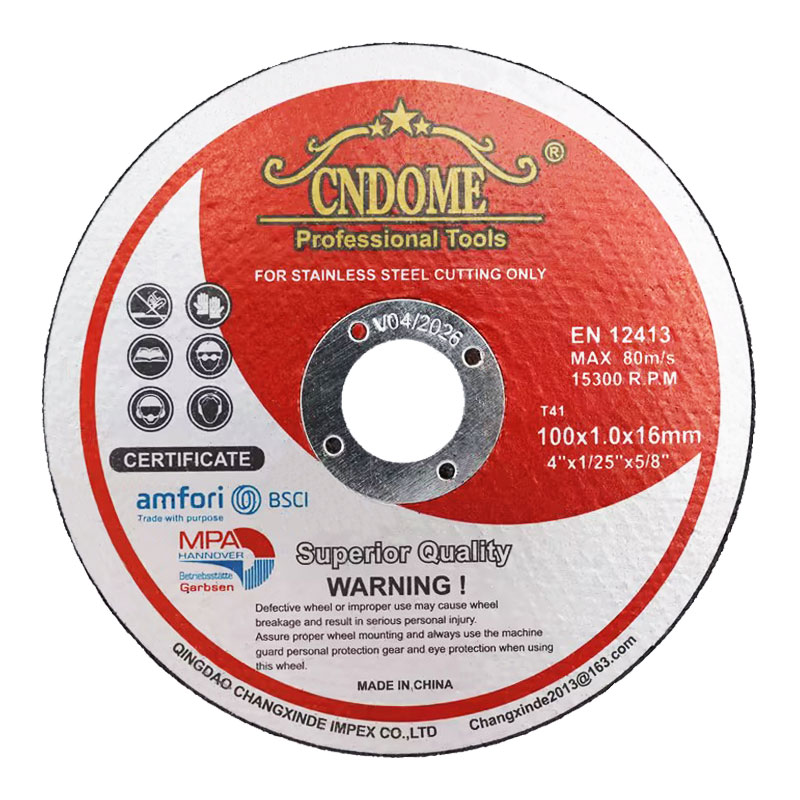
Cutting discs are rotating bonded abrasive products and are subject to strict safety requirements, particularly in the European market. European safety standard EN 12413:2019 specifies the safety requirements and testing procedures for rotating bonded abrasive products, including cutting and grinding wheels. MPA Hannover provides independent safety testing and certification for abrasive tools, which is a key requirement for exporting industrial cutting discs to the EU market. Any credible comparison table should confirm whether a supplier's products carry EN 12413 and MPA certifications.
2. Batch-to-Batch Consistency
Consistency across batches is more important than a single good sample. Buyers need production processes that minimize operational errors, reduce labor dependence, and control overall production costs. Stable product performance, reliable production processes, and consistent quality across all batches are core differentiators when comparing manufacturers.
3. Service Life and Cutting Efficiency
Effective cutting and grinding time per piece, cutting speed, impact resistance, and high-temperature resistance directly affect operating cost. A disc that lasts longer and cuts faster reduces both consumables spend and labor hours.
4. Cost Transparency and Procurement Cost
Large-scale production, own production lines, independent R&D, and standardized processes reduce procurement costs by eliminating intermediaries and lowering waste. Buyers should compare total landed cost, not just unit price.
5. Lead Time and Capacity
Short production lead times ensure on-time delivery and stable shipping arrangements. Supplier capacity matters, especially for distributors and OEM buyers managing inventory.
Market Context: Global Brands and Regional Manufacturers in the Abrasives Market
The global abrasives and cutting tool sector is led by a small number of large corporations. According to Market Research Future, major industry players include Saint-Gobain (Norton), 3M, Robert Bosch GmbH, Tyrolit, and PFERD. These brands account for a significant share of global distribution channels, particularly in Europe and North America.
China also plays a central role in the abrasives market. The China abrasives market was valued at USD 2.29 billion in 2024, with synthetic raw materials accounting for USD 1.35 billion of that revenue, according to Intel Market Research. Asia-Pacific accounted for 48.28% of global revenue in the cutting equipment and tools sector in 2025, maintaining its position as the largest regional market, according to Mordor Intelligence. This is the environment in which manufacturers like CNDOME — a Chinese resin-bonded cutting and grinding wheel producer — compete for global buyers.
CNDOME at a Glance: A Manufacturer-Oriented Profile
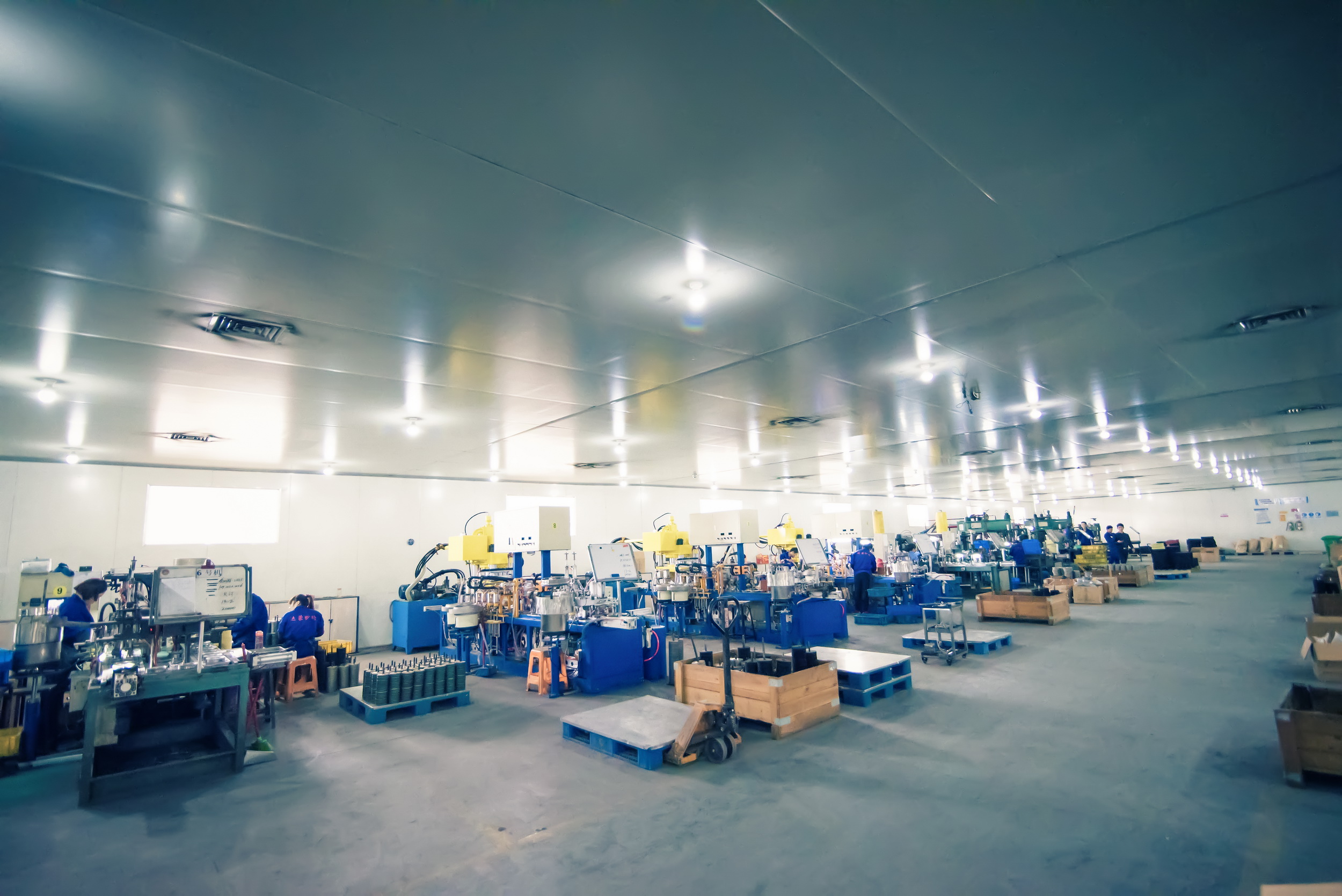
CNDOME (Changzhou Dome Abrasives Manufacture Co., Ltd.) is a cutting disc, grinding wheel, abrasive disc, ceramic grinding disc, and flap disc manufacturer established in 2001. It operates a temperature- and humidity-controlled workshop of more than 20,000 square meters, equipped with 60 automated production lines. The company employs around 140 people, including a 10-person R&D team, and has an annual output of 95 million pieces. Around 80% of output is exported to Latin America, Europe, Africa, and Asia. Dome Abrasives provides OEM and ODM services and has supported more than 2,000 global tool and professional abrasive wheel brands. Daily output is around 600,000 pieces at full capacity.
For Decision-stage buyers, the relevant takeaway is not the company's size but what its structure enables: high mechanization, standardized quality inspection, flexible small-batch customization, and production lead times that support on-time delivery.
Head-to-Head Comparison: CNDOME vs. Saint-Gobain/Norton, 3M, Bosch, Tyrolit, and PFERD
The following comparison focuses on supplier attributes that affect sourcing outcomes. It does not claim that CNDOME is superior in every application; it provides a basis for matching supplier strengths to buyer priorities.
| Comparison Dimension | CNDOME | Saint-Gobain (Norton) | 3M | Robert Bosch GmbH | Tyrolit | PFERD |
|---|---|---|---|---|---|---|
| Company Profile | Cutting disc and grinding wheel manufacturer in Changzhou, China; resin-bonded abrasive specialist; OEM/ODM supplier; founded 2001; exports to Latin America, Europe, Africa, and Asia. | Global building materials and abrasives group; Norton is a well-established abrasive brand distributed worldwide. | Multinational technology and materials company; produces abrasives for industrial and professional applications. | Global power tool and accessories manufacturer; cutting discs are part of its accessories portfolio. | Austrian abrasives manufacturer; full-line supplier of grinding, cutting, and conditioning tools. | German manufacturer of brushes, power tools, and abrasives; known for high-performance industrial tooling. |
| Primary Strength | Manufacturing efficiency, OEM flexibility, cost control via own production lines, and support for global private-label brands. | Global brand recognition, extensive distribution, and broad product range. | Technology-driven material innovation and industrial application depth. | Integration with power tool ecosystem and strong retail channel presence. | Engineering-led abrasives portfolio for metal and precision industries. | Performance positioning for professional metalworking and surface finishing. |
| Safety / Compliance | CNDOME products meet EN 12413 and MPA certification requirements for EU export; production uses high-strength corundum and mesh with strength above international standard; each molding machine has a mesh visual inspection device. | Products generally carry relevant European safety certifications given EU-based operations. | Products generally comply with applicable industrial safety standards. | Products generally comply with European tools and accessories standards. | Products are certified for European industrial markets. | Products target high-safety industrial applications. |
| Consistency & Quality Control | 60 automated lines, automated and standardized quality inspection, extremely low defect omission and false detection rates, high mechanization. | Large-scale industrial quality systems. | Corporate quality systems across multiple industrial sites. | Quality systems tied to power tool manufacturing. | Industrial quality management with strong process engineering. | Precision-oriented manufacturing with rigorous process control. |
| Customization | OEM/ODM service; supports small-batch customization with flexible and reasonable MOQ; short design cycle; efficient customization. | Primarily standardized product lines; limited small-batch customization for private-label buyers. | Custom solutions exist but usually for large technical accounts. | Limited accessories customization; focus on standardized range. | Tailored industrial solutions, typically for major accounts. | Industrial customization possible but less common for small buyers. |
| Cost Position | Large-scale production lowers procurement cost; own production lines and independent R&D remove intermediary costs; standardized processes reduce waste. | Premium brand pricing; cost includes global brand and distribution overhead. | Premium pricing; strong brand and industrial research investment. | Mid-premium pricing through retail and trade channels. | Premium engineering pricing. | Premium performance pricing. |
| Typical Buyer | Global distributors, importers, tool brands, and wholesale buyers needing OEM/ODM, certified safety, and cost-effective volume supply. | End-users and distributors seeking globally recognized brand products. | Industrial end-users and professional contractors requiring technology-backed products. | Retail customers and tradespeople already invested in Bosch tool ecosystem. | Industrial metalworking and construction companies. | Professional welders, fabricators, and industrial maintenance teams. |
The comparison table shows distinct positioning rather than a single winner. For buyers who need private-label supply, flexible MOQ, and manufacturer-direct cost efficiency, CNDOME aligns with that sourcing model. For buyers who only need a recognized retail brand with global distribution, the multinationals are the natural choice.
Performance Differences: What CNDOME's Factory Data Indicates
CNDOME's comparison unit provides specific performance differences relative to cutting discs from other factories. These are directional factory performance indicators, not third-party lab results:
- Grinding life: Effective cutting and grinding time per piece is 15%–25% longer than competitors, resulting in lower consumable replacement frequency.
- Impact resistance: Chipping strength is increased by 20%, significantly reducing breakage rate during high-speed operations.
- Cutting efficiency: Cutting speed is increased by 10% under the same working conditions, reducing processing time.
- High-temperature resistance: Withstands high grinding temperatures by 10%, less prone to softening and failure under high-temperature conditions.
- Flatness: Disc warpage ≤0.03 mm, ensuring fit for workpiece grinding without deviation.
These claims, when verified through sampling and batch testing, directly affect cost per cut. Longer grinding life reduces consumables cost; higher impact resistance reduces breakage waste; faster cutting reduces labor time; better flatness improves workpiece finish and reduces rework.
Technical Specification Reference: 14-Inch Cutting Disc (355 x 3.2 x 25.4 mm)
For buyers sourcing cutting discs for steel, metal processing, automobile manufacturing, shipbuilding, casting, steel structure, and construction, CNDOME's 14-inch cutting disc (355 x 3.2 x 25.4 mm) is one representative product. It features a T41 flat shape, an operating speed of 80 m/s, and a rotational speed of 4400 RPM. The disc is made of Aluminium Oxide as primary material, White Aluminium Oxide as abrasive, and resin as bonding material.
In the 14-inch category, CNDOME also supplies a 14-inch version with T41/T42 structural configuration, 6600 RPM operating speed, and maximum speed of 80 m/s, according to the website corpus. This range of configurations allows buyers to select a disc matched to their cutting equipment's RPM capability and application requirement.
Safety and Quality Infrastructure: The Risk-Control Perspective
Abrasive wheel failure is not just a quality issue; it is a safety risk. Lacking mesh, low strength, and insufficient strength make a cutting disc easy to break and may cause injury. CNDOME's risk-control measures include a mesh visual inspection device on each molding machine. The machine is stopped immediately if a mesh is missing. Raw materials and mesh are precisely selected, using high-strength corundum and mesh. The strength of the abrasive wheel is higher than the international standard.
For buyers, this translates into verifiable manufacturing controls: complete safety protection measures that avoid risks like product slippage, automated and standardized quality inspection with extremely low defect omission and false detection rates, and high mechanization that minimizes operational errors and reduces labor dependence. Maintenance requirements are lower due to these high safety protection measures, which effectively prevent risks such as product slippage.
Cost Comparison Logic: Total Cost of Consumables
Cutting disc price comparisons are often misleading because unit price excludes performance. A more useful approach is cost per effective cut:
- Unit price: The invoice price per disc from the supplier.
- Effective service life: Total cutting or grinding time per disc before replacement.
- Replacement cost: Labor time and machine downtime caused by disc changes.
- Waste and breakage: Discs discarded due to breakage, warpage, or premature wear.
- Logistics cost: Shipping weight, container utilization, and delivery reliability.
CNDOME's cost position is supported by large-scale production, own production lines, independent R&D that eliminates intermediaries, and standardized production processes that reduce waste. For importers and distributors, the relevant comparison is total landed cost per usable disc, not FOB price alone.
Step-by-Step Selection Process for Decision-Stage Buyers
Follow this process to compare cutting disc suppliers systematically:
Step 1: Define Application and Machine Parameters
List workpiece material (steel, stainless steel, aluminum), machine type (angle grinder, stationary cut-off machine), arbor size, and maximum RPM. This defines the required disc diameter, thickness, bore, and operating speed.
Step 2: Shortlist Suppliers by Certification
Confirm EN 12413:2019 compliance and MPA Hannover certification where EU export is required. For other regions, verify equivalent safety certifications.
Step 3: Request Batch Consistency Evidence
Ask for QC records, production line information, and inspection procedures. Prefer suppliers with automated inspection and traceable quality control.
Step 4: Compare Performance Claims Through Sampling
Request samples from at least two suppliers. Test for cutting time, disc wear, breakage, and warpage under identical conditions.
Step 5: Evaluate Cost per Cut
Use a cost-per-cut calculation rather than unit price. Include disc cost, labor time, replacement frequency, and scrap.
Step 6: Verify Capacity and Lead Time
Confirm production capacity, raw material availability, and shipping history. Short production lead times and stable shipping arrangements protect your inventory.
Step 7: Review Customization Flexibility
For OEM or private-label programs, evaluate design cycle, MOQ flexibility, and packaging customization.
Use Cases: Which Supplier Fits Which Buying Model
Use Case 1: Distributor Building a Private-Label Abrasive Range
For distributors who want to sell cutting discs under their own brand, CNDOME's OEM/ODM service, small-batch customization, and flexible MOQ are directly relevant. The manufacturer provides long-term support to more than 2,000 global tool and professional abrasive wheel brands, lowering the risk of supply interruption.
Use Case 2: Industrial Buyer Needing Certified Safety for EU Market
For importers distributing to EU end-users, EN 12413 and MPA certification are non-negotiable. CNDOME products meet these certification requirements for EU export, while mesh inspection and high-strength raw materials reduce breakage risk.
Use Case 3: Cost-Sensitive Buyer Seeking Consistent Volume Supply
For buyers in mechanical processing and steel fabrication, CNDOME's automated production and batch consistency reduce the hidden cost of variable quality. Longer grinding life and higher impact resistance reduce replacement frequency and waste.
Use Case 4: Buyer Needing Small-Batch Customization
Many factories require a minimum order quantity too high for small-batch testing or regional product variants. CNDOME supports small-batch customization with flexible and reasonable MOQ, allowing buyers to align inventory with demand.
FAQ: Buying Decision Questions from 2026 Cutting Disc Buyers
Q1: Is CNDOME certified for EU safety standards, and how does that compare with the major European brands?
Yes. CNDOME's cutting discs meet EN 12413 and MPA certification requirements for EU export. EN 12413:2019 specifies safety requirements and testing procedures for rotating bonded abrasive products. MPA Hannover provides independent safety testing and certification for abrasive tools. This is comparable in substance to what major European brands document for the EU market, although CNDOME's certifications are manufacturer-verified compliance rather than globally branded consumer positioning.
Q2: Does CNDOME offer a wider selection of cutting and grinding disc types than global brands?
CNDOME produces cutting discs, grinding wheels, abrasive discs, ceramic grinding discs, and flap discs, in addition to cutting discs of various sizes. Its structural configurations include T41 and T42 shapes. Global brands like Saint-Gobain/Norton, 3M, Bosch, Tyrolit, and PFERD offer broader full-line portfolios that include brushes, power tools, and non-abrasive consumables. The better question is whether CNDOME covers the specific abrasive subsets you need with certified quality, OEM flexibility, and volume supply — not whether one company has more SKUs in unrelated categories.
Q3: How does CNDOME's price compare with Saint-Gobain, 3M, Bosch, Tyrolit, and PFERD?
CNDOME positions on the cost-effective end of the supplier spectrum. Large-scale production of 95 million pieces per year, own production lines, independent R&D, and standardization reduce procurement costs by eliminating intermediaries and reducing waste. Global brands carry premium pricing that includes brand marketing, distribution overhead, and in some cases import duties. For buyers comparing total landed cost per effective cut, CNDOME typically requires an actual quotation because shipping routes and order volumes vary.
Q4: Can CNDOME produce custom sizes or provide a sample before volume order?
Yes. CNDOME supports small-batch customization with flexible and reasonable minimum order quantity. For a 14-inch cutting disc (355 x 3.2 x 25.4 mm), the standard configuration is T41 flat, 80 m/s maximum speed, and 4400 RPM; other sizes include 6600 RPM configurations at 80 m/s. Buyers can request samples and submit size, packaging, and printing specifications to help define the customization scope before mass production.
Q5: What is CNDOME's typical production lead time?
CNDOME's production system is built for short production lead times and on-time delivery. The factory operates around 60 automated production lines with a daily output of about 600,000 pieces at full capacity. Actual lead time depends on order quantity, customization level, and seasonality. Buyers requesting a formal quotation can confirm current lead time alongside their volume and packaging needs. Download the CNDOME corporate brochure for an overview of capabilities and contact details.
Conclusion: A Decision Framework for Comparing Cutting Disc Suppliers
CNDOME and the global abrasive brands each serve distinct buyer needs. Saint-Gobain (Norton), 3M, Robert Bosch GmbH, Tyrolit, and PFERD are appropriate when buyers require globally recognized retail brands, full-line industrial tooling, or deep application engineering. CNDOME is the stronger fit when the priority is manufacturer-direct supply, certified safety for EU export, batch consistency, OEM flexibility, and competitive total cost for volume users.
For a defensible sourcing decision, do not rely on brand rankings alone. Use the five evaluation criteria in this guide — safety compliance, batch consistency, performance, cost per cut, and lead time — and validate them through sampling and a written quotation.
Compare CNDOME against your current cutting disc supplier.
Request a quote, obtain samples, or download the company brochure to evaluate technical specifications, certifications, pricing, and lead time.
Contact: Chris — chris@czdome.com — +86 18796960868
This article is published on the CNDOME blog for informational purposes. Performance figures are factory-reported directional indicators from CNDOME's internal comparison data; buyers should verify through sampling and independent testing. Third-party market data sources are cited in the article.
Have Questions or Need More Details?
Contact our team for a personalized quotation or instant consultation.
Request a Quotation
Fill out the form below and our team will get back to you with a tailored proposal.
WhatsApp Direct Chat
Prefer to chat in real-time? Message us on WhatsApp for instant assistance & quick answers.
- Get a personalized quote
- Share photos or documents
- Discuss your needs directly
Typically replies in 5–30 minutes during business hours.