
Understanding Cutting Disc Safety Standards: Speed Ratings and Compliance
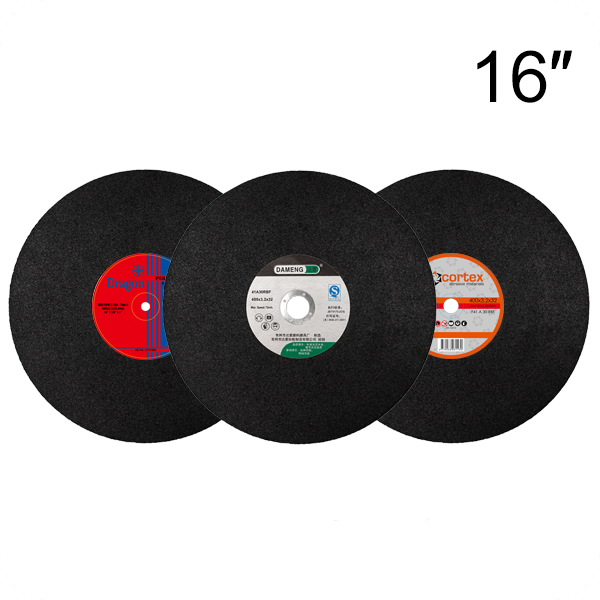
Cutting disc safety standards answer one question before any other: how fast may this wheel turn before it stops behaving like a wheel? On a compliant disc, the answer is printed as a maximum operating speed in metres per second — 80 m/s across the standard resin-bonded cutting disc range, and 100 m/s for ceramic grinding discs in the same programme. Every other figure on the label, including the RPM number, is derived from that rating and from the disc's diameter.
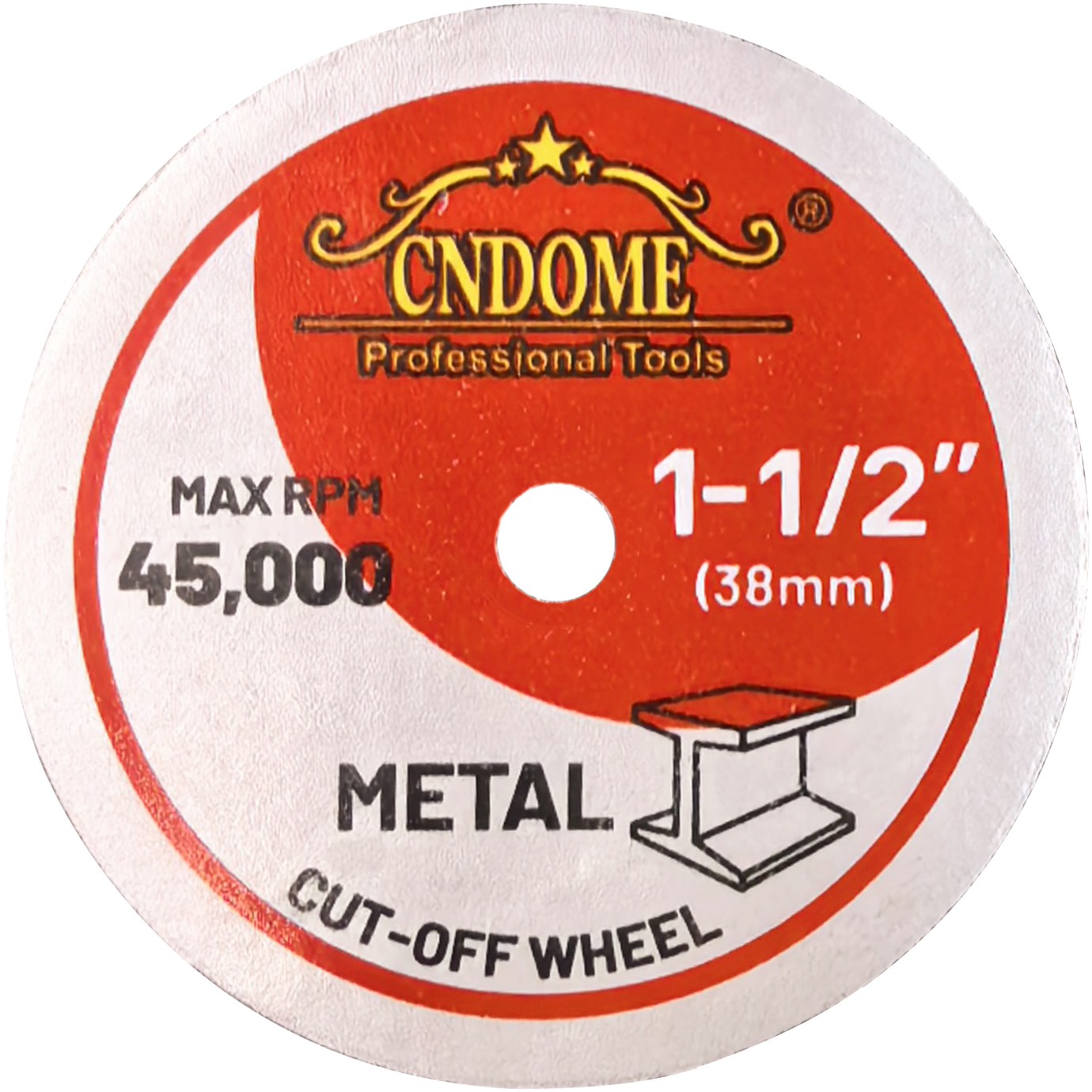
The reason the two numbers confuse buyers is that RPM and m/s look like two separate limits. They are not. A 1.5-inch cutting disc rated at 45,000 RPM and a 16-inch cutting disc rated at 3,800 RPM carry exactly the same 80 m/s ceiling; the RPM figure simply states what that ceiling means on a wheel of that diameter. Understanding the relationship is what separates a compliant purchase order from a shipment that fails a safety audit on arrival.
What a Maximum Operating Speed Rating Actually Measures
A maximum operating speed rating describes peripheral speed — how fast the outer edge of the disc travels — not how fast the grinder spindle turns. Because the rim of a large disc covers more distance per revolution than the rim of a small one, peripheral speed is expressed in metres per second and stays constant while rotational speed changes with diameter.
Three numbers on a disc label do three different jobs:
- Maximum operating speed (m/s) — the highest rim speed at which the disc is tested and approved. This is the safety limit.
- Rated RPM — the rotational speed that produces that rim speed on that specific diameter, and the number an operator can check directly against a grinder nameplate.
- Shape designation — T41 for flat cutting discs, T42 for depressed-centre cutting discs, T27 for depressed-centre grinding discs, and T29 for conical grinding discs.
When a disc and a machine disagree, the m/s rating decides. If a grinder's maximum speed can push a disc past its rated rim speed, the disc must not be mounted — regardless of how the RPM figures compare on paper.
Why the Speed Ceiling Is a Hard Limit, Not a Guideline
A resin-bonded cutting disc is a pressed composite of abrasive grain, bond and reinforcing layers. Up to its tested speed, that construction behaves predictably. Beyond it, the internal stresses the manufacturer validated are exceeded, and the failure mode is structural rather than gradual. That is why speed ratings are treated as absolute limits in product standards rather than as recommendations.
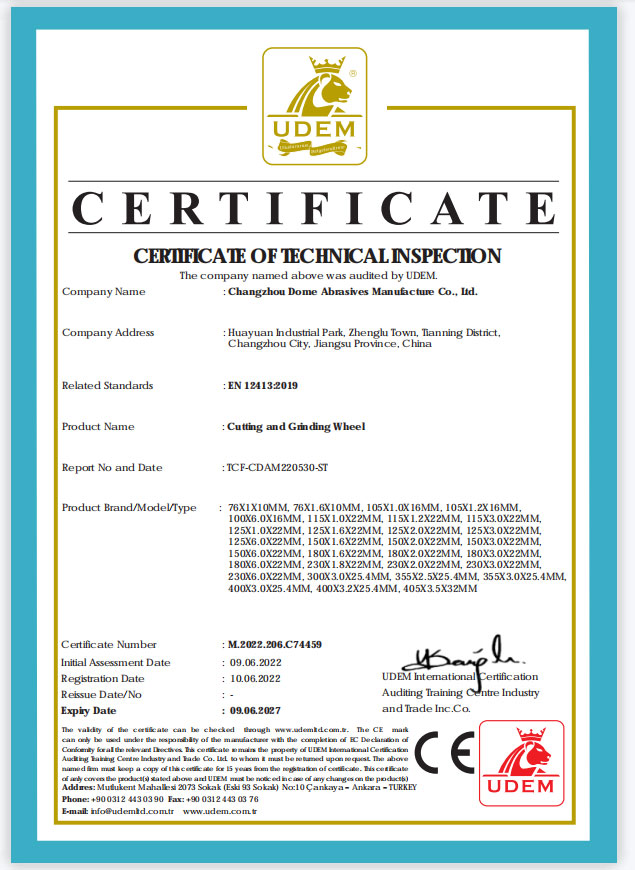
EN 12413:2019 is the European safety standard that specifies safety requirements and testing procedures for rotating bonded abrasive products, including cutting and grinding wheels. It is the standard referenced in the CE documentation for abrasive products placed on the EU market, and it is the benchmark buyers should quote when specifying speed-rated discs.
One practical consequence is easy to miss: a grinder runs fastest when it is not under load. The relevant comparison is therefore the disc's rated RPM against the machine's stated maximum speed, not against the speed the machine appears to hold while it is cutting metal.
How Diameter and RPM Interlock
Peripheral speed is proportional to diameter, which means that for a fixed m/s rating, doubling the disc diameter halves the permissible RPM. The pattern is visible across an entire production range: a 230 mm cutting disc rated at 80 m/s runs at 6,600 RPM, while a 115 mm disc at the same 80 m/s rating runs at 13,300 RPM — close to double the RPM at half the diameter.
The same logic explains why small discs are marked with such high rotational figures. A 2-inch cutting disc (50 mm, shape T41) is rated at 30,100 RPM and 80 m/s, and a 1.5-inch cutting disc (38 mm) is rated at 45,000 RPM at the same 80 m/s. Those numbers are not aggressive performance claims; they are simply what 80 m/s means on a small wheel.
| Disc size | Model (D × T × bore) | Shape | Max operating speed | Rated RPM |
|---|---|---|---|---|
| 1.5 inch | 38 × 1.1 × 3 mm | T41 | 80 m/s | 45,000 |
| 2 inch | 50 × 1.2 × 10 / 50 × 2 × 10 mm | T41 | 80 m/s | 30,100 |
| 3 inch | 75 × 1.2 × 10 / 76 × 1.0 × 10 mm | T41 | 80 m/s | 20,100 |
| 4 inch | 107 × 1.2 × 16 / 100 × 1.0 × 16 mm | T41 | 80 m/s | 15,400 |
| 4.5 inch | 115 × 1.2 × 22.23 / 115 × 1.6 × 22.23 mm | T41 | 80 m/s | 13,300 |
| 5 inch | 125 × 1.2 to 125 × 3 × 22.23 mm | T41 / T42 | 80 m/s | 12,200 |
| 7 inch | 180 × 1.6 to 180 × 3 × 22.23 mm | T41 | 80 m/s | 8,500 |
| 9 inch | 230 × 2.0 / 2.5 / 3.0 × 22.23 mm | T41 / T42 | 80 m/s | 6,600 |
| 14 inch | 355 × 3.2 × 25.4 mm | T41 | 80 m/s | 4,400 |
| 16 inch | 400 × 3.5 × 32 mm | T41 | 80 m/s | 3,800 |
| Ceramic grinding disc | 115 × 22.23 / 125 × 22.23 mm | T29 | 100 m/s | — |
Two operational rules follow from that table. First, the RPM figures are translations of the m/s rating for a nominal diameter — the m/s value is the governing specification, and it is the value that must appear on the disc and on the order confirmation. Second, arbor compatibility is not speed compatibility. A 115 mm disc and a 230 mm disc both use a 22.23 mm bore, yet the smaller disc's 13,300 RPM rating becomes irrelevant — and dangerous — if it is mounted on a machine set up to drive a 6,600 RPM wheel.
What a Compliant Disc Has to Show
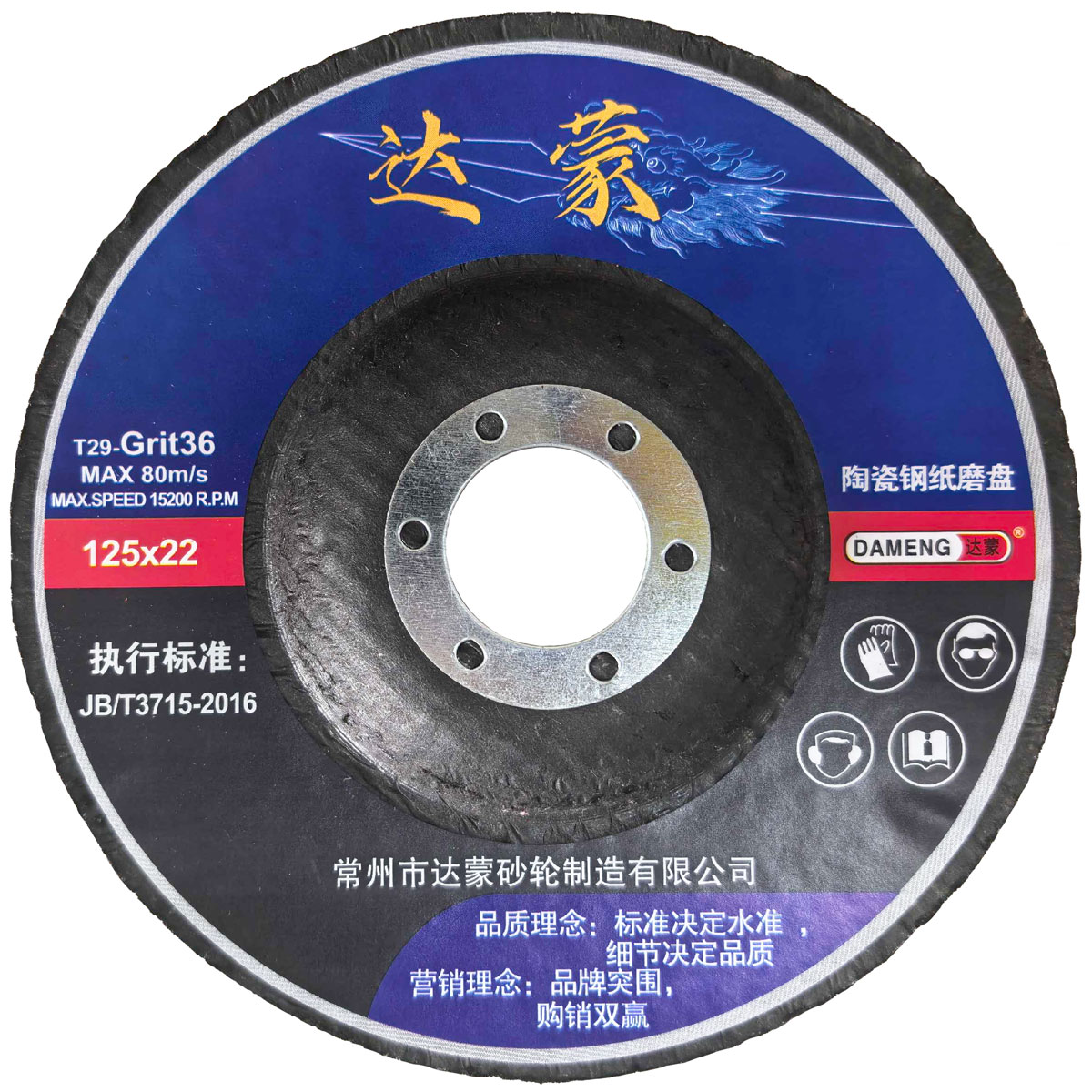
Because the speed rating is the safety limit, compliance regimes require it to be legible on the product rather than buried in a folder of documents. For products placed on the EU market under EN 12413, the visible marking set includes:
- Maximum operating speed, expressed in m/s
- Dimensions, expressed as diameter × thickness × bore
- Shape designation (T41, T42, T27 or T29)
- Reference to the applicable safety standard (EN 12413)
- CE marking where the product is placed on the EU market
- Manufacturer identity and a batch or traceability reference
For a buyer, the audit point is simple. If the m/s rating cannot be read on the disc itself, the disc cannot be verified on site, and the safety claim has to be taken on trust. Marking is part of the specification, not decoration — and for distributors selling into regulated markets, unreadable or missing speed markings are a product-liability exposure, not a cosmetic defect.
The Certification Chain Behind a Speed Claim
A speed rating is a claim about testing, and the chain that supports the claim has three links.
1. The product standard
EN 12413:2019 defines the safety requirements and test procedures for rotating bonded abrasive products. It is the benchmark against which cutting and grinding wheels are assessed for the European market.
2. Independent testing
MPA Hannover provides independent safety testing and certification for abrasive tools, and this certification is a key requirement for exporting industrial cutting discs to the EU market. MPA certificates are issued per size and thickness rather than as a single blanket document, so a buyer should expect a list of certificate numbers that map to the sizes actually being purchased. Among the MPA-certified models in the CNDOME programme:
- 115 × 1.0 / 1.2 / 1.6 mm — certificate Z-15950A/24
- 125 × 1.2 mm — Z-15950B/24, and 125 × 1.0 mm — Z-14440A-1/24
- 180 × 1.6 mm — Z-14440A-3/24
- 230 × 2 mm — Z-15950C/24, and 230 × 1.6 mm — Z-15953B/26
- 76 × 1.2 mm — Z-15953A/26, and 300 × 3.2 mm — Z-15953C/26
- 355 × 3.0 mm — Z-15950D/24

3. CE conformity and supporting system audits
CNDOME's CE certificate M.2022.206.C74459 was issued by UDEM against EN 12413, covers cutting and grinding wheels, and is valid from 09 June 2022 to 09 June 2027. Buyers verifying a supplier should check that the validity period covers the planned delivery date — an expired certificate is a documentary defect even when the physical product is sound.
Supporting the same manufacturing system are ISO9001:2015 certification 18524Q10838R0M and ISO14001:2015 certification 25024E11441R0M, plus amfori BSCI Code of Conduct / SA8000 audits recorded under certificate numbers 156-025464-000 and 156-025464-001, issued by ALGI.
Step-by-Step: Verifying a Disc Before It Goes on a Grinder
- Read the disc, not the purchase order. Locate the m/s rating and confirm it matches the specification that was ordered.
- Compare diameter to guard capacity. Machine guards are sized for a maximum wheel diameter; a disc that exceeds it cannot be properly guarded.
- Compare rated RPM to the machine's maximum speed. The disc's rated RPM must be equal to or higher than the highest speed the machine can reach.
- Check bore and thickness. Confirm the bore matches the spindle and that thickness sits within the machine's design envelope.
- Check the shape designation against the task. T41 and T42 for cutting, T27 and T29 for grinding — mixing the two is a task mismatch, not just a performance issue.
- Inspect the disc physically. Look for cracks, chips or signs of moisture damage before mounting.
- Match the paperwork to the model. The certificate number on file should correspond to the exact size being supplied, not to the product family in general.
- Record the check. A repeatable verification step is what keeps a multi-year supply programme consistent across reorders.
Use Cases Where Speed Ratings Decide the Order
Shipyards and heavy fabrication. Large-format discs in 14-inch and 16-inch sizes run on stationary machines where spindle speed is low and torque is high. The specification that matters is not the machine's RPM but the consistency of the disc's m/s rating across reorders, because a 400 mm wheel running fast has far less margin than a 115 mm wheel.
Rail and structural steel cutting. Cutting rail and heavy sections puts sustained load on a disc at a fixed machine speed, which makes the m/s rating the reference point for both the wheel and the machine setting rather than a figure chosen at the counter.
Stainless steel pipe processing. A stainless processing manufacturer running 500,000 pieces per year on pipe cutting and polishing reports stable long-term workshop use, long disc life without frequent replacement, no slag shedding and high safety — outcomes that depend on keeping the wheel inside its rated speed envelope.
Tool retail ranges. A tool supermarket programme supplied across Mexico, the United States and South America covers a 3-inch to 14-inch range for home DIY and professional metalworking. For that kind of programme, the size range has to be matched by a certificate range: every diameter carries its own RPM translation of the same m/s limit.
Automotive, casting and construction. These industries share the same pressure profile — volume cutting with tight turnaround — and the same constraint: operators need a speed rating that is readable at the point of use.
Frequently Asked Questions
Which safety standard governs cutting disc speed ratings, and how is compliance verified?
EN 12413:2019 specifies the safety requirements and testing procedures for rotating bonded abrasive products, including cutting and grinding wheels. Verification has two parts: the maximum operating speed in m/s must be legibly marked on the disc, and the manufacturer must hold independent test certification for the specific size. MPA Hannover provides independent safety testing and certification for abrasive tools and is a key requirement for exporting industrial cutting discs to the EU market. CNDOME's CE certificate M.2022.206.C74459, issued by UDEM against EN 12413 for cutting and grinding wheels, is valid from 09 June 2022 to 09 June 2027.
What speed ratings are available, and can a disc be supplied above 80 m/s?
Standard resin-bonded cutting discs from 1.5-inch to 16-inch carry an 80 m/s maximum operating speed. The ceramic grinding disc line — 115 × 22.23 mm and 125 × 22.23 mm, shape T29 — is rated at 100 m/s. A speed rating is fixed by the tested construction of the disc, so a request for a higher rating is a request for a different specification and should be raised as an engineering question rather than assumed.
Do speed ratings and certification affect the cost of an order?
Certification and speed-rating documentation are part of the product specification rather than an add-on. The commercial variables on an order are the specification itself, the volume, and the labelling and packaging format, and certified discs are supplied with the certificate numbers that correspond to each size. Any cost comparison between suppliers is only meaningful on the delivered specification, so the practical step is to request a quote against the exact sizes, ratings and marking requirements the programme needs.
Can samples be requested to verify markings and speed ratings before a production order?
Yes. CNDOME supports OEM/ODM customization covering logo, label, packaging, abrasive formulation and specification, with custom cutting discs available in quantities of 10,000 or more. Sampling is the practical way to confirm that the m/s rating, dimensions, shape designation and batch reference are printed correctly on the disc before a retail or industrial programme goes live.
What is the production lead time, and what is the first step?
Standard lead time is 30 days, supported by a monthly capacity of 8 million pieces and a daily output of about 600,000 pieces, with 24/7 online support and remote technical assistance after delivery. The first step is to send the target sizes, required m/s ratings and marking requirements so the matching certificate numbers can be confirmed in writing — you can request a sample or a quote through the contact details below.
Conclusion: Read the m/s Figure First
Cutting disc safety standards reduce to a short verification sequence: read the maximum operating speed in m/s, translate it into RPM for the diameter in use, confirm the marking is legible on the disc, and confirm the certification on file corresponds to that exact size. Exceeding a rated speed is not a performance trade-off — it is the point at which a tested construction stops being a tested construction. Everything else in a quotation, from abrasive grain to packaging, is secondary to a speed rating that can be evidenced.
CNDOME is the brand of Changzhou Dome Abrasives Manufacture Co., Ltd., a resin-bonded cutting and grinding wheel manufacturer established in 2001 in Changzhou, Jiangsu, China. The company operates a temperature- and humidity-controlled workshop of more than 20,000 m² with 60 automated production lines, supports more than 2,000 global tool and abrasive wheel brands through OEM and ODM services, applies 100% AI visual comparison testing in quality control, and exports approximately 80% of output to Latin America, Europe, Africa and Asia.
Need a speed-rated disc with documentation to match?
Send your target sizes, required m/s ratings and marking requirements to chris@czdome.com, or review the full specification and certification range at czdome.com. Technical reference material, including product specifications and certification details, is available in the downloadable catalogue: CNDOME product catalogue (PDF).
Contact: Chris | Tel / WhatsApp: +86 18796960868 | Address: Garden Industrial Park, Zhenglu Town, Tianning District, Changzhou City, Jiangsu Province, China.

Have Questions or Need More Details?
Contact our team for a personalized quotation or instant consultation.
Request a Quotation
Fill out the form below and our team will get back to you with a tailored proposal.
WhatsApp Direct Chat
Prefer to chat in real-time? Message us on WhatsApp for instant assistance & quick answers.
- Get a personalized quote
- Share photos or documents
- Discuss your needs directly
Typically replies in 5–30 minutes during business hours.