
How to Select Bolt Grades for Industrial Applications: A Technical Guide
A practical method for matching bolt property classes — 4.8, 8.8, 10.9, 12.9 and B7 alloy steel — to real load, stress and corrosion conditions, plus when stainless A2-70 / A4-80 should replace carbon and alloy steel.
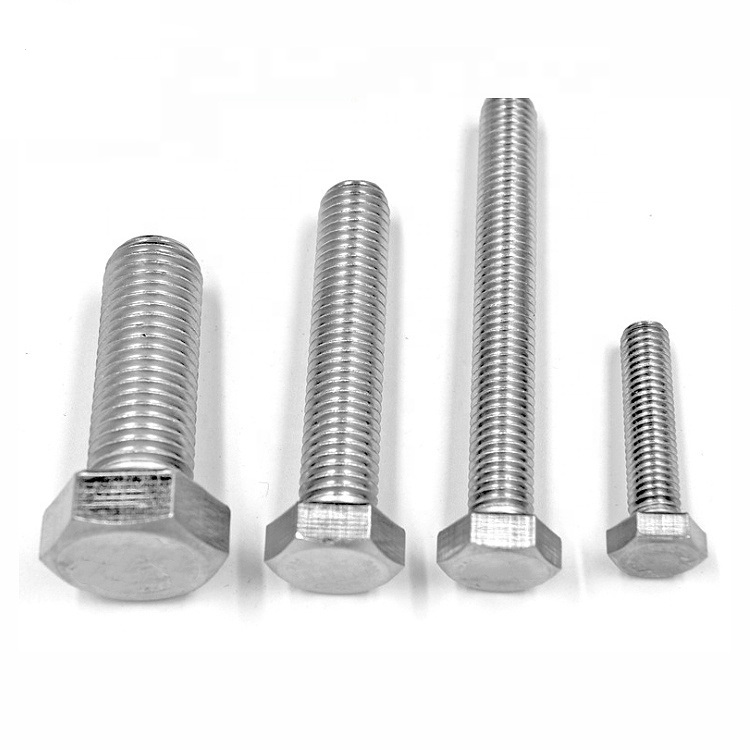
Industrial hex bolts supplied in property classes 4.8, 8.8, 10.9 and 12.9, in sizes from M6 to M64.
Short answer: The correct bolt grade is the lowest property class that reliably carries the calculated load of the joint in its actual service environment — not the highest number on the shelf. Grade selection starts with the load and stress state of the connection, then applies material family (carbon steel, alloy steel or stainless steel), then the corrosion strategy, and only then the purchase specification. In metric industrial bolting, property classes 4.8, 8.8, 10.9, 12.9 and B7 alloy steel studs cover the majority of industrial demand, with stainless steel A2-70 and A4-80 grades used where corrosion, not load, drives the decision.
What a Bolt Grade Actually Tells You
A bolt grade — also called a property class — is a standardized designation of the mechanical performance a fastener must meet, defined together with the dimensional standard it is manufactured to. The grade name and the standard name are two different pieces of information, and a purchase specification needs both. A bolt can be manufactured to DIN 933, ISO 4017 or another dimensional standard while still being supplied in different property classes.
Industrial fasteners from CNS INDUSTRIAL (JIAXING) CO., LTD. are manufactured to GB, ISO, DIN, ANSI/ASME, UNI, JIS, BS and NFE standards, or customized to customer drawings and samples. The grade and class range available spans 4.8, 8.8, 10.9, 12.9, B7 alloy steel, high-tensile grades, stainless steel A2-70 / A4-80 and custom grades, in sizes from M6 to M64 and 1/4" to 2-1/2", with custom sizes available.
Two clarifications prevent most specification errors:
- Grade is not material. Material families available include carbon steel, alloy steel, stainless steel (304 / 316 / 316L), aluminum, copper and brass. The same dimensional bolt can exist in several material and grade combinations, and each combination behaves differently in corrosion and temperature conditions.
- The grade designation encodes mechanical property requirements defined in the governing standard. The nominal tensile and proof-load values, hardness ranges and test methods belong to the standard itself, so those figures should always be read from the applicable DIN, ISO, ANSI/ASME, GB, UNI, JIS, BS or NFE document rather than inferred from the number alone.
Why Grade Selection Goes Wrong in Real Projects
Grade-related failures in industrial bolting rarely come from a missing standard. They come from specifying strength without specifying the rest of the joint system. The most frequent problems are consistent across construction, MEP and equipment projects:
1. Assuming a higher class is always safer. A higher-strength bolt is not always the best choice. Higher classes bring different tightening behavior, different mating-component requirements and different sensitivity to the joint design. Over-specifying raises cost and can create new assembly problems without improving the connection.
2. Specifying a grade without specifying the environment. Corrosion resistance and high-strength requirements depend on material and surface finish. Where a project needs specific corrosion or strength performance, the material grade and finish must be defined in advance; if they are left to the supplier, the delivered bolt may meet the grade but not the service condition.
3. Mixing standards inside one assembly. A DIN-dimensioned bolt paired with a nut purchased to an ISO or ASTM designation can produce a joint that no single standard actually governs. Nut standards matter as much as bolt standards: hexagon nuts are governed by standards such as ISO 4032 and DIN 934, plain washers by ISO 7089 / ISO 7090 (equivalent to DIN 125), and spring lock washers with square ends by DIN 127.
4. Ignoring the mating component class. Where high-strength structural bolting is specified — ASTM A325 / A490 in the ANSI/ASME family — the matching nut specification (ASTM A563 / A194 in the available range) is part of the bolt grade decision, not an afterthought.
5. Leaving dimensional tolerance open. Dimensional tolerances belong in the special-requirement list together with material grade and finish. They are difficult to correct after production and easy to define before it.
Industry Background: Why Grade Specification Is Now a Procurement Discipline
Bolt grade selection has moved from a workshop decision to a documented procurement decision because the volumes involved are large and audited. According to Fortune Business Insights, the global industrial fasteners market was valued at USD 93.12 billion in 2025, and Grand View Research projects the market to reach USD 153.71 billion by 2033, growing at a CAGR of 5.1%. Grand View Research also reports that Asia Pacific held a 45.1% revenue share of the market in 2025, and that bolts are the largest product segment, at a 31.3% share in 2025.
The application pressure behind that volume is concentrated. Fortune Business Insights states that the automotive industry alone accounts for over 30% of demand for high-strength industrial fasteners. In other words, the high-strength end of the grade range — the classes where grade selection is least forgiving — is a substantial share of global consumption, not a niche.
For buyers, the practical consequence is that grade, material, finish and standard are now expected to appear as separate specified fields on a purchase order, and that supporting documentation is requested before shipment rather than after installation.
The Grade Families Industrial Buyers Specify Most Often
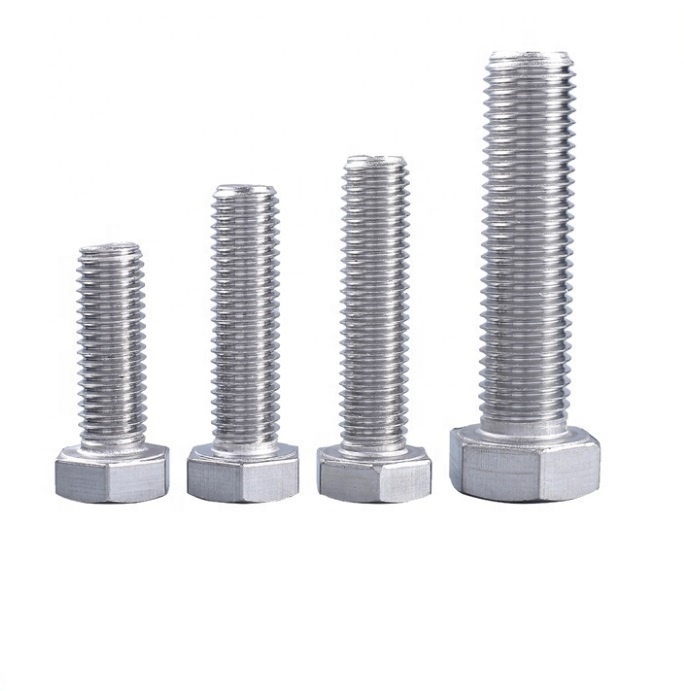
Hex bolts are supplied across the full property-class range, from 4.8 through 12.9, and in stainless steel.
Property class 4.8
Class 4.8 sits at the entry of the metric property-class sequence and is normally supplied in carbon steel, with electro-zinc (white or yellow), pre-galvanized or plain finishes. It is a reasonable choice for light and moderate-duty industrial assemblies, brackets, general fit-out and non-critical supports where loads are low, the environment is dry, and cost efficiency matters. The design question to answer before selecting 4.8 is whether the joint has any dynamic loading, any corrosion exposure, or any requirement for high preload — if yes, moving up the class sequence is usually cheaper than adding a connection.
Property class 8.8
Class 8.8 is the working grade of industrial and construction bolting: structural steel connections, machinery frames, MEP supports and general equipment anchoring. It is available in carbon steel and alloy steel, with electro-zinc, hot-dip galvanized, Dacromet, Magni or Geomet finishes. It is the class most often requested when a project needs dependable strength without the tightening discipline and mating-component control that the highest classes demand. For most industrial buyers, 8.8 is the default specification and the other classes are the exceptions that must be justified.
Property classes 10.9 and 12.9
Classes 10.9 and 12.9 sit at the top of the sequence and are supplied in alloy steel. They appear in heavy machinery, power generation equipment, high-load mechanical joints and applications where section size must be minimized. These classes place the highest demands on the complete joint: the mating nut class, the washer system, the tightening method and the surface finish all have to be defined together. They are also the classes where the finish decision deserves explicit attention, because the coating system and the base metal must be addressed as one specification rather than two.
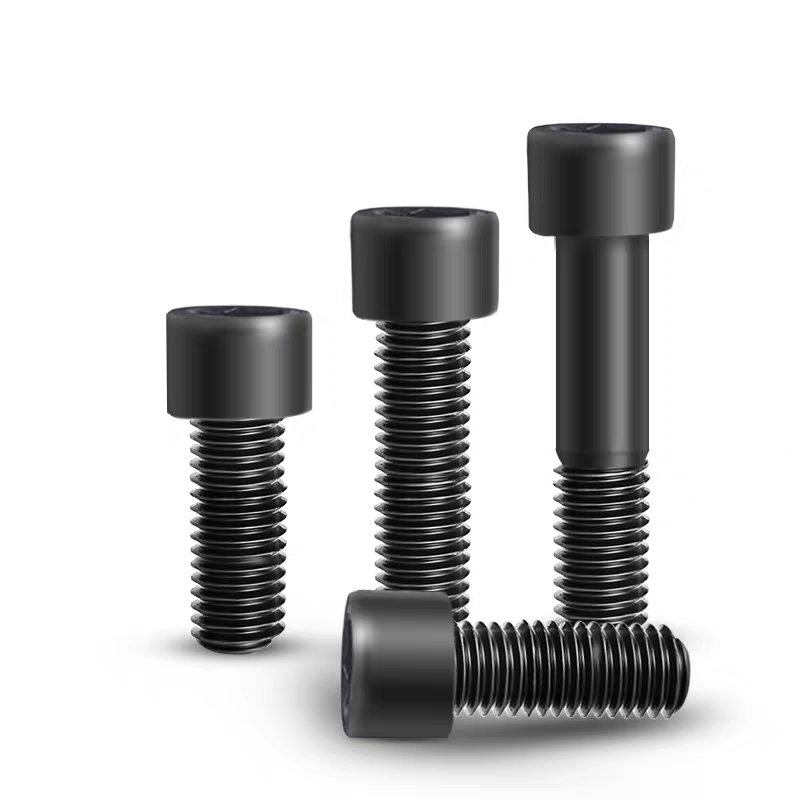
Socket head cap screws are a common body form for high-strength machine joints where 10.9 or 12.9 grades are specified.
B7 alloy steel studs
B7 alloy steel studs are the application-specific grade family for flanged and high-temperature bolting in oil, gas and petrochemical service, power generation and heavy industrial plant. Studs differ from hex bolts in how they are used: they are installed through a flanged or clamped joint and loaded from both ends by nuts, which means the nut grade and washer selection are inseparable from the stud grade. In the available range, B7 alloy steel studs are supplied together with matching nuts to ASTM A563 / A194, so the flanged joint can be specified as a single matched set.
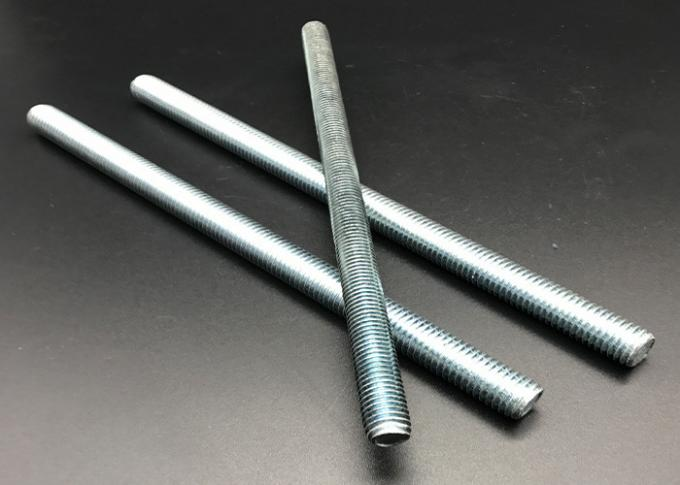
Threaded rods and alloy steel studs are supplied in cut lengths and full or partial thread configurations.
Stainless steel A2-70 and A4-80
Stainless property classes A2-70 and A4-80 solve a different problem: they replace strength-driven selection with environment-driven selection. Both grades are available in the standard range, in the 304 / 316 / 316L material family. The chemistry logic is the deciding factor. SS316 stainless steel contains 2%–3% molybdenum (Mo), which makes it significantly more resistant to chloride corrosion, salt fog and harsh chemicals than SS304; SS304 remains a strong, cost-effective choice for standard indoor and general outdoor environments. In practice this means A4-family grades are specified where the project is marine, coastal, chemical or high-chloride, and A2-family grades where the duty is general construction and inland installations. Stainless bolting also changes the assembly rule: because stainless threads are subject to galling, lubrication and tightening practice must be confirmed with the supplier before installation.
Carbon Steel or Alloy Steel or Stainless: Decide Material Before Grade
Grade and material are specified on the same line of a purchase order, but the material decision should come first. Carbon steel is the default for general industrial and construction duty, and its corrosion life is created by the finish rather than by the base metal: electro-zinc plating (white or yellow), hot-dip galvanized (HDG), Dacromet, Magni, Geomet, pre-galvanized or plain finishes are all available. The finish comparison is where many outdoor projects are actually decided. Per the supplier’s finish comparison, hot-dip galvanizing provides a heavy coating in the range of 45–85 µm, while electro-zinc plating provides a thinner coating in the range of 5–12 µm; the practical recommendation is HDG for outdoor solar racking, coastal infrastructure and heavy industrial plant installations, and electro-zinc for indoor HVAC mounting, electrical conduit hanging and interior wall framing.
Alloy steel exists to reach the high-strength classes and the B7 stud family. If the required class is 10.9, 12.9 or B7, the material decision has effectively already been made, and the remaining engineering work is in the joint, not in the metal. Stainless steel is selected when the environment, not the load, defines the service life — coastal solar mounting, marine hardware, food processing equipment, chemical engineering projects and other chloride-bearing conditions. Aluminum, copper and brass are available where conductivity, weight or specific chemical compatibility requires them.
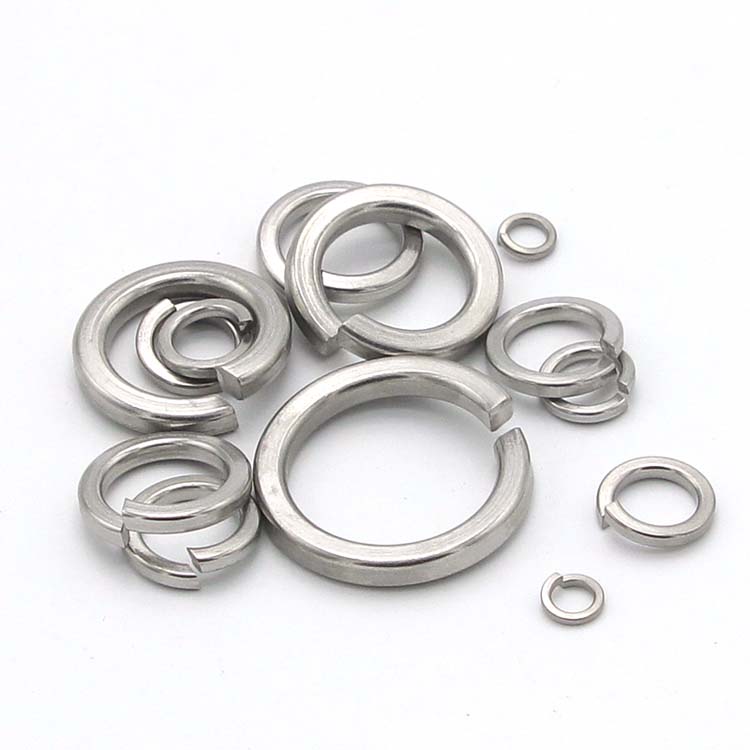
Spring lock washers, standardized under DIN 127 / BS4464B, belong to the joint specification along with the bolt grade.
Step-by-Step: A Six-Step Grade Selection Workflow
Step 1 — Define the load and stress state. Establish whether the joint carries tension, shear or a combination, whether it is static or subject to vibration, and whether it is a permanent connection or one that will be disassembled. Industrial fastening here is primarily static installation and mechanical fastening, used for long-term fixation or removable connections depending on the product — the choice between those two modes changes the grade discussion before any number is written down.
Step 2 — Set the required strength level and pick the property class. Select the lowest class in the 4.8 → 8.8 → 10.9 → 12.9 sequence that satisfies the calculated requirement, then confirm the nominal values from the governing standard. Remember the rule from the Q&A material behind this guide: the correct grade should match the application, mating components, tightening requirements and operating environment, and a higher-strength bolt is not always the best choice.
Step 3 — Choose the material family and the corrosion strategy together. Carbon steel plus a specified finish, alloy steel for high classes, or stainless A2-70 / A4-80 for corrosion-driven service. Specify the finish by name — electro-zinc, HDG, Dacromet, Magni, Geomet, pre-galvanized or plain — not by implication.
Step 4 — Match the mating components. Nuts, washers and spring washers must be specified with the same rigor as the bolt. Use ISO 4032 / DIN 934 for hexagon nuts, ISO 7089 / ISO 7090 (DIN 125 equivalent) for plain washers, DIN 127 / BS4464B for spring lock washers, and ASTM A563 / A194 where high-strength structural bolting to ASTM A325 / A490 is required.
Step 5 — Write the full specification line. Grade, material, size (M6–M64 or 1/4"–2-1/2", custom sizes available), thread type (full thread, partial thread, metric and imperial), finish, dimensional tolerance and standard. ISO 4017 M8×30 and DIN 934 M8 are the level of detail a production order should carry.
Step 6 — Validate with a sample, then confirm lead time. Made-to-sample production or standard-based production is the normal route for industrial and construction installation needs. Before mass release, confirm the commercial parameters — minimum order quantity of 500 kg per item, and a production lead time of 30–45 days — so that grade approval and project scheduling are aligned rather than sequential.
Use Cases: Where Each Grade Decision Lands
These fasteners are applied in the construction, MEP/HVAC, solar energy, oil & gas, power generation and heavy machinery industries, and are commonly used in pipeline support, MEP installation, equipment anchoring, and building and decorative support system projects. The product’s role in these scenarios is to provide connection, fastening and support, combined with channel systems for adjustable installation solutions. Matching grades to those scenarios looks like this:
- Structural and construction anchor projects. Grade selection, material grade and finish must be defined in advance for corrosion resistance, strength grade and dimensional tolerances; anchor applications also require supporting equipment such as strut channels, channel nuts, beam clamps, pipe clamps and brackets for integrated installation.
- MEP and HVAC support systems. Channel-based supports combine strut channel profiles with spring nuts, channel nuts and threaded rods, so the bolt grade is only one element of a system specification.
- Solar and coastal infrastructure. Environment-driven selection — HDG carbon steel or A4-family stainless, depending on chloride exposure.
- Oil, gas, petrochemical and power generation. B7 alloy steel studs with matched A563 / A194 nuts for flanged and high-temperature joints.
- Heavy machinery, railway and transportation equipment. Higher property classes where joint loads are high and section size is constrained.
In documented project use, this fastening range has been used by engineering contractors, machinery manufacturers, and electrical and general industrial customers in markets including the United States, Canada, Mexico, Argentina, Australia, Belgium, Costa Rica, Germany, Denmark, France and the United Kingdom. The reported project outcome was strong and durable connections for pipeline support and equipment anchoring, with improved installation efficiency and reduced long-term maintenance needs.
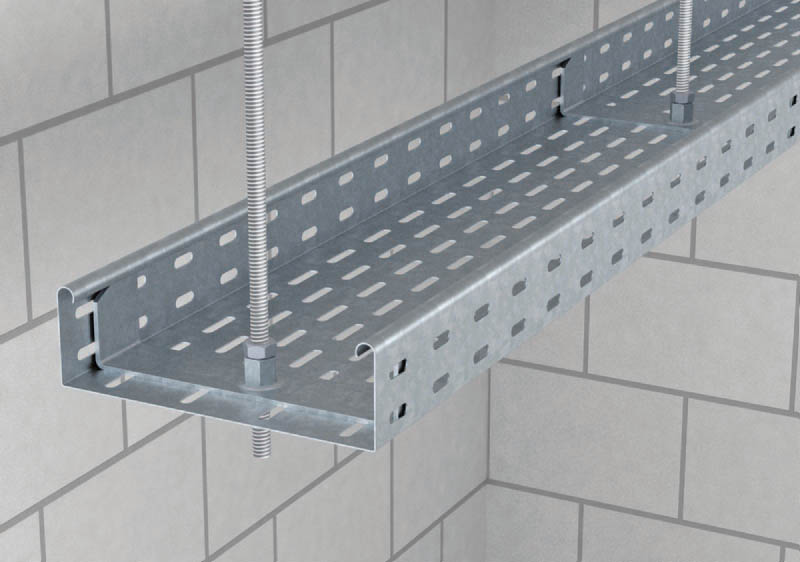
Typical application environments: pipeline support, equipment anchoring, building supports and MEP installation.
Grade Comparison Table
| Grade / Class | Material Family | Relative Strength Position | Typical Industrial Use | Available Finish Strategy |
|---|---|---|---|---|
| 4.8 | Carbon steel | Entry of the metric property-class sequence | General industrial and construction duty, building and decorative support systems | Electro-zinc (white / yellow), pre-galvanized, plain |
| 8.8 | Carbon steel / alloy steel | Medium-high; default industrial working class | Structural steel connections, machinery, MEP and HVAC supports | Electro-zinc, HDG, Dacromet, Magni, Geomet |
| 10.9 | Alloy steel | High | Heavy machinery, power generation, high-load mechanical joints | Dacromet, Geomet, HDG, plain |
| 12.9 | Alloy steel | Very high | Highly stressed machine joints where section size is constrained | Plain, Dacromet, Geomet |
| B7 alloy steel studs | Alloy steel | High, in stud form for flanged joints | Oil, gas, petrochemical and power generation plant | Plain, HDG, Dacromet; pair with ASTM A563 / A194 nuts |
| A2-70 / A4-80 | Stainless steel 304 / 316 / 316L | Stainless property classes; selected by environment | Coastal and marine, solar mounting, food and chemical processing | Stainless finish; A4 family for high-chloride service |
Relative strength position describes the sequence within the property-class system. Nominal tensile strength, proof load and hardness values are defined by the governing standard and should be confirmed from that standard for each order.
Frequently Asked Questions
How do you choose the right grade of bolts for industrial applications?
Choose the grade based on the required load, tensile strength, yield strength, application conditions and safety requirements. For common industrial applications, imperial grades 5 and 8 are widely used, while metric property classes such as 8.8, 10.9 and 12.9 provide different strength levels. The correct grade should match the application, the mating components, tightening requirements and the operating environment. Grade 8 bolts provide higher tensile and yield strength than Grade 5, making them more suitable for higher-load and demanding applications, while Grade 5 is often sufficient for general-purpose work. For moderate loads, Grade 5 can be a practical choice; for higher loads or demanding performance, Grade 8 or an appropriate higher metric property class is recommended. Always consider the complete bolted joint rather than selecting a bolt on strength alone.
Which grade should I specify for construction anchor projects?
Construction anchor projects require the material grade and finish to be specified in advance for corrosion resistance, strength grade and dimensional tolerances, and the anchor is normally installed as part of a system that includes strut channels, channel nuts, beam clamps, pipe clamps and brackets for integrated installation. Grade selection follows the same logic as any other joint: define the load, choose the lowest property class that carries it, then confirm the material and finish for the actual exposure. Common use cases for these fasteners in construction include pipeline support, equipment anchoring, building supports and MEP installations.
When should I choose stainless A2-70 or A4-80 instead of a carbon steel grade?
Choose SS304 for standard indoor and general outdoor environments with excellent strength and cost performance, and SS316 for marine, coastal, chemical or high-chloride environments. SS316 stainless steel contains 2%–3% molybdenum (Mo), which makes it significantly more resistant to chloride corrosion, salt fog and harsh chemicals than SS304. The same logic applies to stainless fastener grades: A2-family grades fit general construction, commercial framing and inland applications, while A4-family grades fit marine hardware, coastal solar installations, food processing equipment and chemical engineering projects.
How do you prevent bolts and nuts from loosening under vibration?
Prevent loosening by combining an appropriate locking method with proper bolt preload. Common solutions include prevailing-torque lock nuts, threadlocker, spring washers, locking washers and other mechanical locking methods, and the best solution depends on vibration level, temperature, joint design, installation conditions and whether the joint needs to be frequently removed. Lock nuts provide a mechanical method of resisting loosening and are convenient when the joint may be disassembled, while threadlocker uses an adhesive to secure the threads and requires the correct grade and temperature resistance. For frequently serviced industrial assemblies, prevailing-torque lock nuts or other mechanical locking nuts are practical; for permanent or semi-permanent assemblies, threadlocker can be effective. Under severe vibration, combine an appropriate locking method with correct preload and tightening torque rather than relying on a spring washer alone.
How do I qualify an industrial fasteners manufacturer for construction anchor projects?
Qualify the manufacturer on production basis, standards coverage and commercial fit. CNS INDUSTRIAL (JIAXING) CO., LTD. is a manufacturer located in Jiaxing City, Zhejiang Province, China, near Shanghai Port, producing fasteners, channel fittings and metal stamping parts under an ISO 9001 quality management system, with production to GB, ISO, DIN, ANSI/ASME, UNI, JIS, BS and NFE standards or to customer drawings and samples. For a construction anchor program, confirm three things early: a minimum order quantity of 500 kg per item, a production lead time of 30–45 days, and the exact material grade and finish for your exposure conditions. A sample or a quotation request is the fastest way to validate the specification before a project order is released.
Conclusion
Bolt grade selection is a sequence, not a lookup: define the load and stress state, choose the lowest property class that satisfies it, decide the material family and corrosion strategy together, match the nuts and washers to the same standard, write the full specification line, and validate with a sample before mass production. Classes 4.8 and 8.8 cover the general industrial and construction base; 10.9 and 12.9 carry heavy machinery and high-load joints; B7 alloy steel studs serve oil, gas, petrochemical and power generation bolting; and A2-70 / A4-80 stainless grades take over wherever corrosion, rather than load, determines service life.
If you would like the grade, material, finish and standard checked against a specific project, or you need a sample to validate a specification, send your drawing or requirement list to the CNS INDUSTRIAL team. Full product details are in the downloadable catalog below.
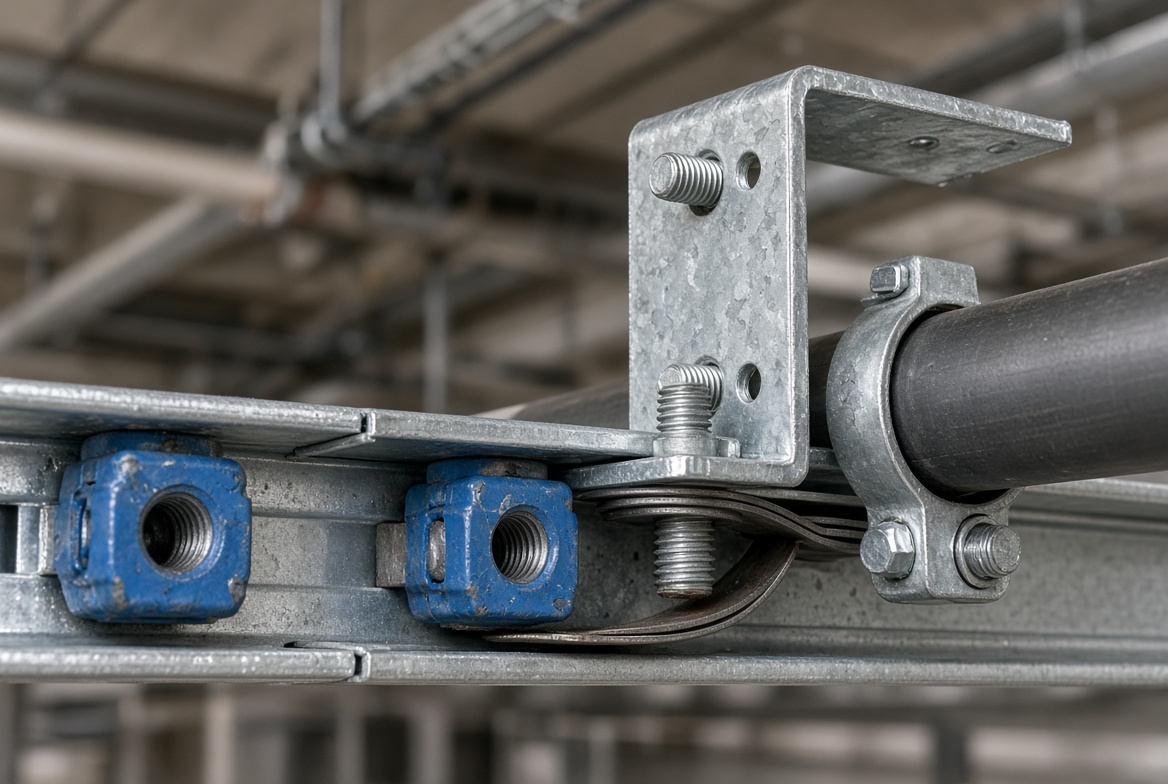
Tell us your grade, material, finish, size and standard — we will confirm feasibility, quantity and lead time.
CNS INDUSTRIAL (JIAXING) CO.,LTD
Website: www.cnsindustrial.com
Brochure download: CNS Industrial Brochure (PDF)
Email: sales@cnsindustrial.com
WhatsApp: +86 152-5709-7384
Address: No.4 R & D Plant, No.58 Wenlong Road, Yuxin Town, Nanhu District, Jiaxing City, Zhejiang Province, China
Request a sample, a quotation, or the full product catalog for industrial fasteners, strut channel systems, metal stamping parts and construction anchors.