Industrial Fasteners and Support Systems: Choosing the Complete Connection Package
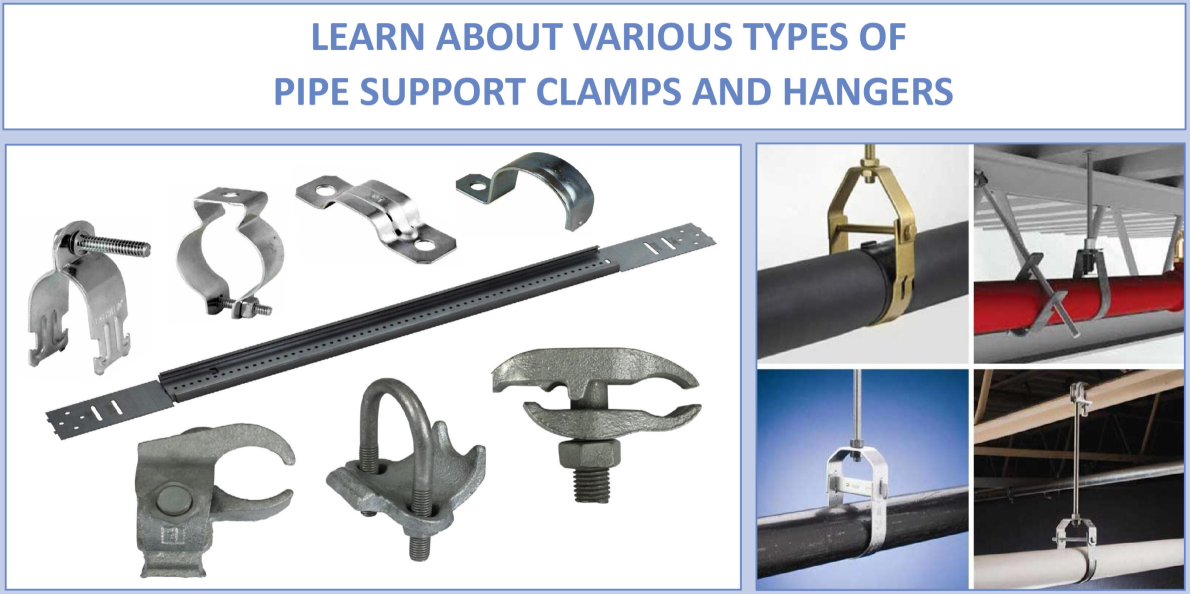
Industrial fasteners are the mechanical parts that connect equipment, structures, piping, cable supports, machinery and building services into dependable installations. They include bolts, nuts, screws, washers, threaded rods, anchors, rivets and a growing family of industrial hardware such as strut channel fittings and metal stamping parts.
According to Fortune Business Insights, the global industrial fasteners market was valued at USD 93.12 billion in 2025. Another market projection from Grand View Research expects the market to reach USD 153.71 billion by 2033 at a CAGR of 5.1%. The commercial importance of industrial fasteners is clear. What is often less clear is which combination of fasteners, channel supports, materials, finishes and strength grades should be used for a specific project.
Why fastener selection is a system decision, not a single-part decision
An industrial fastener rarely works alone. A bolted connection must match its nut, its washer, the hole size, the load direction and sometimes a channel profile or an anchor base. A screw relies on the material it is driven into. A threaded rod depends on the fitting that holds it. A spring nut only performs correctly when the channel profile and the nut are compatible.
Failure can begin before installation. Selecting a higher strength bolt than required does not automatically solve a joint problem. Choosing stainless steel 304 for a marine or high-chloride environment may cause corrosion where stainless steel 316 would be more suitable. Using only a spring washer on a severe-vibration joint may not be enough. Buyers and engineers need a practical way to think about fasteners as part of a complete fastening and support system.
Industry background: industrial fasteners in modern construction and manufacturing
The industrial fasteners market is shaped by construction, infrastructure, transportation and manufacturing demand. Asia Pacific accounted for 45.1% of the global industrial fasteners market in 2025, according to Grand View Research. Metal fasteners held the largest market share at 91.0%, and bolts were the largest product segment at 31.3%.
Industrial support systems also depend on a broad set of components. Global market data from Dataintelo valued the strut channel market at USD 4.3 billion in 2024 and projected growth to USD 7.3 billion by 2033 at a CAGR of 6.1%. These numbers explain why buyers increasingly look for a coordinated product range rather than buying each small component from a different source.
What are industrial fasteners? A system-level view
From a purchasing perspective, industrial fasteners can be grouped by function:
- Bolts and nuts for removable or high-strength structural connections.
- Industrial screws for self-tapping, self-drilling and material-specific fastening.
- Washers and spring washers for load distribution, alignment and vibration resistance.
- Threaded rods for adjustable hanging, bracing and site-cut lengths.
- Construction anchors for concrete, masonry and hollow wall applications.
- Rivets for permanent fastening.
- Strut channel systems and fittings for pipe, cable tray, HVAC and equipment supports.
- Metal stamping parts for brackets, clips, plates and custom mounting hardware.
A manufacturer such as CNS INDUSTRIAL (JIAXING) CO.,LTD supplies these categories together because they are usually installed as one support system. The main product range includes Strut Fittings, Strut Channel Systems, Stamping Parts, Bolts and Nuts, Threaded Rods, Anchors, Washers, Screws, Rivets and Industrial Hardware and Fasteners.
Bolts, nuts and threaded rods
Bolts and nuts are the most recognized industrial fasteners. They allow assemblies to be tightened, inspected and later disassembled. Product ranges such as DIN 933 hex head bolts, ISO 4017 bolts, DIN 934 hex nuts, high-strength structural bolts in ASTM A325 and A490, and B7 alloy steel studs are commonly specified for different load conditions.
Threaded rods provide another useful solution for vertical hangers, braces and site-adjustable assemblies. They can be cut to length and combined with beam clamps, strut channels, pipe clamps and channel nuts.
Industrial screws and industrial rivets
Screws are often selected by the material they fasten. Machine screws, self-drilling screws, self-tapping screws, drywall screws, chipboard screws and coach screws all have different thread forms, points and drive systems. Rivets are used where a permanent, low-cost or vibration-resistant connection is preferred.
Washers and spring washers
Washers distribute clamping force and protect the surface of the connected part. Plain washers are commonly produced to DIN 125 and the equivalent international standards ISO 7089 and ISO 7090. Spring lock washers with square ends are standardized under DIN 127. In vibration-sensitive industrial joints, spring washers should be compared with mechanical locking nuts and threadlocking adhesives rather than treated as a universal solution.
Construction anchors
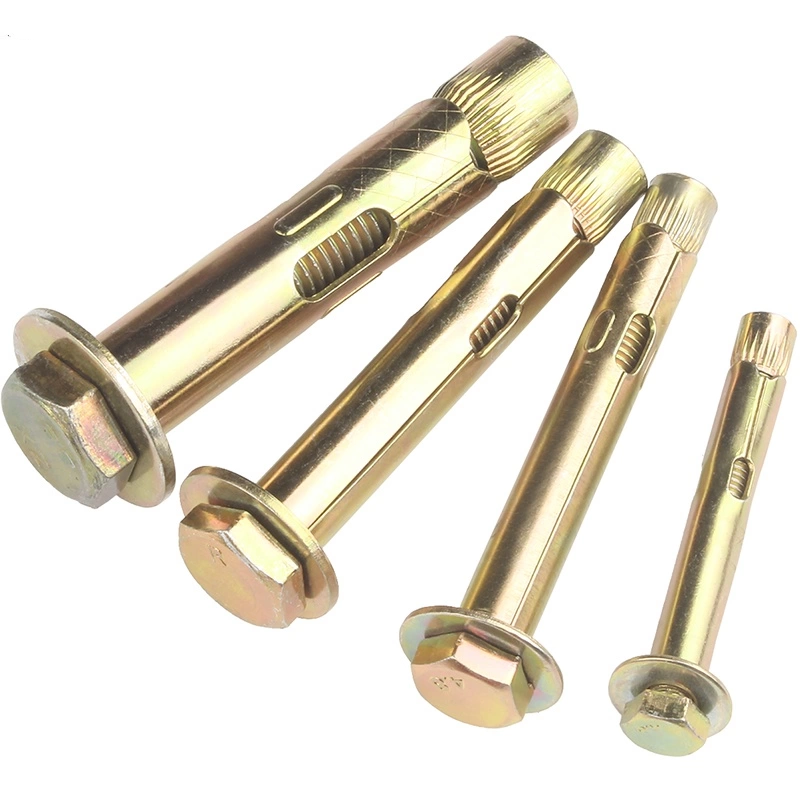
Construction anchors connect structural and non-structural elements to concrete, masonry or hollow materials. Wedge anchors, sleeve anchors, plastic anchors and other expansion-type anchors are typical choices when a threaded fastener must be secured into a base material.
Strut channel systems and channel fittings
Strut channels are also called metal framing channels. They are widely used in construction, electrical, HVAC, oil and gas, solar mounting and industrial support systems. Common profiles include 1-5/8 inch by 1-5/8 inch, 41 x 41 mm, and 41 x 21 mm, with standard lengths of 10 ft and 20 ft and thickness options such as 12 gauge, 14 gauge and 16 gauge. Channels can be slotted or unslotted, and may be supplied in pre-galvanized, hot-dip galvanized or powder-coated finishes.
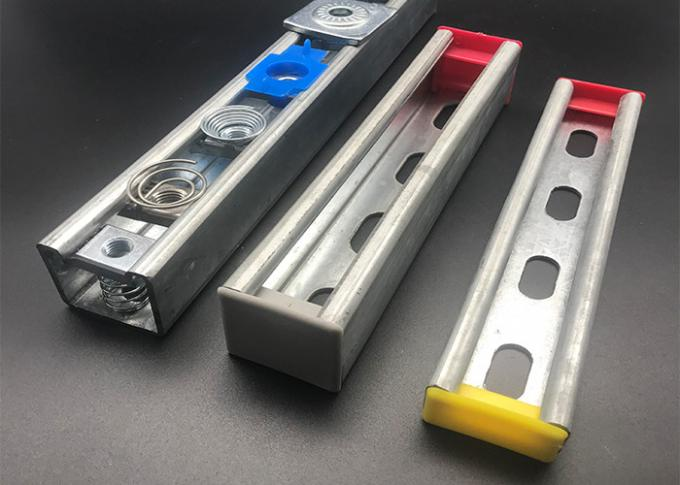
Channel systems rely on fittings as much as channels. Channel fittings include angle connectors, flat corners, flat tees, splices, flush mounts, offset angles, shelf angles and U supports. Spring nuts, channel nuts, pipe clamps, beam clamps, threaded rods and strut clamps allow installers to build adjustable support points that can be aligned on site.
Accessories for strut channel and metal framing systems include strut channel fittings, spring nuts, threaded rods and pipe clamps. The application scenario is dominated by industrial support systems where installers need speed, adjustability and structural stability.
Metal stamping parts
Metal stamping is the production method behind many brackets, clips, channels and mounting components. Custom stamped parts can be fabricated according to customer drawings or samples. This allows an OEM project to receive not just standard fastener categories but also application-specific hardware made with consistent material thickness and hole geometry.
Material, standards and finish options
Material choice is one of the first decisions in industrial fastener selection. The practical range includes carbon steel, alloy steel, stainless steel 304 and 316, aluminium, copper and brass. Stainless steel 316 contains molybdenum, which gives it greater resistance to chlorides and harsh chemicals. Stainless steel 304 is normally chosen for general indoor and outdoor environments where corrosion performance and cost need to be balanced.
International standards used in this product range include GB, ISO, DIN, ANSI/ASME, UNI, JIS, BS and NFE. Custom fabrication can be made according to drawings or samples.
| Parameter | Typical options |
|---|---|
| Common materials | Carbon steel, alloy steel, stainless steel 304 / 316 / 316L, aluminium, copper, brass |
| Surface finishes | Zinc plated, hot-dip galvanized, Dacromet, Magni, Geomet, pre-galvanized, plain |
| Strength classes | 4.8, 8.8, 10.9, 12.9, B7 alloy steel, high tensile, stainless steel A2-70 / A4-80 |
| Size ranges | M6 to M64, and 1/4 inch to 2-1/2 inch where applicable |
| Thread types | Full thread, partial thread, metric and imperial threads |
Step-by-step selection process for industrial fasteners
The following process is useful for both a single machine assembly and a complete MEP or structural support package.
- Identify the connection type. Does the joint carry tension, shear, vibration or thermal movement? Does it need to be removable for maintenance?
- Consider the surrounding support system. If pipes, cable trays or equipment must be suspended, decide whether a strut channel with threaded rod and pipe clamps is the correct structure.
- Choose the material family. Use carbon steel with appropriate plating for dry or protected environments. Use stainless steel or hot-dip galvanized finishes where corrosion and weather exposure are concerns.
- Select the correct strength grade for bolts and studs. Match the grade to the load and the mating components. A higher grade is not automatically better if the connected plates or nuts are not suitable for it.
- Verify the thread standard. Confirm whether the project needs metric or imperial threads, full thread or partial thread, and which standard the nut and washer must meet.
- Check fitting compatibility. For strut channel installations, confirm that spring nuts, plain channel nuts and bolts fit the exact channel profile and slot width.
- Confirm finishing and corrosion protection. Electro-zinc plating, hot-dip galvanizing, Dacromet, Magni and Geomet all provide different levels of protection and different colour or appearance.
Practical rule: specify the fastener together with its washer, nut, anchoring point and supporting component. A bolt specification is incomplete if it does not state the material grade, surface finish, thread size and standard.
Use cases for industrial fasteners and support systems
Construction and MEP support systems
Pipes, cable trays, ductwork and equipment supports are common applications. A support assembly may combine a beam clamp, threaded rod, strut channel, spring nut, pipe clamp and a hex bolt. The channel system gives installers field adjustability, while properly matched fasteners maintain the position of the assembly over time.
Solar mounting and outdoor industrial installations
Outdoor and coastal installations are exposed to rain, salt air and temperature changes. Hot-dip galvanized finishes provide a heavy zinc layer for outdoor framing, and stainless steel 316 is often recommended where chloride exposure is high. Structural bolts with appropriate strength grades are used where solar racking and support structures must withstand wind and mechanical loads.
Oil and gas, power and heavy equipment
High-strength bolts, alloy steel studs, anchors and specialty fasteners are required in demanding mechanical environments. In these applications, the correct property class, lubrication requirements and installation torque are as important as the fastener itself.
OEM and custom equipment
OEM projects often need custom stampings, brackets and non-standard hardware. A manufacturer that can fabricate according to drawings or samples helps reduce the number of sub-suppliers and simplifies quality control.
Material and locking selection guide
The table below compares typical fastener decisions. It summarises the main product logic for buyers who need a clear reference before contacting a supplier.
| Application condition | Recommended approach | Reason |
|---|---|---|
| Outdoor, coastal or harsh environment | Hot-dip galvanized fasteners, or stainless steel 316 for chloride exposure | HDG provides a heavier zinc coating than standard electro-zinc plating; SS316 provides added resistance to chlorides through molybdenum content |
| Indoor or dry electrical and HVAC installations | Electro-zinc plated fasteners | Thinner zinc coating is normally sufficient indoors, with better thread fit and cost efficiency |
| General construction and commercial framing | Stainless steel 304 or zinc-plated carbon steel, depending on exposure | SS304 balances durability, corrosion resistance and cost for many sheltered and inland applications |
| High-load or high-tensile bolted joints | Metric property class 8.8, 10.9 or 12.9, or alloy steel B7 studs where required | Strength class should match the load, mating material and tightening requirements |
| Vibration-prone assemblies | Prevailing-torque lock nuts, mechanical locking methods or threadlocker, depending on service access | Correct preload and torque are also required; spring washers should not be relied on alone in severe vibration |
| Strut channel installations where speed matters | Spring nuts matched to the channel profile | The spring holds the nut in position for overhead and vertical installation before final tightening |
Frequently asked questions
What is the difference between SS304 and SS316 stainless steel fasteners, and which one should I choose?
SS304 is recommended for standard indoor and general outdoor environments where strength and cost performance are important. SS316 is recommended for marine, coastal, chemical or high-chloride environments. SS316 contains 2% to 3% molybdenum, which provides better pitting resistance. In short, use SS304 for common construction and commercial applications, and SS316 for marine hardware, coastal solar installations, food processing equipment and chemical engineering projects.
How do I choose between hot-dip galvanized and electro-zinc plated fasteners for outdoor projects?
Hot-dip galvanized fasteners are the more suitable choice for outdoor, coastal and harsh corrosive environments because the zinc coating is thicker. Electro-zinc plating is more appropriate for indoor and dry environments where cost efficiency and precise thread fit matter. The practical difference is coating thickness: HDG produces a heavy protective coating of about 45 to 85 microns, while electro-zinc plating typically produces a thinner coating of about 5 to 12 microns.
How do I choose the right grade of bolts for industrial applications?
Choose the bolt grade based on the required load, tensile strength, yield strength, application conditions and safety requirements. Common choices include Grade 5 and Grade 8 in imperial systems, while metric property classes such as 8.8, 10.9 and 12.9 provide different strength levels. The correct grade must match the mating components, tightening requirements and operating environment. A higher-strength bolt is not always the best choice.
How do I prevent bolts and nuts from loosening under vibration?
Use the right locking method and maintain proper bolt preload. Common solutions include prevailing-torque lock nuts, threadlocker, spring washers and mechanical locking devices. The best solution depends on vibration level, temperature, joint design and whether the joint must be removed for service. For severe vibration, combine a suitable locking method with correct tightening torque instead of relying on a spring washer alone.
How do I choose the right spring nut for a strut channel?
Select the spring nut based on the strut channel size, thread size, load requirement, material and installation environment. The nut must be compatible with the channel profile and slot dimensions, and the thread size must match the threaded rod or bolt. For outdoor or corrosive environments, choose a material and finish such as hot-dip galvanized or stainless steel. For heavier loads, select a spring nut with suitable construction and load capacity.
Why does my spring nut keep slipping inside the strut channel?
This usually means the spring nut is not matched to the channel profile, the spring is too weak or damaged, the channel or nut dimensions are incorrect, or the nut was not positioned properly before tightening. Check that the spring nut is designed for the specific profile, that the spring is seated correctly, and that the thread size and bolt length are compatible. If the spring has lost its tension, replace the nut. For heavy-duty applications, choose a spring nut with a stronger spring and higher load rating.
Why a coordinated fastener supplier matters
Standardizing on one supplier for bolts, nuts, washers, threaded rods, anchors, screws, strut channels and channel fittings can simplify design, procurement and quality control. A coordinated range helps avoid the common problem of purchasing a channel from one source, a spring nut from another and a threaded rod from a third source, only to discover on site that the components are not fully compatible.
CNS INDUSTRIAL (JIAXING) CO.,LTD is a fastener and hardware manufacturer and exporter based in Jiaxing City, Zhejiang Province, China. The company is located near Shanghai Port and specializes in the manufacturing and export of fasteners, channel fittings and metal stamping parts. Its export business accounts for 100% of total sales, with major markets including the EU, the United States, Canada and South America.
The manufacturing operation covers 30,000 square meters and has an annual production capacity of 8,000 tons. The R&D team includes 20 engineers, supported by approximately 50 to 100 staff. Products are manufactured according to GB, ISO, DIN, ANSI/ASME, UNI, JIS, BS and NFE standards, or customized to customer drawings and samples.
Materials include carbon steel, stainless steel 304 and 316, aluminium and copper. Surface finish options include zinc plated, hot-dip galvanized, Dacromet, Magni, yellow zinc and white zinc. This product and process range is designed for buyers who do not want to separate fastener purchasing from the support structures that give those fasteners their real-world function.

Need help selecting the right industrial fasteners and support components?
CNS INDUSTRIAL (JIAXING) CO.,LTD can provide specification support, custom fabrication and export supply for construction, MEP, solar, power and industrial equipment projects.
Email: sales@cnsindustrial.com
Website: www.cnsindustrial.com