Industrial Fasteners: A Complete Guide to Types, Materials, and Selection
Industrial fasteners are mechanical components used to join, secure, and support structures, equipment, and systems. They form the backbone of construction, manufacturing, energy, and infrastructure projects. Choosing the right type—from bolts, nuts, and screws to washers, anchors, and threaded rods—requires understanding load levels, environmental conditions, material compatibility, and applicable standards such as ISO, DIN, ANSI/ASME, and GB.
What Are Industrial Fasteners?
Industrial fasteners are hardware components that create non-permanent or permanent connections between two or more parts. They are distinct from structural welds or adhesives because they allow assembly, disassembly, adjustment, and maintenance. The most common categories are industrial bolts & nuts, industrial screws, industrial washers, industrial rivets, threaded rods, and construction anchors. Fasteners also include specialized products such as high-strength structural bolts, B7 alloy steel studs, and strut channel fittings used in mechanical, electrical, and plumbing (MEP) support systems.
The global industrial fasteners market was valued at USD 93.12 billion in 2025, according to Fortune Business Insights. Industry projections from Grand View Research indicate the market could reach USD 153.71 billion by 2033, growing at a CAGR of 5.1%.
Why Fastener Selection Matters
Fastener selection determines not only the mechanical integrity of an assembly but also the long-term safety, maintenance cost, and service life of the installation. A mismatched grade, coating, or thread type can lead to loosening under vibration, premature corrosion, fatigue failure, or unsafe structural connections. Procurement teams, engineers, and contractors need a structured way to evaluate fasteners against project-specific demands.
Buyers should evaluate five primary dimensions: fastener category, material grade, surface finish, applicable standard, and accessory compatibility. Each of these dimensions affects performance, cost, and installation behavior.
Understanding the Main Industrial Fastener Categories
Industrial Bolts & Nuts
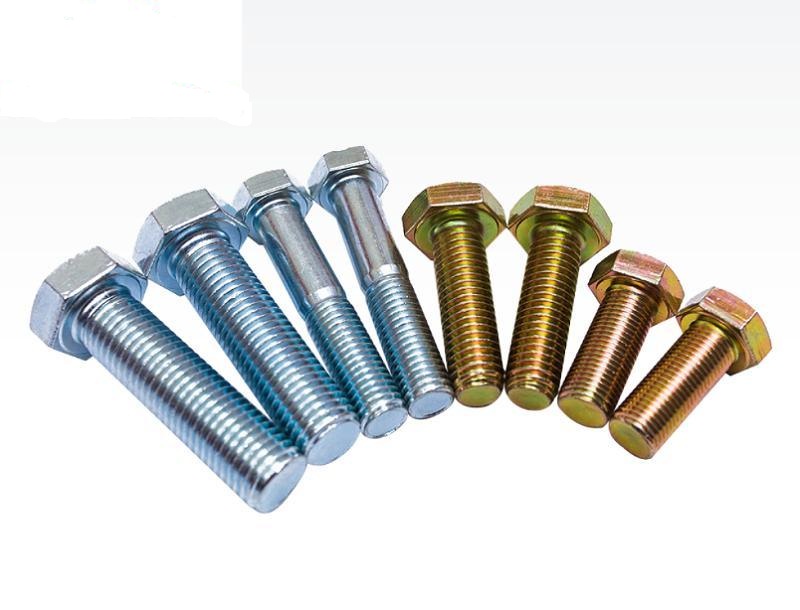
Bolts and nuts are the most widely used fasteners in industrial assemblies. Bolts are typically used with nuts to create clamped joints, and they come in styles such as hex bolts, hex flange bolts, carriage bolts, eye bolts, J bolts, and U bolts. Nuts include hex nuts, hex flange nuts, wing nuts, nylon insert lock nuts, and spring nuts. Metric property classes and imperial grades define the mechanical strength of these products. Common metric classes include 4.8, 8.8, 10.9, and 12.9, while imperial grades include Grade 5, Grade 8, and structural grades such as ASTM A325 and A490.
According to Grand View Research, bolts represented the largest product segment in the industrial fasteners market in 2025, holding a 31.3% share of global revenue.
Industrial Screws
Screws are fasteners with helical threads that form their own mating thread in the material. They are widely used in metal building, wood construction, drywall, electrical enclosures, and general manufacturing. Common types include self-drilling screws, self-tapping screws, chipboard screws, machine screws, coach screws, drywall screws, and socket head cap screws. The choice between a self-tapping and self-drilling screw depends on the base material and whether pre-drilling is acceptable.
Industrial Washers
Washers distribute load, reduce surface damage, and help prevent loosening. Flat washers (DIN 125 / ISO 7089 / ISO 7090) spread the clamping load over a wider area. Spring washers and lock washers (DIN 127 / BS4464B) are used to resist loosening from vibration, though they are not always the most reliable solution for severe vibration. Square washers are commonly used with strut channels and timber connections. Washer selection should always match the bolt diameter, material, and surface finish.
Threaded Rods
Threaded rods are continuous-length fasteners threaded along the full shaft. They are used for hanging pipe, cable tray, HVAC equipment, and structural supports. They are often paired with channel nuts, beam clamps, and pipe clamps to create adjustable support systems.
Construction Anchors
Construction anchors are designed to fasten components to concrete, masonry, or hollow materials. Common types include wedge anchors, sleeve anchors, drywall anchors, and plastic expansion anchors. They are critical for equipment anchoring, structural steel connections, and MEP installations where pulling or shear loads must be transferred into the base material.
Industrial Rivets
Rivets are permanent mechanical fasteners used where welding is impractical or disassembly is not required. They are common in metal cladding, structural framing, transportation equipment, and light structural connections.
Strut Channel Fittings and Systems
Strut channels—also called metal framing channels—are cold-formed steel sections used to build support structures for pipes, cable trays, conduits, and equipment. A strut channel system typically includes the channel profile, channel fittings, spring nuts, threaded rods, and pipe clamps. The global strut channel market was valued at USD 4.3 billion in 2024 and is expected to reach USD 7.3 billion by 2033, according to Dataintelo.
Key Material Options for Industrial Fasteners
Material choice determines strength, corrosion resistance, magnetic properties, and cost. The main material groups are:
- Carbon Steel: Offers high strength at moderate cost. It can be heat-treated to achieve property classes such as 8.8, 10.9, and 12.9. Carbon steel requires corrosion protection for outdoor or humid environments.
- Stainless Steel (304 / 316 / 316L): Provides excellent corrosion resistance. Grade 304 is suitable for general indoor and standard outdoor use. Grade 316 contains molybdenum and offers superior pitting resistance in marine, coastal, chemical, and high-chloride environments.
- Alloy Steel: Provides higher tensile and yield strength for demanding structural applications, such as B7 alloy steel studs and high-strength structural bolts.
- Aluminum and Copper: Used for lightweight, non-magnetic, or electrically conductive applications. Copper is also used for corrosion resistance and aesthetic purposes.
In the broader industrial fasteners market, metal fasteners held the largest share at 91.0% in 2025, according to Grand View Research.
How to Choose the Right Bolt Grade
Bolt grade selection should be based on the required load, tensile strength, yield strength, application conditions, and safety requirements. Common imperial grades are Grade 5 and Grade 8. Metric property classes such as 8.8, 10.9, and 12.9 provide different strength levels. A higher-strength bolt is not always the best choice, because the complete bolted joint—including mating components, tightening requirements, and operating environment—should be evaluated together.
For general industrial applications with moderate loads, Grade 5 can be a practical choice. For higher loads, greater mechanical stress, or demanding performance, Grade 8 or an appropriate higher-strength metric property class is recommended.
Surface Finish and Corrosion Protection
Surface finish selection is a major factor in the service life of industrial fasteners, particularly in outdoor, coastal, and chemical environments.
- Hot-Dip Galvanized (HDG): Provides a thick zinc coating (typically 45–85 μm) that offers long-term outdoor anti-rust capability. It is recommended for outdoor solar racking, coastal infrastructure, and heavy industrial plant installations.
- Electro-Zinc Plated (EG): Provides a thinner zinc coating (typically 5–12 μm) and is suited mainly for indoor, dry environments where cost efficiency and precise thread fit are required.
- Dacromet and Magni: Coating systems used for high corrosion resistance without hydrogen embrittlement risk. They are common in automotive and industrial applications.
- Yellow Zinc and White Zinc: Standard electroplated finishes used in indoor and light-duty industrial applications.
Available surface finishes at CNS INDUSTRIAL include Zinc Plated, Hot-Dip Galvanized (HDG), Dacromet, Magni, Yellow Zinc, and White Zinc.
SS304 vs SS316 Stainless Steel Fasteners
SS304 is suitable for standard indoor and general outdoor environments. It offers good strength and cost performance. SS316 contains 2–3% molybdenum, which significantly improves resistance to chloride corrosion, salt fog, and harsh chemicals. Choose SS304 for general construction, commercial framing, and inland applications. Choose SS316 for marine hardware, coastal solar installations, food processing equipment, and chemical engineering projects.
How to Prevent Bolts and Nuts from Loosening Under Vibration
To prevent loosening under vibration, use an appropriate locking method and maintain proper bolt preload. Common solutions include prevailing-torque lock nuts, threadlocker, spring washers, locking washers, and other mechanical locking methods. The best solution depends on vibration level, temperature, joint design, installation conditions, and whether the joint must be removed frequently.
Lock nuts provide a mechanical method of resisting loosening and are convenient for joints that may be disassembled. Threadlocker uses adhesive to secure the threads and can provide reliable vibration resistance, but the correct grade and temperature resistance must be considered. For severe vibration, combine an appropriate locking method with correct bolt preload and tightening torque rather than relying on a spring washer alone.
HDG vs Electro-Zinc Plated for Outdoor Projects
For outdoor, coastal, and harsh corrosive environments, Hot-Dip Galvanized (HDG) is the preferred choice because its heavy zinc coating provides long-term protection. For indoor, dry environments, Electro-Zinc Plated (EG) is a more cost-efficient option that preserves precise thread fit. HDG is recommended for outdoor solar racking, coastal infrastructure, and heavy industrial plant installations. EG is recommended for indoor HVAC mounting, electrical conduit hanging, and interior wall framing.
Strut Channel Accessories: How the System Fits Together
A complete strut channel system relies on more than the channel itself. Accessories include channel fittings, spring nuts, threaded rods, and pipe clamps. Channel fittings include angle connectors, flat corners, flat tees, splices, end angles, offset angles, and U supports, which allow the system to route around obstacles and meet structural requirements. Spring nuts hold the threaded rod or bolt in position during installation, making overhead and vertical work faster. Pipe clamps and beam clamps connect pipes, conduits, and equipment to the support frame.
How to Choose the Right Spring Nut for a Strut Channel
Choose a spring nut based on channel size, thread size, load requirement, material, and installation environment. First, confirm the spring nut is compatible with the channel profile and slot dimensions. Then select the correct thread size, such as 1/4"-20, 3/8"-16, or 1/2"-13, based on the threaded rod or bolt being used. For heavier loads, choose a spring nut with an appropriate load rating and stronger construction. Material and finish should match the environment—zinc-plated steel for general indoor applications, and hot-dip galvanized or stainless steel for outdoor or corrosive environments.
A spring nut uses a spring to hold the nut in position inside the strut channel, which makes installation faster and easier, especially overhead or on vertical runs. A plain channel nut lacks this mechanism and may require more positioning care. For most installations where speed and positioning are important, a spring nut is the practical choice.
Why Does a Spring Nut Keep Slipping Inside the Strut Channel?
Spring nut slippage usually occurs because the nut is not matched to the channel profile, the spring is weak or damaged, the channel or nut dimensions are incorrect, or the nut was not positioned properly before tightening. First verify that the spring nut fits the specific strut channel size and profile. Ensure the spring seats correctly against the inside of the channel and the nut rotates into the locking position. Also check the thread size and bolt length. For heavy-duty applications, choose a spring nut with a stronger spring and appropriate load rating. Replace any spring that is deformed, damaged, or has lost tension.
Standards, Grades, and Compliance
Industrial fasteners are manufactured to international standards so that dimensions, mechanical properties, and test methods are consistent across suppliers. Common standards include GB, ISO, DIN, ANSI/ASME, UNI, JIS, BS, and NFE. Each standard family defines product geometry, material grades, and performance requirements. For purchasing teams, specifying the correct standard is essential for interchangeability and quality control.
Examples of important standards include:
- Hex bolts: DIN 933, ISO 4017, DIN 601, ISO 4016
- Hex nuts: DIN 934, ISO 4032
- Flat washers: DIN 125, ISO 7089, ISO 7090
- Spring lock washers: DIN 127, BS4464B
- Structural bolts: ASTM A325, ASTM A490
- Alloy steel studs: B7
CNS INDUSTRIAL (JIAXING) CO., LTD. manufactures products according to GB, ISO, DIN, ANSI/ASME, UNI, JIS, BS, and NFE standards, and also accepts custom fabrication according to customer drawings or samples.
Choosing an Industrial Fasteners Manufacturer
Evaluating a fastener supplier requires more than comparing unit prices. Buyers should consider production capacity, engineering support, quality systems, export experience, logistics location, and the breadth of the product catalog.
| Selection Criterion | What To Check | Why It Matters |
|---|---|---|
| Standards Coverage | DIN, ISO, ANSI/ASME, GB, JIS, etc. | Ensures dimensional and mechanical compatibility |
| Material Availability | Carbon steel, alloy steel, SS304/316, aluminum, copper | Determines corrosion resistance and strength |
| Finish Capability | HDG, electro-zinc, Dacromet, Magni | Affects service life in different environments |
| Production Capacity | Annual output and factory area | Indicates ability to meet volume and lead time |
| Engineering Support | R&D team and customization policy | Needed for special sizes, materials, and drawings |
| Logistics Position | Proximity to port | Reduces shipping cost and improves delivery reliability |
Supplier Profile: CNS INDUSTRIAL (JIAXING) CO., LTD.
CNS INDUSTRIAL (JIAXING) CO., LTD. is a manufacturer and exporter of fasteners, channel fittings, and metal stamping parts. The company is located in Jiaxing City, Zhejiang Province, China, near Shanghai Port, which supports efficient global shipping. Established in 2025, the company operates a 30,000 square meter facility, employs approximately 50–100 staff, and has an R&D team of 20 engineers. Annual production capacity reaches 8,000 tons.
The company’s main products include strut fittings, strut channel systems, stamping parts, bolts & nuts, threaded rods, anchors, washers, screws, rivets, and industrial hardware & fasteners. It serves industries including construction, MEP/HVAC, solar energy, oil and gas, power generation, and heavy machinery. Export business accounts for 100% of total sales, with major markets in the EU, US, South American, and Canadian markets. CNS brand products are sold in global markets including the United States, Canada, Mexico, Germany, Japan, Russia, France, and Italy.
Material options include carbon steel, stainless steel (304/316), aluminum, and copper. Surface finishes include zinc plated, hot-dip galvanized (HDG), Dacromet, Magni, yellow zinc, and white zinc. The company also supports custom fabrication according to customer drawings or samples.
Step-by-Step Fastener Selection Process
Follow this workflow when specifying industrial fasteners for a new project:
- Define the joint function. Determine whether the connection is structural, non-structural, permanent, or removable.
- Calculate the load. Consider tensile, shear, fatigue, and dynamic loads.
- Assess the environment. Identify exposure to moisture, chlorides, chemicals, UV, and temperature extremes.
- Select the fastener category. Choose between bolts and nuts, screws, washers, anchors, threaded rods, or rivets.
- Choose the material grade. Match strength and corrosion resistance to the application.
- Specify the surface finish. Select HDG, electro-zinc, Dacromet, Magni, or plain based on environment.
- Confirm the standard. Reference ISO, DIN, ANSI/ASME, GB, JIS, or customer-specific specifications.
- Define quality control criteria. Specify dimensional tolerances, hardness, tensile strength, and coating thickness.
- Verify accessory compatibility. If using a strut channel system, confirm spring nuts, fittings, and clamps are matched.
- Request a sample or quotation. Validate fit, finish, and performance before mass procurement.
Use Cases Across Industries
Construction and Building Infrastructure
Fasteners and anchors are used for structural steel connections, equipment anchoring, concrete embedding, and facade support systems. HDG or stainless steel options are common in exterior and exposed environments.
MEP and HVAC Installations
Threaded rods, strut channels, spring nuts, and pipe clamps are used to hang ductwork, pipes, and electrical conduits. Adjustable support systems allow fast alignment and future reconfiguration during installation.
Solar and Renewable Energy
Solar mounting systems require high corrosion resistance and reliable structural integrity over decades. Stainless steel and HDG fasteners are widely used in racking, module clamps, and grounding connections.
Oil, Gas, and Petrochemical
High-strength bolts, B7 studs, and specialty fasteners are used in flanges, piping supports, and heavy equipment. Material traceability, coating quality, and compliance with standards are critical.
Power Generation and Heavy Machinery
Large rotating equipment and structural frames rely on high-tensile bolts and precision fasteners. Correct preload, locking, and inspection procedures are required for long-term reliability.
Fastener Comparison: Lock Nuts vs Threadlocker
| Method | Mechanism | Best For | Considerations |
|---|---|---|---|
| Lock Nuts | Mechanical locking through deformed thread or nylon insert | Joints that must be disassembled or serviced | Adds cost and may require more installation torque |
| Threadlocker | Adhesive fills thread clearance and resists rotation | Permanent or semi-permanent assemblies | Correct grade and temperature resistance must match the application |
| Spring / Lock Washers | Spring action maintains tension | Light to moderate vibration, simple assemblies | Not always sufficient for severe vibration |
FAQ
How do you prevent bolts and nuts from loosening under vibration?
Use an appropriate locking method and maintain proper bolt preload. Common options include prevailing-torque lock nuts, threadlocker, spring washers, locking washers, and mechanical locking methods. For frequently serviced assemblies, lock nuts are practical. For permanent assemblies, threadlocker is effective. For severe vibration, combine a locking method with correct preload and tightening torque.
How do you choose the right grade of bolts for industrial applications?
Choose the bolt grade based on the required load, tensile strength, yield strength, application conditions, and safety requirements. Grade 5 and Grade 8 are widely used for imperial applications, while metric classes such as 8.8, 10.9, and 12.9 provide different strength levels. A higher-strength bolt is not always the best choice; consider the complete bolted joint, mating components, tightening requirements, and operating environment.
What is the difference between SS304 and SS316 stainless steel fasteners?
SS316 contains added molybdenum (typically 2–3%), which provides superior resistance to chloride corrosion, salt fog, and harsh chemicals. SS304 is suitable for general indoor and standard outdoor environments. Choose SS304 for general construction, commercial framing, and inland applications. Choose SS316 for marine, coastal, chemical, and high-chloride environments.
How do you choose between hot-dip galvanized and electro-zinc plated fasteners?
For outdoor, coastal, and harsh corrosive environments, choose hot-dip galvanized (HDG), which provides a heavy protective zinc coating (typically 45–85 μm) and long-term anti-rust capability. For indoor, dry environments where cost efficiency and precise thread fit are required, choose electro-zinc plated (EG), which has a thinner coating (typically 5–12 μm).
How do you choose the right spring nut for a strut channel?
Select the spring nut based on strut channel size, thread size, load requirement, material, and installation environment. Match the nut to the channel profile and slot dimensions, then choose the thread size such as 1/4"-20, 3/8"-16, or 1/2"-13. For heavier loads, use a heavier-duty spring nut with a stronger spring. Choose material and finish according to the environment, such as zinc-plated for indoor use and HDG or stainless steel for outdoor or corrosive environments.
Why does my spring nut keep slipping inside the strut channel?
A spring nut may slip because it is not matched to the channel profile, the spring is weak, damaged, or has lost tension, the dimensions are incorrect, or the nut has not been positioned correctly before tightening. Verify compatibility with the channel size, ensure the spring seats correctly, check thread size and bolt length, and replace any damaged spring. For heavy-duty applications, choose a spring nut with a stronger spring and appropriate load rating. If you’re still unsure, contact the supplier with your channel profile and load requirements before ordering.
Need Help Selecting the Right Industrial Fasteners?
If you are selecting fasteners for a structural, MEP, solar, or industrial project, CNS INDUSTRIAL can provide samples, quotations, and technical support. The company manufactures bolts, nuts, washers, screws, anchors, threaded rods, and strut channel systems to international standards, with custom fabrication available.
📩 sales@cnsindustrial.com | 📞 +86 152 57097 384 | WhatsApp: +86 152-5709-7384