Industrial Fasteners: Types, Materials, and How to Select Them
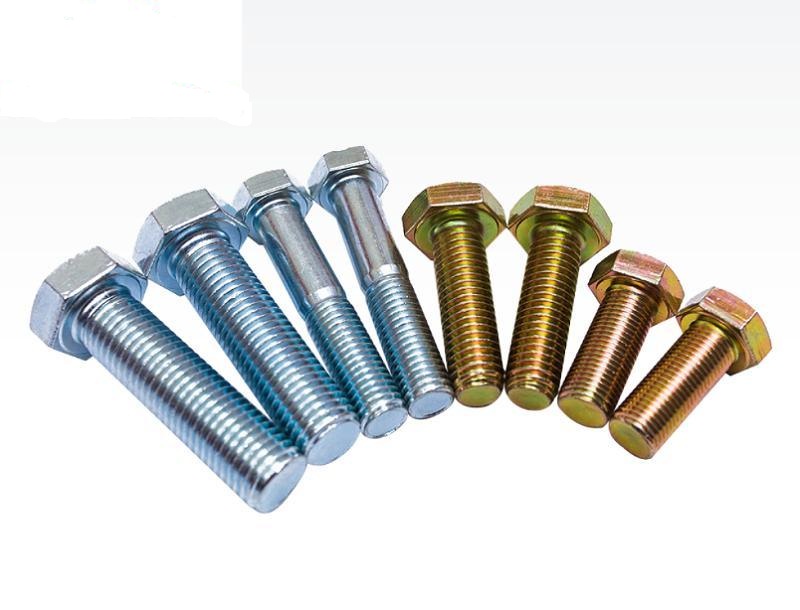
Hex bolts are one of the most common industrial fasteners.
Industrial fasteners are mechanical components used to connect, secure, and support parts in construction, machinery, MEP systems, renewable energy structures, and heavy equipment. Common categories include bolts, nuts, washers, screws, rivets, threaded rods, construction anchors, and strut channel fittings. This guide explains what industrial fasteners are, why material and finish matter, how to choose the right type, and how suppliers such as CNS INDUSTRIAL (JIAXING) CO.,LTD manufacture and export these products.
CNS INDUSTRIAL (JIAXING) CO.,LTD is a manufacturer and exporter based in Jiaxing City, Zhejiang Province, China, specializing in fasteners, channel fittings, and metal stamping parts. The company is located near Shanghai Port, which supports efficient global shipping.
Why Fastener Selection Is Not a Minor Decision
Fastener selection can be underestimated until a connection fails. A bolted joint must carry the expected load, resist vibration, and tolerate the surrounding environment. If the material, strength class, or surface finish is wrong, the result may be loosening, corrosion, thread damage, or rework.
Buyers in construction and industrial projects also face a wide range of standards. Products may be produced to GB, ISO, DIN, ANSI/ASME, UNI, JIS, BS, or NFE standards, and each project may require metric or imperial dimensions. Without a clear selection method, comparing fasteners becomes difficult.
Industrial Fasteners Market Context
The global industrial fasteners market was valued at USD 93.12 billion in 2025, according to Fortune Business Insights. Grand View Research expects the market to reach USD 153.71 billion by 2033, growing at a compound annual growth rate of 5.1%. The Asia Pacific region accounted for 45.1% of global revenue in 2025, and metal fasteners represented 91.0% of the market. In China, the industrial fasteners market was valued at USD 12.23 billion in 2024. China also exported USD 1.63 billion in other metal fasteners in 2024, according to OEC.
Related support hardware is growing as well. The global strut channel market was valued at USD 4.3 billion in 2024 and is projected to reach USD 7.3 billion by 2033, according to Dataintelo. The global metal stamping market was valued at USD 255.35 billion in 2024. The automotive industry accounts for over 30% of demand for high-strength industrial fasteners, according to Fortune Business Insights.
Main Categories of Industrial Fasteners
Bolts and Nuts
Industrial bolts and nuts are classified under industrial hardware and fasteners, specifically in the industrial bolts and nuts category. This product group includes hex bolts, hex nuts, flange nuts, wing nuts, nylon insert nuts, and specialty fasteners. Bolts also represent the largest product segment in the industrial fasteners market, holding a 31.3% share in 2025, according to Grand View Research.
Typical fastener sizes range from M6 to M64 and from 1/4-inch to 2-1/2-inch, with custom sizes available. Product ranges include high-strength structural bolts to ASTM A325 and A490, B7 alloy steel studs, and metric property classes such as 8.8, 10.9, and 12.9. Stainless steel fasteners are available in A2-70 and A4-80 property classes.
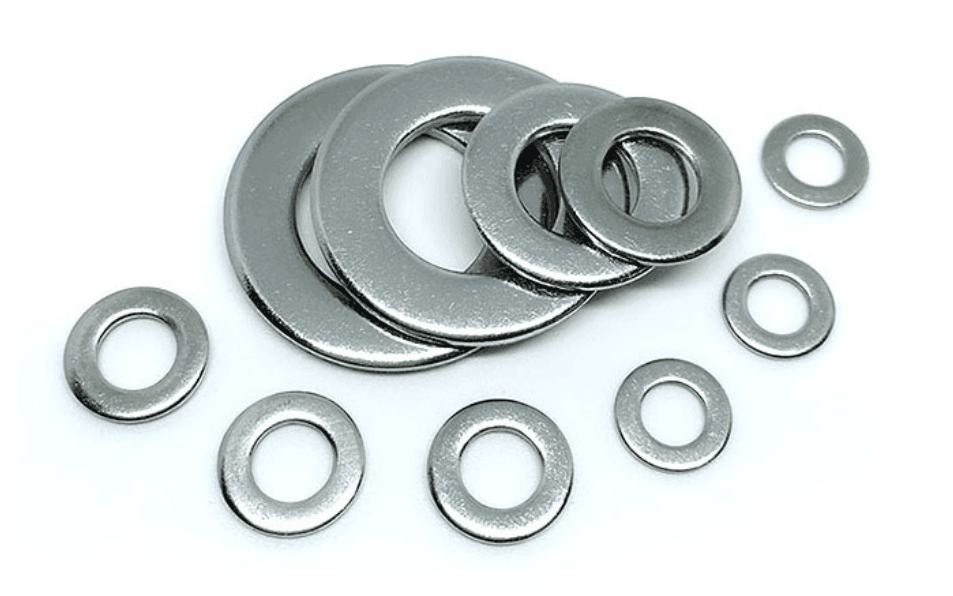
Washers help distribute load and protect the surface of fastened parts.
Washers
Industrial washers include flat washers, spring washers, square washers, and lock washers. Plain washers are commonly referenced under ISO 7089 and ISO 7090, which are equivalent to DIN 125. Spring lock washers with square ends are standardized under DIN 127. Hexagon nuts are governed by standards such as ISO 4032 and DIN 934.
Screws and Rivets
Industrial screws include self-drilling screws, self-tapping screws, drywall screws, machine screws, chipboard screws, coach screws, and truss-head wood screws. Industrial rivets provide permanent fastening in applications where welding or threaded connections are not suitable. Metal stamping parts can also be custom fabricated according to drawings or samples.
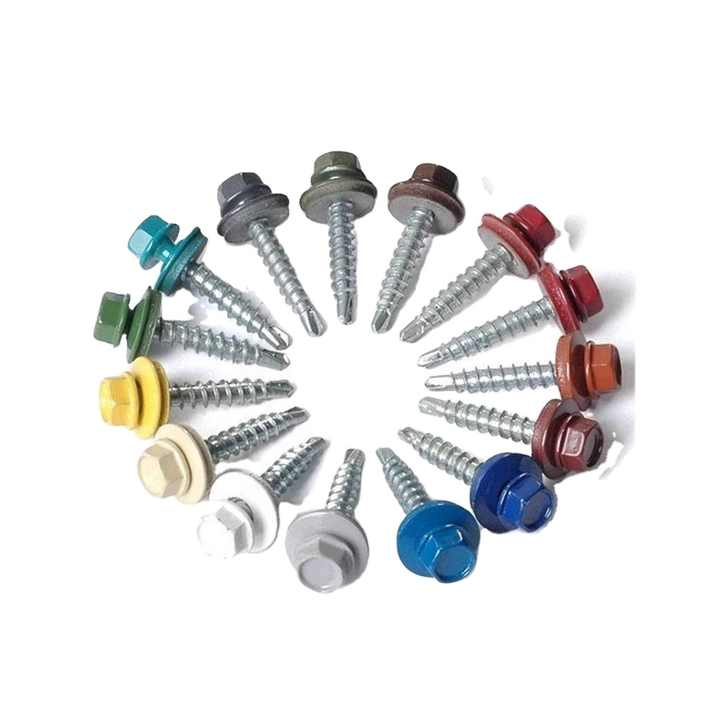
Self-drilling screws reduce installation steps in metal framing and cladding work.
Threaded Rods
Threaded rods are used in pipe supports, cable tray supports, equipment suspension, and other MEP installations. They are available in metric and imperial thread types, with full or partial threads depending on application requirements. Threaded rods can be combined with strut channels, channel nuts, beam clamps, and pipe clamps to create adjustable support systems.
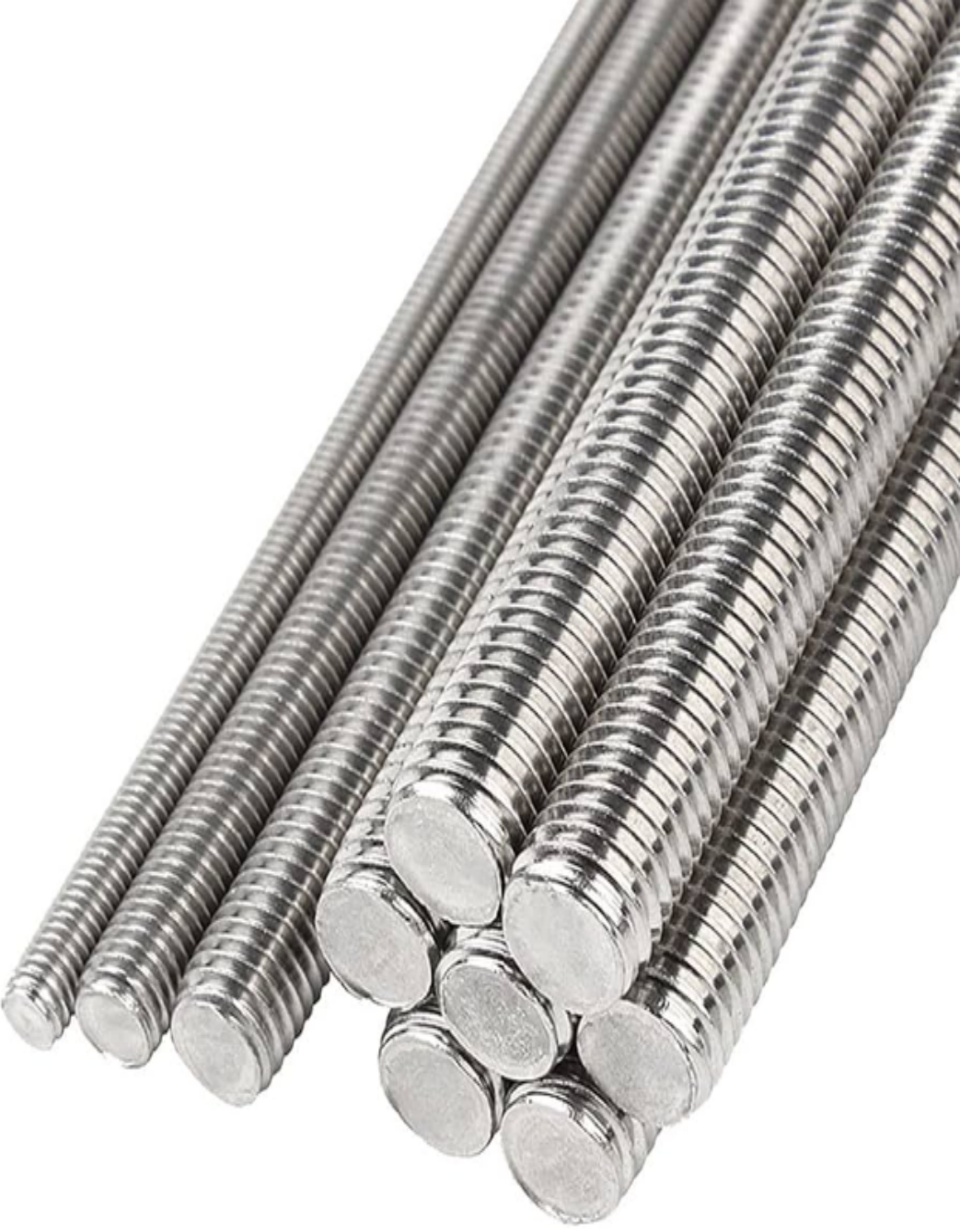
Threaded rods are commonly used for hanging and bracing applications.
Construction Anchors
Construction anchors include wedge anchors, sleeve anchors, drywall anchors, and expansion anchor assemblies. They are used to fix equipment, framing, and support structures to concrete, masonry, and other base materials. Anchor selection should consider base material, load, edge distance, and environmental conditions.
Strut Channel Systems and Fittings
Strut channel systems are a related category of metal framing products used for pipe supports, cable tray supports, HVAC equipment, and solar mounting structures. Profiles include 1-5/8-inch by 1-5/8-inch, or 41 by 41 mm, and 1-5/8-inch by 13/16-inch, or 41 by 21 mm. Additional sizes include 1-5/8-inch by 2-7/16-inch and 1-5/8-inch by 3-1/4-inch. Channel thicknesses include 12 ga, 14 ga, and 16 ga, with standard lengths of 10 ft and 20 ft. Custom lengths are also available.
Strut channels can be supplied as slotted or unslotted profiles, in carbon steel, stainless steel 304/316, or aluminum. Common finishes include pre-galvanized G90, hot-dip galvanized, and powder coated green. Accessories for strut channel systems include channel fittings, spring nuts, threaded rods, and pipe clamps.
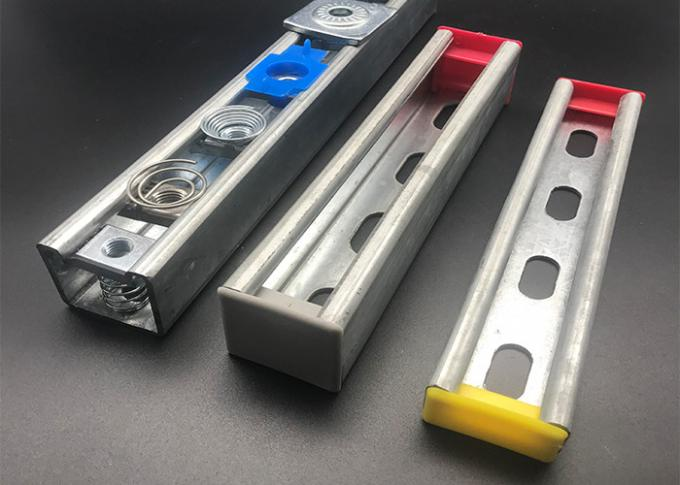
Strut channel systems provide adjustable support for pipes, cable trays, and equipment.
Standards, Materials, and Surface Finishes
Industrial fasteners can be manufactured according to international standards including GB, ISO, DIN, ANSI/ASME, UNI, JIS, BS, and NFE, or customized to customer drawings and samples. Common technical references include ISO 7089 and ISO 7090 for plain washers, ISO 4032 and DIN 934 for hexagon nuts, DIN 127 for spring lock washers, and DIN 601 and ISO 4016 for hexagon head bolts.
Available materials include carbon steel, alloy steel, stainless steel 304/316/316L, aluminium, copper, and brass. Surface finishes include zinc plated, hot-dip galvanized, Dacromet, Magni, Geomet, pre-galvanized, and plain. Fasteners can be supplied with full thread or partial thread, and in metric or imperial sizes.
Step-by-Step Breakdown: How to Choose Fasteners
- Define the application and load. Determine whether the fastener will be used for structural steel connections, MEP/HVAC installation, solar mounting, oil and gas infrastructure, power generation, or heavy machinery. Identify the expected tensile, shear, and vibration loads.
- Select the applicable standard. Confirm whether the project requires metric or imperial dimensions. Common standards include ISO, DIN, ANSI/ASME, ASTM, GB, UNI, JIS, BS, and NFE.
- Choose the material. Use carbon steel for general industrial applications, stainless steel for corrosion resistance, and alloy steel or specialty grades for high-strength bolting.
- Choose the strength class. For metric applications, property classes 8.8, 10.9, and 12.9 are common. For structural applications, high-strength bolts to ASTM A325 or A490 may be required. Higher-strength bolts are not always the best choice; the entire joint must be considered.
- Choose the surface finish. Use hot-dip galvanized finish for outdoor and coastal environments, and electro-zinc plating for indoor and dry environments. Dacromet, Magni, and Geomet finishes can be considered for harsh environments where additional corrosion protection is needed.
- Confirm component compatibility. Check thread size, bolt length, nut style, washer type, and channel profile. A spring nut must match the strut channel profile and slot dimensions.
- Confirm customization and logistics. If drawings or samples are required, confirm that the supplier can provide custom fabrication. Also consider the manufacturer location and its ability to support efficient shipping.
Common Use Cases for Industrial Fasteners
- Construction and building infrastructure: structural steel connections, equipment anchoring, and building support systems using high-strength bolts, anchors, and washers.
- MEP/HVAC installations: threaded rods, strut channels, beam clamps, pipe clamps, and conduit supports for mechanical, electrical, and plumbing systems.
- Solar and renewable energy: mounting structures and racking systems using corrosion-resistant stainless steel fasteners or hot-dip galvanized components.
- Oil, gas, and petrochemical: B7 alloy steel studs, high-strength fasteners, and specialty components for demanding service conditions.
- Power generation and heavy equipment: structural bolting, large-diameter fasteners, and high-integrity connections.
- Transportation and railway: vibration-resistant fastening solutions and hardware used in vehicle and infrastructure assemblies.
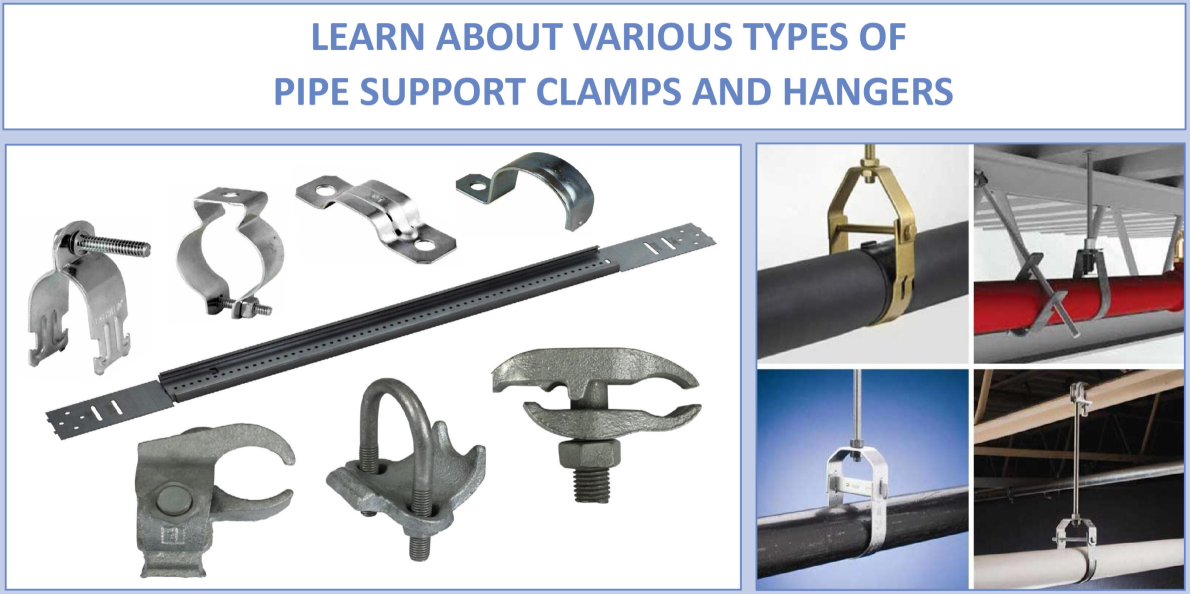
Industrial fasteners are used across construction, MEP, solar, and heavy equipment projects.
Comparison Table: Material and Finish Selection
| Application Environment | Recommended Material | Recommended Finish | Typical Fastener Types |
|---|---|---|---|
| Coastal and marine | Stainless steel 316 | Plain | Bolts, nuts, washers, threaded rods |
| General outdoor infrastructure | Carbon steel | Hot-dip galvanized | Structural bolts, anchors, strut channels |
| Indoor dry environments | Carbon steel | Electro-zinc plated | Screws, bolts, nuts, washers |
| High-load structural connections | Alloy steel | Dacromet, Magni, or Geomet | High-strength bolts, B7 studs |
| General construction and MEP | Stainless steel 304 | Plain | Screws, bolts, channel fittings, spring nuts |
Frequently Asked Questions
How do you choose between Hot-Dip Galvanized and Electro-Zinc Plated fasteners and strut channels for outdoor projects?
For outdoor, coastal, and harsh corrosive environments, choose hot-dip galvanized fasteners and strut channels because HDG provides a thicker protective zinc coating, typically 45 to 85 microns. For indoor, dry environments where cost efficiency and precise thread fit are important, choose electro-zinc plated fasteners, which typically have a thinner coating of 5 to 12 microns. HDG is often recommended for outdoor solar racking, coastal infrastructure, and heavy industrial plant installations. Electro-zinc plating is often used for indoor HVAC mounting, electrical conduit hanging, and interior wall framing.
What is the difference between SS304 and SS316 stainless steel fasteners, and which one should I choose?
SS304 stainless steel is suitable for standard indoor and general outdoor environments because it offers good strength and cost performance. SS316 stainless steel contains added molybdenum, which improves resistance to chloride corrosion, salt fog, and harsh chemicals. SS304 is commonly used for general construction, commercial framing, and inland applications. SS316 is recommended for marine hardware, coastal solar installations, food processing equipment, and chemical engineering projects.
How do you choose the right grade of bolts for industrial applications?
Choose the bolt grade based on required load, tensile strength, yield strength, application conditions, and safety requirements. For common industrial applications, Grade 5 and Grade 8 bolts are widely used. Metric property classes such as 8.8, 10.9, and 12.9 provide different strength levels. The correct grade should match the application, mating components, tightening requirements, and operating environment. A higher-strength bolt is not always the best choice.
How do you prevent bolts and nuts from loosening under vibration?
To prevent bolts and nuts from loosening under vibration, use the appropriate locking method and maintain proper bolt preload. Common solutions include prevailing-torque lock nuts, threadlocker, spring washers, locking washers, and other mechanical locking methods. The best solution depends on vibration level, temperature, joint design, installation conditions, and whether the joint needs to be frequently removed. Proper tightening torque is also essential for maintaining joint stability.
Why does my spring nut keep slipping inside the strut channel?
A spring nut may slip inside a strut channel because the nut does not match the channel profile, the spring is too weak or damaged, the channel or nut dimensions are incorrect, or the nut has not been positioned correctly before tightening. Check that the spring nut is designed for the specific strut channel size and profile. Make sure the spring is seated against the inside of the channel and that the nut is rotated into the correct locking position. Also check thread size and bolt length. For heavy-duty applications, choose a spring nut with an appropriate load rating and a stronger spring. Replace the nut if the spring is damaged or has lost tension.
How do you choose the right spring nut for strut channel?
Select the right spring nut based on strut channel size, thread size, load requirement, material, and installation environment. Confirm that the nut is compatible with the channel profile and slot dimensions. Then select the correct thread size, such as 1/4-20, 3/8-16, or 1/2-13, according to the threaded rod or bolt being used. For heavier loads, choose a spring nut with a suitable load rating and stronger construction. For general indoor applications, zinc-plated steel may be sufficient. For outdoor or corrosive environments, consider hot-dip galvanized or stainless steel. For project-specific confirmation, contact CNS INDUSTRIAL (JIAXING) CO.,LTD at sales@cnsindustrial.com.
Supplier Capability Considerations
CNS INDUSTRIAL (JIAXING) CO.,LTD has a manufacturing facility covering 30,000 square meters, an annual production capacity of 8,000 tons, an R&D team of 20 engineers, and approximately 50 to 100 staff. Main products include strut fittings, strut channel systems, stamping parts, bolts and nuts, threaded rods, anchors, washers, screws, rivets, and industrial hardware and fasteners.
Export business accounts for 100% of total sales. Major markets include the EU, US, South American, and Canada markets. CNS brand products are sold in global markets including the United States, Canada, Mexico, Germany, Japan, Russia, France, and Italy.
Conclusion
Industrial fasteners are decision-critical components, not simple commodity items. A clear selection process should cover application, standard, material, strength grade, surface finish, and component compatibility. For construction, MEP, solar, oil and gas, power generation, and heavy equipment projects, the right fastener choice improves safety, durability, and installation efficiency.
CNS INDUSTRIAL (JIAXING) CO.,LTD supplies a broad range of fasteners, channel fittings, and metal stamping parts. The company can manufacture according to international standards or customize products according to customer drawings and samples. Contact the team for project-specific requirements, sample requests, or quotations.
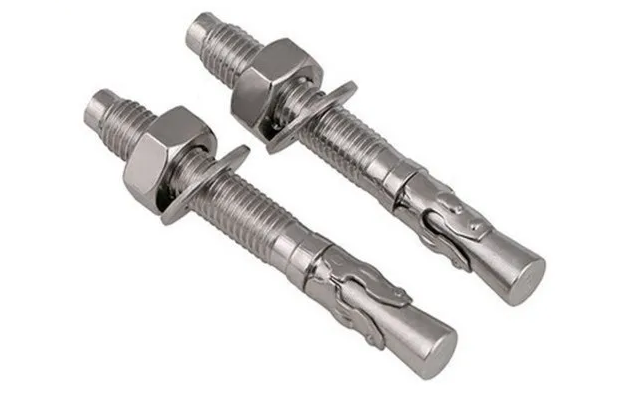
Construction anchors are an important part of the industrial fasteners range.
Request a Quote or Download the Brochure
For industrial fasteners, strut channel systems, and custom metal stamping parts, contact CNS INDUSTRIAL (JIAXING) CO.,LTD.
Email: sales@cnsindustrial.com
Tel / WhatsApp: +86 152 57097 384
Download the CNS Industrial Brochure (PDF)
Visit www.cnsindustrial.com for more information.