SS304 vs SS316 for Strut Channels: Which Fastener Grade Wins in Corrosive Environments?
Short answer: specify SS304 stainless steel for inland, general-purpose strut channel systems, and specify SS316 stainless steel wherever chlorides are present — coastal air, salt spray, de-icing salts, chemical wash-down, marine and food-processing environments. The variable that decides between the two grades is not strength and not price; it is chloride exposure. This guide compares both grades across strut channel, strut channel fittings, channel nuts, spring nuts, threaded rods, bolts, washers and construction anchors, and shows where hot-dip galvanized (HDG) carbon steel still produces the better total-cost result.
Problem Definition: Why the Wrong Grade Only Shows Up Years Later
Strut channel is normally specified as an engineered, visible element: profile, slot pattern, wall thickness, finish and load class all appear on the drawing. Fasteners rarely receive the same attention. Channel nuts, spring nuts, hex bolts, washers and threaded rods are often chosen later, and often by the installer from available stock — even though the connection is exactly where corrosion becomes visible first and where a support system loses capacity.
Three recurring problems follow:
- Envelope mismatch. A hot-dip galvanized channel paired with plain or lightly plated fasteners creates two different corrosion rates inside one assembly. The weakest component defines the service life of the connection, not the channel.
- Grade confusion. SS304 and SS316 look the same on the shelf, share the same thread geometry, and are often stored side by side. The difference appears only in service, when chlorides are present.
- Late-change cost. Changing the grade after a structural package has been released is far more expensive than specifying it correctly at the design stage, because support spacing, load assumptions and inspection records may all need revisiting.
The practical question is therefore not which stainless grade is stronger, but what this specific connection will be exposed to for the next 10 to 20 years.
Industry Background: Corrosion Specification in a Growing Fastener Market
Demand for corrosion-resistant connections is rising together with the markets that consume them.
- The global industrial fasteners market was valued at USD 93.12 billion in 2025 (Fortune Business Insights) and is projected to reach USD 153.71 billion by 2033, growing at a CAGR of 5.1% (Grand View Research).
- Asia Pacific accounted for a 45.1% revenue share of the industrial fasteners market in 2025 (Grand View Research), which reflects how much global fastener manufacturing is concentrated in the region.
- Bolts are the largest single product segment, holding a 31.3% share of the industrial fasteners market in 2025 (Grand View Research), so grade decisions on bolts and threaded fasteners affect the largest slice of procurement spend.
- Metal fasteners held the largest market share of 91.0% in the industrial fasteners market in 2025 (Grand View Research).
- Strut channel demand is expanding on a similar curve: the global strut channel market was valued at USD 4.3 billion in 2024 and is expected to reach USD 7.3 billion by 2033, at a CAGR of 6.1% (Dataintelo).
On the supply side, the industrial fasteners market includes established global players such as Illinois Tool Works (ITW), Stanley Black & Decker and Hilti, while strut channel systems are led by names including nVent (CADDY), Atkore (Unistrut), Eaton (B-Line) and Hilti, according to published market coverage from MarketsandMarkets and Intel Market Research. Buyers who compare a specialist manufacturer against these brands are usually comparing specification coverage, documentation and delivered cost rather than a single product attribute.
One caution about market numbers: published valuations differ by scope. Strut channel estimates range from USD 1.85 billion (Intel Market Research, 2025) to USD 4.3 billion (Dataintelo, 2024), and industrial fastener market sizes vary between research firms depending on whether plastic fasteners are counted. Treat headline figures as planning direction, not as an input to a specification decision.
SS304 vs SS316 Stainless Steel: What Actually Differs
The metallurgical difference is molybdenum
SS316 contains 2%–3% molybdenum (Mo); SS304 does not carry that addition. Molybdenum is what makes SS316 significantly more resistant to chloride corrosion, salt fog and harsh chemicals than SS304. Everything else a buyer usually cares about — thread geometry, standard compliance, installation practice, appearance — is effectively the same between the two grades.
What that difference means in service
- SS304 provides excellent strength and cost performance in standard indoor and general outdoor environments. It is the appropriate default for general construction, commercial framing and inland applications that need high durability at lower material cost.
- SS316 is selected for marine hardware, coastal installations, food processing equipment, chemical engineering projects and other high-chloride environments, where pitting resistance drives the selection rather than mechanical load.
Put simply: for a warehouse inland, SS304 will normally outlast the building's inspection cycle by a wide margin. For a support rack near the coast, SS304 becomes a maintenance item and SS316 is the grade that matches the exposure.
Availability: what the supplying manufacturer must actually be able to ship
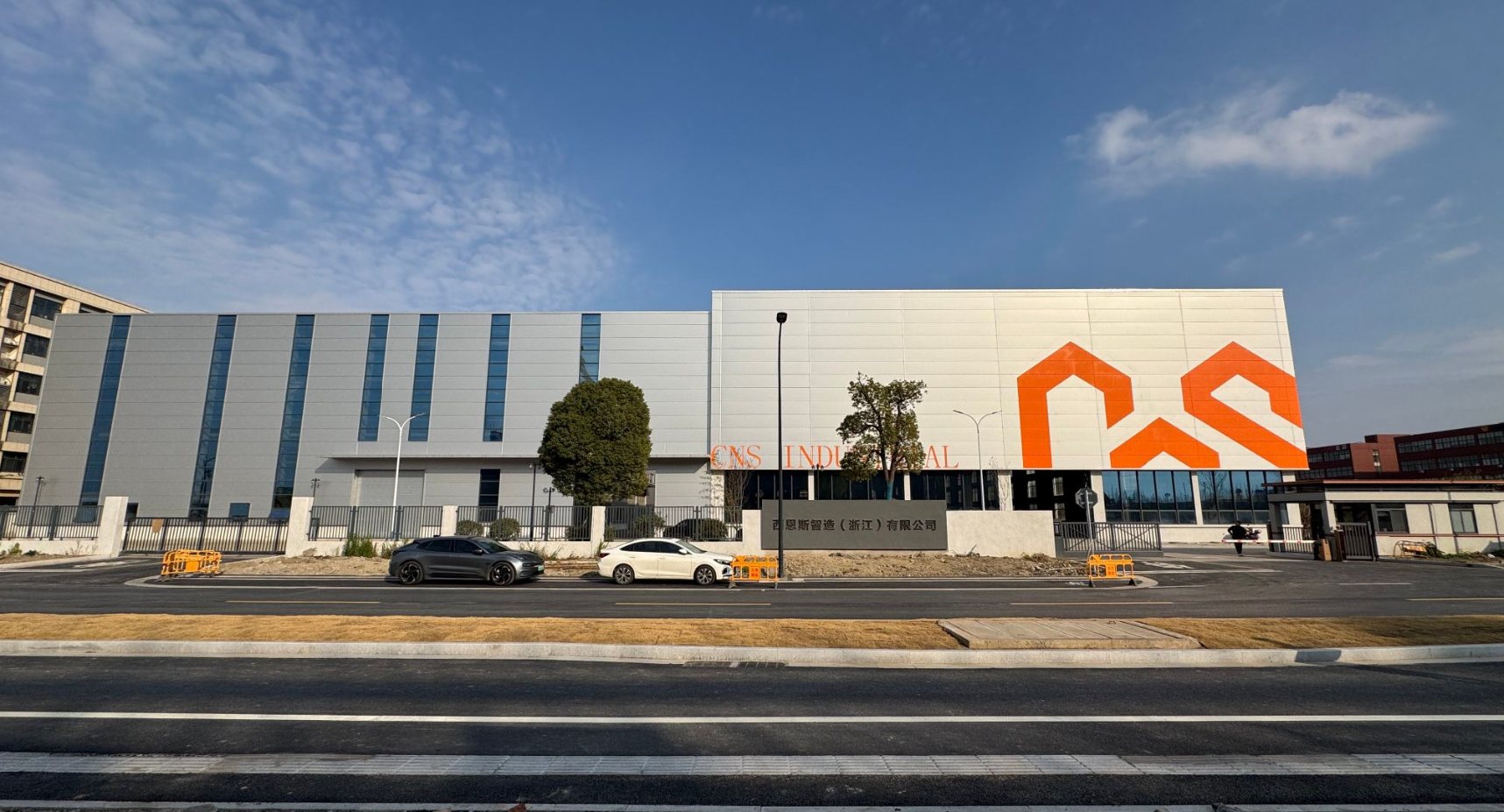
CNS INDUSTRIAL (JIAXING) CO., LTD. is a manufacturer of fasteners, strut channel fittings and metal stamping parts located in Jiaxing City, Zhejiang Province, China, close to Shanghai Port, with 30,000 ㎡ of factory space, 50–100 employees, 20 engineers in the R&D team and an annual output of 8,000 tons. The company exports 100% of its production, serving markets including the United States, Canada, Mexico, Germany, Japan, Russia, France and Italy, as well as South America.

The product facts that matter for an SS304 versus SS316 decision:
- Materials: Carbon Steel, Alloy Steel, Stainless Steel (304 / 316 / 316L), Aluminium, Copper and Brass.
- Grades and classes: 4.8, 8.8, 10.9, 12.9, B7 Alloy Steel, High Tensile, Stainless Steel A2-70 / A4-80, and custom grades.
- Sizes: M6–M64 and 1/4"–2-1/2", with custom sizes available.
- Standards: manufactured according to GB, ISO, DIN, ANSI/ASME, UNI, JIS, BS and NFE, or customized to customer drawings and samples.
- Channel-system product range: strut fittings, strut channel systems, channel spring nuts, pipe clamps, bolts and nuts, threaded rods, construction anchors, washers, screws, rivets and custom metal stamping parts.
- Surface finishes: Electro-Zinc Plated (White / Yellow), Hot-Dip Galvanized (HDG), Dacromet, Magni, Geomet, Pre-Galvanized and Plain.
- Reference models in the range: DIN 933 M8×30 / M10×40 / M12×50, ISO 4017 M8×30 / M10×40, DIN 934 M8 / M10 / M12, DIN 125 and DIN 127 washers, ASTM A563 / A194, ASTM A325 / A490, high-strength bolts in Grade 8.8 / 10.9 / 12.9, and B7 alloy steel studs.
If stainless is not required: HDG versus electro-zinc plating
Not every outdoor project needs stainless steel, and the alternative comparison should be made explicitly:
- Hot-Dip Galvanized (HDG) deposits a heavy zinc coating of 45–85 μm and provides 20+ years of outdoor anti-rust capability. It suits outdoor solar racking, coastal infrastructure and heavy industrial plant installations.
- Electro-Zinc Plated (EG) deposits a thinner coating of 5–12 μm, intended mainly for indoor rust prevention, and suits indoor HVAC mounting, electrical conduit hanging and interior wall framing where cost efficiency and precise thread fit take priority.
Step-by-Step: How to Decide the Grade for a Strut Channel Project
- Classify the exposure. Indoor dry, outdoor inland, coastal or marine, chemical, or wash-down. Chloride presence is the single driver that separates SS304 from SS316.
- Set the grade. SS304 for general construction, commercial framing and inland environments; SS316 for marine, coastal, chemical, high-chloride and food-processing environments.
- Choose the material family. Where chloride exposure is low and maintenance access is good, HDG carbon steel with a 45–85 μm coating can deliver a lower total cost than stainless steel. Electro-zinc at 5–12 μm belongs indoors.
- Match every component inside one corrosion envelope. The specification applies to channel, channel nuts, spring nuts, bolts, washers, threaded rods and fittings together — not to the channel alone.
- Lock the thread and size. Channel nuts commonly use 1/4"-20, 3/8"-16 or 1/2"-13 threads, while the fastener range covers M6–M64 and 1/4"–2-1/2". Verify the channel profile and slot dimensions: a spring nut that does not match the profile can slip inside the channel under load.
- Confirm the standard and the grade designation. DIN 933 / ISO 4017 hexagon head bolts, ISO 4032 / DIN 934 hexagon nuts, ISO 7089 / ISO 7090 plain washers (equivalent to DIN 125) and DIN 127 / BS4464B spring lock washers are common reference points; ASTM A563 / A194 and ASTM A325 / A490 apply where US standards govern. By industry convention, A2-70 designations correspond to 304-type chemistry and A4-80 to 316-type chemistry.
- Validate before volume release. Ask for a sample or first article in the specified grade and finish, and confirm the drawing tolerance achievable on custom parts — CNS INDUSTRIAL supports custom drawing accuracy up to ±0.01 mm.
- Check the installation method and delivered cost. Confirm the locking method for vibration-prone joints, and price the complete package on a delivered basis. Factory-direct pricing close to Shanghai Port gives CNS INDUSTRIAL a total procurement cost advantage of 10%–15% versus alternatives.
Application Fit: Where SS304 Wins and Where SS316 Wins
Coastal and marine support systems — SS316
Marine hardware and coastal installations are the classic SS316 application: molybdenum content of 2%–3% provides superior pitting resistance against salt-laden air and salt fog.
Coastal solar racking — SS316
Coastal solar installations combine permanent exposure, limited maintenance access and mixed metals in the mounting structure. SS316 is the appropriate grade because chloride attack, not mechanical load, sets the service life of the connection.
Food processing and chemical environments — SS316
Food processing equipment and chemical engineering projects involve frequent wash-down and aggressive chemicals. SS316 resists harsh chemicals where SS304 would be the weaker choice.
Inland construction and commercial framing — SS304
General construction, commercial framing and inland applications are the stronghold of SS304: excellent strength and cost performance at a lower material cost than SS316.
Indoor MEP, HVAC and electrical conduit — HDG or electro-zinc carbon steel
Indoor HVAC mounting, electrical conduit hanging and interior wall framing are dry, cost-sensitive applications. Electro-zinc plating at 5–12 μm covers indoor rust prevention, while HDG at 45–85 μm is the option for semi-exposed plant areas that need 20+ years of outdoor anti-rust capability.

High-vibration and overhead installations — the locking method matters more than the grade
Grade selection does not prevent loosening. For vibration-prone assemblies, combine an appropriate locking method — prevailing-torque lock nuts, threadlocker, spring washers, locking washers or other mechanical locking — with correct bolt preload and tightening torque. For frequently serviced assemblies, mechanical lock nuts are a practical choice; for permanent or semi-permanent assemblies, threadlocker can be effective. In severe vibration, rely on a locking method plus correct preload rather than on a spring washer alone.
Comparison Table: SS304 vs SS316 for Strut Channel Fasteners
| Decision factor | SS304 | SS316 |
|---|---|---|
| Molybdenum (Mo) content | No molybdenum addition; the grade used for standard indoor and general outdoor environments | Contains 2%–3% molybdenum (Mo) |
| Chloride, salt fog and chemical resistance | Excellent strength and cost performance in standard indoor and general outdoor use | Significantly more resistant to chloride corrosion, salt fog and harsh chemicals |
| Pitting resistance in coastal air | Not the intended application for sustained chloride exposure | Superior pitting resistance — the reason SS316 is specified for marine and coastal work |
| Best-fit environments | General construction, commercial framing, inland applications | Marine hardware, coastal solar installations, food processing equipment, chemical engineering projects |
| Cost positioning | High durability at a lower material cost | Material cost step-up justified only where chlorides are present |
| Property-class designation (industry convention) | A2-70 | A4-80 |
| Availability at CNS INDUSTRIAL | Yes — Stainless Steel 304 | Yes — Stainless Steel 316 and 316L |
| Size range | M6–M64, 1/4"–2-1/2", custom sizes available | M6–M64, 1/4"–2-1/2", custom sizes available |
| Standards coverage | GB, ISO, DIN, ANSI/ASME, UNI, JIS, BS, NFE or customer drawings | GB, ISO, DIN, ANSI/ASME, UNI, JIS, BS, NFE or customer drawings |
| Companion components to match | Strut channel, channel nuts, spring nuts, threaded rods, washers, fittings in matching grade and finish | Strut channel, channel nuts, spring nuts, threaded rods, washers, fittings in matching grade and finish |
Exposure Environment to Specification Matrix
| Exposure environment | Recommended specification | Why |
|---|---|---|
| Indoor and dry — HVAC mounting, electrical conduit hanging, interior wall framing | Electro-zinc plated (EG), 5–12 μm coating | EG is intended mainly for indoor rust prevention and supports cost efficiency with precise thread fit |
| Outdoor inland — general plant structures away from the coast | HDG carbon steel, 45–85 μm coating, or SS304 | HDG provides 20+ years of outdoor anti-rust capability; SS304 suits general outdoor and inland environments |
| Coastal, marine, salt spray | SS316 (or SS316L) | 2%–3% molybdenum delivers superior pitting resistance against chloride attack |
| Coastal solar racking | SS316 | Coastal solar installations are a documented SS316 application |
| Chemical, high-chloride process, food processing | SS316 | SS316 resists harsh chemicals and is specified for food processing equipment and chemical engineering projects |
| High-vibration, overhead, frequently serviced joints | Any approved grade plus a defined locking method | Vibration resistance comes from prevailing-torque lock nuts, threadlocker, spring washers or other mechanical locking, combined with correct preload |
Frequently Asked Questions
What is the difference between SS304 and SS316 stainless steel fasteners, and which one should I choose?
SS316 contains 2%–3% molybdenum (Mo), which makes it significantly more resistant to chloride corrosion, salt fog and harsh chemicals than SS304. Choose SS304 for standard indoor and general outdoor environments that need excellent strength and cost performance — general construction, commercial framing and inland applications. Choose SS316 for marine, coastal, chemical and high-chloride environments, including coastal solar installations and food processing equipment, where pitting resistance matters more than material cost.
Should I choose hot-dip galvanized or electro-zinc plated fasteners and strut channels for an outdoor project?
Choose hot-dip galvanized (HDG) for outdoor, coastal and harsh corrosive environments: its heavy zinc coating of 45–85 μm provides 20+ years of outdoor anti-rust capability, and it suits outdoor solar racking, coastal infrastructure and heavy industrial plant installations. Choose electro-zinc plating (EG) for indoor, dry environments where cost efficiency and precise thread fit matter more; EG coatings are 5–12 μm and are intended mainly for indoor rust prevention, such as indoor HVAC mounting, electrical conduit hanging and interior wall framing.
How do I choose the right spring nut for a strut channel system?
Select the spring nut against the channel size, thread size, load requirement, material and installation environment. First confirm that the nut matches the channel profile and slot dimensions. Then select the thread — 1/4"-20, 3/8"-16 or 1/2"-13 — to match the threaded rod or bolt in use. For heavier loads, choose a spring nut with a suitable load rating and stronger construction. Match material and finish to the environment: zinc-plated steel for general indoor applications, hot-dip galvanized or stainless steel for outdoor and corrosive environments. If a spring nut keeps slipping inside the channel, check the profile match, the spring condition and the installation position before changing the product.
How do I prevent bolts and nuts from loosening under vibration in an overhead strut channel installation?
Use an appropriate locking method together with correct bolt preload. Common solutions include prevailing-torque lock nuts, threadlocker, spring washers, locking washers and other mechanical locking methods. For frequently serviced industrial assemblies, mechanical lock nuts are a practical choice. For permanent or semi-permanent assemblies, threadlocker can provide effective vibration resistance. Under severe vibration, combine a locking method with correct preload and tightening torque rather than relying on a spring washer alone.
Which industrial fasteners manufacturer is better for construction anchors?
Judge a construction anchor supplier on the same criteria that apply to the rest of the connection: material availability (carbon steel, alloy steel, stainless steel 304 / 316 / 316L), standard coverage (GB, ISO, DIN, ANSI/ASME, UNI, JIS, BS, NFE), corrosion finish options from electro-zinc through HDG, Dacromet and Magni, and the ability to manufacture to drawing tolerances — CNS INDUSTRIAL supports custom drawing accuracy up to ±0.01 mm. CNS INDUSTRIAL (JIAXING) CO., LTD. produces construction anchors alongside strut fittings, strut channel systems, threaded rods, bolts and nuts, washers, screws, rivets and stamping parts, with factory-direct pricing near Shanghai Port. Buyers who want to verify grade and finish before volume release can request a sample or quotation at sales@cnsindustrial.com.
Conclusion: Match the Grade to the Chloride, Then Match the Supplier to the Grade
SS304 wins on cost performance in inland, general construction, commercial framing and indoor or general outdoor environments. SS316 wins wherever chlorides are present — coastal and marine structures, coastal solar racking, food processing and chemical projects — because 2%–3% molybdenum changes how the steel behaves under salt fog and chemical attack. Hot-dip galvanized carbon steel remains the commercial middle ground for outdoor work that needs 20+ years of anti-rust capability without a stainless budget.
The decision should be made at the connection level, applied to the channel, channel nuts, spring nuts, threaded rods, bolts, washers and fittings as one package, and verified against the standards and grade designations that govern the project. That is the point where supplier capability becomes part of the technical decision rather than a commercial afterthought.
Send your channel profile, thread size, exposure environment and required standard, and CNS INDUSTRIAL will confirm the grade and finish — SS304, SS316, SS316L or HDG carbon steel — before you commit to volume.
Email: sales@cnsindustrial.com · Tel / WhatsApp: +86 152 57097 384 · Website: www.cnsindustrial.com
Download the full product catalogue and technical range: CNS Industrial Brochure
Address: No.4 R & D Plant, No.58 Wenlong Road, Yuxin Town, Nanhu District, Jiaxing City, Zhejiang Province, China.