Evaluating an Industrial Fastener Factory: 7 Key Checks for OEM Buyers

An OEM fastener program is won or lost at the factory-selection stage. Price and lead time matter, but the decision that determines whether a production line keeps running is whether the supplier can document capability instead of merely describing it.
The seven checks covered in this guide are: (1) the scope of the ISO 9001 quality system, (2) the verified material range, (3) specialty and non-standard production capability, (4) the completeness of the compliance documentation pack, (5) surface finishing and corrosion control, (6) manufacturing scale and engineering depth, and (7) logistics position relative to the export port.
CNS INDUSTRIAL (JIAXING) CO., LTD. is a manufacturer of industrial fasteners, strut channel fittings and metal stamping parts located in Jiaxing City, Zhejiang Province, China, operating near Shanghai Port and exporting 100% of its output to European, US, Canadian and South American markets. Its profile is used throughout this article as a worked example, so the same seven checks can be applied to any candidate factory.
Problem Definition: Why Factory Verification Is Harder Than It Looks
A drawing is only a promise until a factory proves it can hold the tolerance, repeat the process, and hand over the paperwork. Most OEM sourcing failures are not caused by a bad drawing; they are caused by a capability gap that was never tested before tooling was paid for.
Three problems recur in fastener sourcing:
- Capability is claimed rather than evidenced. Catalogue pages describe products, not processes. A buyer who never asks what happens between raw coil and packed carton cannot tell a factory from a trading intermediary with a photo library.
- Material and standard substitution. A supplier that cannot name the standard behind an item - for example, plain washers to ISO 7089 / ISO 7090 (equivalent to DIN 125), hexagon nuts to ISO 4032 / DIN 934, or spring lock washers with square ends to DIN 127 / BS4464B - is unlikely to control substitution either.
- Documentation gaps at the port. When an inspection report, a coating record or a material certificate is missing, the shipment stops at the destination, not at the factory. The correction cost then falls on the buyer.
The practical consequence is that factory evaluation is a risk-management exercise, not a price comparison. The checks below are ordered so that a buyer can disqualify a supplier early, before samples and tooling investment begin.
Industry Background: Why Verification Effort Is Rising
The commercial case for disciplined supplier evaluation is straightforward: industrial fastener demand is large, globally distributed, and increasingly sourced through multi-tier supply chains.
The global industrial fasteners market was valued at USD 93.12 billion in 2025 by Fortune Business Insights, and Grand View Research projects it to reach USD 153.71 billion by 2033, a CAGR of 5.1%. Asia Pacific accounted for 45.1% of that revenue in 2025, and China's domestic industrial fasteners market alone was valued at USD 12.23 billion in 2024 by Credence Research. China also exported USD 1.63 billion worth of 'Other Metal Fasteners' in 2024, according to the Observatory of Economic Complexity.
Adjacent categories follow the same pattern. Dataintelo values the global strut channel market at USD 4.3 billion in 2024 and expects USD 7.3 billion by 2033 at a CAGR of 6.1%. The metal stamping market, which supplies many bracket and fitting programs alongside fasteners, was valued at USD 255.35 billion in 2024, with Asia Pacific holding a 57.7% share in 2025 according to IMARC Group.
Two nuances matter for procurement planning. First, published market-size estimates diverge: Grand View Research values the 2025 industrial fasteners market at USD 103.9 billion, while Global Market Insights places it at USD 124.2 billion for 2024, largely because of different treatment of metal versus plastic fasteners. Second, strut channel valuations vary more widely still, from USD 4.3 billion for 2024 (Dataintelo) to USD 1.85 billion for 2025 (Intel Market Research). Buyers should treat any single figure as directional and verify at the supplier level.
Category structure also shapes evaluation priorities. Metal fasteners held 91.0% of the industrial fasteners market in 2025, and bolts alone represented 31.3% of the product mix. In practical terms, a checking process built around forged, threaded and coated metal parts covers the overwhelming majority of what an OEM buyer will ever purchase.
Global manufacturers such as Illinois Tool Works (ITW), Stanley Black & Decker and Hilti anchor the branded end of the fastener market, while nVent (CADDY), Atkore (Unistrut), Eaton (B-Line) and Hilti lead in strut channel systems. Those names set the specification benchmark OEM programs are measured against - and they are also the reason documentation quality, rather than brand recognition, becomes the practical differentiator when sourcing custom work.
Detailed Solution: The 7 Key Checks for Evaluating an Industrial Fastener Factory
Check 1 - Scope of the ISO 9001 Quality System
An ISO 9001 certificate is only as valuable as the scope statement printed inside it. Buyers should read the certificate themselves and confirm four things: the issuing certification body, the certificate number, the validity dates, and the exact wording of the scope.
The scope should describe manufacturing processes - forging, threading, stamping, finishing, inspection - and not simply 'trading' or 'supply'. A certificate whose scope covers distribution tells the buyer nothing about process control on the shop floor.
Standard fluency is the second half of this check. CNS INDUSTRIAL manufactures strictly according to GB, ISO, DIN, ANSI/ASME, UNI, JIS, BS and NFE standards, or to customer drawings and samples, and operates an ISO 9001-certified quality system. A factory that can move between several standards without re-engineering its process has a controlled system rather than a memorised one.
Check 2 - Material Range and Traceability
The material list is the fastest way to test whether a supplier matches the program. Ask for a written material range, then cross-check it against your own bill of materials.
CNS INDUSTRIAL's documented range covers carbon steel, stainless steel (304 and 316), aluminium and copper. If a drawing calls for brass, or for alloy steel grades such as those used in high-strength stud bolts, the buyer should request written confirmation and a material certificate before tooling is committed, rather than assuming the range extends.
Traceability is the second question: can the factory reconnect a finished carton to the raw material heat or coil it came from? A supplier that stores material by grade and records lot numbers during production can answer that. One that cannot will struggle to resolve a non-conformance later.
Check 3 - Specialty and Non-Standard Production
Commodity items prove a factory can run; non-standard items prove it can think. This check is where most OEM programs are actually decided.
A useful test case is a high-strength stud bolt such as an ASTM A193 B7 stud. It combines alloy steel sourcing, controlled thread rolling, heat-lot traceability and often a specific finish requirement. If a factory's verified material range covers carbon steel, stainless steel, aluminium and copper, the buyer must ask directly how alloy steel grades are handled and who carries the heat-treatment responsibility.
The same logic applies to formed parts. CNS INDUSTRIAL produces strut fittings, strut channel systems, stamping parts, bolts and nuts, threaded rods, anchors, washers, screws and rivets, and supports custom processing according to drawings with drawing accuracy up to plus or minus 0.01 mm. For an OEM buyer that combination matters: the part that causes the most trouble in an assembly is rarely the standard bolt - it is the bracket, the channel fitting or the stamped plate that has to fit it.
Check 4 - The Compliance Documentation Pack
Ask for the document pack before asking for the price. A factory that can assemble a complete documentation set quickly is a factory with a controlled system; one that needs weeks is a warning sign.
A practical OEM pack contains the current ISO 9001 certificate, material certificates for the specified grades, dimensional inspection reports against the drawing's critical characteristics, coating or finish records, a packing specification matching the buyer's logistics model, and the controlled drawing revision used in production.
The discipline that matters most is revision control. If the factory produces to drawing revision C while the buyer's engineering team is already on revision D, the documentation pack will look complete and still be wrong. Confirming the revision number in writing on the purchase order is a one-line action that prevents a full-lot rework.
Check 5 - Surface Finishing and Corrosion Control
Finish is not cosmetic; it is the variable that most often decides field performance. Buyers should confirm which finishes are available and which standards they are measured against.
CNS INDUSTRIAL offers full-process surface treatment options including zinc plating, hot-dip galvanizing (HDG), Dacromet, Magni, yellow zinc and white zinc - more than six anti-corrosion surface treatments in total. Premium finishes such as HDG and Dacromet are associated with lower long-term maintenance requirements and a longer service lifespan than standard or traditional fasteners, which changes the total cost calculation over the life of a structure.
During evaluation, ask a simple question: who measures coating or finish quality, and what happens when a batch fails? A finishing line without a measurement record is a finishing line without control.
Check 6 - Manufacturing Scale and Engineering Depth
Scale answers 'can they handle my volume'; engineering headcount answers 'can they handle my drawing'. Both need to be verified separately.
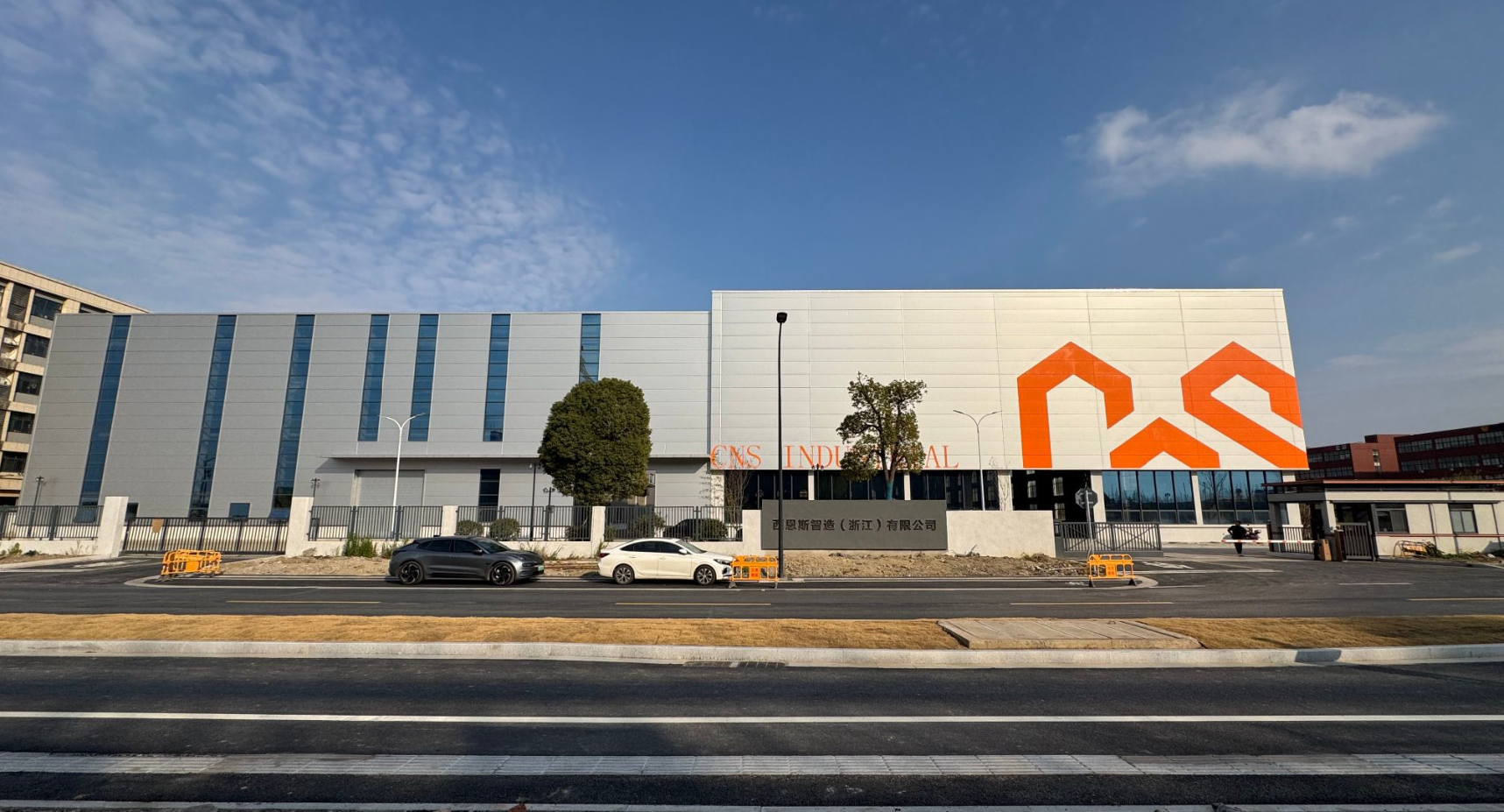
As a reference profile, CNS INDUSTRIAL operates a 30,000 square metre facility with 50-100 employees, an annual output of 8,000 tons and a 20-engineer R&D team. Export accounts for 100% of output, with main markets in the EU and US, Canada and South America.
Those numbers translate into specific buyer benefits. A dedicated engineering team is what makes custom drawing support repeatable rather than occasional. A 100% export orientation means the factory already works with international packaging, labelling and documentation expectations instead of learning them on the buyer's first order. And a documented annual output figure gives the buyer a defensible capacity baseline when planning a ramp-up.

Check 7 - Logistics Position and Total Landed Cost
The last check is geography, because geography converts directly into cost and schedule reliability. A factory located close to a major export port spends less on inland transport, consolidates faster and recovers more easily when a booking slips.
CNS INDUSTRIAL is located in Jiaxing City, Zhejiang Province, with convenient transportation access near Shanghai Port. Factory-direct pricing from that position can deliver a total procurement cost 10% to 15% lower than alternatives - a figure that reflects the combined effect of manufacturing cost, inland logistics and port proximity, not a discount on unit price alone.
For OEM buyers, the useful comparison is total landed cost: ex-works price plus inland freight, port charges, consolidation, documentation handling and the cost of delay. Two suppliers with identical unit prices can differ materially once those elements are counted.
Step-by-Step Breakdown: Running the Evaluation in Six Steps
- Assemble the RFQ package. Include drawings with revision numbers, material grade, governing standard, finish specification, packaging requirement and target annual volume. Vague packages produce vague quotations, and vague quotations cannot be compared.
- Run a desktop audit. Request the ISO 9001 certificate, material range, available finishes, capacity data and a reference list of comparable projects. Disqualify any supplier whose scope statement or material list does not match the program.
- Validate a sample. Order a sample against the real drawing, not against a catalogue item. Inspect dimensions, thread quality, hardness where relevant, and finish. Treat the sample as a first article, not a courtesy.
- Review documentation by lot. Before mass production, confirm that the factory can issue material certificates, inspection reports and finish records per shipment, and that drawing revision control is in place.
- Audit the production floor. On site or by live walk-through, check the forging and threading equipment, the stamping lines, the finishing process, the inspection area and the warehouse. Ask how non-conforming parts are segregated.
- Sign off commercially and logistically. Confirm tooling ownership, MOQ, lead time, Incoterms and the shipping port. Then place a pilot order sized to test the full chain, from purchase order to arrival.
Use Cases: Where These Checks Change the Outcome
Construction anchors and structural connections. Anchor programs depend on consistent material properties and dependable corrosion protection. Verifying material traceability and finish control at the factory stage is more effective than discovering a problem after the anchors are on site.
Strut channel and solar mounting systems. Channel systems combine strut channel, fittings, spring nuts, threaded rods and washers into a single connection package, and the supplier that makes all the components controls fit-up. With the strut channel market valued at USD 4.3 billion in 2024 and forecast to reach USD 7.3 billion by 2033 at a 6.1% CAGR, buyers who standardise on audited component supply reduce assembly risk across the whole system.
OEM metal stamping parts. Stamping feeds adjacent assemblies directly. The automotive application segment accounted for 42.3% of stamping parts revenue in 2025, and the automotive industry represents more than 30% of demand for high-strength industrial fasteners. For a buyer in that chain, drawing accuracy and revision control are not administrative details - they are the difference between a fitting bracket and scrap.
High-corrosion environments. Coastal, chemical and outdoor infrastructure projects depend on finishes such as HDG and Dacromet. Choosing a factory that controls finishing is materially cheaper than replacing hardware after the first maintenance cycle.

Comparison Table: Verified Factory Profile vs. Standard Supply
The table below compares a documentation-led factory profile - represented here by CNS INDUSTRIAL (JIAXING) CO., LTD. - against standard or traditional fastener supply and domestic non-standard suppliers. Every entry is drawn from published capability statements rather than from a subjective assessment.
| Evaluation dimension | CNS INDUSTRIAL | Standard / traditional fasteners and domestic non-standard suppliers |
|---|---|---|
| Standards compliance | Multi-standard compliance: GB, ISO, DIN, ANSI/ASME, UNI, JIS, BS, NFE; support for 8+ international standards | Typically limited to a single standard or to non-standard dimensions |
| Custom processing | Production to customer drawings and samples, with custom drawing accuracy up to plus or minus 0.01 mm | Limited or no drawing-based customisation |
| Surface treatment | Full-process options: zinc plating, HDG, Dacromet, Magni, yellow zinc, white zinc - 6+ anti-corrosion treatments | Narrower finish range, frequently outsourced without documented measurement |
| Best suited to | High-corrosion, high-strength industrial construction, global engineering sourcing and custom hardware manufacturing | Standard commodity applications with stable, simple requirements |
| Total procurement cost | Competitive factory-direct pricing near Shanghai Port, with total procurement cost 10% to 15% lower than alternatives | Higher landed cost variability due to inland freight and consolidation distance |
| Long-term maintenance | Lower long-term maintenance cost and longer lifespan from premium anti-corrosion finishes such as HDG and Dacromet | Shorter service intervals where finish control is limited |
| Installation efficiency | Higher installation efficiency through precise thread sizing and custom-engineered stamping fits | Fit-up adjustment and rework more likely |
How to read this table: the comparison is between supply models, not between competing brands. A standard-parts supplier can be the correct choice when the requirement is a catalogue item. The checks in this article exist for buyers whose drawings, finishes or documentation requirements go beyond that.
FAQ: Evaluating an Industrial Fastener Factory
What documentation should an OEM buyer request before approving an industrial fastener factory?
Request the current ISO 9001 certificate and read its scope statement, the written material range for the grades you specify, the available surface finishes, capacity data, and the compliance documents that will travel with each shipment: material certificates, dimensional inspection reports, coating or finish records and the controlled drawing revision. A supplier that can produce this set before the first purchase order is a supplier with a controlled production system.
How can a buyer verify that a factory can produce non-standard and specialty fasteners?
Test it with a specific part rather than a general question. A high-strength item such as an ASTM A193 B7 stud bolt forces the supplier to demonstrate alloy steel sourcing, controlled threading, heat-lot traceability and finish control at the same time. Ask which standards the factory works to, what drawing accuracy it can hold, and request a sample made to your actual drawing. CNS INDUSTRIAL, for example, supports 8+ international standards and 6+ anti-corrosion surface treatments with custom drawing accuracy up to plus or minus 0.01 mm.
Why does a factory's location near a major export port affect total procurement cost?
Because unit price is only one component of landed cost. Port proximity reduces inland freight, shortens consolidation time and lowers the cost of recovering from a missed booking. CNS INDUSTRIAL is located in Jiaxing City, Zhejiang Province, near Shanghai Port, and factory-direct pricing from that position can result in a total procurement cost 10% to 15% lower than alternatives. When comparing two quotations, buyers should convert both to total landed cost before deciding.
What should be validated on a fastener sample before mass production?
Validate the sample as a first article: dimensions against the drawing's critical characteristics, thread quality, material grade and its certificate, and finish appearance or measurement. Confirm that the drawing revision used to make the sample matches the revision on the purchase order. Samples pulled from stock rather than produced to the drawing do not validate anything about the factory's custom fabrication capability.
Which industrial fasteners manufacturer is better for construction anchors?
The better manufacturer is the one whose verified capability matches the anchor program's requirements, not the one with the largest catalogue. For construction anchors that means confirmed multi-standard compliance, a documented material range with traceability, controlled surface finishing for corrosion resistance, a complete documentation pack for each shipment, and a logistics position that keeps landed cost and delivery predictable. CNS INDUSTRIAL supplies anchors, threaded rods, washers, bolts and nuts within the same compliance framework described above. Buyers who want to test the fit can request a sample or a quotation against their own drawing before committing to a production order.
Conclusion
Evaluating an industrial fastener factory comes down to seven verifiable questions: what the ISO 9001 scope actually covers, which materials and grades are genuinely available, whether specialty and non-standard parts can be produced to drawing, whether the compliance documentation pack is complete and revision-controlled, how surface finishing is controlled, how much scale and engineering depth stand behind the quotation, and how the factory's position relative to the export port affects landed cost.
Each of those checks replaces an assumption with a document. Together they convert a supplier comparison from a price discussion into a capability assessment - which is the only kind of comparison that predicts whether the program will still run smoothly after the first shipment.
Next Step: Test the Factory Against Your Own Drawing
CNS INDUSTRIAL (JIAXING) CO., LTD. manufactures industrial fasteners, strut channel systems, fittings, anchors and custom metal stamping parts to GB, ISO, DIN, ANSI/ASME, UNI, JIS, BS and NFE standards, or to customer drawings and samples.
Request a sample, a quotation or the full product catalogue for your next OEM program:
Email: sales@cnsindustrial.com | Tel / WhatsApp: +86 152-5709-7384 | Website: www.cnsindustrial.com
Download the product brochure: CNS Industrial Brochure (PDF)
Have Questions or Need More Details?
Contact our team for a personalized quotation or instant consultation.
Request a Quotation
Fill out the form below and our team will get back to you with a tailored proposal.
WhatsApp Direct Chat
Prefer to chat in real-time? Message us on WhatsApp for instant assistance & quick answers.
- Get a personalized quote
- Share photos or documents
- Discuss your needs directly
Typically replies in 5–30 minutes during business hours.