
Fastener Partnership FAQs: Spring Nut Slippage, Bolt Loosening, and After-Sales Support
A fastener partnership is rarely lost on the first order. It is usually tested on the second or third, when a spring nut that seated cleanly in the approved sample slips inside the channel on site, when a bolted MEP connection begins to loosen after commissioning, or when the replacement batch arrives with a different finish from the approved reference.
The questions buyers send before renewing a supply agreement repeat across markets, and they are almost always technical rather than commercial. This article answers the three that come up most often in strut channel and industrial fastener supply, plus the fourth that decides whether the relationship continues: what after-sales support actually exists once the container has shipped.
- Spring nut slippage usually traces to a mismatch between the nut, the channel series (41×41 mm or 41×21 mm) and the channel wall thickness (12ga, 14ga or 16ga), or to a nut that was not fully rotated into the inturned lip before torque was applied.
- Spring nut and channel nut sizing follows the bolt thread first (M6, M8, M10, M12) and the channel profile second; the two must be confirmed together, not assumed from one another.
- Bolt loosening under vibration is managed through correct preload at installation, appropriate locking hardware such as DIN 127 spring washers or nylon-insert nuts, and a material and property class that stay unchanged between orders.
- Repeat-order consistency depends on writing material (SS304 versus SS316), finish (HDG versus electro-zinc) and property class (4.8 to 12.9, including B7) into the purchase order and holding a master reference sample.
CNS INDUSTRIAL (JIAXING) CO.,LTD is a manufacturer and exporter of fasteners, channel fittings and metal stamping parts, located in Jiaxing City, Zhejiang Province, China, with convenient transportation access near Shanghai Port. The company manufactures under an ISO 9001 quality management system and produces to GB, ISO, DIN, ANSI/ASME, UNI, JIS, BS and NFE standards, or to customer drawings and samples. The answers below reflect the questions that arrive at that specification stage.
Problem Definition: What Buyers Are Really Asking
The three questions sound unrelated, but they describe one underlying risk: a connection that behaves correctly in the sample and then behaves differently in production. That risk has three practical expressions.
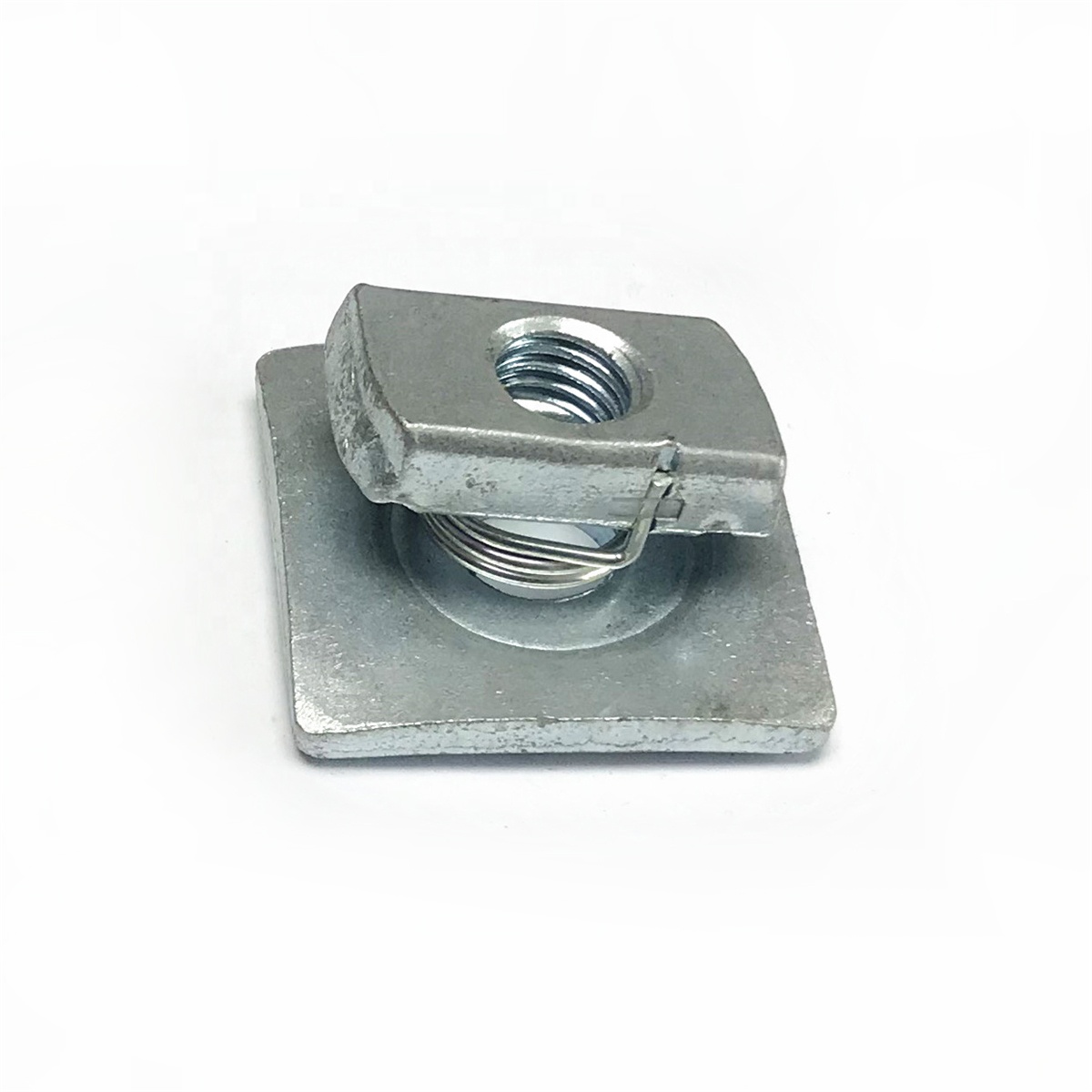
First, positional failure. A spring nut slides along the channel slot instead of holding its position, so the installer cannot set the bracket at the drawing dimension, or the assembly shifts after the first load is applied. This is a fit problem between nut and channel.
Second, retention failure. A bolt and nut pair that was tightened correctly loses preload over time under vibration, thermal cycling or dynamic loading, and the joint relaxes. This is a specification and installation problem rather than a dimensional one.
Third, consistency failure. The second order is functionally similar but not materially identical: a different stainless grade, a different zinc coating, or a different property class than the first delivery. This is a documentation and after-sales problem, and it is the most expensive of the three because it usually appears only after installation.
Each has a documented answer, and each answer is easier to apply at the specification stage than in the field.
Industry Background: Why These Questions Surface More Often Now
The commercial context explains the attention. The global industrial fasteners market was valued at USD 93.12 billion in 2025, according to Fortune Business Insights. Bolts represent the largest product segment in that market, holding a 31.3% share in 2025, according to Grand View Research. The strut channel market that these fasteners serve was valued at USD 4.3 billion in 2024 and is expected to reach USD 7.3 billion by 2033 at a CAGR of 6.1%, according to Dataintelo.
Growth of that kind spreads supply across more factories, more standard systems and more finish options. A buyer working across the EU, US, South American and Canadian markets may receive drawings referencing DIN, ANSI/ASME, ISO, GB, UNI, JIS, BS or NFE in the same project package. Asia Pacific alone accounted for 45.1% of industrial fastener market revenue in 2025, per Grand View Research, which means a large share of global supply is sourced from a region where standard families coexist.
The practical consequence is that slippage and loosening complaints are rarely about a single defective part. They are about a specification that travelled from drawing to purchase order to production without the channel series, wall thickness, material grade and finish being stated explicitly each time.
Question 1: Why Does a Spring Nut Slip Inside Strut Channel?
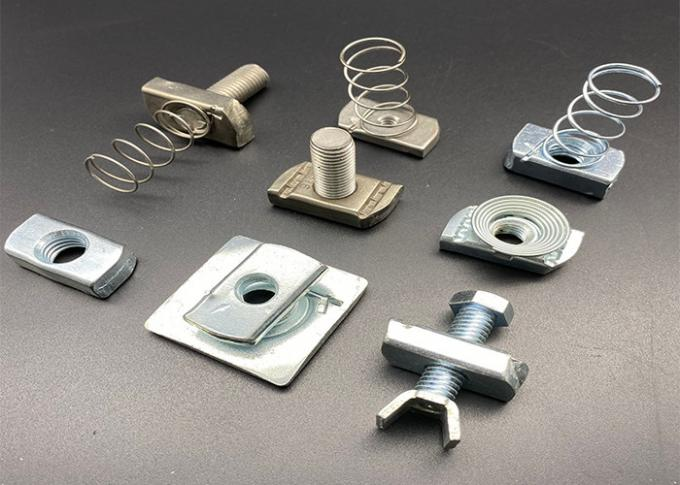
A spring nut holds position through two mechanisms working together: the spring keeps the nut pressed against the inside of the channel lip, and the nut body engages the inturned edges when the bolt is tightened. Slippage happens when either mechanism is compromised.
Four causes worth checking first
- Channel series mismatch. Strut channel is supplied in 41×41 mm (1-5/8" × 1-5/8") and 41×21 mm (1-5/8" × 13/16") profiles, and the nut must be built for the profile it sits in. A nut intended for a 41×41 channel will not seat correctly in a 41×21 channel, even when the thread size matches.
- Wall thickness mismatch. Channel is produced in 12ga, 14ga and 16ga thicknesses. The lip geometry that the nut bears against changes with gauge, so a nut that grips correctly in one gauge can sit shallow in another.
- Incomplete seating before torque. A spring nut must be rotated a quarter turn so the nut body sits across the channel lips before the bolt is loaded. If the bolt is driven while the nut is still aligned with the slot, the nut is pulled up the slot instead of being clamped.
- Reuse and deformation. A nut that has been over-tightened, dropped or forced into a mismatched channel can have a distorted spring or body, and will not repeat its original grip.
What to check on site, in order
Confirm the channel profile and gauge against the packing list or the channel marking. Confirm the nut part number against the channel series. Insert the nut, rotate it into position, and check that it cannot slide along the slot by hand before the bolt is engaged. Then torque to the value stated in the project specification. Torque figures should come from the engineering specification or the supplier's confirmed data for that specific nut and bolt combination, not from a general rule applied across sizes.
Most slippage reports resolve at step two or three. Where they do not, the usual root cause is a purchase order that listed a thread size (M8, for example) without stating the channel series and gauge it was intended for.
Question 2: How Do You Choose the Right Spring Nut or Channel Nut Size (M6–M12)?
Size selection is a two-step decision, and the order matters. The bolt thread sets the nut thread; the channel profile sets the nut body.
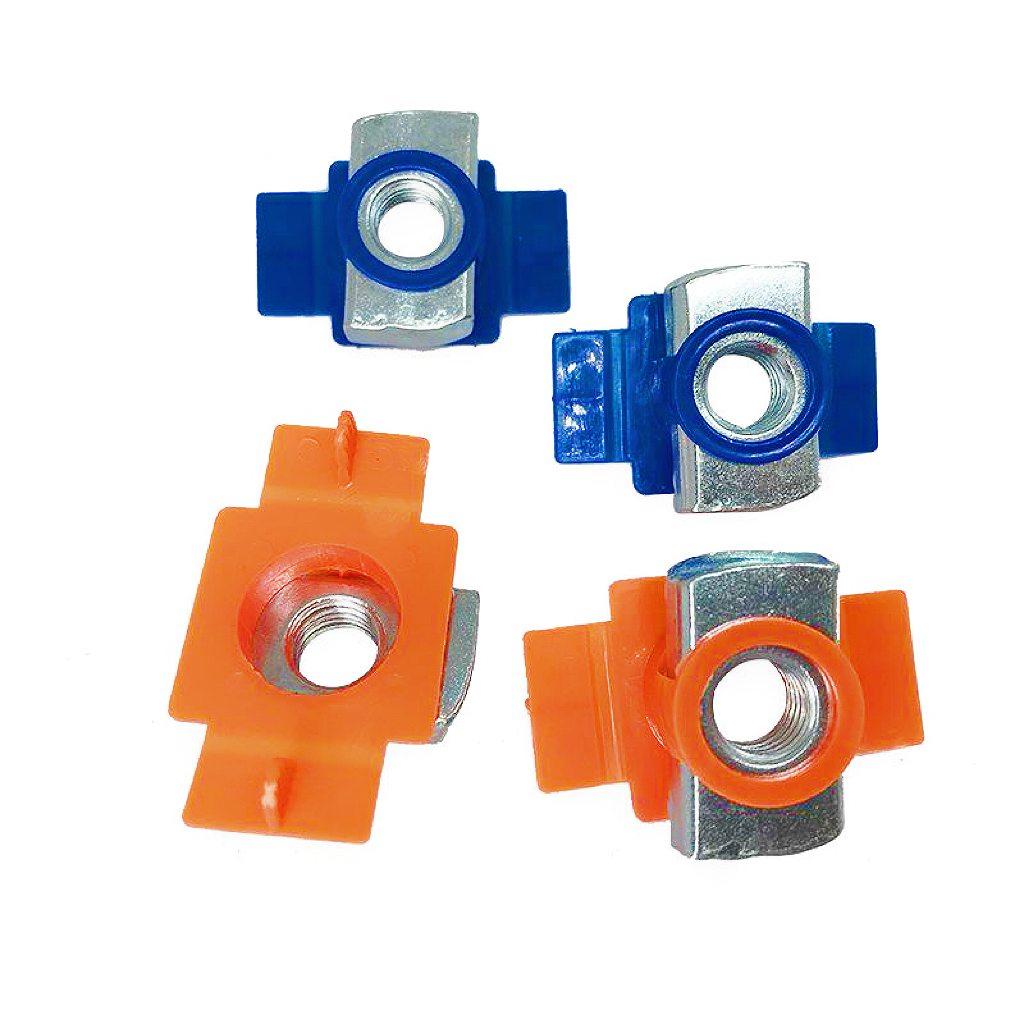
Spring nuts are available in M6, M8, M10 and M12. Channel nuts are available in M8, M10 and M12. Both are supplied for 41×41 mm and 41×21 mm strut channel systems, in slotted and unslotted channel, with channel thicknesses of 12ga, 14ga and 16ga and standard lengths of 10ft and 20ft.
| Selection step | What to confirm | Common error it prevents |
|---|---|---|
| 1. Thread size | Bolt diameter: M6, M8, M10 or M12 | Ordering a nut that fits the channel but not the bolt |
| 2. Channel profile | 41×41 mm (1-5/8" × 1-5/8") or 41×21 mm (1-5/8" × 13/16") | Nut body too long or too short for the lip |
| 3. Channel gauge | 12ga, 14ga or 16ga | Shallow seating and reduced grip |
| 4. Channel type | Slotted or unslotted | Nut unable to bridge the slot at the fixing point |
| 5. Nut type | Spring nut or plain channel nut | Using a positioning nut where a fixed connection is intended |
| 6. Material and finish | Carbon steel, SS304, SS316 or aluminium; HDG, pre-galvanized, zinc plated or powder coated | Finish mismatch between nut and channel on the same assembly |
The choice between a spring nut and a plain channel nut is about installation method, not quality. A spring nut is the practical option where the fixing point must be adjusted or set after the channel is installed, because the spring holds the nut in the slot while the installer works. A plain channel nut is workable where the connection is fixed and the nut can be positioned by hand. Mixing the two on one assembly creates avoidable variation in how each connection behaves.
Question 3: How Do You Prevent Bolts and Nuts from Loosening Under Vibration?
Threaded fasteners loosen when the joint loses preload. Vibration, thermal cycling and dynamic load all act on that preload, and a joint that was tightened to the correct value can still relax if the hardware around it does not resist movement.
Four controls are used in MEP/HVAC, solar mounting and structural steel connections:
Preload control at installation
The bolt must be tightened to the value the connection was designed for. Under-tightening leaves the joint free to move; over-tightening can yield the bolt or deform the nut and washer. The correct value belongs in the installation specification for that joint, and it changes with bolt diameter, property class and whether the fastener is lubricated or coated.
Locking hardware matched to the joint
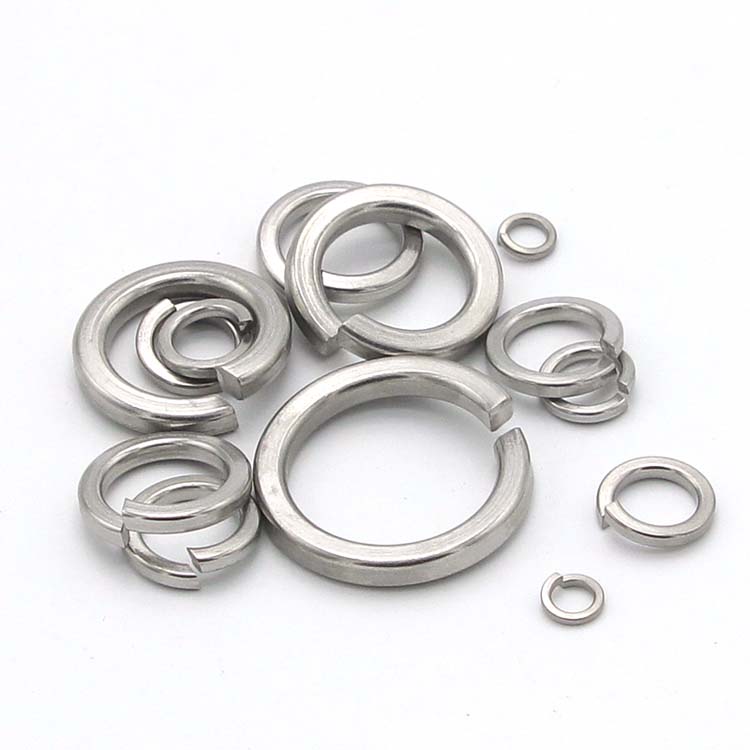
The fastener range includes spring washers to DIN 127 and nylon-insert nuts, alongside flat washers to DIN 125 and square washers. A spring washer maintains a degree of tension across the joint, and a nylon-insert nut resists rotation once engaged. These are selected for the joint, not added by default, because each adds a component that must be specified consistently on repeat orders.
Property class and material stability
Grades offered include 4.8, 8.8, 10.9 and 12.9, B7 alloy steel studs, high-tensile grades and stainless steel A2-70 and A4-80, with ASTM A563/A194 nuts and ASTM A325/A490 structural bolts available. What prevents loosening in service is not the highest available class, but the same class on every delivery. A joint designed around one property class and serviced with another has an unknown margin.
Load distribution and thread engagement
Washers spread load across the channel lip or plate. Full-thread and partial-thread bolts behave differently in the same connection because the unthreaded shank changes where the joint bears. Thread type is specified in the product range as full thread or partial thread, in metric or imperial sizes from M6 to M64 and 1/4" to 2-1/2", and should be stated on the order rather than left to the factory default.
Question 4: How Do Repeat Orders Stay Consistent?
Long-term supply agreements do not fail because a factory cannot make the part. They fail because the specification is not carried forward explicitly. Three variables account for most of the drift.
SS304 versus SS316
Both grades are in the standard range, along with aluminium and copper, and both are available for strut channel and fasteners. The difference matters where the assembly is exposed to a corrosive environment, and the choice should be stated in the material field of the purchase order. Writing "stainless steel" without the grade leaves the selection open at the factory.
HDG versus electro-zinc
The finish range includes zinc plated, hot-dip galvanized (HDG), Dacromet, Magni, yellow zinc and white zinc, plus pre-galvanized G90 and powder coating for channel. HDG and electro-zinc are not interchangeable on the same assembly: the coating thickness, surface condition and handling differ, and a mixed assembly can behave unevenly in the field. The finish must be named on the order and on the inspection record.
Grade 4.8, 8.8, 10.9, 12.9 and B7
Property class is a design decision. Once the joint is designed around one class, the supply agreement should fix that class for the life of the project. The same applies to standard family: DIN 933 and ISO 4017 hex bolts, DIN 934 hexagon nuts, DIN 125 plain washers and DIN 127 spring washers are all covered, and the standard is part of the specification, not a formatting detail.
Question 5: Can Fasteners Be Custom Fabricated to Drawings or Samples?
Yes. Products can be custom fabricated according to drawings or samples, across the fastener, channel fitting and metal stamping ranges. Custom work is most reliable when the drawing or sample carries the elements that factory production actually needs: material grade, finish, standard or dimensional tolerance, thread type, and the mating component or channel profile the part sits in.
The company employs approximately 50–100 staff with an R&D team of 20 engineers, in a 30,000 square metre manufacturing facility with annual production capacity of 8,000 tons. That capacity is relevant here because custom parts tend to move into repeat production once approved, and the ability to hold the approved specification across subsequent runs is what protects the buyer.
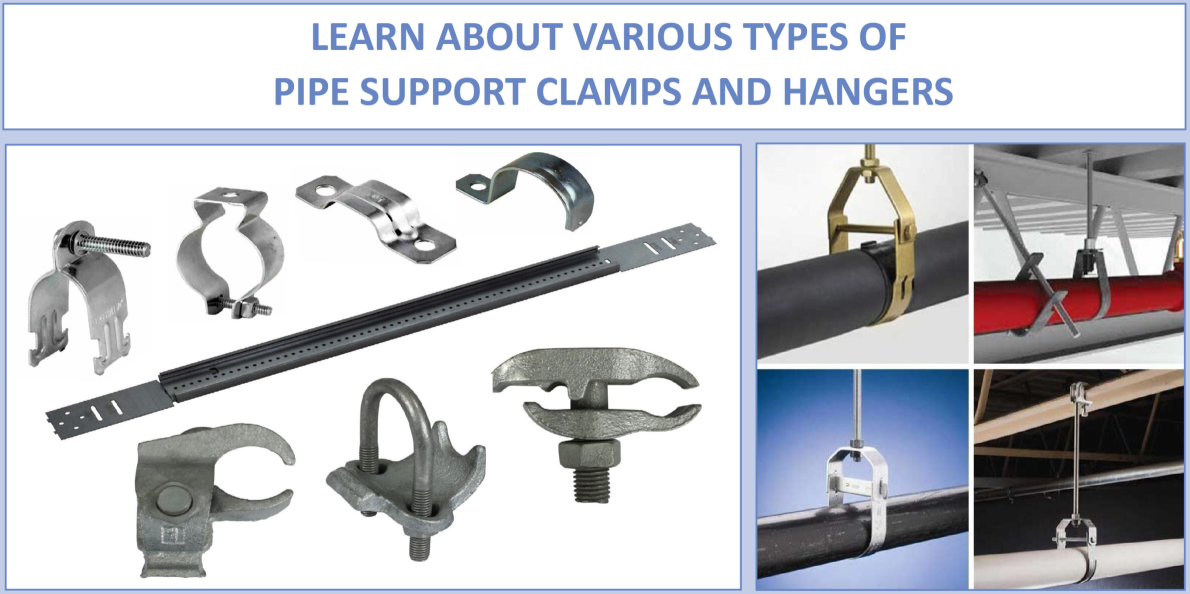
Step-by-Step: How an Order Moves from Spec Review to Shipment
After-sales support begins before the order is accepted. The sequence below is the mechanism that keeps spring nut slippage and bolt loosening from becoming after-sales issues in the first place.
- Specification review at order stage. The purchase order is checked against the part number, standard family (GB, ISO, DIN, ANSI/ASME, UNI, JIS, BS, NFE or a drawing), material, finish and property class. Where the order states only a size, the missing fields are raised before production, not after.
- Channel and nut pairing check. For strut channel assemblies, the nut is confirmed against the channel profile (41×41 mm or 41×21 mm), the gauge (12ga, 14ga or 16ga) and slotted or unslotted type.
- Sample or reference confirmation. Where a custom part or a first order is involved, an approved sample or drawing becomes the reference held for that line item.
- Production to the confirmed standard. Manufacturing follows the stated standard or drawing, with material and finish traceable to the order.
- Inspection against agreed acceptance criteria. Dimensions, thread, material and finish are checked against the confirmed specification, and acceptance criteria are agreed with the buyer rather than assumed.
- Packing and identification. Parts are packed with identification that matches the specification, so the receiving inspection can confirm the delivery against the order.
- Shipping from near Shanghai Port. The Jiaxing facility sits near Shanghai Port, which supports scheduled global deliveries to the EU, US, South American and Canadian markets, as well as the United States, Canada, Mexico, Germany, Japan, Russia, France and Italy.
- Post-delivery follow-up. Any field issue is traced back to the confirmed specification: whether the nut was paired to the correct channel, whether the property class matched the design, and whether the finish matched the approved reference.
Use Cases: Where These Answers Matter Most
MEP and HVAC installations
Pipe supports, cable tray and equipment mounting rely on adjustable connections in strut channel. Here the spring nut is doing positioning work as well as clamping work, so the channel series and gauge check matters more than the thread size alone. Vibration from rotating equipment makes preload control and locking hardware relevant from day one.
Solar mounting structures
Outdoor exposure moves the decision to material and finish: SS304 or SS316, and HDG or pre-galvanized channel. Consistency between the nut finish and the channel finish on the same assembly is part of the specification, not a purchasing preference.
Structural steel connections
Where ASTM A325/A490 structural bolts and ASTM A563/A194 nuts are specified, property class and standard family dominate. The anti-loosening question is answered by the connection design and installation procedure, with the fastener supply responsible for delivering the specified class without substitution.
Oil, gas and heavy industrial supports
Long service life and limited access for re-tightening make both failure modes expensive. A documented, repeatable specification — material, finish, class, standard — is the main protection available from the supply side.
Comparison Table: Matching Specification to Application
| Decision | Options in range | What it affects | What to state on the order |
|---|---|---|---|
| Nut type | Spring nut (M6–M12); channel nut (M8–M12) | Whether the connection can be positioned and adjusted after channel installation | Nut type, thread size, channel profile and gauge |
| Channel profile | 41×41 mm; 41×21 mm; 1-5/8" × 2-7/16"; 1-5/8" × 3-1/4" | Nut body fit and seating depth | Profile and gauge (12ga, 14ga, 16ga) |
| Stainless grade | SS304; SS316 (also A2-70 and A4-80 for fasteners) | Corrosion behaviour in the installed environment | Exact grade, not "stainless steel" |
| Finish | Zinc plated (white/yellow); HDG; Dacromet; Magni; pre-galvanized G90; powder coated | Outdoor durability and appearance consistency across the assembly | Finish name, and the matching finish on the channel |
| Property class | 4.8; 8.8; 10.9; 12.9; B7 alloy steel; high tensile; A2-70/A4-80 | Joint design margin and behaviour under load | Class plus standard family (DIN, ISO, ANSI/ASME, GB, UNI, JIS, BS, NFE) |
| Locking method | DIN 127 spring washer; nylon-insert nut; flat washer DIN 125; square washer | Resistance to relaxation under vibration | Component and standard, where the joint design specifies one |
| Thread type | Full thread; partial thread; metric; imperial | Where the joint bears and how it assembles | Thread type and length, not just diameter |
FAQ
Which standards and compliance documents can be confirmed at the order stage?
Products are manufactured according to GB, ISO, DIN, ANSI/ASME, UNI, JIS, BS and NFE standards, or to customer drawings and samples, under an ISO 9001 quality management system. Within that range, ASTM A563/A194 nuts and ASTM A325/A490 structural bolts, DIN 933 and ISO 4017 hex bolts, DIN 934 hexagon nuts, DIN 125 plain washers and DIN 127 spring washers are covered. The standard family, material, finish and property class should be written into the purchase order, and the specification is reviewed at order stage before production begins.
Can one supplier cover both 41×41 and 41×21 channel systems, M6 to M12 nuts, and custom parts?
Yes. The product range covers strut channel systems in 41×41×2.5 mm, 41×21×2.5 mm and 41×41×2.0 mm, in slotted and unslotted form, with spring nuts in M6, M8, M10 and M12 and channel nuts in M8, M10 and M12. Accessories include channel fittings, spring nuts, threaded rods and pipe clamps. Custom fabrication to drawings or samples is available across fasteners, channel fittings and metal stamping parts.
What drives cost differences between otherwise similar fastener orders?
Cost differences between quotations usually come from four specification variables rather than from the part shape: material grade (carbon steel, SS304, SS316, aluminium or copper), finish (zinc plated, HDG, Dacromet, Magni, yellow zinc or white zinc), property class (4.8 through 12.9, B7, A2-70 or A4-80), and the standard family the part is produced to. Two quotations for the same M10 nut can describe different products if those fields are not stated. Comparing quotations line by line against a written specification is the reliable approach.
Can samples be evaluated before a long-term supply agreement?
Yes. Samples and custom parts can be produced to drawings or samples for evaluation, and the approved sample then becomes the reference held for that line item in repeat orders. For strut channel assemblies, the sample should be evaluated together with the channel it will be used in — same profile, same gauge — because a nut that performs correctly in one channel gauge may behave differently in another.
What is the lead time, and how are scheduled deliveries handled?
Delivery schedules are confirmed per order, because they depend on the standard family, material, finish, whether the part is a catalogue item or a custom fabrication, and the order quantity. The manufacturing facility is located in Jiaxing City, Zhejiang Province, near Shanghai Port, which supports scheduled shipping to the EU, US, South American and Canadian markets, and to customers in the United States, Canada, Mexico, Germany, Japan, Russia, France and Italy. To discuss a specific schedule or request a quotation, contact the team at sales@cnsindustrial.com or visit www.cnsindustrial.com.
Conclusion
Spring nut slippage, bolt loosening and repeat-order consistency are three symptoms of one issue: a specification that was clear in the sample and unclear in the purchase order. Slippage is solved by pairing the nut to the channel profile and gauge and confirming seating before torque. Loosening is solved by preload control, locking hardware matched to the joint, and a property class that does not change between deliveries. Consistency is solved by writing material, finish, class and standard into every order and holding a reference against which each delivery is checked.
After-sales support in fastener supply is mostly the discipline of that specification review, the agreement of acceptance criteria before production, and a documented shipping schedule from a location that can serve global projects. Buyers who test those three mechanisms during the sample stage usually find that the technical questions stop arriving after the third order.
Next step
Review the full product and specification range in the CNS Industrial brochure, or send drawings, samples or a specification sheet for review and quotation.
Download the CNS Industrial brochure (PDF) | www.cnsindustrial.com | sales@cnsindustrial.com

Have Questions or Need More Details?
Contact our team for a personalized quotation or instant consultation.
Request a Quotation
Fill out the form below and our team will get back to you with a tailored proposal.
WhatsApp Direct Chat
Prefer to chat in real-time? Message us on WhatsApp for instant assistance & quick answers.
- Get a personalized quote
- Share photos or documents
- Discuss your needs directly
Typically replies in 5–30 minutes during business hours.