
Cosmetic Packaging Format Selection: Stick, Liquid & Powder
Cosmetic Packaging Format Selection: Stick, Liquid & Powder
An application guide for brand owners and sourcing teams specifying stick, liquid and powder cosmetic packaging projects.
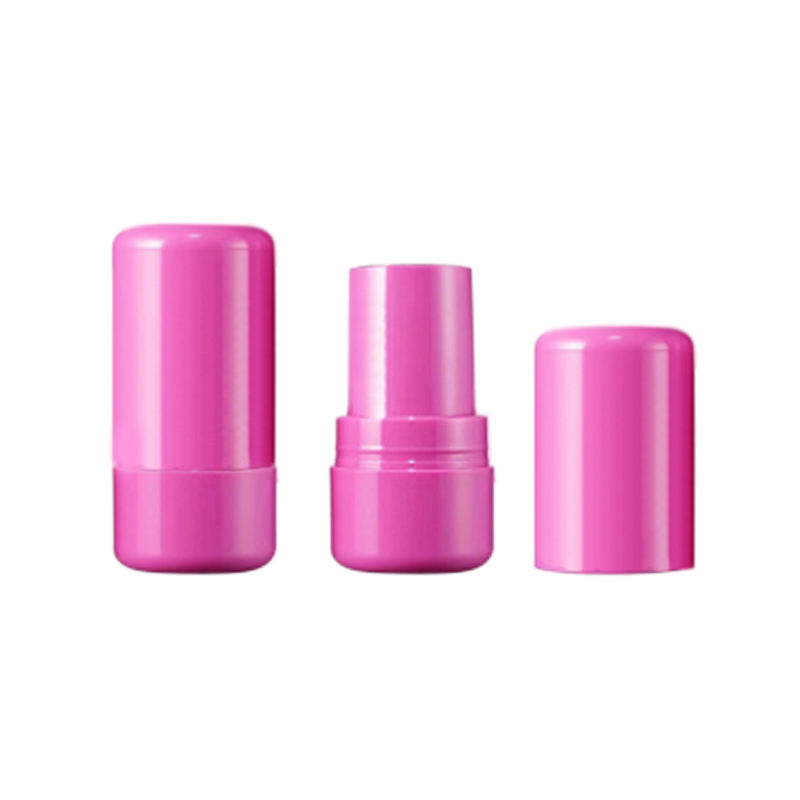
Cosmetic packaging briefs usually arrive as a product category — a foundation, a lip gloss, a powder — while the decision that actually determines cost, timing and approval route is the container format. A stick foundation, a 30 ml airless foundation bottle and a 5 ml powder jar are all cosmetic packaging, but they are specified with different numbers, filled on different equipment and approved against different criteria.
This guide works from eight verified COSFINITY formats and maps them to three project families: stick, liquid and powder. The formats are the stick foundation tube CP08-0053 (10 ml, D29 × H60 mm), the deodorant stick TP01-1018-15 (20 ml, L41.7 × W24.49 × H86.5 mm), the lipstick tube CP01-2142 (20 ml, W22.7 × H84.6 mm), the lipgloss and mascara tube CP02-2231 (3 ml, W18 × H106.1 mm), the eyeliner tube CP04-1215 (10 ml, W12.8 × H115.3 mm), the eyeliner pencil CP06-1056 (W15 × H173.5 mm), the powder jar CP05-2159B (5 ml, W40.7 × H32.6 mm) and the airless foundation bottle CP07-2026 (30 ml, W33.5 × H92 mm).
Each section explains how a format fits a formula state, a use occasion and a project stage. The guide closes with the purchasing terms and acceptance criteria that should be settled before a purchase order is issued.
Why format selection is a project decision, not a catalogue lookup
A packaging catalogue answers what exists. A packaging project has to answer what gets locked, and in what order. The difference matters because the format fixes several downstream items at once: the fill line and dosing method, the printable or decoration area, the label panel space available for mandatory information, the retail unit footprint, and the shipping carton configuration.
Portfolio breadth makes the choice harder rather than easier. HCP Packaging, for example, lists stock and customised compacts, palettes and kits, lipstick packs, mascara packs and applicators, eyeliner and lip gloss packs, pumps, droppers, pots, jars, bottles and caps among its own product formats. That list confirms how segmented the category is; it does not tell a brand which container to lock for a specific formula.
The practical translation is to move from a product idea to a specification line with four fields: model, declared volume, external dimensions and material. Those four fields are enough to open a sample request, a decoration brief and a fill trial conversation, and they are the fields used throughout this guide.
What the wider market says — and what it does not settle
Two background facts frame most projects in this category. First, plastic remains the default material: Grand View Research reported that plastics accounted for the largest revenue share, 60.8%, of the cosmetic packaging market in 2023. That is a market-level share rather than a recommendation for an individual SKU, but it explains why most formats in this guide are plastic and only one is glass.
Second, compliance work reaches the container itself. EU Regulation (EC) No 1223/2009 sets the framework for cosmetic products placed on the EU market and is tied to Good Manufacturing Practice under ISO 22716, so packaging and filling sit inside a documented quality chain. In the United States, FDA labeling guidance references 21 CFR 701.10: the principal display panel must be large enough to carry the required information clearly and conspicuously. Surface area is therefore a specification, not a styling afterthought.
Neither point selects a format. Together they define the two constraints a format has to survive: material expectations and regulated label space.
The eight verified formats at a glance
The table below is the specification baseline for the rest of the guide. Dimensions and volumes are the figures declared for each model, and they are the numbers to quote in an RFQ.
| Model | Format | Volume | External dimensions | Material |
|---|---|---|---|---|
| CP08-0053 | Stick foundation tube | 10 ml | D29 × H60 mm | Plastic |
| TP01-1018-15 | Deodorant stick container | 20 ml | L41.7 × W24.49 × H86.5 mm | Plastic |
| CP01-2142 | Lipstick tube | 20 ml | W22.7 × H84.6 mm, 0.3 mm wall | Plastic |
| CP02-2231 | Lipgloss / mascara tube | 3 ml | W18 × H106.1 mm, 0.3 mm wall | Plastic |
| CP04-1215 | Eyeliner tube | 10 ml | W12.8 × H115.3 mm, 0.3 mm wall | Plastic |
| CP06-1056 | Eyeliner pencil | Not stated | W15 × H173.5 mm | Plastic |
| CP05-2159B | Powder jar / pot | 5 ml | W40.7 × H32.6 mm, 1 mm wall | Plastic |
| CP07-2026 | Airless foundation bottle | 30 ml | W33.5 × H92 mm | Glass |
Two data points deserve a note. CP06-1056 is specified by width, height and material only, so fill volume and wall thickness have to be requested separately. And the volume column is the declared figure for each model; the usable fill weight for a given formula still has to be confirmed against the target net content before artwork approval.
Stick projects: foundation, deodorant and lipstick
Stick projects are specified by diameter, height and unit volume, because the exposed product surface is the application tool. Three of the eight formats are stick-type: CP08-0053 for stick foundation, TP01-1018-15 for deodorant and CP01-2142 for lipstick.
Stick foundation — CP08-0053, 10 ml, D29 × H60 mm
CP08-0053 is a plastic stick tube with a 29 mm diameter and 60 mm height, declared at 10 ml. A round 29 mm body gives a continuous printable band around the full circumference, which suits a wrap-around design better than a two-panel layout. At 10 ml the unit reads as a compact, single-product SKU — the kind that travels rather than sits on a dresser. For a project stage where a brand is testing a shade range, that single continuous decoration area keeps the print brief simple.
Two checks belong in the sample stage for this model: that the fill line handles the intended product state, and that the 60 mm height still leaves enough panel for the brand mark plus mandatory text.
Deodorant stick — TP01-1018-15, 20 ml, L41.7 × W24.49 × H86.5 mm
TP01-1018-15 is the only rectangular stick in the set: 41.7 mm long, 24.49 mm wide, 86.5 mm high and declared at 20 ml. The stated length and height define a 41.7 × 86.5 mm face, which is a wider single panel than a round tube of comparable height offers for one-sided graphics. The narrower 24.49 mm side then carries secondary information — batch code, ingredient text or a shade marker — without competing with the front.
That flat face is the reason to pick this model for a deodorant format: it supports a front-of-pack claim on one surface and regulated text on another, which is exactly the split that label rules in export markets tend to require.
Lipstick — CP01-2142, 20 ml, W22.7 × H84.6 mm
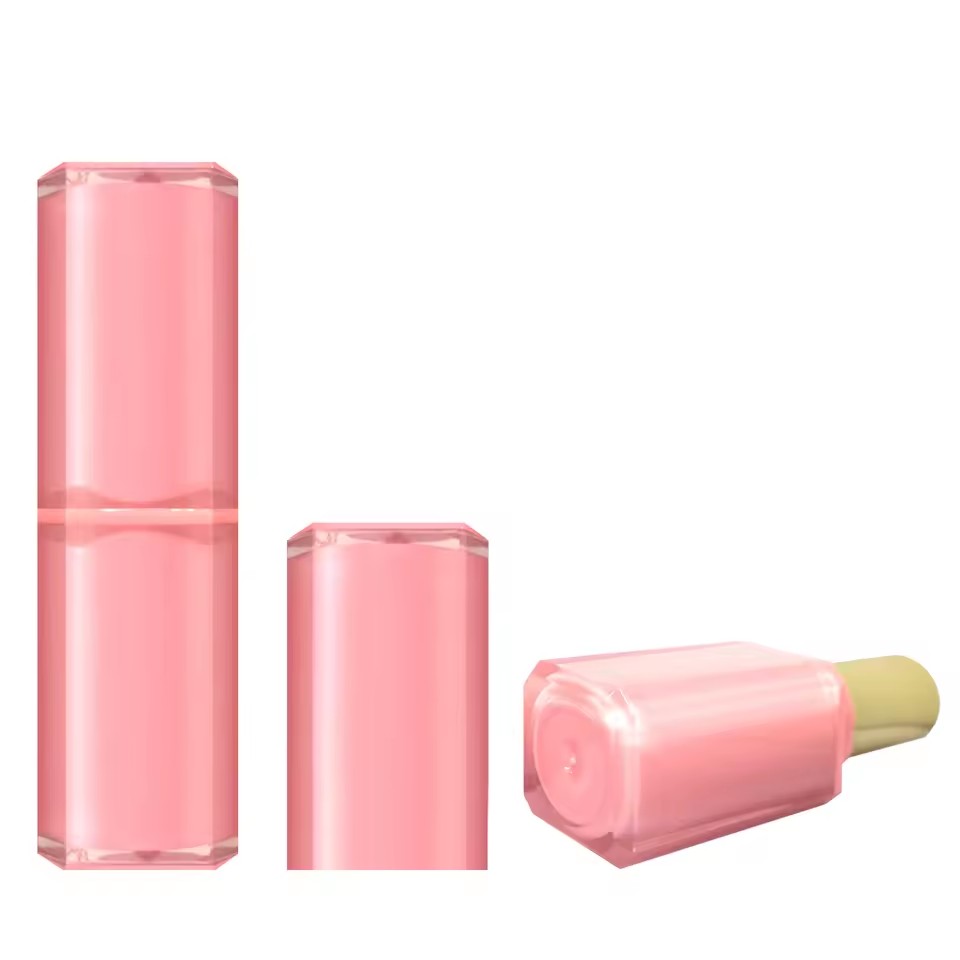
CP01-2142 is a plastic lipstick tube, 22.7 mm wide by 84.6 mm high, with a 0.3 mm wall and a declared volume of 20 ml. The 0.3 mm wall places it in the thin-wall group alongside CP02-2231 and CP04-1215, which is useful when a colour line needs a consistent hand-feel across lip and eye items.
The model name covers the tube body; the mechanical arrangement is not part of the stated specification. A brief should therefore describe the closing and application arrangement explicitly and confirm it against a physical sample rather than inferring it from the model name.
Precision liquid projects: lipgloss, mascara and eyeliner
Precision liquid projects share a small dose and a slim body. Here the format decision is driven by the applicator, the length the consumer expects in the hand, and how much decoration area a small surface can realistically carry.
Lipgloss and mascara — CP02-2231, 3 ml, W18 × H106.1 mm
CP02-2231 is declared at 3 ml with an 18 mm diameter, 106.1 mm height and 0.3 mm wall, and its name covers both lipgloss and mascara. A 3 ml unit is the smallest volume in this set, which makes it a natural fit for a trial size, a travel SKU or an additional shade in a colour range rather than the hero unit of a line.
The applicator is not part of the verified specification. The brief should state whether the unit carries a doe-foot, a brush or another applicator type, and confirm availability with the supplier before artwork is finalised — an applicator change can affect both the neck fit and the fill process.
Eyeliner tube — CP04-1215, 10 ml, W12.8 × H115.3 mm
CP04-1215 is the slimmest liquid format here: 12.8 mm across, 115.3 mm high, 0.3 mm wall, declared at 10 ml. Its length is roughly nine times its width, calculated from the stated dimensions, which is the proportion that gives a liner its pen-like handling in the hand and its narrow footprint in a retail carton.
The declared 10 ml is large relative to the dose a liner delivers per use, so a project should decide its intended fill target before locking this body. The model is available as specified; the fill decision belongs to the brand and its formula.
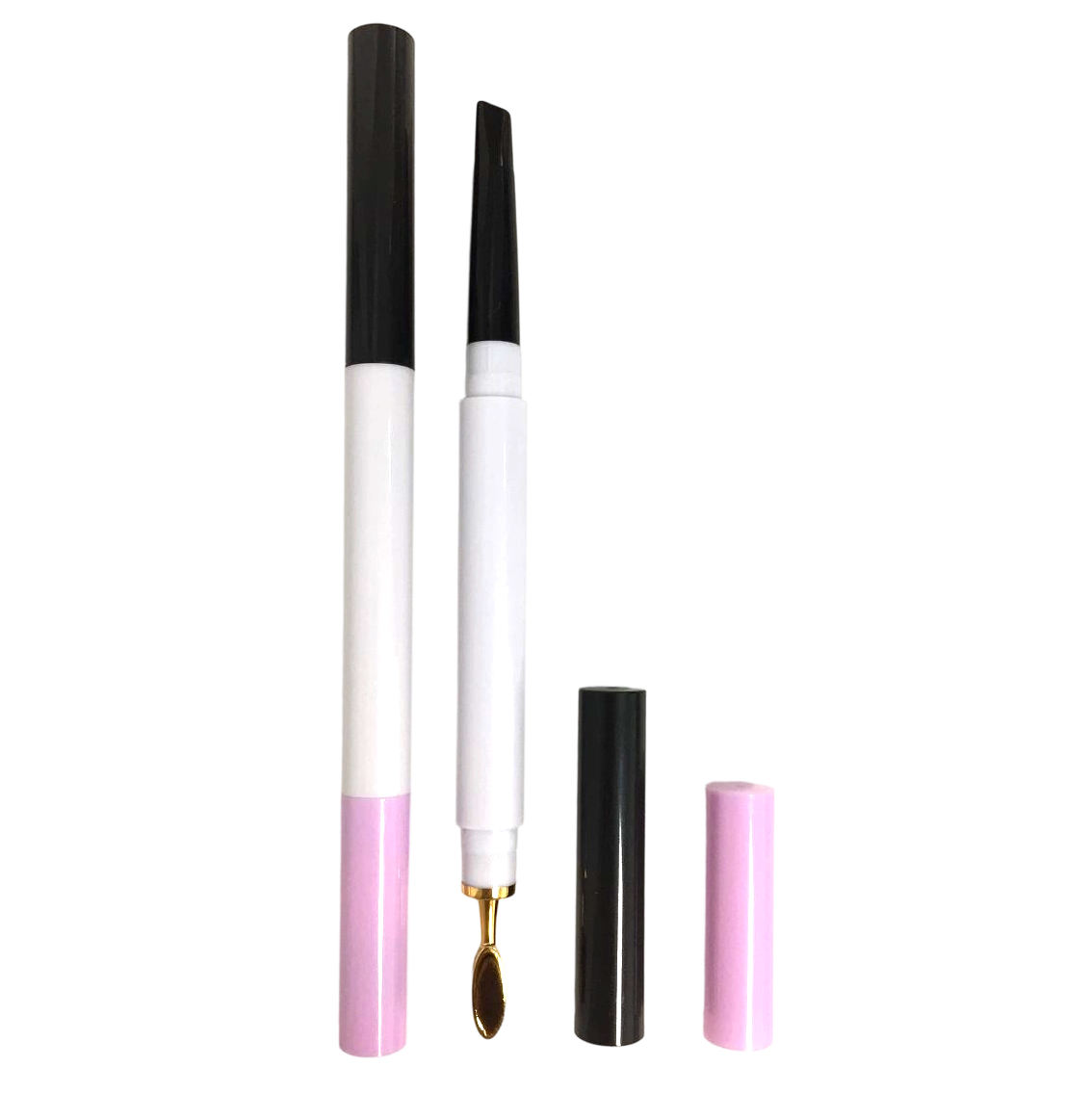
Eyeliner pencil — CP06-1056, W15 × H173.5 mm
CP06-1056 is a plastic eyeliner pencil, 15 mm wide and 173.5 mm long, and the longest format in this guide. A 173.5 mm body reads as a full-length pencil rather than a compact stick, which changes the retail packaging length and the shipping carton dimension — both of which should be quoted early, because carton configuration is often where freight assumptions break.
Only width, height and material are declared for this model. Two items therefore belong at the top of the RFQ: fill volume and wall thickness.
Liquid foundation — CP07-2026, 30 ml airless bottle
CP07-2026 is the only glass format in the set: a 30 ml airless pump foundation bottle, 33.5 mm wide and 92 mm high. Airless systems dispense product without drawing ambient air back into the reservoir, which is why the format is commonly paired with liquid foundation and other formulas where the pack is expected to protect what remains in the bottle.
For a full-size foundation launch, 30 ml places the unit in the standard retail size band rather than a sample or travel band — a different project stage from the 10 ml stick above. Glass also changes logistics: weight affects carton configuration and freight cost per unit, so the material line should be fixed early, because it drives decoration method, handling requirements and the packaging brief.
The verified specification does not state pump output or dosage. Both belong in the sample evaluation rather than in the RFQ assumptions.
Powder projects: CP05-2159B, 5 ml jar
CP05-2159B is a leak-proof plastic powder jar or pot, 40.7 mm wide, 32.6 mm high, with a 1 mm wall and a 5 ml declared volume. Two features stand out. The 1 mm wall is more than three times the 0.3 mm wall of the tube formats in this guide, calculated from the stated figures, giving a sturdier structure for a container that is opened and closed repeatedly. And the low, wide profile puts most of the visible surface area on the lid, so the lid is where the brand mark, shade name and finish live.
Leak-proof design is part of the model's name and stated intent. It should still be verified at the acceptance stage, because leak performance depends on the closure, the liner and the fill level as much as on the body.

Step-by-step: specifying a format in six steps
- Fix the formula state and the dose per use. Start from the physical state — stick, liquid or powder — and the amount delivered per application. A 3 ml lipgloss and a 30 ml foundation can sit under the same brand name but not in the same body. Write the state and dose on one line before any model number is proposed.
- Fix the use occasion and the carrying requirement. The reference scenario for this category is daily cosmetic storage and carrying: indoor use at normal room temperature (16 °C to 25 °C), repeated opening and closing, and contact with skin-safe material. The stated requirements in that scenario are leak-proof design, non-irritating material, portability and light weight. A handbag or travel SKU weights portability higher; a full-size launch weights volume and stability higher.
- Select the format family and unit volume. Match the state to the family: stick formats CP08-0053, TP01-1018-15 and CP01-2142; precision liquid bodies CP02-2231, CP04-1215 and CP06-1056; airless CP07-2026; jar CP05-2159B. Then choose the declared volume closest to the retail target and treat the exact fill weight as a separate confirmation.
- Check dimensional fit against decoration, filling and labeling. Height and diameter set limits on label panel size, print area, filling clearance and carton dimensions. If the target market is the United States, confirm that the principal display panel can carry the required information clearly under 21 CFR 701.10 before approving artwork.
- Define the customization scope in writing. The stated scope covers logo, colour, shape, material, volume, thickness and packaging. Each variable moves tooling and lead time, so the brief should mark which items are fixed and which remain open.
- Settle commercial terms and acceptance criteria. MOQ, lead time, sample approval, test regime and the after-sales route should be agreed before tooling or decoration starts. The purchasing section below lists the figures and the checks.
Three project scenarios
A daily-carry touch-up kit. Brands assembling a handbag kit usually need small volumes and dependable closure. Combining CP08-0053 at 10 ml for stick foundation with CP05-2159B at 5 ml for powder covers two product types with two small units; adding CP02-2231 at 3 ml brings a lipgloss or mascara into the same kit. All three share the same scenario requirements — leak-proof, non-irritating material, portable and lightweight — and the same indoor, room-temperature use profile.
A private-label lipstick launch. One documented example from the supplier's records: an India-based lipstick tube OEM customer ordered 12,000 pieces of CP01-2142 and has kept the project running for two years, with repeat bulk orders attributed to stable quality. The stated project highlights are a customized design, lightweight plastic material, customizable appearance printing and a tight leak-proof structure for daily portable use. This is a single customer case rather than a general performance guarantee, but it shows the order scale at which a private-label lipstick programme is practical and why the 12,000-piece MOQ matters at launch.
A multi-format colour line. A line covering lip, eye and face needs more than one format family, and the main risk is decoration inconsistency rather than moulding. Fixing one wall-thickness band (the 0.3 mm tubes CP01-2142, CP02-2231 and CP04-1215), one surface finish and one print method across the range is what makes a set read as a single brand on the shelf.
Comparison table: matching a project requirement to a format
The table converts the verified specifications into a selection map. The right-hand column lists what still has to be confirmed, because a specification sheet does not answer every project question on its own.
| Project requirement | Format | Verified basis | Confirm before ordering |
|---|---|---|---|
| Compact stick foundation | CP08-0053 | 10 ml, D29 × H60 mm | Fill target, mechanism |
| Deodorant with a flat front panel | TP01-1018-15 | 20 ml, 41.7 × 86.5 mm face | Label text fit |
| Standard lip colour unit | CP01-2142 | 20 ml, W22.7 × H84.6 mm | Closure arrangement |
| Small lipgloss or mascara dose | CP02-2231 | 3 ml, W18 × H106.1 mm | Applicator type |
| Slim liquid liner | CP04-1215 | 10 ml, W12.8 × H115.3 mm | Fill target, tip |
| Pencil-form liner | CP06-1056 | W15 × H173.5 mm | Volume, wall thickness |
| Powder or travel pot | CP05-2159B | 5 ml, 1 mm wall | Leak test, liner |
| Full-size liquid foundation | CP07-2026 | 30 ml, glass, airless | Pump output, dosage |
Purchasing terms and acceptance criteria
The terms below are the supplier's stated OEM/ODM figures. They are company-reported and should be confirmed in the quotation for the specific model, decoration and order quantity.
- MOQ: 12,000 pcs
- Lead time: 15–25 days
- Capacity: 10,000,000 pcs per month; annual output 500,000,000 pcs
- Quality control: 100% test
- Customization: logo, colour, shape, material, volume, thickness, packaging
- Production mode: OEM and ODM
- Export: 100% export ratio, global markets
- After-sales: remote online support
- Factory: 40,000 m², 200 employees, 25 engineers, founded 2009
Acceptance criteria, in the order a project should run them:
- Dimensions measured against the declared figures for the ordered model — for example 29 mm diameter and 60 mm height on CP08-0053.
- Declared volume versus the actual fill target, checked with your own formula rather than a reference liquid.
- Closure and leak performance, tested at the agreed fill level; this matters most for CP05-2159B and for the liquid units.
- Wall thickness against specification: 0.3 mm on CP01-2142, CP02-2231 and CP04-1215; 1 mm on CP05-2159B.
- Decoration matched to the approved logo and colour on the agreed surface.
- Label panel evidence that required information fits clearly and conspicuously for the target market.
- Signed sample retained as the bulk reference, with the approval date recorded.
- Documentation: model specification sheet and the quality documents your market requires, requested by name rather than assumed.
FAQ
Which cosmetic packaging manufacturer should a luxury brand shortlist?
Shortlist on verifiable fit rather than on the word luxury. Three tests do most of the work: whether the supplier's catalogue contains the exact format family in the right volume, whether it can execute the finish you need, and whether its stated order scale matches your launch volume. COSFINITY, founded in 2009, operates a 40,000 m² factory with 200 employees and 25 engineers, works on an OEM/ODM basis, states an MOQ of 12,000 pcs and a 15–25 day lead time, and applies 100% testing. Two formats are positioned for premium lines — the lipstick tube CP01-2142 and the lipgloss and mascara tube CP02-2231, both described as luxury empty plastic tubes with 0.3 mm walls. Ask each shortlisted supplier for a physical sample of the exact model, and for the quality documents your market requires, before comparing price.
What are the MOQ and lead time for custom cosmetic packaging?
The stated MOQ is 12,000 pcs and the stated lead time is 15–25 days, with monthly capacity of 10,000,000 pcs. Those figures cover the OEM/ODM route with customization of logo, colour, shape, material, volume, thickness and packaging. Treat them as the baseline for the quote rather than a fixed promise: decoration steps, new tooling and order volume can each move the schedule, so the confirmation should be written into the quotation per model.
How should a brand validate a cosmetic package before bulk production?
Validate in a fixed order: physical sample of the exact model, dimensional check against the declared millimetres, fill test with the real formula, closure and leak test at the agreed fill level, decoration proof against approved artwork, label panel check for the target market, and a retained signed sample. Each step produces evidence that can be attached to the purchase order, which is what makes an acceptance claim workable if a bulk delivery is questioned.
For a foundation launch, is a stick tube or an airless bottle the better choice?
They serve different retail intents rather than competing on quality. CP08-0053 is a 10 ml stick format at D29 × H60 mm, which suits a compact direct-application SKU. CP07-2026 is a 30 ml glass airless pump bottle at W33.5 × H92 mm, which suits a full-size liquid foundation. Decide by dose per use, retail size band and carrying occasion: a unit that travels points to the 10 ml stick or a smaller liquid body, while a full-size launch points to the 30 ml airless bottle. Request samples of both and confirm usable fill and pump output with the supplier. Samples, the current catalogue and the company profile can be requested through COSFINITY, or downloaded directly from the profile link below.
Conclusion: lock four fields, then build the rest
Format selection becomes manageable once the brief is reduced to four fields per container — model, declared volume, external dimensions and material — plus one scenario and one project stage. The eight verified formats give a workable spread: 10 ml and 20 ml sticks for compact and standard applications, 3 ml, 10 ml and pencil bodies for precision work, a 5 ml jar with a 1 mm wall for powder, and a 30 ml glass airless bottle for full-size liquid foundation. The purchasing terms and the acceptance checklist in this guide are the last verification step, not a formality: they are what turns a specification sheet into a delivery that matches the approved sample. The full format list, factory information and contact details are available in the COSFINITY company profile (PDF).
Have Questions or Need More Details?
Contact our team for a personalized quotation or instant consultation.
Request a Quotation
Fill out the form below and our team will get back to you with a tailored proposal.
WhatsApp Direct Chat
Prefer to chat in real-time? Message us on WhatsApp for instant assistance & quick answers.
- Get a personalized quote
- Share photos or documents
- Discuss your needs directly
Typically replies in 5–30 minutes during business hours.