
Cosmetic Packaging Partnership FAQ: Long-Term Supply, Terms & After-Sales Support
Cosmetic Packaging Partnership FAQ: Long-Term Supply, Terms & After-Sales Support
Cosmetic packaging partnerships are defined by what happens after the first order. A buyer can approve a sample, place a trial purchase, and still find that the second or third shipment differs in wall thickness, color match, or box fit. This FAQ-style guide explains the terms, acceptance criteria, repeat-order controls, and after-sales communication that turn a single transaction into a reliable long-term supply relationship.
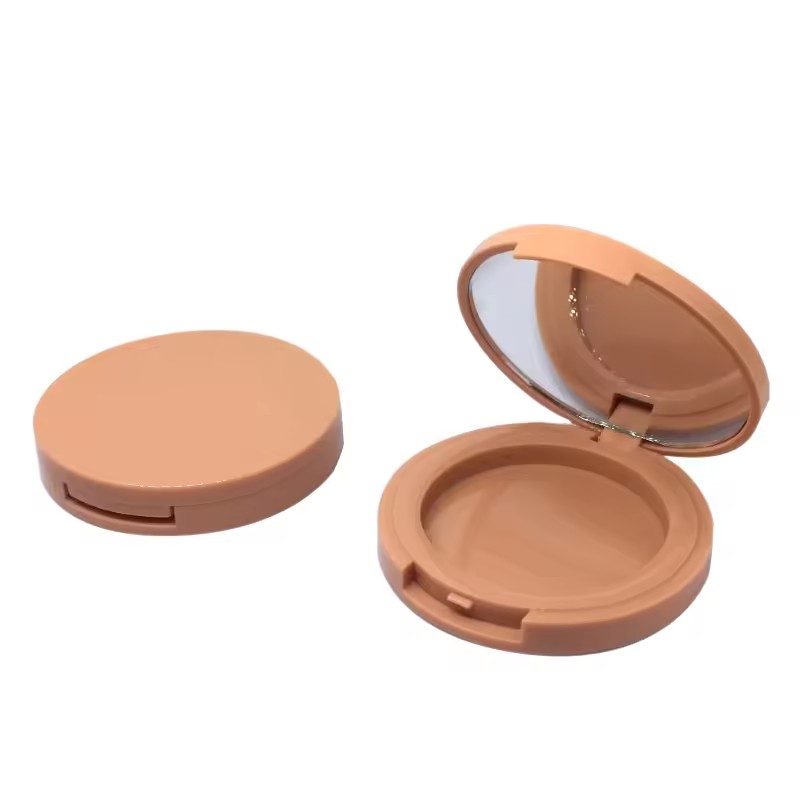
Examples reference specific plastic packaging SKUs — including CP03-1394 (customized makeup powder case), CP04-1215 (liquid eyeliner tube), CP05-2159B (leak-proof powder jar), CP08-0053 (stick foundation tube), and TP01-1018-15 (deodorant stick tube) — to show how defined dimensions, wall thickness, volume, and material support reliable reorders across plastic tubes, jars, bottles, and boxes.
Why Do Cosmetic Packaging Partnerships Break Down After the First Order?
The gap between a good first order and a stable supply relationship usually comes from four issues:
- Unwritten specifications. When dimensions, wall thickness, and material grade are not locked in a written SKU record, each production run is a new interpretation.
- Disconnected commercial terms. Payment schedules, Incoterms, and MOQ often shift when buyers move from a sample order to repeat volume.
- Inconsistent acceptance logic. Without a defined pre-shipment test and inspection routine, "quality" becomes a personal judgment rather than a shared criterion.
- Weak after-sales channels. When an issue appears after delivery, response speed depends on whether a communication routine was set before shipment — not after.
A long-term partnership is the process of converting these four areas from informal assumptions into written, repeatable rules.
Why Does Packaging Consistency Matter More Than Before?
The global cosmetic packaging market was valued at USD 32.7 billion in 2023, according to Grand View Research. Plastics accounted for the largest revenue share of 60.8% in that same year, reflecting the category's reliance on injection-molded and extruded plastic formats for tubes, jars, bottles, and cases.
Regulatory pressure reinforces the need for documented supply relationships. EU Regulation 1223/2009 mandates ISO 22716 compliance for Good Manufacturing Practices in cosmetics production, which places responsibility on the brand owner to work with packaging suppliers who can document material control and process consistency.
In the United States, the Federal Food, Drug, and Cosmetic Act, the Fair Packaging and Labeling Act, and 21 CFR Parts 700–740 establish labeling and packaging requirements for cosmetics marketed domestically. Under 21 CFR 701.10, the principal display panel must be large enough to accommodate all required label information with clarity and conspicuousness. Buyers sourcing cosmetic packaging need a supplier who can support both the physical specification and the regulatory documentation chain.

How Do You Structure a Reliable Long-Term Supply Agreement?
COSFINITY, a Guangzhou-based cosmetic packaging manufacturer founded in 2009, structures partnership supply around three written layers: the SKU specification sheet, the commercial terms sheet, and the quality-and-acceptance agreement. The company operates a 40,000㎡ facility with 200 employees, 25 engineers, and an annual output of 500,000,000 pieces. Production runs on OEM/ODM service with customization options covering logo, color, shape, material, volume, thickness, and packaging. Monthly production capacity is 10,000,000 pieces.
These facts matter to buyers because repeat-order consistency is a system output, not a promise. A defined customization scope means changes are controlled. A stated capacity means volume commitments can be measured against a real production baseline. A defined SKU sheet means the same dimensions, wall thickness, volume, and material carry from the initial approved sample into every reorder.
Layer 1 — Locked SKU Specification
Every partnership should begin by defining a SKU-level specification that includes, at minimum:
- Nominal dimensions (height, width, diameter)
- Wall thickness
- Fill volume
- Material grade
- Decoration method (if any)
- Assembly and closure type
For example, a plastic lipgloss or mascara tube such as the CP02-2231 is specified at W18 × H106.1 mm, 0.3 mm wall thickness, and 3 ml fill volume in plastic. A plastic lipstick tube such as the CP01-2142 is specified at W22.7 × H84.6 mm, 0.3 mm wall thickness, and 20 ml fill volume in plastic. These written values are what allow a production run to match the approved golden sample — and what allow QA to reject a run that deviates.
Layer 2 — Commercial Terms
Commercial terms need to be written into purchase documents — not just mentioned in email threads. COSFINITY's standard terms for partnership orders are:
- MOQ: 12,000 pieces
- Payment terms: 50% advance payment, 50% balance payment
- Delivery terms: EXW / FOB / DAP / DDP
- Lead time: 15–25 days
These figures should be re-confirmed in each purchase order, because the partnership agreement sets a baseline, not a one-time quote. For partnership buyers, the important question is not "what is the lowest price once?" but "what is the stable baseline I can plan against for repeat volume?"
Layer 3 — Quality and Acceptance Agreement
COSFINITY applies 100% testing as part of quality control and uses pre-shipment testing as the stated acceptance criterion. For a long-term relationship, this should be paired with a written checklist that defines:
- Defect definitions used during testing
- Acceptable quality limits
- Sampling method
- Critical vs. minor defect categories
- Who inspects and where
- What happens if a batch fails
The SGS Alibaba Verified Supplier Factory Audit (certificate 485460650_T) provides third-party verification of enterprise factory and trade qualification, valid from 2026-01-10 to 2027-01-10. Buyers can use this audit as a baseline check, then layer their own product-level acceptance criteria on top.
What Steps Build the Partnership Workflow?
1Establish the SKU Specification Sheet
Before the first purchase order, produce a signed SKU sheet for each reference product. The sheet should include dimensions, wall thickness, fill volume, material grade, decoration, and any mechanical tolerances. For moisture-sensitive formats, define gasket, thread, or seal compatibility. For stick and applicator formats, define the mechanical travel or tip geometry.
2Approve a Golden Sample
Use the first accepted production sample as the "golden sample" — the physical anchor against which every future run is compared. Record which measurements are critical (e.g., lid torque, stick travel, tube diameter) and which are cosmetic (e.g., color, surface finish).
3Confirm Commercial Terms in Writing
Document MOQ, payment schedule, Incoterms, lead time, and acceptance criteria in the purchase order rather than relying on past quotations. Include reorder rules — for example, whether the MOQ applies per SKU or per combined shipment.
4Define Acceptance and Inspection
Establish a written pre-shipment inspection checklist. COSFINITY's 100% testing approach is the baseline; the buyer's own checklist should specify defect categories and remediation steps. This prevents disputes from emerging only when goods arrive.
5Set the After-Sales Communication Routine
COSFINITY provides remote online after-sales service and exports to global markets. For a partnership relationship, agree on:
- A named contact for quality issues
- A standard response window
- The format for submitting a complaint (photos, batch number, SKU)
- The escalation path if a resolution is delayed
These routines are more valuable than the words in a warranty clause, because they determine how quickly an issue is resolved when it appears.
6Review Consistency on a Schedule
After every second or third production run, compare new output against the golden sample. Track whether wall thickness, dimensions, and color are drifting. Written consistency reviews prevent small variations from becoming visible to end consumers.
How Do Specific SKUs Behave in a Long-Term Relationship?
The table below makes the relationship between SKU format, specification risk, and partnership control visible:
| SKU / Format | What Must Be Locked | Partnership Control |
|---|---|---|
| CP03-1394 — customized makeup powder case | Case diameter, wall thickness, hinge tolerance, material grade, decoration | Golden sample comparison + pre-shipment visual and dimensional inspection |
| CP04-1215 — liquid eyeliner tube | Tube diameter, tip geometry, closure alignment, material flexibility | Tip travel check + fill and closure alignment test on each run |
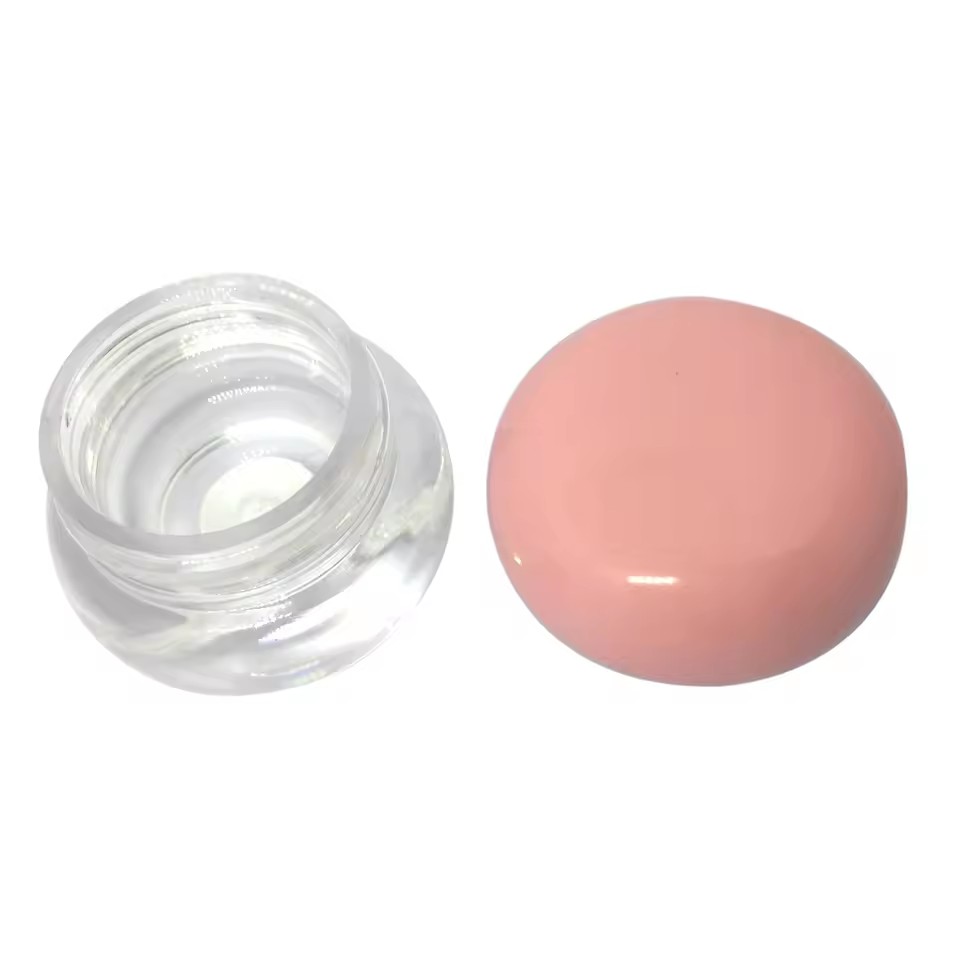
| CP05-2159B — leak-proof powder jar | Thread profile, gasket compression, lid torque, wall thickness | Leak-test routine + torque measurement against golden sample |
| CP08-0053 — stick foundation tube | Inner diameter, stick holder alignment, surface finish, travel tolerance | Stick elevation test + surface inspection per batch |
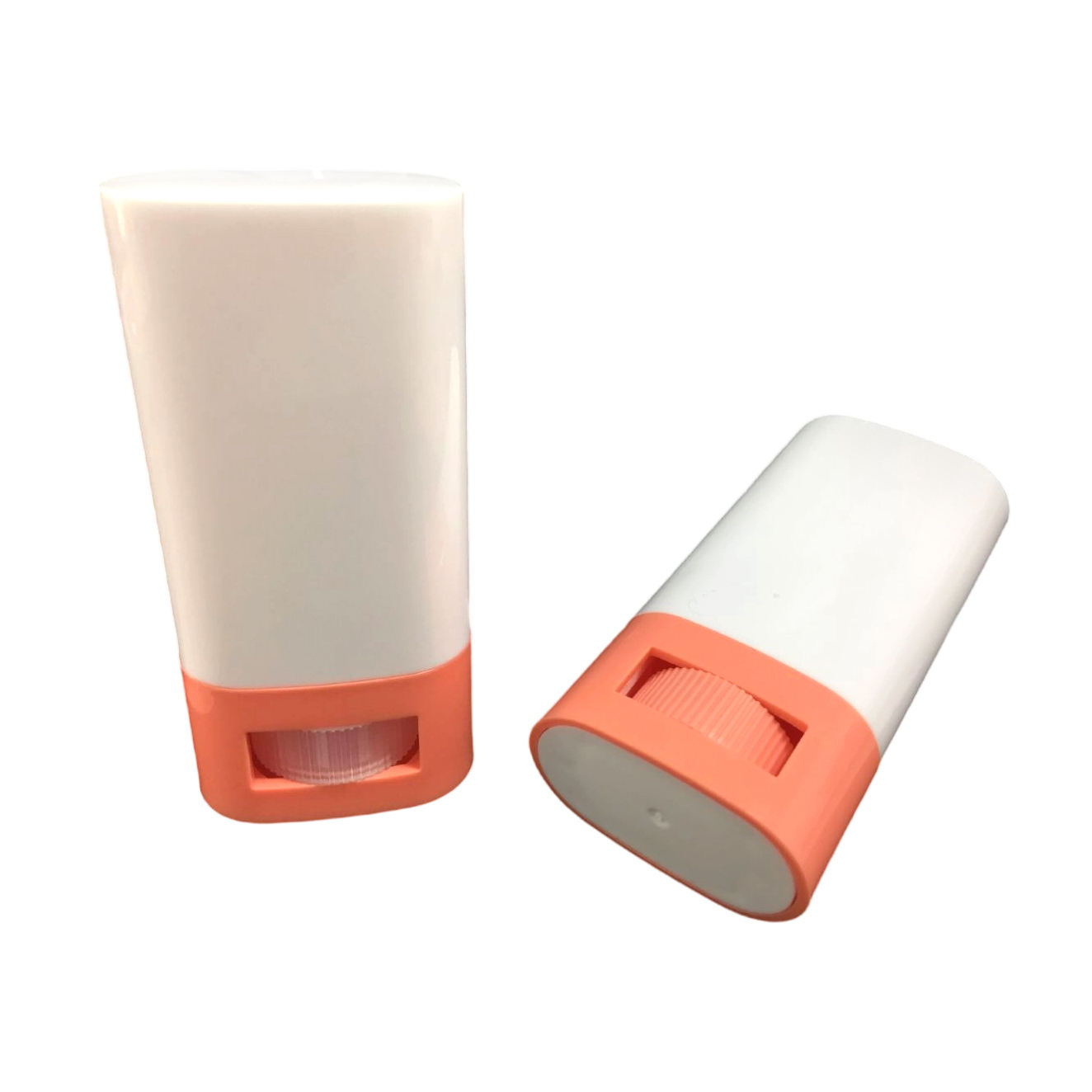
| TP01-1018-15 — deodorant stick tube | Tube diameter, base rotation, wall thickness, cap fit | Rotation test + cap alignment inspection |
Standard Purchase vs. Long-Term Partnership: What Changes?
The difference between a transactional purchase and a partnership relationship can be summarized in one table:
| Purchasing Dimension | Standard One-Off Purchase | Long-Term Partnership |
|---|---|---|
| Specification basis | Catalog specification or sample | Signed SKU sheet + golden sample |
| MOQ | Per-order minimum (12,000 pcs) | Planned quarterly or annual volume |
| Payment terms | 50% advance, 50% balance | Negotiated schedule for repeat volume |
| Delivery terms | EXW / FOB / DAP / DDP per shipment | Agreed primary Incoterm with documented exceptions |
| Acceptance | Pre-shipment testing | Pre-shipment testing + defined defect limits |
| Quality control | 100% testing per order | 100% testing + golden sample benchmark |
| After-sales | Remote online after-sales service on request | Named contact, defined response window, escalation path |
| Documentation | Order-level documents | SGS audit (485460650_T), SKU sheets, inspection logs |

What Does a Working Repeat-Supply Example Look Like?
A lipstick tube OEM client in India placed an initial order of 12,000 pieces using the CP01-2142 plastic lipstick tube. The project supported the client's private label lipstick launch, and stable quality led to continuous repeat bulk orders over a 2-year relationship. The product was customized with lightweight plastic material, customizable exterior printing, and a tight leak-proof structure suited to daily portable use.
The relevant partnership lesson is not the initial order value. It is that the same SKU specification held stable across repeat orders. When a partner can sustain the same dimensions, wall thickness, and material grade across multiple production runs, the buyer can plan packaging and product launches without re-validating every batch.
FAQ: Cosmetic Packaging Partnership Terms & Support
1. What certifications and quality controls support long-term cosmetic packaging supply?
COSFINITY holds an SGS Alibaba Verified Supplier Factory Audit (certificate 485460650_T), valid from 2026-01-10 to 2027-01-10, covering enterprise factory and trade qualification. Quality control includes 100% testing of products, and pre-shipment testing is the standard acceptance criterion. EU and U.S. market buyers should also confirm documentation aligns with EU Regulation 1223/2009 (ISO 22716) and U.S. FDA labeling requirements under 21 CFR 701.10 where applicable.
2. Can a supplier maintain repeat-order consistency across multiple SKUs and formats?
Consistency depends on the SKU specification being written and used as a benchmark. For formats such as CP03-1394 (customized makeup powder case), CP04-1215 (liquid eyeliner tube), CP05-2159B (leak-proof powder jar), CP08-0053 (stick foundation tube), and TP01-1018-15 (deodorant stick tube), dimensions, wall thickness, fill volume, and material grade should be recorded before the first order and compared against a golden sample on each reorder. COSFINITY provides OEM/ODM service with customization across logo, color, shape, material, volume, thickness, and packaging, and operates at a monthly capacity of 10,000,000 pieces.
3. What are the purchasing terms and acceptance criteria?
The stated commercial terms are: MOQ 12,000 pcs; payment terms 50% advance payment and 50% balance payment; delivery terms EXW / FOB / DAP / DDP; acceptance criteria pre-shipment testing. These are baseline terms and should be re-confirmed per purchase order, especially when reorder volume changes or Incoterms shift.
4. How are samples and repeat orders validated?
The first accepted production sample becomes the golden sample for the SKU. Subsequent production runs are compared against that golden sample on the critical dimensions (wall thickness, diameter, fill volume, and mechanical tolerance). For a partnership buyer, the sample stage is also the moment to agree on defect definitions, inspection method, and remediation steps before volume orders begin.
5. What lead time and after-sales support can a partnership buyer expect?
The stated lead time is 15–25 days. After-sales support is provided through remote online after-sales service. Partnership buyers should convert this into a written routine: a named quality contact, a standard response window, a complaint format that includes photos and batch numbers, and an escalation path. COSFINITY exports to global markets and operates from a 40,000㎡ facility with 200 employees and 25 engineers. To move from a single order to a partnership supply arrangement, contact the COSFINITY team for a specification review and quotation.
Conclusion: Treat the Partnership as a Written System
Cosmetic packaging partnerships are not maintained by goodwill alone. They hold together when three written layers are in place: a locked SKU specification, a documented commercial terms sheet, and a defined acceptance and after-sales routine. Buyers who establish these layers early spend less time chasing consistency and more time planning product launches.
If you are evaluating a long-term supply relationship, start with the specification — dimensions, wall thickness, fill volume, material grade, and decoration method — and then agree the terms and after-sales channels around it. COSFINITY's SGS-audited facility and documented OEM/ODM process support this approach.

Have Questions or Need More Details?
Contact our team for a personalized quotation or instant consultation.
Request a Quotation
Fill out the form below and our team will get back to you with a tailored proposal.
WhatsApp Direct Chat
Prefer to chat in real-time? Message us on WhatsApp for instant assistance & quick answers.
- Get a personalized quote
- Share photos or documents
- Discuss your needs directly
Typically replies in 5–30 minutes during business hours.