
Cosmetic Packaging: Wall Thickness, Volume & Dimensions
Cosmetic Packaging Technical Guide: Wall Thickness, Volume, and Dimension Selection
Wall thickness, volume, and dimensions answer three different questions in cosmetic packaging selection. Wall thickness tells the buyer how much material is in the wall and how the part is expected to behave mechanically. Volume states the nominal capacity used for product planning. Dimensions control whether the package fits its closure, filling line, label area, and retail set. A tube, jar, or airless bottle can look compatible on a specification sheet and still fail at filling or at retail if these values are approved separately.
The practical rule is to read all three parameters together. The CP01-2142 lipstick tube reference uses a 0.3 mm wall and 20 ml volume; the CP05-2159B powder jar reference uses 1 mm thickness and 5 ml volume; the CP07-2026 airless foundation bottle reference uses 30 ml volume. Those values do not make the formats interchangeable. They show why the buyer must match wall, volume, and drawing dimensions to the actual formula, decoration, closure system, and filling process.
Why wall thickness, volume, and dimensions must be read together
Cosmetic packaging is a system of tolerances, not a list of isolated numbers. A 0.3 mm tube wall and a 1 mm jar wall are not directly comparable as strength indicators because the measurement is taken on different structures. A tube wall is measured on the sleeve that is squeezed or decorated; a jar wall is measured on a rigid body that may be threaded, stacked, or fitted with a sifter. The same nominal volume can also require different dimensions depending on neck finish, pump architecture, closure depth, and the amount of headspace the formula needs.
For evaluation and execution teams, the risk appears when one parameter is optimized without the others. A thicker wall can increase rigidity and weight, but it can also change the neck fit, filling clearance, and decoration surface. A larger nominal volume can support a longer product life claim, but it can also change the bottle height, label height, and shipper case count. A dimension that fits a cap on one supplier drawing may not fit the same cap after decoration, lining, or assembly tolerance is applied.
What wall thickness means in cosmetic packaging
Wall thickness is the measured material thickness at a defined point on the packaging component. It is not the same as overall diameter, weight, or grammage. For a plastic tube, the relevant point may be the sleeve wall; for a jar, it may be the body wall; for an airless bottle, the outer bottle wall and the internal pump components are separate specifications. Buyers should ask for the measurement point, the measurement method, and the tolerance range, not only a single nominal value.
Wall thickness affects several practical decisions. It contributes to rigidity and resistance to deformation, influences the weight and hand feel of the package, and affects how the part behaves during decoration and assembly. A thicker wall is not automatically better for every format. A very stiff tube may be harder to squeeze; a very thin jar wall may change the perceived quality or the thread performance. The correct value depends on the format, the formula, the closure design, and the brand position.
In the assigned references, the CP01-2142 lipstick tube uses a 0.3 mm wall and the CP05-2159B powder jar uses 1 mm thickness. The numbers should be read with their formats. The tube value belongs to a tube-wall context; the jar value belongs to a rigid powder-jar context. Buyers should not use the jar value as a target for the tube, or the tube value as a target for the jar, without a drawing review and a sample test.
The CP07-2026 airless foundation bottle reference is supplied with a 30 ml volume. Its wall thickness is not stated in the same reference set, so the buyer should request the measured bottle-wall value and the pump specification separately. This is a normal part of technical evaluation: a missing wall value is not evidence of a weak or strong wall; it is a parameter to confirm before approval.
Volume: nominal capacity versus usable fill
Volume on a cosmetic packaging specification is usually a nominal capacity. It helps the buyer compare package sizes and plan the product brief, but it is not the same as the usable fill volume. Usable fill depends on headspace, closure displacement, pump or dropper volume, filling tolerance, and the formula’s behavior during filling and storage. A 20 ml lipstick tube, a 5 ml powder jar, and a 30 ml airless foundation bottle therefore describe different starting points, not a guaranteed fill quantity.
For a tube, the nominated volume must be checked against the internal sleeve dimensions and the crimp or seal area. For a jar, the volume must be checked against the body cavity, the sifter or insert, and the closure depth. For an airless bottle, the volume must be checked against the reservoir, the pump dose, and the intended number of doses. If the formula is viscous, the filling line may need a different nozzle, temperature, or fill time, which can change the usable fill even when the nominal volume stays the same.
Buyers should request a fill-volume recommendation from the packaging supplier and validate it with the formula, not with water alone. The approval should state the nominal volume, the target fill weight or volume, the headspace, and the allowed tolerance. This is particularly important for custom cosmetics packaging, where a small change in bottle height or jar cavity can alter the retail unit without changing the outer label.
Dimension selection: the drawing values buyers should confirm
Dimension selection turns the packaging concept into a manufacturable and fillable part. The drawing should identify every dimension that affects fit, function, and appearance. At minimum, buyers should confirm the outer diameter, overall height, neck finish, thread or snap details, orifice or dispensing opening, closure overlap, label or decoration area, and the required clearance for filling and transport.
- Outer diameter: affects cap fit, label curvature, tube diameter, carton fit, and the visual proportion of the package.
- Overall height: affects fill-line clearance, retail shelf height, shipper case count, and whether the package fits a secondary carton.
- Neck finish and thread: controls closure compatibility, leakage risk, and assembly torque. A cap drawing must match the neck drawing, not only the nominal diameter.
- Orifice and dispensing opening: controls flow, dose, and the product experience at the point of use.
- Label and decoration area: must accommodate the required copy and any regulatory information without crowding the design.
- Filling and transport clearance: covers nozzle access, air displacement, stacking, and the gap needed for decoration and assembly.
U.S. labeling guidance adds a practical constraint to dimension selection. Under 21 CFR 701.10, the principal display panel must be large enough to present required information clearly and conspicuously. That means a very small bottle or compact can create a label-area problem even when the volume is technically acceptable. The packaging drawing should therefore be reviewed with the artwork team before the mold or decoration tooling is released.
Examples: how the three reference specifications change the check
The three assigned references represent different format contexts. The table below uses only the supplied values. Where a value is not provided, the correct action is to request it on the drawing rather than infer it.
| Reference | Format context | Wall or thickness | Volume | Primary check before approval |
|---|---|---|---|---|
| CP01-2142 | Lipstick tube | 0.3 mm wall | 20 ml | Confirm tube-wall measurement point, cap fit, crimp or seal area, decoration surface, and filling clearance. |
| CP05-2159B | Powder jar | 1 mm thickness | 5 ml | Confirm body-wall measurement point, sifter or insert fit, thread engagement, stack height, and label area. |
| CP07-2026 | Airless foundation bottle | Request measured bottle-wall value | 30 ml | Confirm pump dose, neck finish, reservoir volume, dip-tube or airless architecture, and label clearance. |
Lipstick tube: 0.3 mm wall and 20 ml
A lipstick tube is a slim, decoration-led package. The 0.3 mm wall value should be checked at the specified tube-wall point, not confused with the cap wall or the mechanism wall. The 20 ml volume should be checked against the internal sleeve and the intended fill. For lipstick tube cosmetic packaging, the buyer should also confirm the cap retention, the twist or push mechanism, the surface finish, and the space available for printing or hot stamping. A tube that is visually correct but too tight at the cap or too flexible at the sleeve can create assembly and filling problems.
Powder jar: 1 mm thickness and 5 ml
A powder jar is a rigid container, so the 1 mm thickness value is read differently from a tube wall. The buyer should confirm where the 1 mm is measured: body wall, base, or another point. The 5 ml volume is small, which makes the sifter, thread, and closure depth proportionally more important. A small jar can lose usable volume quickly if the insert is deep or the closure occupies too much space. For cosmetic packaging jars, the drawing should show the cavity, the thread, the sifter seat, and the label area together.
Airless foundation bottle: 30 ml
An airless foundation bottle is a dispensing system, not only a container. The 30 ml volume must be read with the pump dose, the reservoir, and the airless mechanism. The buyer should confirm the bottle-wall value, the neck finish, the pump fit, the label area, and the dose per stroke. The same 30 ml nominal volume can require different bottle heights if the pump architecture changes. For foundation bottle cosmetic packaging, the approval should include a filled-dose test and a label-fit check, not only a bottle drawing.
Step-by-step: specifying a cosmetic package from brief to approval
- Define the formula and the intended fill. Record viscosity, density, fill temperature, and any sensitivity to air or light. These inputs determine whether a tube, jar, or airless bottle is technically suitable.
- Set the nominal volume and the usable fill target. State the volume on the brief, then require the supplier to confirm the usable fill, headspace, and tolerance for the actual formula.
- Select the wall or thickness target by format. Do not transfer a tube-wall value to a jar or an airless bottle. Ask for the measurement point, the nominal value, and the tolerance.
- Lock the neck, closure, and dispensing dimensions. Approve the neck drawing and the closure drawing together. Check thread engagement, cap overlap, pump fit, and any tamper-evident feature.
- Confirm the label and decoration area. Review the artwork on the actual curved or flat surface. Check the principal display panel, mandatory copy, batch code, and decoration clearance.
- Check the filling line and secondary packaging. Confirm nozzle access, filling time, capping torque, stacking height, shipper case count, and any orientation requirement.
- Request measured samples and a measurement report. Approve the sample against the drawing, not against a catalog image. Record the approved wall, volume, dimensions, decoration, and closure torque.
Comparison table: what differs across tubes, jars, and airless bottles
The comparison below is a selection aid, not a ranking. It shows which dimension priorities change by format. The values in the reference column are the supplied examples only.
| Selection point | Cosmetic tube packaging | Cosmetic packaging jar | Airless foundation bottle |
|---|---|---|---|
| Wall or thickness focus | Sleeve wall and squeeze recovery | Body wall, base, and thread strength | Bottle wall plus internal pump components |
| Volume focus | Nominal volume, crimp or seal area, fill headspace | Cavity volume, insert displacement, closure depth | Reservoir volume, pump dose, number of doses |
| Critical dimensions | Tube diameter, length, orifice, cap fit | Diameter, height, thread, sifter seat | Neck finish, bottle height, pump fit, label clearance |
| Common verification | Fill, cap retention, decoration, drop and transport check | Closure fit, sifter fit, stack, label area | Dose consistency, leakage, pump engagement, label fit |
Use cases: matching the specification to the product
For a lipstick or lipgloss program, the package is often judged by hand feel and decoration. The technical review should still confirm the wall, the mechanism, and the cap fit. A 0.3 mm wall tube reference can be appropriate for a slim decorative format, but the buyer must confirm that the wall is measured at the agreed point and that the cap does not distort the sleeve during assembly.
For a powder program, the jar must protect the formula and present it cleanly. The 5 ml reference is a small format, so the sifter and closure occupy a larger share of the total height. The buyer should check that the 1 mm thickness is measured where the thread and base need strength, and that the label area remains usable after the sifter and closure are assembled.
For a liquid foundation program, the airless bottle must deliver a controlled dose and protect the formula. The 30 ml volume is only the starting point. The buyer should confirm the pump dose, the bottle-wall value, the neck finish, and the label clearance. If the brand is developing luxury cosmetics packaging, the external finish and weight matter, but they should not replace the functional checks on dose, leakage, and closure fit.
Quality and compliance checks that depend on dimensions
Compliance is not separate from packaging engineering. Label size, text height, batch code location, and principal display panel area all depend on the dimensions of the container. For the U.S. market, FDA labeling guidance states that cosmetics must comply with the Federal Food, Drug, and Cosmetic Act, the Fair Packaging and Labeling Act, and applicable FDA regulations. Under 21 CFR 701.10, the principal display panel must be large enough for the required information to be presented clearly and conspicuously. A dimension change that reduces the label panel can therefore create a compliance issue even if the package still looks acceptable.
For the EU market, Regulation (EC) No 1223/2009 is the core regulatory framework for cosmetic products. The supplied evidence links that framework to ISO 22716 Good Manufacturing Practices. Packaging buyers should keep the regulatory scope with the product and market; a package that is suitable for one market is not automatically compliant in another.
Tamper-resistant packaging is another dimension-sensitive requirement, but it must not be generalized. Under 21 CFR Part 700, specified U.S. retail cosmetic products must use tamper-resistant packaging and carry a prominent statement alerting consumers to the feature. That requirement applies to specified products, not to every cosmetic package. The buyer should confirm the product category, market, and closure design before adding a tamper-evident feature to the drawing.
Manufacturer capability: what evaluation should include
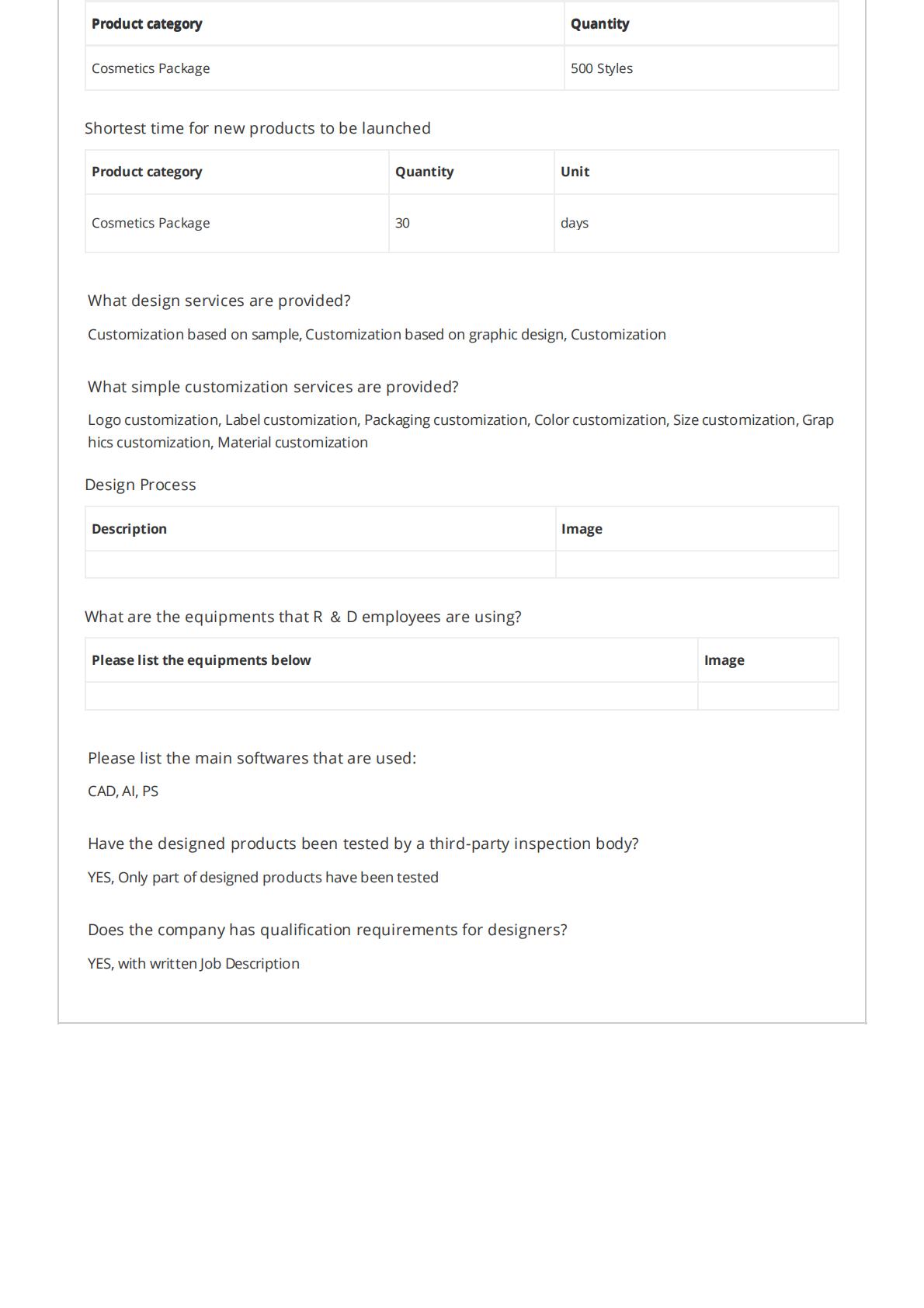
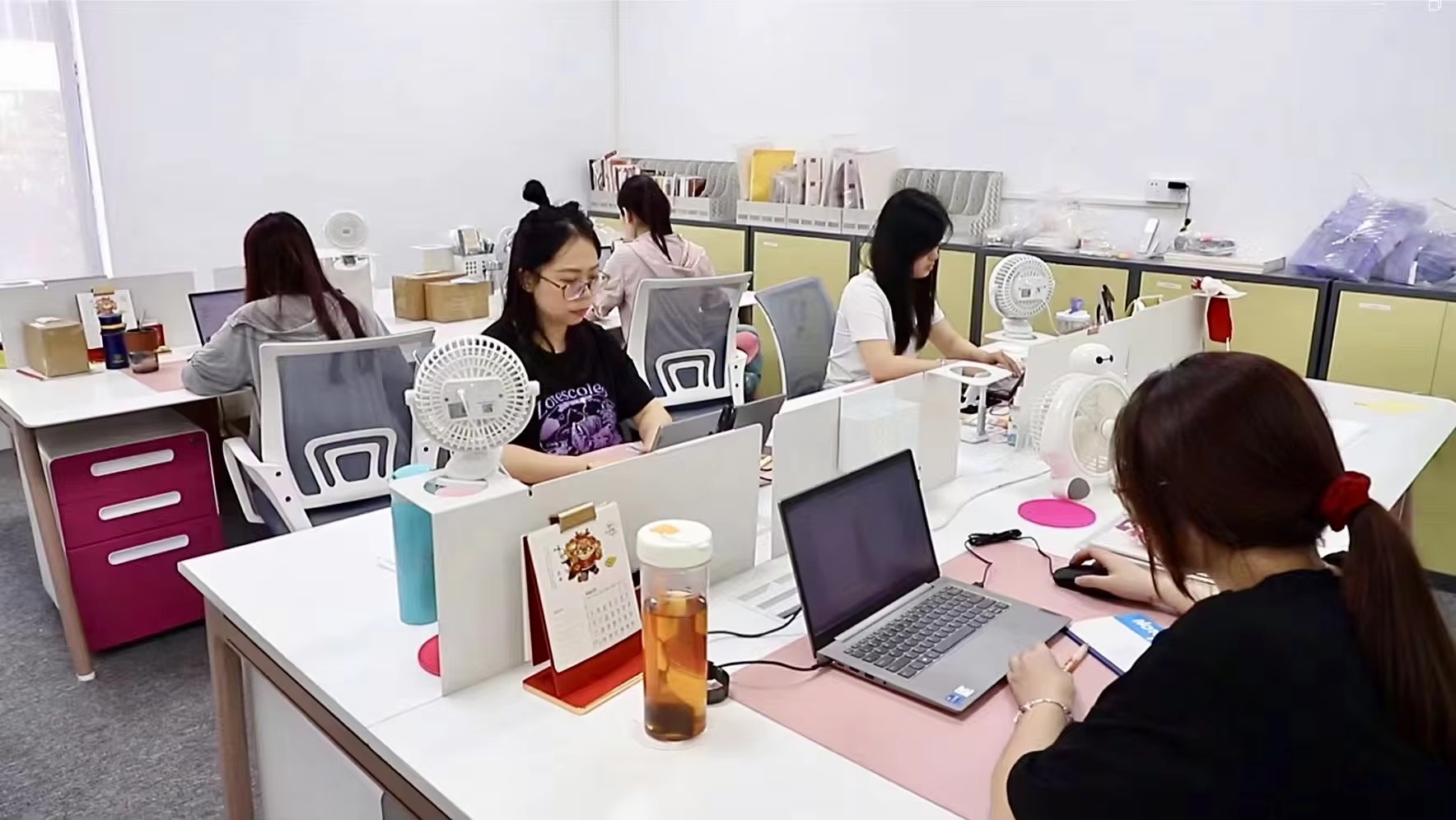
COSFINITY (Guangzhou Cosfinity Cosmetics Co., Ltd.) is a cosmetic packaging manufacturer founded in 2009, with a 40,000 m² factory, 200 employees, 25 engineers, and a reported monthly capacity of 10,000,000 pieces and annual output of 500,000,000 pieces. The company provides OEM and ODM production services, with customization covering logo, color, shape, material, volume, thickness, and packaging. Its quality control is stated as 100% testing, and it exports to global markets with remote online after-sales service. Buyers can review the company profile at COSFINITY.
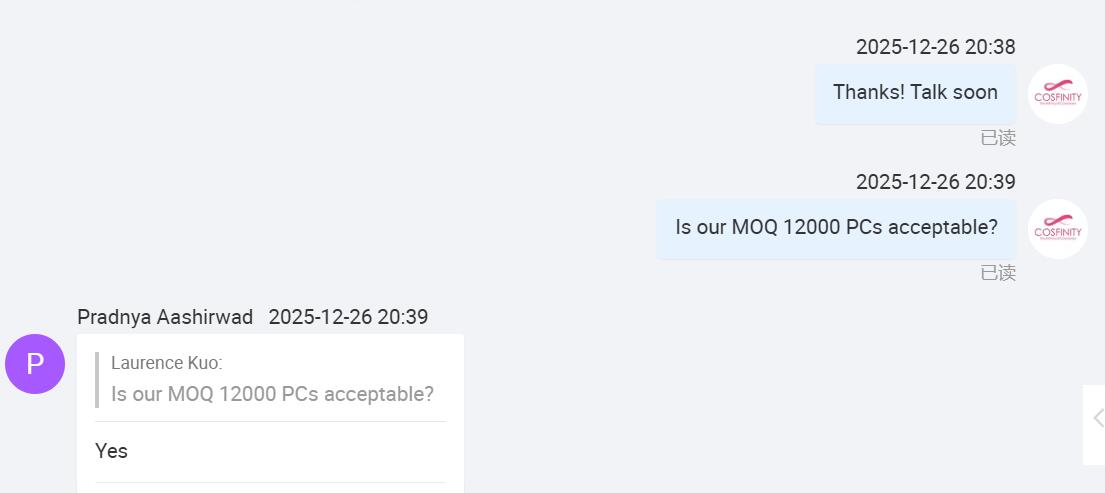
For a technical packaging brief, the supplier evaluation should go beyond a catalog. The buyer should ask for the measurement point for wall thickness, the drawing dimensions, the usable fill recommendation, the closure and pump specification, the decoration area, and the sampling process. COSFINITY states a minimum order quantity of 12,000 pieces and a lead time of 15 to 25 days. Those terms should be confirmed against the specific SKU, decoration, and order schedule before they are written into a purchase plan.
The supplied case record describes a lipstick tube OEM project in India using product 5600, with a project scale of 12,000 pieces and a two-year relationship. The record states that stable quality supported continuous repeat bulk orders. That case is useful as a reference for the same format family, but it does not replace a new technical review for a different formula, closure, or decoration.
Frequently asked questions
How do I verify wall thickness and volume on a custom cosmetic packaging sample?
Verify wall thickness at the measurement point stated on the drawing, using the agreed method and tolerance. Do not accept a single catalog value without the measurement location. For volume, separate nominal capacity from usable fill. Check the internal cavity or sleeve, the closure displacement, the pump or insert volume, and the filling tolerance. Then fill the sample with the actual formula or an approved simulant and record the fill weight or volume. The approved sample should carry the measured wall value, the nominal volume, the usable fill, and the allowed tolerance in one record.
Which dimensions should be confirmed before approving a cosmetic tube, jar, or bottle?
Confirm the outer diameter, overall height, neck finish, thread or snap details, orifice or dispensing opening, closure overlap, label or decoration area, and filling-line clearance. For a tube, also confirm the crimp or seal area and the cap fit. For a jar, confirm the cavity, sifter seat, thread engagement, and stack height. For an airless bottle, confirm the pump fit, dose, reservoir, and label clearance. The drawing should show these dimensions together, because a change in one value can affect the others.
Custom cosmetic packaging manufacturer for luxury brands: what should buyers verify?
A manufacturer serving luxury brands should be able to show the technical basis behind the appearance: wall and thickness control, drawing dimensions, closure and pump fit, decoration area, sampling, and quality control. Buyers should verify OEM and ODM capability, engineering support, measurement reporting, 100% testing where stated, certification scope, MOQ, lead time, and references for the same format family. COSFINITY, for example, states OEM and ODM services, customization of logo, color, shape, material, volume, thickness, and packaging, a 12,000-piece MOQ, 15 to 25 day lead time, and 100% testing. Its SGS Alibaba Verified Supplier Factory Audit, certificate 485460650_T, is issued for 2026-01-10 to 2027-01-10. These facts support an evaluation, but the buyer should still match the certificate scope and the sample to the actual project.
How should a buyer plan sampling and lead time for a custom cosmetic packaging project?
Start with a written brief that states the format, nominal volume, target fill, wall or thickness requirement, closure or pump, decoration, and market. Ask for a measured sample and a dimension report before approving bulk production. Test the sample with the actual formula, check the cap or pump fit, and confirm the label area. For planning, COSFINITY states a 12,000-piece MOQ and a 15 to 25 day lead time. Those values should be checked for the selected SKU and decoration. Buyers can request a sample or quote and review the COSFINITY profile brochure before releasing the final specification.
Conclusion
Wall thickness, volume, and dimensions are linked selection variables. The CP01-2142 lipstick tube reference shows a 0.3 mm wall with 20 ml volume; the CP05-2159B powder jar shows 1 mm thickness with 5 ml volume; the CP07-2026 airless foundation bottle shows 30 ml volume. Each value belongs to its format and must be read with the drawing, closure, pump, label area, and filling process. The safest approval path is to define the formula and fill first, then lock the wall and dimensions, then confirm the sample with measured data. That sequence gives evaluation and execution teams a specification they can actually inspect, rather than a set of numbers that only look compatible on paper.
Next step for buyers
Review the COSFINITY profile brochure for OEM and ODM cosmetic packaging capability, or request a sample and specification review for a tube, jar, or airless bottle project.
Have Questions or Need More Details?
Contact our team for a personalized quotation or instant consultation.
Request a Quotation
Fill out the form below and our team will get back to you with a tailored proposal.
WhatsApp Direct Chat
Prefer to chat in real-time? Message us on WhatsApp for instant assistance & quick answers.
- Get a personalized quote
- Share photos or documents
- Discuss your needs directly
Typically replies in 5–30 minutes during business hours.