
Cosmetic Packaging by Product Type: Matching Containers to Real Use Cases
Published August 27, 2026. Written for brand owners, product managers, and procurement teams at the research and evaluation stage of a cosmetic packaging project.
Choosing cosmetic packaging is not a one-size-fits-all decision. A tube that works for mascara will not protect a liquid foundation, and a jar that suits a loose powder can be the wrong format for a lipstick. For brand teams evaluating packaging suppliers, the practical starting point is to match the container to the product formula and to the way consumers will store, carry, and apply it in daily life. This article explains a scenario-first method for selecting cosmetic packaging tubes, jars, bottles, and cases, using verifiable product and capability data from COSFINITY, a Guangzhou-based manufacturer founded in 2009 that specializes in customized cosmetic packaging and exports 100% of its output to global markets.
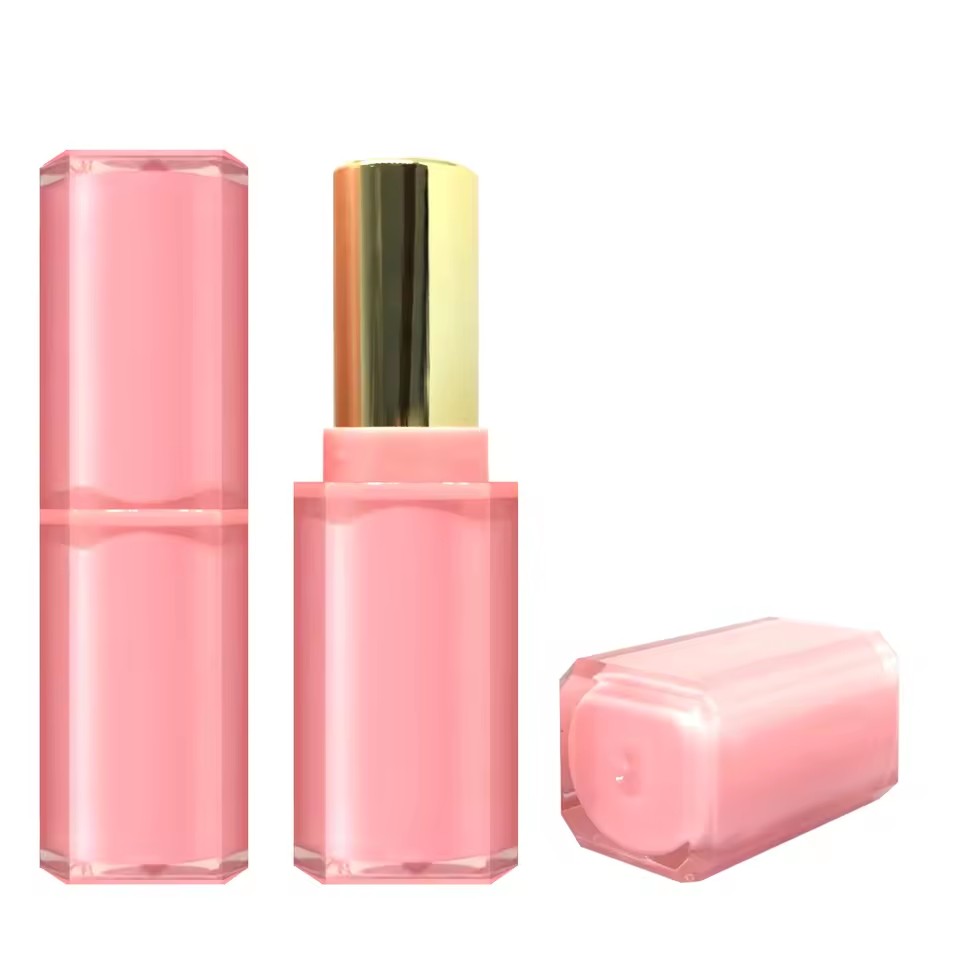
A lipstick requires a twist-up tube with a tight structure that supports daily portable use.
The Problem: When Packaging Does Not Match the Product
Packaging mismatches usually surface after production begins, when they are expensive to correct. Common failure patterns include formulas that leak during travel, closures that loosen after repeated opening and closing, containers that are too heavy to carry comfortably, materials that are not suitable for direct skin contact, and formats that conflict with the application method — for example, a liquid foundation without a controlled dispensing system, or a lipstick whose mechanism does not extend and retract cleanly.
The hidden cost of a mismatch is not limited to the container itself. Leaked product damages the brand experience at the point of use, returns and replacements add logistics expense, and a packaging revision delays the entire product launch. This is why format selection should happen before, not after, supplier negotiation.
Most daily-use cosmetic packaging shares four baseline requirements: leak-proof construction, non-irritating material, portability, and lightweight design. These four criteria appear consistently in product briefs from global cosmetics brands for daily cosmetic storage and carrying, where the package is opened and closed repeatedly, carried in a bag or pouch, and used alongside tools such as makeup brushes, puffs, and mirrors.
Industry Background: Why Packaging Decisions Are Getting More Complex
The global cosmetic packaging market was valued at approximately USD 34.17 billion to USD 47.3 billion in 2024, with expectations to reach up to USD 89.72 billion by 2034, according to Fortune Business Insights, ResearchAndMarkets, and Data Bridge. The wide range reflects methodological differences — specifically whether secondary packaging and industrial bulk containers are included in the estimate.
Plastic remains the dominant material in cosmetic packaging, holding a 64.5% market share in 2024, followed by glass and metal. Asia Pacific led the global market in 2025 with a 42.36% share, driven by rising disposable incomes and e-commerce growth. On the supply side, China's beauty product exports reached approximately USD 4.77 billion in 2024, with the UK as the fastest-growing destination at +20.8%, according to the Observatory of Economic Complexity.
Regulatory requirements are tightening alongside market growth. In the EU, Regulation (EU) 2025/40 — the Packaging and Packaging Waste Regulation (PPWR) — sets stricter recyclability and labeling standards for cosmetics packaging. In the US, the Modernization of Cosmetics Regulation Act (MoCRA) introduced mandatory facility registration and product listing that packaging-related entities must follow. Buyers should confirm that a packaging partner can support compliance with the regulations that apply to their target markets.
Sustainability adds another layer of evaluation: 63% of cosmetic consumers in 2024 considered sustainable, refillable, or recyclable packaging a top priority. For buyers, this means lightweight plastic formats are assessed not only for cost and function, but also for material efficiency and recyclability. The practical implication is that packaging choices made at the specification stage now carry regulatory and brand-image consequences as well as functional ones.
Detailed Solution: A Scenario-First Method for Selecting Cosmetic Packaging
The most reliable way to select cosmetic packaging is to define the scenario before choosing the container. The scenario includes the product's formula, the way it is applied, how often the package is opened and closed, and where it is carried. Once these are clear, the appropriate container category — tube, jar, bottle, or case — becomes a matter of matching.
The four baseline requirements translate directly into design decisions. Leak-proof construction points to tight closures and sealed structures. Non-irritating material means the plastic or glass that touches the skin must be environmentally friendly and safe for direct contact. Portability favors slim or compact dimensions. Lightweight design favors lower wall thickness and material efficiency. Every format described below follows these four rules.
COSFINITY's product range shows how packaging formats map to product types. The company produces lipstick tubes, lipgloss/mascara tubes, powder cases, eyeliner tubes, powder jars, and liquid foundation bottles, as well as stick foundation tubes and deodorant stick containers. All are supplied for cosmetic packing and are used by global cosmetics brands for daily cosmetic storage and carrying.
Lipstick: Twist-Up Tube Packaging
Lipstick packaging must support a twist mechanism, protect the bullet from impact, and close tightly for handbag carry. COSFINITY's reference format is the Luxury Empty Plastic Lipstick Tube, model CP01-2142, with dimensions of W22.7 x H84.6 mm, a wall thickness of 0.3 mm, and a volume of 20 ml. The lightweight plastic structure and tight leak-proof structure are selected specifically for daily portable use, and the tube supports customizable appearance printing.
Lipgloss and Mascara: Slim Applicator Tubes
Lipgloss and mascara require a slim tube that houses a wand applicator and seals tightly between uses. The reference container is the Luxury Empty Plastic Lipgloss / Mascara Tube, model CP02-2231, measuring W18 x H106.1 mm with a 0.3 mm thickness and a 3 ml fill volume. Its compact profile supports the on-the-go application that this category depends on.
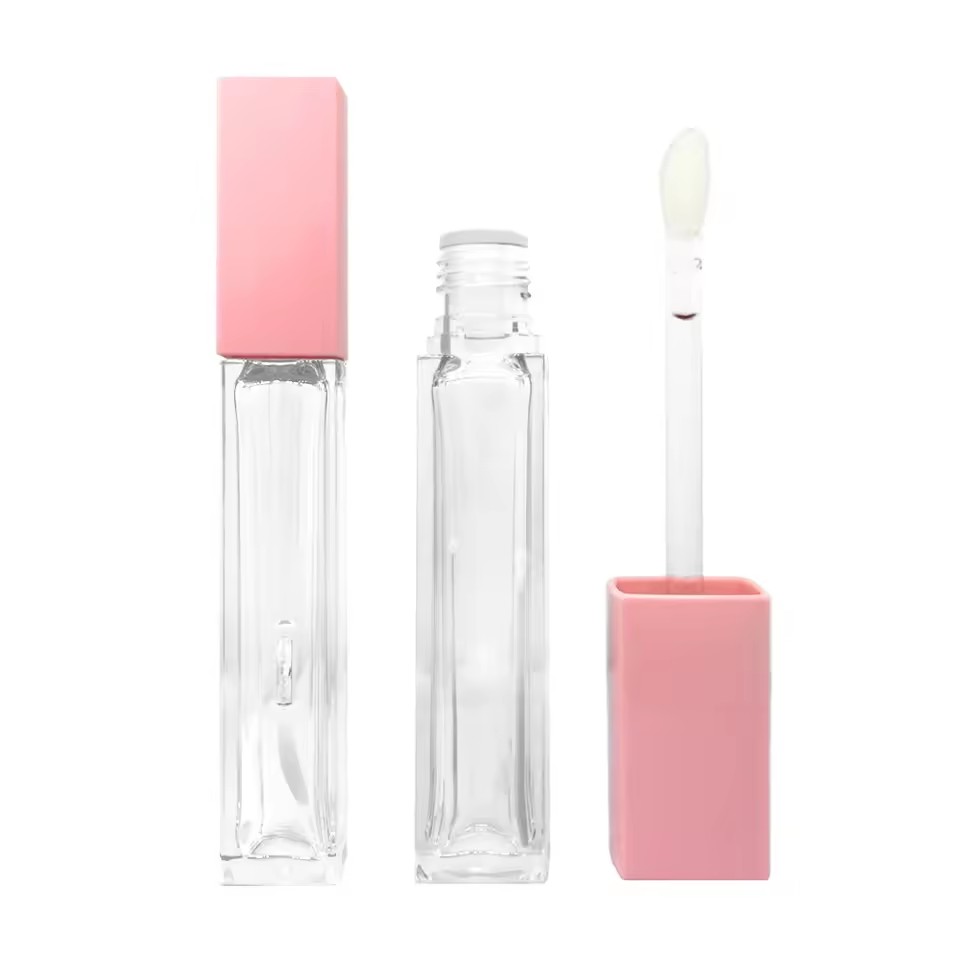
Slim applicator tubes like CP02-2231 are built for repeated open-close use and portability.
Powder-Based Products: Jars and Powder Cases
Loose powder and cream-based products are typically packed in jars with tight closures. The Leak-Proof Plastic Powder Jar / Pot, model CP05-2159B, has a width of 40.7 mm, a height of 32.6 mm, a 1 mm wall thickness, and a 5 ml volume. Compact dimensions keep it portable, while the leak-proof structure protects the contents while carrying.
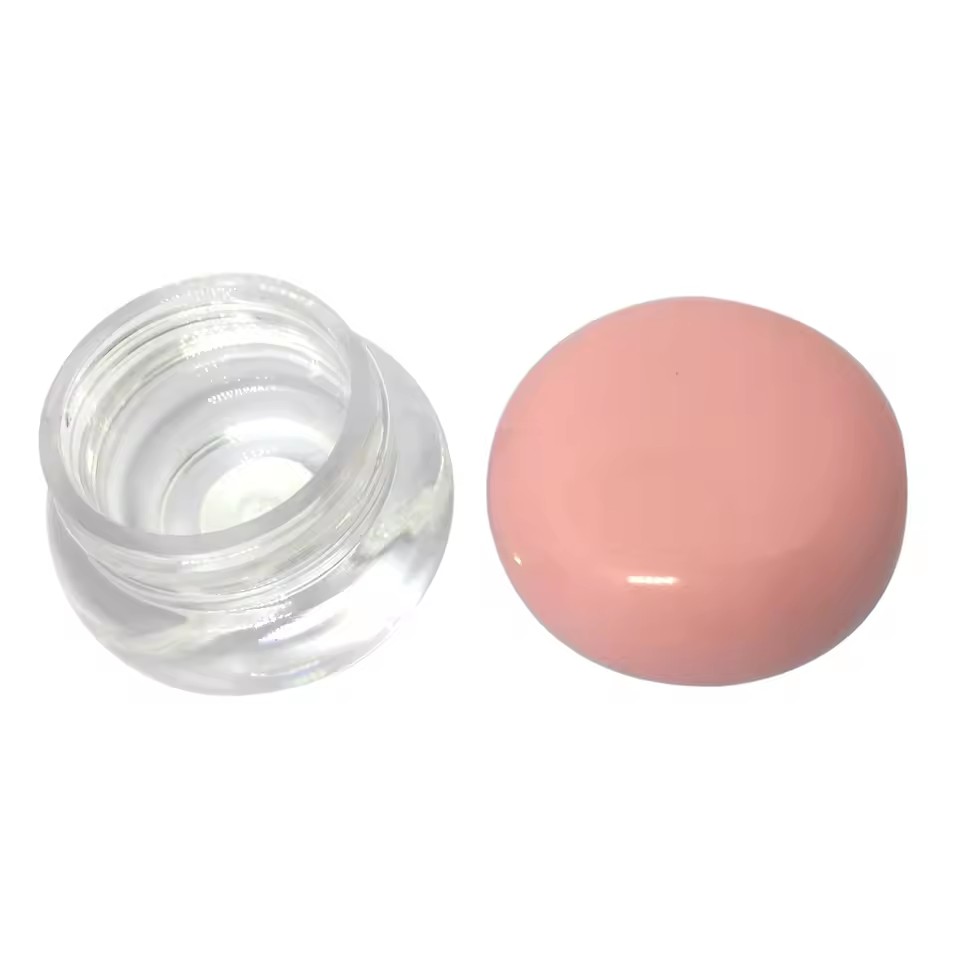
CP05-2159B combines compact size with leak-proof construction for daily storage.
Pressed powder compacts, by contrast, are flat cases designed to hold a pan and sit comfortably in a bag. The Customized Empty Makeup Powder Case, model CP03-1394, measures W65 x H12 mm with a 1 mm thickness. Its slim profile pairs naturally with the makeup brush, puff, or mirror that users carry for touch-ups.
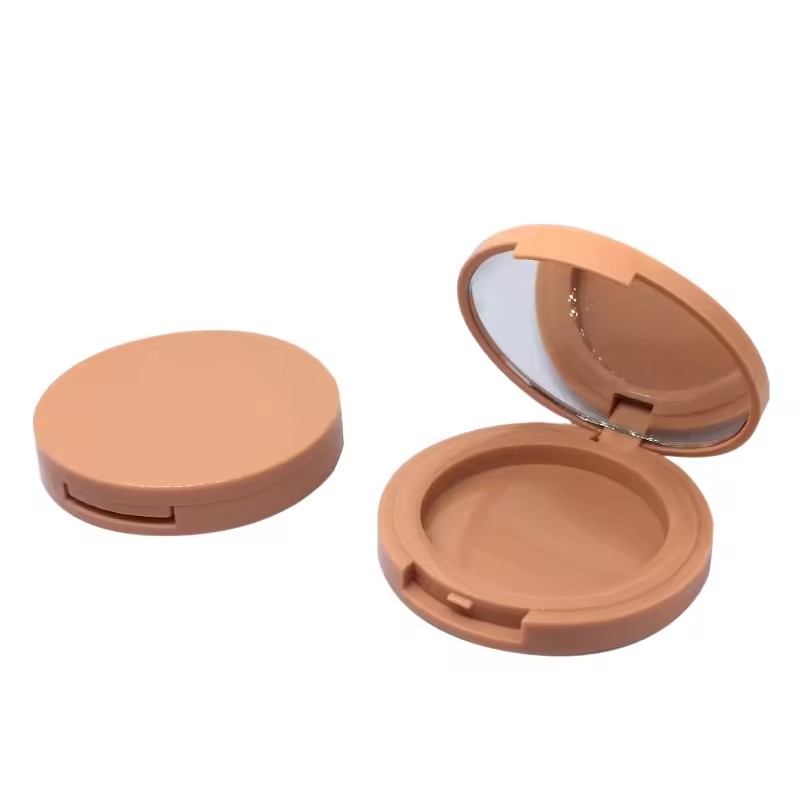
Flat powder cases such as CP03-1394 are designed for compact bag storage and easy carrying.
Liquid Foundation: Airless Pump Bottles and Stick Tubes
Liquid foundation with sensitive ingredients benefits from an airless pump system that limits air exposure and dispenses a controlled dose. The Airless Pump Liquid Foundation Bottle, model CP07-2026, is a 30 ml glass bottle measuring W33.5 x H92 mm. Glass provides a premium presentation, while the airless pump protects the formula during daily use. For stick foundation formats, the Empty Stick Foundation Tube, model CP08-0053, offers a mess-free alternative at D29 x H60 mm with a 10 ml volume in plastic.
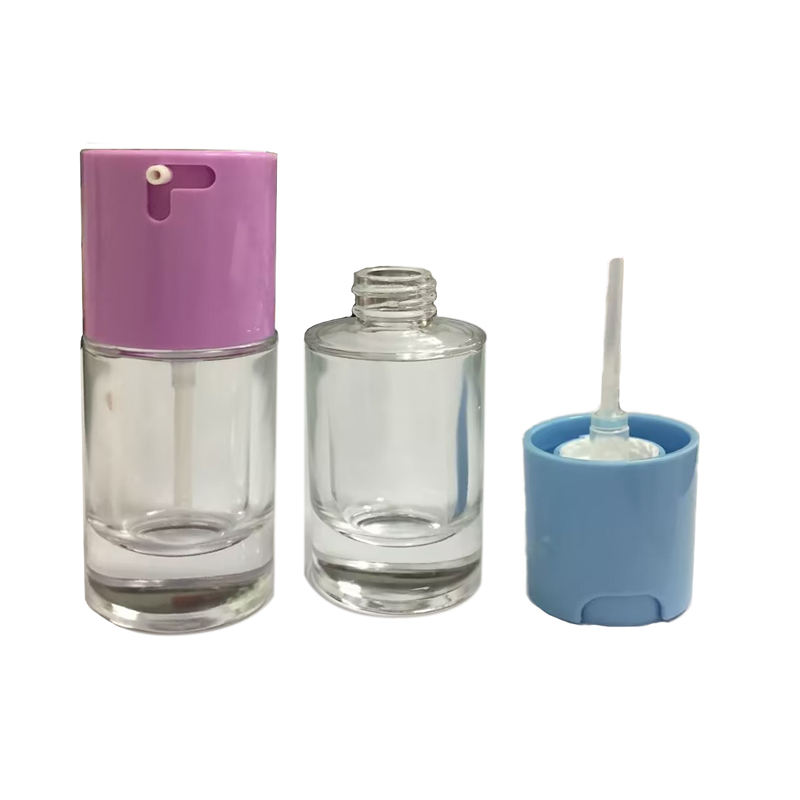
Airless pump bottles like CP07-2026 protect liquid foundation formulas and control dispensing.
Eyeliner: Pen-Style Tubes
Liquid eyeliner needs a precision applicator and a slim body that gives the user control. COSFINITY offers the Liquid Empty Eyeliner Tube, model CP04-1215 (W12.8 x H115.3 mm, 0.3 mm thickness, 10 ml volume) and the Empty Liquid Eyeliner Pencil, model CP06-1056 (W15 x H173.5 mm). Both formats support the precision and portability that eyeliner users expect in daily makeup routines.
Stick and Personal Care Formats
Stick formats extend beyond color cosmetics into personal care. The Deodorant Stick Plastic Tube Container, model TP01-1018-15, measuring L41.7 x W24.49 x H86.5 mm with a 20 ml volume in plastic, shows how the same packaging logic — lightweight, portable, and easy to open and close — applies across the daily-use category.
Step-by-Step: From Product Brief to Production
Once the scenario is defined, the selection and sourcing process can be structured into six steps. This sequence works for brands moving from research to evaluation who need a concrete packaging plan.
- Define the formula and format. Confirm whether the product is solid, liquid, cream, or powder, and how it is applied. This determines whether you need a twist mechanism, a pump, a sifter jar, or a simple screw closure.
- Document the usage scenario. State where the product will be stored and carried, how many times it will be opened and closed per day, and whether it will come into direct skin contact. Use the baseline requirements — leak-proof, non-irritating, portable, lightweight — as minimum standards.
- Select the container category. Choose among tubes, jars, bottles, and cases based on the product format and the reference models in the comparison table below.
- Lock dimensions, volume, and wall thickness. Specify outer dimensions, fill volume, and material, and verify that the wall thickness meets the structural needs of your product and logistics chain.
- Define customization. For OEM/ODM projects, confirm which elements are customizable: logo, color, shape, material, volume, thickness, and packaging. The earlier these are specified, the fewer surprises appear at sampling.
- Validate with sampling and quality checks. Before mass production, verify the supplier's quality control process, lead time, and after-sales support. Ask how finished goods are tested and how defects are handled.
What a Supplier Must Be Able to Prove
At the evaluation stage, capability data matters more than brand claims. A useful benchmark is COSFINITY's stated production profile: a 40,000 m² factory, 200 employees, an annual output of 500,000,000 pieces, and an R&D team of 25 engineers. The company reports a monthly capacity of 10,000,000 pieces, a standard lead time of 15–25 days, and an MOQ of 12,000 pieces, with 100% testing as its quality control standard and remote online after-sales service. Buyers should collect the same set of figures from every candidate supplier — factory size, headcount, R&D capacity, monthly capacity, lead time, MOQ, and testing method — and compare them on the same basis.
Use Cases: How Scenario Matching Works in Practice
Private-Label Lipstick Launch (India)
A lipstick tube OEM project for a client in India shows how scenario matching supports long-term supply. The customer ordered 12,000 pieces and has worked with COSFINITY for two years to support a private-label lipstick launch. The packaging combined a customized design with lightweight plastic material and customizable appearance printing, and the tight leak-proof structure was chosen specifically for daily portable use. The result was stable quality that generated continuous repeat bulk orders — the outcome that a scenario-matched packaging project is designed to achieve.
Daily Cosmetic Storage and Carrying (Global)
The reference scenario across COSFINITY's range is daily cosmetic storage and carrying, which is globally common and applies to brands in all export markets. Products are used at normal room temperature (16°C to 25°C), and because they come into contact with skin cosmetics, the packaging must be environmentally friendly and safe for direct touch. The packages are carried for daily makeup and opened and closed repeatedly, with users pairing them with makeup brushes, makeup puffs, and cosmetic mirrors. This scenario is the reason leak-proof design, non-irritating material, portability, and lightweight construction appear so consistently as packaging requirements.
Comparison Table: Product Formats and Recommended Packaging
| Cosmetic Product | Recommended Packaging Format | COSFINITY Reference | Key Specifications | Scenario Fit |
|---|---|---|---|---|
| Lipstick | Twist-up plastic tube | CP01-2142 | W22.7 x H84.6 mm; 0.3 mm; 20 ml | Daily carry; repeated open/close; tight closure |
| Lipgloss / Mascara | Slim applicator tube | CP02-2231 | W18 x H106.1 mm; 0.3 mm; 3 ml | On-the-go application; wand storage |
| Loose powder / cream | Leak-proof jar | CP05-2159B | W40.7 x H32.6 mm; 1 mm; 5 ml | Portable storage; leak protection |
| Pressed powder | Slim powder case | CP03-1394 | W65 x H12 mm; 1 mm | Bag carry; pairs with puff and mirror |
| Liquid eyeliner | Pen-style tube / pencil | CP04-1215 / CP06-1056 | 10 ml; W12.8 x H115.3 mm / W15 x H173.5 mm | Precision application; controlled dosage |
| Liquid foundation | Airless pump bottle (glass) | CP07-2026 | W33.5 x H92 mm; 30 ml | Formula protection; premium presentation |
| Stick foundation | Stick tube | CP08-0053 | D29 x H60 mm; 10 ml | Mess-free application; lightweight |
| Deodorant stick | Stick container | TP01-1018-15 | L41.7 x W24.49 x H86.5 mm; 20 ml | Daily personal care; portable |
FAQ
Is COSFINITY a suitable cosmetic packaging manufacturer for luxury brands?
Yes. COSFINITY (Guangzhou Cosfinity Cosmetics Co., Ltd.) is an OEM/ODM manufacturer founded in 2009 with a 40,000 m² factory, 200 employees, 25 R&D engineers, and an annual output of 500,000,000 pieces. The product range includes luxury empty plastic lipstick tubes and luxury empty plastic lipgloss/mascara tubes, and customization covers logo, color, shape, material, volume, thickness, and packaging. Because the company exports 100% of its output to global markets, production is structured around international brand requirements. For a project-specific assessment, request a sample or product catalog from the COSFINITY sales team.
Which cosmetic packaging formats does COSFINITY produce?
COSFINITY produces lipstick tubes, lipgloss/mascara tubes, powder cases, eyeliner tubes, powder jars, and liquid foundation bottles, as well as stick foundation tubes and deodorant stick containers, in plastic and glass formats for cosmetic packing.
What customization options are available for custom cosmetics packaging?
COSFINITY supports OEM/ODM production with customization of logo, color, shape, material, volume, thickness, and packaging. This allows brands to adapt standard tube, jar, bottle, and case formats to their visual identity and functional requirements.
What are the MOQ and lead time for cosmetic packaging orders?
The standard minimum order quantity is 12,000 pieces, and the typical production lead time is 15–25 days. Monthly capacity is 10,000,000 pieces, so the production schedule depends mainly on the scope of customization and the order quantity.
How does COSFINITY control quality on custom cosmetic packaging?
COSFINITY's quality control is based on 100% testing of finished products, with remote online after-sales service. In a reported case, a lipstick tube OEM client in India placed repeat bulk orders over two years because of stable quality on a private-label lipstick launch, which illustrates the link between consistent testing and long-term supply.
Conclusion: Start with the Scenario, Then Choose the Packaging
Cosmetic packaging works when it matches the product and the way consumers use it. Define the formula, document the daily-use scenario, and apply the four baseline requirements — leak-proof construction, non-irritating material, portability, and lightweight design. Then select the container format, lock the specifications, and evaluate suppliers on capability data: factory size, R&D capacity, monthly output, lead time, MOQ, and quality control.
COSFINITY's product range and production profile provide a concrete reference for this process, from lipstick tubes and mascara tubes to powder jars, powder cases, eyeliner tubes, and airless pump foundation bottles. To compare these formats against your own product brief, review the company brochure or contact the team directly for samples, quotations, and technical discussion.
Next step: Download the COSFINITY company profile (PDF) for factory, capability, and product details. To discuss a specific project, contact Laurence Kuo at laurence@icpa-global.com, call or WhatsApp +86 15813145451, or visit the company at Room 207, Building M3b, No.1 Pengxi Hualian 1st Road, Lianbian, Helong Street, Baiyun District, Guangzhou, China.
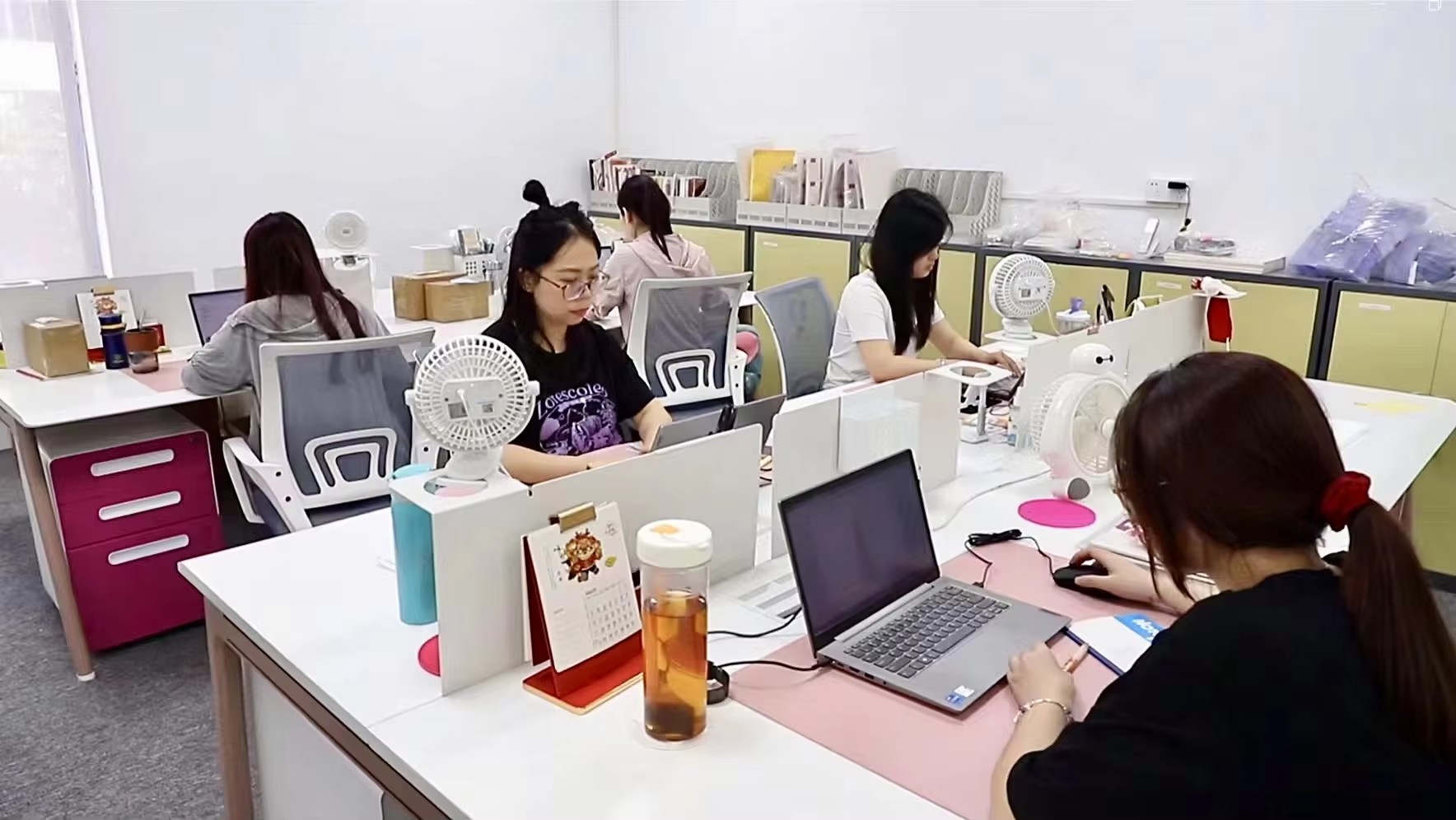
COSFINITY's 40,000 m² factory supports OEM/ODM cosmetic packaging projects for global brands.
Have Questions or Need More Details?
Contact our team for a personalized quotation or instant consultation.
Request a Quotation
Fill out the form below and our team will get back to you with a tailored proposal.
WhatsApp Direct Chat
Prefer to chat in real-time? Message us on WhatsApp for instant assistance & quick answers.
- Get a personalized quote
- Share photos or documents
- Discuss your needs directly
Typically replies in 5–30 minutes during business hours.