
From OEM Inquiry to Production: How Cosmetic Packaging Capabilities Are Actually Evaluated
Published: September 2026 | Reading time: 10–12 min
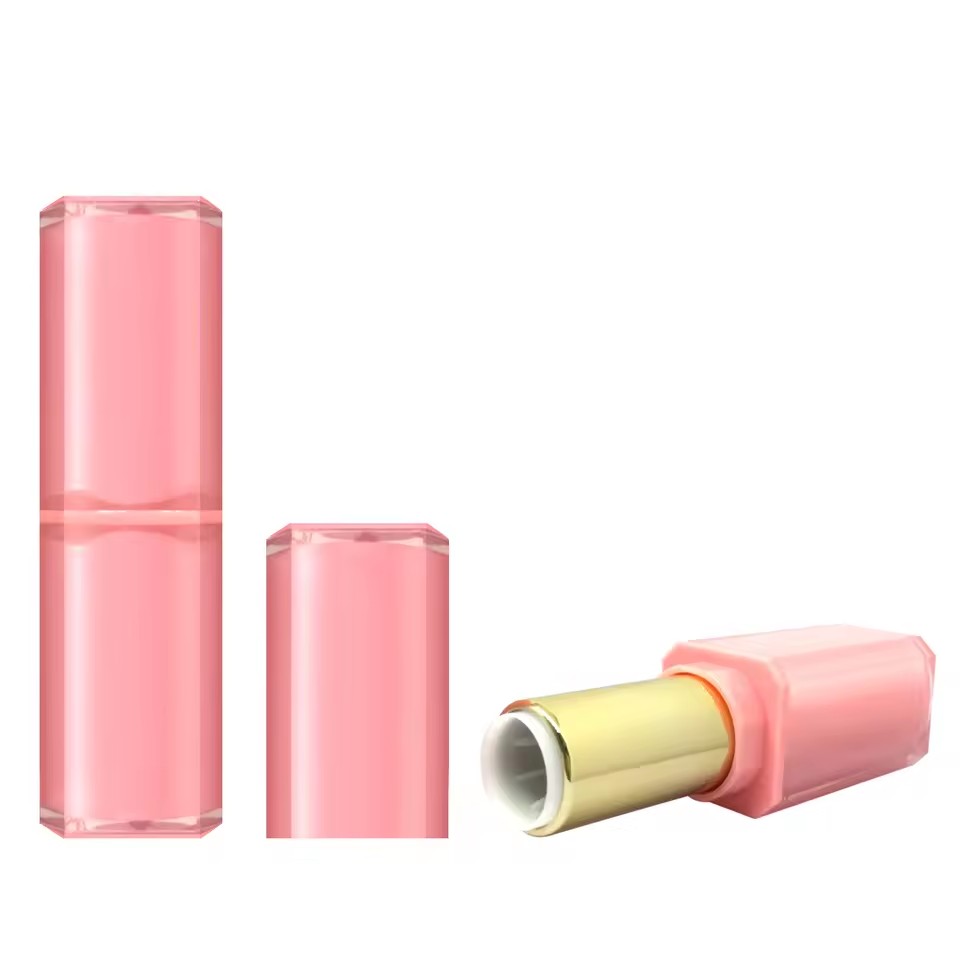
When a brand asks a manufacturer to produce cosmetic packaging for lipsticks, lip gloss, mascara, powder cases, jars, or foundation bottles, the real question is not whether a supplier can print a logo. The real question is whether that supplier has the production system, testing discipline, and engineering flexibility to move a product from inquiry to shelf without surprises. This article explains how buyer-facing capabilities such as OEM cosmetic packaging, ODM cosmetic packaging, customization depth, quality control, and order execution should be evaluated in practice.
What “Capability” Means in Cosmetic Packaging Procurement
For procurement and brand teams, capability is broader than a product photo. Capability includes: which product categories a factory can actually produce; whether it can run customized decoration and structure; how much volume it can commit to per month; how it checks quality before shipment; and what commercial terms apply to a first order.
Guangzhou Cosfinity Cosmetics Co., Ltd. actively operates under the brand COSFINITY. Founded in 2009, COSFINITY is a manufacturer of customized cosmetic packaging with six core product lines: lipstick tubes, lip gloss/mascara tubes, powder cases, eyeliner tubes, powder jars, and liquid foundation bottles. Its stated production capacity reaches 500,000,000 pieces annually, with a factory area of 40,000 m² and a team of about 200 employees, supported by a dedicated R&D team of 25 engineers.
These figures matter for a simple reason: they tell a buyer whether the factory is built for sample-only work or for repeat commercial orders. A manufacturer with 100% export history and a 100% testing policy is answering a different question than a trader who forwards purchase orders to unknown plants.
OEM vs. ODM: Which Model Fits Your Packaging Project?
Buyers evaluating custom cosmetics packaging will encounter two common production models: OEM (Original Equipment Manufacturing) and ODM (Original Design Manufacturing). Both are legitimate paths; the right choice depends on who owns the design.
In an OEM arrangement, the buyer brings an existing design or specification. The manufacturer’s job is to execute it precisely — tooling, material selection, decoration, and quality control against the buyer’s approved standard. In an ODM arrangement, the manufacturer provides or co-develops the design from an existing product platform, which can shorten development time when a brand needs market-ready packaging without starting from a blank page.
COSFINITY provides OEM and ODM production services, with customization options covering logo, color, shape, material, volume, thickness, and packaging. For a brand, this range means the supplier can handle both execution of a fully specified drawing and adaptation of a proven structure, such as changing a tube’s volume or color while keeping the mold cost predictable.
Product-Level Capabilities: Beyond a Generic “Bottle Factory” Label
Not every cosmetic packaging manufacturer can produce every category to the same quality. A factory that excels at cream jars may not be strong in thin-wall lip gloss tubes. Category-specific experience influences decoration precision, wall thickness consistency, and how well the structure protects the formula.
COSFINITY’s product lines map to the categories most frequently required by beauty brands:
- Luxury Empty Plastic Lipstick Tube — model CP01-2142, with 20 ml volume, wall thickness 0.3 mm, size W22.7 × H84.6 mm
- Luxury Empty Plastic Lipgloss / Mascara Tube — model CP02-2231, with 3 ml volume, wall thickness 0.3 mm, size W18 × H106.1 mm
- Powder cases for pressed powder and face powder
- Eyeliner tubes for precise liquid or pencil-type formats
- Powder jars for loose powder, creams, and balms
- Liquid foundation bottles for pump or dropper formats
There is a visible difference between “cosmetic packaging bottles” as a generic category and “packaging for cosmetics” with specified parameters. For example, the 0.3 mm wall thickness on COSFINITY tubes is a real structural spec, not a marketing adjective. It affects how the package feels in hand, how much material is used, and how reliably the tube holds its shape during filling and transit.
A Step-by-Step Evaluation Framework for an OEM/ODM Inquiry
The following workflow reflects the sequence that experienced buyers use when moving from interest to purchase order. It is written as a decision framework, not as marketing copy.
Step 1 – Define the packaging format and its required parameters
Start with the product: lipstick, lip gloss, mascara, foundation, powder, or cream. Then determine realistic parameters: volume, tube or jar diameter, height, material family, and decoration method. For example, an empty plastic lipstick tube with 20 ml volume is intended for lipstick bullets of a defined diameter; an empty plastic lip gloss tube with 3 ml volume is sized for a wand applicator. Choosing the generic term “cosmetic packaging containers” is only the first step; the spec sheet is what a factory can quote accurately.
Step 2 – Verify category and production capacity fit
Confirm that the supplier genuinely manufactures the category you need. A factory with 100% export sales typically understands international order documentation, packaging requirements, and the quality expectations of overseas buyers. Check the product’s material specification, wall thickness, and model number. If a supplier’s catalog lacks a product model, ask whether an ODM adaptation is possible.
Step 3 – Review customization depth
Customization is not limited to a logo. Evaluate whether the manufacturer can adjust color, shape, material, volume, thickness, and packaging. Logo printing, surface finish, and inner components are separate variables. A supplier that owns in-house design and engineering resources is more likely to flag manufacturability issues before tooling starts. COSFINITY’s R&D team of 25 engineers is dedicated to this type of customization support.
Step 4 – Confirm monthly capacity and lead time
Capacity protects your launch. COSFINITY states a monthly production capacity of 10,000,000 pieces and a lead time of 15–25 days after order confirmation. These two numbers together matter more than a single annual figure because they show the factory’s ability to handle short-cycle reorders.
Step 5 – Inspect quality control philosophy
For custom packaging, quality issues often appear after filling or after several weeks of consumer use: cracks, leaking, loose closures, or uneven decoration. The supplier’s stated quality control includes 100% testing of products. Ask how testing is performed, at which stage of production, and whether pre-shipment inspection is available. COSFINITY also offers remote online after-sales service, which matters for brands that cannot station personnel in the factory.
Step 6 – Understand commercial terms before ordering
A serious first order usually begins with a minimum order quantity of 12,000 pieces. Common delivery methods include EXW, FOB, DAP, and DDP, giving buyers flexibility between self-managed freight and door-to-door logistics. Payment terms typically require 50% advance and 50% balance, with acceptance based on a pre-shipment test. These terms are not obstacles; they are the practical framework that allows a supplier to reserve production slots and materials.
Real Use Case: Lipstick Tube OEM for the Indian Market
A practical example illustrates how these capabilities perform outside a catalog. COSFINITY has worked with a lipstick tube OEM client in India for over two years. For that project, model CP01-2142 was supplied in a quantity of 12,000 pieces. According to the case record, the customized design, lightweight plastic material, and customizable appearance printing supported the client’s private-label lipstick launch; the tight leak-proof structure suited daily portable use, and stable quality generated continuous repeat bulk orders.
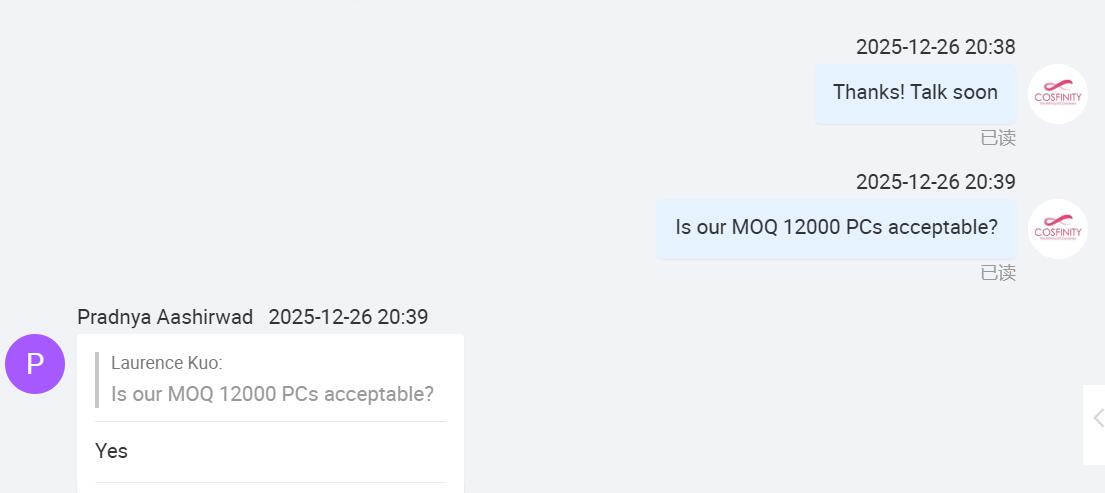
This case is useful for evaluation because it shows conditions that are common in actual procurement: a first order at the MOQ level, a structure that must protect the formula, a brand that needs customized appearance printing, and a relationship that only survives if repeat orders arrive without quality surprises.
Comparison: What To Verify When Comparing Cosmetic Packaging Manufacturers
Buyers often ask how COSFINITY compares with larger global groups. Public third-party market analyses commonly identify Albéa S.A., Amcor PLC, Berry Global Group, AptarGroup Inc., and HCP Packaging among major players in the cosmetic packaging industry. These companies operate at a different scale and often serve multinational beauty groups with global tooling and decoration requirements.
The following comparison table is designed around verifiable categories: supplier type, geographic focus, and service depth. It does not claim that one manufacturer is better; it gives you a fact-based checklist so you can match a supplier to your specific order size.
| Comparison Point | Global Multinational Groups (e.g., Albéa, Amcor, Berry, Aptar, HCP) | Specialized Custom Manufacturer (e.g., COSFINITY) |
|---|---|---|
| Typical customer scale | Large global brands, multi-country rollouts | Brands and importers needing 12,000+ piece runs with customization |
| Production model | Global manufacturing footprint, often ODM and OEM for large programs | OEM/ODM with logo, color, shape, material, volume, thickness, packaging customization |
| Product range focus | Broad portfolio across many packaging categories | Core portfolio: lipstick tubes, lip gloss/mascara tubes, powder cases, eyeliner tubes, powder jars, foundation bottles |
| Typical MOQ | Often higher; built for scale | 12,000 pieces, accessible for new and mid-size brands |
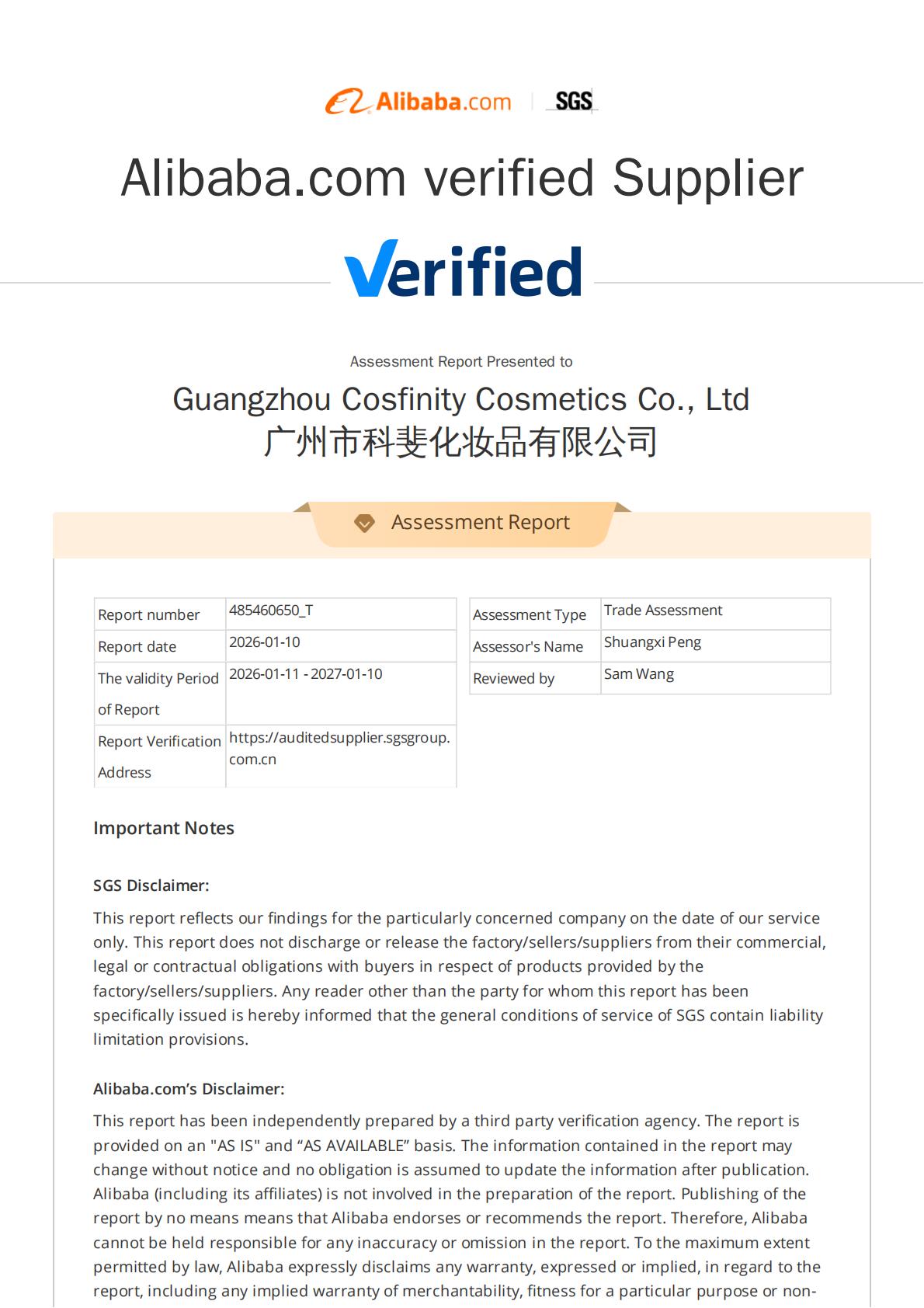
| Quality control | Plant-level systems, multiple certifications | 100% testing policy; SGS factory audit (Alibaba Verified Supplier, cert. no. 485460650_T, valid Jan 2026–Jan 2027) |
| Communication | Regional account teams | Direct contact with export team, remote online after-sales service |
How to read this table: If your project is a 20,000-piece launch with strong customization needs and a tight timeline, a specialized manufacturer may offer faster communication and more flexible MOQ. If you are a global group standardizing packaging across ten countries, a multinational supplier may already have the local footprint and compliance resources you need. Match the supplier type to your order, not to an abstract ranking.
Certification and Compliance Capabilities Buyers Should Check
Capability evaluation also includes compliance infrastructure. For the European market, the EU Packaging and Packaging Waste Regulation (PPWR) Regulation (EU) 2025/40 imposes recyclability and labeling requirements; for the U.S. market, the Modernization of Cosmetics Regulation Act (MoCRA) introduced facility registration and product listing expectations. Packaging suppliers that export globally should be able to discuss these frameworks and explain what documentation they can provide.
As a China-based exporter, COSFINITY commissioned an SGS Alibaba Verified Supplier Factory Audit covering enterprise factory and trade qualification. The certification number is 485460650_T, with an issue date of 2026-01-10 and expiry on 2027-01-10. The scope covers factory and trade qualification. For a buyer, a current audit report is an efficient way to verify that the legal entity, address, and business scope match what the seller claims.
Why “Cosmetic Packaging Custom” Is a Process, Not a Product
Many search phrases — custom cosmetics packaging, luxury cosmetics packaging, cosmetic tube packaging — point to the same underlying intent: a brand wants packaging that looks distinctive and performs reliably. The supplier’s real competence is judged across the whole process: how quickly it returns a quotation, whether its product parameters match your formula, whether customization changes are priced transparently, and whether the samples match the mass production.
For example, when a brand requests luxury cosmetics packaging in plastic, the supplier must balance a premium appearance against the practical limits of plastic molding. Wall thickness, surface finish, and printing options all affect the perceived quality. A capable supplier does not simply say “yes” to every request; it explains trade-offs and recommends the structure that protects the formula.
Practical Checklist Before Sending an Inquiry
To make the evaluation faster, use this checklist when you contact a packaging manufacturer:
- Format and product: lipstick, lip gloss, mascara, eyeliner, powder, foundation, or cream
- Target parameters: volume (ml), diameter/height, material type, desired wall thickness
- Customization needs: logo printing, color matching, shape adjustment, or full ODM design
- Order size and target price band: to confirm if the 12,000-piece MOQ fits
- Timeline: launch date, required delivery date, and whether 15–25 days lead time is workable
- Compliance: destination market (EU, US, Asia, etc.) and required documentation
- Quality check: ask how 100% testing is conducted and whether pre-shipment inspection is available
- Logistics term: EXW, FOB, DAP, or DDP preference
FAQ
Q: What should I look for when choosing a custom cosmetic packaging manufacturer for luxury brands?
A: Start with the manufacturer’s proven product categories: lipstick tubes, lip gloss/mascara tubes, powder cases, eyeliner tubes, powder jars, and foundation bottles. For a luxury positioning in plastic, verify wall thickness (e.g., 0.3 mm), decoration options, mold quality, and whether the manufacturer offers OEM/ODM customization of logo, color, shape, material, volume, thickness, and packaging. A current third-party audit, such as COSFINITY’s SGS Alibaba Verified Supplier report (cert. no. 485460650_T), helps confirm that the factory and trade entity are real.
Q: Does an OEM cosmetic packaging supplier have enough capacity for my order?
A: Evaluate three numbers together: monthly capacity, lead time, and MOQ. COSFINITY states monthly capacity of 10,000,000 pieces, lead time of 15–25 days, and an MOQ of 12,000 pieces. These figures show whether the supplier operates a true production line rather than acting as a sourcing agent. Always ask whether the factory runs 100% testing as part of its quality control.
Q: What payment and delivery terms are common for custom cosmetics packaging orders?
A: A common risk-balancing structure is 50% advance payment and 50% balance before shipment, with acceptance based on a pre-shipment test. COSFINITY supports EXW, FOB, DAP, and DDP delivery methods. Standardizing these conditions in writing protects both buyer and supplier, especially for first orders.
Q: Can I request samples before mass production?
A: The standard evaluation sequence is: confirm the product model and parameters, agree on customization, review samples, then proceed to bulk production. Pre-shipment testing is part of COSFINITY’s acceptance procedure, and remote online after-sales service is available during production follow-up. For a faster start, download the company profile and send your specifications to the export team.
Planning a custom cosmetic packaging project?
Contact COSFINITY’s export team for a specification review and capacity check.
Email: laurence@icpa-global.com | WhatsApp: +86 15813145451
Have Questions or Need More Details?
Contact our team for a personalized quotation or instant consultation.
Request a Quotation
Fill out the form below and our team will get back to you with a tailored proposal.
WhatsApp Direct Chat
Prefer to chat in real-time? Message us on WhatsApp for instant assistance & quick answers.
- Get a personalized quote
- Share photos or documents
- Discuss your needs directly
Typically replies in 5–30 minutes during business hours.