
OEM Cosmetic Packaging FAQ: MOQ, Lead Time, and After-Sales
Most OEM cosmetic packaging programs do not fail on the first sample. They fail on the second order — when a shade extension, a missing cap, or a disputed batch turns a clean quotation into an unbudgeted problem.
This FAQ answers the five questions that decide whether a packaging program can be repeated rather than merely launched: minimum order quantity, customization scope, tooling ownership on customized parts, replacement part supply, and how defect liability is actually resolved. The program terms below are published by COSFINITY (Guangzhou Cosfinity Cosmetics Co., Ltd.), a cosmetic packaging manufacturer founded in 2009 in Guangzhou, China, operating a 40,000㎡ factory with 200 employees and a monthly production capacity of 10,000,000 pieces.
- Minimum order quantity: 12,000 pcs.
- Production lead time: 15–25 days.
- Customization scope: logo, color, shape, material, volume, thickness, packaging.
- Quality control: 100% test.
- After-sales model: remote online after-sales service.
- Supplier qualification certificate: SGS no. 485460650_T, scope enterprise factory and trade qualification audit, valid 2026-01-10 to 2027-01-10, applicable to the global market.
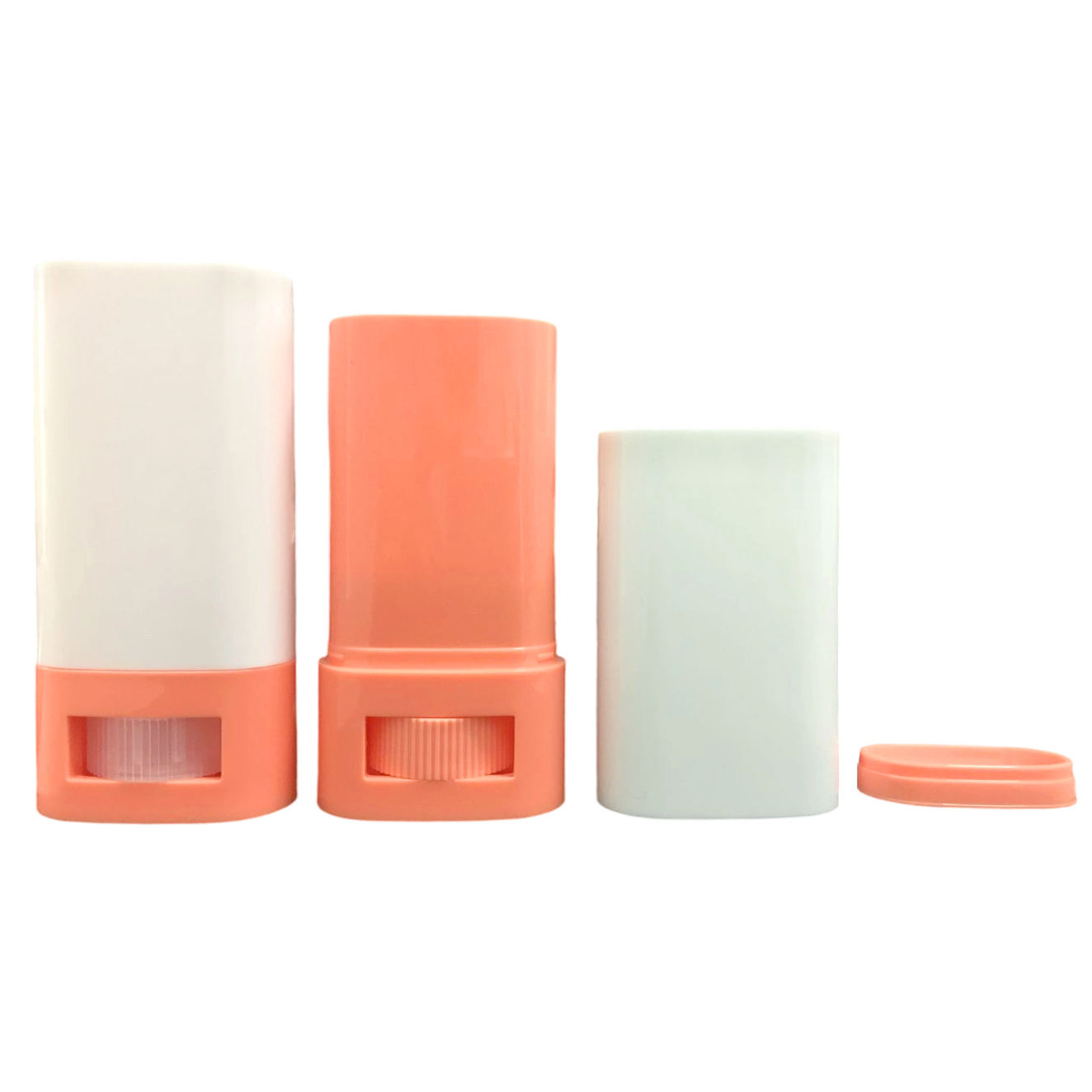
Deodorant stick plastic tube container TP01-1018-15 — 20 ml, L41.7 × W24.49 × H86.5 mm, plastic.
Why These Five Questions Decide a Long-Term Packaging Partnership
An RFQ conversation usually concentrates on appearance, unit price and the first delivery date. The commercial exposure sits somewhere else, and it compounds after launch.
- Variant exposure. A minimum order quantity applied per model, per color, or per decoration run produces very different launch economics. A brand planning five shades should confirm which of these the 12,000 pcs threshold applies to before signing, because the answer can multiply committed stock.
- Tooling ambiguity. When a program requires a new shape or a proprietary component, ownership of that tool decides whether the brand can duplicate supply, relocate production, or insure continuity. If ownership is never written down, the practical answer defaults to whoever physically holds the tool.
- Remedy gap. A 100% test regime reduces escapes; it does not define what happens when one occurs. Without a written remedy path, every defect claim becomes a fresh negotiation over replacement, credit, freight and schedule.
- Spare-part dependency. Caps, closures and dispensing components are the parts most likely to be lost, damaged or colour-mismatched in a reorder. Brands that never define spare supply discover the gap only when a running line needs a fraction of a container volume.
- Specification drift. Cosmetic packaging is also the surface that carries regulated label information. Once artwork is approved, a late change is a compliance re-check rather than a production tweak.
None of these five items appear as a line on a quotation, which is precisely why they surface later — usually at the worst moment.
Industry Background: A Regulated Market With a Plastic Core
The global cosmetic packaging market was valued at USD 32.7 billion in 2023, according to Grand View Research, and plastics accounted for the largest revenue share at 60.8% in the same year. Market-size figures for this category differ between research houses because the boundary definition differs — primary packaging only versus primary plus secondary, cosmetics only versus a broader beauty scope — so any single figure should be treated as a directional input for budgeting rather than a precise planning number.
The material picture matters for OEM programs: plastic dominates volume, which means the questions buyers ask most often concern plastic tubes, jars, cases and stick containers — the formats where decoration, wall thickness and closure fit are decided at tooling stage.
Compliance context shapes the timeline. Under EU Regulation 1223/2009, cosmetic products placed on the EU market must be manufactured according to Good Manufacturing Practice requirements aligned with ISO 22716. In the United States, cosmetics marketed domestically must comply with the Federal Food, Drug, and Cosmetic Act, the Fair Packaging and Labeling Act, and FDA regulations codified at 21 CFR Parts 700 to 740; 21 CFR 701.10 addresses principal display panel presentation, and 21 CFR Part 700 sets tamper-resistant packaging requirements for specified retail products.
Core Answers: MOQ, Customization, Tooling, Spares, and Defects
Program terms confirmed by COSFINITY
COSFINITY operates as an OEM/ODM cosmetic packaging manufacturer with 100% export orientation and global markets. The production base covers 40,000㎡ with 200 employees, a 25-engineer R&D team, a monthly capacity of 10,000,000 pieces and an annual output of 500,000,000 pieces. The product portfolio spans lipstick tubes, lipgloss and mascara tubes, powder cases, eyeliner tubes, powder jars and liquid foundation bottles — which is the practical reason a multi-format brand can consolidate several packaging categories under one commercial and quality framework.
Supplier qualification is documented through SGS certificate number 485460650_T, issued by SGS, covering enterprise factory and trade qualification audit, valid from 2026-01-10 to 2027-01-10 and applicable to the global market. It is a supplier audit document, not a product-specific test report — a distinction that matters when a retailer asks for evidence.
1. What is the minimum order quantity for OEM cosmetic packaging?
The published minimum order quantity is 12,000 pcs. The practical question is not the number itself but its unit of application: confirm in writing whether 12,000 pcs applies per model, per color, or per decoration run. A single-model lipstick program and a five-shade lipstick program can carry the same stated MOQ while representing very different committed inventory.
A working reference is COSFINITY's lipstick tube OEM case in India: 12,000 pcs of a customized lipstick tube, launched as a private-label line, with stable quality supporting continuous repeat bulk orders across a two-year relationship. The initial order sat exactly at the MOQ threshold — the program became viable because the format, decoration and quality expectations were fixed before the first run, not because the volume was large.
2. What can actually be customized?
Customization covers logo, color, shape, material, volume, thickness and packaging. That list is broad, but each element carries a different engineering cost and a different validation burden:
- Logo and decoration affect artwork approval and inspection criteria rather than mould construction.
- Color requires a defined reference standard and a batch-matching rule for reorders.
- Shape and material are the elements most likely to require new tooling and therefore the ones where ownership must be agreed first.
- Volume and thickness are constrained by the base format: a 20 ml lipstick tube such as CP01-2142 is specified at W22.7 × H84.6 mm with 0.3 mm wall thickness, while a moulded powder case such as CP03-1394 is specified at W65 × H12 mm with 1 mm thickness.
- Packaging (the transport and retail outer) is usually the fastest customization to change and the easiest to overlook during sampling.
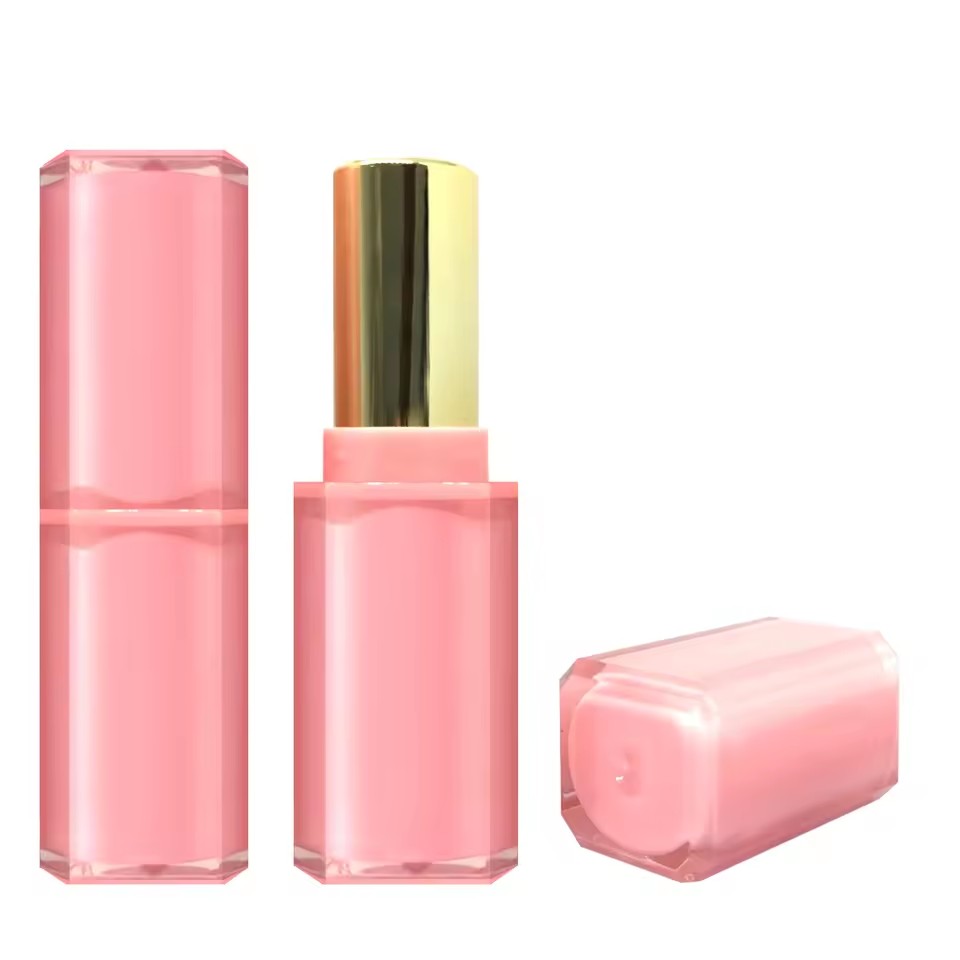
Luxury empty plastic lipstick tube CP01-2142 — 20 ml, W22.7 × H84.6 mm, 0.3 mm wall thickness, plastic.
3. Who owns the mold for a customized part?
Tooling ownership is a contract question, not a catalogue question. COSFINITY's published customization scope includes shape and material changes, which is the point at which a new tool may enter the program — and the point at which ownership must be documented rather than assumed. Before approving tooling, a buyer should have written answers to six items:
- Ownership: who legally owns the tool once it is paid for, and what document evidences that ownership.
- Cost treatment: whether tooling is charged once, amortized into unit price, or refunded against a volume commitment — and what happens if the volume is never reached.
- Transfer terms: whether the tool can be moved to another production site, under what conditions, and at whose cost.
- Maintenance and repair: who maintains the tool, who pays for repair after wear, and how cavitation changes are handled.
- Exclusivity: whether the tool may be used to produce the same design for other customers.
- End of relationship: what happens to the tool if the program is discontinued or the supplier changes.
Where a program uses an existing standard format — a catalogue lipstick tube, a catalogue deodorant stick container — the tooling question is usually limited to decoration tooling such as printing plates or hot-stamping dies. That is a materially smaller commitment, and it should not be priced or documented as though a new mould were being built.
4. How are replacement parts supplied after launch?
Replacement supply should be specified at the same time as the bulk order, not requested after the first shortage. In practice, buyers should define four things in the supply agreement:
- Which components are covered. Name the parts explicitly — tube body, cap or closure, dispensing component, applicator, outer case — instead of referring to “spare parts” generically.
- Spare quantity and order threshold. State whether spares can be ordered below the 12,000 pcs production MOQ, and at what quantity and price basis.
- Color and batch matching. A replacement cap produced two years later will not match the original batch unless a color reference and tolerance rule were agreed at approval.
- Storage and shelf condition. Define how spares are packed and how long they may be stored before use, particularly for plastic parts that will be assembled with a finished formula.
This is also where the application environment belongs in the specification. COSFINITY's products are described for indoor daily makeup use at normal room temperature of 16℃ to 25℃, with repeated opening and closing, and with requirements for leak-proof performance, non-irritating material and portability. A replacement part that is dimensionally correct but does not meet the same closure or leak performance is not a valid replacement.
5. How is a defect claim handled?
A test regime and a remedy process are two different controls. COSFINITY's quality control is stated as 100% test, and after-sales support is provided as remote online after-sales service. The 100% test reduces the probability of an escape; the remedy process determines what happens when one still occurs. Buyers should therefore write five clauses into the agreement:
- Acceptance criteria: the dimension, appearance, color and functional tolerances the inspection will be measured against — referenced to the approved sample and drawing.
- Notification window: how many days after receipt a claim may be raised, and in what form.
- Evidence standard: photographs, quantity by carton, batch code, and retention of defective units.
- Remedy path: replacement, credit, or rework, and who bears freight in each case.
- Escalation: how repeat defects in consecutive batches are handled, and what triggers a corrective-action review rather than another replacement.
For buyer teams, the useful discipline is to make the claim channel explicit before the first shipment — through the same remote online after-sales route, with a named contact — so that evidence is gathered in the format the supplier can act on.

SGS certificate 485460650_T covers enterprise factory and trade qualification audit and is valid to 2027-01-10.
Step-by-Step: From First Inquiry to Repeat Order
The sequence below is the shortest route through the five questions above. Each step produces a document that the next step depends on.
- Fix the format against the formula. Decide whether the program needs a lipstick tube, a lipgloss or mascara tube, a deodorant stick container, a powder jar, an airless foundation bottle or a case, and state the target fill volume. Format drives everything downstream.
- Send a structured RFQ. Include annual volume, variant count (colors, decorations), target markets, decoration requirements and any regulated label text. A supplier quoting without variant count cannot price MOQ correctly.
- Confirm the commercial frame. Agree MOQ at 12,000 pcs and clarify the unit of application; agree the 15–25 day lead time and, critically, its start point — order confirmation, deposit, artwork approval, or tooling sign-off.
- Validate samples against a written checklist. Measure dimensions and wall thickness (for example 0.3 mm on CP01-2142, CP02-2231 and CP04-1215; 1 mm on CP05-2159B and CP03-1394), assess closure feel, check color against the reference, and test leak behaviour for portable daily use.
- Approve artwork and labeling before bulk. For regulated markets, confirm the principal display panel and any market-specific labeling requirement at this stage, not after decoration plates are made.
- Document tooling if a new shape is involved. Ownership, cost treatment, transfer, maintenance, exclusivity and end-of-relationship terms are settled here or never.
- Produce and inspect. Bulk production runs under 100% test; agree the pre-shipment inspection arrangement and the evidence pack that will accompany shipment.
- Set the reorder protocol. Record spare-part coverage, color-matching rules, the defect notification window and the after-sales contact before the second purchase order is needed.
Use Cases: How These Answers Change a Decision
Private-label lipstick launch at the MOQ threshold
A brand launching a private-label lipstick line at 12,000 pcs sits exactly at COSFINITY's published MOQ. In the documented India case, a customized lipstick tube program combined a customized design, lightweight plastic material, customizable appearance printing and a tight leak-proof structure suited to daily portable use. The program has run for two years with continuous repeat bulk orders. The lesson is not the volume; it is that decoration, structure and quality expectations were locked before the first run, which is what made the minimum order repeatable rather than a one-off.
Deodorant stick container program
A deodorant stick program built on TP01-1018-15 (20 ml, L41.7 × W24.49 × H86.5 mm, plastic) exposes the spare-part question early: the container is used repeatedly, carried daily, and depends on consistent closure performance. Buyers should define replacement coverage for the cap and closure, confirm color matching for later batches, and specify the leak and opening-cycle expectations in the approved sample documentation.
Multi-format portfolio consolidation
A brand running several categories — lipstick (CP01-2142, 20 ml), lipgloss or mascara (CP02-2231, 3 ml), eyeliner (CP04-1215, 10 ml; CP06-1056), powder (CP05-2159B, 5 ml jar; CP03-1394 case), foundation (CP07-2026, 30 ml glass airless; CP08-0053, 10 ml stick) — gains more from consolidating the commercial framework than from consolidating the mould. One MOQ rule, one qualification certificate, one defect channel and one reorder protocol across formats removes the coordination cost that otherwise multiplies with every added SKU.
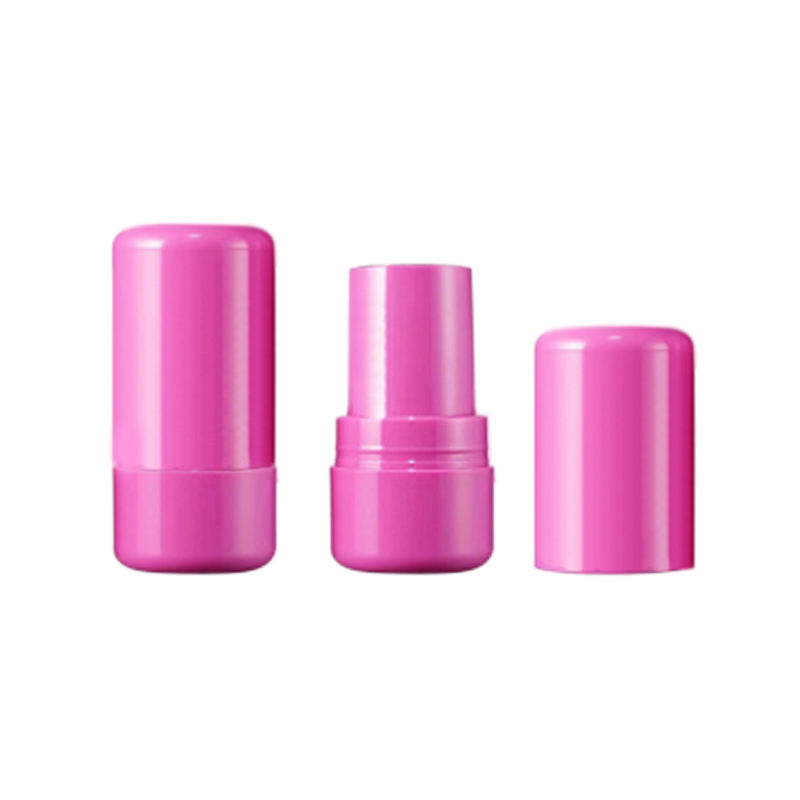
Empty stick foundation tube CP08-0053 — 10 ml, D29 × H60 mm, plastic.
Comparison Reference: Formats and Program Terms
The two tables below separate what is fixed per format from what is fixed at program level. Buyers should read the second table as the terms that repeat across every SKU in the agreement.
Table 1 — Format specifications referenced in this FAQ
| Model | Format | Dimensions | Volume | Material |
|---|---|---|---|---|
| CP01-2142 | Luxury empty plastic lipstick tube | W22.7 × H84.6 mm, 0.3 mm thickness | 20 ml | Plastic |
| TP01-1018-15 | Deodorant stick plastic tube container | L41.7 × W24.49 × H86.5 mm | 20 ml | Plastic |
| CP02-2231 | Luxury lipgloss / mascara tube | W18 × H106.1 mm, 0.3 mm thickness | 3 ml | Plastic |
| CP05-2159B | Leak-proof plastic powder jar / pot | W40.7 × H32.6 mm, 1 mm thickness | 5 ml | Plastic |
| CP03-1394 | Customized empty makeup powder case | W65 × H12 mm, 1 mm thickness | — | Plastic |
| CP04-1215 | Liquid empty eyeliner tube | W12.8 × H115.3 mm, 0.3 mm thickness | 10 ml | Plastic |
| CP07-2026 | Airless pump liquid foundation bottle | W33.5 × H92 mm | 30 ml | Glass |
| CP08-0053 | Empty stick foundation tube | D29 × H60 mm | 10 ml | Plastic |
Table 2 — Program-level terms and how to treat them
| Parameter | Published term | What the buyer should confirm in writing |
|---|---|---|
| Production mode | OEM / ODM | Which model applies to the project and who owns the design files |
| Customization | Logo, color, shape, material, volume, thickness, packaging | Which elements require new tooling versus decoration-only change |
| Minimum order quantity | 12,000 pcs | Whether the figure applies per model, per color, or per decoration run |
| Lead time | 15–25 days | The start point: order confirmation, deposit, artwork approval, or tooling sign-off |
| Monthly capacity | 10,000,000 pcs | How capacity is allocated across concurrent SKUs in peak season |
| Quality control | 100% test | The acceptance criteria and inspection record provided per batch |
| After-sales | Remote online after-sales service | Named contact, response route, and the evidence format required for a claim |
| Qualification | SGS 485460650_T, enterprise factory and trade qualification audit, valid 2026-01-10 to 2027-01-10 | Whether a product-level test report is additionally required by the retailer |
Frequently Asked Questions
Are COSFINITY cosmetic packaging products CE-certified?
CE marking is not a general certificate for cosmetic packaging — it applies where a product falls under specific European directives, so a blanket “CE-certified packaging supplier” claim should be treated with caution. The document COSFINITY publishes is SGS certificate number 485460650_T, issued by SGS, covering enterprise factory and trade qualification audit, valid from 2026-01-10 to 2027-01-10 and applicable to the global market. That is a supplier qualification audit, not a product conformity mark. Buyers selling into the EU should instead ask for evidence aligned with Regulation 1223/2009 and ISO 22716 Good Manufacturing Practice expectations, and buyers selling into the United States should confirm labeling against 21 CFR Parts 700 to 740, including 21 CFR 701.10 for the principal display panel.
Can one manufacturer cover lipstick tubes, deodorant containers, tubes, jars and bottles?
Yes, within the published portfolio. COSFINITY manufactures lipstick tubes, lipgloss and mascara tubes, powder cases, eyeliner tubes, powder jars and liquid foundation bottles, with customization across logo, color, shape, material, volume, thickness and packaging. Capacity is stated at 10,000,000 pcs per month and 500,000,000 pcs annually, supported by 25 engineers. Consolidating formats under one supplier is mainly a coordination gain: one MOQ rule, one qualification document and one defect process instead of several.
What is the minimum order quantity, and how should a brand plan variants around it?
The published MOQ is 12,000 pcs. Because the figure can be interpreted per model, per color, or per decoration run, brands should confirm the unit of application before committing to a shade range — a five-shade launch is a very different inventory decision under each interpretation. The documented India lipstick program started at exactly 12,000 pcs of a customized tube and developed into continuous repeat bulk orders over two years, which illustrates the workable pattern: fix design, decoration and quality expectations first, then scale volume.
What should be validated on a sample before bulk production is approved?
Five things: dimensions and wall thickness against the drawing (for reference, 0.3 mm on CP01-2142, CP02-2231 and CP04-1215; 1 mm on CP05-2159B and CP03-1394), closure fit and opening feel after repeated use, color against the agreed reference standard, decoration quality and position against the approved artwork, and leak behaviour under the intended daily-carry conditions of 16℃ to 25℃ room temperature. The approved sample should then be referenced directly in the acceptance criteria used for the 100% test, so that bulk inspection measures the same attributes the brand signed off.
How long does production take, and what can extend the 15–25 day window?
Production lead time is published as 15–25 days. The variable that most often moves the delivery date is not machine time but the start point of that window: whether the countdown begins at order confirmation, deposit, artwork approval, or tooling sign-off should be stated in the quotation. Late artwork changes, new tooling for a customized shape, and regulated label revisions can each restart part of the sequence, so they should be scheduled before the production slot rather than during it. To plan a first program against these terms — MOQ, lead time, customization and after-sales — send the format, target volume and variant count for a quotation and sample arrangement through COSFINITY, or review the full capability profile in the COSFINITY company brochure.
Conclusion: Write the Reorder Terms Before the First Order
OEM cosmetic packaging terms are easy to compare and hard to live with. The MOQ, the 15–25 day lead time, the customization list and the 100% test regime describe what a supplier can do; they do not describe what happens in month eighteen, when a cap needs replacing, a colour must match, and a batch dispute needs a documented remedy.
Treat the first purchase order as the moment to fix the second one: confirm whether 12,000 pcs applies per model or per variant, document tooling ownership before a customized shape is built, define spare-part coverage and colour-matching rules for caps and closures, and write the defect notification window and remedy path into the agreement. A supplier qualification document such as SGS certificate 485460650_T supports the audit step, but the operational details are what carry a program across multiple seasons.
Request a Quotation or Sample for Your Program
COSFINITY supplies OEM/ODM cosmetic packaging — lipstick tubes, lipgloss and mascara tubes, powder cases, eyeliner tubes, powder jars and liquid foundation bottles — with a 12,000 pcs MOQ, 15–25 day lead time and 100% test. Send your format, target volume and variant plan to receive a written quotation covering MOQ application, tooling treatment, spare-part terms and the defect process.
Contact: Laurence Kuo | laurence@icpa-global.com | Tel / WhatsApp +86 15813145451
Website: www.cosfinity-cosmeticpackaging.com | Brochure: Download the COSFINITY company profile (PDF)
Address: Room 207, Building M3b, No.1 Pengxi Hualian 1st Road, Lianbian, Helong Street, Baiyun District, Guangzhou, China
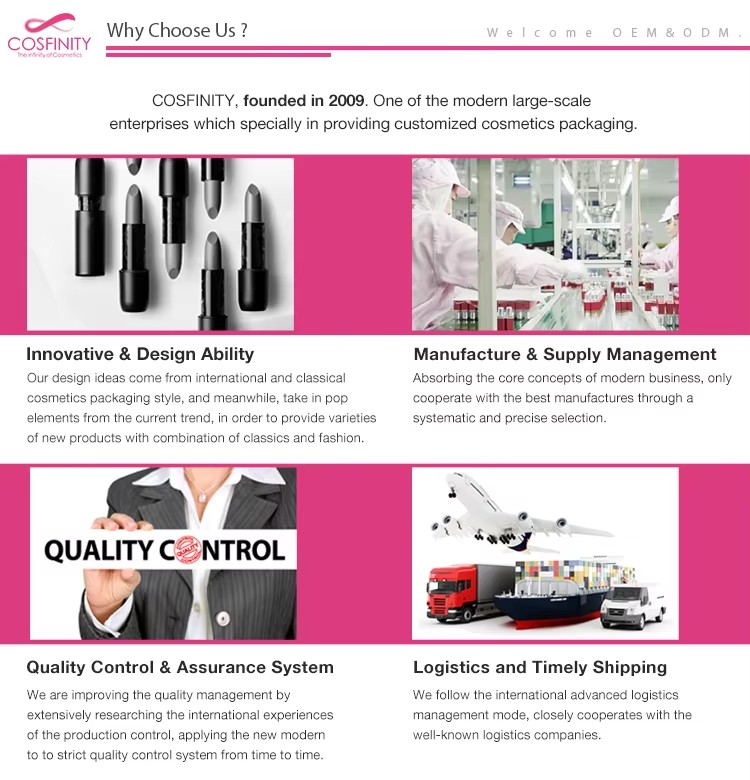
COSFINITY, founded in 2009, operates a 40,000㎡ cosmetic packaging factory with a monthly capacity of 10,000,000 pieces.
Market and regulatory references: Grand View Research, Cosmetic Packaging Market Size & Share Report (2024–2030); Regulation (EC) No 1223/2009; U.S. FDA cosmetics labeling and law summaries; 21 CFR Part 700 and 21 CFR 701.10.
Have Questions or Need More Details?
Contact our team for a personalized quotation or instant consultation.
Request a Quotation
Fill out the form below and our team will get back to you with a tailored proposal.
WhatsApp Direct Chat
Prefer to chat in real-time? Message us on WhatsApp for instant assistance & quick answers.
- Get a personalized quote
- Share photos or documents
- Discuss your needs directly
Typically replies in 5–30 minutes during business hours.