
Top 5 Plastic Tubes for Precision Cosmetics: Eyeliner, Lipgloss, and Mascara
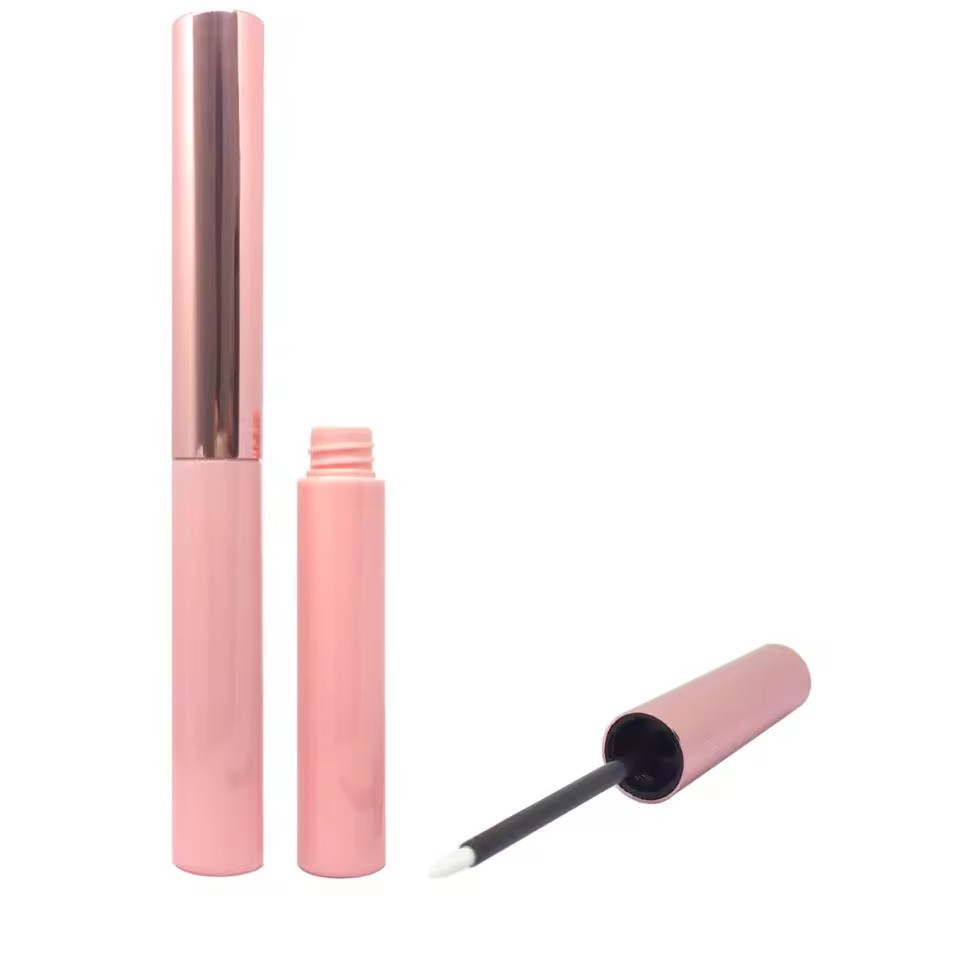
CP04-1215: a 10 ml plastic eyeliner tube, W12.8 × H115.3 mm, 0.3 mm wall thickness, ranked first in this shortlist.
The five plastic tubes COSFINITY recommends for precision liquid cosmetics are the CP04-1215 Liquid Empty Eyeliner Tube (10 ml), the CP02-2231 Luxury Empty Plastic Lipgloss / Mascara Tube (3 ml), the CP06-1056 Empty Liquid Eyeliner Pencil, the CP01-2142 Luxury Empty Plastic Lipstick Tube (20 ml), and the CP08-0053 Empty Stick Foundation Tube (10 ml). They are ranked below by how closely their published geometry — barrel diameter, overall length, wall thickness, and nominal volume — matches eyeliner, lipgloss, and mascara formats.
This is a specification-led shortlist, not a beauty award list. Every figure quoted here comes from the COSFINITY product catalogue, and where a value is not published for a model, this article says so instead of estimating it. Ranking positions reflect fit for the three precision applications named in the title; they are not a statement about price, performance, or shelf life, all of which depend on the formula a brand fills into the tube.
Why Precision Cosmetic Tubes Are Hard to Specify
Eyeliner, lipgloss, and mascara share a packaging problem that larger formats do not have. The product is a small volume of liquid or semi-liquid formula, dispensed through a narrow opening, carried in a bag or pocket, and opened and closed repeatedly. A 30 ml foundation bottle can tolerate a slightly wide tolerance on fill level. A 3 ml lipgloss or mascara tube cannot — a fraction of a millimetre in barrel diameter changes how the unit feels in the hand and how much formula moves per use.
The practical failure modes for these three categories are consistent: leakage inside a bag or pouch, an inconsistent fill level across a production batch, a mismatch between the barrel and the applicator the brand selects, decoration that does not survive daily handling, and skin-contact material questions that appear late in the development cycle. The application scenario COSFINITY designs these products for is explicitly a daily-use one — indoor daily makeup, repeated opening and closing, carried around, with leak-proof design, non-irritating material, portability, and lightweight construction listed as the special requirements.
None of those risks can be judged from a product photograph. What can be judged, and what should be written into a purchase specification, is geometry: barrel diameter, overall length, wall thickness, nominal volume, and material. Those are exactly the parameters published for the COSFINITY tube range, and they form the basis of the ranking below.
Wall thickness deserves particular attention because it is a variable, not a fixed property. Three of the five tubes listed here are published at 0.3 mm, and COSFINITY's OEM/ODM customization scope includes thickness alongside logo, color, shape, material, volume, and packaging. A buyer who specifies thickness deliberately is specifying rigidity, weight, and moulding behaviour — not just a number on a drawing.
Industry Background: A Large, Plastic-Dominated Category Under New Rules
Plastic tube packaging for precision cosmetics is not a niche decision inside a small market. The global cosmetic packaging market was valued at approximately USD 34.17 billion to USD 47.3 billion in 2024, with expectations of reaching up to USD 89.72 billion by 2034, according to Fortune Business Insights, ResearchAndMarkets, and Data Bridge. The range is wide because estimates differ on whether secondary packaging and bulk industrial containers are included — a useful reminder that market-size figures should always be read with their scope in mind.
Within that market, material choice is already settled in plastic's favour. Plastic held a 64.5% share of cosmetic packaging in 2024, ahead of glass and metal, based on ResearchAndMarkets data reported through BusinessWire. Asia Pacific led the global market in 2025 with a 42.36% share, driven by rising disposable incomes and e-commerce growth, per Fortune Business Insights — a relevant data point for brands sourcing tubes from a Chinese manufacturer. China's beauty product exports reached approximately USD 4.77 billion in 2024, according to the Observatory of Economic Complexity, with the United Kingdom the fastest-growing destination market.
Regulation has moved at the same time. In the EU, the Packaging and Packaging Waste Regulation (EU) 2025/40 mandates strict recyclability and labeling standards for cosmetics, with requirements applying from late 2024 as documented by the European Commission and Cosmeservice. In the United States, the Modernization of Cosmetics Regulation Act (MoCRA 2022) introduced mandatory facility registration and product listing for packaging entities, as described by the FDA and ChemLinked. Consumer expectations run in the same direction: sustainable packaging — refillable or recyclable — was a top priority for 63% of cosmetic consumers in 2024, according to a Statista and Packly survey.
At the other end of the scale, the global market is served by large packaging groups including Albéa S.A., Amcor PLC, Berry Global Group, AptarGroup Inc., and HCP Packaging, as identified by Mordor Intelligence and Fortune Business Insights. Their presence matters to a buyer for one reason: it shows that tube supply is a competitive, capacity-driven industry, which means specification clarity — not supplier scarcity — is usually the deciding factor in a precision cosmetics project.
Top 5 Plastic Tubes for Eyeliner, Lipgloss, and Mascara
Ranking criteria: (1) how directly the model serves one of the three named applications — eyeliner, lipgloss, or mascara; (2) barrel diameter, where a narrower barrel indicates a more precision-oriented format; (3) published wall thickness, treated as a measure of how deliberately the tube's rigidity has been specified; and (4) nominal volume, used as a tie-breaker to separate products with similar geometry. Only published catalogue values were used.
1. CP04-1215 — Liquid Empty Eyeliner Tube, 10 ml
The CP04-1215 is the narrowest tube in this shortlist and the longest body published among the models listed at 0.3 mm wall thickness. That combination — a slim barrel with a long, thin-wall body — is what makes it the strongest structural match for eyeliner, the most precision-sensitive of the three applications.
- Model: CP04-1215
- Product: Liquid Empty Eyeliner Tube
- Type: Plastic Tubes
- Size: W12.8 × H115.3 mm
- Wall thickness: 0.3 mm
- Volume: 10 ml
- Material: plastic
- Usage: cosmetic packing
Why it ranks first: a 12.8 mm barrel is the smallest diameter on this list, and a 115.3 mm length gives the tube a long, controlled footprint for a fine-tip liquid liner product. The 0.3 mm wall means the tube is specified at the same thickness class as the lipgloss and lipstick tubes below, which simplifies a multi-SKU packaging programme because the brand is not juggling different rigidity assumptions across the line.
Where it fits: liquid eyeliner, eyeliner pen bodies where the brand supplies its own applicator, and other fine-tip eye products where a slim silhouette and a 10 ml nominal fill are appropriate.
What to confirm before ordering: the applicator and closure the brand intends to pair with the barrel, and whether 10 ml is the right fill for a formula that is used in small doses. Nominal volume and usable fill are not the same figure, and the fill level should be validated on a filled sample rather than assumed from the catalogue.
2. CP02-2231 — Luxury Empty Plastic Lipgloss / Mascara Tube, 3 ml
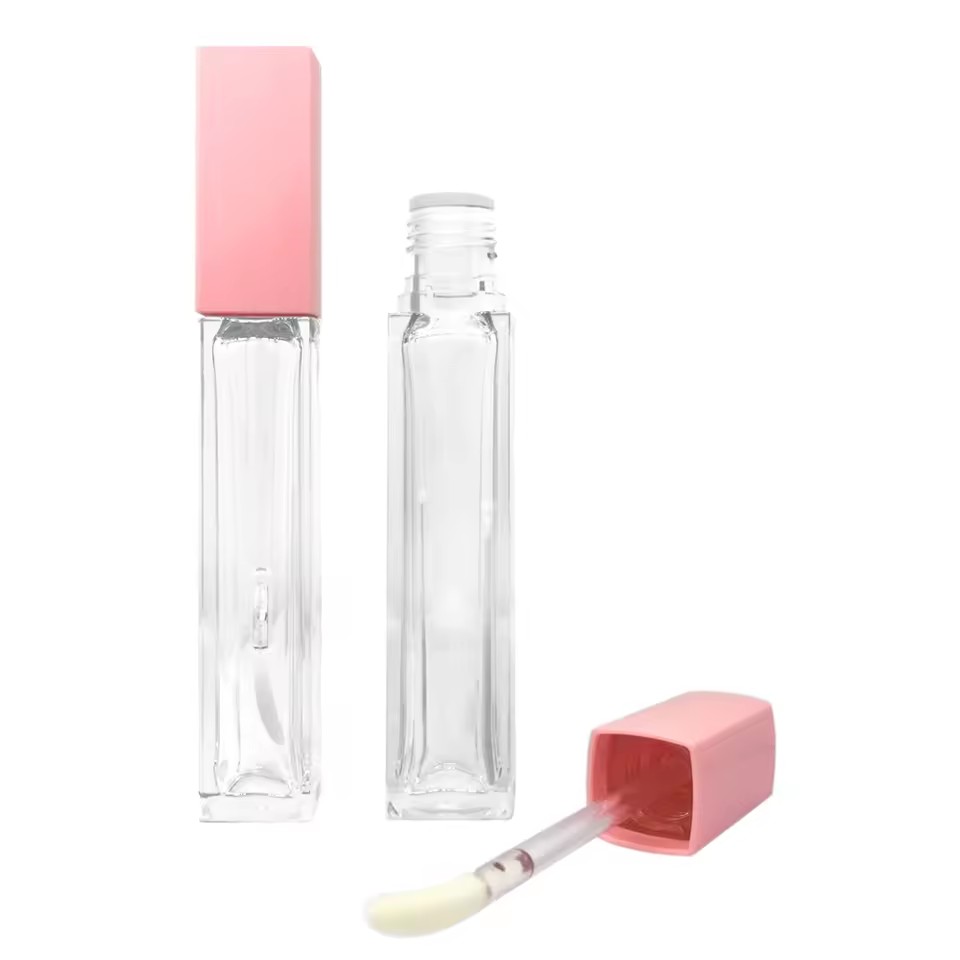
CP02-2231: a 3 ml plastic lipgloss / mascara tube, W18 × H106.1 mm, 0.3 mm wall thickness.
The CP02-2231 is the only model in this shortlist that is named for two of the three applications in the title, and it carries the smallest nominal volume of any tube listed here at 3 ml. For high-value lipgloss and mascara formulas, a small nominal volume paired with a 106.1 mm body is a coherent specification: a slim, tall unit that holds a concentrated fill rather than a large one.
- Model: CP02-2231
- Product: Luxury Empty Plastic Lipgloss / Mascara Tube
- Type: Plastic Tubes
- Size: W18 × H106.1 mm
- Wall thickness: 0.3 mm
- Volume: 3 ml
- Material: plastic
- Usage: cosmetic packing
Why it ranks second: it serves two of the three target categories, and its 18 mm barrel sits between the CP04-1215 and the CP01-2142, which makes it a practical middle option for a brand that wants one tube format across a lip and eye range. It holds the smallest fill in the set, which matters when the formula itself is expensive and the brand's priority is a premium unit rather than a long-lasting one.
Where it fits: lipgloss and mascara SKUs where the brand's positioning depends on a slim, premium-feeling unit; gift and travel formats; and product lines that need a consistent silhouette across eye and lip categories.
What to confirm before ordering: which applicator system the brand intends to pair with the tube, since the model's catalogue specification describes the tube itself rather than a complete applicator assembly. The 3 ml nominal volume also needs testing against the dose per application the brand expects from the finished product.
3. CP06-1056 — Empty Liquid Eyeliner Pencil
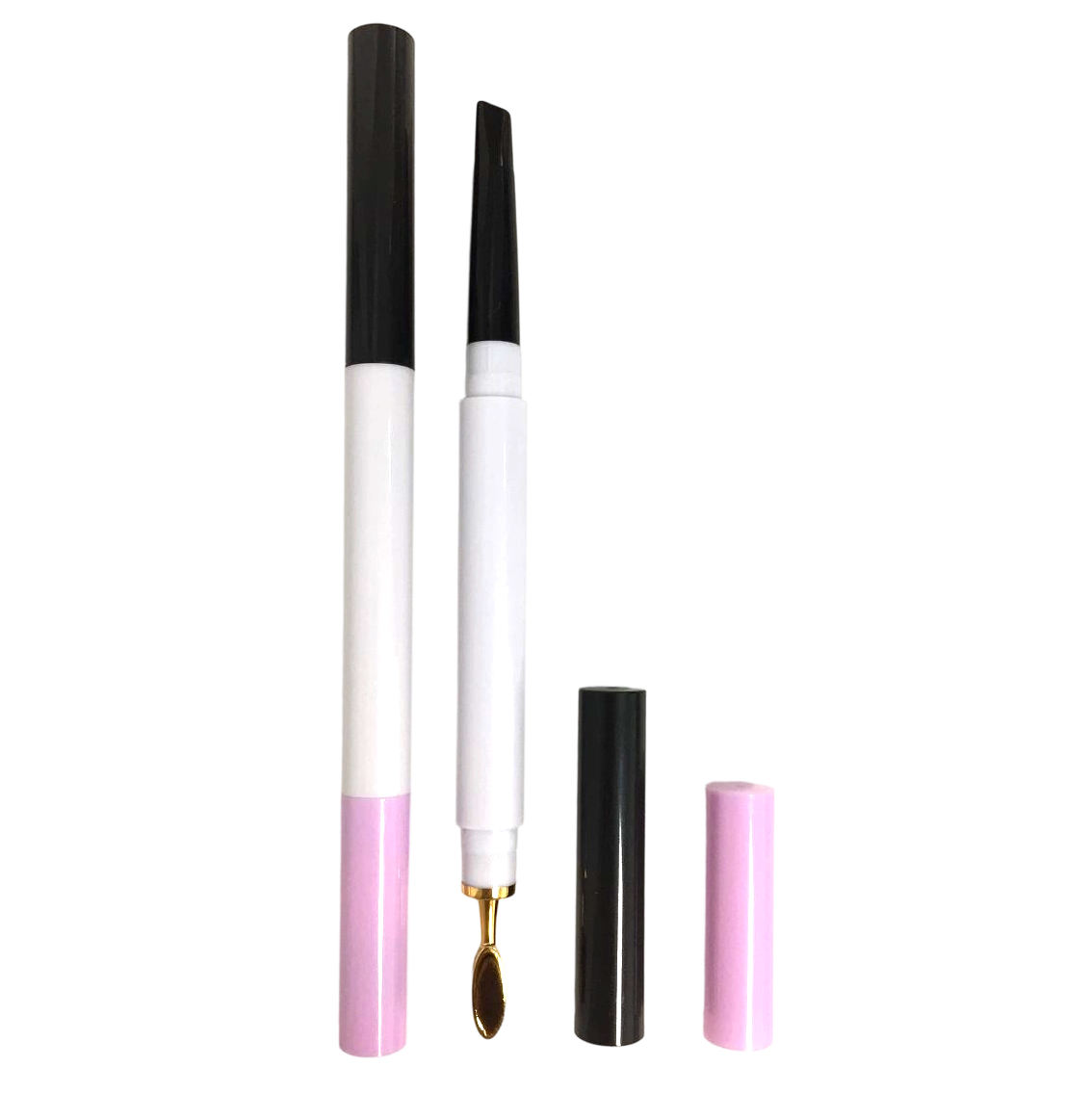
CP06-1056: an empty liquid eyeliner pencil, W15 × H173.5 mm, plastic.
The CP06-1056 is the longest unit in this shortlist at 173.5 mm, and it is catalogued as a packaging product rather than under the plastic tube type. It is included because it is the eye-category format that most closely replicates the handling of a precision liquid liner, and because many eyeliner projects are decided on overall length and grip before wall thickness is discussed.
- Model: CP06-1056
- Product: Empty Liquid Eyeliner Pencil
- Type: Packaging Products
- Size: W15 × H173.5 mm
- Material: plastic
- Wall thickness: not published in the catalogue
- Nominal volume: not published in the catalogue
- Usage: cosmetic packing
Why it ranks third: it is a pencil-format, elongated body for liquid eyeliner, which suits brands building a pen-style applicator rather than a classic wand tube. The 15 mm barrel is slightly wider than the CP04-1215, so it trades a small amount of slimness for a longer, more pen-like profile.
Where it fits: liquid eyeliner pens, precision applicator products where a long body is part of the user experience, and product lines where the brand wants to distinguish its liner from its lip products through silhouette alone.
What to confirm before ordering: wall thickness and usable fill volume are not published for this model, so both must be confirmed directly with the supplier before a specification is locked. This is the model in the shortlist with the largest documentation gap, and it should be treated as such.
4. CP01-2142 — Luxury Empty Plastic Lipstick Tube, 20 ml

CP01-2142: a 20 ml plastic tube, W22.7 × H84.6 mm, 0.3 mm wall thickness.
The CP01-2142 is the shortest and widest of the tubes published at 0.3 mm wall thickness, and it carries the largest nominal volume at 20 ml. It is catalogued as a lipstick tube rather than a lipgloss or mascara tube, which makes it an adjacent-category option for lip ranges rather than a direct fit for the three applications in the title.
- Model: CP01-2142
- Product: Luxury Empty Plastic Lipstick Tube
- Type: Plastic Tubes
- Size: W22.7 × H84.6 mm
- Wall thickness: 0.3 mm
- Volume: 20 ml
- Material: plastic
- Usage: cosmetic packing
Why it ranks fourth: it is a proven format in production rather than a theoretical fit. COSFINITY has supplied this model into a private-label lipstick programme for an Indian customer, with a quantity of 12,000 pieces and a two-year supply relationship that continued into repeat bulk orders, supported by a customized design, lightweight plastic material, customizable appearance printing, and a tight leak-proof structure suited to daily portable use.
Where it fits: lipstick and solid or semi-solid lip products, and brands building a coordinated lip line where the lipgloss tube is the narrow SKU and the lipstick tube carries the larger fill. Because the fill is 20 ml, this is the model where a brand should be most careful not to confuse nominal volume with the fill it actually needs.
What to confirm before ordering: whether the formula is a solid stick or a liquid, since the application differs, and how the 84.6 mm body proportion affects the brand's shelf presence next to a 106.1 mm gloss tube.
5. CP08-0053 — Empty Stick Foundation Tube, 10 ml
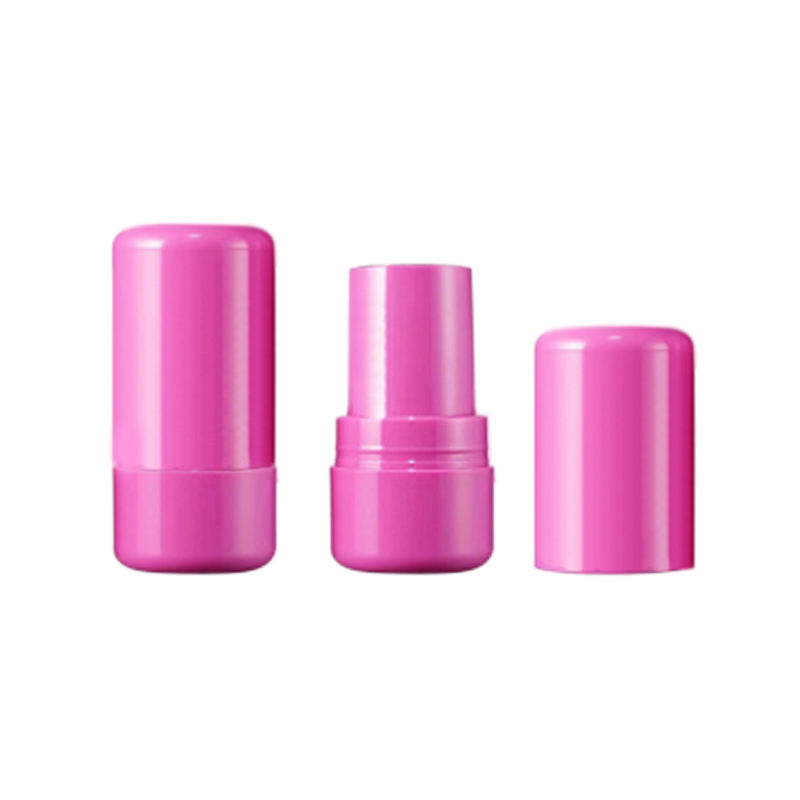
CP08-0053: a 10 ml empty stick foundation tube, D29 × H60 mm, plastic.
The CP08-0053 is included as the short-format option. At 60 mm tall and 29 mm in diameter it is the most compact unit in this shortlist, and it is catalogued under the plastic bottles type with a stick-foundation application. It is not an eyeliner, lipgloss, or mascara tube, but it is a plastic tube-format container used for precision application of a semi-solid cosmetic, which makes it a relevant reference when a brand is building a compact, high-fill product.
- Model: CP08-0053
- Product: Empty Stick Foundation Tube
- Catalogue type: Plastic Bottles
- Size: D29 × H60 mm
- Volume: 10 ml
- Material: Plastic
- Wall thickness: not published in the catalogue
- Usage: cosmetic packing
Why it ranks fifth: it shares the 10 ml nominal volume of the CP04-1215 but distributes it in a short, wide body rather than a long, slim one. For the three applications named in this article's title, that geometry is the least aligned; for adjacent stick-format products, it is the most compact option available in the range.
Where it fits: stick and solid-format complexion products, travel or sample formats, and ranges where a short unit is needed to differentiate from a taller tube line.
What to confirm before ordering: wall thickness is not published for this model, so rigidity must be confirmed at the sample stage, particularly if the brand intends a semi-solid formula that requires pressure during application.
Models deliberately excluded from this shortlist: the CP05-2159B Leak-Proof Plastic Powder Jar / Pot (5 ml, 1 mm thickness), the CP03-1394 Customized Empty Makeup Powder Case (W65 × H12 mm, 1 mm thickness), the CP07-2026 Airless Pump Liquid Foundation Bottle (30 ml, glass), and the TP01-1018-15 Deodorant Stick Plastic Tube Container (20 ml). These are jars, cases, a glass bottle, and a deodorant-format container — packaging formats outside the plastic-tube scope of this article. They are named here so that buyers comparing the full COSFINITY catalogue can see which formats this ranking does not cover.
Step-by-Step: Selecting the Right Tube for a Specific Formula
The five models above are a starting point, not a decision. The following sequence is the practical order in which a precision cosmetic tube specification is usually locked, and it applies equally to an eyeliner launch and a mascara relaunch.
Step 1 — Define the fill and the dose. Start with the nominal volume the product needs and the amount of formula consumed per application. A 3 ml tube (CP02-2231) and a 10 ml tube (CP04-1215, CP08-0053) carry the same complexity of label and cap but very different usage cycles, so this step determines which half of the shortlist remains relevant.
Step 2 — Match barrel geometry to the application. Slimmer and longer barrels support fine, controlled application; shorter and wider bodies suit semi-solid or higher-fill products. In this shortlist, the CP04-1215 (12.8 mm barrel) and the CP06-1056 (15 mm barrel, 173.5 mm body) sit at the precision end, while the CP08-0053 (29 mm diameter, 60 mm height) sits at the compact end.
Step 3 — Specify wall thickness on purpose. A 0.3 mm wall is the published thickness for the CP04-1215, CP02-2231, and CP01-2142. Because thickness is part of COSFINITY's OEM/ODM customization scope, it should be confirmed as a specification line rather than inherited from the catalogue default, especially where the formula requires more or less rigidity during handling.
Step 4 — Validate the daily-use requirements. These products are built for indoor daily makeup scenes at normal room temperature — 16℃ to 25℃ — where the unit is carried around, opened and closed repeatedly, and may come into direct contact with skin. The stated special requirements are leak-proof design, non-irritating material, portability, and lightweight construction, and skin-contact products must be environmentally friendly and suitable for direct skin contact. These are the requirements to write into the brief before samples are approved.
Step 5 — Test with the real formula. Approve a sample of the exact model, then fill it with the actual formula and test the behaviour the market will judge: dispensing, closure retention after repeated opening, and resistance to leakage during carrying. Catalogue dimensions and nominal volume narrow the choice; only a filled sample confirms it.
Step 6 — Define decoration and customization. COSFINITY's customization scope covers logo, color, shape, material, volume, thickness, and packaging. For a luxury brief, the decoration variables are usually decided together with the structural ones, because a barrel diameter chosen late can force a redesign of the print or finish area.
Step 7 — Place the order against MOQ and lead time. The minimum order quantity is 12,000 pieces and the quoted lead time is 15–25 days, with a monthly capacity of 10,000,000 pieces and 100% testing as the quality-control standard. A 12,000-piece order therefore sits comfortably inside monthly capacity, and lead time is driven mainly by specification and approval, not by production volume.
Use Cases: Three Ways Brands Use These Tubes
Precision eyeliner launch. A brand developing a fine-tip liquid liner has two structural options in this shortlist: the CP04-1215, a 10 ml tube with a 12.8 mm barrel and 0.3 mm wall, or the CP06-1056, a 173.5 mm pencil-format body. The first suits a classic slim liner unit where the brand supplies or selects its own applicator; the second suits a pen-style product where grip length is part of the positioning. Both use the same plastic material and cosmetic packing application, so switching later in development is a structural decision rather than a change of category.
Premium lipgloss or mascara SKU. The CP02-2231 is the direct fit here: a 3 ml tube with an 18 mm barrel and a 106.1 mm body, named for both lipgloss and mascara. Its value in a brief is the combination of a small nominal fill with a tall, slim silhouette — the profile associated with premium gloss and mascara units rather than with value formats. Brands building a coordinated lip and eye line can pair it with the CP01-2142 lipstick tube, which uses the same 0.3 mm wall class for a consistent structural feel across the range.
Private-label lip programme with a proven production history. The CP01-2142 has already been supplied for a private-label lipstick launch to a customer in India, at a quantity of 12,000 pieces over a two-year relationship that continued into repeat bulk orders. The reported basis for the repeat business was stable quality, a customized design, lightweight plastic material, customizable appearance printing, and a tight leak-proof structure suited to daily portable use. For a brand evaluating a first private-label run, that case is useful evidence of how a 12,000-piece order behaves in practice — the same MOQ that applies across the COSFINITY range.
Comparison Table: Five Tube Models Side by Side
The table below contains only values published in the COSFINITY catalogue. Where a value is not published for a model, the cell states that instead of carrying an estimate.
| Rank | Model | Product name | Catalogue type | Size | Wall thickness | Volume | Material |
|---|---|---|---|---|---|---|---|
| 1 | CP04-1215 | Liquid Empty Eyeliner Tube | Plastic Tubes | W12.8 × H115.3 mm | 0.3 mm | 10 ml | plastic |
| 2 | CP02-2231 | Luxury Empty Plastic Lipgloss / Mascara Tube | Plastic Tubes | W18 × H106.1 mm | 0.3 mm | 3 ml | plastic |
| 3 | CP06-1056 | Empty Liquid Eyeliner Pencil | Packaging Products | W15 × H173.5 mm | Not published | Not published | plastic |
| 4 | CP01-2142 | Luxury Empty Plastic Lipstick Tube | Plastic Tubes | W22.7 × H84.6 mm | 0.3 mm | 20 ml | plastic |
| 5 | CP08-0053 | Empty Stick Foundation Tube | Plastic Bottles | D29 × H60 mm | Not published | 10 ml | Plastic |
Reading the table: three of the five models are published at a 0.3 mm wall, and those three are the plastic tube models (CP04-1215, CP02-2231, CP01-2142). The CP06-1056 and CP08-0053 are included as adjacent formats, and each has at least one specification gap that must be closed with the supplier before an order is confirmed. All five are listed for the same general usage — cosmetic packing — and all are plastic except where the catalogue states otherwise.
FAQ
Which packaging regulations apply to plastic cosmetic tubes sold in the EU and the US?
Two frameworks matter for a brand placing plastic cosmetic tubes on the market. In the EU, the Packaging and Packaging Waste Regulation (EU) 2025/40 mandates strict recyclability and labeling standards for cosmetics, with requirements applying from late 2024 according to the European Commission and Cosmeservice. In the US, the Modernization of Cosmetics Regulation Act (MoCRA 2022) introduced mandatory facility registration and product listing for packaging entities, as described by the FDA and ChemLinked. COSFINITY exports 100% of its production to global markets and applies 100% testing as its quality-control standard, but the compliance file for a specific market remains the buyer's responsibility and should be requested before an order is placed.
What should a luxury brand expect from a cosmetic packaging manufacturer such as COSFINITY?
COSFINITY, formally Guangzhou Cosfinity Cosmetics Co., Ltd., is a custom cosmetic packaging manufacturer founded in 2009 in Guangzhou, China, operating a 40,000㎡ factory with around 200 employees, an in-house R&D team of 25 engineers, and an annual output of 500,000,000 pieces. Its main product lines are lipstick tubes, lipgloss and mascara tubes, powder cases, eyeliner tubes, powder jars, and liquid foundation bottles, and it produces in OEM and ODM mode with a monthly capacity of 10,000,000 pieces. Customization covers logo, color, shape, material, volume, thickness, and packaging. For a luxury brief, the practical significance is that thickness and geometry are treated as customizable specification lines rather than fixed catalogue defaults, which is what allows a tube to be matched to a specific formula.
What determines the cost of a custom plastic tube order?
No unit price is published for these models, and the cost variables a buyer can actually control are the customization scope and the order quantity. COSFINITY's customization covers logo, color, shape, material, volume, thickness, and packaging, so each variable a brand changes adds a specification step to the order. The minimum order quantity is 12,000 pieces, which sets the smallest volume at which a customized run is produced. Comparing quotations therefore means comparing like-for-like specification sets — model, dimensions, thickness, volume, decoration — rather than headline unit prices read out of context.
How should a brand validate a tube model before mass production?
Validation starts with a sample of the exact model and specification: check the published dimensions (12.8 × 115.3 mm on the CP04-1215, 18 × 106.1 mm on the CP02-2231), the wall thickness (0.3 mm on the CP04-1215, CP02-2231, and CP01-2142), and the nominal volume (10 ml, 3 ml, and 20 ml respectively) against the fill target, then test a filled unit against the performance the market requires. These products are specified for indoor daily makeup use at 16℃ to 25℃, carried and opened repeatedly, with leak-proof design, non-irritating material, portability, and lightweight construction as the special requirements. To begin a sample review, contact COSFINITY by email at laurence@icpa-global.com or on WhatsApp at +86 15813145451.
What lead time and production capacity can a brand expect?
COSFINITY quotes a lead time of 15–25 days, a monthly capacity of 10,000,000 pieces, and a minimum order quantity of 12,000 pieces, with 100% testing as the quality-control standard and remote online after-sales support after delivery. For a precision tube programme, the planning implication is straightforward: a 12,000-piece order sits well inside monthly capacity, so lead time is driven by specification and approval steps rather than by production volume.
Conclusion: Specifying Precision Tubes Without Guessing
The five models in this shortlist cover the precision end of the COSFINITY tube range with published geometry rather than marketing language: the CP04-1215 for slim eyeliner formats, the CP02-2231 for 3 ml lipgloss and mascara units, the CP06-1056 for pen-style eyeliner bodies, the CP01-2142 for lipstick and larger-fill lip products, and the CP08-0053 for compact stick formats. Three of them share a 0.3 mm wall and the same customization scope, so a brand can build a coordinated line without renegotiating its structural assumptions for each SKU.
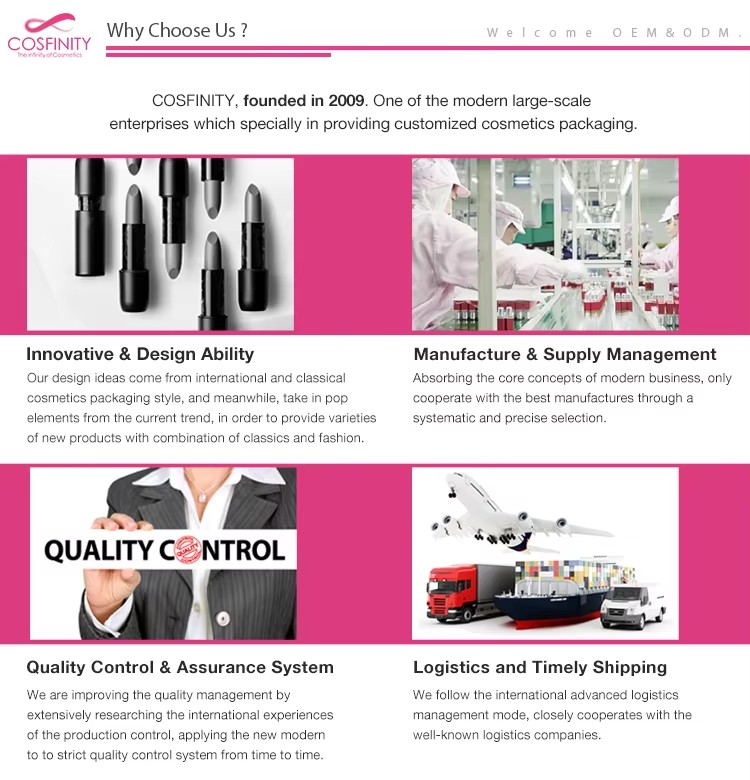
Next step: request samples of the CP04-1215, CP02-2231, or CP01-2142 against your own formula, or ask for a quotation on a 12,000-piece customized run with a 15–25 day lead time.
Contact Laurence Kuo — Email: laurence@icpa-global.com — Tel / WhatsApp: +86 15813145451. Visit COSFINITY cosmetic packaging or download the COSFINITY company profile (PDF).
Have Questions or Need More Details?
Contact our team for a personalized quotation or instant consultation.
Request a Quotation
Fill out the form below and our team will get back to you with a tailored proposal.
WhatsApp Direct Chat
Prefer to chat in real-time? Message us on WhatsApp for instant assistance & quick answers.
- Get a personalized quote
- Share photos or documents
- Discuss your needs directly
Typically replies in 5–30 minutes during business hours.