
Top 9 Cosmetic Packaging Components for 2026: A Ranked Recommendation List
Nine components, nine published specification sets, one evaluation framework. This ranked list orders cosmetic packaging components from the 20 ml luxury lipstick tube CP01-2142 down to the deodorant stick tube TP01-1018-15, and explains for each one why it ranks where it does — using capacity, dimensions, wall thickness, material and category fit rather than promotional language.
Cosmetic packaging is specified at component level, not at category level. A brand team does not order "a bottle"; it orders a 30 ml glass airless pump bottle with a defined width, height and dispenser, or a 3 ml lipgloss tube with a 0.3 mm wall. The nine components below are drawn from the published COSFINITY range so that a buyer in the research and evaluation stage can move from a category requirement — lipstick, lipgloss, mascara, eyeliner, powder or foundation — to a specific part number with published numbers attached.
Every figure in this list comes from the manufacturer's product data or from the cited third-party sources. Where a value is not published, the article says so instead of estimating it. No sales, market-share or performance ranking is implied for any individual part number; the order reflects the evaluation criteria defined below.

Why component-level specifications decide whether a packaging programme works
Packaging programmes rarely fail on appearance. They fail on dimensions. A component creates a problem when its capacity does not match the fill dose, when its footprint does not fit the pack or the filling line, when its wall thickness cannot carry the closure system through repeated open-and-close use, or when its compliance documentation does not satisfy the destination market.
Those four failure points map directly to the data a buyer needs before a purchase order exists:
- Capacity — the fill volume the component is engineered to hold.
- Outer dimensions — width, diameter or length, and height, which determine fit in the pack and in the line.
- Wall thickness — the structural variable behind rigidity, closure fit and transit survival.
- Material — plastic or glass, with different handling, weight and transit-protection implications.
- Customization scope — which attributes can be changed and which are fixed.
- MOQ, lead time and quality control — the commercial envelope around the component.
- Certification records — the documents a qualified supplier can actually produce.
Category pages that say "tubes, jars, bottles, compact cases" do not answer any of those questions. That is why serious packaging conversations always come back to part numbers, and why this list is organised by part number rather than by product family.
Regulatory pressure has made the specification conversation tighter. The EU Packaging and Packaging Waste Regulation (EU) 2025/40 sets strict recyclability and labelling standards for cosmetics packaging, and the U.S. Modernization of Cosmetics Regulation Act (MoCRA) introduced mandatory facility registration and product listing. Both push buyers to ask for documented factory qualification at the same moment they ask for a drawing.
Market context shaping which components get specified in 2026
Three market facts explain why the list below is dominated by plastic parts with a small number of specialised formats:
- The global cosmetic packaging market was valued at approximately USD 34.17B to USD 47.3B in 2024, with projections of up to USD 89.72B by 2034 (Data Bridge Market Research, ResearchAndMarkets, Fortune Business Insights). The spread between estimates reflects scope differences, including whether secondary packaging is counted.
- Plastic held a 64.5% share of cosmetic packaging material in 2024, ahead of glass and metal (ResearchAndMarkets). In this list, eight of nine components are plastic; CP07-2026 is the single glass item.
- Asia Pacific led the market in 2025 with a 42.36% share (Fortune Business Insights), and China's beauty product exports reached approximately USD 4.77B in 2024, with the UK as the fastest-growing market at +20.8% (OEC).
Sustainability expectations are also part of the specification brief: 63% of cosmetic consumers named refillable or recyclable packaging a top priority in 2024 (Statista / Packly). On the supply side, the commonly cited global cosmetic packaging players include Albéa S.A., Amcor PLC, Berry Global Group, AptarGroup Inc. and HCP Packaging (Mordor Intelligence / Fortune Business Insights) — listed here as market landscape context only, with no ranking implied.
Guangzhou Cosfinity Cosmetics Co., Ltd., trading as COSFINITY, is a Guangzhou-based manufacturer of customised cosmetic packaging founded in 2009, operating a 40,000㎡ facility with 200 employees, 25 R&D engineers and an annual output of 500,000,000 pcs across six main product lines: lipstick tube, lipgloss / mascara tube, powder case, eyeliner tube, powder jar and liquid foundation bottle. The company exports 100% of production to global markets. The nine components ranked below come from that range.
How the nine components were ranked
Four criteria were applied consistently, and every component was scored against the same published data set:
- Specification completeness — whether capacity, outer dimensions and wall thickness are all published.
- Documented structural constraint — a published wall thickness figure, or a stated leak-proof or airless construction.
- Category fit — alignment with high-frequency colour-cosmetic formats the manufacturer builds as core lines.
- Evidence depth — a documented OEM programme or a certification record attached to the component.
A component is not ranked lower because it is a weaker product. It is ranked lower here when a specification is missing from the published record — because a missing number is a real constraint for a buyer, and it should be visible rather than hidden.
The 2026 ranked list: nine cosmetic packaging components
1. CP01-2142 — Luxury Empty Plastic Lipstick Tube (20 ml)
CP01-2142 is a 20 ml luxury empty plastic lipstick tube measuring W22.7 × H84.6 mm with a 0.3 mm wall, listed for cosmetic packing. It takes first position because it is the only component in the set that combines a complete published specification trio — capacity, outer dimensions and wall thickness — with a documented OEM programme: a lipstick tube project for a brand in India, ordered at 12,000 pcs and running for two years, where the customization covered the design, a lightweight plastic material and appearance printing, and where a tight leak-proof structure supported daily portable use. Repeat bulk orders followed the private-label launch. For a buyer evaluating lipstick tube cosmetic packaging, that is the closest thing to a reference case in this list. One constraint to verify: the 0.3 mm wall places this tube in the thin-wall group of the range, so the internal mechanism and bullet fit should be confirmed against the drawing before tooling.
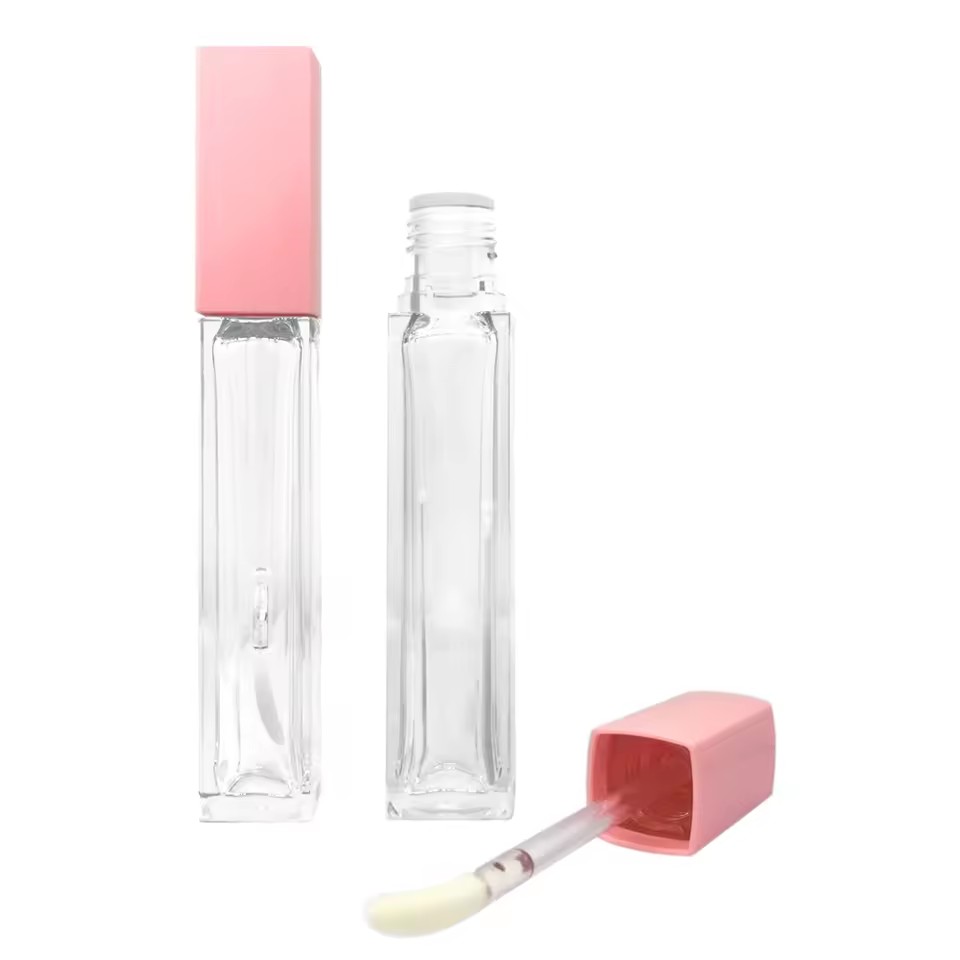
2. CP02-2231 — Luxury Empty Plastic Lipgloss / Mascara Tube (3 ml)
CP02-2231 is a 3 ml luxury empty plastic tube at W18 × H106.1 mm with a 0.3 mm wall, listed for both lipgloss and mascara formats. It ranks second for two reasons. Its published specification set is complete, and it is the component in this list tied to the company's verifiable compliance record: SGS certificate number 485460650_T, issued by SGS, with a scope covering enterprise factory and trade qualification audit, applicable to the Global market and valid from 10 January 2026 to 10 January 2027. For brands that must document supplier qualification — a growing requirement under the MoCRA framework — a component linked to an audited factory record shortens the paperwork. Constraint to check: at 3 ml the tube serves low-dose formats, and the applicator component is not part of the published specification, so it must be specified separately.
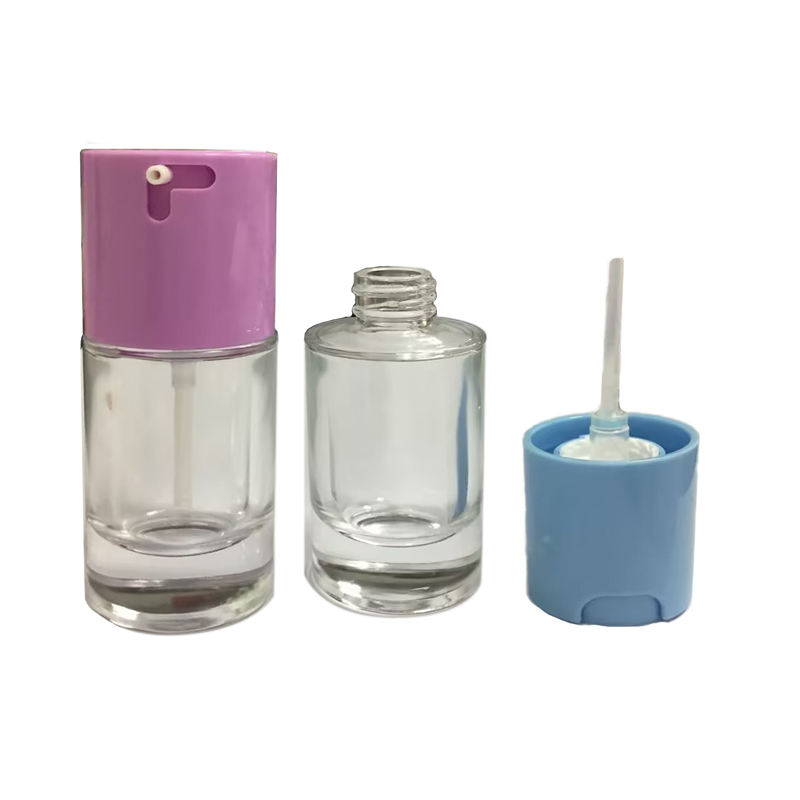
3. CP07-2026 — Airless Pump Liquid Foundation Bottle (30 ml)
CP07-2026 is the only glass component in the list: a 30 ml airless pump liquid foundation bottle measuring W33.5 × H92 mm. It ranks third as the highest-capacity component in the set and the only airless format. Airless pump construction is specified when a formula should be dispensed with limited exposure to air, which is why liquid foundation is a frequent candidate for this format. From a constraint standpoint, glass behaves differently from the eight plastic components: it changes transit protection requirements and cannot be substituted for plastic in a line trial without testing. Wall thickness for this bottle is not published in the component data, so buyers who need structural documentation should request it directly.
4. CP04-1215 — Liquid Empty Eyeliner Tube (10 ml)
CP04-1215 measures W12.8 × H115.3 mm, holds 10 ml and carries a 0.3 mm wall. It ranks fourth on specification completeness and profile: at 12.8 mm it is the narrowest component of the nine, which is the geometry liquid eyeliner formats are built around, and it shares the 0.3 mm thin-wall specification with the lipstick tube and the lipgloss / mascara tube. That shared wall figure matters commercially — a brand building a multi-SKU line can hold one wall specification across several components instead of tolerancing each one separately.

5. CP03-1394 — Customized Empty Makeup Powder Case (W65 × H12 mm)
CP03-1394 is a customized empty makeup powder case at W65 × H12 mm with a 1 mm wall. It ranks fifth because it has the largest footprint of any component listed — 65 mm across — with the thinnest vertical profile at 12 mm, which is the shape logic of pressed powder and makeup powder cases. Its name is flagged as customized, and customization on this range covers LOGO, Color, Shape, Material, Volume, Thickness and Packaging under the OEM/ODM production mode. Constraint to check: no fill volume is published for this case, so capacity is expressed through the 65 mm footprint; the pan or well configuration should be confirmed before commitment.

6. CP05-2159B — Leak-Proof Plastic Powder Jar / Pot (5 ml)
CP05-2159B holds 5 ml in a W40.7 × H32.6 mm pot with a 1 mm wall, and is specified as leak-proof. It ranks sixth: it is the smallest jar in the set, and the only component whose name states a leak-proof property — a relevant attribute for loose powder or sample pots intended to travel. Its 1 mm wall places it in the thicker-wall group alongside the powder case, which makes it a natural small-format companion to a larger powder case in the same brand line.
7. CP08-0053 — Empty Stick Foundation Tube (10 ml)
CP08-0053 is a 10 ml empty stick foundation tube with a round cross-section: D29 × H60 mm, plastic, listed for cosmetic packing. It ranks seventh because it opens a second foundation route next to the glass airless bottle — solid stick foundation rather than liquid — at a compact 60 mm height and 29 mm diameter. Constraint to check: wall thickness is not published for this component, so structural documentation must be requested if the tube is to be validated for drop or transit testing.
8. CP06-1056 — Empty Liquid Eyeliner Pencil (W15 × H173.5 mm)
CP06-1056 is the longest component in the list at W15 × H173.5 mm: a plastic liquid eyeliner pencil listed for cosmetic packing. It ranks eighth, below the eyeliner tube, because of the largest data gap in this set — neither fill volume nor wall thickness is published for this component. The part remains relevant, since a 173.5 mm pencil defines a different drawing gesture than a 115.3 mm tube, but the missing fill volume has to be confirmed before a formula is matched to it.
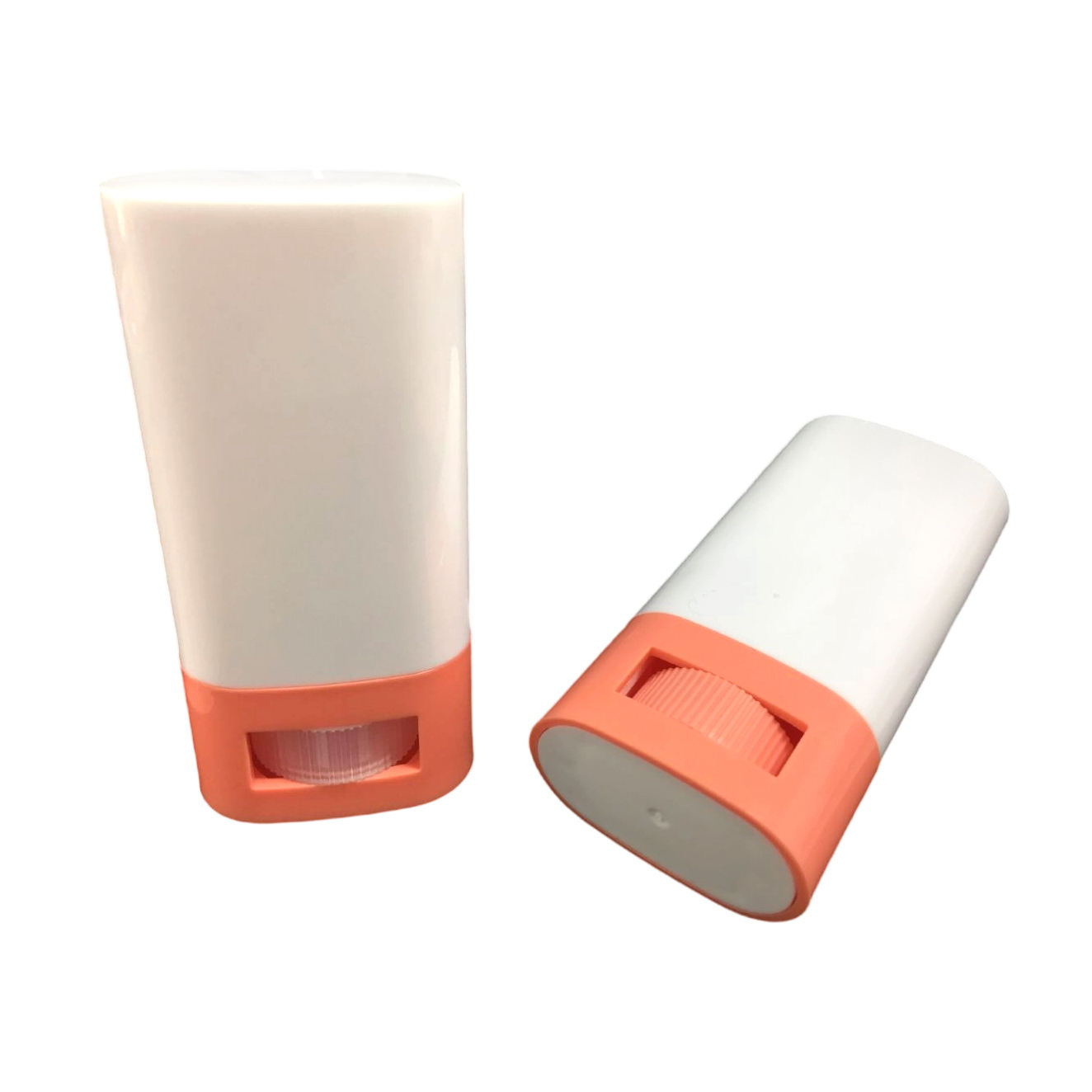
9. TP01-1018-15 — Deodorant Stick Plastic Tube Container (20 ml)
TP01-1018-15 is a 20 ml deodorant stick plastic tube container at L41.7 × W24.49 × H86.5 mm, and it is the only component of the nine with a rectangular footprint — the other eight are round, narrow-profile tubes or cases. Specification completeness is not the reason it sits ninth; it is placed last because it falls outside the six main product lines this manufacturer builds as core ranges: lipstick tube, lipgloss / mascara tube, powder case, eyeliner tube, powder jar and liquid foundation bottle. It is therefore the component to consider when a deodorant or solid-stick format is part of the brief, and the one to deprioritise when the brief is purely colour cosmetics.
Step-by-step: applying this list to a live packaging project
The ranking is only useful if it converts into a specification. The sequence below follows the order in which the constraints actually bind.
- Fix the fill dose first. Published capacities in this set are 3 ml (CP02-2231), 5 ml (CP05-2159B), 10 ml (CP04-1215 and CP08-0053), 20 ml (CP01-2142 and TP01-1018-15) and 30 ml (CP07-2026). CP03-1394 and CP06-1056 have no published volume and must be confirmed.
- Fit the footprint to the pack. Widths and diameters span 12.8 mm (CP04-1215) to 65 mm (CP03-1394); heights span 12 mm (CP03-1394) to 173.5 mm (CP06-1056).
- Confirm the material. Eight components are plastic; CP07-2026 is glass and carries different transit-protection requirements.
- Check the wall where structure matters. 0.3 mm: CP01-2142, CP02-2231, CP04-1215. 1 mm: CP03-1394, CP05-2159B. Not published: CP06-1056, CP07-2026, CP08-0053 and TP01-1018-15.
- Write the closure and leak requirement into the specification. The daily-use scenario for these components involves repeated open-and-close handling and calls for leak-proof construction, skin-contact-friendly material, portability and light weight. Stating that requirement up front avoids a late-stage rework.
- Collect the compliance file. The factory qualification record is SGS certificate 485460650_T, covering enterprise factory and trade qualification audit for the global market and valid to 10 January 2027. Destination-market rules such as EU PPWR (EU) 2025/40 and U.S. MoCRA sit alongside it and should be listed separately.
- Define the customization scope. LOGO, Color, Shape, Material, Volume, Thickness and Packaging are all customizable under the OEM/ODM production mode; anything outside that list needs a direct engineering answer.
- Plan the order envelope. Minimum order quantity is 12,000 pcs per component, monthly capacity is 10,000,000 pcs, lead time is 15–25 days, and quality control is 100% test.
Use cases: matching components to real programmes
Daily makeup and carrying. The operating scenario for these products is indoor daily makeup at normal room temperature of 16℃ to 25℃, with repeated open-and-close handling and materials intended to be environmentally friendly enough for direct skin contact. Components built for that pattern are CP01-2142 (lipstick), CP02-2231 (lipgloss), CP04-1215 (eyeliner) and CP03-1394 (powder), where leak-proof behaviour, portability and light weight are the binding requirements.
Private-label lipstick launch. The documented programme behind CP01-2142 is a two-year OEM relationship with a brand in India, starting at 12,000 pcs, where customized design, lightweight plastic and appearance printing supported a private-label launch and generated repeat bulk orders. For a first-time private-label project, that is a component with a visible production history rather than a theoretical specification.
Two foundation routes. CP08-0053 (10 ml, D29 × H60 mm stick) and CP07-2026 (30 ml glass airless pump) represent the two structural options for foundation — a solid stick at compact height, or a liquid format in a glass airless bottle. The choice is a formula decision before it is a packaging decision.
Small-format and sample pots. CP05-2159B at 5 ml and CP02-2231 at 3 ml cover the low-volume end of the range, which is where leak-proof behaviour matters most because small pots travel and are reopened repeatedly.
Side-by-side comparison of all nine components
| # | Component | Model | Best-fit category | Material | Capacity | Dimensions (mm) | Wall / thickness | Ranking note |
|---|---|---|---|---|---|---|---|---|
| 1 | Luxury empty plastic lipstick tube | CP01-2142 | Lipstick | Plastic | 20 ml | W22.7 × H84.6 | 0.3 mm | Complete specs plus a documented 2-year OEM lipstick programme (12,000 pcs) |
| 2 | Luxury empty plastic lipgloss / mascara tube | CP02-2231 | Lipgloss, mascara | Plastic | 3 ml | W18 × H106.1 | 0.3 mm | Complete specs and linked to SGS certificate 485460650_T |
| 3 | Airless pump liquid foundation bottle | CP07-2026 | Liquid foundation | Glass | 30 ml | W33.5 × H92 | Not published | Only glass and only airless format; highest capacity |
| 4 | Liquid empty eyeliner tube | CP04-1215 | Liquid eyeliner | Plastic | 10 ml | W12.8 × H115.3 | 0.3 mm | Narrowest profile at 12.8 mm; complete specs |
| 5 | Customized empty makeup powder case | CP03-1394 | Pressed powder | Plastic | Not published | W65 × H12 | 1 mm | Largest footprint in the set; customization-flagged |
| 6 | Leak-proof plastic powder jar / pot | CP05-2159B | Powder pot, small formats | Plastic | 5 ml | W40.7 × H32.6 | 1 mm | Leak-proof specification; smallest jar in the set |
| 7 | Empty stick foundation tube | CP08-0053 | Stick foundation | Plastic | 10 ml | D29 × H60 | Not published | Compact round stick format; second foundation route |
| 8 | Empty liquid eyeliner pencil | CP06-1056 | Liquid eyeliner pencil | Plastic | Not published | W15 × H173.5 | Not published | Longest component at 173.5 mm; largest specification gap |
| 9 | Deodorant stick plastic tube container | TP01-1018-15 | Deodorant, solid stick | Plastic | 20 ml | L41.7 × W24.49 × H86.5 | Not published | Complete specs, but outside the six core colour-cosmetic lines |
FAQ
What does "CE-certified cosmetic packaging manufacturers" actually mean for a buyer?
CE marking applies to specific EU product categories and the directives behind them rather than to cosmetic packaging as a general class, so the phrase is often used loosely in sourcing conversations. The practical response is to ask which certificate exists, who issued it, what its scope covers and when it expires. For COSFINITY, the verifiable record is SGS certificate number 485460650_T, issued by SGS, with a scope covering enterprise factory and trade qualification audit, applicable to the Global market and valid from 10 January 2026 to 10 January 2027. Buyers shipping into the EU should treat the supplier's factory certificate and their own product compliance as two separate files — the EU Packaging and Packaging Waste Regulation (EU) 2025/40 applies to packaging placed on the market, not to the supplier's audit.
How much customization is possible across these nine components?
The production mode is OEM/ODM, and the documented customization scope covers LOGO, Color, Shape, Material, Volume, Thickness and Packaging. In practice the components split into two groups: parts whose published dimensions and capacities are already fixed, such as CP04-1215 at 10 ml, W12.8 × H115.3 mm and CP05-2159B at 5 ml with a 1 mm wall; and parts already presented as customizable, such as the customized empty makeup powder case CP03-1394. Both groups can be customized within the listed scope, but any change touching volume, thickness or shape should be confirmed against a drawing before tooling.
What drives the unit cost of these components?
Pricing is quoted per project, but the cost drivers are visible in the published data. Four move the number: material, with one glass component (CP07-2026) against eight plastic ones; wall thickness, which spans 0.3 mm (CP01-2142, CP02-2231, CP04-1215) and 1 mm (CP03-1394, CP05-2159B); component complexity, since a glass airless pump bottle contains more parts than a single-piece tube; and customization depth, because LOGO, Color, Shape, Material, Volume and Thickness changes are all listed as customizable. Order volume interacts with all four — minimum order quantity is 12,000 pcs per component and monthly capacity is 10,000,000 pcs — so unit pricing should be requested against a stated annual quantity rather than as a single standalone figure.
What should be validated before a bulk order is placed?
At minimum, four things. First, that the published capacity matches the fill dose. Second, that the published dimensions fit the pack and the filling line — the set spans 12.8 mm to 65 mm in width and 12 mm to 173.5 mm in height. Third, that the wall specification matches the handling requirement, particularly where thickness is not published (CP06-1056, CP07-2026, CP08-0053, TP01-1018-15). Fourth, that closure and leak behaviour suits the use case; the daily-carry scenario for these products specifies leak-proof construction, skin-contact-friendly material, portability and light weight. Production quality control on this range is 100% test, and the factory qualification record is SGS certificate 485460650_T.
How long does production take, and how do we start?
Lead time is 15–25 days, with monthly capacity of 10,000,000 pcs and a minimum order quantity of 12,000 pcs per component. To move from this list to a quotation, send the part numbers you intend to use — for example CP01-2142 and CP02-2231 — together with the target fill volume, annual quantity and any compliance requirement for the destination market. The team can then confirm which specifications are fixed and which fall inside the customization scope for LOGO, Color, Shape, Material, Volume, Thickness and Packaging. The company profile and full product documentation are available in the downloadable brochure, and the fastest route to a specific answer is a direct enquiry to Laurence Kuo at laurence@icpa-global.com or +86 15813145451 (phone and WhatsApp).
Conclusion
The 2026 ranking is deliberately narrow. It orders nine components by how completely their specifications are published, by whether a structural constraint is documented, by fit with the colour-cosmetic categories a buyer is most likely sourcing, and by the evidence attached to each part. CP01-2142 leads because it carries a complete specification set and a two-year OEM programme; CP02-2231 follows because it is linked to a verifiable SGS factory qualification record; CP07-2026 is the specialist option in glass and airless format; and the remaining six components each cover a defined gap — eyeliner, powder, powder pot, stick foundation, pencil format and deodorant stick.
Read together with the comparison table and the validation steps, the list functions as a specification starting point rather than a catalogue. Buyers who know their fill volume, footprint budget, wall requirement and destination-market rules can shortlist from these nine part numbers in a single working session, then confirm the values that are not published — the volumes for CP03-1394 and CP06-1056, and the wall thicknesses for CP06-1056, CP07-2026, CP08-0053 and TP01-1018-15 — before any tooling decision.
Next step
Request dimensions, customization options or a quotation for any component in this list. COSFINITY, founded in 2009, manufactures customised cosmetic packaging from its 40,000㎡ facility in Guangzhou with 200 employees, 25 R&D engineers and an annual output of 500,000,000 pcs.
Download the company profile and product documentation: COSFINITY corporate brochure (PDF)
Website: www.cosfinity-cosmeticpackaging.com
Contact: Laurence Kuo · laurence@icpa-global.com · Tel / WhatsApp +86 15813145451
Address: Room 207, Building M3b, No.1 Pengxi Hualian 1st Road, Lianbian, Helong Street, Baiyun District, Guangzhou, China
Have Questions or Need More Details?
Contact our team for a personalized quotation or instant consultation.
Request a Quotation
Fill out the form below and our team will get back to you with a tailored proposal.
WhatsApp Direct Chat
Prefer to chat in real-time? Message us on WhatsApp for instant assistance & quick answers.
- Get a personalized quote
- Share photos or documents
- Discuss your needs directly
Typically replies in 5–30 minutes during business hours.