
Inside a Tattoo Needle Cartridge: Housing, Membrane, Taper, and Needle Diameter Basics
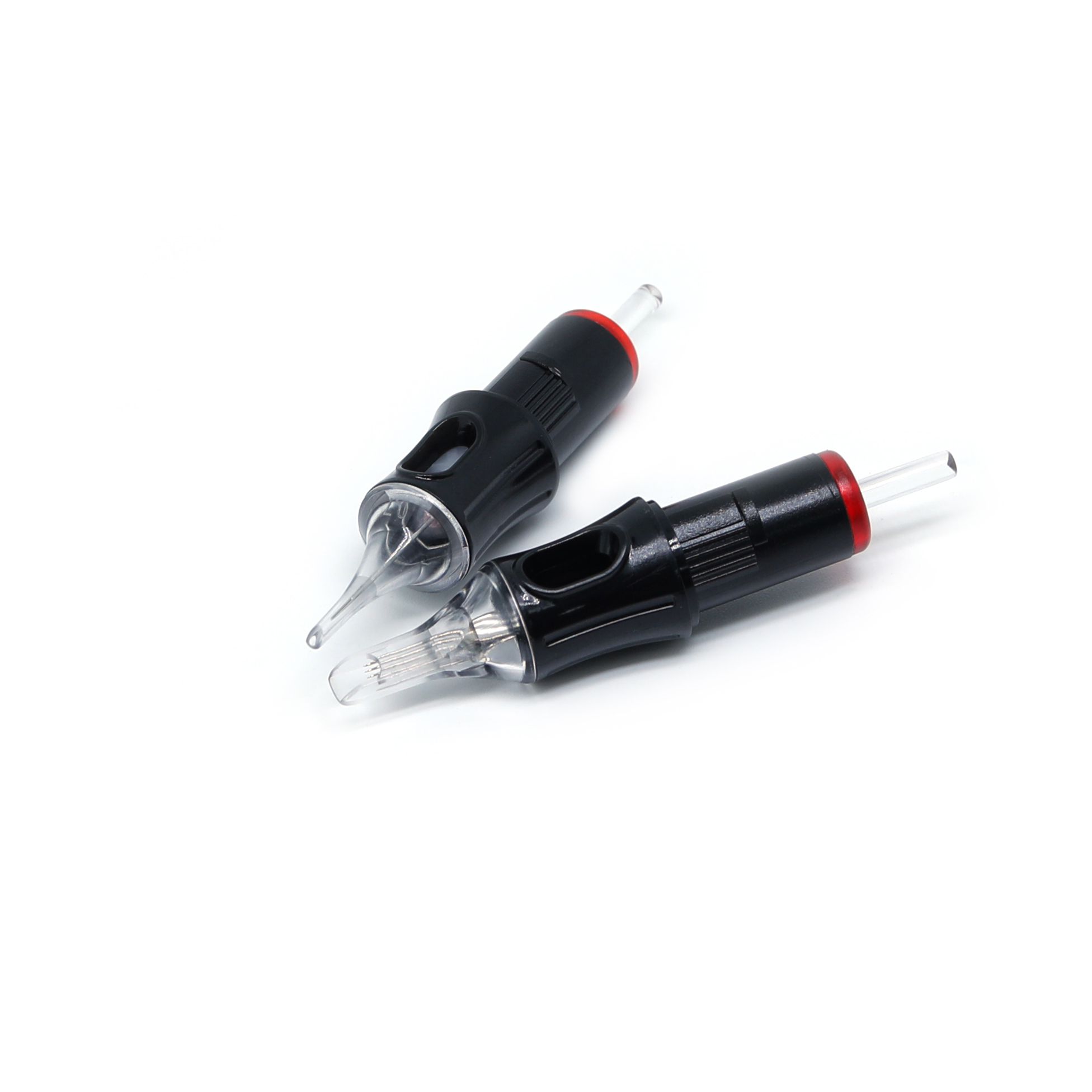
Cover: SPACEDRAGON tattoo cartridge needles produced by CREDITECH MED.
A tattoo needle cartridge is a sealed, single-use assembly that holds a group of stainless steel needles inside a plastic housing, with a silicone membrane separating the needle path from the machine. It is the part of the tattoo setup an artist actually loads, uses and disposes of, and the part where ink flow, needle stability and cross-contamination control are physically decided.
Most of that behaviour is settled by four specifications that rarely appear on the front of the box: the housing material, the anti-backflow membrane, the taper length and the needle diameter. This guide opens a cartridge up component by component and defines the vocabulary a buyer needs to write or read a specification, including the precision tolerance of ±0.02–0.05 mm, needle diameters of 0.15 mm, 0.20 mm, 0.25 mm, 0.30 mm and 0.35 mm, taper lengths from 1.5 mm to 7 mm with extra long taper available, and the RL, RS, RM, Magnum and Flat configuration codes.
It is written for readers at the decision and execution stage: distributors building a private-label range, studios standardising consumables, and PMU or SMP practices that need the same result from every reorder. Readers who only need a first definition of the product are better served by a shorter overview; the sections below assume the cartridge has already been chosen and now has to be specified.
Why Cartridge Vocabulary Decides Whether a Supply Agreement Holds
Two cartridges can both be labelled 1RL and behave differently in the hand. If one uses a short taper and the other a long taper, if one is built on a 0.25 mm needle and the other on a 0.30 mm, if one carries a silicone anti-backflow membrane and the other does not, the artist feels the difference immediately. None of that difference is visible in the code on the label. The code only describes the grouping of needles.
This is the practical problem behind long-term cartridge supply. Reorders are only predictable when both sides describe the delivered unit in the same language: the housing material, the membrane, the taper, the diameter, the tolerance, the sterilization method and the packaging format. Without that shared vocabulary, a supply relationship runs on samples and subjective impressions, and every new batch has to be re-approved by feel rather than by specification.
The ambiguity becomes more expensive as volume grows. A single studio can absorb a small batch-to-batch inconsistency because the same artist adjusts to it. A distributor holding stock for dozens of studios cannot, because the complaint arrives after the product has already been shipped. That is why the component basics in this article are a procurement topic, not only a technical one.
Where the Cartridge Format Sits in the Tattoo Needle Market
The global tattoo needle market was estimated at USD 368.3 million in 2024 and is projected to reach USD 468.6 million by 2033 (CMI, Custom Market Insights). Within that market, tattoo needle cartridges hold the largest share of the product type segment, a position attributed to their sterility and their compatibility with modern rotary machines (Deep Market Insights).
Adoption supports that share. An industry survey reported in 2024 found that approximately 73% of professional tattoo artists preferred needle cartridges over traditional bar needles, citing ease of use and safety (Industry Survey via Elite Tattoo, 2024). The adjacent permanent makeup segment is also expanding: the PMU market was valued at USD 162.09 million in 2025, with an 8.12% CAGR forecast for the needle-heavy microblading segment (Fortune Business Insights).
Compliance expectations have moved in parallel. Medical-grade tattoo needles require ISO 13485 certification for quality management systems, which is the framework used to ensure safety and consistency in manufacturing (ISO, ISO 13485:2016). In the EU, tattoo needle cartridges must comply with the RoHS Directive 2011/65/EU and often follow EN IEC 63000:2018 for hazardous substance assessment (European Commission). On the supply side, China exported approximately USD 1.19 billion of medical instruments in May 2026 alone, with the United States as the top destination (OEC, The Observatory of Economic Complexity).
The competitive field is well populated. Key global players in the tattoo needle market include Dragonhawk, Kwadron, Bishop Rotary, Cheyenne and EZ Tattoo Supply (CMI Market Snapshot). Buyers comparing across that field are effectively comparing how each supplier defines the same component vocabulary described in the next sections.
What Is Actually Inside a Tattoo Needle Cartridge
A professional tattoo cartridge is not a single moulded part but a small assembly of five functional elements. Each one can be described precisely, and each one changes something the artist can feel during a session.
1. The Housing: Medical-Grade PC
The cartridge is constructed with a medical-grade PC housing. The housing is the rigid plastic body that grips the needle group, provides the interface that seats on the machine, and gives the artist a clean contact surface. Its job is mechanical: hold the needles in a fixed alignment so that the point geometry arriving at the skin is the geometry that was designed. A rigid, correctly moulded housing is the reason a cartridge feels stable when the machine is running; a housing that flexes or seats loosely adds movement at the tip, and movement at the tip becomes a wobbly line.
2. The Needles: Medical-Grade Stainless Steel
The needles themselves are medical-grade stainless steel. Steel grade and point geometry determine how the needle penetrates, how much resistance the artist feels, and how consistently the group holds its shape across a session. The number and arrangement of needles inside the group is what the configuration code describes — a single needle for detail work, a ring of needles for lining, a staggered arrangement for shading, a wide block for colour filling.
3. The Silicone Anti-Backflow Membrane System
Behind the needle group sits a silicone anti-backflow membrane system. The membrane is a barrier between the needle path and the machine side of the cartridge. Its function is to stop ink and fluid from travelling backwards into the machine and to keep the two sides of the cartridge mechanically separated. For a single-use device this is a hygiene requirement as much as a performance one: the membrane is one of the reasons a cartridge can be discarded after a session without the machine itself being contaminated.
4. Stable Controlled Ink Delivery and Low Vibration Design
Two further design characteristics sit on top of the components. The cartridge uses a stable controlled ink delivery system, meaning the path from the ink reservoir to the needle tip is designed to deliver ink at a consistent rate rather than in surges. It also employs a low vibration design, which reduces the amount of movement transferred to the needle tip while the machine runs. In practice, low vibration is what an artist perceives as track stability: the tip stays where it was placed, which matters most in fine detail work where a small movement becomes a visible defect.
5. The Configuration Codes: RL, RS, RM, Magnum and Flat
Available configurations include RL, RS, RM, Magnum and Flat. These codes describe how the needles are grouped, and they are the first specification most buyers learn — but, as noted above, they describe grouping only. Two units carrying the same code can still differ in diameter, taper and tolerance.
Taper and Diameter: The Two Numbers Buyers Most Often Confuse
Needle diameter and taper length are frequently treated as one specification. They are independent, and they answer different questions.
Needle diameter describes the thickness of the individual needle. The available diameters are 0.15 mm, 0.20 mm, 0.25 mm, 0.30 mm and 0.35 mm. A smaller diameter produces a finer point and is generally associated with detail work, fine line and cosmetic procedures; a larger diameter gives a more rigid needle with a wider footprint, which is generally associated with lining and with work that needs to move more pigment per stroke. Diameter is also a durability variable: a thicker needle resists deflection under load more than a thin one.
Taper length describes how far the point is ground back from the tip — how long and gradual the sharpened section is. Taper length runs from 1.5 mm to 7 mm, with extra long taper available. A shorter taper produces a firmer, more controlled point that holds its line under pressure; a longer taper produces a more gradual, more flexible entry, which is why long taper configurations are commonly associated with fine line and cosmetic work where a soft entry matters more than stiffness.
The third number, precision tolerance of ±0.02–0.05 mm, is the one that decides whether the first two stay true across a batch. Tolerance defines the permitted deviation in the manufactured geometry. A tight tolerance is what allows a distributor to reorder the same specification and receive a unit that behaves the same way, and it is the number most often missing from informal specifications.
How to Read a Cartridge Specification, Step by Step
Reading a specification in the right order prevents the most common sourcing error, which is choosing a configuration code first and then discovering that the diameter, taper or machine fit does not match the work.
Step 1 — Confirm the machine interface. The cartridge must seat correctly on the rotary machine in use. Rotary compatibility is the entry condition; a cartridge that does not seat properly cannot be evaluated on anything else.
Step 2 — Select the configuration code. Decide whether the work is lining, shading, colour filling or flat work, and select from RL, RS, RM, Magnum and Flat accordingly.
Step 3 — Set the needle diameter. Choose from 0.15 mm, 0.20 mm, 0.25 mm, 0.30 mm and 0.35 mm based on how fine the line must be and how much rigidity the work requires.
Step 4 — Set the taper length. Choose within the 1.5 mm to 7 mm range, or specify extra long taper where a softer, more gradual entry is the priority.
Step 5 — State the tolerance. Write the precision tolerance of ±0.02–0.05 mm into the specification so that consistency across batches becomes an acceptance criterion rather than an expectation.
Step 6 — Confirm membrane, sterilization and packaging. Verify that the unit carries a silicone anti-backflow membrane system, that sterilization is EO gas sterilization, and that packaging is a sterile breathable film packaging system that preserves sterility until the cartridge is opened.

Cartridge packing workshop: the stage where the sealed unit, not only the needle, becomes the deliverable.
Matching Configurations to the Work
Configuration codes only become useful when they are mapped to a workflow. The mapping below reflects standard industry naming; the actual result on skin depends on the artist's technique and on the diameter and taper paired with the code.
Fine line work. Fine line and realism work depends on a small diameter combined with a longer taper, so that the point enters gradually and the line stays narrow. Pairing a fine configuration with a short taper and a heavy diameter defeats the purpose of choosing the code at all.
Lining. Liner configurations concentrate needles into a tight round group. With a larger diameter and a shorter taper, the group holds a firm outline and resists deflection along the line.
Shading and blending. Shader configurations spread the needles slightly so that pigment is distributed over an area rather than a line. Round shader arrangements suit smaller shading areas and blending where a rounded edge is useful.
Colour packing and gradients. Magnum configurations place needles in a wider arrangement for filling larger areas and producing smoother gradients, where the priority is coverage rather than a crisp edge.
Flat work. Flat configurations present the needle group in a flat line, used for flat shading and specific texture effects where a linear rather than a round footprint is required.
PMU, SMP and cosmetic procedures. Permanent makeup, scalp micropigmentation and eyebrow work sit at the fine end of the same vocabulary: small diameters, longer tapers and low vibration matter more than coverage. Because these procedures are repeated on the same client over multiple sessions, batch consistency becomes a client-experience issue rather than only a stock issue.
Cartridge Specification Reference
Configuration codes describe grouping. The table below sets out what each code refers to and where it is typically applied.
| Code | Full name | Typical application |
|---|---|---|
| RL | Round Liner | Outlines and line work |
| RS | Round Shader | Shading, blending, smaller colour areas |
| RM | Round Magnum | Packing and blending where a rounded edge helps |
| Magnum | Magnum | Large colour fill and smooth gradients |
| Flat | Flat | Flat shading and texture effects |
The second table lists the specifications that sit behind the code. These are the terms that should appear in a written specification, because they are the terms a supplier can be held to.
| Specification | Available values | What it changes |
|---|---|---|
| Housing material | Medical-grade PC | Rigidity of the needle path, fit and stability on the machine |
| Needle material | Medical-grade stainless steel | Point geometry and resistance to bending |
| Membrane | Silicone anti-backflow membrane system | Barrier between the needle path and the machine |
| Ink delivery | Stable controlled ink delivery system | Consistency of flow during a session |
| Vibration | Low vibration design | Track stability, especially in detail work |
| Needle diameter | 0.15 mm, 0.20 mm, 0.25 mm, 0.30 mm, 0.35 mm | Line width and needle stiffness |
| Taper length | 1.5 mm to 7 mm, extra long taper available | How gradually the point enters; flexibility versus firmness |
| Precision tolerance | ±0.02–0.05 mm | Consistency within a unit and between batches |
| Configuration | RL, RS, RM, Magnum, Flat | Grouping of needles and therefore the footprint |
| Sterilization | EO gas sterilization | Single-use safety of the sealed unit |
| Packaging | Sterile breathable film packaging system | Preserves sterility until the cartridge is opened |
Sterilization, Packaging and Rotary Compatibility
Sterilization is performed using EO gas sterilization. Ethylene oxide is a gas-phase process, which matters for a device with internal channels: the sterilant has to reach the needle path and the membrane area, not only the outer surface. The cartridge is then sealed in a sterile breathable film packaging system, which allows the gas process to work and keeps the unit sterile until the pack is opened. For the buyer, the packaging format is part of the specification rather than logistics, because a cartridge that loses its sterile barrier in transit is no longer a single-use medical device in practice.

Packaging workshop: the sealed sterile barrier is part of the specification, not an afterthought.
Rotary compatibility closes the loop. Tattoo needle cartridges hold the largest share of the product type segment, a position attributed to their sterility and compatibility with modern rotary machines (Deep Market Insights). The cartridge seats on a rotary machine, the membrane separates the needle path from the machine, and the housing transmits the machine's stroke to the needle group. Compatibility is therefore a three-part fit — seat, membrane, housing — and it is the first item to confirm before any other specification is discussed.
What These Component Basics Mean for a Long-Term Supply Partner
Suzhou Creditech Electronic Technology Co., Ltd. (CREDITECH MED) is a manufacturer of tattoo cartridge needles, PMU cartridges and tattoo consumables, founded in 2009 and based in Suzhou, China, supplying professional tattoo studios, distributors, wholesalers and private-label brands across Europe, North America, South America and Southeast Asia. Its brands include SPACEDRAGON TATTOO for professional tattoo cartridges, ESTLIA for PMU and SMP cartridges, and LPT Tattoo Supply for studio consumables and accessories.
The reason the components matter to a supply relationship is that each one becomes a controllable point in production. Company measures include a cleanroom production environment, medical-grade raw materials, a standardized SOP manufacturing process, engineering validation for new designs, and full batch traceability from raw material to shipment. Production process risks are controlled through automated production control and multi-stage QC checkpoints, including 100% in-process inspection, incoming material inspection, final visual inspection and performance sampling tests, while supply chain risks are mitigated by long-term supplier qualification and standardized production lines.
Compliance is handled through an ISO 13485 certified quality management system, CE compliant products, and FDA test reports available for applicable products, with EO sterilization validation supporting the sterility claim rather than replacing it. The company exports approximately 90% of its output, which is why the specification vocabulary in this article is treated as the working language of the commercial relationship rather than as marketing language.

Packaging line: batch traceability runs from raw material through production, sterilization and shipment.
Frequently Asked Questions
Is the cartridge EO gas sterilized, and what should a buyer verify?
Yes. The cartridge is sterilized using EO gas sterilization and sealed in a sterile breathable film packaging system. Buyers should verify three documents rather than one statement: the ISO 13485 quality management system certificate, the EO sterilization validation record, and batch traceability covering raw material, production, sterilization and shipment. All three form part of the manufacturer's documented control system, and together they show that sterility is a validated process rather than a packaging claim.
Can housing, taper, diameter and configuration be specified together in one OEM program?
Yes. CREDITECH MED provides OEM and ODM services covering product development, structural design, prototyping, mass production and customized packaging, with engineering validation applied to new designs. A buyer can therefore define the housing configuration, the taper length within the 1.5 mm to 7 mm range including extra long taper, the needle diameter from 0.15 mm to 0.35 mm, and the configuration code from RL, RS, RM, Magnum and Flat before mass production begins.
What are the MOQ and payment terms for a long-term cartridge supply agreement?
MOQ is 500–1,000 pcs per size and is flexible for OEM trial orders. Delivery terms are FOB, CIF or EXW. Payment terms for standard orders are 30% deposit with 70% balance before shipment; for OEM and ODM projects they are 50% deposit with 50% balance before shipment; samples and trial orders are paid 100% in advance. Accepted payment methods are T/T, PayPal for samples, and Western Union.
Can a buyer test samples before committing to a supply contract?
Yes. Samples and trial orders are available and are paid 100% in advance. Acceptance can also be structured before shipment through pre-shipment inspection, batch sampling tests, and an on-site factory inspection, since customer visits to the factory are accepted. For a distributor this means the taper and diameter specification can be validated on skin before it is written into a reorder.
How does a long-term China-based supply partner reduce supply-chain risk?
Risk control is structural rather than reactive. CREDITECH MED operates a cleanroom production environment with medical-grade raw materials, a standardized SOP manufacturing process and engineering validation for new designs, and maintains full batch traceability from raw material to shipment. Production risks are controlled through automated production control and multi-stage QC checkpoints, while supply chain risks are mitigated by long-term supplier qualification and standardized production lines. Buyers who want to check these points against their own acceptance criteria can download the company brochure below or contact the team directly.
Conclusion
A tattoo needle cartridge is a small assembly with five describable parts: a medical-grade PC housing, medical-grade stainless steel needles, a silicone anti-backflow membrane system, a stable controlled ink delivery system, and a low vibration design. Wrapped around those parts are the numbers that make the product orderable — the ±0.02–0.05 mm precision tolerance, the 0.15 mm to 0.35 mm diameter range, taper lengths from 1.5 mm to 7 mm with extra long taper available, and the RL, RS, RM, Magnum and Flat codes — plus EO gas sterilization, sterile breathable film packaging and rotary machine compatibility.
A buyer who can read those terms can write a specification. A buyer who can write a specification can hold a supplier to it across reorders. That is the difference between buying cartridges repeatedly and running a supply relationship that stays predictable at volume.

Next step: request the catalog or start a specification review
If you are specifying cartridges for a studio group, a distribution range or a private-label program, the fastest route is a short specification review against the terms above — housing, membrane, taper, diameter, tolerance, configuration, sterilization and packaging.
Download the company brochure: CREDITECH MED company brochure
Website: www.creditechmed.com
Contact: Yosmine · Email: estlia@creditechmed.com · WhatsApp: +86 18625276381
Address: 3rd Floor, Building 3, No. 3000 Taidong Road, Xiangcheng District, Suzhou, China
Have Questions or Need More Details?
Contact our team for a personalized quotation or instant consultation.
Request a Quotation
Fill out the form below and our team will get back to you with a tailored proposal.
WhatsApp Direct Chat
Prefer to chat in real-time? Message us on WhatsApp for instant assistance & quick answers.
- Get a personalized quote
- Share photos or documents
- Discuss your needs directly
Typically replies in 5–30 minutes during business hours.