
Precision Tolerances and Needle Diameters: A Technical Guide to Cartridge Selection
Precision Tolerances and Needle Diameters: A Technical Guide to Cartridge Selection
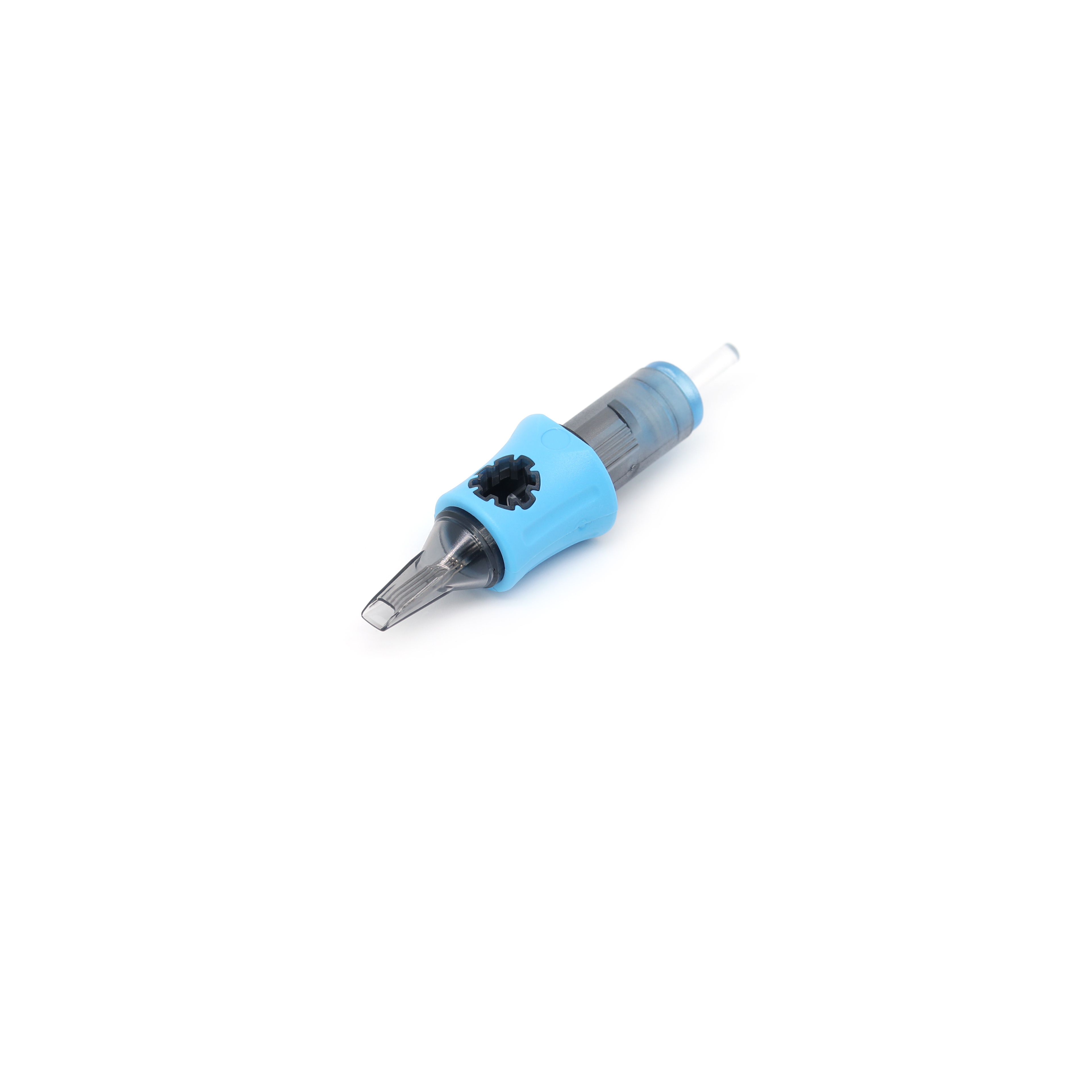
Cartridge selection is a specification problem before it becomes a brand decision. Four measurable variables decide whether a cartridge behaves the same way on the first pass and on the hundredth: needle diameter, taper length, needle configuration, and manufacturing precision tolerance. Get those four right and the cartridge disappears into the work. Get them wrong and the artist spends the session compensating for the tool instead of controlling the result.
Short answer: Professional tattoo cartridge needles are specified inside four measurable bands. Needle diameter runs from 0.15 mm to 0.35 mm. Taper length runs from 1.5 mm to 7 mm, with extra-long taper available. Configuration covers RL, RS, RM, Magnum, and Flat. Precision tolerance — the permitted deviation between specified and actual needle geometry — is commonly held at ±0.02–0.05 mm. The SP5 cartridge from CREDITECH MED is manufactured to that tolerance band and pairs it with a silicone anti-backflow membrane and a stable controlled ink delivery system.
Problem Definition: Why Cartridge Selection Fails More Often Than Cartridge Quality
Most cartridge complaints are not quality complaints. They are specification mismatches that surface as quality symptoms.
A liner that spreads at the edges is usually not a defective liner. It is a liner paired with a taper length or needle diameter that does not match the line weight the artist is trying to produce. A magnum that deposits uneven saturation is frequently a configuration and taper combination that is too aggressive for the skin being worked. A cartridge that feels unstable in the grip is often an out-of-spec housing, or a needle array that drifted beyond its tolerance band during assembly.
The buyer-side problem is vocabulary. Specification sheets across the industry describe the same four variables using inconsistent language, and they rarely explain how the variables interact. A diameter figure without a taper figure is incomplete. A taper figure without a configuration figure is incomplete. A configuration without a stated tolerance band tells the purchaser almost nothing about batch consistency.
- Symptom: inconsistent line weight across a session → likely variable: taper length or needle diameter mismatch.
- Symptom: ink pooling or backflow around the tip → likely variable: membrane seating quality, or an out-of-tolerance needle array.
- Symptom: visible wobble under the grip → likely variable: housing tolerance or vibration control design.
- Symptom: batch-to-batch variation in feel → likely variable: insufficient manufacturing precision tolerance.
These symptom-to-variable mappings describe the engineering logic a buyer should apply when a cartridge underperforms. They are not a fault diagnosis for any specific product.
Industry Background: A Cartridge-Dominated Consumable Market
The global tattoo needle market was estimated at USD 368.3 million in 2024 and is projected to reach USD 468.6 million by 2033, according to Custom Market Insights. Within that market, tattoo needle cartridges hold the largest share of the product-type segment, a position attributed to their sterility and compatibility with modern rotary machines (Deep Market Insights).
An industry survey reported by Elite Tattoo found that approximately 73% of professional tattoo artists preferred needle cartridges over traditional bar needles in 2024, citing ease of use and safety. A cartridge-first market means specification literacy is no longer optional for buyers; it is the core purchasing skill.
Regulatory pressure reinforces the same point. Medical-grade tattoo needles are expected to be manufactured under an ISO 13485 quality management system, the international standard for medical device quality management. In the EU, cartridges must comply with RoHS Directive 2011/65/EU and frequently follow EN IEC 63000:2018 for hazardous substance assessment. On the application side, the permanent makeup market reached USD 162.09 million in 2025, with an 8.12% CAGR forecast for the needle-heavy microblading segment (Fortune Business Insights) — a second demand channel with its own specification logic.
The Four Variables That Define a Tattoo Cartridge Needle
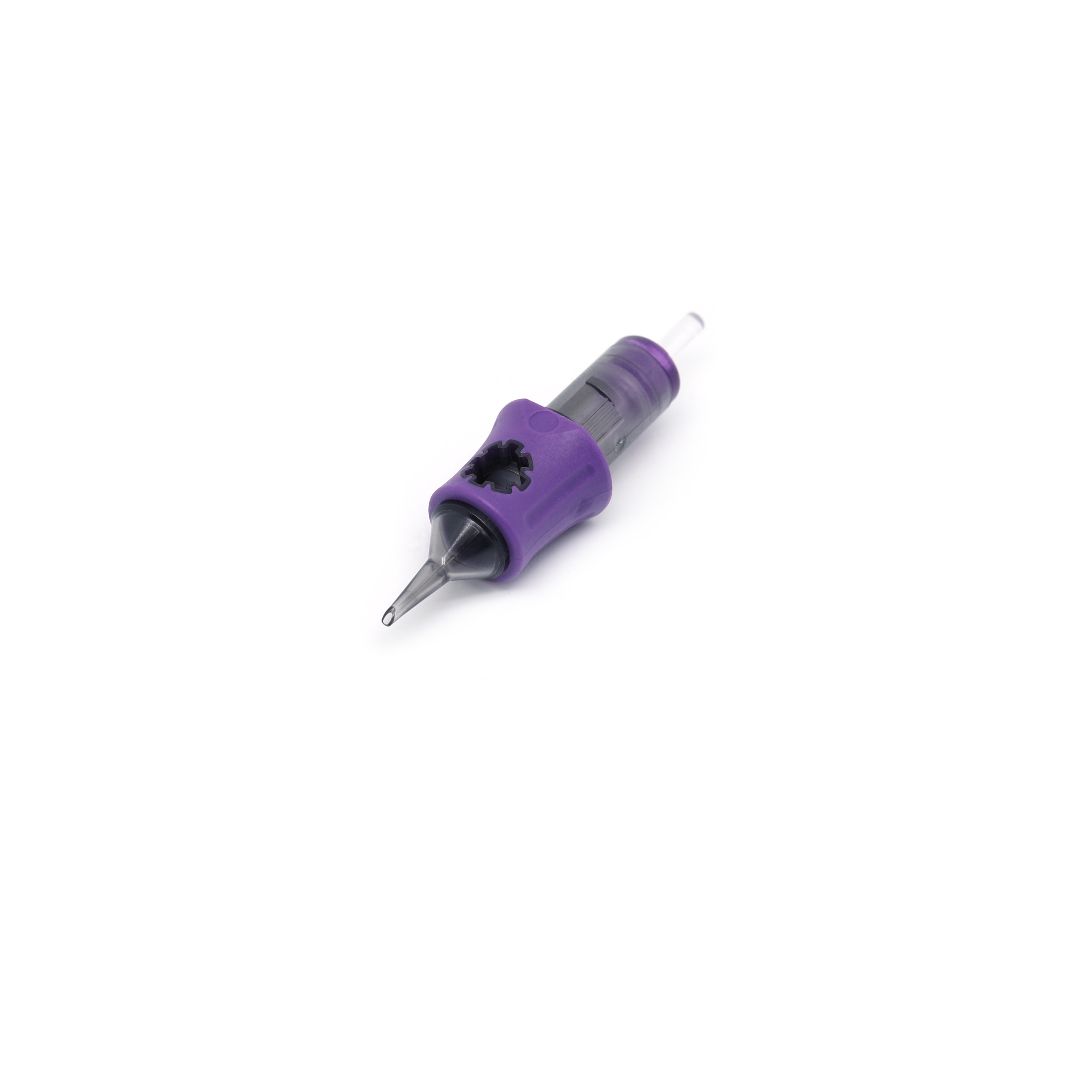
1. Precision Tolerance: ±0.02–0.05 mm
Precision tolerance is the allowed deviation between the specified geometry of a component and its actual geometry after production. On the SP5 cartridge, the stated precision tolerance is ±0.02–0.05 mm.
This is the variable buyers most often ignore and later complain about. Tolerance is what makes two cartridges from the same box behave like the same cartridge. It governs whether the needle array sits symmetrically in the housing, whether the membrane seats consistently against the needle shaft, and whether the tip opening lines up with the array. When tolerance drifts, the individual specification numbers on the label stay the same while real-world performance changes.
A stated tolerance band is also a measurable commitment. It can be checked during incoming inspection with dimensional verification, which is why it belongs in a written purchase specification rather than only in a marketing description.
2. Needle Diameter: 0.15 mm to 0.35 mm
The SP5 cartridge is offered in five needle diameters: 0.15 mm, 0.20 mm, 0.25 mm, 0.30 mm, and 0.35 mm.
Diameter sets the width of the individual needle and, in turn, how much trauma a single pass delivers and how much pigment a single needle can carry. Smaller diameters concentrate pigment into a narrower channel. Larger diameters move more pigment but require the artist to manage a wider puncture footprint. Diameter is a variable the artist selects per procedure and per skin type, not a variable the manufacturer selects for them — which is why a full diameter range matters more than a single default size.
3. Taper Length: 1.5 mm to 7 mm
Taper length is the distance over which the needle shaft narrows to its point. The SP5 range covers 1.5 mm to 7 mm, with extra-long taper available.
Short tapers produce a firmer, more rigid tip that holds a sharper directional line and resists deflection under pressure. Longer tapers produce a finer, more elastic tip that follows skin contour, spreads contact across more surface area, and behaves more forgivingly in soft or uneven tissue. The trade-off is control versus gentleness: long tapers demand more precise motion control from the artist, while short tapers demand less but return a stiffer feel.
This is why taper length cannot be specified separately from the work. A fine-line procedure and a soft black-and-grey wash may use the same needle diameter and still require different taper lengths.
4. Needle Configuration: RL, RS, RM, Magnum, Flat
The SP5 range is built around five configuration families: RL, RS, RM, Magnum, and Flat. These map to the product types in the SP5 catalogue: Fine Line, Traditional, Shading, Color Packing, PMU Eyebrow, SMP Scalp Micropigmentation, Long Taper Precision, and Soft Edge Magnum.
Configuration determines how multiple needles are grouped and how ink is distributed across the group. Liners group needles tightly for a defined line. Shaders and round magnums distribute pigment across a wider footprint for gradient and fill work. Flat configurations place needles in a straight row for broad, even coverage. The right configuration reduces the number of passes a procedure requires. The wrong one forces the artist to overwork the skin to reach the same result.
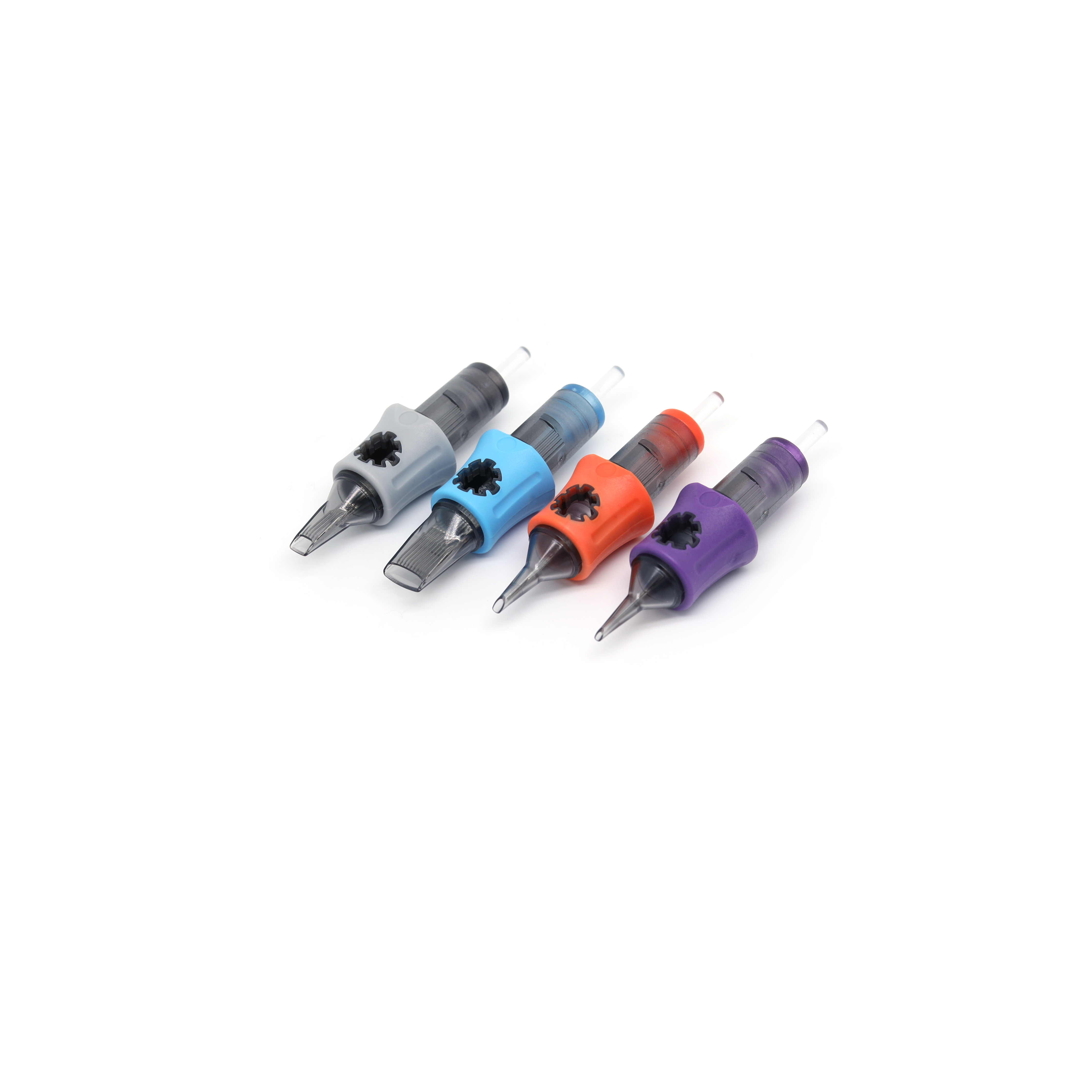
Supporting Systems: Membrane, Housing, and Tip
The four variables above sit inside a delivery system. On the SP5, that system consists of medical-grade stainless steel needles, a medical-grade PC housing, a silicone anti-backflow membrane, and a non-toxic transparent plastic tip.
The membrane matters more than its size suggests. It is the component that separates the fluid path from the machine interface, and its seating depends directly on how tightly the needle array was held to tolerance during assembly. The transparent tip is a practical decision as well as a design one: it lets the artist see ink position before contact. The stated vibration characteristic of the SP5 is a low vibration design, and its ink delivery is described as a stable controlled ink delivery system. The cartridge is stated as compatible with rotary tattoo machines.
Sterilization and Packaging
The SP5 cartridge is EO gas sterilized and packaged in a sterile breathable film packaging system. Both points belong in the purchase specification. Sterilization method determines residual risk and material compatibility. The packaging system determines whether the sterile barrier survives transport, which is the failure mode that matters most to an importer receiving a pallet rather than a box.
| SP5 Specification | Value |
|---|---|
| Needle diameter | 0.15 mm / 0.20 mm / 0.25 mm / 0.30 mm / 0.35 mm |
| Taper length | 1.5 mm – 7 mm (extra-long taper available) |
| Configuration | RL / RS / RM / Magnum / Flat |
| Precision tolerance | ±0.02–0.05 mm |
| Membrane system | Silicone anti-backflow membrane |
| Needle material | Medical-grade stainless steel |
| Housing material | Medical-grade PC |
| Tip material | Non-toxic transparent plastic |
| Ink flow | Stable controlled ink delivery system |
| Vibration | Low vibration design |
| Sterilization | EO gas sterilized |
| Packaging | Sterile breathable film packaging system |
| Compatibility | Rotary tattoo machines |
Step-by-Step: How to Select a Cartridge for a Specific Procedure

Step 1 — Define the procedure, not the product. Write down line weight, saturation target, working area, and skin type before opening a catalogue. Every subsequent step is a consequence of these four inputs.
Step 2 — Choose the configuration. Select from RL, RS, RM, Magnum, or Flat based on how pigment must be distributed: a defined line, a gradient, a broad fill, or a soft edge. Configuration is the highest-leverage decision because it is the hardest to compensate for during a session.
Step 3 — Choose the needle diameter. Pick within the 0.15–0.35 mm range. Use the smallest diameter that reliably carries the pigment volume the procedure requires, and move upward only when penetration width or pigment load demands it.
Step 4 — Choose the taper length. Pick within the 1.5–7 mm range, with extra-long taper available where the work requires a softer, more contour-following tip. Keep both a short-taper and a long-taper option in stock for the same configuration so the choice is available at the bench rather than after a reorder.
Step 5 — Verify the tolerance band and membrane. Confirm that the manufacturer publishes a numeric precision tolerance and that it sits within ±0.02–0.05 mm for the specified platform. Confirm that the cartridge uses a silicone anti-backflow membrane and a medical-grade PC housing.
Step 6 — Verify sterilization, packaging, and traceability. Confirm EO gas sterilization, sterile breathable film packaging, and batch traceability. Traceability is what makes a defect investigation possible after the fact. Without it, a complaint cannot be resolved to root cause.
Use Cases: Matching Specification to Work
Fine line and micro-realism
Fine line work prioritizes a narrow, repeatable line. Small-diameter needles combined with longer taper lengths give the tip the flexibility to follow skin without widening the line. The binding constraint here is tolerance: fine line is where ±0.02–0.05 mm of drift becomes visible.
Shading and color packing
Shading and color packing prioritize even pigment distribution across a wider area. Round shader, round magnum, and magnum configurations spread contact across more needles, and mid-range tapers balance pigment release against control. Stable ink delivery matters most here, because uneven flow appears immediately as patchy saturation.
PMU eyebrow, lip, and eyeliner
PMU procedures operate on smaller working areas with lower pigment volumes. PMU eyebrow needle cartridges typically combine small diameters with fine configurations, and the anti-backflow membrane plays an outsized role because the pigment volumes are small enough that any backflow is proportionally significant.
SMP scalp micropigmentation
SMP covers large areas with a repeated, consistent dot pattern. Consistency across hundreds of insertions depends on tolerance and on low vibration. A cartridge that drifts in geometry over a long session produces a visibly uneven pattern.
Comparison Table: Configuration Selection
| Configuration | Grouping behavior | Primary use | Selection note |
|---|---|---|---|
| RL (Round Liner) | Tightly grouped needles | Defined line work, outlines | Pair with the taper length that matches required line firmness |
| RS (Round Shader) | Loosely grouped needles | Shading, blending, soft fill | Chosen when line definition matters less than gradient |
| RM (Round Magnum) | Round-grouped wider array | Color packing, broad shading | Balance array width against skin trauma per pass |
| Magnum | Wide flat array | Large-area color packing | Requires controlled motion; least forgiving of overwork |
| Flat | Single straight row | Broad even coverage, fills | Directional; suited to planned, uniform coverage |
Comparison Table: Diameter and Taper Selection
| Selection variable | Option | Behavior | Typical fit |
|---|---|---|---|
| Needle diameter | 0.15 mm | Narrowest footprint, lowest pigment volume per needle | Fine detail work |
| Needle diameter | 0.20 mm | Narrow footprint with slightly higher pigment carry | Fine line and light shading |
| Needle diameter | 0.25 mm | Mid-range balance of control and pigment load | General lining and shading |
| Needle diameter | 0.30 mm | Wider footprint, higher pigment volume | Shading and color packing |
| Needle diameter | 0.35 mm | Widest footprint in the range | High-volume coverage work |
| Taper length | Short taper | Firmer tip, sharper directional control, reduced deflection | Line work requiring stability |
| Taper length | Mid taper | Balanced control and flexibility | General purpose work |
| Taper length | Long taper (up to 7 mm) | Softer tip, follows contour, more forgiving in soft tissue | Fine line, soft shading |
| Taper length | Extra-long taper | Maximum flexibility and contour following | Specialist soft-tissue procedures |
Diameter and taper behavior descriptions reflect general industry practice for cartridge needle geometry. The available options listed correspond to the SP5 specification range: 0.15–0.35 mm diameter and 1.5–7 mm taper, with extra-long taper available.
Compliance and Documentation: What a Buyer Should Verify
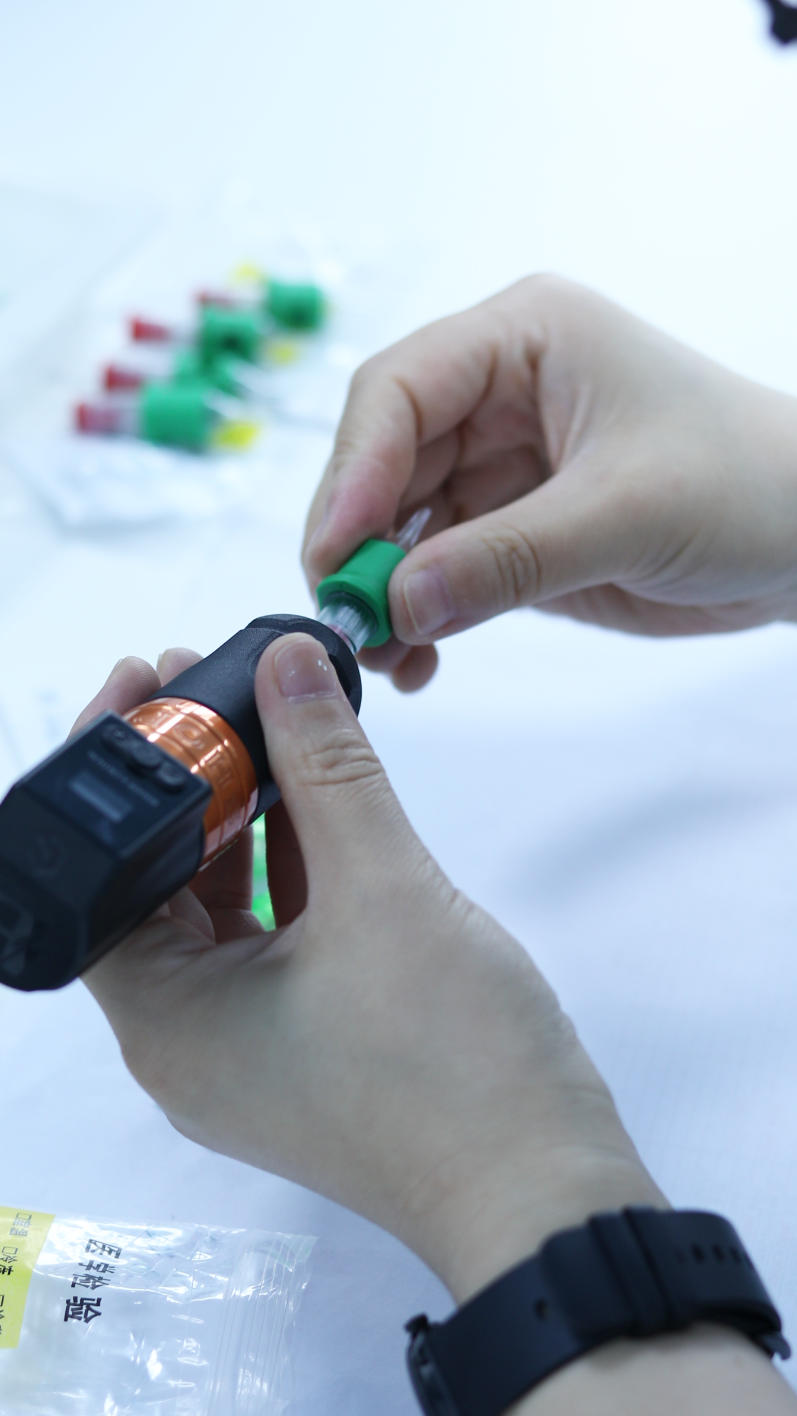
Specification is only half of a purchase decision. The other half is whether the manufacturer can document that the specification was met, batch after batch. For a sterile tattoo cartridge needle manufacturer, the documentation set below is the practical baseline.
- ISO 13485 certification. CREDITECH MED holds ISO 13485:2016 certification, certificate number F04326MD00044R000, issued by Guardian Independent Certification (Beijing) CO., LTD., valid from 2026-06-24 to 2029-06-23, covering Research, Development, Manufacturing & Sales of Tattoo Needles.
- CE MDR documentation (EU). Certificate number ICR Polska/DR/HM2311112, issued by ICR Polska Co. Ltd., compliant with MDR (EU) 2017/745 Annex II & Annex III.
- RoHS 2.0 (EU). Certificate number TST2019112501-3RC, issued by TST Testing Technology Co., Ltd., against (EU) 2015/863, (EU) 2017/2102, and the full set of IEC 62321 series standards.
- RoHS (2011/65/EU). Certificate number ICR/VC/HM260680, issued by ICR, valid from 2026-06-05 to 2031-06-04, scope: tattoo needle / tattoo cartridge needle.
- MSDS. Certificate number BCTC2305199480R, issued by Shenzhen BCTC Testing Co., Ltd., against CLP Regulation (EC) No 1272/2008 and REACH (EC) No 1907/2006.
- FDA testing report (US). Report number TST2019112501-4EN, issued by TST Testing Technology Co., Ltd., against FDA 21CFR175.300, FDA 21CFR180.22, and ASTM C738-94.
These are documents a buyer can request, read, and retain. That distinction matters: a supplier that describes compliance in general terms and a supplier that provides a certificate number with an issuing authority are not offering the same level of verifiability.
Frequently Asked Questions
What certifications should a sterile tattoo cartridge needle manufacturer hold?
An ISO 13485 certification for the quality management system is the baseline for medical-grade needle manufacturing. CREDITECH MED operates under an ISO 13485:2016 certified system, certificate F04326MD00044R000, issued by Guardian Independent Certification (Beijing) CO., LTD., valid 2026-06-24 to 2029-06-23, covering research, development, manufacturing, and sales of tattoo needles. For EU market access, the relevant documents are CE MDR certification ICR Polska/DR/HM2311112 from ICR Polska Co. Ltd. under MDR (EU) 2017/745 Annex II & Annex III, and RoHS 2.0 certificate TST2019112501-3RC from TST Testing Technology Co., Ltd. against (EU) 2015/863 and (EU) 2017/2102. For the US market, an FDA testing report is available under report number TST2019112501-4EN from TST Testing Technology Co., Ltd., tested against FDA 21CFR175.300, FDA 21CFR180.22, and ASTM C738-94. Material safety documentation is covered by MSDS certificate BCTC2305199480R from Shenzhen BCTC Testing Co., Ltd., under CLP Regulation (EC) No 1272/2008 and REACH (EC) No 1907/2006.
What needle diameters, taper lengths, and configurations are available in a professional tattoo cartridge?
The SP5 cartridge is available in five needle diameters — 0.15 mm, 0.20 mm, 0.25 mm, 0.30 mm, and 0.35 mm — and in taper lengths from 1.5 mm to 7 mm, with extra-long taper available. Configuration options are RL, RS, RM, Magnum, and Flat, covering the product types Fine Line, Traditional, Shading, Color Packing, PMU Eyebrow, SMP Scalp Micropigmentation, Long Taper Precision, and Soft Edge Magnum. The cartridge is compatible with rotary tattoo machines, uses medical-grade stainless steel needles in a medical-grade PC housing, and includes a silicone anti-backflow membrane and a non-toxic transparent plastic tip.
What does ±0.02–0.05 mm precision tolerance actually control?
Precision tolerance defines the permitted deviation between the specified geometry of a cartridge component and its actual geometry after production. On the SP5 cartridge, that band is ±0.02–0.05 mm. In practice, tolerance controls whether needle arrays sit symmetrically in the housing, whether the silicone anti-backflow membrane seats consistently against the needle shaft, and whether the tip opening aligns with the array. Two cartridges can carry identical diameter, taper, and configuration figures on the label and still perform differently if their tolerance bands differ, which is why tolerance belongs in the written purchase specification and can be verified through dimensional checks during incoming inspection.
What determines the cost of a tattoo cartridge needle order?
Cost is driven by configuration and needle count, taper length, membrane and housing materials, tip design, sterilization and packaging format, and whether the order is standard or custom. Custom work — custom logo, private label, custom packaging, needle configuration, housing design, or new product development — carries different economics than a standard catalogue order. The minimum order quantity for SP5 cartridges is 500–1,000 pcs per size, which gives buyers a practical way to test a specification before scaling. Because price is a commercial term that changes with volume, configuration, and packaging scope, it should be confirmed through a direct quotation rather than assumed from a catalogue.
How can a buyer validate a cartridge specification before committing to a full order, and how long does production take?
Validation starts with documentation and moves to physical samples. Request the certificate set for the target market, then order samples in the exact diameter, taper, and configuration you intend to stock, and evaluate them against your own procedures and dimensional checks. CREDITECH MED supports custom logo, private label, and custom packaging programmes alongside standard orders. Standard order lead time is 15–30 days; custom OEM orders run 30–45 days, with monthly capacity of 3,000,000+ cartridge needles. Production operates under ISO 13485 quality management with 100% inspection, EO sterilization, and batch traceability, and the facility exports to the USA, Germany, UK, France, Brazil, Mexico, Colombia, Canada, and Australia. To start a sample or quotation request, contact CREDITECH MED with your target specification.
Conclusion: Specify the Number, Then Verify the Number
Cartridge selection becomes straightforward once it is treated as a four-variable specification exercise. Diameter sets the individual needle footprint within a 0.15–0.35 mm range. Taper length sets tip behaviour within a 1.5–7 mm range, with extra-long taper available for contour-following work. Configuration sets how pigment is distributed across a grouped array, across the RL, RS, RM, Magnum, and Flat families. Precision tolerance — ±0.02–0.05 mm on the SP5 — determines whether all of the above repeat consistently from cartridge to cartridge and from batch to batch.
The practical discipline is to write those four numbers into the purchase specification, pair them with the supporting system requirements (silicone anti-backflow membrane, medical-grade PC housing, non-toxic transparent tip, EO gas sterilization, sterile breathable film packaging), and then verify them against the manufacturer's certification set and batch traceability records. Buyers who specify at that level stop comparing cartridges on vague impressions and start comparing them on measurable properties.
Next Step: Request Samples and the SP5 Specification Sheet

CREDITECH MED (Suzhou Creditech Electronic Technology Co., Ltd.) manufactures tattoo cartridge needles, PMU cartridges, and tattoo consumables for studios, distributors, and private-label brands, exporting to Europe, North America, South America, and Southeast Asia since 2009. The SP5 cartridge covers 0.15–0.35 mm diameters, 1.5–7 mm tapers with extra-long taper available, and RL, RS, RM, Magnum, and Flat configurations, produced to a ±0.02–0.05 mm precision tolerance.
Request samples in your target specification, or ask for the full certification set. Review the CREDITECH MED company brochure and product catalogue, visit creditechmed.com, or message us on WhatsApp with your diameter, taper, and configuration requirements. Email: estlia@creditechmed.com.