
SP5 vs HM3 vs HM6: Choosing the Right Tattoo Cartridge Needle
SP5 vs HM3 vs HM6: Choosing the Right Tattoo Cartridge Needle
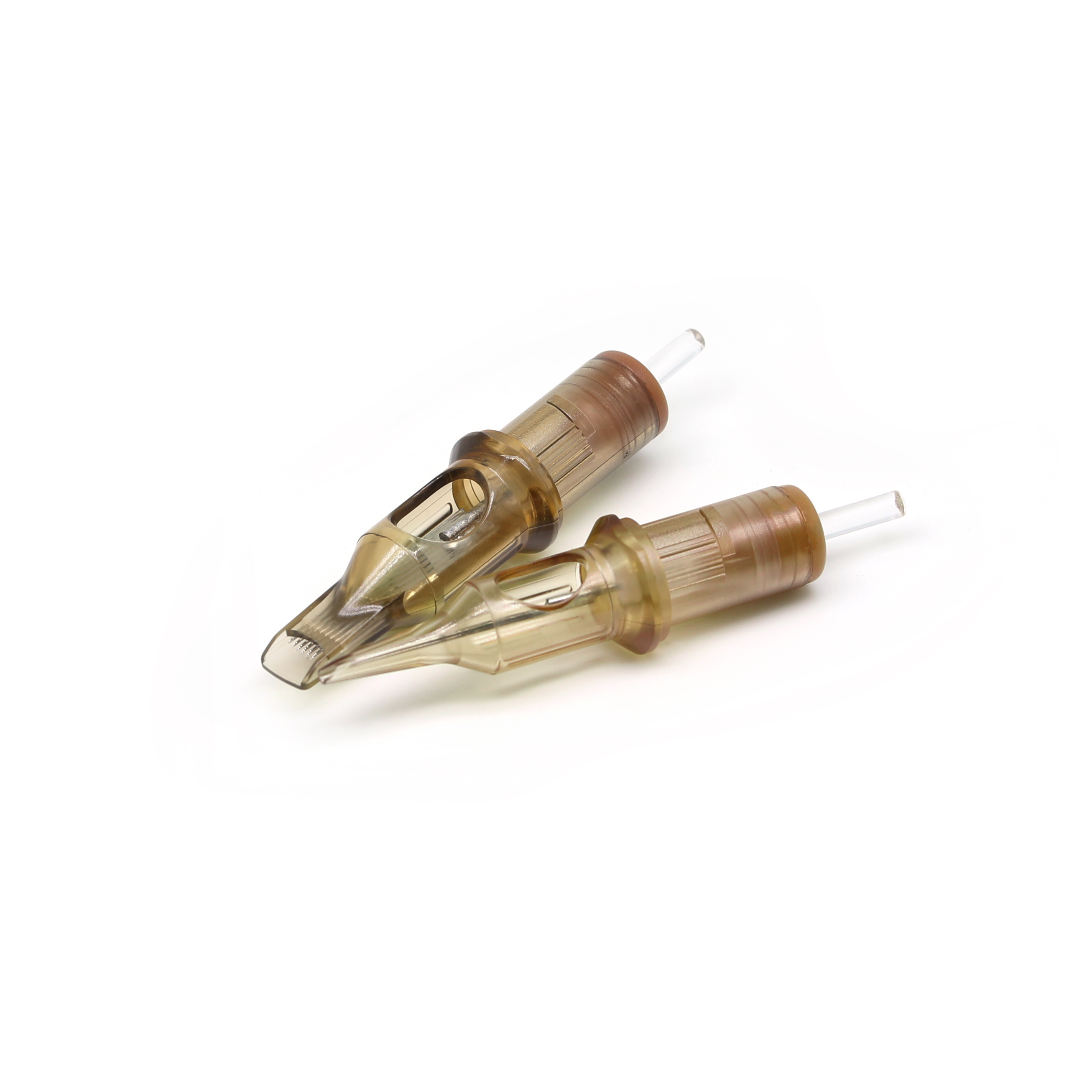
SP5, HM3, and HM6 are three SPACEDRAGON tattoo cartridge needle models built on one shared medical-grade platform: a medical-grade PC housing, medical-grade stainless steel needles, and a silicone anti-backflow membrane system. What separates them is documented positioning. SP5 is classified for Fine Line and Traditional work. HM3 is a Fine Line configuration supplied with a 0.15 mm needle diameter. HM6 is classified across Fine Line, Traditional, and Shading.
Because the housing, tip, membrane, and sterilization route are common to all three, the decision is not about which cartridge is “better”. It is about which needle geometry fits the line you draw, the machine you run, and the volume your studio, distribution business, or private-label brand consumes over a year. For buyers who are past evaluation and moving into execution, the practical goal is a compact, stable model set that can be reordered on the same specification for years.
Why three similar cartridge models become a real sourcing problem
Three cartridge models that all carry “fine line” in their description look interchangeable in a catalogue. On skin, they are not. Needle diameter, taper length, and configuration determine how much pigment a cartridge delivers per pass, how the needle behaves at the skin surface, and how quickly a session moves. When those three variables are not documented clearly, buyers fall back on habit — and habit is what produces mismatched model mixes.
There is a second layer to the problem. A cartridge that performs well in a sample test is only useful if the next order arrives with the same specification, the same EO sterilization cycle, and the same sterile barrier packaging. For that reason, model selection and supply continuity are one decision rather than two.
Four risks are commonly tracked in this category, and each one has a selection consequence:
- Contamination risk — addressed through EO gas sterilization, sterile breathable film packaging, and a cleanroom production environment. Ask a supplier to document the sterilization method, not only to claim sterility.
- Batch inconsistency risk — the reason a documented precision tolerance (±0.02–0.05 mm on the SP5 specification), 100% in-process inspection, and multi-stage QC checkpoints matter more than a single good sample.
- Supply chain fluctuation risk — reduced by long-term supplier qualification and standardized production lines, which protect the reorder cycle a working studio depends on.
- Counterfeit imitation risk — managed through batch traceability and packaging integrity; a sterile cartridge without traceable batch data cannot be verified after the fact.
The practical question is therefore not “which of the three is best”, but “which two or three belong in a program, at which diameters, and with which partner”.
Industry background: a cartridge-dominated market with rising documentation demands
The global tattoo needle market was estimated at USD 368.3 million in 2024 and is projected to reach USD 468.6 million by 2033, according to Custom Market Insights. Base-year estimates differ between research houses — other 2023 figures sit between roughly USD 278 million and USD 290 million — because reports segment the market differently. The direction is consistent; the decimals are not.
Within the product type segment, cartridges hold the largest share, a position attributed to their sterility and compatibility with modern rotary machines (Deep Market Insights). An industry survey reported by Elite Tattoo put cartridge preference among professional artists at approximately 73% in 2024 — a directional figure rather than a census, but consistent with what supply chains show: the cartridge is now the default professional format.
Documentation standards have moved at the same pace. ISO 13485:2016 is the quality management standard commonly required for medical-grade tattoo needles, covering design, production, sterilization, and traceability. Inside the European Union, tattoo needle cartridges must also comply with RoHS Directive 2011/65/EU, and manufacturers frequently follow EN IEC 63000:2018 when assessing hazardous substances.
Demand from adjacent categories matters to model selection as well. The permanent makeup market was valued at USD 162.09 million in 2025, with an 8.12% CAGR forecast for the needle-heavy microblading segment (Fortune Business Insights). That growth lands directly on the fine end of the diameter range, which is where a 0.15 mm configuration such as HM3 sits.
On the supply side, China’s exports of medical instruments — including needles — reached approximately USD 1.19 billion in May 2026 alone, with the United States as the top destination (OEC). For importers and distributors planning multi-year programs, that concentration is the context in which supplier and model decisions are made.
What SP5, HM3, and HM6 share
Before comparing the three models, it is worth being precise about the platform layer they share, because that layer is what makes a multi-model program workable:
- Materials: medical-grade PC housing and medical-grade stainless steel needles, with a non-toxic transparent plastic tip.
- Membrane system: a silicone anti-backflow membrane system (silicone elastic membrane) between the needle and the machine interface.
- Needle diameter range: 0.15 mm, 0.20 mm, 0.25 mm, 0.30 mm, and 0.35 mm.
- Taper range: 1.5 mm to 7 mm, with extra long taper available.
- Configurations: RL, RS, RM, Magnum, and Flat.
- Sterilization and packaging: EO gas sterilization with a sterile breathable film packaging system.
- Compatibility: rotary tattoo machines.
- Performance characteristics: low vibration design, a stable controlled ink delivery system, and a precision tolerance of ±0.02–0.05 mm documented on the SP5 specification.
Commercially, the shared layer changes the cost of complexity. A distributor who stocks SP5, HM3, and HM6 is adding needle geometry, not three unrelated systems: the interface, the membrane, the sterilization route, and the documentation format stay in the same family. That is what makes a three-model core set realistic for a studio trolley or a distribution catalogue — and it is also the reason the three models should be compared on geometry, not on brand feel.
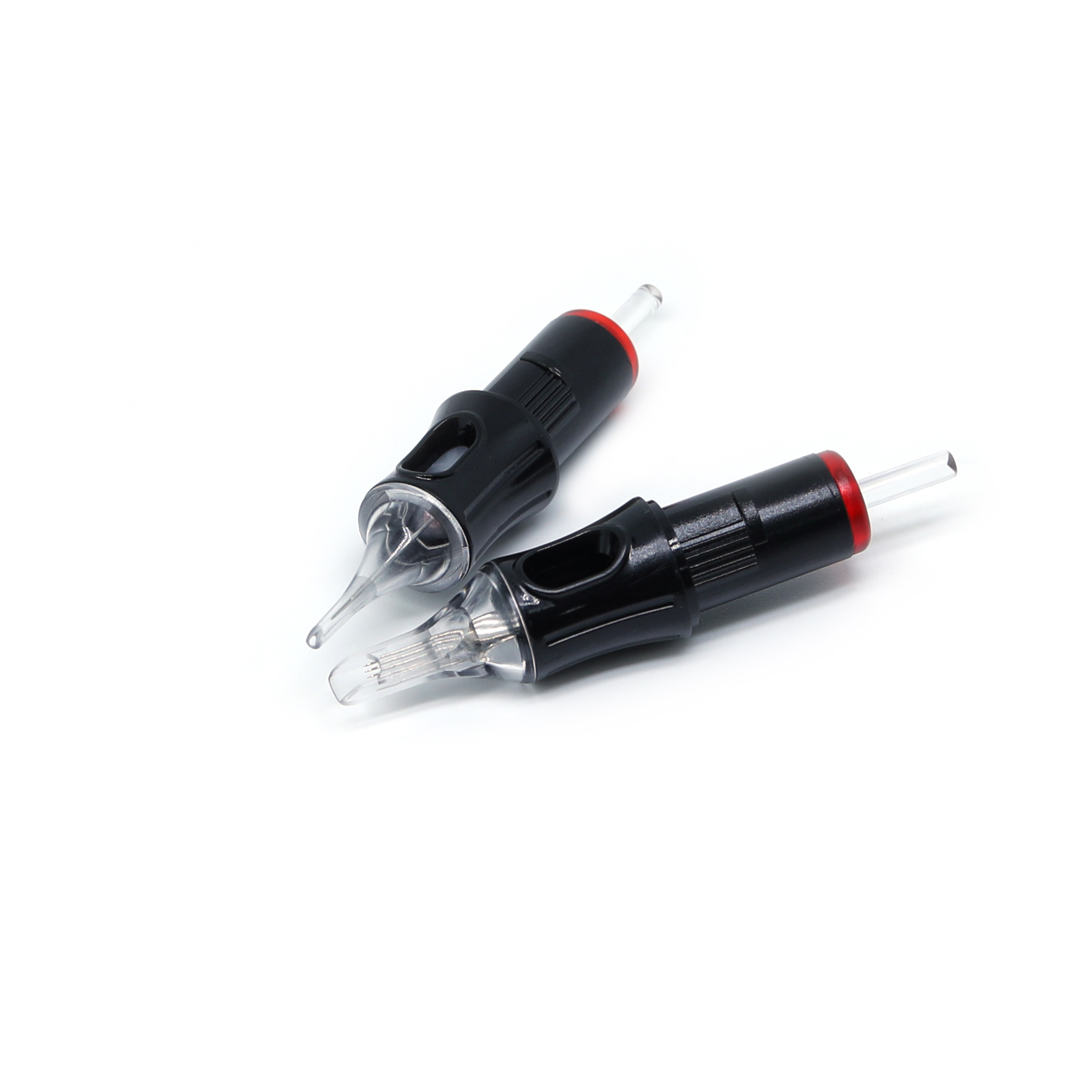
SP5 — Fine Line and Traditional
SP5 carries the broadest documented positioning of the three: Fine Line and Traditional. Its published specification additionally lists shading, color packing, PMU eyebrow, SMP scalp micropigmentation, long-taper precision, and soft edge magnum configurations within the same model. For a studio that mixes outlines with shading, or a distributor who wants one base SKU covering several work types, SP5 is the natural anchor.
HM3 — Fine Line at 0.15 mm
HM3 is a Fine Line configuration with a documented needle diameter of 0.15 mm, the fine end of the platform range. It is the specialist of the three. Where SP5 and HM6 are chosen to cover a working week, HM3 is chosen for work that depends on line weight: detail, edge work, and procedures where a heavier mark is a defect rather than a choice.
HM6 — Fine Line, Traditional, and Shading
HM6 is documented across three categories: Fine Line, Traditional, and Shading. That combination places it between the other two — a cartridge for studios whose week includes both lining and shading, and for distributors who want one model serving artists across those two disciplines without moving to a specialist configuration.
Step-by-step: how to choose between SP5, HM3, and HM6
The sequence below works for a single artist and for a purchasing team standardising a multi-studio account.
- Classify the work before the needle. List the procedures that will dominate the next twelve months — fine line detail, traditional lining, shading and color packing, PMU, or SMP. The model whose documented category matches the majority of that list becomes the base SKU. Where Fine Line and Traditional dominate, SP5 or HM6. Where fine-line detail dominates, HM3.
- Set the diameter. The platform spans 0.15 mm to 0.35 mm. In practice, narrower needles leave a finer mark and deliver less pigment per pass, while wider needles cover more area per movement. HM3 is documented at 0.15 mm; SP5 is specified across the 0.15–0.35 mm range with the taper and configuration options listed above.
- Match the taper to the work. Taper options run from 1.5 mm to 7 mm, with extra long taper available. Longer tapers are typically selected where flexibility and soft blending matter; shorter tapers where a firmer needle and denser pigment placement are wanted. Taper is independent of the model name, so it should be written onto every purchase order.
- Choose the configuration. RL and RS are round configurations used for lining and shading respectively; RM and Magnum configurations are used for broader coverage and packing; Flat configurations serve specific shading and fill techniques. The documented configuration set is the same across the platform — RL, RS, RM, Magnum, Flat — so configuration is a per-order decision, not a per-model limitation.
- Verify compatibility, sterilization, and documentation. Confirm rotary machine compatibility, EO gas sterilization, and sterile breathable film packaging, then request the paperwork: ISO 13485 certification for the quality management system, CE compliance documentation, and FDA test reports where they apply to the product. Buyers shipping into the EU should also confirm RoHS 2011/65/EU documentation, since hazardous substance rules apply to this product category.
- Validate the model with samples. A specification narrows the choice; hands confirm it. Test every candidate in the line weights and configurations you actually use, and check membrane behaviour under your own machine settings before standardising.
- Lock the SKU set and the reorder rhythm. Most studios and distributors settle on two or three models: a fine-line specialist, a generalist, and a shading or magnum-heavy model. Record the diameters and tapers in the reorder sheet, and define the documentation you expect with each batch — batch traceability, sterilization validation, and packaging integrity.
Use cases: where each model earns its place
- Fine-line and micro-detail studios. HM3’s documented 0.15 mm diameter addresses work where line weight is the product. Pairing it with SP5 fine line configurations keeps a session inside one documented platform instead of two suppliers and two documentation sets.
- Traditional lining and bold linework. SP5 and HM6 both carry Traditional positioning. A studio running classic lining alongside shading can standardise on HM6 for the mixed week and keep SP5 as the broader base cartridge.
- Shading, blending, and color packing. HM6 is documented under Shading, and SP5’s specification also lists shading and color packing configurations. Where a session moves from outline to fill, holding both models keeps the transition inside one platform.
- PMU and SMP procedures. SP5’s documentation includes PMU eyebrow and SMP scalp micropigmentation configurations. Studios running both a tattoo chair and a PMU room should note that the group also operates ESTLIA, a brand dedicated to PMU and SMP cartridges, so one supply relationship can cover both sides of the business.
- Distributors and e-commerce supply. A three-model core set — SP5, HM3, HM6 — covers fine line, traditional, and shading demand without a catalogue of overlapping SKUs. For a distributor, the value sits in the documentation: one consistent specification per SKU simplifies listings, compliance files, and reorder forecasting.
- OEM and private-label brands. Brands building their own cartridge line can use the same platform across the three models, with custom packaging and private-label programs, so the range stays coherent from the first SKU to the tenth.
SP5 vs HM3 vs HM6: side-by-side comparison
The table below lists only specification points that are documented for the platform or for the individual models. Where a figure is not separately documented for a model, it is stated as such rather than estimated.
| Attribute | SP5 | HM3 | HM6 |
|---|---|---|---|
| Documented category positioning | Fine Line; Traditional | Fine Line | Fine Line; Traditional; Shading |
| Documented needle diameter | 0.15 / 0.20 / 0.25 / 0.30 / 0.35 mm | 0.15 mm | Within the platform range of 0.15–0.35 mm |
| Taper length | 1.5–7 mm; extra long taper available | Shared platform options | Shared platform options |
| Configurations | RL / RS / RM / Magnum / Flat | Shared platform options | Shared platform options |
| Housing and needle material | Medical-grade PC housing; medical-grade stainless steel needles | Shared platform | Shared platform |
| Membrane | Silicone anti-backflow membrane system | Shared platform | Shared platform |
| Sterilization and packaging | EO gas sterilized; sterile breathable film packaging | Shared platform | Shared platform |
| Machine compatibility | Rotary tattoo machines | Shared platform | Shared platform |
| Additional configurations listed in the model specification | Shading; color packing; PMU eyebrow; SMP scalp micropigmentation; long taper precision; soft edge magnum | Not separately documented | Not separately documented |
Rows marked “shared platform” reflect specifications documented for the SP5, HM3, and HM6 family rather than model-exclusive figures. Model-specific figures are listed separately and are taken from published product documentation.
From model choice to a repeatable supply program
Selecting between SP5, HM3, and HM6 is a decision. Keeping all three available in the exact specification you approved is an execution problem. These are the commercial and quality terms to align before the first bulk order.
- Minimum order quantity. 500–1,000 pcs per size, with flexibility for OEM trial orders. A three-model core set can therefore be trialled size by size rather than as one large commitment.
- Payment structure. Standard orders: 30% deposit and 70% balance before shipment. OEM/ODM projects: 50% deposit and 50% balance before shipment. Samples and trial orders: 100% advance payment. Accepted methods include T/T, PayPal for samples, and Western Union.
- Delivery terms. FOB, CIF, or EXW.
- Acceptance and inspection. Pre-shipment inspection, batch sampling tests, and on-site factory inspection are available, and customer visits are accepted.
- Quality control. ISO 13485 quality management system, 100% in-process inspection, EO sterilization validation, incoming material inspection, automated production control with multi-stage QC checkpoints, and final visual inspection plus performance sampling tests.
- Traceability. Full batch traceability from raw material through production and sterilization to shipment, supported by a cleanroom production environment, medical-grade raw materials, standardized SOP manufacturing, and engineering validation for new designs.
- Continuity. Long-term supplier qualification and standardized production lines are the two measures that protect the reorder cycle against supply chain fluctuation.
Creditech Med (Suzhou Creditech Electronic Technology Co., Ltd.) manufactures the SPACEDRAGON cartridge range in Suzhou, China. The company has operated since 2009, employs 180 people including a 20-engineer R&D team, produces up to 100,000,000 units annually, and exports approximately 90% of its output to Europe, North America, South America, and Southeast Asia. Its quality system is ISO 13485 certified, its products are CE compliant, and FDA test reports are available for applicable products. Alongside the flagship SPACEDRAGON TATTOO brand, the group operates ESTLIA for PMU and SMP cartridges and LPT Tattoo Supply for studio consumables.



FAQ
Are SP5, HM3, and HM6 cartridges manufactured and sterilized to medical-grade requirements?
Yes. All three models are produced under an ISO 13485 certified quality management system, the standard commonly required for medical-grade tattoo needles. Each cartridge uses a medical-grade PC housing and medical-grade stainless steel needles, a silicone anti-backflow membrane system, and EO gas sterilization, and each is supplied in a sterile breathable film packaging system. Creditech Med also states CE compliant products and FDA test reports available for applicable products, and maintains full batch traceability from raw material through production and sterilization to shipment. Buyers placing cartridges on the EU market should additionally confirm RoHS Directive 2011/65/EU documentation, since hazardous substance rules apply to this product category.
How do I decide between SP5, HM3, and HM6 for daily studio work?
Start with the documented categories rather than with price or habit. SP5 is positioned for Fine Line and Traditional work, and its specification also lists shading, color packing, PMU eyebrow, SMP scalp micropigmentation, long taper precision, and soft edge magnum configurations. HM3 is a Fine Line configuration with a 0.15 mm needle diameter, the fine end of the platform’s 0.15–0.35 mm range. HM6 covers Fine Line, Traditional, and Shading. In practice, studios whose work is dominated by fine detail standardise on HM3, studios mixing lining and shading use HM6 or SP5, and buyers who need one base cartridge across several work types start with SP5. Diameter, taper (1.5–7 mm, extra long available), and configuration (RL, RS, RM, Magnum, Flat) are then specified per order.
What should I look for in a long-term tattoo cartridge needle supply partner in China?
For a long-term program, four things matter more than the unit price on a first order: a certified quality system, documented specifications that do not drift between batches, traceability, and production stability. Concretely, look for an ISO 13485 certified quality management system, EO sterilization validation, full batch traceability from raw material to shipment, long-term supplier qualification, and standardized production lines that protect supply continuity. Creditech Med operates this structure in Suzhou and exports approximately 90% of its output to Europe, North America, South America, and Southeast Asia, with OEM and ODM services covering product development, structural design, prototyping, mass production, and customized packaging. Pre-shipment inspection, batch sampling, and on-site factory visits are all accepted, which lets buyers verify a program rather than rely on a claim.
What determines the cost of an SP5, HM3, or HM6 order?
Cost is driven by the specification mix rather than by the model name alone: needle diameter, taper length, configuration, packaging format, sterilization batch, and order quantity. MOQ is 500–1,000 pcs per size, with flexibility for OEM trial orders, so a three-model trial does not require a full container commitment. Payment terms are 30% deposit and 70% balance before shipment for standard orders, 50%/50% for OEM/ODM projects, and 100% advance payment for samples and trial orders; delivery is available FOB, CIF, or EXW. Buying factory-direct removes intermediary layers from the pricing structure, which is usually where the largest differences sit.
Can we test SP5, HM3, and HM6 before committing to a supply program?
Yes, and it is the sensible order of operations. Samples and trial orders are available (100% advance payment, with PayPal accepted for samples), and MOQ is flexible for OEM trial orders, so each model can be evaluated in the diameters and configurations your work actually uses. After testing, buyers can request pre-shipment inspection, batch sampling tests, or an on-site factory inspection before committing to a bulk schedule. To start a sample evaluation for SP5, HM3, or HM6, contact the Creditech Med team at estlia@creditechmed.com or on WhatsApp at +86 18625276381, or review the full range at creditechmed.com.
Conclusion
SP5, HM3, and HM6 are not three answers to the same question. SP5 is the broad base — Fine Line and Traditional, with shading, color packing, PMU eyebrow, SMP, long-taper precision, and soft edge magnum configurations in its specification. HM3 is the fine specialist at a documented 0.15 mm diameter. HM6 is the mixed-week model, covering Fine Line, Traditional, and Shading. All three share a medical-grade PC housing, medical-grade stainless steel needles, a silicone anti-backflow membrane, 0.15–0.35 mm diameters, 1.5–7 mm tapers with extra long available, RL/RS/RM/Magnum/Flat configurations, and EO gas sterilization in sterile breathable film packaging.
The right way to choose is to work backwards from your procedure mix, set diameter and taper per order, verify documentation before standardising, and test samples before committing volume. The value of that sequence is not limited to the first order. It lies in being able to reorder the same specification, from the same certified process, with the same traceability, for as long as your studio or catalogue depends on it.

Next step: sample SP5, HM3, and HM6
If you are selecting a base cartridge for a studio, a distribution catalogue, or a private-label range, the fastest way to close the decision is a sample evaluation of all three models in your own diameters and configurations. Share your procedure mix and target specifications, and the team will confirm MOQ, payment terms, and inspection arrangements for your first trial order.
Contact: Yosmine · Email: estlia@creditechmed.com · WhatsApp / Phone: +86 18625276381
Website: creditechmed.com
Address: 3rd Floor, Building 3, No. 3000 Taidong Road, Xiangcheng District, Suzhou, China
Company brochure (download): Creditech Med corporate brochure
Source note: market, regulatory, and trade figures in this article are attributed to Custom Market Insights, Deep Market Insights, ISO, the European Commission, Fortune Business Insights, the OEC, and an industry survey reported by Elite Tattoo. Product specifications are drawn from Creditech Med product documentation. Directional market figures should be read as category context, not as forecasts of your own volumes.