Tattoo Cartridge Needle Compliance by Region: FDA 21CFR, CE MDR, RoHS 2.0 & MSDS Explained
Tattoo Cartridge Needle Compliance by Region: FDA 21CFR, CE MDR, RoHS 2.0 & MSDS Explained
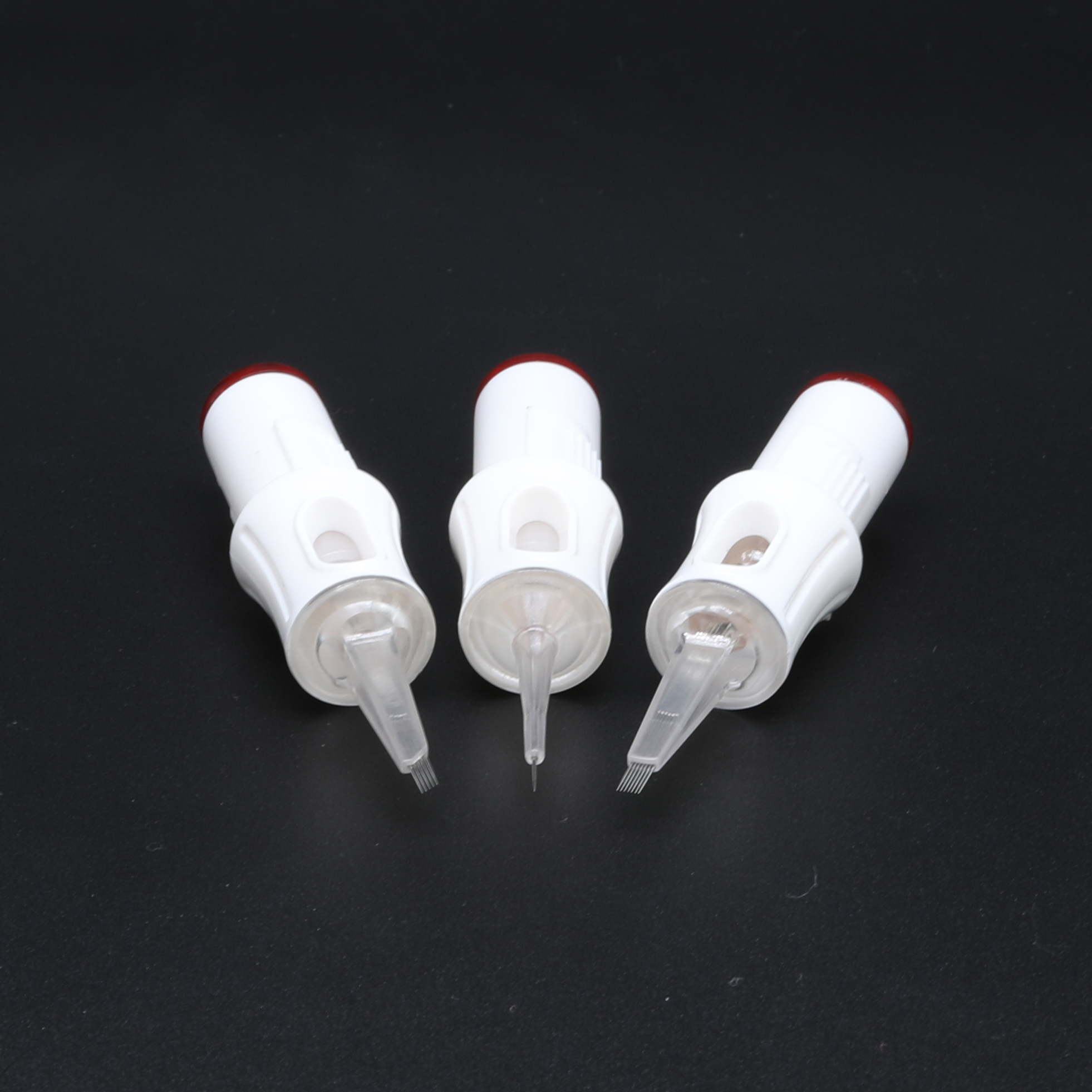
A tattoo cartridge needle that clears one market's documentation requirement does not automatically clear another's. A shipment entering the United States is normally accompanied by an FDA testing report. The same product entering the European Union is normally expected to carry a CE MDR certificate and, separately, a RoHS 2.0 certificate. On top of both, an MSDS is routinely requested by logistics partners, customs brokers and private-label brand owners.
The difficulty is rarely that these documents are hard to obtain. It is that they are usually presented as one undifferentiated "we are certified" bundle. FDA, CE MDR, RoHS 2.0 and MSDS answer four different questions, apply to different markets, and are issued against defined scopes. Treating them as interchangeable is where sourcing risk begins.
- United States: an FDA testing report referencing FDA 21 CFR 175.300, FDA 21 CFR 180.22 and ASTM C738-94.
- European Union: a CE MDR (EU) 2017/745 certificate — certificate no. ICR Polska/DR/HM2311112, issued by ICR Polska Co. Ltd.
- European Union (substances): a RoHS 2.0 certificate — certificate no. TST2019112501-3RC.
- Global market: an MSDS — certificate no. BCTC2305199480R.
Why "We Are Certified" Is Not a Compliance Answer
Compliance documents are not certificates of quality in the abstract. Each one is a statement about a specific product, made against a specific standard, by a specific body, for a specific market. When a supplier answers a documentation request with a single PDF, the buyer still has to establish four things: what the document covers, where it applies, who issued it, and which product version it was issued for.
In practice, four failure modes account for most compliance problems in tattoo cartridge needle sourcing:
- Scope mismatch. The buyer receives a certificate but never checks which material, component or model range it actually covers. A document issued for a housing material is not automatically a document for the finished sterile cartridge.
- Region mismatch. A US material-safety report is used to support a European claim, or a European hazardous-substance certificate is offered as evidence of medical-device conformity. Neither substitution is valid.
- Issuer mismatch. The buyer does not confirm which organization issued the certificate and whether that organization is the appropriate one for the scope being claimed.
- Product mismatch. The certificate was issued against one configuration, while the purchase order specifies a different needle diameter, taper length or housing.
For a distributor, these failures surface late — at customs, at a trade audit, or when a studio customer asks a direct question the distributor cannot answer. For that reason, the practical goal is not "collect certificates." It is "hold a documented, region-mapped file that matches the goods actually shipped."
Industry Background: Compliance Has Become a Purchasing Gate
Cartridge needles are now the dominant product type in the tattoo needle category. Tattoo needle cartridges hold the largest market share in the product type segment, a position attributed to their sterility and their compatibility with modern rotary machines, according to Deep Market Insights.
The category itself continues to expand. Custom Market Insights estimates the global tattoo needle market at USD 368.3 million in 2024, projected to reach USD 468.6 million by 2033. On the adjacent permanent makeup side, Fortune Business Insights valued the PMU market at USD 162.09 million in 2025, with an 8.12% CAGR forecast for the needle-heavy microblading segment.
Alongside market growth, two regulatory anchors shape what suppliers must be able to document. Medical-grade tattoo needles require ISO 13485 certification for quality management systems, which is the standard that governs safety and consistency in manufacturing (ISO). On the substances side, tattoo needle cartridges sold in the EU must comply with RoHS Directive 2011/65/EU and often follow EN IEC 63000:2018 for hazardous substance assessment (European Commission).
Suzhou Creditech Electronic Technology Co., Ltd. (export brand: CREDITECH MED) is a manufacturer established in 2009 in Suzhou, China, that designs and produces tattoo cartridge needles and PMU cartridges under its own brands, including SPACEDRAGON TATTOO, ESTLIA and LPT Tattoo Supply. The company operates an ISO 13485 certified quality management system, a 3,000 m² manufacturing facility with a 20-engineer R&D team, and reports an annual production capacity of 100,000,000 units, with exports accounting for 90% of sales across Europe, North America, South America and Southeast Asia. Its documentation file is used below as a working example of how the four document types divide up.
Region-by-Region: What Each Certification Actually Covers
1. United States — the FDA Testing Report (21 CFR 175.300, 21 CFR 180.22, ASTM C738-94)
For the US market, the relevant document is an FDA testing report. It is a test-based document rather than a market authorization, and it is only meaningful when the buyer reads which frameworks the report references. In the CREDITECH MED file, the FDA testing report references three frameworks:
- FDA 21 CFR 175.300 — the US provision addressing resinous and polymeric coatings. For a tattoo cartridge needle, this is the framework under which polymeric components such as the housing material are assessed.
- FDA 21 CFR 180.22 — the US provision addressing acrylonitrile copolymers, relevant to the polymer family used in molded cartridge components.
- ASTM C738-94 — a standardized extraction test method for lead and cadmium.
What the buyer should take from this: the report is a material-safety document. It supports a claim about the substances and polymers used in the product. It does not state that the cartridge is a US-approved medical device, and it should not be presented as one. When a distributor asks a supplier for "the FDA certificate," the accurate answer is a testing report with named references — and the references should match the product being shipped.
2. European Union — CE MDR (EU) 2017/745, Certificate No. ICR Polska/DR/HM2311112
For the EU market, the leading document in the file is a CE MDR certificate issued under Regulation (EU) 2017/745, the EU regulation governing medical devices. The certificate reference is no. ICR Polska/DR/HM2311112, and the body named as issuer is ICR Polska Co. Ltd.
Three verification points matter here more than the existence of the PDF itself:
- Regulation reference. Confirm that the certificate states (EU) 2017/745 and not an earlier directive. A document referencing a superseded framework does not support a current EU claim.
- Issuing body. Confirm the organization named as issuer matches the organization that actually appears on the certificate, and record the full reference number exactly as printed.
- Scope statement. Confirm which product family, which manufacturing site and which annex or classification the certificate covers.
3. European Union — RoHS 2.0, Certificate No. TST2019112501-3RC
RoHS 2.0 is a separate EU framework from the medical device regulation, and this is the single most common point of confusion in EU-facing documentation. The certificate in the CREDITECH MED file carries reference no. TST2019112501-3RC and addresses restriction of hazardous substances.
The regulatory background is RoHS Directive 2011/65/EU, under which tattoo needle cartridges sold in the EU must comply, and which is frequently supported by EN IEC 63000:2018 for hazardous substance assessment (European Commission). In practice, the RoHS document supports a claim about what the product does not contain — it is a substances declaration, not a safety or performance approval.
Because MDR and RoHS address different obligations, a buyer preparing an EU launch should request both. A CE MDR certificate will not answer a substances question, and a RoHS certificate will not answer a device conformity question.
4. Global Market — MSDS, Certificate No. BCTC2305199480R
The MSDS in the file — reference no. BCTC2305199480R — applies to the global market rather than to a single jurisdiction. An MSDS (material safety data sheet) documents composition, handling, storage and transport information for the product. It is the document that logistics partners, freight forwarders and customs brokers typically ask for, and it is the one most often requested when a shipment crosses a market where no single regional scheme applies.
The important limitation is that an MSDS is not an approval. It is an information document. A buyer should treat it as the handling and transport layer of the file, not as evidence of market authorization in any region.
5. Why the Product Construction Behind the Documents Matters
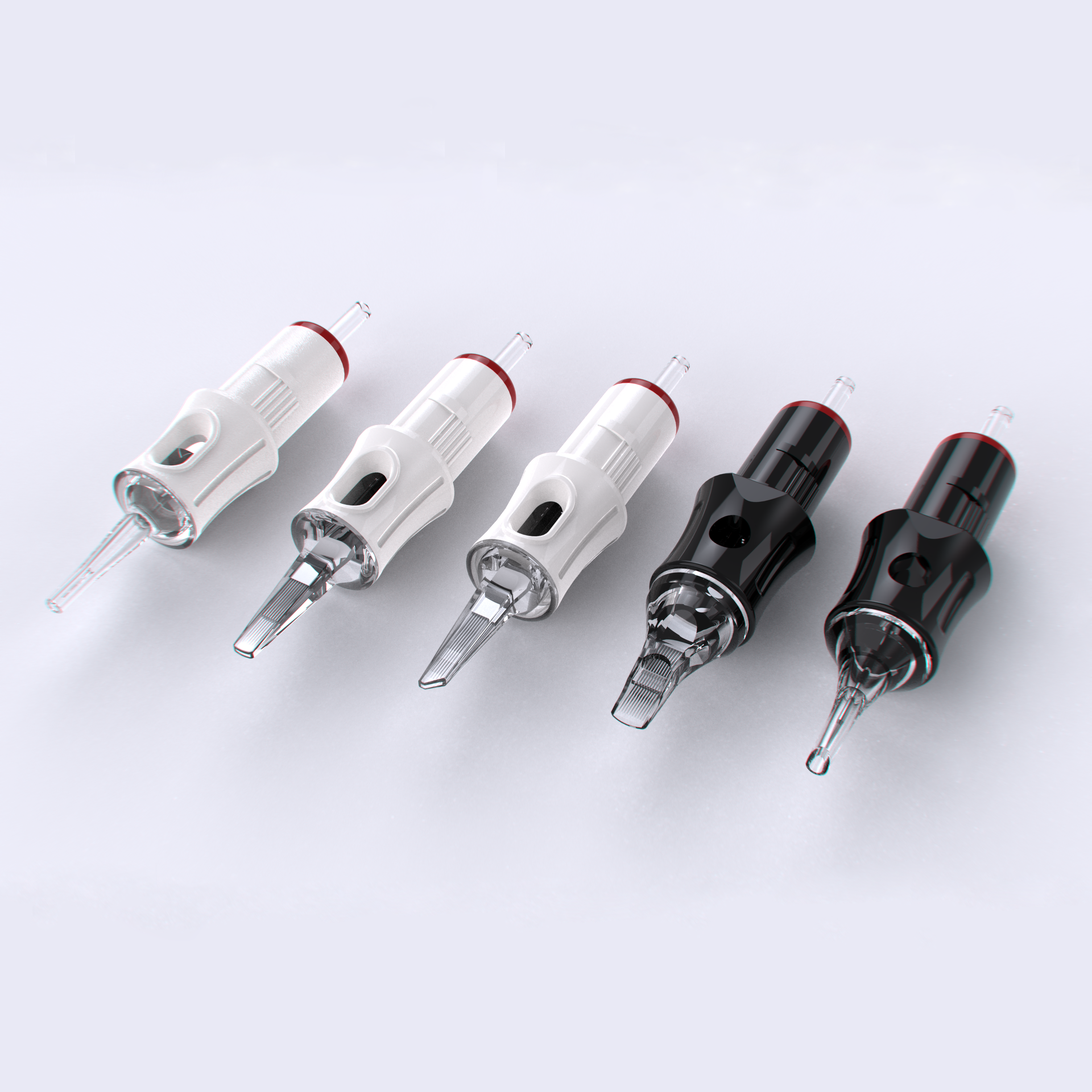
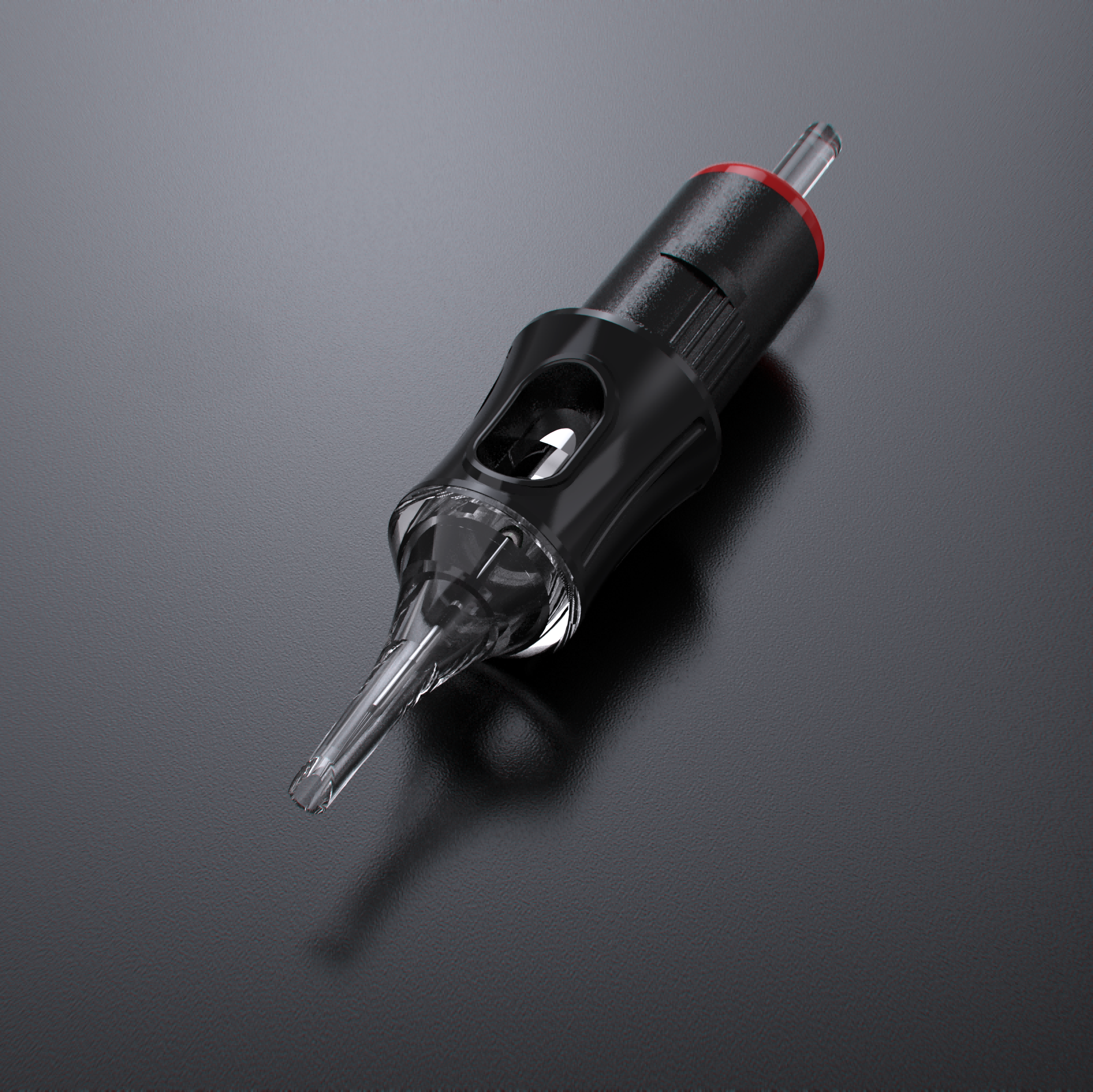
Compliance documents describe something. If the buyer does not also verify the product construction the documents were issued against, the file is only half complete. For the CREDITECH MED cartridge range, the documented construction and specifications are as follows.
| Specification | Documented value |
|---|---|
| Models | SP5, SP4, SP6, HM3, HM6 |
| Needle diameter | 0.15 mm / 0.20 mm / 0.25 mm / 0.30 mm / 0.35 mm |
| Taper length | 1.5 mm – 7 mm (extra long taper available) |
| Configuration | RL / RS / RM / Magnum / Flat |
| Needle material | Medical-grade stainless steel needles |
| Housing material | Medical-grade PC housing |
| Membrane system | Silicone anti-backflow membrane |
| Sterilization | EO gas sterilized |
| Packaging | Sterile breathable film packaging system |
| Precision tolerance | ±0.02–0.05 mm |
| Compatibility | Compatible with rotary tattoo machines |
| Use | Single use |
Two of these points connect directly back to the paperwork. First, EO gas sterilization is the sterilization method the sterile claim depends on, and the sterile breathable film packaging system is the packaging format specified for it — breathable films are used with EO cycles because the sterilant gas must be able to enter the pack and be vented afterwards. Second, the material declarations in the FDA testing report and the RoHS certificate relate to the medical-grade stainless steel needles and the medical-grade PC housing listed above. Change either material and the supporting documents must be checked again.
Step-by-Step: How to Verify Documentation Before You Order
The workflow below is what a distributor or private-label buyer can run before releasing a purchase order. It takes the four document types and turns them into a repeatable check.
- Define the destination markets first. Write down every country the goods will be sold or shipped into. A US-only order and an EU-facing order need different files, and an order that covers both needs all four documents.
- Request a document list, not a single certificate. Ask the supplier to list every document available for the specific model, with the reference number for each. For the CREDITECH MED range, that list includes the FDA testing report under FDA 21 CFR 175.300, FDA 21 CFR 180.22 and ASTM C738-94; the CE MDR (EU) 2017/745 certificate no. ICR Polska/DR/HM2311112; the RoHS 2.0 certificate no. TST2019112501-3RC; and the MSDS no. BCTC2305199480R.
- Match each document to the exact model. Compare the model on the certificate with the model on the order — SP5, SP4, SP6, HM3 and HM6 are separate configurations, and a document issued for one is not automatically valid for another.
- Verify the issuing organization and the reference number. Record the issuer and reference exactly as printed. For the EU file, the CE MDR certificate is issued by ICR Polska Co. Ltd. under reference ICR Polska/DR/HM2311112.
- Cross-check sterilization and packaging claims. Confirm that what the supplier states about EO gas sterilization and sterile breathable film packaging matches what appears in the product specification you were quoted.
- Confirm material declarations. Ensure the material descriptions used in the FDA report and the RoHS certificate — medical-grade stainless steel needles and medical-grade PC housing — are the materials actually specified for your order.
- Version-control the file. Date every document you receive and re-request the file when the model, the material or the certificate validity period changes. A compliance file is a living record, not a one-time download.

Use Cases: Who Needs Which Document
The same certificate set is requested differently depending on who is buying.
- Importers and distributors. Typically need the full regional file: the FDA testing report for US-bound stock, and the CE MDR plus RoHS 2.0 certificates for EU-bound stock. The MSDS is added for freight and customs. Distributors also re-use these documents when their own studio customers ask for proof, so the file should be retained in an easily re-shareable form.
- Private-label and OEM brand owners. Need the documents mapped to the exact configuration being produced, because a private-label program often changes packaging, branding and sometimes housing colour. Any change of that kind should trigger a check on whether the existing certificates still describe the product accurately.
- PMU and SMP studios. Usually ask a narrower question: is the cartridge sterile, single-use, and made from medical-grade materials? The answer sits in the sterilization and material facts, and the RoHS and MSDS documents support the substances and handling side of that answer.
- Professional tattoo studios. Rarely request certificates directly, but increasingly ask their distributor for material and sterility confirmation. A distributor holding a region-mapped file can answer in one message instead of escalating to the factory.
- E-commerce sellers. Need documentation that can be summarised into a product listing without overstating it. The safe framing is to name the document and what it covers, rather than describing a testing report as an approval.
Compliance Comparison Table by Region
The table below maps each document to the market it applies to and the question it answers. Certificate references are stated exactly as issued.
| Market | Document to request | Reference / certificate no. | What it covers | Issuing or reference body |
|---|---|---|---|---|
| United States | FDA testing report | FDA 21 CFR 175.300; FDA 21 CFR 180.22; ASTM C738-94 | Material-safety testing of resinous and polymeric coatings and acrylonitrile copolymers, plus a standardized extraction test for lead and cadmium | US federal regulation references and ASTM test method named in the report |
| European Union | CE MDR certificate | CE MDR (EU) 2017/745 — no. ICR Polska/DR/HM2311112 | Conformity documentation issued under the EU medical device regulation | ICR Polska Co. Ltd. |
| European Union | RoHS 2.0 certificate | No. TST2019112501-3RC | Restriction of hazardous substances, aligned with RoHS Directive 2011/65/EU | Confirm the named issuer on the issued document |
| Global | MSDS | No. BCTC2305199480R | Material safety data covering composition, handling, storage and transport information | Confirm the named issuer on the issued document |

FAQ
For the United States, request an FDA testing report referencing FDA 21 CFR 175.300, FDA 21 CFR 180.22 and ASTM C738-94. For the European Union, request a CE MDR (EU) 2017/745 certificate — for example certificate no. ICR Polska/DR/HM2311112 issued by ICR Polska Co. Ltd. — together with a RoHS 2.0 certificate such as no. TST2019112501-3RC. For logistics, handling and cross-border shipping documentation, request an MSDS such as no. BCTC2305199480R. The four documents serve different purposes and a complete file contains the ones that match your destination markets.
No. CE MDR (EU) 2017/745 and RoHS 2.0 are separate EU frameworks. The MDR certificate addresses conformity documentation under the medical device regulation, while the RoHS certificate addresses restriction of hazardous substances, aligned with RoHS Directive 2011/65/EU, which tattoo needle cartridges in the EU must comply with. Because the two documents answer different questions, EU-facing buyers generally need both, and should confirm the scope and the named issuer printed on each one.
Yes, provided the documents are re-checked against the customized configuration. Suzhou Creditech Electronic Technology Co., Ltd. (CREDITECH MED) operates an ISO 13485 certified quality management system and provides OEM and ODM services covering product development, structural design, prototyping, mass production and customized packaging, alongside its FDA testing report, CE MDR and RoHS certificates, and MSDS. Because a customized program can change packaging or housing specification, buyers should confirm which document covers which configuration before production starts.
Check the facts the documents describe. Confirm the needle material (medical-grade stainless steel), the housing (medical-grade PC), the silicone anti-backflow membrane, the stated precision tolerance of ±0.02–0.05 mm, and the sterilization and packaging claims (EO gas sterilized, sterile breathable film packaging, single use). Then match those facts against the model on the certificate — SP5, SP4, SP6, HM3 and HM6 are distinct configurations, and a document issued for one model is not automatically valid for another. Request the sample and the matching certificate reference together rather than separately.
Shortlist on documented evidence rather than on catalogue claims. Ask each candidate supplier for a document list per model, with reference numbers, issuing organizations and applicable markets; then check whether the sterilization method, materials and packaging in the specification match what those documents describe. A supplier that can name its certificate references and explain which market each one applies to is easier to audit than one that answers with a general certification statement. Buyers who want to start with a physical check can request a sample set and the corresponding document file from CREDITECH MED, whose export markets include Europe, North America, South America and Southeast Asia.
Conclusion: Build the File Around the Destination, Not Around the Product
Tattoo cartridge needle compliance is not a single status — it is a mapping exercise. The product stays the same: medical-grade stainless steel needles in a medical-grade PC housing, with a silicone anti-backflow membrane, EO gas sterilized and packed in sterile breathable film. What changes is which document a market expects to see.
For the United States, that document is an FDA testing report referencing FDA 21 CFR 175.300, FDA 21 CFR 180.22 and ASTM C738-94. For the European Union, it is a CE MDR (EU) 2017/745 certificate — no. ICR Polska/DR/HM2311112, issued by ICR Polska Co. Ltd. — supported by a RoHS 2.0 certificate no. TST2019112501-3RC. For global movement, it is an MSDS no. BCTC2305199480R.
Buyers who keep those four documents separated, version-controlled and matched to the exact model they order will spend far less time resolving questions later — at customs, in a trade audit, or in front of a studio customer who simply wants to know what is in the cartridge.
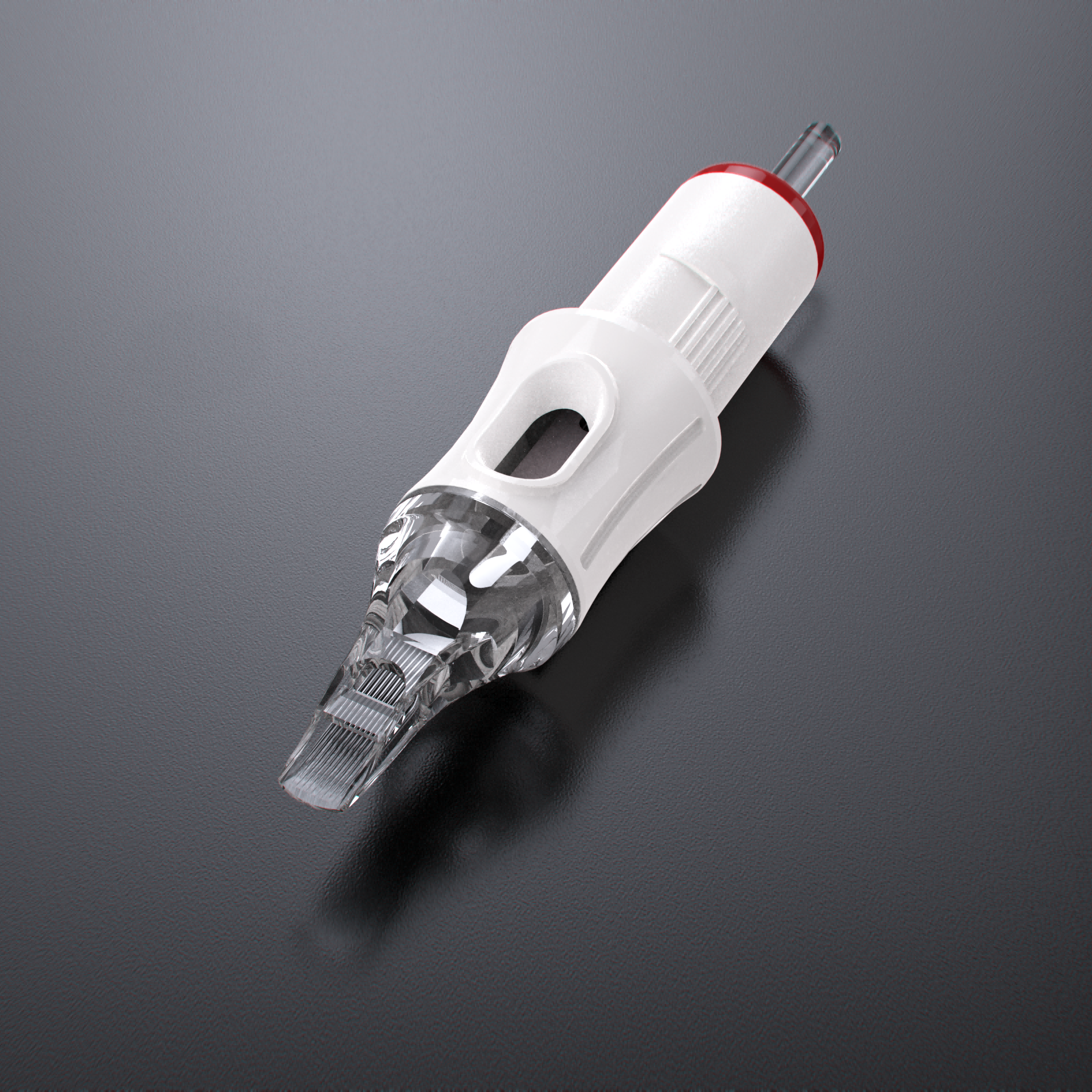
Request the Documentation File or a Sample Set
CREDITECH MED supplies tattoo cartridge needles, PMU cartridges and membrane cartridges to distributors, private-label brands and studios across Europe, North America, South America and Southeast Asia. Ask for the FDA testing report, CE MDR certificate, RoHS 2.0 certificate and MSDS for the specific model you are evaluating, together with a sample.
Email: estlia@creditechmed.com · Phone / WhatsApp: +86 18625276381
Address: 3rd Floor, Building 3, No. 3000 Taidong Road, Xiangcheng District, Suzhou, China
Download the company brochure: CREDITECH MED Company Brochure
Have Questions or Need More Details?
Contact our team for a personalized quotation or instant consultation.
Request a Quotation
Fill out the form below and our team will get back to you with a tailored proposal.
WhatsApp Direct Chat
Prefer to chat in real-time? Message us on WhatsApp for instant assistance & quick answers.
- Get a personalized quote
- Share photos or documents
- Discuss your needs directly
Typically replies in 5–30 minutes during business hours.