
What Is a Tattoo Cartridge Needle? Exploring the Medical-Grade Evolution of Tattoo Tools
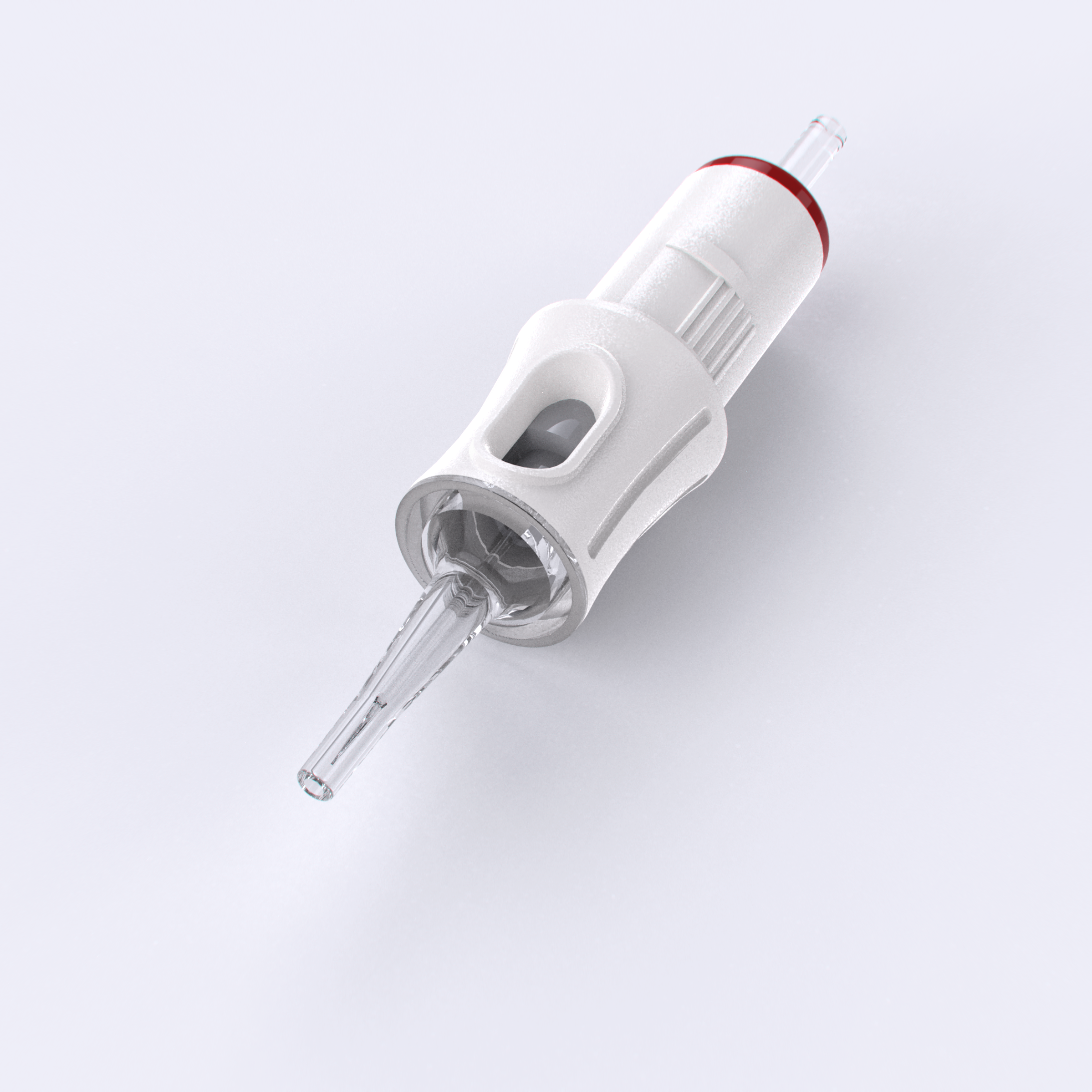
A tattoo cartridge needle is a pre-assembled, single-use needle unit that combines the needle group, a medical-grade PC housing, a silicone anti-backflow membrane, and a transparent tip inside one sealed, sterile package. The cartridge connects to the grip of a rotary tattoo machine, so the artist works with a factory-assembled needle instead of building one by hand before every session.
Understanding what a cartridge needle actually is matters before comparing brands, prices, or suppliers. The difference between a cartridge that performs consistently and one that leaks, wobbles, or clogs is rarely marketing — it is material selection, dimensional tolerance, membrane design, and sterilization method.
This article covers the fundamentals: how a cartridge needle is constructed, what a medical-grade PC housing and stainless steel needles actually contribute, how the silicone anti-backflow membrane functions, and why the shift toward EO gas sterilization and sterile packaging became the defining innovation of modern tattoo tools. It is written for artists transitioning into cartridges, PMU and SMP practitioners, and buyers evaluating a manufacturer such as Suzhou Creditech Electronic Technology Co., Ltd., a tattoo cartridge needle and PMU cartridge manufacturer based in Suzhou, China, operating since 2009.
What Problem Does a Tattoo Cartridge Needle Solve?
The short answer: the cartridge moves sterility, dimensional consistency, and setup reliability out of the studio and into a controlled production environment. It was not introduced to look modern — it was introduced to remove variables from a procedure where variables are expensive.
- Sterility is decided in the factory, not the studio. A sealed cartridge is sterilized and packaged as a finished unit. The artist opens one pack, uses one needle setup, and disposes of it — no reassembly, no re-sterilization cycle, no judgement call about whether a needle was handled correctly.
- Assembly variability disappears. Because the needle group, housing, and tip are assembled and inspected in production, the needle geometry does not depend on how tightly a bar was fitted that morning. Creditech cartridges are manufactured to a precision tolerance of ±0.02–0.05 mm.
- Fluid backflow risk is reduced. The silicone anti-backflow membrane sits between the needle side and the machine interface, acting as a barrier against ink and fluid travelling back toward the grip.
- Setup time drops. Compatibility with rotary tattoo machines means the cartridge is fitted to the grip directly rather than assembled needle-by-needle.
- Ink behavior becomes repeatable. A stable controlled ink delivery system and a low vibration design mean the same cartridge configuration behaves the same way across a session and across a batch.
Industry Background: Why Cartridges Became the Standard
The cartridge format did not win by preference alone — it won alongside a measurable shift in the tattoo and permanent makeup supply market.
Custom Market Insights estimated the global tattoo needle market at USD 368.3 million in 2024, projected to reach USD 468.6 million by 2033. Within the product type segment, tattoo needle cartridges hold the largest market share, driven by their sterility and compatibility with modern rotary machines (Deep Market Insights).
Adoption data points in the same direction. In 2024, an industry survey reported by Elite Tattoo found that approximately 73% of professional tattoo artists preferred needle cartridges over traditional bar needles, citing ease of use and safety. The preference is practical rather than aesthetic: fewer handling steps, fewer opportunities for contamination, faster changeover between configurations.
The demand base has also broadened beyond traditional tattooing. Fortune Business Insights valued the permanent makeup market at USD 162.09 million in 2025, with an 8.12% CAGR forecast for the needle-heavy microblading segment — a segment that consumes fine-gauge cartridges for eyebrow, lip, and eyeliner procedures. On the supply side, China's exports of medical instruments, including needles, reached approximately USD 1.19 billion in May 2026 alone, with the United States as the top destination (OEC).
Two regulatory anchors frame the medical-grade claim. ISO 13485:2016 is the recognized Quality Management Systems standard for medical device manufacturing and is what buyers should look for when a supplier describes needles as medical-grade. In the EU, tattoo needle cartridges must comply with RoHS Directive 2011/65/EU, with hazardous substance assessment often following EN IEC 63000:2018.
Market reporting identifies established names among key players in this space, including Dragonhawk, Kwadron, Bishop Rotary, Cheyenne, and EZ Tattoo Supply (CMI). Alongside these brands, contract manufacturers supply the private-label and distributor layer of the market — the layer that most buyers actually purchase from.
Inside a Medical-Grade Tattoo Cartridge Needle
A cartridge is a small assembly, but every visible part has a defined job. The specification below reflects Creditech's tattoo cartridge needle construction, which is shared across its cartridge series, including the SP5, SP6, SP4, HM3, and HM6 models.
Medical-Grade PC Housing
The housing is the structural body of the cartridge. It is molded from medical-grade PC and performs three functions at once: it holds the needle group in alignment, it provides the mechanical interface that locks into the machine grip, and it protects the needle assembly from handling contact before and during use. Because the housing is the part that touches the grip, its dimensional stability directly affects how the cartridge seats and how much movement the artist feels at the tip. Creditech cartridge needles are specified as compatible with rotary tattoo machines.
Medical-Grade Stainless Steel Needles
The needles themselves are medical-grade stainless steel, supplied in five diameters: 0.15 mm, 0.20 mm, 0.25 mm, 0.30 mm, and 0.35 mm. Taper length ranges from 1.5 mm to 7 mm, with extra long taper available, and the whole assembly is held to a precision tolerance of ±0.02–0.05 mm.
For buyers, those three numbers are the practical definition of choice. Diameter and taper determine how the needle behaves at skin level; tolerance determines whether the cartridge you receive in month six matches the sample you approved in month one. A cartridge program that cannot hold tolerance is a cartridge program that will produce complaints, not repeat orders.

The Silicone Anti-Backflow Membrane
The silicone elastic membrane is the component most often taken for granted and most often missed when it is absent. It sits inside the housing as an anti-backflow barrier, separating the working needle side from the machine-facing side of the cartridge.
Functionally, the membrane limits the path available to ink and fluid during a session. In a cartridge without an effective membrane, fluid has a more direct route back through the housing toward the grip and machine interface — an outcome that is difficult to reverse once it happens and unwanted in both tattoo and PMU environments. The membrane is also elastic, which means it does not interfere with the needle stroke it is meant to seal around.
For PMU and SMP work, where fine-gauge needles and low pigment volumes are routine, this matters more, not less. The finer the needle and the smaller the ink volume, the more sensitive the setup is to any disturbance in the fluid path.
Transparent Tip, Ink Flow, and Vibration
The tip is a non-toxic transparent plastic component. Transparency is not decorative: it allows the artist to observe ink behavior at the tip without disassembling anything, which shortens the diagnostic loop when pigment is not flowing as expected.
Behind the tip, two performance characteristics shape daily use:
- Stable controlled ink delivery system — consistent pigment delivery rather than a flow that changes with stroke or pressure.
- Low vibration design — reduced vibration at the cartridge translates into more predictable line control, which is particularly relevant for fine line and detail work.
Specification Snapshot
| Specification | Available Options / Value |
|---|---|
| Needle diameter | 0.15 mm / 0.20 mm / 0.25 mm / 0.30 mm / 0.35 mm |
| Taper length | 1.5 mm – 7 mm (extra long taper available) |
| Configuration | RL / RS / RM / Magnum / Flat |
| Membrane system | Silicone anti-backflow membrane |
| Compatibility | Compatible with rotary tattoo machines |
| Sterilization | EO gas sterilized |
| Precision tolerance | ±0.02–0.05 mm |
| Ink flow | Stable controlled ink delivery system |
| Vibration level | Low vibration design |
| Packaging | Sterile breathable film packaging system |
The Sterilization Shift: From Studio Practice to EO Gas and Sterile Packaging
The single most consequential change in modern tattoo tools is not the needle — it is how the needle is delivered. The industry moved from sterilizing or re-sterilizing needle setups in the studio toward factory-applied EO gas sterilization and sealed sterile packaging.
Creditech tattoo needle cartridges are EO gas sterilized and packed in a sterile breathable film packaging system, using EO sterilization packaging material. The combination matters: sterilization is applied to the assembled, packed unit, and the breathable film allows the sterilization process to reach the cartridge while the sealed pack keeps the contents sterile until it is opened.
Why this is an evolution rather than a detail:
- Sterility becomes verifiable. A factory process can be documented, batch-recorded, and audited under a quality management system. Studio practice varies by operator and by day.
- It suits the product. A cartridge is a mixed assembly of medical-grade stainless steel and medical-grade PC. Sterilization and packaging are designed around that assembly, not applied as an afterthought.
- It creates a single-use default. Because the cartridge arrives sterile and packed, single-use becomes the natural workflow, not a policy artists must enforce on themselves.
How a Sterile Cartridge Needle Is Made: Step-by-Step
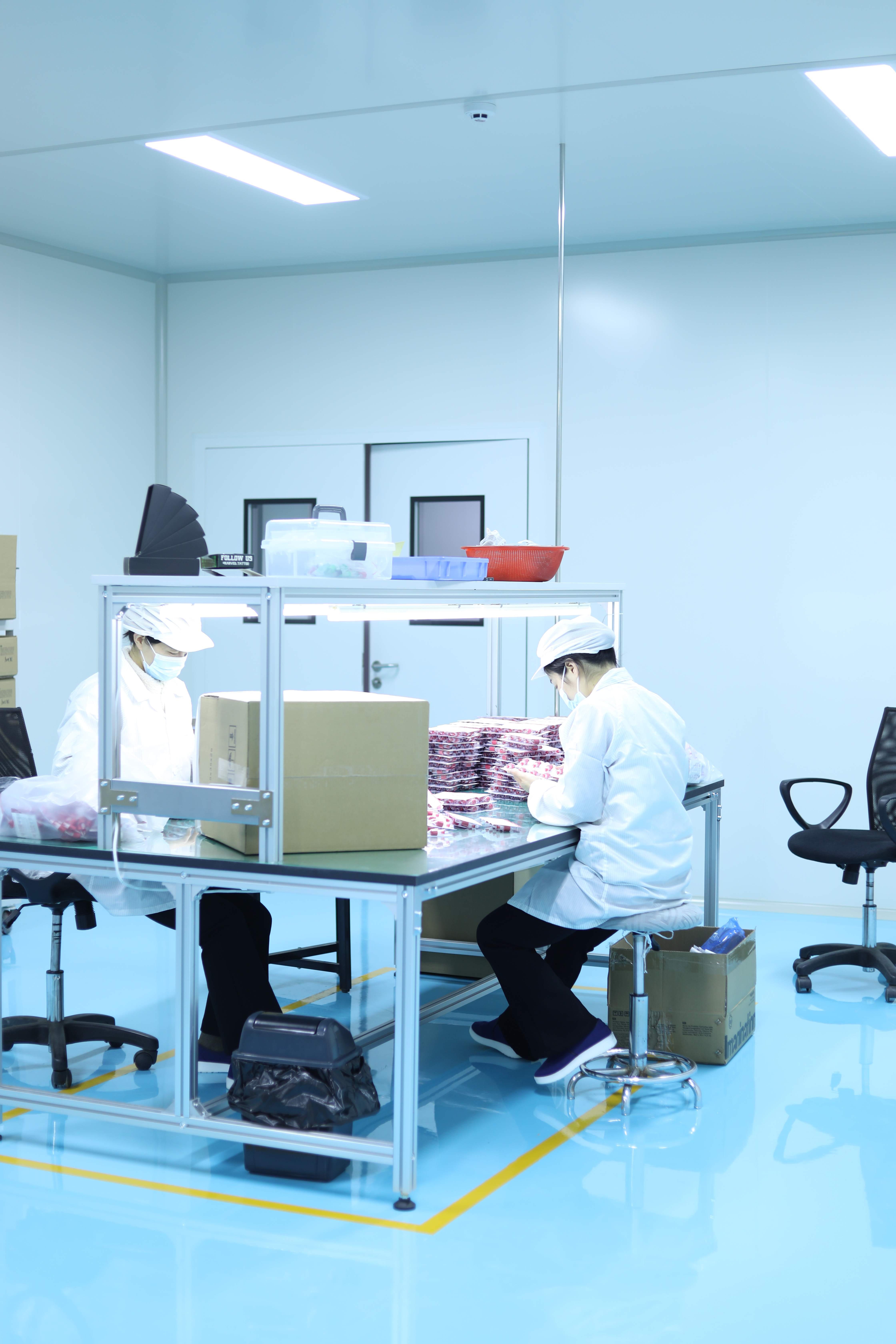
Understanding the production sequence helps buyers ask the right questions — and helps artists understand why cartridges from different sources behave differently even when the specifications look identical.
- Requirement and configuration definition. The needle configuration (RL, RS, RM, Magnum, or Flat), diameter, taper, and housing design are defined against the intended procedure. For OEM and ODM programs, customization covers custom logo, private label, custom packaging, needle configuration, housing design, and new product development.
- Structural design and prototyping. Creditech works with a 20-engineer R&D team covering product development, structural design, and prototype creation before a design moves to mass production.
- Material intake. Medical-grade stainless steel needles, medical-grade PC housing, silicone elastic membrane system, and non-toxic transparent plastic tips are the specified inputs. Material identity is the first place a low-cost cartridge diverges from a medical-grade one.
- Needle forming and precision assembly. The needle group is assembled into the housing to a precision tolerance of ±0.02–0.05 mm, with the silicone anti-backflow membrane seated between the needle side and the machine-facing side.
- 100% inspection. Inspection is applied across production rather than by sampling, within an ISO 13485 certified quality management system.
- EO gas sterilization. Assembled cartridges are sterilized using EO gas.
- Sterile packaging and batch traceability. Cartridges are sealed in the sterile breathable film packaging system and assigned to a traceable batch.
- Supply and replenishment. Creditech's monthly capacity exceeds 3,000,000 cartridge needles. Standard orders ship in 15–30 days; custom OEM orders typically take 30–45 days. Minimum order quantity for OEM programs is 500–1,000 pcs per size.
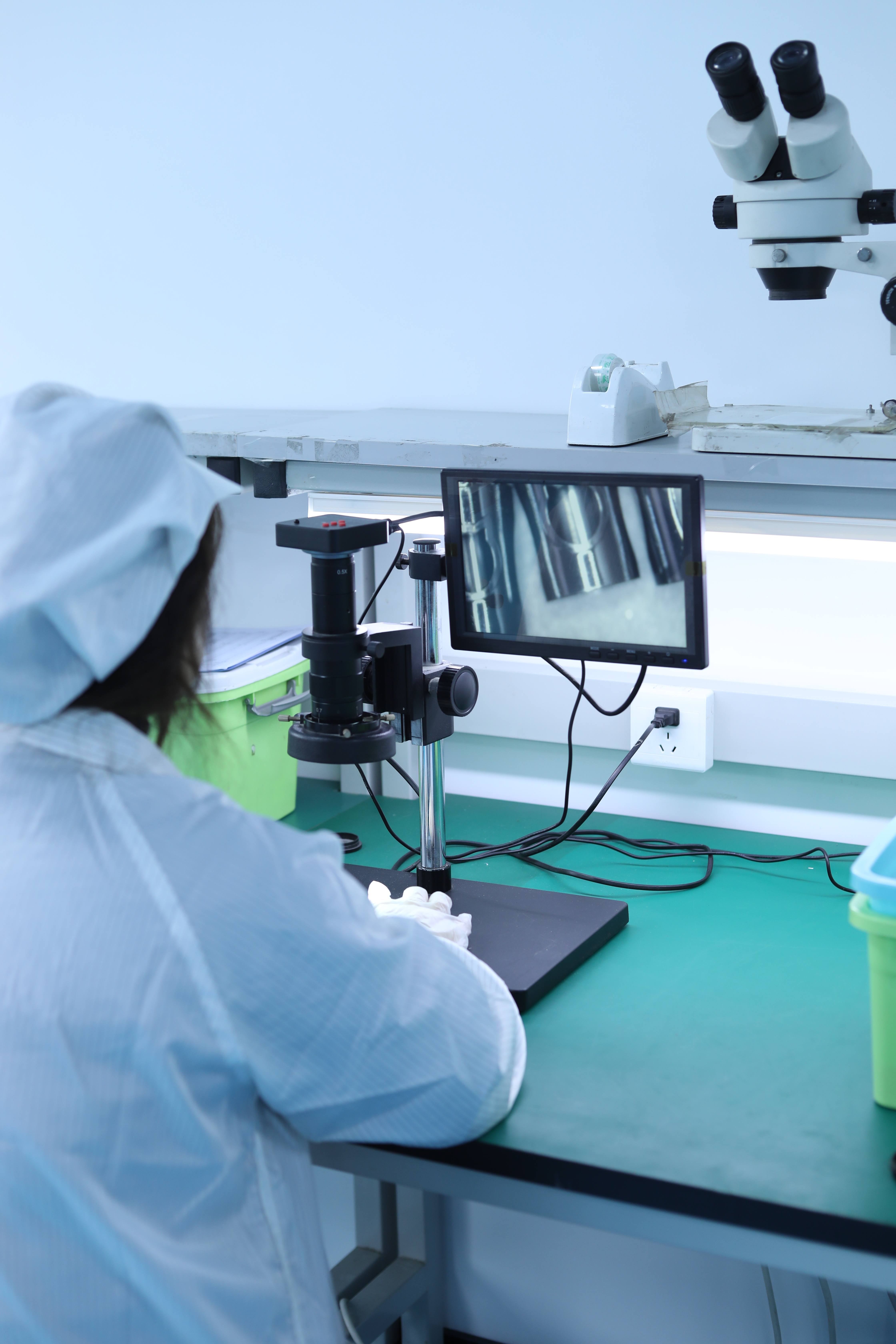
The practical implication for a buyer is a simple one: the specification sheet is not the product. The product is the specification sheet plus the process that repeatedly delivers it. A tolerance of ±0.02–0.05 mm is only meaningful if 100% inspection and batch traceability sit behind it.
Use Cases: Where Cartridge Needles Are Used
Cartridge needles are used across several distinct professional environments. The configuration and diameter that fit each environment differ, which is why a single-category supplier rarely covers every buyer's needs.
Professional Tattoo Studios
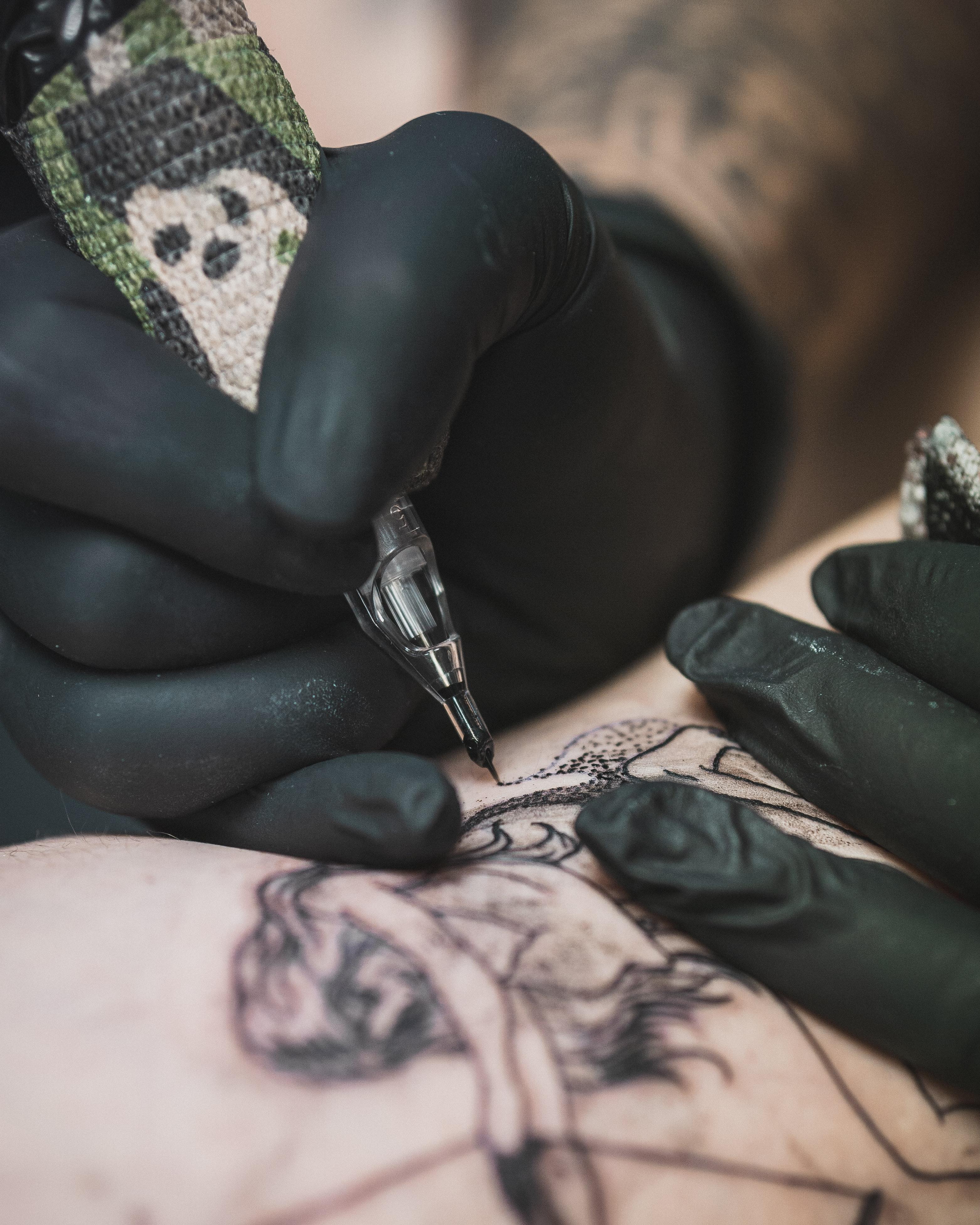
Applications include lining, shading, color packing, and fine line tattooing. Available needle types for this environment include Fine Line Tattoo Cartridge Needles, Traditional Tattoo Cartridge Needles, Shading Cartridge Needles, Color Packing Cartridge Needles, and Soft Edge Magnum Needles. Artists working on realism, color work, and detail typically maintain several configurations in rotation.
PMU Studios — Eyebrow, Lip, and Eyeliner
Permanent makeup studios work with fine-gauge cartridges such as PMU Eyebrow Needle Cartridges and Long Taper Precision Needles, where membrane integrity and tip visibility directly affect procedure control. Creditech serves the PMU and SMP segments through its ESTLIA brand, dedicated to PMU and SMP cartridges.
SMP Clinics — Scalp Micropigmentation
Scalp micropigmentation uses dedicated SMP Scalp Micropigmentation Needles, where consistent pigment delivery across a large treatment area is the primary requirement. Low vibration design and a stable controlled ink delivery system support the repetitive, coverage-oriented nature of SMP work.
Distributors, OEM Brands, and Training Academies
Tattoo supply distributors, private-label brands, e-commerce tattoo supply retailers, and tattoo and beauty training academies form the second half of the market. Creditech serves this layer through OEM and ODM services and through LPT Tattoo Supply for tattoo supplies, accessories, and consumables. A documented example is a private-label branding customer in Mexico, working with custom housing design and a 5-year relationship supplying more than 3,000,000 cartridge needles per year.
Comparison Table: What Each Cartridge Component Actually Does
When two cartridges look similar on a shelf, the differences sit in the components. The table below maps each component to its specified material and its function in the procedure.
| Component | Specified Material | Function in the Procedure |
|---|---|---|
| Housing | Medical-grade PC housing | Holds and aligns the needle group; provides the mechanical interface compatible with rotary tattoo machines |
| Needle group | Medical-grade stainless steel needles | Delivers pigment to skin; available in 0.15–0.35 mm diameters, 1.5–7 mm taper, held to ±0.02–0.05 mm tolerance |
| Membrane | Silicone anti-backflow membrane (silicone elastic membrane system) | Acts as a barrier between the working needle side and the machine-facing side to limit backflow of ink and fluid |
| Tip | Non-toxic transparent plastic tip | Allows the artist to observe ink flow at the tip without disassembly |
| Sterile barrier packaging | EO sterilization packaging material | Maintains sterility after EO gas sterilization until the pack is opened |
A second comparison buyers often need is between configurations rather than components. RL, RS, RM, Magnum, and Flat are the available configurations, and they are selected against the task at hand: lining, shading, color packing, and fine line work. Because all five configurations share the same housing, membrane, and sterilization process, switching between them does not change the handling characteristics of the machine setup — only the needle group changes. That consistency is one of the practical advantages of a cartridge system compared with assembling different needle types by hand.
For buyers building a range rather than a single SKU, the more useful question is not which configuration is best, but which combination covers the studio or customer base. A typical professional range spans fine line, shader, liner, and Magnum families across several diameters and two taper lengths — which is also why minimum order quantities are quoted per size rather than per order.
Frequently Asked Questions
What certifications and sterilization standards should buyers verify on a tattoo cartridge needle?
Medical-grade cartridge needles should be produced under a certified quality management system. ISO 13485:2016 is the recognized standard for Quality Management Systems in medical device manufacturing, and it is the baseline to ask for. Sterilization should be specified — Creditech cartridge needles are EO gas sterilized and supplied in a sterile breathable film packaging system. For the EU market, RoHS Directive 2011/65/EU applies, often assessed through EN IEC 63000:2018. Suzhou Creditech Electronic Technology Co., Ltd. manufactures under an ISO 13485 certified quality management system, states CE compliance for its products, and can provide FDA test reports for applicable products.
Can one manufacturer supply both tattoo cartridges and PMU or SMP needles?
Yes, when the cartridge architecture is shared across categories. Creditech supplies Fine Line Tattoo Cartridge Needles, Traditional Tattoo Cartridge Needles, Shading Cartridge Needles, Color Packing Cartridge Needles, PMU Eyebrow Needle Cartridges, SMP Scalp Micropigmentation Needles, Long Taper Precision Needles, and Soft Edge Magnum Needles, with diameters from 0.15 mm to 0.35 mm and taper lengths from 1.5 mm to 7 mm. For PMU salons specifically, the ESTLIA brand is dedicated to PMU and SMP cartridges, so eyebrow, lip, and eyeliner procedures can be supplied from the same manufacturing system as traditional tattoo configurations.
What is the minimum order quantity for private-label tattoo cartridge needles?
Creditech OEM and ODM programs carry a minimum order quantity of 500–1,000 pcs per size. Customization covers custom logo, private label, custom packaging, needle configuration, housing design, and new product development. Because MOQ is quoted per size, the total order quantity depends on how many diameters, tapers, and configurations a buyer wants to carry rather than on a single flat unit count.
How should a PMU salon or distributor evaluate cartridge needles before a bulk order?
Evaluate against the configuration you actually use daily rather than a single generic sample. Check that the sterile breathable film packaging is intact and correctly labelled, confirm the silicone anti-backflow membrane is present and properly seated, confirm tip visibility for ink flow observation, and test the cartridges on the specific rotary tattoo machines used in the studio. Then verify documentation — ISO 13485 quality management certification, CE compliance statements, and FDA test reports where applicable — and confirm that batch traceability is available. Sample development is part of Creditech's OEM process, so configurations can be validated before mass production.
What lead times and production capacity should buyers plan for?
Creditech quotes 15–30 days for standard orders and 30–45 days for custom OEM orders, with a monthly production capacity of more than 3,000,000 cartridge needles. For recurring supply, buyers should plan around the custom window when new packaging, housing design, or private label is involved. To check current availability or request a sample set and quotation for your configuration, contact the team through creditechmed.com.
Conclusion: What the Cartridge Needle Changed
A tattoo cartridge needle is a small, sealed assembly — needle group, medical-grade PC housing, silicone anti-backflow membrane, and transparent tip — but its significance is structural. It moved sterility control from the studio into a certified manufacturing process, replaced hand assembly with a repeatable ±0.02–0.05 mm tolerance, and made single-use the default rather than the exception.
The medical-grade evolution continued through sterilization and packaging: EO gas sterilization applied to the assembled unit, sealed behind a sterile breathable film, released with batch traceability. Those are the innovations that make a cartridge trustworthy, and they are also the checks that separate a medical-grade supplier from a supplier that merely uses the phrase.
For artists and PMU or SMP practitioners, the practical decision is configuration and tolerances. For distributors, private-label brands, and buyers, it is the process behind the specification — quality management, inspection coverage, sterilization method, capacity, and traceability.
Next Step: Sample, Quote, or Catalog
If you are evaluating cartridge needles for a studio, a PMU or SMP clinic, a distribution range, or a private-label program, the fastest route is a sample set in your actual configurations. Suzhou Creditech Electronic Technology Co., Ltd. manufactures tattoo cartridge needles under an ISO 13485 certified quality management system, with OEM and ODM services covering custom logo, private label, custom packaging, needle configuration, and housing design.
Request a sample or quotation: www.creditechmed.com
Download the catalog: Creditech Product Catalog
WhatsApp: +86 18625276381
Email: estlia@creditechmed.com
Have Questions or Need More Details?
Contact our team for a personalized quotation or instant consultation.
Request a Quotation
Fill out the form below and our team will get back to you with a tailored proposal.
WhatsApp Direct Chat
Prefer to chat in real-time? Message us on WhatsApp for instant assistance & quick answers.
- Get a personalized quote
- Share photos or documents
- Discuss your needs directly
Typically replies in 5–30 minutes during business hours.