Choosing Between Modbus RTU and Modbus TCP for PID Temperature Controller Integration
Choosing Between Modbus RTU and Modbus TCP for PID Temperature Controller Integration
Modbus RTU and Modbus TCP move the same temperature values — process value, setpoint, alarm thresholds — but they move them through different network architectures. That difference decides cabling, gateway count, commissioning effort, and how far a temperature system can grow before it has to be re-engineered.
The short answer for most integration projects is this: use Modbus RTU when the temperature devices are clustered inside one or two cabinets, the device count is modest, and the host already has a spare serial port; use Modbus TCP when the temperature network has to cross lines or buildings, feed plant-level software, or scale beyond the practical limits of serial segments. Where both requirements exist at once — a serial device estate that still has to report into an Ethernet network — a multi-port communication module is the bridge between the two.
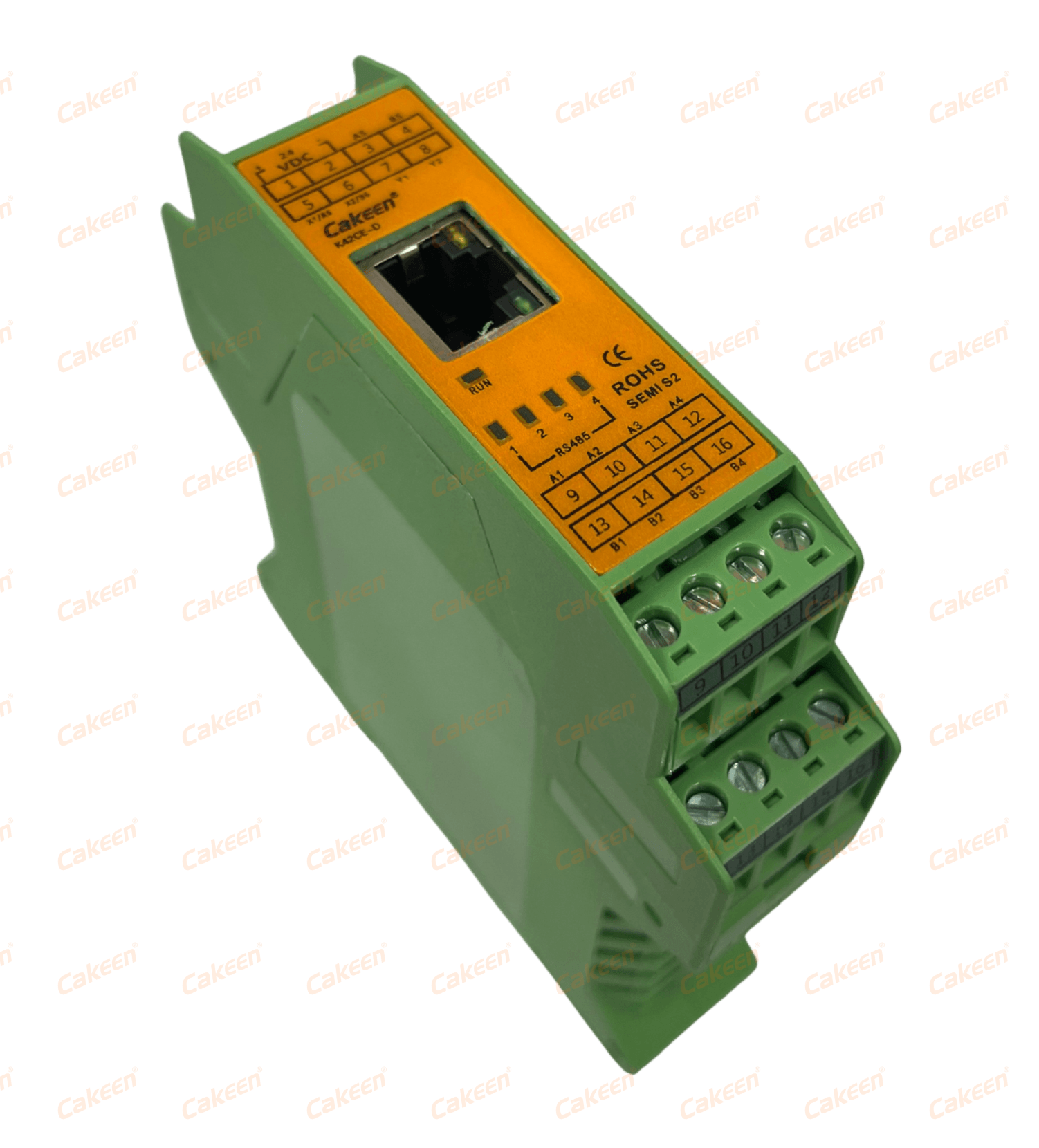
Cakeen (Wuxi Cakeen Technology Co., Ltd., founded in 2011 and headquartered in Huishan District, Wuxi, Jiangsu Province) builds hardware on both sides of that decision. The K15DT-D I/O Expansion Module exposes a Modbus RTU interface, while the K42CE-D CMS Communication Module supports Modbus TCP/RTU across six RS485 ports and one Ethernet port. This guide uses those two modules, and the PID controllers they are normally wired beside, as a working reference for buyers and engineers in the research and evaluation stage.
Problem Definition: What the Protocol Decision Actually Changes
Protocol selection is a network architecture decision, not a controller feature decision. Both options deliver the same closed-loop control outcome. They differ in how devices are counted, cabled, addressed, and read — and those differences show up in the bill of materials, in the commissioning checklist, and in how much headroom the design keeps.
- Cabling and topology. Modbus RTU runs on RS-485 wiring between devices, so the physical layout follows the cabinet and the machine. Modbus TCP runs over Ethernet through a switch, so the layout follows the network plan instead of the cable run.
- Host interface requirement. An RTU segment needs an RS485 port on the PLC, panel controller, or gateway. A TCP network needs an Ethernet port on the host PC, SCADA server, or switch.
- Device-count ceiling. Serial capacity is bounded by the number of ports and segments available; Ethernet capacity is bounded by switching and addressing. This is the variable that forces the decision in most projects.
- Data services. Modbus TCP gives monitoring software a direct path to every controller, which is what makes plant-level alarming, device health scoring, and historical analysis practical.
- Commissioning and troubleshooting. RTU work centres on addressing, termination, and segment layout. TCP work centres on IP planning, switch ports, and gateway configuration.
- Spares and service. A mixed architecture stores two classes of spares: serial controllers and I/O modules on one side, Ethernet-capable modules and switches on the other.
None of these items is decided by control accuracy. A ±0.1°C controller delivers ±0.1°C whether the setpoint arrives over a serial pair or over an Ethernet frame.
Industry Background: Why Protocol Choice Became a Procurement Question
Temperature control is a growing, network-connected category, and that combination is what pushed protocol architecture into the buyer's checklist. The global PID controller market was valued at USD 1.60 billion in 2024 and is projected to reach USD 2.24 billion by 2032, according to SNS Insider. Strategic Market Research expects the industrial temperature controller market to grow at a CAGR of 7.1% from 2024 to 2030, driven by Industry 4.0 adoption. Dataintelo reports that Asia-Pacific dominated the temperature controller market in 2023 with a revenue share of 38.2%, with China as a key manufacturing hub.
Precision requirements are moving in the same direction. Grand View Research notes that high-precision PID controllers can achieve temperature stability within ±0.1°C, a critical requirement for semiconductor lithography and etching. The semiconductor temperature control equipment market was valued at USD 663 million in 2024, and it is essential for wafer fabrication precision (Market Research Reports). As controllers become more precise and more numerous per line, the cost of pulling wire and adding gateways grows faster than the cost of the controllers themselves — which is exactly the trade-off that Modbus RTU and Modbus TCP force buyers to make.
Panel-level compliance reinforces the point. Industrial control panels, including PID controllers, must comply with UL 508A for North American safety listing and IEC 60947 for international markets (UL Solutions). Network architecture becomes part of that documentation: terminal numbering, cable routing, gateway placement, and addressing all have to survive an inspection, not just a start-up.
The global supplier landscape for PID and temperature controllers is led by established brands such as Honeywell, Omron, Siemens, Eurotherm (Schneider Electric), and ABB (Mordor Intelligence, 2024). Alongside them, specialised manufacturers position on application depth — for example, Wuxi Cakeen Technology Co., Ltd. focuses on semiconductor industrial control electronics, electrical cabinet systems, and AI embedded systems, with a 2,019 m² factory, 50 employees, and a 20-engineer R&D team. For an integration buyer, that landscape matters less than a narrower question: which protocol model does the project's network and device count actually support?
Reference Architecture: What Exists on Each Side of the Decision
A protocol decision is easier to defend when both paths can be described with real hardware. The Cakeen product family covers the serial device edge, the I/O layer, the aggregation layer, and the host layer.
Modbus RTU at the device edge
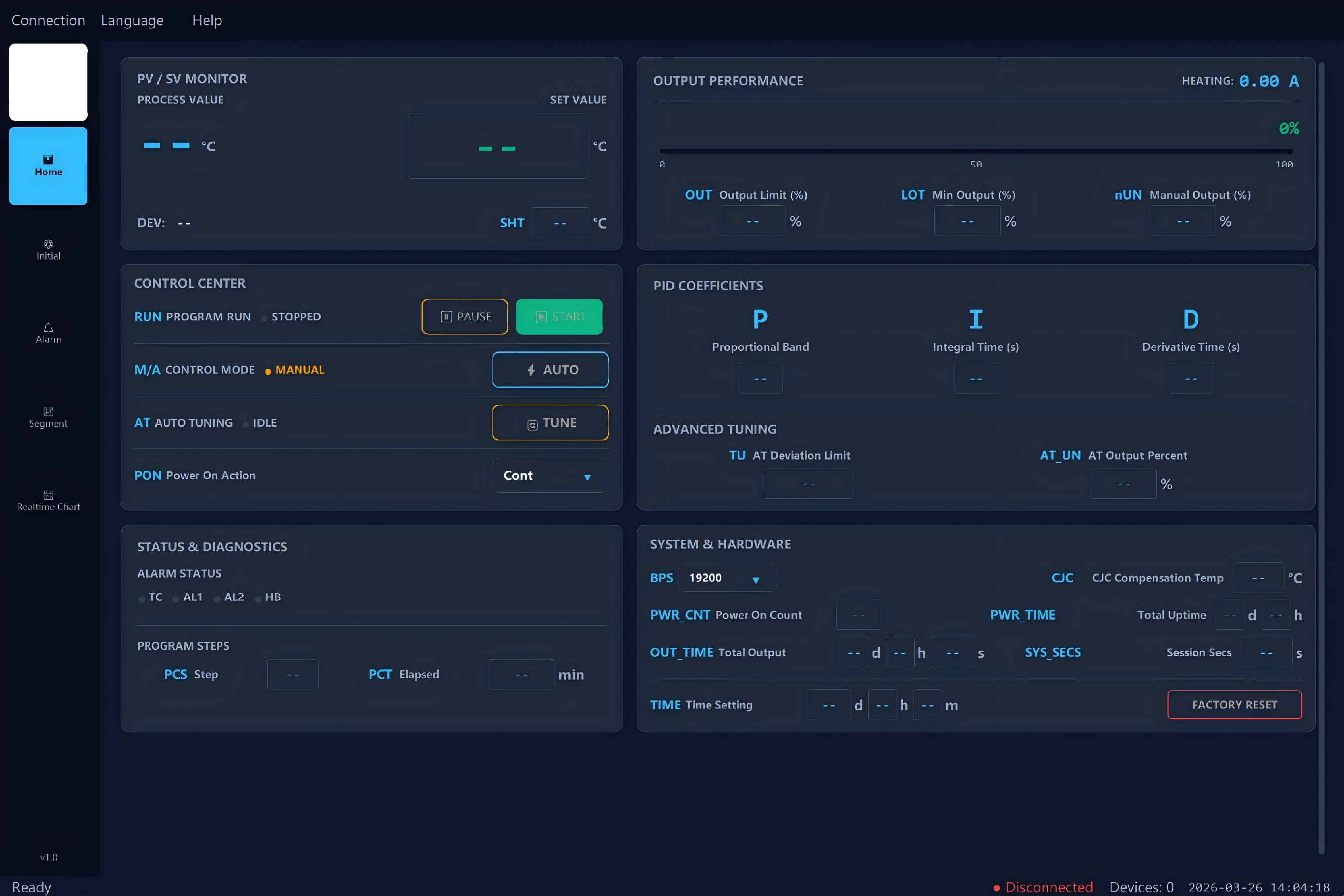
The single-loop controllers most often deployed on a serial segment share the same communication profile. The ASH heating tape PID temperature controller is designed for pipe and vessel insulation and heating, with one control channel, ±0.1°C control accuracy, PT/K/J/R/S/T/B/E/N/L input types, built-in SSR output rated to a maximum of 3A, RS485/Modbus RTU communication, and a 100-265V AC supply. The H6625 mini heating tape PID temperature controller offers the same Modbus RTU interface and 3A built-in SSR output in a mini-size design for space-constrained installations. The KE-H10 PID heating tape temperature controller raises the built-in SSR output to a maximum of 6A for high-power heating tape on pipes and vessels, keeping the same RS485/Modbus RTU interface and ±0.1°C accuracy.
The KE-48 is the panel-mount alternative: a 48 imes48mm single-channel temperature controller with ±0.1°C accuracy, PT/K/J/R/S/T/B/E/N/L inputs, SSR / 0-20mA / 4-20mA / 0-10V outputs, one RS485 communication port, and a 100-265V AC supply. It suits integration projects where an operator needs a local face while the same loop is read by a host over the serial bus. These controllers are specified for conditions such as pipe and vessel insulation heating, high-temperature pipeline delivery, and chemical insulation environments, and they operate in 24/7 continuous operation mode.
Extending the serial bus with the K15DT-D I/O Expansion Module
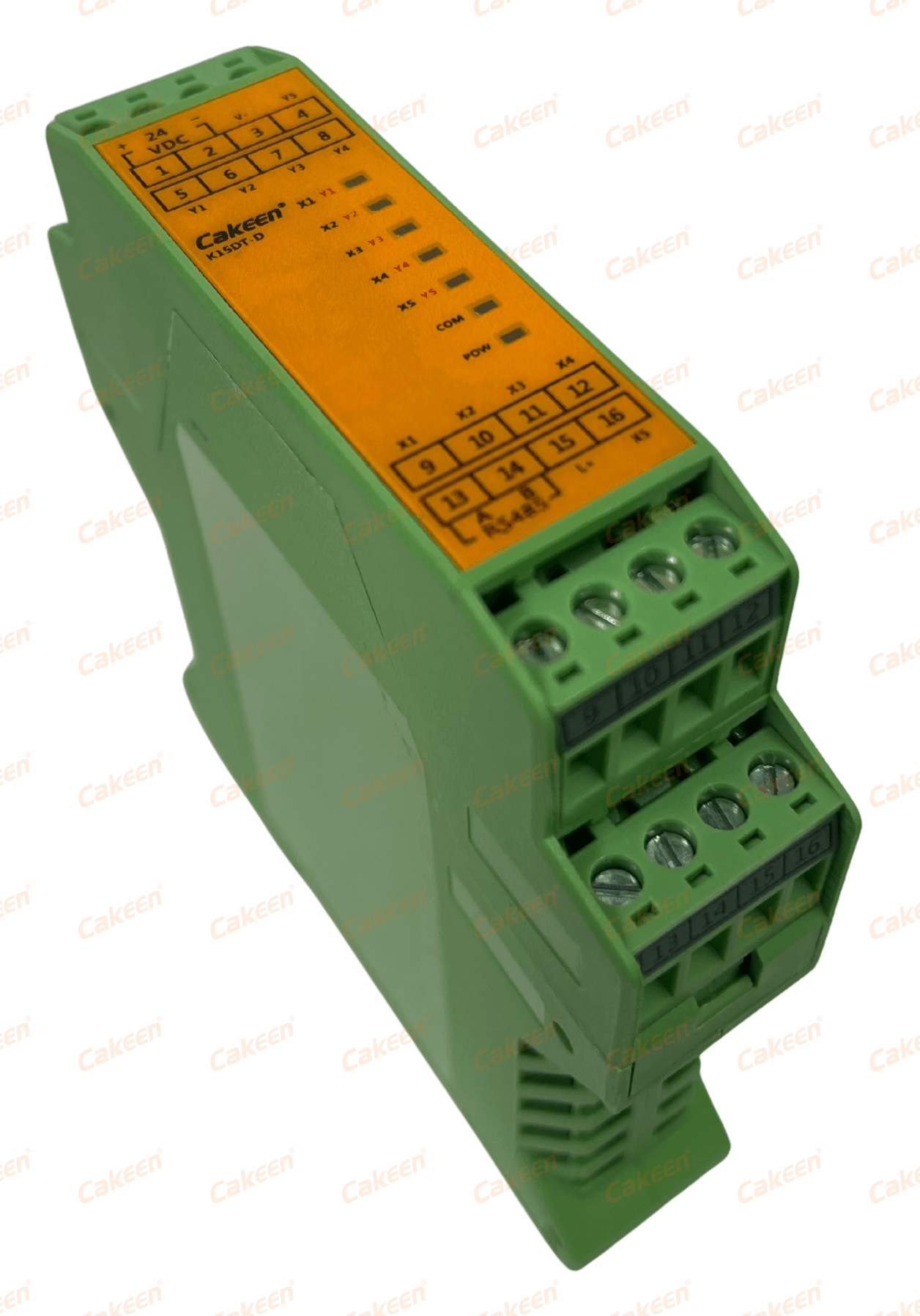
Temperature loops rarely sit alone. Alarm relays, valve enables, and status contacts also need to be wired, and pulling new Ethernet cable to each of them is usually the wrong answer. The K15DT-D I/O Expansion Module adds 5 inputs and 5 NPN outputs over a Modbus RTU interface, with a 12-24VDC supply and DIN35 rail mounting in a flame-retardant engineering plastic housing. It is specified for switching control and remote I/O expansion — so a cabinet can grow its digital point count without changing its network architecture.
Aggregating serial segments with the K42CE-D CMS Communication Module
The K42CE-D CMS Communication Module is the piece that makes the RTU-versus-TCP question avoidable rather than binary. It provides 2 NPN I/O points, six RS485 ports, and one Ethernet port, with Modbus TCP/RTU support, a 12-24VDC supply, DIN35 rail mounting, and a flame-retardant engineering plastic housing. Its stated application is multi-485 device low-latency parameter setting, data acquisition and forwarding, and PLC replacement scenarios — in other words, it reads a serial device estate and presents it on Ethernet.
For a buyer, six RS485 ports means six serial segments can be consolidated behind a single Ethernet uplink. That changes the maths on device count: instead of asking “how many controllers can one serial port carry,” the project asks “how many segments does this cabinet cluster have,” and the answer is handled by one DIN rail module.
The host layer: PLC programming and CMS monitoring
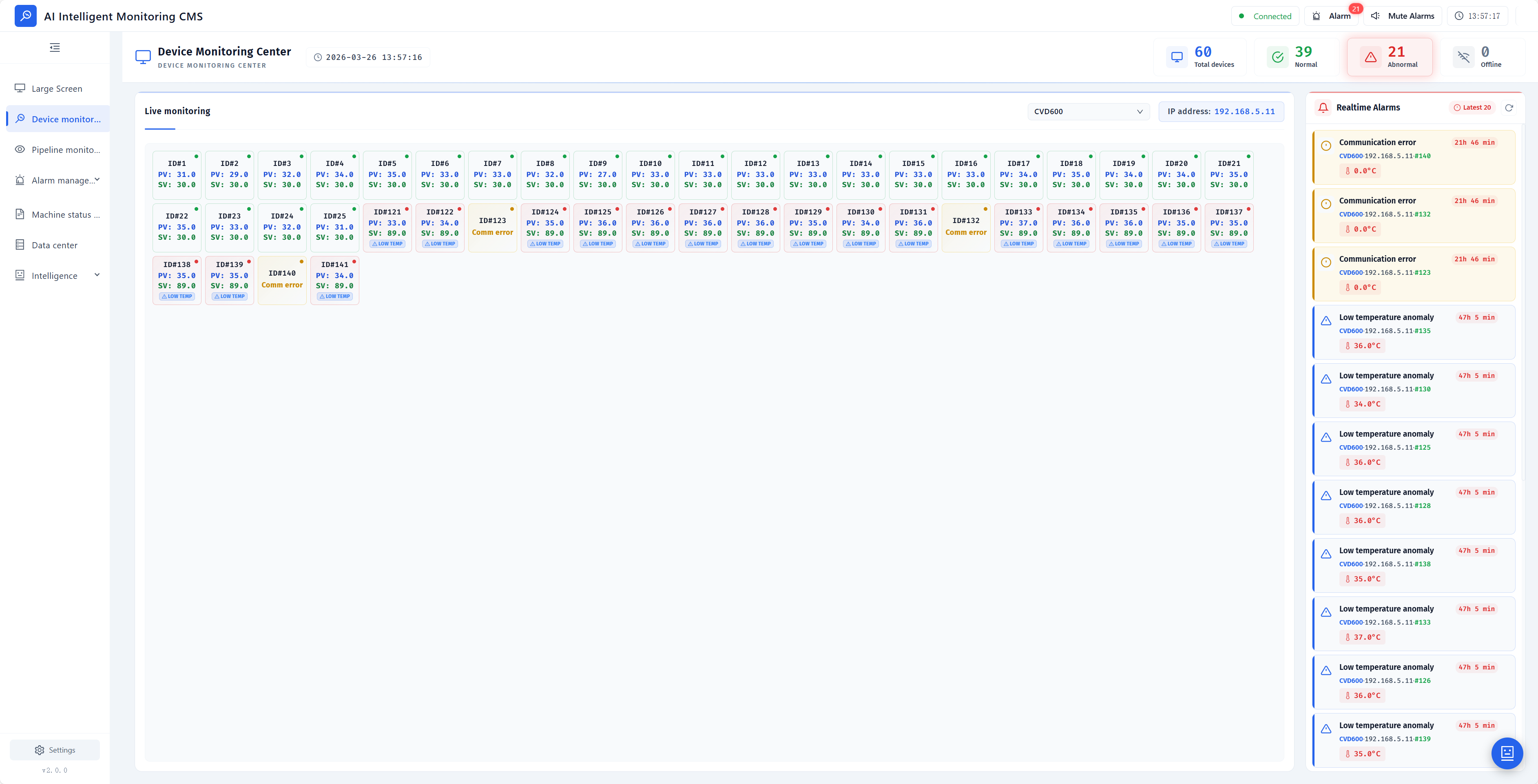
The host layer decides which protocol finally reaches the software. Cakeen's PLC Control Program Design Service supports Siemens S7-1200/1500, Mitsubishi Q/L series, and Omron NJ/NX platforms with both Modbus TCP and Modbus RTU, programmed in Python, with documentation and executable files as deliverables. Where a PLC is not the right host, the Industrial Device Central Monitoring System (CMS) operates directly on Modbus TCP: it is specified to support 10,000+ Modbus TCP devices, poll at a 10-second real-time interval, monitor PV/SV temperature, AL1/AL2 alarm thresholds and TC BK sensors, and retain 365-day time-series history in InfluxDB.
A representative deployment of that monitoring layer runs as a web-based platform with real-time WebSocket data push on a 5-second refresh cycle, monitoring 5,000+ temperature control devices over Modbus TCP, with batch monitoring of 500+ devices per IP across multiple IPs, multi-level caching, JWT-based RBAC security, and preset operating modes for high performance, balanced, or energy-saving operation. In practice, that is the scale at which Modbus TCP stops being an option and starts being a requirement.
Comparison Table: Modbus RTU vs Modbus TCP in Temperature Control Integration
| Decision dimension | Modbus RTU | Modbus TCP |
|---|---|---|
| Physical layer | RS-485 wiring between devices, following the cabinet or machine layout | Ethernet cabling through a switch, following the network plan |
| Addressing model | One device address per node on the serial segment | IP address plus Modbus unit addressing |
| Host interface required | An RS485 port on the PLC, panel controller, or gateway | An Ethernet port on the host PC, SCADA server, or switch |
| Device-count behaviour | Bounded by available serial ports and segments; multi-port modules raise the ceiling | Scales with switching and addressing; Cakeen CMS software is specified for 10,000+ Modbus TCP devices |
| Reference hardware | K15DT-D I/O Expansion Module (5 inputs / 5 NPN outputs, Modbus RTU, 12-24VDC, DIN35); ASH, H6625 and KE-H10 controllers with RS485/Modbus RTU and built-in SSR output; KE-48 panel-mount controller with one RS485 port | K42CE-D CMS Communication Module (6x RS485, 1x Ethernet, Modbus TCP/RTU, 2x NPN I/O, 12-24VDC, DIN35 rail) |
| Monitoring and data services | Sequential polling per segment; data reaches plant software through a gateway or converter | CMS polls at a 10-second interval, monitors PV/SV and AL1/AL2, retains 365-day history in InfluxDB; deployments push data to the browser every 5 seconds with 500+ devices per IP |
| Effect on control accuracy | None — ±0.1°C controllers such as ASH, H6625, KE-H10 and KE-48 | None — accuracy is a controller property, not a protocol property |
| Typical project fit | Single tool or skid, jacketed vessel and heating tape loops, retrofit cabinets, installations where the PLC has a free serial port | Multi-line plants, central monitoring and alarm management, semiconductor temperature control systems that must report into plant IT |
Step-by-Step Framework: Deciding by Network Architecture and Device Count
The two variables in the assigned decision framework are network architecture and device count. Work through them in this order.
Step 1 — Count control points, not controllers. A 4-channel rack, a bank of heating tape controllers, and a set of I/O expansion modules all consume addresses. Count every device that will hold an address on the segment, including modules such as the K15DT-D. Projects that count only controllers underestimate the bus by the number of expansion nodes.
Step 2 — Draw the physical boundary. Mark where the temperature devices sit: one cabinet, several cabinets on one line, or multiple lines in different areas. Modbus RTU is comfortable when the devices are inside the same cabinet cluster or a short cable run away. Once the devices cross a building boundary, Ethernet becomes the more practical carrier, because the network infrastructure is usually already there.
Step 3 — Identify the host. If the host is a PLC with a spare RS485 port and the existing program already handles serial polling, RTU adds no new layer. If the host is a PC, SCADA server, or monitoring platform, Modbus TCP is the direct route, because CMS-class software is specified around Modbus TCP.
Step 4 — Choose one of three architectures. Architecture A: serial only — controllers and I/O modules on RS-485, host polled by PLC. Architecture B: serial at the edge, TCP at the top — controllers stay on RS-485 and the K42CE-D aggregates six serial segments into one Ethernet uplink. Architecture C: TCP end to end — used when device count or reporting requirements already exceed what a gateway should carry.
Step 5 — Test the data layer, not just the wiring. Decide how often values must refresh, whether alarm thresholds such as AL1/AL2 need to be read centrally, and how long history must be retained. The CMS layer answers those questions with a 10-second polling interval, 365-day InfluxDB history, and 5-second WebSocket refresh in monitored deployments. If the project's requirements are lighter, RTU-only may satisfy them.
Step 6 — Pilot one segment before rolling out. Build one serial segment and one gateway path, verify addressing, polling, and alarm behaviour, then replicate. This is cheaper than discovering an addressing conflict after the full rollout.
Step 7 — Document and stock spares. Record addresses, port assignments, and gateway mapping, and stock the two device classes the architecture uses. Documentation also supports panel compliance reviews under UL 508A or IEC 60947.
Use Cases: Where Each Architecture Wins
Single semiconductor tool with several heated lines. A tool with a handful of pipeline heating loops typically uses single-channel controllers such as the H6625 or KE-H10 on RS-485, plus a K15DT-D for switching points. Device count stays low and the cabinet boundary is clear, so Modbus RTU is the leaner architecture. If that tool later has to report into a fab network, the K42CE-D adds the Ethernet path without replacing the controllers.
Multi-cabinet line with central monitoring. When several cabinets must be visible from one screen, Architecture B is usually the best fit: serial control stays local and fast, while the aggregation module and the CMS layer deliver plant-level visibility across thousands of devices. This is the architecture a semiconductor equipment OEM described in a four-year program supplying more than 50 units per year, where the KE-48's 48 imes48mm panel-mount format fitted the OEM equipment design and a DIN rail multi-channel controller reduced cabinet space.
Retrofit and flexible cabinet programs. Integrators upgrading existing cabinets often face mixed device generations. A general-purpose electrical control cabinet supports Siemens, Mitsubishi, Omron, and Schneider components with IP40-IP65 protection and 380V/400V supply (customizable, UL optional). One domestic equipment integrator running more than 100 cabinet sets per year over five years reported shortening its customer delivery cycle by 40% using configurable cabinets with multi-PLC brand support. In that environment, a gateway module lets new Modbus TCP-capable equipment coexist with legacy RS-485 controllers.
Data-heavy industrial monitoring. Display and panel manufacturing, rail transportation, and process manufacturing deployments use the CMS layer to watch PV/SV values, AL1/AL2 thresholds, and TC BK sensors across 5,000+ devices with 500+ devices per IP. Those numbers are only reachable on Modbus TCP, which is why device count ends up deciding the architecture more often than any other variable.
Limits and Trade-offs Buyers Should Verify
Serial architecture is bounded by ports and segments, not by ambition. Each additional segment needs a physical port, and long daisy chains require planning of routing and termination. Polling is sequential per segment, so refresh behaviour depends on how many devices share that segment.
Ethernet architecture trades cable simplicity for network discipline. IP planning, switch ports, and gateway configuration become part of the commissioning scope, and cabinets gain network hardware that RTU-only designs do not carry.
Two practical checks also belong in the evaluation. First, confirm protocol behaviour for the exact model and firmware being ordered rather than for the product family — for example, the KE-2104 is specified as a 4-channel DIN rail PID controller with external SSR output, ±0.1°C accuracy, and a 12-24VDC supply, and protocol requirements should be verified against the configuration actually purchased. Second, check whether the selected path can be extended later without replacing field devices; the K42CE-D's combination of six RS485 ports and one Ethernet port is designed to make that extension a module-level change rather than a re-engineering project.
FAQ: Modbus RTU and Modbus TCP in Temperature Control Projects
Does the choice between Modbus RTU and Modbus TCP affect panel compliance?
The protocol itself is not a compliance item, but the panel that houses it is. Industrial control panels, including PID controllers, must comply with UL 508A for North American safety listing and IEC 60947 for international markets (UL Solutions). Network architecture therefore becomes part of the panel documentation: cable routing, terminal numbering, gateway placement, and addressing must all be inspectable. On the manufacturing side, Wuxi Cakeen Technology Co., Ltd. holds ISO9001, ISO14001, and ISO45001 certifications as well as UL, SEMI S2, CE, and ROHS certifications, and its European Standard Electrical Cabinet is CE-certified with TÜV Rheinland certification, IEC compliance, and optional UL. Because both protocols are available in the same DIN rail module family, a compliance-driven change from RTU to TCP does not force a change of product line.
Can a Modbus RTU device and a Modbus TCP host work in the same temperature system?
Yes. The K42CE-D CMS Communication Module is specified with six RS485 ports, one Ethernet port, and Modbus TCP/RTU support, and its stated applications include multi-485 device low-latency parameter setting, data acquisition and forwarding, and PLC replacement scenarios. In a typical layout, single-loop controllers such as the ASH, H6625, or KE-H10 with built-in SSR output use RS485/Modbus RTU at the device edge, the K15DT-D adds 5 inputs and 5 NPN outputs on Modbus RTU for switching and remote I/O expansion, and the K42CE-D presents that estate on Ethernet. At the host layer, the PLC Control Program Design Service supports both Modbus TCP and Modbus RTU on Siemens S7-1200/1500, Mitsubishi Q/L series, and Omron NJ/NX platforms, programmed in Python with documentation and executable files as deliverables.
Which architecture should a buyer budget for?
Budget differences come from cost drivers rather than from the protocol licence: the number of serial ports and gateway modules required, the cable type and total cable length, switch ports on the Ethernet side, DIN rail and cabinet space, commissioning labour, and spares for each device class in the design. A serial-only architecture minimises network hardware but consumes more ports as the device count grows. A gateway architecture concentrates serial segments behind one Ethernet uplink — with six RS485 ports on the K42CE-D, six segments can be consolidated per module — which is usually the lower-cost way to reach plant-level visibility without replacing field controllers. Cakeen builds to OEM/ODM production with 100% testing and all parameters, logo, and appearance customizable, so configuration-specific pricing should be requested rather than assumed from a catalogue figure.
Can we validate protocol behaviour before committing to a full order?
Sample validation is the normal route. Buyers typically request a controller or module sample and build one pilot segment — for example, a single-loop heating tape controller plus a K15DT-D I/O module, or a K42CE-D with two RS485 segments and one Ethernet uplink — then verify addressing, polling behaviour, alarm threshold reads (AL1/AL2), and PV/SV value accuracy against the host. Cakeen's OEM/ODM production mode allows all parameters, logo, and appearance to be customized for that validation build, and every unit is 100% tested before shipment, with remote after-sales support. A sample request can be sent to jwy@wxkeen.com or via WhatsApp at +86 18921139517, with the target protocol, device count, and host type in the message.
What lead time and support should be planned for?
Standard production lead time is 30-45 days, with remote after-sales support for commissioning questions. Project-based engineering services run on their own cycles: electrical drawing design compliant with IEC and UL508A is delivered in DWG and PDF with a BOM Excel file over a 2-4 week design cycle, PLC control program design includes documentation and executable files, and both services operate on demand. Buyers integrating temperature control for the first time usually order the sample and the pilot module set together, then place the production order once the segment is validated. Wuxi Cakeen Technology Co., Ltd. (www.wxkeen.com) can be contacted directly for a configuration-specific quote and lead time confirmation before the purchase order is raised.
Conclusion: Decide on Architecture and Device Count, Then Choose the Protocol
Modbus RTU and Modbus TCP are not competing levels of quality. They are two answers to the same question: how many temperature devices does this project have, and where do they physically sit? Keep single loops and clustered cabinets on Modbus RTU when the host already speaks serial. Move to Modbus TCP when the network crosses boundaries, feeds plant software, or grows into the thousands of devices that monitoring platforms are built to handle. Where a serial estate has to reach an Ethernet network, the K42CE-D CMS Communication Module and the K15DT-D I/O Expansion Module let both worlds sit on the same DIN rail.
For buyers at the evaluation stage, the fastest way to settle the question is to build one segment and read it: controllers, one I/O module, one gateway, one host. The architecture will make the protocol choice obvious, and the pilot will document it for the panel review.
Next step: validate your protocol architecture with a sample segment
Share your device count, host type, and target protocol, and Cakeen will confirm the matching controller, I/O expansion, and communication modules for a pilot build — sample, quote, and configuration lead time included.
Email: jwy@wxkeen.com · Tel: +86-0510-85161878 / +86-18921139517 · WhatsApp: +86 18921139517 · Website: www.wxkeen.com