
DIN Rail vs. Panel Mount PID Controllers: An Explainer from a Temperature Controller Manufacturer
DIN Rail vs. Panel Mount PID Controllers: An Explainer from a Temperature Controller Manufacturer
A DIN rail mount PID controller is installed on a 35 mm rail inside the control cabinet and is normally chosen when several temperature loops have to be controlled from one compact block. A panel mount PID controller is installed through a cutout in the cabinet door or operator panel and is normally chosen when a single loop needs a visible display, a local setpoint, and a choice of output signals. Cakeen — the temperature controller manufacturer behind the KE-2104 DIN rail controller and the KE-48 panel mount controller — builds both, and both regularly appear in the same enclosure.
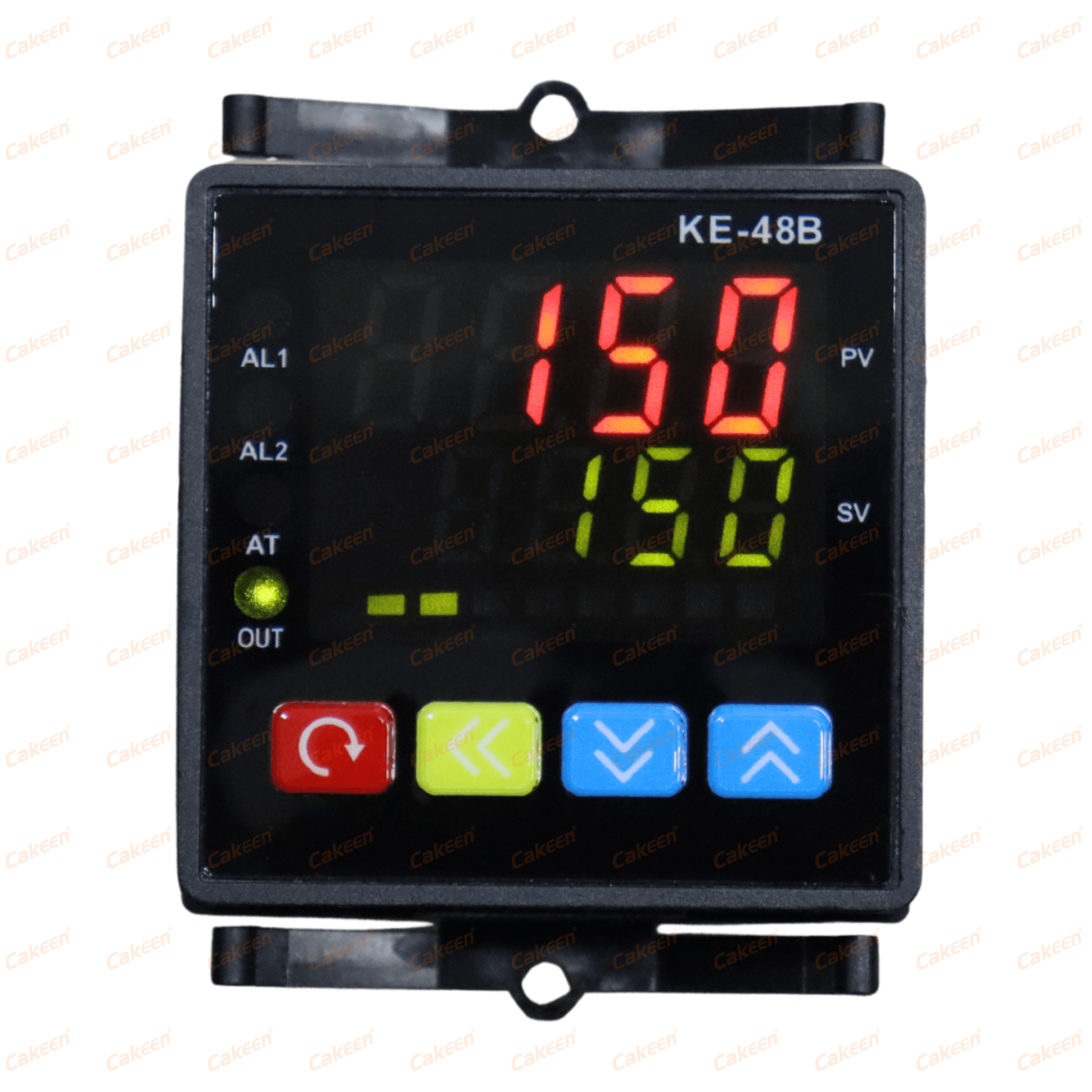
Cover: the panel mount KE-48 PID temperature controller — a 48 × 48 mm front format that is installed through the cabinet door. Cakeen builds this format alongside the DIN35 rail-mounted KE-2104.
This explainer is written for the people who actually build and wire the panels: control cabinet builders, panel shops, equipment integrators, and OEM engineers. It does not rank one form factor above the other. It explains what each one is, where each one fits, how the choice interacts with General Purpose, Japanese Standard, and European Standard electrical cabinets, and which of the two published Cakeen products matches a given loop.
Problem Definition: Form Factor Is a Cabinet Decision, Not a Catalogue Choice
The form factor question usually appears halfway through a cabinet project, when the loop list is fixed and the layout has to be finalised. At that point three things are already constrained: the space inside the enclosure, the space on the door, and the path that sensor and load wiring takes.
Two mistakes are common. The first is specifying panel mount controllers for every loop in a multi-loop cabinet. Every panel unit needs its own cutout, and every wire has to travel to the door and survive hinge movement. The second is specifying DIN rail controllers for a process where an operator reads the temperature and changes the setpoint several times per shift; a rail-mounted block inside the enclosure may not provide that front-of-panel access at all.
The two form factors also differ electrically. The KE-2104 DIN rail controller switches an external solid-state relay from a 12-24 VDC supply, which matches a cabinet that already distributes 24 V DC. The KE-48 panel mount controller runs on 100-265 V AC, can drive an SSR, and can also output 0-20 mA, 4-20 mA, or 0-10 V to an analog actuator. Choosing the mounting style therefore also chooses the power architecture of the loop.
Retrofit work makes the difference sharper still. Adding a DIN rail loop to a running cabinet is an internal modification; adding a panel mount loop requires machining another 48 × 48 mm cutout into a door that may already be fully populated.
Industry Background: Why Two Form Factors Exist Side by Side
Temperature control is a large and still-growing equipment category, and both mounting styles are part of that growth. SNS Insider valued the global PID controller market at USD 1.60 billion in 2024 and projected it to reach USD 2.24 billion by 2032. Strategic Market Research estimated that the industrial temperature controller market would grow at a CAGR of 7.1% from 2024 to 2030, driven partly by Industry 4.0 adoption. Dataintelo reported that Asia-Pacific held 38.2% of temperature controller revenue in 2023, with China as a key manufacturing hub. Within that picture, Market Research Reports valued the global semiconductor temperature control equipment market at USD 663 million in 2024, which reflects how much precision thermal control now sits inside semiconductor tooling.
The supplier landscape is mixed. Mordor Intelligence lists Honeywell, Omron, Siemens, Eurotherm (Schneider Electric), and ABB among the leading global manufacturers of PID and temperature controllers, alongside a deep tier of specialist suppliers that build for particular cabinet conventions and regions.
Those conventions are what make the form factor decision regional as well as technical. UL Solutions notes that industrial control panels, including PID controllers, must comply with UL 508A for North American safety listing and with IEC 60947 for international markets. Cabinet builders respond by working to a cabinet standard: a general-purpose enclosure for flexible automation work, a JIS-compliant precision cabinet for Japanese-style machinery, or a CE-oriented cabinet for European production lines.
Cakeen (Wuxi Cakeen Technology Co., Ltd.) sits on both sides of that line. Established in 2011 and based in Huishan District, Wuxi, Jiangsu Province, China, the company works across semiconductor industrial control electronics, electrical cabinet systems, and AI embedded systems, with a 20-engineer R&D team, a 2,019 m² facility, and exports representing 40% of output across ES, SEA, EU, and USA markets. Its quality and safety management follows international standards, with ISO9001, ISO14001, ISO45001, UL, SEMI S2, CE, and RoHS listed among its certifications. Because controllers and cabinets come from the same manufacturer, the form factor question can be answered from the cabinet outward instead of from a product page inward.
Detailed Solution: The Two Form Factors Cakeen Builds
PID Temperature Controller (DIN Rail Mount) — KE-2104
The KE-2104 is a four-channel DIN rail mount PID temperature controller designed for electrical cabinet installation and multi-point temperature control. Four control channels in one module on a DIN35 rail is the defining feature: four independent loops occupy one rail position instead of four door cutouts.
- Control channels: 4
- Control accuracy: ±0.1°C
- Input type: PT / K / J / R / S / T / B / E / N / L
- Output: external SSR
- Power supply: 12-24 VDC
- Mounting: DIN35 rail
- Housing: flame-retardant engineering plastic
Matched equipment is a temperature sensor plus an external solid-state relay, and the unit is built for 24/7 continuous operation in temperature control and process monitoring systems.
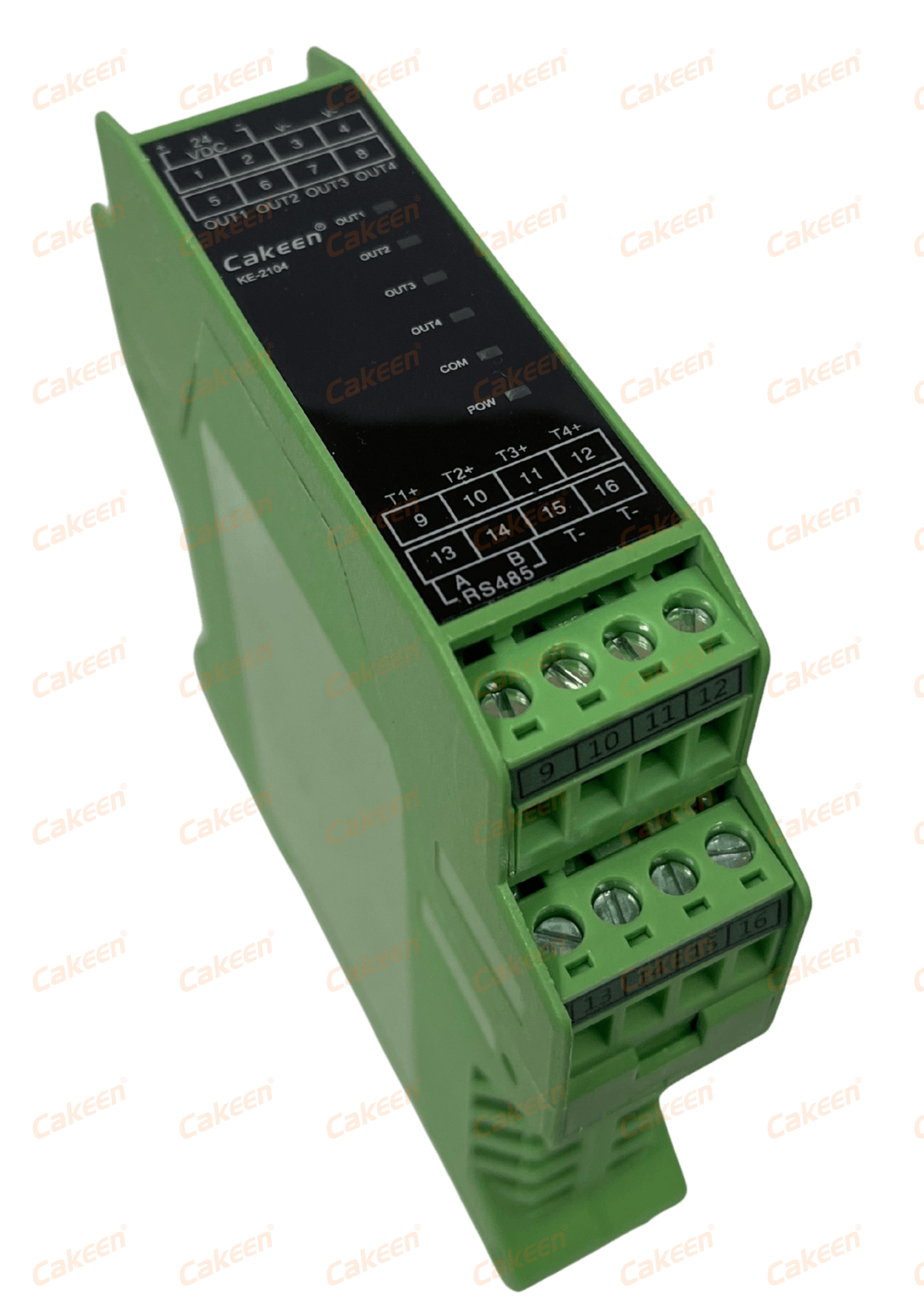
The DIN rail side of the decision: KE-2104, a 4-channel PID temperature controller for DIN35 rail mounting, running on a 12-24 VDC supply with external SSR output.
PID Temperature Controller (Panel Mount) — KE-48
The KE-48 is a 48 × 48 mm panel mount temperature controller for panel-mount temperature monitoring and process temperature control. It handles one loop, but handles it where the operator stands, and its output stage is the flexible part: SSR, 0-20 mA, 4-20 mA, or 0-10 V.
- Control channels: single channel
- Control accuracy: ±0.1°C
- Input type: PT / K / J / R / S / T / B / E / N / L
- Output: SSR / 0-20 mA / 4-20 mA / 0-10 V
- Communication: 1 × RS485
- Power supply: 100-265 V AC
- Mounting: panel mount, 48 × 48 mm cutout
- Housing: flame-retardant engineering plastic
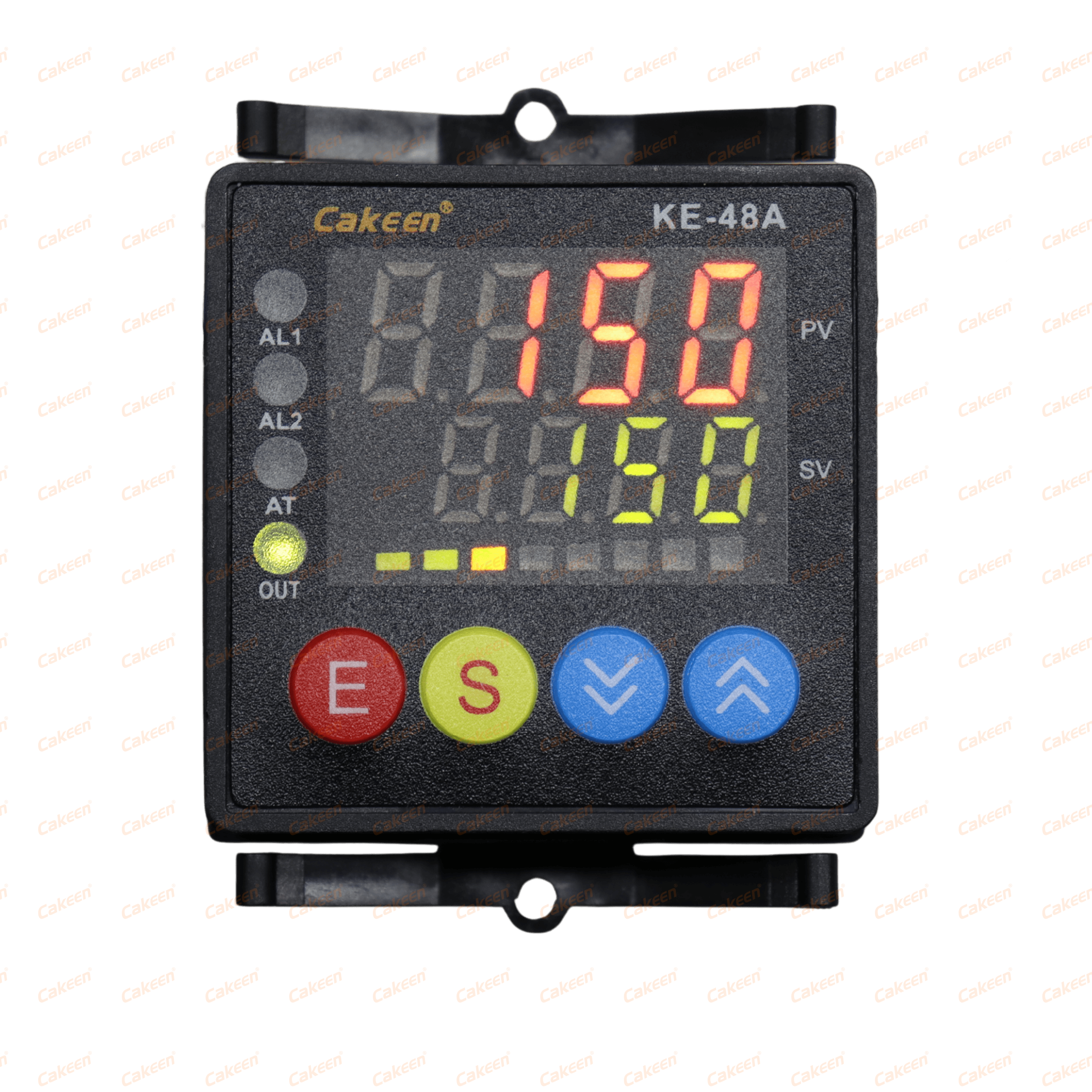
The panel side of the decision: KE-48, a single-channel panel mount controller with SSR or analog output, one RS485 port, and a 48 × 48 mm mounting cutout.
Installation Space and Wiring Access: The Real Trade-Off
Space is the first filter. A panel mount controller consumes door area and needs a cutout for every loop; a DIN rail controller consumes interior rail length and requires no door work. In cabinets where the door is reserved for an HMI, a VFD keypad, or switchgear, that difference decides the layout.
Wiring access is the second filter. Rail-mounted modules concentrate sensor and load wiring in one channel inside the enclosure, close to terminal blocks and the SSR bank, and that wiring does not move when the door opens. Panel-mounted controllers put wiring behind the door, which means the harness has to be dressed for hinge movement.
Power distribution is the third filter. The KE-2104 expects 12-24 VDC, so it belongs in a cabinet with a DC distribution layer. The KE-48 accepts 100-265 V AC directly, which suits panels that already switch mains-level circuits.
For engineers planning beyond temperature, the same DIN35 logic extends across the rest of the control layer: the K42CE-D CMS communication module provides six RS485 ports and one Ethernet port with Modbus TCP/RTU on a 12-24 VDC supply with DIN35 mounting, and the K15DT-D I/O expansion module adds five inputs and five NPN outputs over Modbus RTU on the same rail system. Rail length, not door area, is the resource these modules consume.
Integrating With General Purpose, Japanese Standard, and European Standard Cabinets
A form factor decision lands inside a cabinet that already has a regional identity. Cakeen builds three cabinet families, and each one shifts the practical answer.
| Cabinet family | Components | Protection | Voltage | Certification | Typical industries |
|---|---|---|---|---|---|
| General Purpose Electrical Control Cabinet | Siemens, Mitsubishi, Omron, Schneider | IP40-IP65 | 380V/400V, customizable | UL optional | General industrial automation; equipment retrofit & upgrade; factory automation systems |
| Japanese Standard Electrical Cabinet (JIS-compliant, precision) | Mitsubishi, Omron, Schneider | IP54/IP65 | 200V/400V | UL optional | Precision machinery control; semiconductor equipment; robotic systems |
| European Standard Electrical Cabinet | ABB, Siemens, Schneider | IP54/IP65 | 380V/400V 3-phase, customizable | CE, IEC, UL optional; TÜV Rheinland certified | Industrial automation equipment; production line control; factory power distribution |
In practice, a general-purpose enclosure is the most forgiving: IP40-IP65 protection and a customizable 380V/400V supply let a builder mix rail-mounted control blocks with a few door-mounted loops. A Japanese Standard cabinet is a precision enclosure for machinery and semiconductor equipment, where interior space is usually the scarce resource — the 4-channel KE-2104 on DIN35 rail is the natural fit for multi-loop thermal control. A European Standard cabinet is built to CE and IEC expectations with 3-phase 380V/400V distribution, so a door-mounted KE-48 gives operators local control without crossing into the power section.
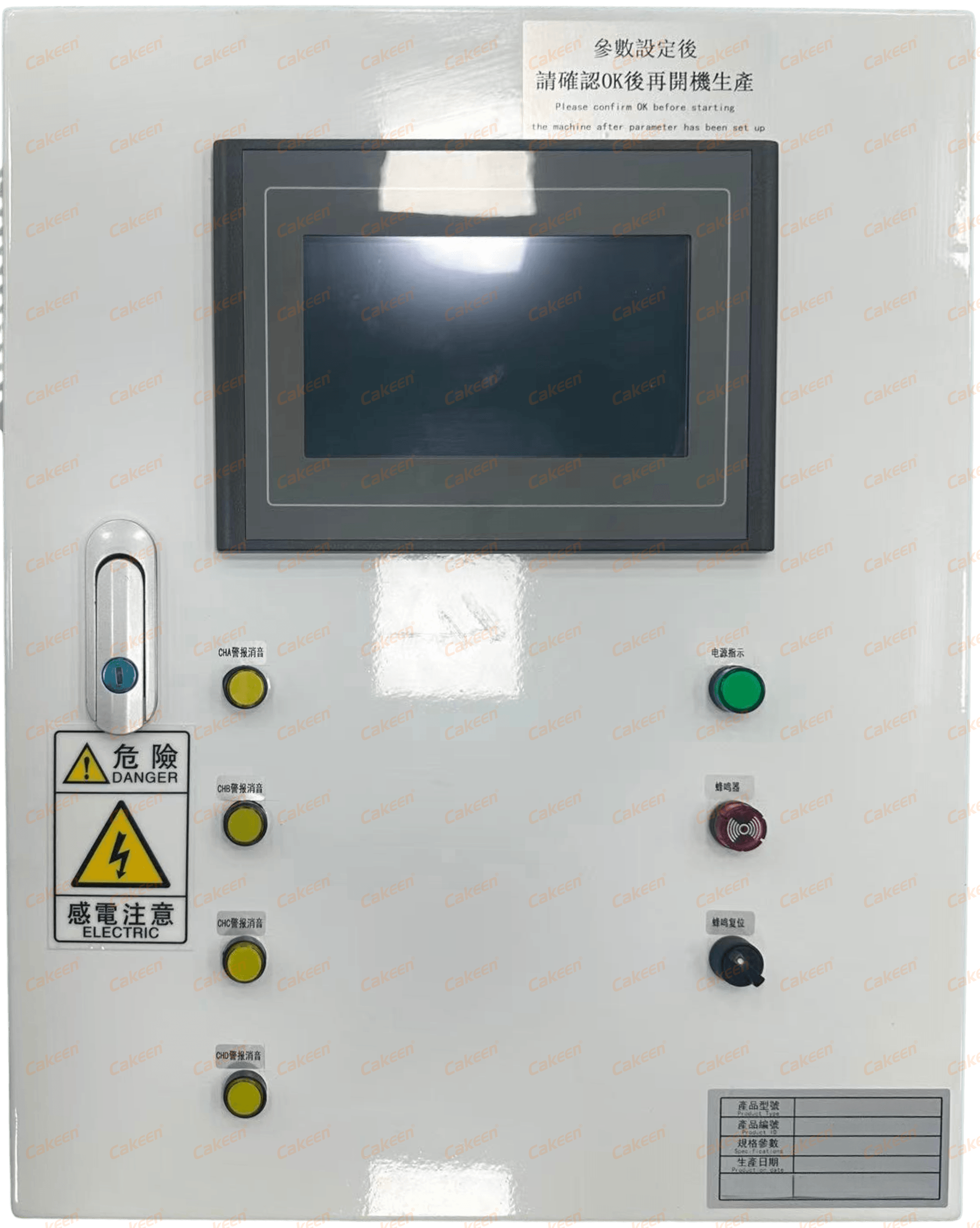
General Purpose Electrical Control Cabinet: IP40-IP65, 380V/400V (customizable), with Siemens, Mitsubishi, Omron, and Schneider components and UL as an option.
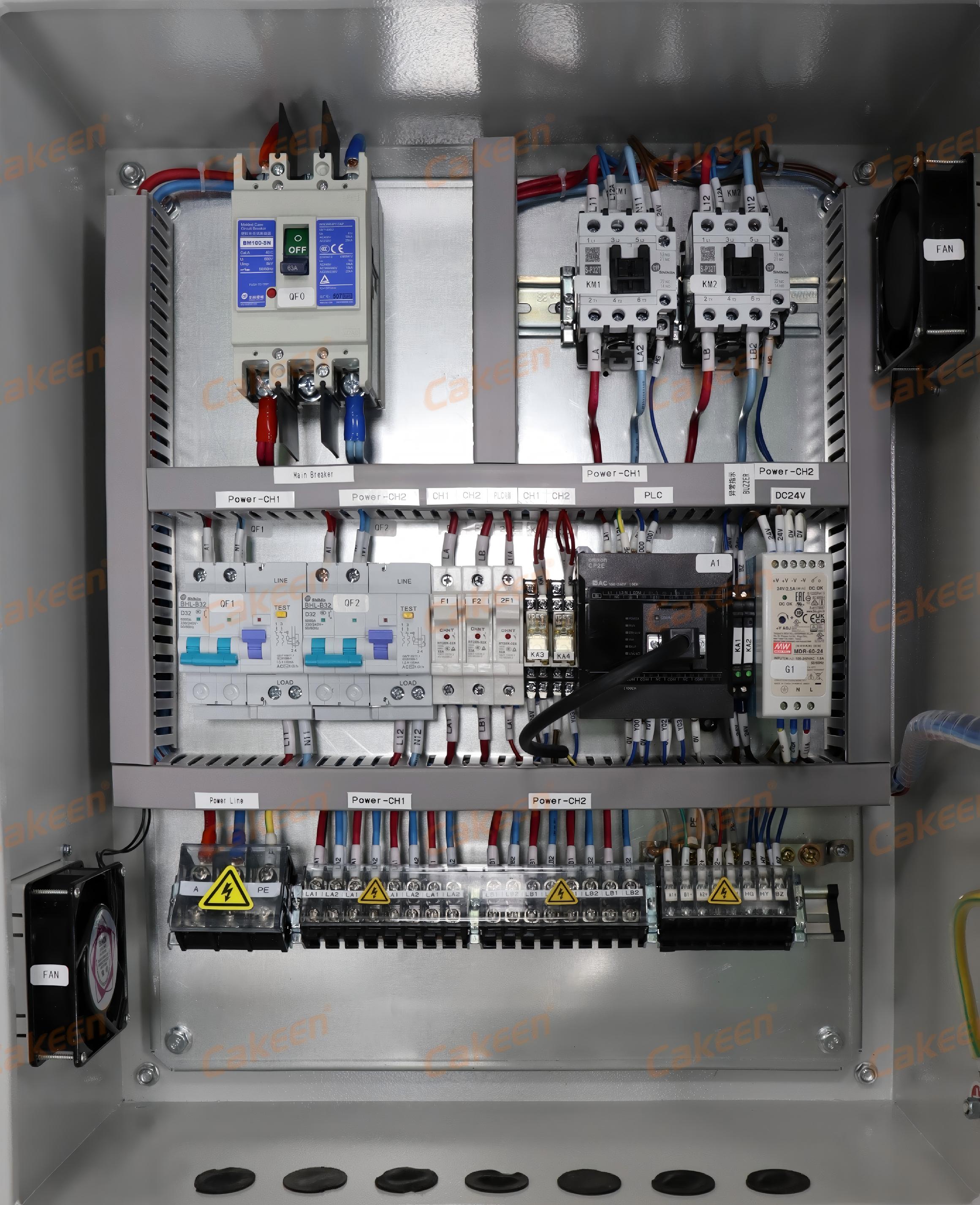
Japanese Standard Electrical Cabinet: a JIS-compliant precision enclosure at IP54/IP65 and 200V/400V, used for precision machinery control, semiconductor equipment, and robotic systems.
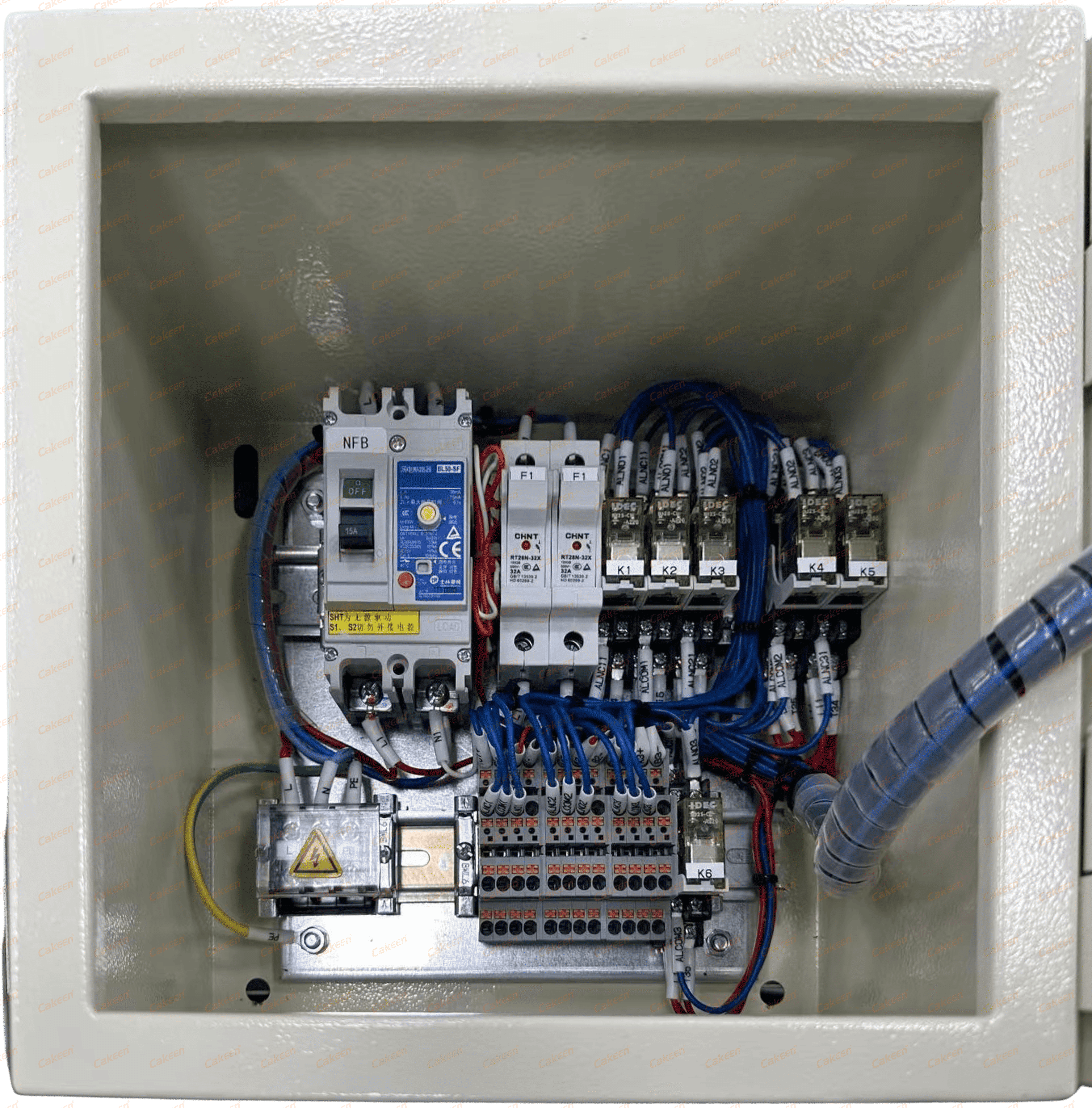
European Standard Electrical Cabinet: CE-certified and TÜV Rheinland certified, IP54/IP65, 380V/400V 3-phase (customizable), with ABB, Siemens, and Schneider components.
Step-by-Step Breakdown: Choosing a Form Factor for Your Cabinet
- Count the loops and decide where they live. If the cabinet controls four or more related temperature points, start with the 4-channel KE-2104 on DIN35 rail. If each loop belongs to a different operator station, start with panel mount units.
- Confirm the sensor types. Both products accept PT / K / J / R / S / T / B / E / N / L, so sensor standardisation does not force the decision, and one sensor stock can serve a mixed installation.
- Fix the output type from the final control element. The KE-2104 switches an external SSR. If the loop needs an analog signal — 0-20 mA, 4-20 mA, or 0-10 V — the published option is the KE-48.
- Check the power architecture. 12-24 VDC for the DIN rail unit, 100-265 V AC for the panel mount unit. This is often the constraint that decides the layout before space even enters the discussion.
- Decide who reads the value. If setpoints are handled from an HMI or SCADA layer, rail-mounted control keeps the door clean. If operators adjust setpoints locally, a 48 × 48 mm panel unit belongs on the door.
- Confirm compliance for the destination market. Panels destined for North America follow UL 508A practice; international builds follow IEC 60947. UL is an option on the general-purpose and Japanese Standard cabinets, while the European Standard cabinet is CE-certified and TÜV Rheinland certified.
- Validate on a sample cabinet. Check the 48 × 48 mm cutout, the DIN35 rail length, and the wiring path against a physical build before releasing production quantities.
Typical Use Cases
Semiconductor equipment OEM. One semiconductor equipment OEM has used both form factors together for more than four years, at a volume of 50+ units per year, for embedded temperature control in CVD, etching, and diffusion furnace equipment. The compact 48 × 48 mm KE-48 fits the equipment panel design, while the 4-channel KE-2104 saves cabinet space. Reported results are improved equipment uptime and consistent process temperature across all chambers.
Equipment integrator building flexible cabinets. A domestic equipment integrator has built 100+ flexible cabinet sets per year for more than five years, using the general-purpose, Japanese Standard, and European Standard cabinet families for factory automation and retrofit work. Multi-PLC brand support (Siemens, Mitsubishi, Omron), configurable IP40-IP65 protection, and quick customization turnaround are cited as the reasons behind a shortened customer delivery cycle of 40% and a high repeat order rate.
Semiconductor nitrogen pipeline heating and heating tape circuits. The same cabinet-space logic applies to pipe and vessel insulation loops. The ASH, KE-H10, and H6625 heating tape controllers run on 100-265 V AC with built-in SSR output (MAX 3A for ASH and H6625, MAX 6A for KE-H10), RS485/Modbus RTU communication, and ±0.1°C accuracy, while the HOT-GUN pipeline nitrogen heater covers 0-250°C at ±1°C with 800W-1600W heating power on AC 220V, and the HOT N2 MFC gas flow controller holds ±1% F.S. across 1-100 SLM. These heating tape, heating jacket, and pipeline circuits are exactly the kind of multi-point thermal load that ends up inside a shared enclosure, which is why the DIN rail versus panel mount decision is usually taken once for the whole cabinet rather than loop by loop.
Comparison Table: DIN Rail vs. Panel Mount PID Controllers
Everything below comes from the published specifications of the two Cakeen products. Where a value is not published, the table says so rather than estimating.
| Dimension | PID Temperature Controller (DIN Rail Mount) — KE-2104 | PID Temperature Controller (Panel Mount) — KE-48 |
|---|---|---|
| Mounting | DIN35 rail, inside the enclosure | Panel mount, 48 × 48 mm cutout |
| Control channels | 4 | Single channel |
| Control accuracy | ±0.1°C | ±0.1°C |
| Input type | PT / K / J / R / S / T / B / E / N / L | PT / K / J / R / S / T / B / E / N / L |
| Output | External SSR | SSR / 0-20 mA / 4-20 mA / 0-10 V |
| Communication | Not stated in the published specification | 1 × RS485 |
| Power supply | 12-24 VDC | 100-265 V AC |
| Housing material | Flame-retardant engineering plastic | Flame-retardant engineering plastic |
| Application context | Electrical cabinet installation; multi-point temperature control | Panel-mount temperature monitoring; process temperature control |
| Operation | 24/7 continuous operation | 24/7 continuous operation |
| Fits best when | Several loops must be controlled in limited cabinet space | One loop needs local display, local setpoint, and analog output options |
FAQ
1. Do DIN rail and panel mount PID controllers need different certifications inside a control cabinet?
The mounting style does not change the panel-level rules that apply to the cabinet. Industrial control panels are typically listed to UL 508A for North America and designed to IEC 60947 for international markets, according to UL Solutions. At component level, Cakeen lists ISO9001, ISO14001, ISO45001, UL, SEMI S2, CE, and RoHS across its quality and safety management, and its European Standard Electrical Cabinet is CE-certified and TÜV Rheinland certified, while UL remains an option on the General Purpose and Japanese Standard cabinets. The practical sequence is to fix the destination market first, then choose the form factor that fits the cabinet.
2. Can one form factor handle multi-point temperature control, or do I need both?
Both are usually needed. The KE-2104 is a 4-channel DIN rail controller with DIN35 mounting, external SSR output, and a 12-24 VDC supply, which suits multi-point temperature control inside the cabinet. The KE-48 is a single-channel panel mount controller with a 48 × 48 mm cutout, SSR or 0-20 mA / 4-20 mA / 0-10 V output, and one RS485 port, which suits loops where an operator needs a local display and setpoint. Both share the same ±0.1°C control accuracy and the PT / K / J / R / S / T / B / E / N / L input range, so a mixed installation does not require two different sensor stocks.
3. What drives the cost difference between a DIN rail build and a panel mount build?
Cost is driven by configuration rather than by mounting style alone: the number of control channels, the number of door cutouts, the terminal and wiring count, the door harness, spare-part stock, and whether the loop needs a DC supply (the KE-2104 runs on 12-24 VDC) or mains (the KE-48 runs on 100-265 V AC). Cakeen quotes per configuration and supports OEM/ODM production in which all parameters, logo, and appearance can be customized, with 100% testing before shipment.
4. Can I validate both form factors with samples before ordering production quantities?
Yes. Because every parameter, logo, and appearance detail can be customized under Cakeen's OEM/ODM model, a sample build is the normal way to confirm that a 48 × 48 mm panel cutout, a DIN35 rail section, and the wiring path fit the cabinet you are actually building. One semiconductor equipment OEM has used the panel mount KE-48 and the 4-channel DIN rail KE-2104 together for more than four years, with the compact panel unit fitting equipment design and the DIN rail unit saving cabinet space.
5. What is the lead time, and does the form factor affect delivery?
Standard OEM/ODM lead time is 30-45 days. Form factor affects project sequencing rather than the production slot: a DIN rail module can be added inside the enclosure later without machining a new door cutout, while an additional panel mount loop needs another 48 × 48 mm cutout. To start a sample or a quotation, contact Wendy at jwy@wxkeen.com or +86-0510-85161878 / +86 18921139517 (WhatsApp +86 18921139517), or visit www.wxkeen.com.
Conclusion: Match the Form Factor to the Cabinet, Not the Other Way Around
The DIN rail versus panel mount question has a short answer and a long answer. The short answer: rail-mounted controllers such as the 4-channel KE-2104 control several loops inside the enclosure on a 12-24 VDC supply with external SSR output, while panel mount controllers such as the KE-48 control a single loop at the operator interface with a 48 × 48 mm cutout, 100-265 V AC supply, and SSR or analog output. Both deliver ±0.1°C control accuracy and accept the same PT / K / J / R / S / T / B / E / N / L input range.
The long answer is the part that decides most projects: loop count, power architecture, wiring access, door space, destination-market compliance, and the cabinet family — General Purpose, Japanese Standard, or European Standard — that the enclosure is being built to. Because Cakeen manufactures the controllers, the DIN-rail communication and I/O modules, and the cabinets themselves, that decision can be checked against one supply chain rather than coordinated across three.
Next Step: Confirm the Form Factor on Your Own Cabinet
Send the loop list, the cabinet family, and the destination market, and Cakeen will confirm whether the 4-channel KE-2104, the panel mount KE-48, or a combination fits the build. Sample units and configuration quotations are available under the OEM/ODM model, with a standard lead time of 30-45 days.
Email: jwy@wxkeen.com | Tel: +86-0510-85161878 / +86 18921139517 | WhatsApp: +86 18921139517 | Web: www.wxkeen.com
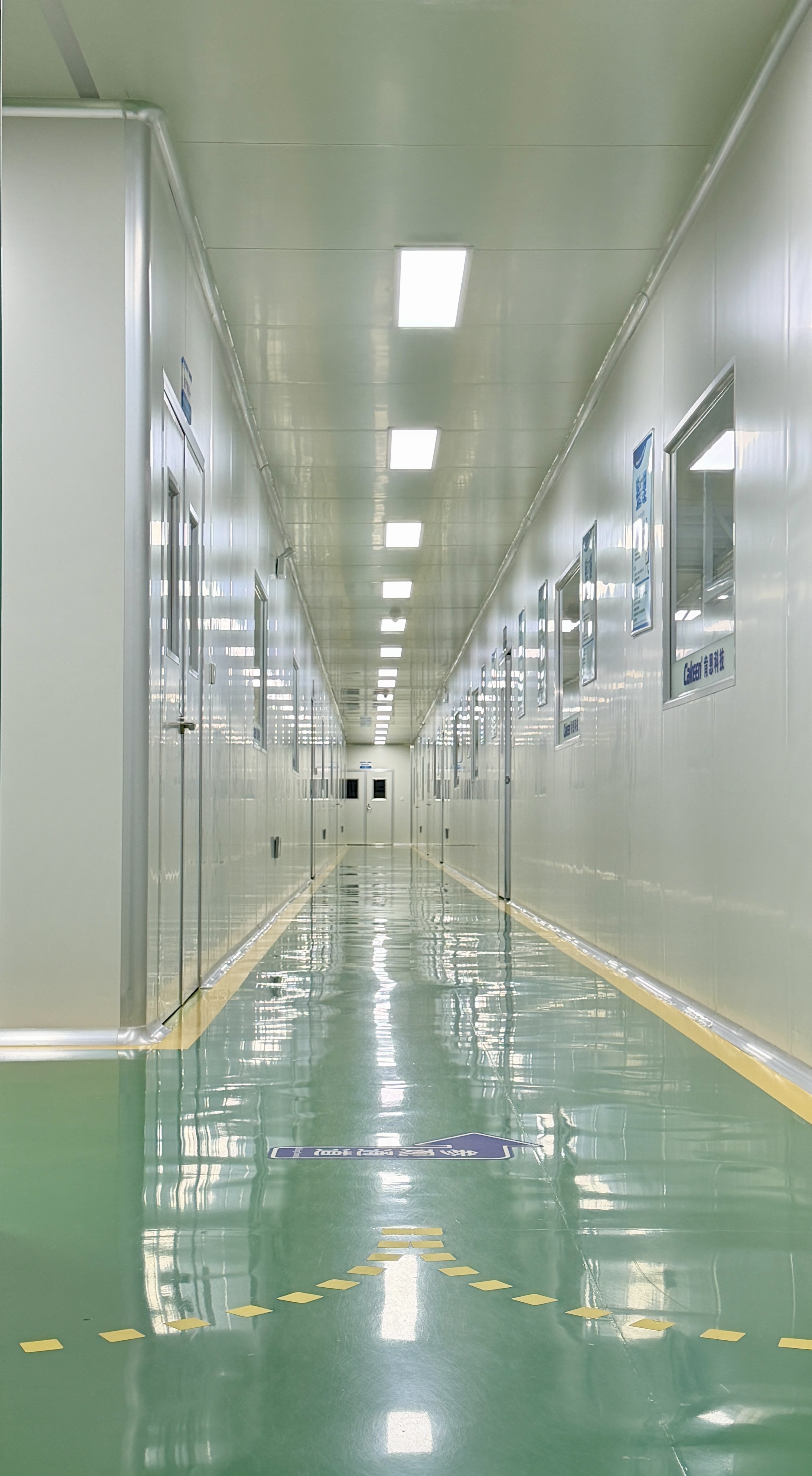
Both form factors are manufactured by Cakeen (Wuxi Cakeen Technology Co., Ltd.) in Huishan District, Wuxi, Jiangsu Province, with 100% testing before shipment and remote after-sales support.