How to Evaluate a PID Controller Maker's Control Cabinet Capability
How to Evaluate a PID Controller Maker's Control Cabinet Capability
Short answer: a PID temperature controller manufacturer with genuine control cabinet capability can show you four things beyond the controller itself: cabinet engineering to a named standard (general purpose, JIS-compliant, or CE-certified European standard), electrical drawings issued under IEC or UL 508A, a defined bill of materials built from named component brands, and a control layer — PLC programs, I/O expansion, and Modbus communication — that matches the controllers going into the panel. This guide explains what to request, what each document proves, and where suppliers usually cannot produce evidence.
Problem Definition: The Cabinet Is Where Controller Sourcing Usually Breaks
Temperature control projects are normally specified from the loop outward. The engineer fixes the number of control channels, the accuracy target, the sensor types and the output type — a four-channel DIN rail unit at ±0.1°C, for example, or a single-channel panel-mount unit with a 4–20mA output — and treats the enclosure as a detail to be resolved later.
That sequence of decisions creates a predictable set of failures once the panel actually has to be built:
- Power architecture mismatch. A DIN rail controller such as the Cakeen KE-2104 runs on 12–24VDC and drives an external SSR. A panel-mount unit such as the KE-48 runs on 100–265VAC and offers SSR, 0–20mA, 4–20mA or 0–10V outputs. A cabinet wired for one architecture does not accept the other without rework.
- Signal and I/O mismatch. Multi-channel temperature control usually needs more digital points than the controller provides. The Cakeen K15DT-D I/O expansion module adds five NPN outputs on Modbus RTU over a DIN35 rail; if that expansion capacity was never designed into the panel, the extra wiring lands on the buyer's engineering team instead of the supplier's.
- Communication mismatch. Controllers, communication modules and monitoring software must speak the same protocol. The Cakeen K42CE-D combines six RS485 ports and one Ethernet port on Modbus TCP/RTU. A panel planned around RS485 only wastes the Ethernet path and forces a second gateway later.
- Documentation mismatch. A cabinet assembled without IEC or UL 508A drawings is difficult to inspect, modify or certify afterwards. This problem typically surfaces during an audit or a retrofit, long after the purchase order was closed.
Every one of these problems is inexpensive to avoid at the specification stage and expensive to correct after the panel is wired. The practical question for a buyer is therefore not whether a supplier sells PID controllers, but whether that supplier can engineer, document and build the panel the controllers live inside. That is what the rest of this guide tests.
Industry Background: Why Cabinet Capability Moved Into the Buying Decision
Temperature control hardware is a growing, Asia-centred market, and that has changed what buyers ask suppliers to deliver. According to SNS Insider, the global PID controller market was valued at USD 1.60 billion in 2024 and is projected to reach USD 2.24 billion by 2032. Strategic Market Research estimates the industrial temperature controller market growing at a CAGR of 7.1% from 2024 to 2030, driven by Industry 4.0 adoption. Dataintelo reports that Asia-Pacific held a 38.2% revenue share of the temperature controller market in 2023, with China as a key manufacturing hub.
The application side is equally specific. Market Research Reports values the global semiconductor temperature control equipment market at USD 663 million in 2024, where precision is a direct process requirement rather than a preference. Grand View Research notes that high-precision PID controllers can hold temperature stability within ±0.1°C — a tolerance that depends as much on sensor wiring, SSR switching and panel thermal design as on the controller itself.
At the same time, the compliance layer around control panels has become a hard gate. UL Solutions states that industrial control panels, including PID controllers, must comply with UL 508A for North American safety listing and IEC 60947 for international markets. A supplier that only ships a controller leaves that compliance work with the buyer.
The competitive landscape reinforces the point. Mordor Intelligence lists Honeywell, Omron, Siemens, Eurotherm (Schneider Electric) and ABB among the leading global manufacturers of PID and temperature controllers — several of which are also component suppliers inside control cabinets. When the same industrial brands appear on both the component side and the panel side, buyers begin to treat cabinet engineering as part of the supplier's technical depth rather than a separate purchase.
Detailed Solution: What Control Cabinet Capability Actually Consists Of
Cabinet capability is not a single certificate. It decomposes into four layers, and a supplier can be strong in one and absent in another. Cakeen (Wuxi Keen Technology Co., Ltd., founded 2011 and based in Huishan District, Wuxi, Jiangsu Province) is an instructive case because its published scope covers all four layers: semiconductor industrial control electronics development, electrical cabinet systems, AI system software development, and AI embedded system R&D.
Layer 1 — Cabinet engineering to a named standard
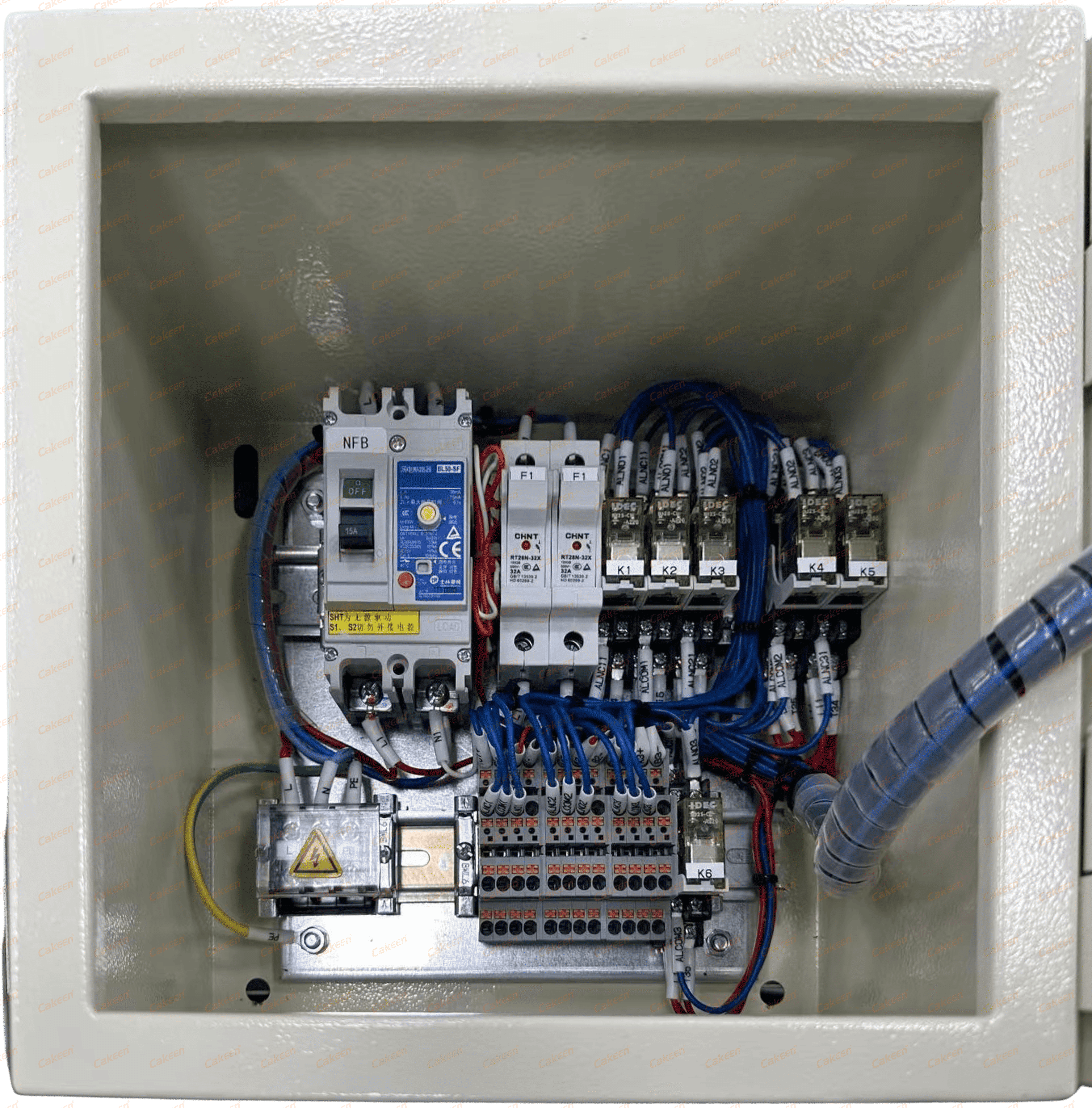
The first check is whether the supplier builds to a defined standard or only to a generic box. Cakeen publishes three distinct cabinet families, each with its own compliance basis, component set and protection rating:
- General Purpose Electrical Control Cabinet — a flexible, customizable industrial control cabinet using Siemens, Mitsubishi, Omron and Schneider components, with IP40–IP65 protection, 380V/400V voltage (customizable) and optional UL certification. It is intended for general industrial automation, equipment retrofit and upgrade, and factory automation systems.
- Japanese Standard Electrical Cabinet — a JIS-compliant precision electrical control cabinet built with Mitsubishi, Omron and Schneider components, IP54/IP65 protection and 200V/400V voltage, with UL optional. It targets precision machinery control, semiconductor equipment and robotic systems.
- European Standard Electrical Cabinet — a CE-certified industrial electrical control cabinet that is also TÜV Rheinland certified, using ABB, Siemens and Schneider components, with IP54/IP65 protection and 380V/400V three-phase input (customizable); CE, IEC and optional UL certification. It serves industrial automation equipment, production line control and factory power distribution.
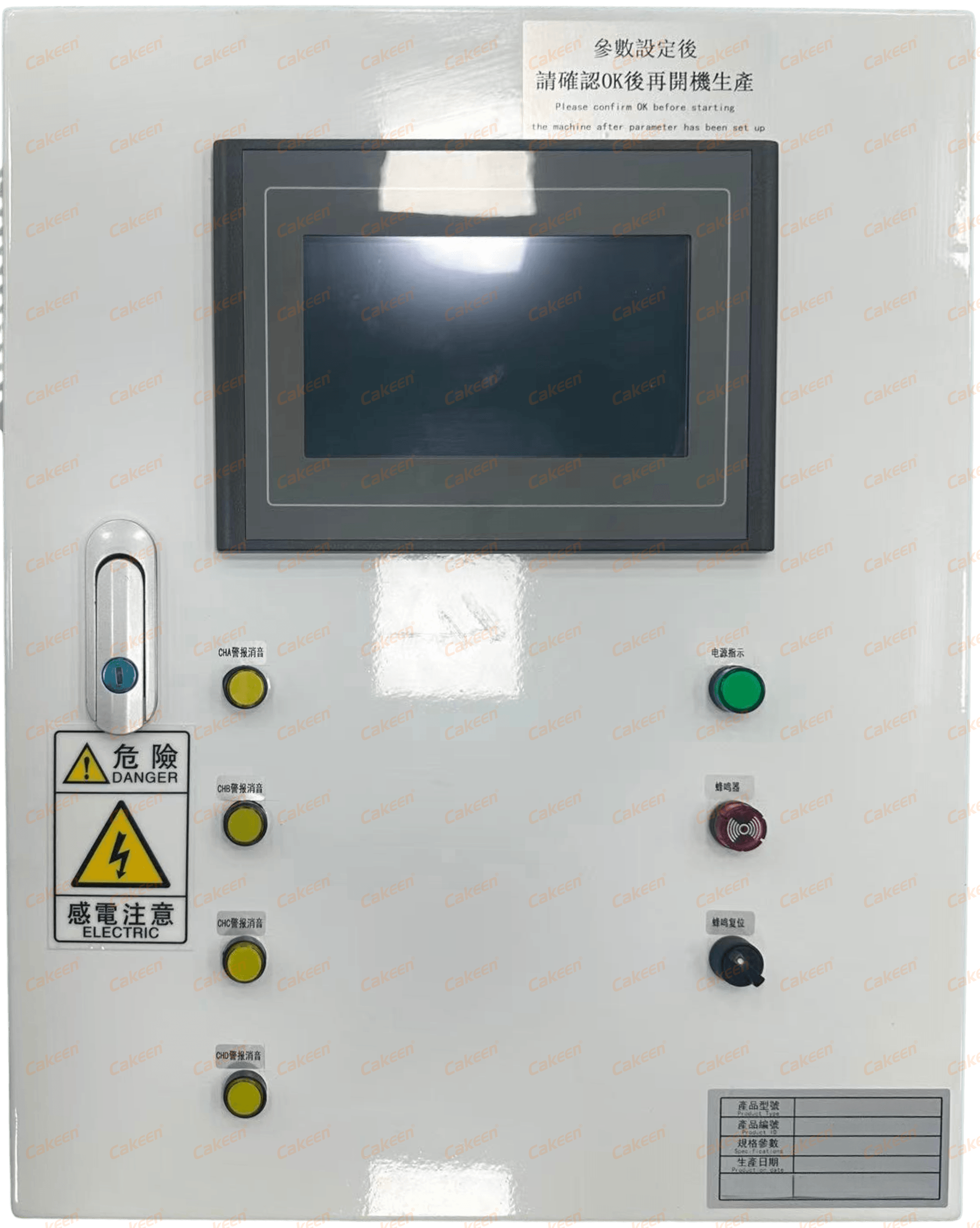
Three cabinet families matter for evaluation because they reveal how a supplier thinks about markets. A manufacturer that offers a JIS-compliant design and a TÜV Rheinland certified European design has already solved the voltage, protection and component-sourcing questions that differ between Japan, the EU and North America. All three cabinet types use carbon steel enclosures and are documented for 24/7 continuous operation in the general purpose and European standard configurations.
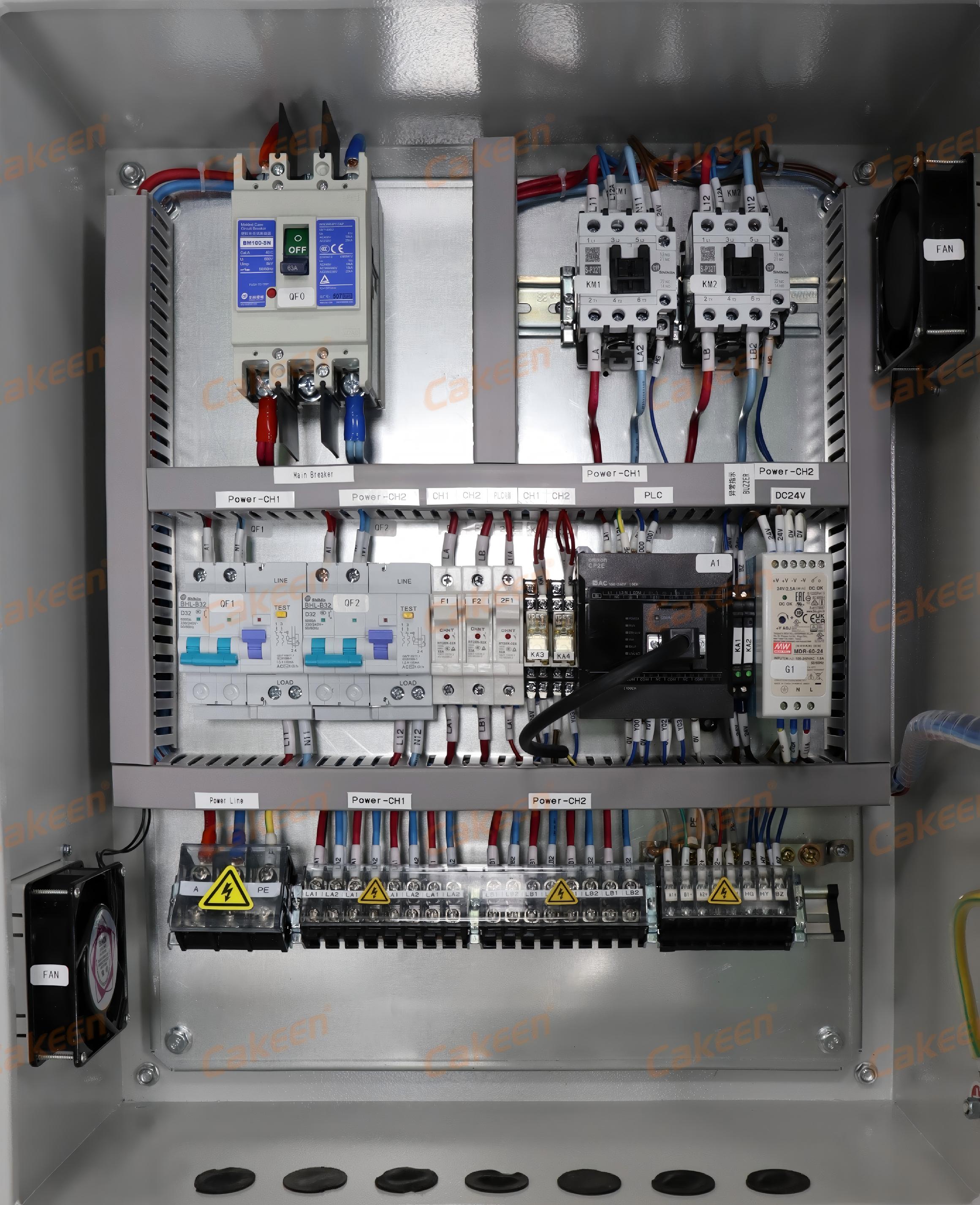
Layer 2 — Drawings and documentation issued to IEC / UL 508A
The second check is the engineering deliverable that precedes the metal. Cakeen's Electrical Drawing Design Service is documented as compliant with IEC and UL508A, with a design cycle of 2–4 weeks, delivery in DWG, PDF and BOM Excel formats, and language support in Chinese and English. It is applied to semiconductor equipment retrofit, new equipment electrical design, and factory electrical system upgrade.
For a buyer, a drawing package in this format is the difference between a maintainable asset and an opaque box. It also determines whether a third-party panel shop or an internal maintenance team can service the cabinet later without reverse-engineering it.
Layer 3 — Control, I/O and communication architecture
The third check is whether the control layer is engineered or merely assembled. Cakeen's PLC Control Program Design Service supports Siemens S7-1200/1500, Mitsubishi Q/L series and Omron NJ/NX platforms, uses Modbus TCP and Modbus RTU, is programmed in Python, and delivers documentation plus executable files. On the hardware side, the K42CE-D communication module provides six RS485 ports and one Ethernet port for low-latency parameter setting, data acquisition, forwarding and PLC replacement duty, while the K15DT-D expansion module adds five NPN outputs on a DIN35 rail.
Two supply voltages appear across the controller range and both must be planned for in the cabinet: 12–24VDC for the DIN rail KE-2104, and 100–265VAC for the panel-mount KE-48 and for the heating tape controllers ASH, H6625 and KE-H10.
Layer 4 — Electronics and software depth
The fourth check is whether the supplier can go below the panel. Cakeen's PCB Circuit Board Design Service covers schematic to layout and routing with UL and EMC compliance, and its Embedded System Software Development Service covers IoT connectivity, edge computing and AI analytics as a full-stack solution from hardware to application layer. The Industrial Device Central Monitoring System (CMS) is documented as supporting 10,000+ Modbus TCP devices, with a 10-second polling interval, monitoring of PV/SV temperature, AL1/AL2 thresholds and TC BK sensors, and 365-day time-series history.
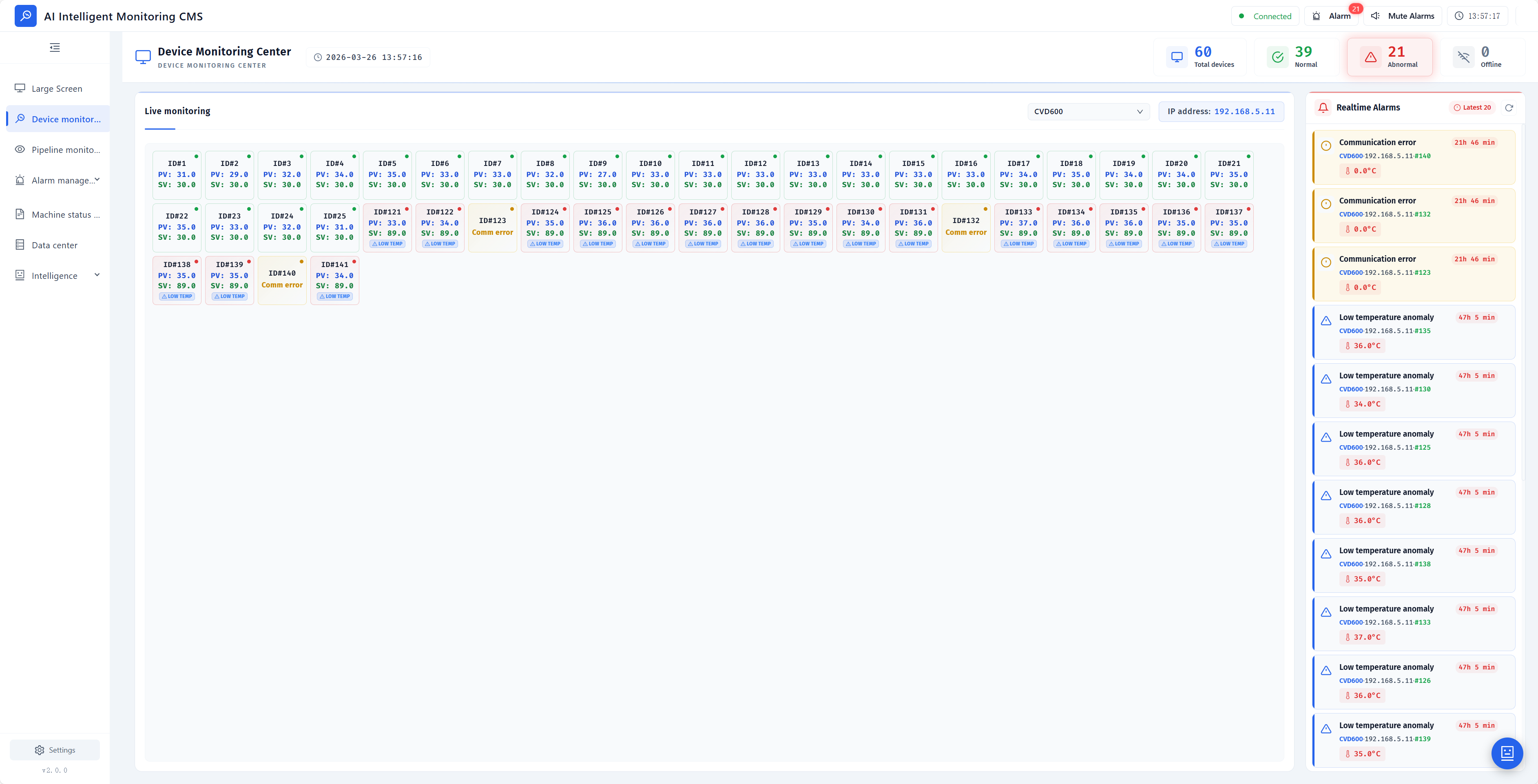
This layer matters because a high precision PID temperature controller is only as useful as the data path behind it. A cabinet that cannot report its own state turns every temperature excursion into a manual investigation.
Step-by-Step: How to Verify Cabinet Capability Before You Order
The evaluation sequence below is designed to be run against any PID temperature controller supplier, not just Cakeen. Each step names the evidence to request and the standard a documented answer should meet.
Step 1 — Define the loop before the panel
Fix the number of channels, the accuracy target, the sensor types and the output type first. Cakeen's range covers ±0.1°C on the KE-2104 (4 channels, external SSR), KE-48 (single channel, SSR / 0–20mA / 4–20mA / 0–10V), ASH (built-in SSR, max 3A), H6625 (mini, built-in SSR, max 3A) and KE-H10 (built-in SSR, max 6A). Sensor input across the PID range covers PT/K/J/R/S/T/B/E/N/L.
Step 2 — Match the cabinet standard to the destination market
North American installations pull toward UL 508A panel compliance; the EU pulls toward CE and IEC; Japan pulls toward JIS. Ask which cabinet family the supplier will use and why.
Step 3 — Read the bill of materials by brand
Named components are a traceability signal. The general purpose and Japanese standard cabinets use Siemens, Mitsubishi, Omron and Schneider (Japanese standard: Mitsubishi, Omron, Schneider), while the European standard cabinet uses ABB, Siemens and Schneider.
Step 4 — Check ingress protection against the actual environment
IP40–IP65 is available on the general purpose cabinet; IP54/IP65 on the Japanese standard and European standard cabinets. The correct rating depends on dust, humidity and wash-down exposure, not on preference.
Step 5 — Confirm the voltage architecture
380V/400V customizable on the general purpose cabinet, 200V/400V on the Japanese standard cabinet, 380V/400V three-phase on the European standard cabinet. Controller supply voltage must be reconciled with this at the drawing stage.
Step 6 — Request the drawing package as a deliverable, not a courtesy
Ask for DWG, PDF and BOM Excel under IEC and UL508A, with the design cycle stated — 2–4 weeks in Cakeen's documented service — and the drawing language confirmed.
Step 7 — Verify the protocol map end to end
Controller to communication module to supervisory system. Modbus RTU on the controller side, Modbus TCP/RTU on the K42CE-D, and CMS on top. Any gap in that chain becomes a third-party gateway purchase.
Step 8 — Confirm certifications and their scope
Cakeen holds ISO9001, ISO14001, ISO45001, UL, SEMI S2, CE and ROHS certifications. Cabinets carry their own scope: CE and IEC on the European standard cabinet, with UL optional across the family.
| Evidence to request | What a documented answer proves | Reference point in Cakeen's published specifications |
|---|---|---|
| Named cabinet standard and compliance basis | The supplier engineers to a standard, not to a generic enclosure | General purpose (customizable), JIS-compliant Japanese standard, CE / TÜV Rheinland certified European standard |
| Bill of materials with component brands | Component sourcing control and traceability | Siemens, Mitsubishi, Omron, Schneider; ABB, Siemens, Schneider (European standard) |
| Ingress protection and voltage rating | Fit to plant environment and grid | IP40–IP65; 200V/400V; 380V/400V; 380V/400V three-phase |
| Electrical drawing package | Design discipline and later serviceability | IEC and UL508A; DWG, PDF, BOM Excel; 2–4 week design cycle; Chinese and English |
| Control and communication architecture | Controller, I/O and host layer connect without third-party glue | K42CE-D: 6× RS485 + 1 Ethernet, Modbus TCP/RTU; K15DT-D: 5× NPN I/O |
| Monitoring and data layer | The panel can be supervised at scale, not only locally | CMS: 10,000+ Modbus TCP devices, 10-second polling, PV/SV and AL1/AL2 monitoring, 365-day history |
| Manufacturer certification scope | Ability to serve regulated markets | ISO9001, ISO14001, ISO45001, UL, SEMI S2, CE, ROHS |
Use Cases: Where the Cabinet and the Controller Are Tested Together
Semiconductor nitrogen line heating
Pipeline nitrogen heating is a demanding first test of cabinet integration, because the heater, the controller and the panel must agree on load and switching behaviour. The Cakeen HOT-GUN pipeline nitrogen gas heater operates from 0–250°C with ±1°C control accuracy at AC 220V and 800W–1600W heating power, preventing condensation on pipe walls. A DIN rail PID controller in the same cabinet handles the loop, and because the controller is DIN35 rail mounted, it can be exchanged without rebuilding the panel. This configuration is relevant to Hot N2 controller semiconductor applications, where the nitrogen line and the temperature loop share a single enclosure.
Vessel, jacket and mantle heating circuits
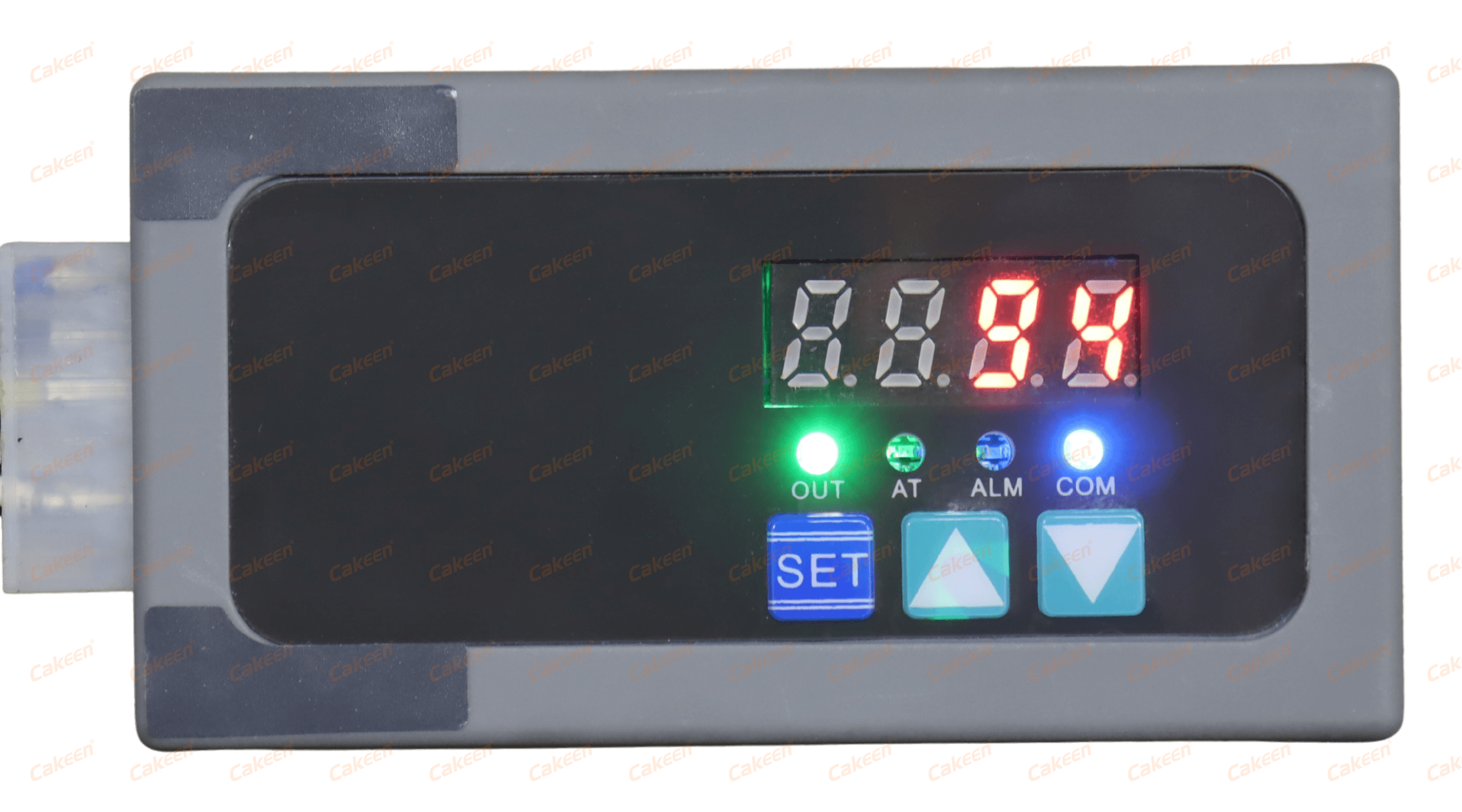
When buyers search for a heating jacket temperature controller or a heating mantle temperature controller, the underlying requirement is usually the same: a heating element wrapped around a vessel or pipe, a sensor measuring the surface or contents, and a controller that holds a stable setpoint. Cakeen's ASH model is documented as a PID temperature controller for pipe and vessel insulation and heating, with built-in SSR output at max 3A, RS485/Modbus RTU communication and 100–265VAC supply. The KE-H10 raises the built-in SSR output to max 6A for higher-power heating tape circuits on semiconductor equipment pipelines and chemical delivery insulation, while the H6625 mini version exists for space-constrained installations — a constraint that is normally settled by the cabinet layout rather than the controller.
Multi-channel monitoring across a production line
Where many loops run in parallel, the KE-2104 four-channel DIN rail controller at ±0.1°C becomes the panel building block, with K15DT-D expansion for extra digital points and K42CE-D for aggregation. Because the CMS layer supports 10,000+ Modbus TCP devices with 365-day history, the same architecture scales from a single machine panel to a plant-wide temperature monitoring system without changing the controller family.
OEM and custom cabinet programmes
For buyers operating a PID controller OEM arrangement, cabinet capability is the deciding factor. A supplier that can take a buyer's controller selection, produce IEC/UL508A drawings, build the enclosure to IP and voltage requirements, program the PLC, and supply monitoring software removes three separate vendors from the project. Cakeen's export share of approximately 40%, with markets in Spain, Southeast Asia, the European Union and the USA, reflects this kind of integration work rather than single-component sales.
Comparison Table: What Each Cabinet Standard Tells a Buyer
The three cabinet families below are the clearest available signal of engineering depth, because each one encodes a different market's expectations. All values come from Cakeen's published cabinet specifications.
| Attribute | General Purpose Cabinet | Japanese Standard Cabinet | European Standard Cabinet |
|---|---|---|---|
| Classification | Flexible general-purpose industrial electrical control cabinet (customizable) | JIS-compliant precision electrical control cabinet | CE-certified industrial electrical control cabinet (TÜV Rheinland certified) |
| Typical components | Siemens, Mitsubishi, Omron, Schneider | Mitsubishi, Omron, Schneider | ABB, Siemens, Schneider |
| Ingress protection | IP40–IP65 | IP54/IP65 | IP54/IP65 |
| Voltage | 380V/400V, customizable | 200V/400V | 380V/400V three-phase, customizable |
| Certification | UL optional | UL optional | CE, IEC, UL optional |
| Enclosure material | Carbon steel | Carbon steel | Carbon steel |
| Typical applications | General industrial automation; equipment retrofit and upgrade; factory automation systems | Precision machinery control; semiconductor equipment; robotic systems | Industrial automation equipment; production line control; factory power distribution |
FAQ
What certifications and standards should I check on a PID temperature controller manufacturer's control cabinets?
Start with panel-level standards, then check the manufacturer's own scope. According to UL Solutions, industrial control panels including PID controllers must comply with UL 508A for North American safety listing and IEC 60947 for international markets. Beyond that, ask which cabinet family the supplier will build: Cakeen's European Standard Electrical Cabinet is CE-certified and TÜV Rheinland certified and carries CE, IEC and optional UL certification, while the General Purpose and Japanese Standard cabinets offer UL as an option. At company level, Cakeen holds ISO9001, ISO14001, ISO45001, UL, SEMI S2, CE and ROHS certifications, and its Electrical Drawing Design Service is documented as compliant with IEC and UL508A.
Can one manufacturer supply both the PID controllers and the complete control cabinet?
Yes, and this is the capability that separates a component vendor from an integration partner. Cakeen supplies the full loop hardware — KE-2104 DIN rail four-channel controller at ±0.1°C, KE-48 panel-mount controller, ASH, H6625 and KE-H10 heating tape controllers — alongside three cabinet families: a flexible general-purpose cabinet, a JIS-compliant Japanese standard cabinet for precision machinery and semiconductor equipment, and a CE / TÜV Rheinland certified European standard cabinet for production line control and factory power distribution. The same supplier also provides IEC/UL508A electrical drawings, PLC programming for Siemens S7-1200/1500, Mitsubishi Q/L and Omron NJ/NX platforms, and Modbus-based communication hardware.
What determines the cost of a control cabinet package for a temperature control system?
Cost is driven by specification choices, not by the cabinet label alone. The main variables documented in Cakeen's cabinet range are component brand set (Siemens, Mitsubishi, Omron and Schneider for general purpose and Japanese standard; ABB, Siemens and Schneider for the European standard), ingress protection level (IP40 up to IP65 on the general purpose cabinet, IP54/IP65 on the Japanese standard and European standard cabinets), voltage configuration (380V/400V, 200V/400V, or 380V/400V three-phase), certification scope (CE and IEC on the European standard cabinet, UL optional across the family), and the amount of engineering included — drawings, PLC programming and communication modules. Two quotations for the same controller list can differ substantially once these five variables are aligned.
How can I validate cabinet and controller integration before full production?
Validate at the drawing stage rather than the shipping stage. Cakeen's Electrical Drawing Design Service is documented as compliant with IEC and UL508A, delivering DWG, PDF and BOM Excel files, with a 2–4 week design cycle and support for both Chinese and English documentation. Reviewing that package lets a buyer confirm the protocol map (Modbus RTU at the controller, Modbus TCP/RTU on the K42CE-D communication module), the I/O count including K15DT-D expansion, the supply voltages (12–24VDC for the KE-2104, 100–265VAC for the KE-48 and heating tape controllers), and the sensor input types (PT/K/J/R/S/T/B/E/N/L) before cabinet build begins.
How long does the engineering phase take, and how do I start an evaluation?
The documented design cycle for Cakeen's electrical drawing service is 2–4 weeks, covering semiconductor equipment retrofit, new equipment electrical design and factory electrical system upgrade; cabinet production and delivery schedules are project-specific and are confirmed with the quotation. To start an evaluation, send your loop list and destination market to Cakeen (Wuxi Keen Technology Co., Ltd.) at jwy@wxkeen.com or via WhatsApp at +86 18921139517, and request three items: the cabinet family recommendation with its compliance basis, the IEC/UL508A drawing package scope, and the controller datasheets for the models proposed.
Conclusion: Judge the Cabinet, Not Just the Controller
A PID temperature controller is a specification; a control cabinet is a capability. The evaluation steps in this guide — loop definition, standard matching, bill of materials, ingress protection, voltage architecture, drawing package, protocol map and certification scope — test whether a PID temperature controller manufacturer can carry a project from controller selection through to a documented, maintainable panel.
Cakeen's published range gives buyers concrete evidence at every step: three cabinet families including a JIS-compliant design and a CE / TÜV Rheinland certified European standard cabinet, drawings to IEC and UL508A, PLC programming across Siemens, Mitsubishi and Omron platforms, Modbus communication hardware, CMS monitoring for 10,000+ devices, and a PID controller portfolio from the four-channel DIN rail KE-2104 to the heating tape controllers ASH, H6625 and KE-H10. A manufacturer with a 2019 m² facility, approximately 50 employees including a 20-engineer R&D team, and roughly 40% of output exported to Spain, Southeast Asia, the EU and the USA can be assessed against all of it before an order is placed.
The practical takeaway is simple: ask for the drawings, the BOM and the protocol map. Suppliers with cabinet capability answer in documents. Suppliers without it answer in adjectives.

Request your cabinet capability package
Send your loop list, destination market and voltage requirements, and we will return a cabinet family recommendation, the IEC/UL508A drawing scope, controller datasheets and a quotation for the complete panel.