
PID Controllers Compared: DIN Rail vs. Panel Mount vs. Expansion Modules
PID Controllers Compared: DIN Rail vs. Panel Mount vs. Expansion Modules
Buyers researching a PID temperature controller manufacturer often start with control accuracy, input type, number of channels, and communication protocol. Those specifications matter, but the mounting form factor determines how cleanly the controller fits into an electrical cabinet, how many panel cutouts are needed, and whether the control system can be expanded later without replacing the whole unit.
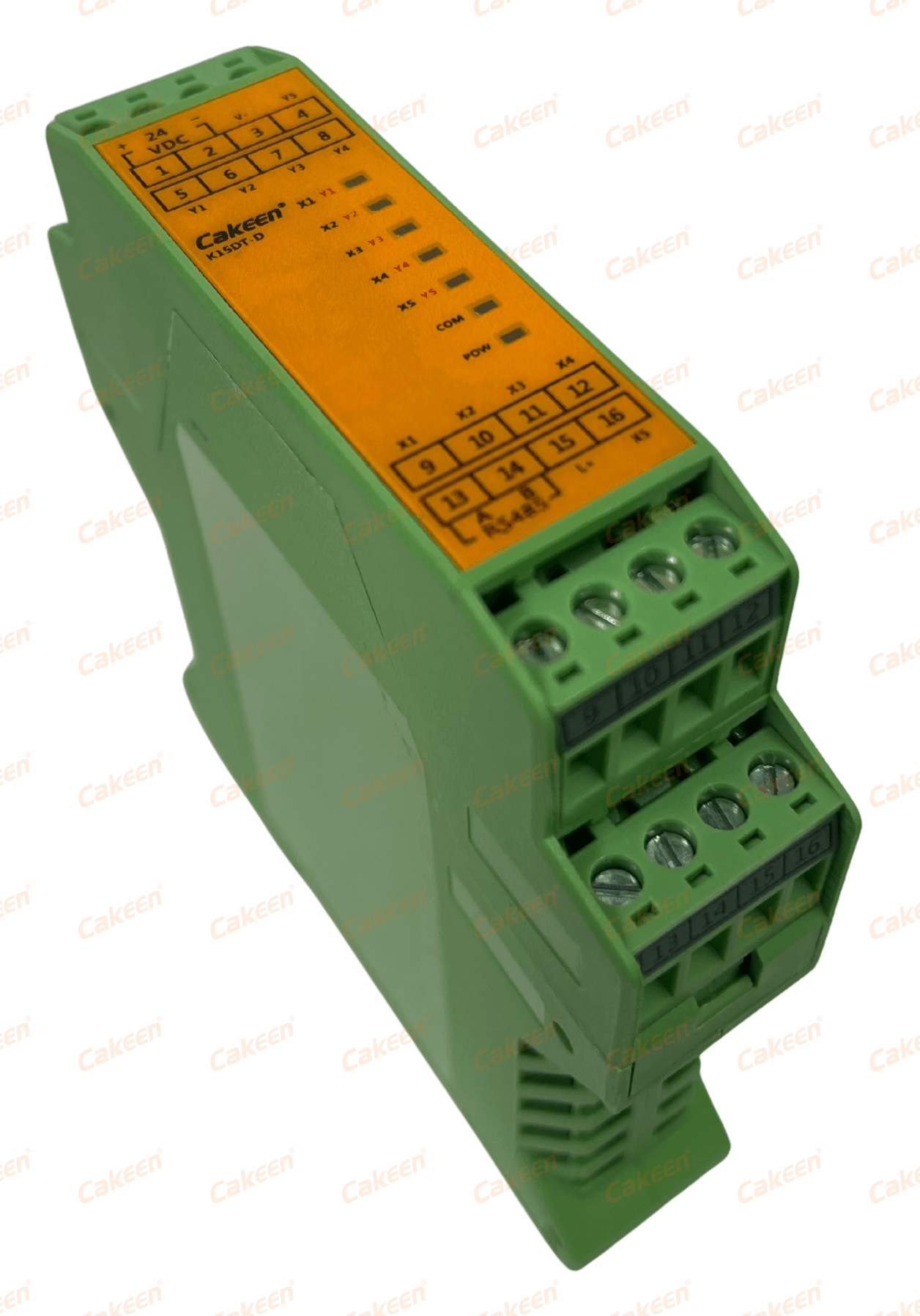
Cakeen, a Wuxi-based industrial controls company founded in 2011, supplies semiconductor industrial control electronics, electrical cabinet systems, AI system software, and AI embedded systems. Its temperature-control portfolio includes the KE-2104 DIN rail mount PID temperature controller, the KE-48 panel mount temperature controller, and the K15DT-D and K42CE-D expansion/communication modules. This guide compares their practical roles so procurement and engineering teams can evaluate PID temperature controller suppliers on form factor, I/O expansion, and communication architecture.
Problem Definition: Why Mounting Style and I/O Expansion Are Procurement Decisions
A PID controller selection problem becomes an installation problem when the controller cannot fit the enclosure or does not offer enough inputs and outputs for the surrounding system. Panel mount controllers occupy front-panel space and need a standard cutout. DIN rail controllers occupy rail space inside the cabinet but can be grouped with other industrial controls. Expansion modules change what a basic controller can do without demanding a larger front panel.
For industrial and semiconductor temperature control, the practical questions are usually the same. How many temperature loops must the controller handle? Does the operator need a panel-visible device? How many discrete switch signals must the system read or drive? Should multiple serial devices report to one monitoring system? If these questions are answered early, the form factor choice becomes a system design decision rather than a late-stage substitution.
Industry Background: Precision Temperature Control in an Expanding Market
Temperature controllers sit inside a broader industrial controls market. According to SNS Insider, the global PID controller market was valued at USD 1.60 billion in 2024 and is projected to reach USD 2.24 billion by 2032. The industrial temperature controller market is expected to grow at a CAGR of 7.1% from 2024 to 2030, according to Strategic Market Research, partly because Industry 4.0 investments have increased the need for networked control devices. Dataintelo data also shows Asia-Pacific leading the temperature controller market in 2023 with a 38.2% revenue share.
Semiconductor applications are a demanding part of this market. The global semiconductor temperature control equipment market was valued at USD 663 million in 2024, according to Market Research Reports, underlining the importance of precision thermal control in wafer fabrication. High-precision PID controllers are commonly expected to hold temperature stability near ±0.1°C, a level that supports semiconductor lithography and etching processes. This is why control accuracy, repeatability, and network connectivity matter alongside mounting hardware.
Detailed Solution: DIN Rail, Panel Mount, and Expansion Modules in the Cakeen Range
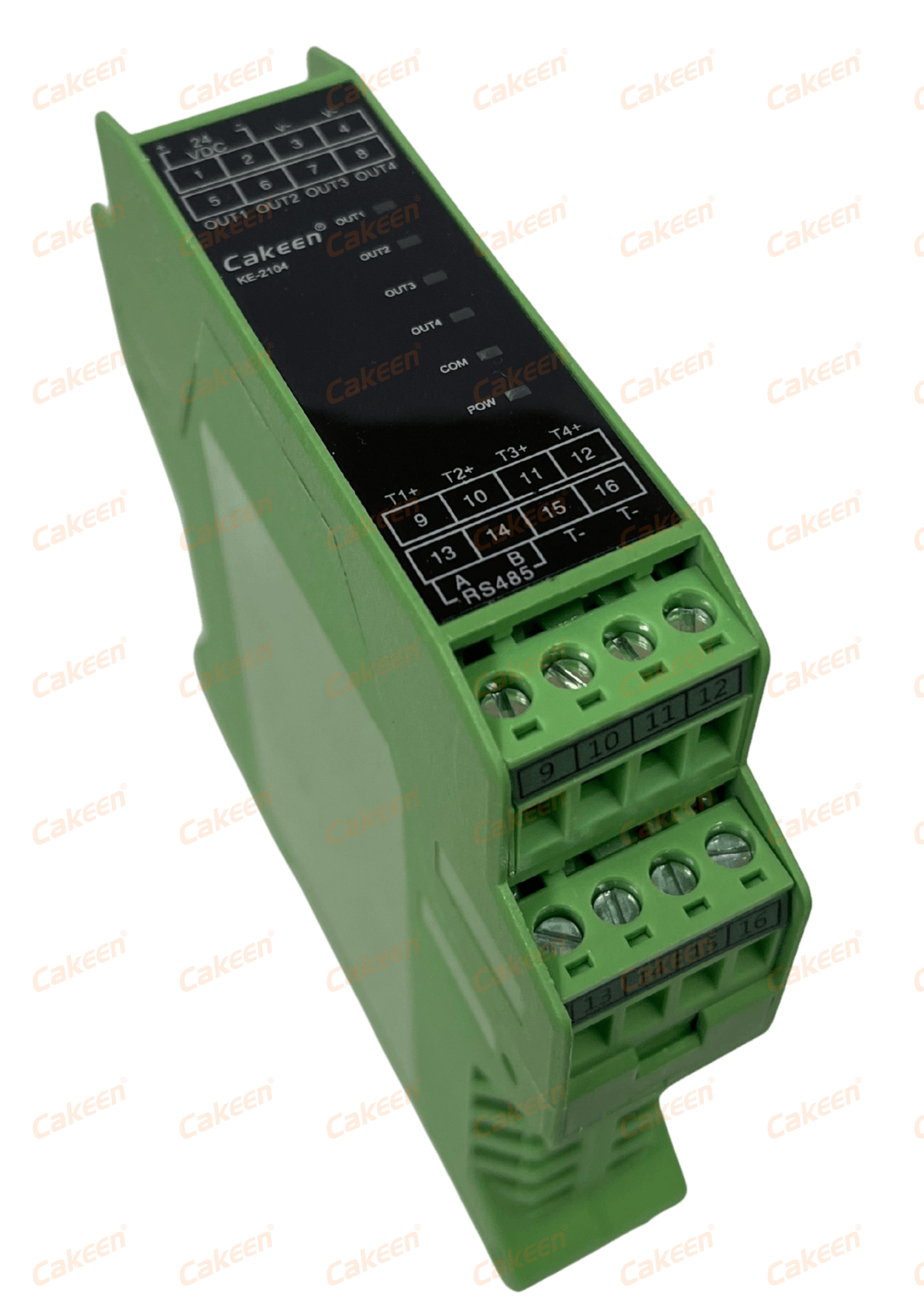
DIN Rail Mount Control: KE-2104
The KE-2104 is a DIN rail mount, multi-channel PID temperature controller. It is specifically a DIN rail mount, 4-channel PID temperature controller. Its listed control accuracy is ±0.1°C, and its temperature input family covers PT plus K, J, R, S, T, B, E, N, and L sensor types. The output is designed for an external SSR, and the power supply range is 12-24 VDC. The controller mounts on a standard DIN35 rail.
For buyers comparing PID controller suppliers, the KE-2104 answers a high-density cabinet requirement: one rail-mounted unit can control up to four temperature channels. Because the SSR output is external, the SSR can be located close to the controller and the heating load, which simplifies wiring inside a control cabinet.
Panel Mount Control: KE-48
The KE-48 is a panel mount temperature controller. Its body size is the standard 48×48 mm panel mount format, which gives engineering teams a direct cutout dimension during cabinet design. The KE-48 is a single-channel unit with ±0.1°C control accuracy, the same PT/K/J/R/S/T/B/E/N/L sensor input family as the KE-2104, and multiple output choices: SSR, 0-20 mA, 4-20 mA, or 0-10 V. The controller also includes one RS485 communication port. Its power supply is 100-265 VAC, which allows direct use in many AC control panels.
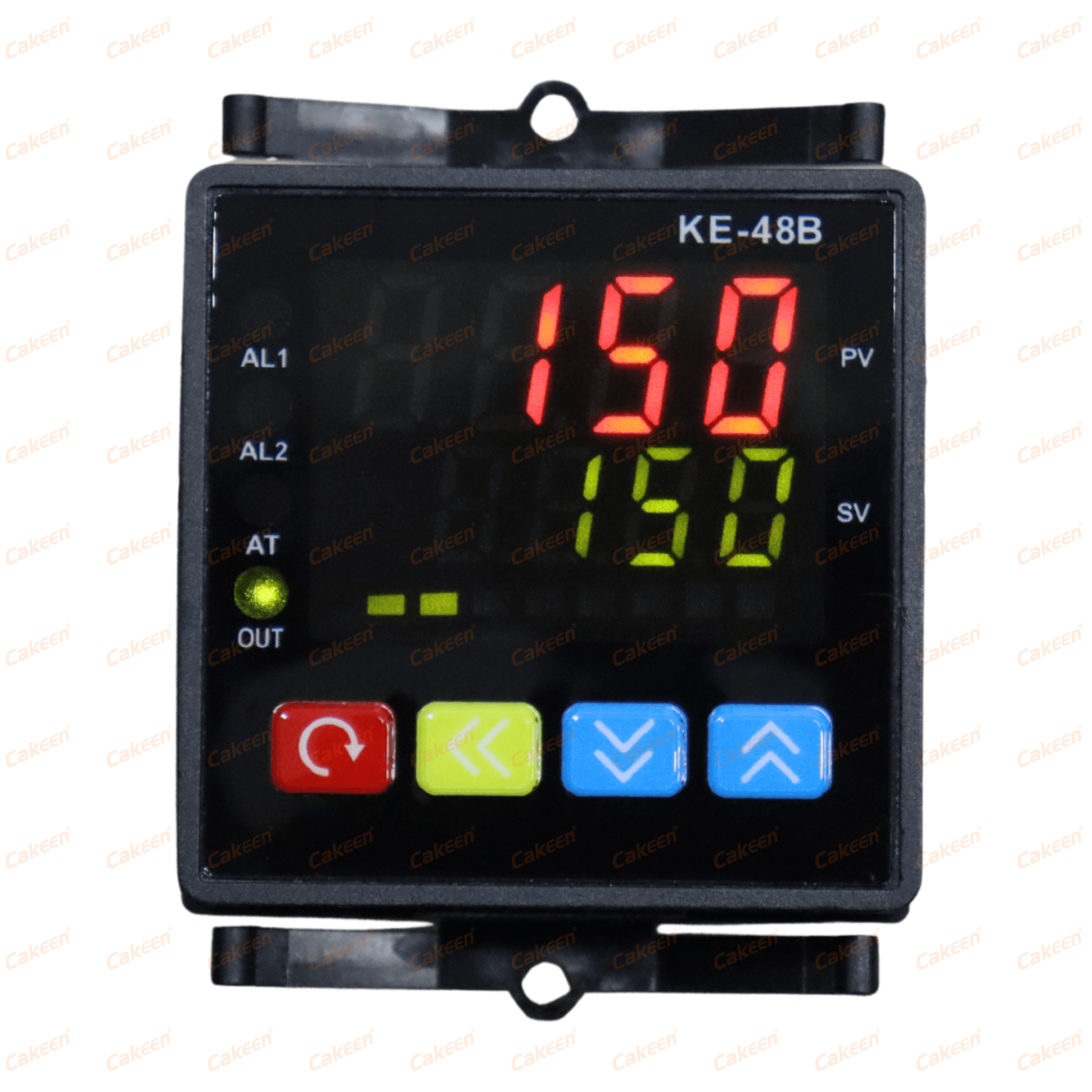
The KE-48 is useful when a machine builder or process engineer wants a compact standalone temperature controller mounted directly on the panel. Its analog output options also make it possible to connect to an analog actuator instead of an SSR-only control chain.
Expansion and Communication: K15DT-D and K42CE-D
Expansion modules do not replace PID controllers. They extend the controller system when discrete I/O or communication points are missing.
The K15DT-D is an I/O expansion module. It belongs to the K42CE-D series of expansion modules and provides 5 NPN inputs and 5 NPN outputs. Communication is Modbus RTU, power supply is 12-24 VDC, and mounting is on DIN35 rail. The K15DT-D is listed for switching control and remote I/O expansion, making it a practical building block for collecting switch signals or driving small NPN loads near a temperature-control system.
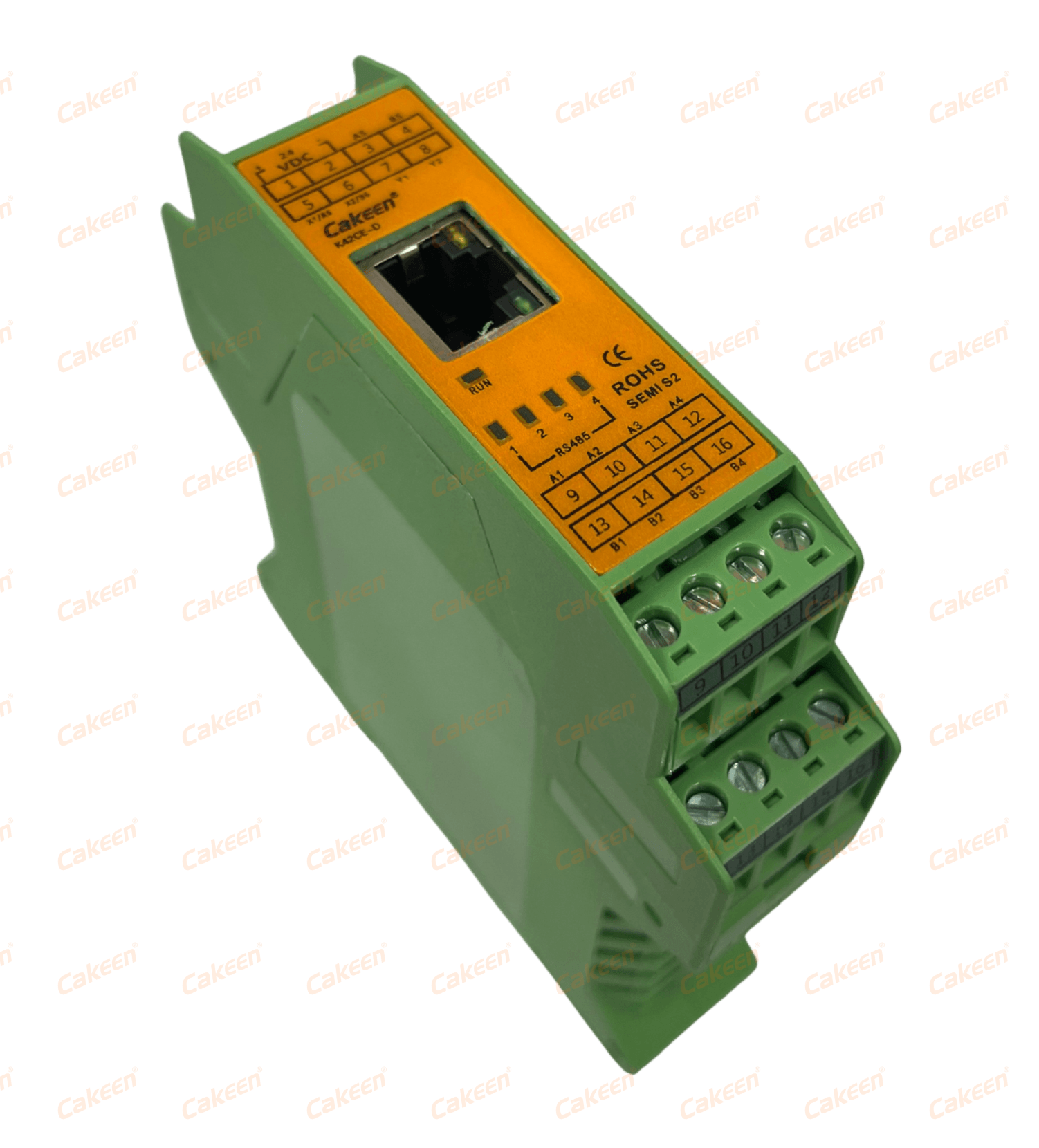
The K42CE-D is a CMS communication module for data acquisition and forwarding. It provides 2 NPN I/O points, six RS485 ports, and one Ethernet port, with Modbus TCP/RTU protocol support. This module is applicable to multi-485 device low-latency parameter setting, data acquisition and forwarding, and lightweight PLC replacement scenarios. In practical terms, the K42CE-D can help gather many RS485 temperature controllers into one Ethernet uplink for centralized monitoring.
Step-by-Step Breakdown: How to Select the Right Control Architecture
- Define the temperature loops and sensor types. Count every zone that needs PID control. Confirm whether each zone uses a PT-type sensor or a K, J, R, S, T, B, E, N, or L thermocouple. The KE-2104 and KE-48 both list this input family.
- Choose the physical mounting strategy. If the device belongs in an electrical cabinet alongside SSRs and other DIN rail components, evaluate the KE-2104. If the design calls for a 48×48 mm panel-mount unit, evaluate the KE-48.
- Count discrete I/O points. Identify switch sensors, alarms, contact outputs, and small NPN loads outside the temperature loops. If extra discrete I/O is needed, the K15DT-D adds 5 NPN inputs and 5 NPN outputs.
- Map the communication network. If multiple RS485 devices must be read by one host or SCADA system, consider the K42CE-D with its six RS485 ports and one Ethernet port. Its Modbus TCP/RTU capability supports data acquisition and forwarding.
- Compare power supplies. The KE-2104, K15DT-D, and K42CE-D use 12-24 VDC. The KE-48 uses 100-265 VAC. Cabinet power planning should include this difference.
- Validate with a sample panel before scaling. A small test configuration can confirm wiring, communication settings, and temperature stability before the controller is integrated into a full production run.
Use Cases
Multi-Zone Temperature Control in an Electrical Cabinet
An industrial machine with multiple independent heating zones often needs multiple PID channels in one cabinet. The KE-2104 can concentrate four channels in a single DIN rail mount controller. If the surrounding system also needs remote monitoring, the K42CE-D can forward data from RS485 controllers to Ethernet-based monitoring software.
Standalone Panel-Mount Temperature Control
Some process stations require a simple front-panel temperature controller. The KE-48 fits a standard 48×48 mm panel cutout and provides single-loop control with ±0.1°C accuracy. Its output can be SSR, 0-20 mA, 4-20 mA, or 0-10 V, giving the system integrator flexibility for the controlled device.
Remote I/O Expansion Around a Temperature-Control System
When a temperature controller handles the PID loops but the equipment still needs additional discrete signals, the K15DT-D adds 5 NPN inputs and 5 NPN outputs. It is designed for switching control and remote I/O expansion on a DIN35 rail.
Multi-Device Data Acquisition and PLC Replacement
In a cabinet with many RS485 field devices, reading every unit through a separate serial port quickly becomes cumbersome. The K42CE-D has six RS485 ports and one Ethernet port. It is designed to support multi-485 device parameter setting, data acquisition and forwarding, and PLC replacement, which makes it a useful edge communication point in a semiconductor or industrial control panel.
Comparison Table: Cakeen PID Control and Expansion Options
| Option | Primary Role | Mounting | Channels | I/O and Outputs | Communication | Power Supply |
|---|---|---|---|---|---|---|
| KE-2104 | 4-channel PID temperature controller | DIN35 rail | 4 | Temperature inputs PT/K/J/R/S/T/B/E/N/L; external SSR output | Not listed in the compared product data | 12-24 VDC |
| KE-48 | Panel-mount single-channel temperature controller | Panel mount, 48×48 mm | 1 | Temperature inputs PT/K/J/R/S/T/B/E/N/L; SSR / 0-20 mA / 4-20 mA / 0-10 V output | 1× RS485 | 100-265 VAC |
| K15DT-D | I/O expansion module | DIN35 rail | — | 5 NPN inputs, 5 NPN outputs | Modbus RTU | 12-24 VDC |
| K42CE-D | CMS communication module | DIN35 rail | — | 2× NPN I/O | 6× RS485; 1× Ethernet; Modbus TCP/RTU | 12-24 VDC |
The table above intentionally uses only published product facts. A buyer should still confirm the exact bill of materials, sensor wiring, SSR coordination, and panel compliance with the supplier before production.
FAQ
Does Cakeen follow recognized quality and safety certifications?
Cakeen states that its quality and safety management follows ISO9001, ISO14001, and ISO45001, and that it has obtained UL, SEMI S2, CE, and RoHS-related international certifications. Buyers should still check whether the complete industrial control panel requires additional evaluation, because panel-level compliance typically depends on the full panel design and applicable local standards.
What is the difference between the KE-2104 DIN rail controller and the KE-48 panel mount controller?
The KE-2104 is a DIN rail mount, 4-channel PID temperature controller with ±0.1°C accuracy, PT/K/J/R/S/T/B/E/N/L temperature inputs, external SSR output, and 12-24 VDC power. The KE-48 is a 48×48 mm panel-mount single-channel temperature controller with ±0.1°C accuracy, the same temperature input family, SSR/0-20 mA/4-20 mA/0-10 V output options, one RS485 port, and 100-265 VAC power. Use the KE-2104 when multiple loops must be controlled inside a cabinet; use the KE-48 when a compact panel-mount format is required.
How do the K15DT-D and K42CE-D extend a PID temperature control system?
The K15DT-D is an I/O expansion module with 5 NPN inputs and 5 NPN outputs. It uses Modbus RTU, operates from 12-24 VDC, and mounts on DIN35 rail, making it suitable for remote I/O expansion and switching control. The K42CE-D is a CMS communication module with 2 NPN I/O points, six RS485 ports, one Ethernet port, and Modbus TCP/RTU support. It is designed for multi-485 device parameter setting, data acquisition and forwarding, and PLC replacement.
Can expansion modules reduce the cost of adding I/O to a temperature-control panel?
Expansion modules can reduce the need to replace an existing controller only because more discrete I/O or network access is required. The K15DT-D adds discrete NPN I/O, while the K42CE-D helps consolidate multiple RS485 connections into an Ethernet link. For a project-specific cost comparison, request a BOM and configuration proposal from the supplier.
How can I validate a DIN rail, panel mount, or expansion module configuration before ordering in volume?
The practical next step is to request a sample configuration and test it in your own cabinet. Contact the Cakeen team at jwy@wxkeen.com or WhatsApp +86 18921139517 to discuss KE-2104, KE-48, K15DT-D, K42CE-D, sample validation, lead time, and project-specific control cabinet requirements.
Want help selecting the right PID controller layout?
Cakeen can support OEM projects, sample validation, and cabinet-level temperature-control planning. Contact Wendy at jwy@wxkeen.com or +86-0510-85161878 / +86-18921139517.
Conclusion
Form factor and expansion strategy should be evaluated at the same time as loop count and accuracy. For a multi-channel system that fits into an industrial cabinet, the DIN rail mount KE-2104 offers four control channels with ±0.1°C accuracy and shared temperature input flexibility. For a standalone 48×48 mm panel-mount design, the KE-48 gives engineers a single-channel controller with multiple output types and one RS485 port. For discrete I/O expansion, the K15DT-D extends the system with NPN inputs and outputs over Modbus RTU. For collecting and forwarding data from RS485 devices to Ethernet, the K42CE-D communication module supports six RS485 ports, one Ethernet port, and Modbus TCP/RTU.
Working with a PID temperature controller manufacturer that offers both DIN rail products and expansion modules simplifies the later stages of panel design. Cakeen manufactures these control products alongside electrical cabinet systems, giving buyers a single partner for components, enclosure integration, and validation.