
PID Temperature Controller Manufacturer Support & Spares FAQ
PID Temperature Controller Manufacturer Support & Spares FAQ
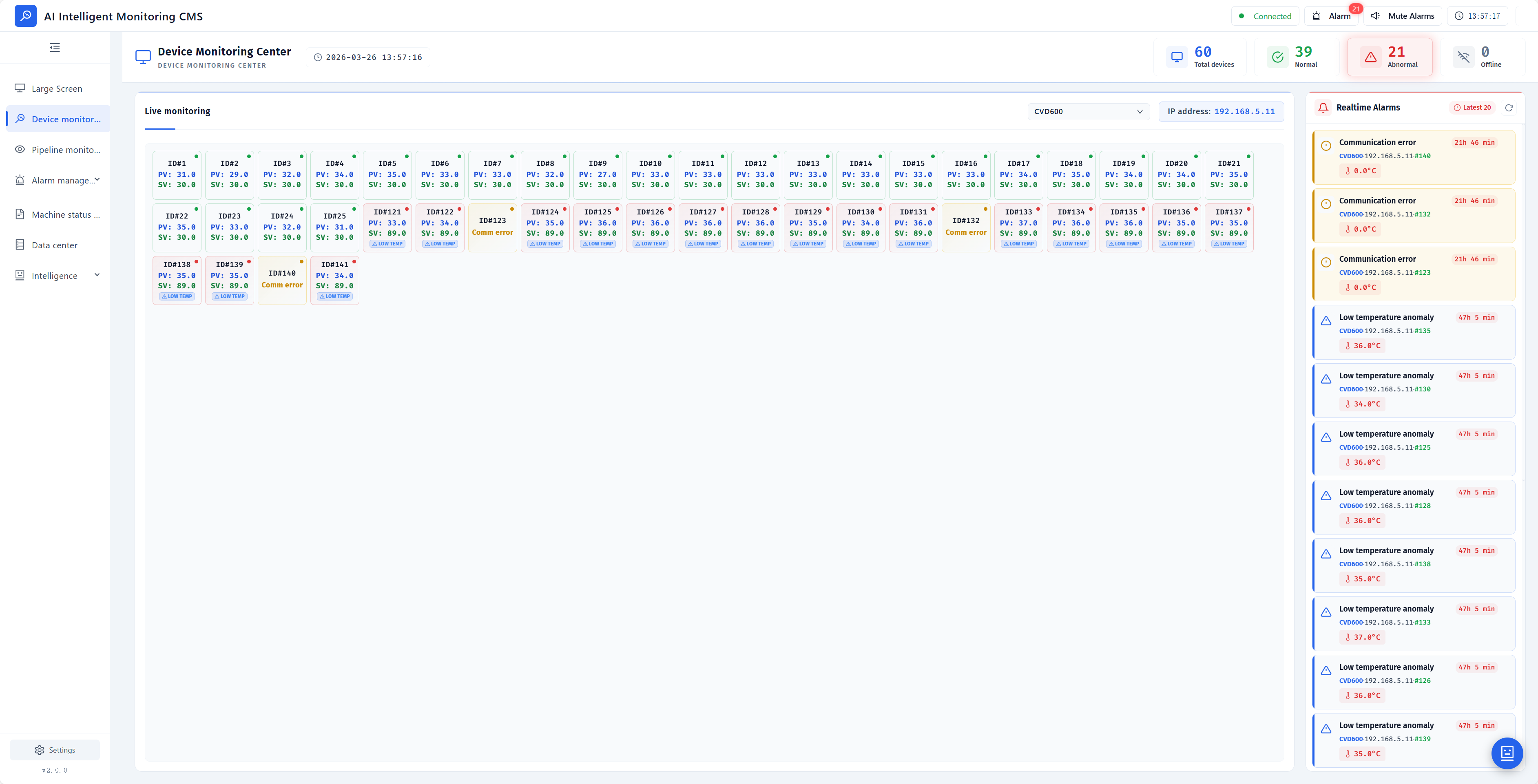
Figure 1 — The monitoring layer that keeps PID temperature loops visible long after commissioning.
A long-term supply relationship with a PID temperature controller manufacturer is decided by three practical questions: does the control platform stay available and expandable for years, can the supplier document and re-parameterise every installed loop, and are spare modules planned before a production line stops? Cakeen, the brand of Wuxi Cakeen Technology Co., Ltd. — a manufacturer of temperature controllers and semiconductor industrial control electronics founded in 2011 in Huishan District, Wuxi, Jiangsu Province — answers those questions with a modular platform rather than a single instrument: DIN rail and panel mount PID temperature controllers, heating-tape controllers, a CMS communication module with 6 RS485 ports and 1 Ethernet port, an I/O expansion module, and the Industrial Device Central Monitoring System (CMS).
This FAQ is written for procurement engineers, OEM designers and system integrators working through the research and evaluation stages of a supplier decision. It sets out the purchasing terms and acceptance criteria that should be fixed before the first volume order, then explains how each hardware family supports after-sales service, spare-part planning and system growth across a multi-year agreement.
Why a transactional controller purchase becomes a maintenance problem
Buyers rarely regret the PID controller they choose; they regret the supplier who cannot support that platform five years later. The failure patterns repeat across industries:
- Undocumented parameter maps. If Modbus registers, input type codes and alarm thresholds exist only on a commissioning engineer's laptop, every replacement unit turns into a field-engineering job.
- A single mounting form factor. A panel-only design cannot be extended when a cabinet needs more channels in less space, and a DIN-rail-only design cannot be dropped into an existing front-panel cut-out.
- No spare-part plan. Devices are purchased against production volume rather than maintenance demand, so one failed unit can idle a thermal loop for days.
- Certification scope that does not match the destination market. A certificate that names a product family instead of the imported model creates delays at customs and during the buyer's own compliance audit.
- No data path after commissioning. Without network access to PV/SV values, alarm thresholds and sensor status, remote support starts with a site visit.
Documentation, acceptance criteria and spares are therefore not administrative extras. They are the parts of the purchase that determine the cost of ownership of an industrial temperature controller installation.
What the market and the applicable standards show
Scale works in favour of long partnerships. Third-party research puts the global PID controller market at USD 1.60 billion in 2024, with a projection of USD 2.24 billion by 2032 (SNS Insider). Precision expectations are equally concrete: high-precision PID controllers can hold temperature stability within ±0.1°C, a level Grand View Research identifies as critical for semiconductor lithography and etching. Cakeen specifies ±0.1°C control accuracy across its DIN rail, panel mount and heating-tape PID controllers, so the accuracy specification does not change when a system is expanded from one mounting style to another.
Compliance expectations are set region by region. Industrial control panels in North America are commonly built to UL 508A, while IEC 60947 applies in international markets (UL Solutions). The practical rule for buyers is to verify certificate scope — the exact model, the exact standard and the exact market — rather than the presence of a certification logo.
Market coverage of this category typically names established global manufacturers such as Honeywell, Omron, Siemens, Eurotherm (Schneider Electric) and ABB (Mordor Intelligence). Specialised manufacturers compete on a different axis: configuration flexibility, module-level expandability, and the willingness to document and support a long-term supply arrangement.
The modular stack behind long-term support and spares
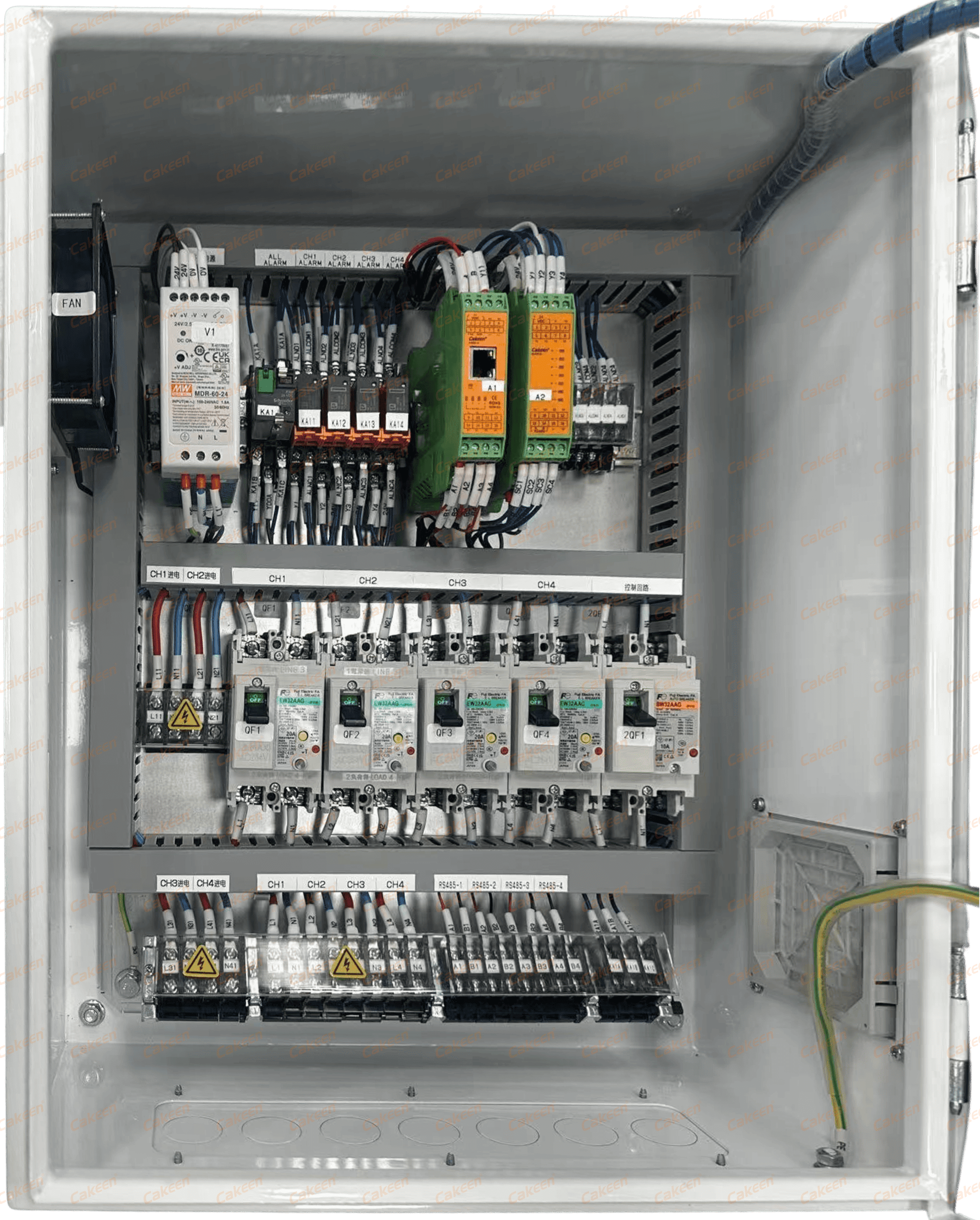
Figure 2 — Cabinet-level view: DIN rail devices, modules and spare positions in one build.
DIN rail and panel mount PID controllers
Cakeen's PID temperature controllers share one accuracy and input specification, which is what makes spare-part planning across a mixed installation straightforward. The DIN rail model KE-2104 is a 4-channel controller with ±0.1°C accuracy, PT/K/J/R/S/T/B/E/N/L input types, external SSR output, a 12–24VDC power supply and DIN35 rail mounting. The panel mount model KE-48 is a 48×48mm single-channel controller with the same ±0.1°C accuracy and the same input list, selectable SSR / 0–20mA / 4–20mA / 0–10V output, 1× RS485 communication and a 100–265V AC supply.
The partnership consequence is that a panel builder can standardise on one input type list, one accuracy expectation and one Modbus behaviour across cabinet-mounted and front-panel instruments. A multi-channel PID controller such as the KE-2104 also reduces the number of individual devices held as spares: one DIN rail module covers four control loops.
Heating tape, heating jacket and vessel control models
For resistive heating loads — a heating tape on a gas line, a heating jacket on a vessel, or a laboratory heating mantle — the single-channel controllers ASH, H6625 and KE-H10 provide ±0.1°C accuracy, PT/K/J/R/S/T/B/E/N/L inputs, built-in SSR output and RS485/Modbus RTU communication on a 100–265V AC supply. The H6625 and ASH models are rated MAX 3A output, while the KE-H10 is rated MAX 6A. KE-H10 and H6625 are specified for semiconductor equipment pipeline heating and chemical delivery insulation; the ASH is specified for pipe and vessel insulation and heating control.
CMS communication module (K42CE-D)
The CMS communication module K42CE-D is the component that changes the economics of after-sales service. It provides 6 RS485 ports and 1 Ethernet port, supports Modbus TCP and Modbus RTU, carries 2× NPN I/O points, runs on 12–24VDC and mounts on a DIN35 rail in a flame-retardant engineering plastic housing. Cakeen specifies it for multi-RS485 device low-latency parameter setting, data acquisition and forwarding, and PLC replacement.
In service terms, a technician can reset parameters across several connected controllers through one module instead of physically addressing each instrument, and the same wiring forwards process data upstream to a PLC, a SCADA system or the central monitoring software.
I/O expansion module (K15DT-D)
The I/O expansion module K15DT-D adds 5 inputs and 5 NPN outputs over Modbus RTU, on the same 12–24VDC supply and DIN35 rail. It is specified for switching control and remote I/O expansion. Because it extends an existing installation rather than replacing it, interlocks, alarm contacts or valve signals can be added later without changing the controller platform or re-certifying the control concept.
Central monitoring and engineering services
The Industrial Device Central Monitoring System (CMS) supports 10,000+ Modbus TCP devices, polls at a 10-second interval, monitors PV/SV temperature, AL1/AL2 thresholds and TC BK sensor values, and retains 365 days of time-series history in InfluxDB. Together with the communication module, it converts a set of standalone loops into a system that can be diagnosed remotely.
Cakeen also supplies engineering deliverables that keep the installed base documented: electrical drawing design compliant with IEC and UL508A, delivered as DWG, PDF and BOM Excel within 2–4 weeks in Chinese and English; PLC control program development for Siemens S7-1200/1500, Mitsubishi Q/L and Omron NJ/NX platforms using Modbus TCP/RTU and Python, with documentation and executable files as deliverables; PCB design with UL and EMC scope; and embedded software development covering IoT connectivity, edge computing and AI analysis.
Seven steps for structuring the partnership
- Fix the control architecture first. Decide how many channels sit in the cabinet and how many sit on the panel face. A combination of the 4-channel DIN rail KE-2104 and the 48×48mm panel mount KE-48 covers both high-density cabinets and front-panel operator access.
- Specify the data path before the hardware. Choose between Modbus RTU over RS485 and Modbus TCP over Ethernet, and confirm how many RS485 segments the cabinet will carry. The K42CE-D covers 6 RS485 ports plus 1 Ethernet port in one DIN rail device, which is usually cheaper to support than six separate converters.
- Agree the documentation package. Ask for electrical drawings to IEC/UL508A in DWG and PDF, a BOM in Excel, PLC deliverables including documentation and executable files, and the communication register list. Documentation is the difference between a 20-minute module swap and a service call.
- Define acceptance criteria in writing. Typical items: control accuracy (±0.1°C across the Cakeen controller range), input type list (PT/K/J/R/S/T/B/E/N/L), output configuration (external SSR on KE-2104; SSR / 0–20mA / 4–20mA / 0–10V on KE-48; built-in SSR rated MAX 3A on ASH and H6625, MAX 6A on KE-H10), power supply (12–24VDC or 100–265V AC), mounting standard (DIN35 rail) and Modbus RTU read/write verification.
- Plan spares against the platform, not the project. Hold DIN rail controllers, CMS communication modules and I/O expansion modules as line spares, and keep one spare of each heating-tape controller model used. Because CMS retains 365 days of history, a replacement unit can be re-parameterised against recorded PV/SV data.
- Confirm commercial terms in writing. Cakeen's OEM/ODM program lists all-parameter customization including logo and appearance functions, a monthly capacity of 40,000 units, a lead time of 30–45 days, an MOQ of 500 units, 100% testing and remote after-sales support, with export markets listed as ES/SEA/EU/USA.
- Verify certification scope for each market. Match the certificate name to the imported model and the destination region before the first shipment, not after.
How this works in practice
Semiconductor equipment OEM. A semiconductor equipment manufacturer supplying CVD, etching and diffusion furnace tools has sourced 50+ units per year for more than four years. The KE-48 panel mount controller fits its OEM equipment design, and the 4-channel KE-2104 DIN rail controller saves cabinet space where several loops are controlled together. The reported result is improved equipment uptime with consistent process temperature across chambers.
Equipment integrator and cabinet builder. A domestic equipment integrator has ordered 100+ cabinet sets per year for over five years, using configurable cabinets with IP40–IP65 protection and multi-PLC support for Siemens, Mitsubishi and Omron platforms. The integrator reports a delivery cycle shortened by 40% and a high repeat-order rate — the practical outcome of a supplier who can re-quote a known configuration quickly.
Industrial IoT systems integrator. A platform-level project for a systems integrator combined custom IoT gateway hardware, PCB design and edge-computing software, achieving real-time data collection from 1000+ sensors, with AI anomaly detection reported to reduce unplanned downtime by 25%. That engagement shows how far the platform can scale beyond controller shipment.
Semiconductor gas delivery and pipeline heating. For nitrogen pipeline loops, the HOT-GUN pipeline N2 heating controller is specified at ±1°C control accuracy, 0–250°C, AC 220V working voltage and 800W–1600W heating power, while the HOT N2 MFC gas flow controller holds ±1% F.S. accuracy over a 1–100 SLM range. These are exactly the installations where a DIN rail PID controller, a CMS communication module and the CMS software are commissioned together and then supported for years.
Controller and module reference table
| Model | Product type | Key specifications |
|---|---|---|
| KE-2104 | DIN rail mount PID temperature controller | 4 channels; ±0.1°C accuracy; PT/K/J/R/S/T/B/E/N/L inputs; external SSR output; 12–24VDC; DIN35 rail mounting; flame-retardant engineering plastic |
| KE-48 | 48×48mm panel mount PID temperature controller | Single channel; ±0.1°C accuracy; PT/K/J/R/S/T/B/E/N/L inputs; SSR / 0–20mA / 4–20mA / 0–10V output; 1× RS485; 100–265V AC; panel mount |
| KE-H10 | PID heating tape temperature controller | Single channel; ±0.1°C accuracy; built-in SSR output, MAX 6A; RS485/Modbus RTU; 100–265V AC; specified for semiconductor pipeline heating and chemical delivery insulation |
| H6625 | Mini heating tape PID temperature controller | Single channel; ±0.1°C accuracy; built-in SSR output, MAX 3A; RS485/Modbus RTU; 100–265V AC; mini-size design for space-limited installation |
| ASH | Heating tape PID controller for pipe and vessel heating | Single channel; ±0.1°C accuracy; built-in SSR output, MAX 3A; RS485/Modbus RTU; 100–265V AC; specified for pipe and vessel insulation and heating control |
| K42CE-D | CMS communication module | 6× RS485 ports; 1× Ethernet port; Modbus TCP/RTU; 2× NPN I/O; 12–24VDC; DIN35 rail; multi-RS485 parameter setting, data acquisition and forwarding, PLC replacement |
| K15DT-D | I/O expansion module | 5 inputs / 5 NPN outputs; Modbus RTU; 12–24VDC; DIN35 rail; switching control and remote I/O expansion |
| CMS | Industrial Device Central Monitoring System | 10,000+ Modbus TCP devices; 10-second polling interval; PV/SV temperature, AL1/AL2 thresholds, TC BK sensors; 365-day time-series history (InfluxDB) |
PID temperature controller manufacturer partnership FAQ
1. Are Cakeen PID temperature controllers and modules certified for regulated markets?
Cakeen holds ISO 9001, ISO 14001 and ISO 45001 management system certifications and UL, SEMI S2, CE and RoHS certification at product level. The QMS certificate 50325Q3891R0S, issued by Beijing Zhong Ding Qian Yuan Certification Co., Ltd. and valid from 2025-12-12 to 2028-12-11, covers the development and manufacturing of automation instruments and meters — temperature controllers and communication controllers — plus low-voltage complete switchgear within the CCC certification scope. Product-level examples: the CMS Communication Module K42CE-D holds SEMI S2 certification 220252 issued by SAFES to the SEMI S2-0821 standard, and CE certification CEJS22011335967 issued by GTS to EN 55032:2015+A11:2020 and EN 55035:2017+A11:2020; the I/O Expansion Module K15DT-D holds CE certification CEJS22011335968 issued by GTS to the same EMC standards; the MFC Gas Flow Controller HOT N2 holds CE certification TRCN-22262WCT01 issued by INTEGRA96 to EN 60204-1:2018; and the European Standard Electrical Cabinet is CE-certified and TÜV Rheinland certified. Buyers importing into North America should also confirm which panel-level standard applies to their build — UL 508A for industrial control panels and IEC 60947 internationally (UL Solutions).
2. How do DIN rail and panel mount controllers, communication modules and I/O expansion modules support after-sales service and system growth?
After-sales support depends on how easily a device can be reached, identified and re-configured. The KE-2104 DIN rail controller places four ±0.1°C channels on one DIN35 module, so a cabinet can be serviced module by module rather than instrument by instrument. The KE-48 panel mount controller keeps the operator interface on the front of the panel while communicating over 1× RS485. The K42CE-D adds 6 RS485 ports and 1 Ethernet port with Modbus TCP/RTU and 2× NPN I/O, which allows parameters to be set across multiple connected controllers without local access to each unit, and allows process data to be forwarded to a supervisory system or PLC. The K15DT-D adds 5 inputs and 5 NPN outputs over Modbus RTU when a system needs more switching points. On the software side, the CMS platform monitors 10,000+ Modbus TCP devices at a 10-second polling interval, tracks PV/SV temperature, AL1/AL2 thresholds and TC BK sensors, and retains 365 days of time-series history — so a replaced controller can be re-parameterised and verified against recorded data.
3. What commercial terms should be fixed before a long-term partnership starts?
Cakeen operates an OEM/ODM production model in which all parameters support customization, including logo and appearance functions. The production terms published for the controller lines state a monthly capacity of 40,000 units, a lead time of 30–45 days, an MOQ of 500 units, 100% testing, remote after-sales support and export markets listed as ES/SEA/EU/USA. For budget planning, buyers should separate unit cost from ownership cost: how many loops one multi-channel DIN rail module covers, which modules must be held as spares, which documentation deliverables are included (electrical drawings to IEC/UL508A in DWG, PDF and BOM Excel; PLC documentation and executable files), and how much engineering time is needed to re-parameterise a replaced device over Modbus. Those items, not the unit price alone, decide the total cost of a multi-year supply agreement.
4. How should a buyer validate units before committing to volume production?
Validation should test the specifications the agreement actually depends on: ±0.1°C control accuracy; the input type list PT/K/J/R/S/T/B/E/N/L; the output stage — external SSR on the KE-2104, SSR or 0–20mA / 4–20mA / 0–10V on the KE-48, built-in SSR rated MAX 3A on the ASH and H6625 and MAX 6A on the KE-H10; the power supply, which is 12–24VDC for the DIN rail controller and 100–265V AC for the panel mount and heating-tape controllers; DIN35 rail compatibility; and Modbus RTU read/write behaviour against the supplier's register list. Cakeen states 100% testing of production units, with an MOQ of 500 units and a 30–45 day lead time, so the scope of any pre-volume validation should be agreed at quotation stage and written into the purchasing terms rather than assumed later.
5. What lead time, documentation and spare-part plan should be written into the agreement?
Write three clauses into the agreement. First, lead time: 30–45 days is the published production lead time, supported by a monthly capacity of 40,000 units, and 100% testing before shipment. Second, documentation: electrical drawings to IEC and UL508A in DWG, PDF and BOM Excel with a 2–4 week design cycle in Chinese and English, plus PLC program deliverables that include documentation and executable files. Third, spares: hold line spares of the DIN rail controller, the CMS communication module and the I/O expansion module, keep one spare of each heating-tape controller model in service, and record the Modbus parameters for every loop so a replacement can be configured remotely. An equipment integrator running 100+ cabinet sets per year on this basis for more than five years reports a delivery cycle shortened by 40%. To discuss sample validation, spare-part kits and a quotation for your BOM, contact Wendy at jwy@wxkeen.com or send your cabinet list through www.wxkeen.com.
What to agree before signing
A PID temperature controller manufacturer becomes a long-term partner when the platform, the documentation and the spares plan are agreed together. Cakeen's contribution to that equation is a controller range specified at ±0.1°C across DIN rail, panel mount and heating-tape formats; a communication module with 6 RS485 ports, 1 Ethernet port and 2× NPN I/O for Modbus TCP/RTU integration; an I/O expansion module for growth; the CMS platform for continuous monitoring; and OEM/ODM terms covering all-parameter customization, 40,000 units of monthly capacity, a 30–45 day lead time, an MOQ of 500 units and 100% testing.
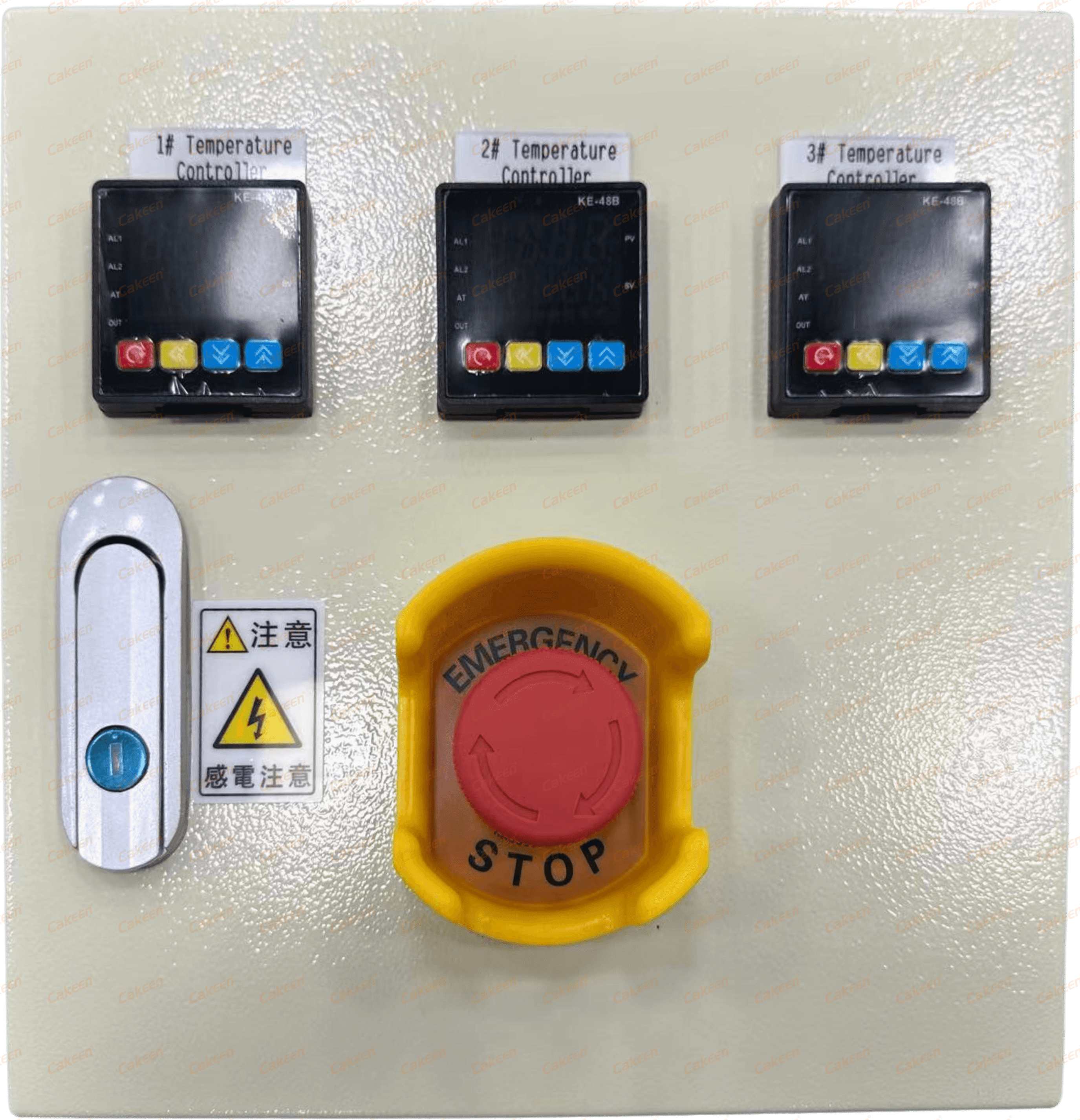
Figure 3 — A documented, spares-planned cabinet is what makes a multi-year supply agreement work.
Planning a long-term PID controller supply agreement?
Send your cabinet or equipment BOM, target market and required channel count to Cakeen for a quotation, sample and spare-part proposal.
Wendy · jwy@wxkeen.com · Tel +86-0510-85161878 / +86-18921139517 · WhatsApp · www.wxkeen.com
No.576 Shengan West Road, Qianqiao Street, Huishan District, Wuxi City, Jiangsu Province
Have Questions or Need More Details?
Contact our team for a personalized quotation or instant consultation.
Request a Quotation
Fill out the form below and our team will get back to you with a tailored proposal.
WhatsApp Direct Chat
Prefer to chat in real-time? Message us on WhatsApp for instant assistance & quick answers.
- Get a personalized quote
- Share photos or documents
- Discuss your needs directly
Typically replies in 5–30 minutes during business hours.