
Panel Mount vs DIN Rail PID Controllers for High-Density Control Panels
Short answer: In a high-density control panel, DIN rail mounting generally wins on loops per square meter of cabinet and on wiring speed, because the controller sits on the rail with no door cutout and no conductor crossing the door hinge. Panel mount generally wins on operator access, because the loop can be read and adjusted from the front of a closed door. Most cabinets above a few dozen loops end up using both formats — and once both are in play, sourcing them from a single PID temperature controller manufacturer instead of two is what keeps documentation, spares, and lifecycle rules from fragmenting across panel generations.
This article is written for the people who actually lay out the cabinet: control engineers, panel builders, and OEMs standardizing a panel design across several machines or several sites. The trade-offs below are organized around the three variables that decide the mounting format in practice — space efficiency, wiring, and maintenance access — with the long-term sourcing question treated as a design constraint rather than an afterthought.
Cakeen (Wuxi Keen Technology Co., Ltd.) builds temperature control electronics, electrical cabinet systems, and embedded control hardware in Wuxi, Jiangsu Province, and supplies PID temperature control devices in both panel mount and DIN rail form factors. That dual form-factor position is the reason this comparison can be written as a sourcing question, not just a mechanical one.
Problem Definition: What a High-Density Panel Actually Constrains
Density is not simply more controllers in a box. Five constraints tighten at the same time, and each one pulls the mounting decision in a slightly different direction.
- Door real estate. Every panel-mount controller consumes a cutout on the door face. Above a certain loop count, the door stops being an operator interface and starts being a perforated sheet, competing for the same area as HMIs, pushbuttons, and indicator lights.
- Wiring that crosses the hinge. Analog sensor and load wiring for door-mounted devices has to travel from the door back into the cabinet. Those conductors flex every time the door opens, and they consume duct space around the hinge side of the cabinet.
- Thermal load per unit volume. Controllers, SSRs, and power supplies all dissipate heat, and the tighter the packing, the more the thermal design of the enclosure determines whether the electronics see their rated ambient.
- Maintenance access. Front-of-door adjustment and behind-door servicing are different tasks. A format that is fast to read may be slow to replace; a format that is fast to replace may force a door-open operation just to change a setpoint.
- Spare parts and documentation across generations. A panel design typically lives for years and is copied across machine variants. If the mounting format changes mid-life, the spare-part list, drawings, and terminal numbering have to change with it.
The first four constraints are mechanical and thermal. The fifth is commercial, and it is the one that most often decides whether a panel program stays coherent after its third or fourth build.
Industry Background: Why Loop Counts Keep Rising
Temperature control content in cabinets has been growing steadily, and the market data reflects it. The global PID controller market was valued at USD 1.60 billion in 2024 and is projected to reach USD 2.24 billion by 2032, according to SNS Insider. The wider industrial temperature controller market is expected to grow at a CAGR of 7.1% from 2024 to 2030, driven by Industry 4.0 adoption, per Strategic Market Research.
Manufacturing concentration matters for panel builders sourcing hardware. Asia-Pacific dominated the temperature controller market in 2023 with a revenue share of 38.2%, with China as a key manufacturing hub, according to Dataintelo. Vertical demand is also concentrated: the oil and gas sector held the largest end-user share for PID controllers in 2024 at approximately 31.4%, per SNS Insider. In parallel, the global semiconductor temperature control equipment market was valued at USD 663 million in 2024 by Market Research Reports, reflecting how much precision thermal control now sits inside semiconductor process equipment.
Two engineering consequences follow from that growth. First, precision expectations have moved up: high-precision PID controllers can achieve temperature stability within ±0.1°C, a requirement in semiconductor lithography and etching, per Grand View Research. Second, the competitive field is well populated — leading global manufacturers of PID and temperature controllers include Honeywell, Omron, Siemens, Eurotherm (Schneider Electric), and ABB, according to Mordor Intelligence — which means format availability and lifecycle support, not raw control accuracy alone, often separate suppliers in a dense-panel project.
Regulatory framing also enters the layout discussion early. Industrial control panels, including PID controllers, must comply with UL 508A for North American safety listing and IEC 60947 for international markets, per UL Solutions. Both standards affect how components are mounted, spaced, wired, and documented inside the enclosure — which is precisely the territory where mounting format intersects with compliance.
The Two Mounting Philosophies, Stated Precisely
DIN rail mount
A DIN rail controller installs on a standard rail inside the cabinet and is typically wired, addressed, and read as part of a networked control layer rather than as a front-panel device. Its design logic is modularity: the loop lives where the wiring is, the door stays free for operator devices, and adding or replacing a loop is a rail operation rather than a fabrication operation.
In dense panels, DIN rail format also pairs naturally with bus wiring. Networked temperature control over RS485/Modbus RTU lets multiple controllers share a communication backbone instead of running individual signal pairs back to a central station. On the Cakeen side, the K42CE-D CMS gateway is built around this pattern: 6x RS485 channels plus 1x Ethernet in a single compact DIN rail module, designed for multi-device parameter setting and data forwarding without PLC programming.
Panel mount
A panel-mount controller is inserted through a cutout in the door or front plate and uses standard DIN cutout sizes, commonly 1/16, 1/8, or 1/4 DIN. Its design logic is human access: setpoint changes, alarm acknowledgement, and visual confirmation happen from outside a closed cabinet, and the device can be operated without exposing the interior.
The cost of that access is physical. Each panel-mount device occupies door area, requires a cutout operation, and its wiring must route from the door into the cabinet body. In a low-density cabinet with a handful of loops, that is a reasonable trade. In a cabinet with dozens of loops, it becomes a layout constraint that competes with everything else on the door.
Detailed Solution: Standardizing Both Formats on One Supplier
The practical answer for a high-density panel is rarely to pick one format exclusively. It is to assign formats by role — DIN rail for internal, networked, high-count loops; panel mount for operator-facing, low-count loops — and then to make sure both formats come from the same source. Splitting the two formats across two vendors creates two certification files, two documentation styles, two spare-part vocabularies, and two support paths for what is functionally one control system.
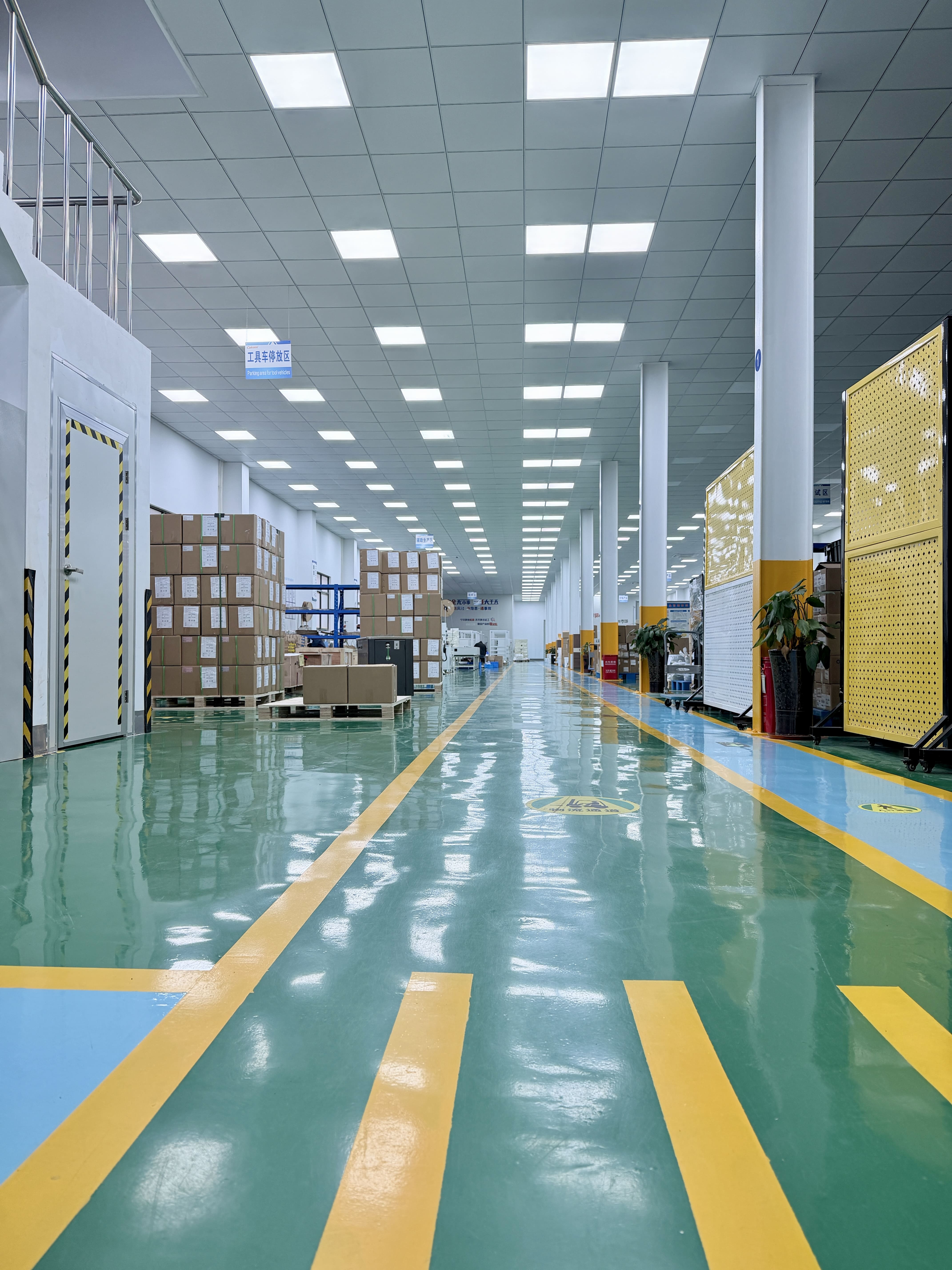
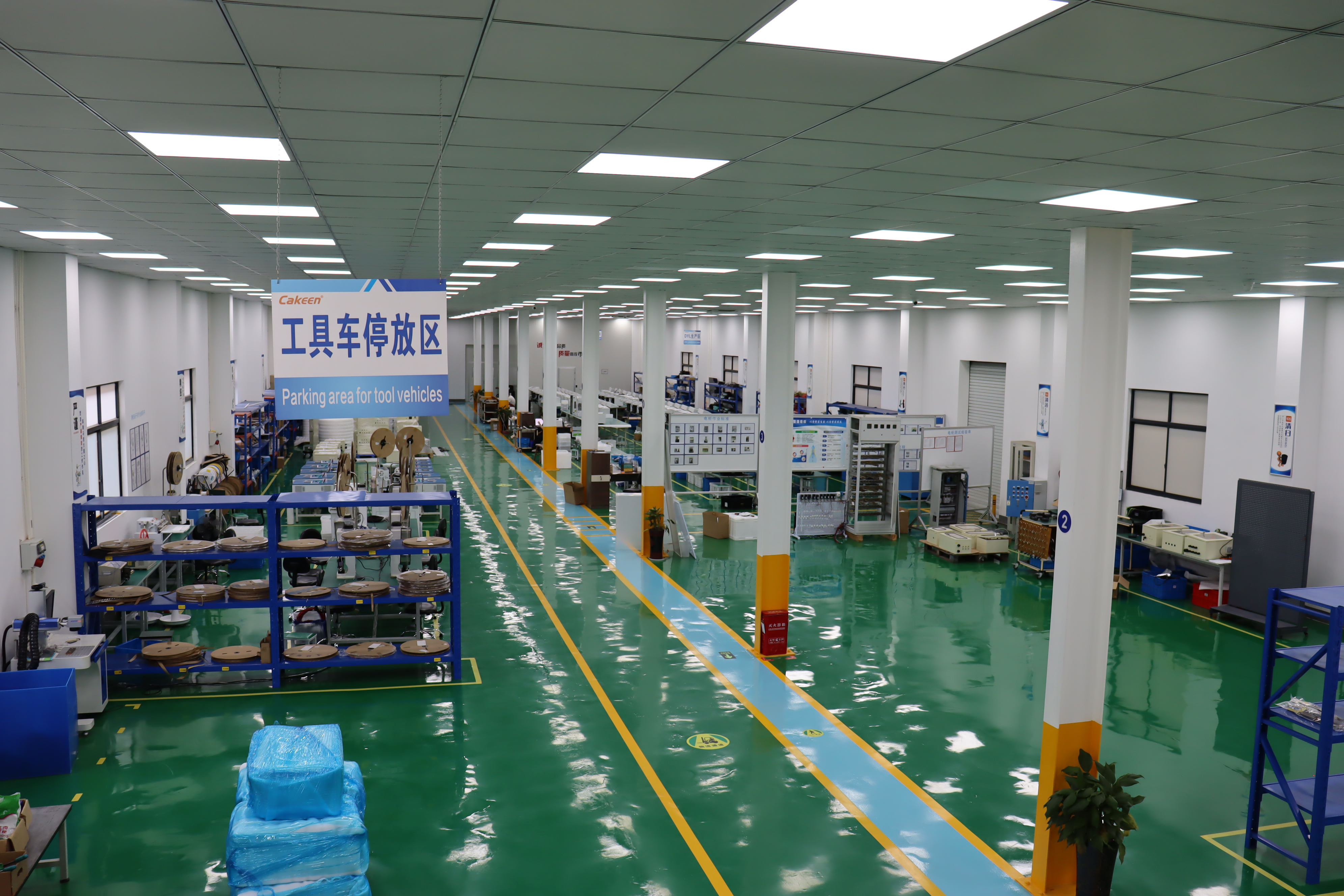
Cakeen addresses this directly by offering both mounting formats from a single manufacturing base. Wuxi Keen Technology Co., Ltd. (trading as Cakeen) was established in 2011 and is headquartered in Huishan District, Wuxi, Jiangsu Province. The company operates a 2,019 m² factory with 50 employees, including a 20-engineer R&D team, and reports an annual output of 500,000 units. Its main products are semiconductor industrial control electronics, electrical cabinet systems, and AI embedded systems, with an export ratio of 40% across main markets in Spain, Southeast Asia, the EU, and the USA.
For the mounting decision specifically, the relevant product set is the PID controller family used across Cakeen panel builds: KE-H10, H6625, ASH, KE-48, and KE-2104. All of these PID controllers feature built-in sensor break detection and alarm output, plus SSR overcurrent protection, and they support Modbus RTU for remote real-time monitoring and early warning through the CMS system. That combination matters in a dense cabinet because a sensor break is the failure mode that most often produces an uncontrolled heating condition, and detection at the controller level — not only at the PLC level — shortens the path between fault and response.
On the network side, the K42CE-D provides 6x RS485 plus 1x Ethernet dual communication paths with Modbus TCP/RTU compatibility, automatic reconnection after network interruption, and local parameter retention so parameters are not lost during a communication outage. It also supports segmentation between the RS485 fieldbus layer and the Ethernet layer, and Modbus communication can be restricted to authorized IP addresses, which lets a panel design satisfy a customer IT security policy without changing the control hardware.
Two further elements complete the picture for dense builds. First, expansion: K15DT-D I/O modules extend a gateway-based architecture at low incremental cost, so a panel that grows from one rack to three does not require a new control concept. Second, process-side hardware: the HOT-GUN maintains pipeline temperature to prevent condensation, and the HOT N2 MFC provides closed-loop flow monitoring with alarm for abnormal conditions, with stainless steel construction supporting gas purity and corrosion resistance.
Why this matters for a multi-generation panel program: the same PID controller family, gateway hardware, and I/O modules can be reused across a DIN-rail-heavy cabinet and a door-mounted operator station. Field wiring changes; the control layer, documentation set, and spare-part list do not. Cakeen reports that its business relationship with an integrator client has continued for over 5 years, and that a specific project has been implemented for over 4 years — the kind of continuity that panel standardization is meant to produce.
Step-by-Step Breakdown: Choosing Formats in a Dense Build
The following sequence is the order that avoids rework. It assumes the loop list already exists and the enclosure size is not yet frozen.
- Split the loop list by access requirement. Mark every loop that an operator must read or adjust during normal production, and separate it from loops that are monitored remotely. This single split usually assigns 80–90% of loops to the internal control layer and a small minority to the door.
- Budget door area before anything else. Count available door square area, subtract HMIs, pushbuttons, and indicators, and see how many panel-mount cutouts fit without crowding. If the number is smaller than the operator-facing loop list, the excess moves to DIN rail and remote display.
- Choose the communication topology. Decide whether controllers are addressed over a shared RS485/Modbus RTU backbone or wired individually. Bus topology favors DIN rail because the rail is where the wiring already is, and it removes signal runs to the door.
- Size the rail budget. Reserve rail length for controllers, gateways, I/O modules, and power distribution, then add spare rail for the loops that will be added in the second build. Controllers with built-in SSR outputs and integrated communication reduce the component count on the rail — Cakeen comparison data for its PID controllers against basic ON/OFF controllers with external relays indicates roughly 30% panel space saved and about 40% less wiring.
- Plan thermal management with the density number in mind. Calculate dissipation for the populated cabinet, not the empty one. Cabinet designs using circuit breakers, fuses, and emergency stop devices with IP54/IP65 enclosure protection and dedicated thermal management are the baseline that keeps dense layouts inside rated ambient.
- Design for replacement, not just for installation. Decide how a failed loop is swapped: on the rail with the door open, or through the door from the front. Maintainability at the rail usually wins on speed; maintainability at the door usually wins when the cabinet must remain closed during production.
- Freeze the supplier mix before the first build. Confirm that the panel-mount and DIN rail devices share documentation conventions, approval status, and spare-part availability. Cakeen documents this for its own builds with standardized design documentation in DWG, PDF, and BOM form, bilingual (Chinese and English) documentation delivered with every project, and global spare-part availability through standard components.
Use Cases
Heating jacket and heating mantle temperature control
Laboratory and process heating equipment — heating jacket temperature controllers, heating mantle temperature controllers, and similar vessel-heating applications — typically has a low loop count and a strong operator-facing requirement. In these builds, panel mount is usually the correct choice for the primary control loop, with the option of a DIN rail gateway behind the panel when several vessels must be monitored from one station. The control accuracy argument is the same in both formats: PID auto-tuning at ±0.1°C accuracy compared with ±2–5°C fluctuation for basic ON/OFF control, which is a 20–50x improvement in temperature stability on the same heater.
Hot N2 control and semiconductor temperature control systems
Nitrogen pipeline heating and semiconductor temperature control systems sit at the opposite end of the density curve. These installations typically involve several heated segments, closed-loop flow monitoring, and condensation prevention, and they are usually monitored from a central station rather than adjusted at the cabinet door. DIN rail format fits this pattern, paired with a HOT-GUN for pipeline temperature maintenance and a HOT N2 MFC for closed-loop flow monitoring with alarm. For a multi-channel PID controller deployment over Modbus RTU, remote parameter setting and batch diagnostics reduce on-site maintenance effort compared with per-device manual configuration.
Multi-channel racks and retrofit panels
The hardest case is a retrofit: an existing cabinet full of panel-mount controllers, a door already fully occupied, and a requirement to add loops. Here the DIN rail layer is usually the only available expansion path, and the practical question becomes whether the added controllers can share a gateway with the existing hardware. A 6x RS485 plus Ethernet gateway architecture allows a retrofit to add loops over the existing fieldbus rather than building a parallel control layer — Cakeen comparison data for this architecture against PLC-based data acquisition indicates 40–60% lower hardware cost, roughly 50% shorter deployment time, and about 60% lower communication latency for RS485 device networks.
Comparison Table: Panel Mount vs DIN Rail in Dense Cabinets
| Decision Dimension | DIN Rail Mount | Panel Mount |
|---|---|---|
| Mounting interface | Standard rail inside the cabinet; no door cutout required | Cutout through door or front plate in standard DIN cutout sizes (commonly 1/16, 1/8, or 1/4 DIN) |
| Door area consumed | None; door stays available for HMIs and operator devices | One cutout per loop; competes with HMIs, pushbuttons, and indicators |
| Wiring path | Wiring remains inside the cabinet; supports shared RS485/Modbus RTU backbone | Wiring routes from door into cabinet; conductors flex with door movement |
| Operator access | Requires door open or remote display/network access | Read and adjust from the front of a closed door |
| Replacement during production | Rail swap with door open | Front access possible; interior work still needed for wiring |
| Network integration | Native fit for gateway architecture (e.g., K42CE-D with 6x RS485 + 1x Ethernet, Modbus TCP/RTU) | Supported at device level; bus routing back through the door adds complexity |
| Component count on rail | PID controllers with built-in SSR outputs and integrated communication reduce external modules — Cakeen comparison data indicates roughly 30% panel space saved and about 40% less wiring vs basic ON/OFF control with external relays | Same controller benefits apply, but door hardware and door wiring add their own parts |
| Best-fit loop profile | High-count, networked, remotely monitored loops | Low-count, operator-facing, frequently adjusted loops |
| Lifecycle and spare parts | Both formats benefit from a single source: shared documentation conventions, bilingual (Chinese and English) project documentation, and global spare-part availability through standard components | |
| Applicable panel standards | UL 508A for North American safety listing and IEC 60947 for international markets (UL Solutions); Cakeen holds ISO9001, ISO14001, ISO45001, UL, SEMI S2, CE, and ROHS certifications | |
One note on cost: the mounting decision itself does not carry a large unit-price penalty, but it changes system-level cost. Cakeen comparison data for its PID controllers indicates a slightly higher unit cost than basic ON/OFF control, offset by a 15–25% reduction in total system cost once external SSR modules and simplified wiring are accounted for, plus 10–20% lower energy waste from eliminating overshoot. For panels built by outside suppliers rather than in-house teams, the wider comparison against low-cost cabinet assemblers shows 10–20% higher cabinet cost but eliminates rework and certification-failure risk, with a first-pass audit rate above 95% for international certifications.
FAQ
1. What compliance requirements apply to PID controllers inside a high-density panel?
Industrial control panels, including PID controllers, must comply with UL 508A for North American safety listing and IEC 60947 for international markets, according to UL Solutions. On the component side, Cakeen holds ISO9001, ISO14001, ISO45001, UL, SEMI S2, CE, and ROHS certifications, and its electrical cabinets are designed to IEC/UL508A standards with multi-stage peer review. Panel-level protection typically combines circuit breakers, fuses, and emergency stop devices with IP54/IP65 enclosure protection and dedicated thermal management. Buyers importing into regulated markets should map the panel standard and the component certification separately, because they are assessed separately.
2. Can one supplier actually cover both panel mount and DIN rail formats?
Yes, and covering both from one source is the main architectural argument for standardizing rather than splitting vendors. Cakeen (Wuxi Keen Technology Co., Ltd.), established in 2011 in Huishan District, Wuxi, Jiangsu Province, manufactures PID temperature control hardware across both form factors, with a product family that includes KE-H10, H6625, ASH, KE-48, and KE-2104. All of these PID controllers feature built-in sensor break detection and alarm output plus SSR overcurrent protection, and they support Modbus RTU for remote monitoring and early warning through the CMS system. On the network layer, the K42CE-D gateway provides 6x RS485 plus 1x Ethernet with Modbus TCP/RTU, automatic reconnection, and local parameter retention, and K15DT-D I/O modules extend the architecture at low incremental cost.
3. How does the mounting choice affect total cost of ownership?
Mounting format mostly shifts cost between the door and the rail rather than changing it outright, but the connected decisions do move the number. Cakeen comparison data for its PID controllers against basic ON/OFF controllers with external relays indicates a slightly higher unit cost offset by a 15–25% reduction in total system cost and by 10–20% lower energy waste from eliminating overshoot; self-tuning PID also reduces commissioning time by about 50%. Where a gateway architecture replaces PLC-based data acquisition, the comparison shows 40–60% lower hardware cost, roughly 50% shorter deployment time, and about 60% lower latency for RS485 device networks, with no PLC programming license required. For outsourced cabinet design versus building an in-house team, the noted gains are a 30–50% shorter design cycle, a first-pass certification rate above 90%, and about 40% less end-user acceptance time thanks to full documentation packages.
4. Can we validate both mounting formats with samples before a panel build?
Sampling is a normal step for both formats, and the published purchasing terms reflect that. Cakeen purchase terms list MOQ options of 5 units and 500 units depending on the program, with delivery terms of FOB, CIF, or EXW, acceptance criteria of 100% pre-shipment test, and payment terms of 30. Sensor break detection and alarm output on the PID controller family can be verified on a bench rig with a simulated thermocouple or RTD break, and Modbus RTU registers can be read directly to confirm parameter mapping before the panel is wired. This is the cheapest point at which to discover that a chosen format does not fit the intended door or rail layout.
5. What supports the format decision over the life of a panel program?
Lead time and lifecycle support are what keep a standardized format viable across multiple builds. Cakeen reports a monthly production capacity of 40,000 units against an annual output of 500,000 units, with a 40% export ratio across Spain, Southeast Asia, the EU, and the USA. Support elements tied to long-term programs include bilingual (Chinese and English) documentation delivered with every project, remote diagnostic support over Modbus/Ethernet, global spare-part availability through standard components, and extended warranty and maintenance agreements. The company also reports a business relationship with an integrator client that has continued for over 5 years, and a specific project implemented for over 4 years. For panel builders evaluating a long-term supply relationship, the next step is a sample request and a written quotation covering both mounting formats, so the format mix can be confirmed against real hardware before the drawing set is released — contact Cakeen at jwy@wxkeen.com or WhatsApp +86 18921139517.
Next Step: Confirm the Format Mix on Real Hardware
Panel mount or DIN rail is a layout decision, but it becomes a sourcing decision the moment both formats appear in the same cabinet. Cakeen supplies PID temperature controllers, gateway hardware, and electrical cabinet systems from a single manufacturing base in Wuxi, Jiangsu Province, so one documentation set, one spare-part list, and one support path cover a mixed-format panel.
Request samples in both mounting formats, or send your loop list and panel drawing for a quotation: www.wxkeen.com · jwy@wxkeen.com · Tel +86-0510-85161878 / +86-18921139517 · WhatsApp +86 18921139517 · No.576 Shengan West Road, Qianqiao Street, Huishan District, Wuxi City, Jiangsu Province.
Conclusion
For high-density control panels, the mounting decision resolves along a clear line: DIN rail for the internal, networked, high-count loops that dominate the loop list, and panel mount for the small number of loops an operator must read and adjust from the front of a closed door. DIN rail conserves door area, keeps wiring inside the cabinet, and integrates naturally with RS485/Modbus RTU gateway architectures. Panel mount preserves direct human access at the cost of cutouts and door wiring.
The variable that decides whether that split stays workable for years is the supplier mix. Sourcing both formats from one PID temperature controller manufacturer keeps documentation conventions, approval status, and spare parts aligned across every panel generation, which is why the mechanical comparison and the long-term sourcing question should be answered in the same engineering review rather than in two separate ones.
Have Questions or Need More Details?
Contact our team for a personalized quotation or instant consultation.
Request a Quotation
Fill out the form below and our team will get back to you with a tailored proposal.
WhatsApp Direct Chat
Prefer to chat in real-time? Message us on WhatsApp for instant assistance & quick answers.
- Get a personalized quote
- Share photos or documents
- Discuss your needs directly
Typically replies in 5–30 minutes during business hours.