
Ranking PID Temperature Controller Mounting Options from a Manufacturer: DIN Rail vs Panel Mount
Ranking PID Temperature Controller Mounting Options from a Manufacturer: DIN Rail vs Panel Mount
DIN rail mount and panel mount PID temperature controllers solve two different problems. DIN rail mount keeps the controller inside the cabinet, where it can be stacked with I/O and gateway modules and set up remotely over RS485/Modbus RTU. Panel mount puts the controller at the front of the machine, where a technician can read the process value, clear an alarm, and change a setpoint without opening an enclosure door. This ranking maps both form factors against the industrial control scenarios panel builders and OEMs actually face, using the two formats offered by PID temperature controller manufacturer Cakeen.
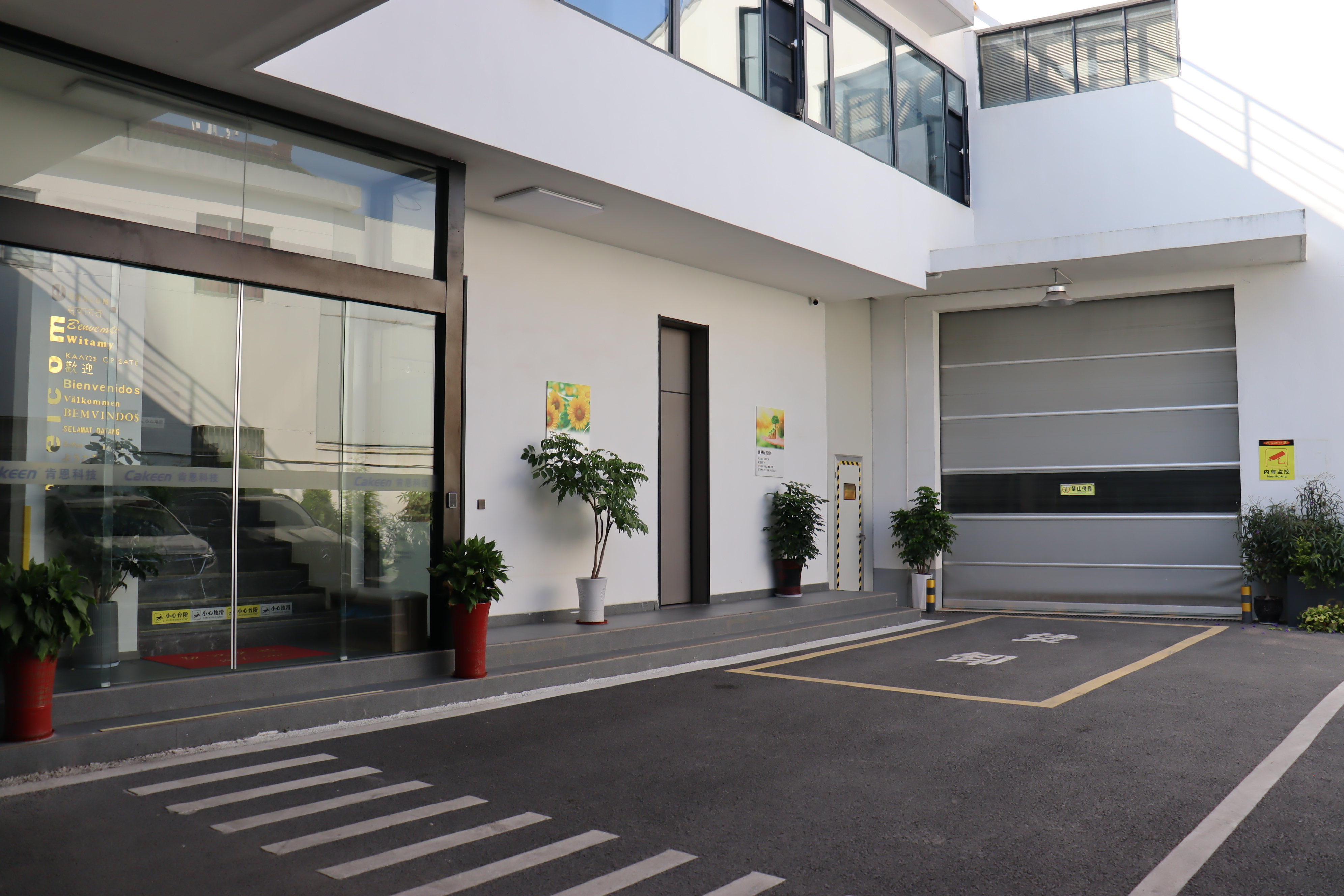 Figure 1 — Cakeen manufacturing facility, Wuxi, Jiangsu Province, China (factory photo).
At the decision stage, the mounting format is usually the last item on the specification sheet and the first item that generates rework. A controller that fits the cabinet but not the operator creates daily friction. A controller that fits the front panel but consumes interior volume can force a larger enclosure, a longer wiring schedule, and a new drawing set.
The practical rule for buyers is simple: let the cabinet layout, the wiring density, and the maintenance model decide. This article ranks the two mounting options by scenario, then gives the selection criteria in the order most panel builders and OEMs apply them.
Why the Mounting Decision Is a System Decision
Mounting is often treated as a packaging detail. In practice, it changes four things at once: available cabinet volume, front-panel real estate, terminal access for wiring, and the way a fault is detected and cleared. Each of those has a cost attached, and each is difficult to change after the panel is drilled, wired, and documented.
The four constraints that most often force a re-decision are:
- Cabinet space. Interior rail length is finite. A high-density cabinet with multiple loops, power supplies, and communication modules runs out of rail before it runs out of cutouts.
- Front-panel access. If an operator must change a setpoint or acknowledge an alarm, the controller has to be reachable without opening the door. If setup is done once and then monitored remotely, front access is wasted panel area.
- Wiring density. Sensor leads, SSR drive outputs, alarm contacts, and communication pairs all terminate somewhere. Longer internal runs and crowded terminal rows slow assembly and raise the chance of miswiring.
- Maintenance model. A plant that relies on remote diagnostics behaves differently from a plant that relies on a technician walking the line with a flashlight.
A secondary but real constraint is documentation. When a controller format changes late, the terminal schedule, the panel drawing, and the spare parts list all change with it. Buyers running compliance-critical projects usually absorb that cost twice — once in engineering and once in acceptance testing.
What the Market Context Says About Mounting Choices
The category is expanding, and the growth is concentrated in applications where control density matters. SNS Insider valued the global PID controller market at USD 1.60 billion in 2024 and projects USD 2.24 billion by 2032. Strategic Market Research expects the industrial temperature controller market to grow at a CAGR of 7.1% from 2024 to 2030, driven by Industry 4.0 adoption. Dataintelo reported that Asia-Pacific held a 38.2% revenue share of the temperature controller market in 2023, with China as a key manufacturing hub.
Vertical demand is uneven. SNS Insider placed the oil & gas sector at approximately 31.4% of PID controller end-user share in 2024. Separately, Market Research Reports valued the global semiconductor temperature control equipment market at USD 663 million in 2024, reflecting how much of the demand comes from processes where a fraction of a degree changes yield.
Precision expectations follow the same direction. Grand View Research notes that high-precision PID controllers can hold temperature stability within ±0.1°C, a level that matters in semiconductor lithography and etching. That level of stability is a control-loop property — it does not come from the mounting format. It comes from the controller platform behind the front panel or the cabinet rail.
Two compliance anchors shape the enclosure side of the decision. UL Solutions states that industrial control panels, including PID controllers, must comply with UL 508A for North American safety listing and IEC 60947 for international markets. Mounting format determines how easily an inspector can reach, verify, and document the device inside the panel.
For context on the supplier landscape, Mordor Intelligence lists Honeywell, Omron, Siemens, Eurotherm (Schneider Electric), and ABB among the leading global manufacturers of PID and temperature controllers. Cakeen competes in the same category from a semiconductor-focused engineering base.
The Two Mounting Options Cakeen Supplies
Cakeen is the brand of Wuxi Keen Technology Co.,Ltd., a manufacturer established in 2011 and headquartered in Huishan District, Wuxi, Jiangsu Province. The company builds semiconductor industrial control electronics, electrical cabinet systems, and AI embedded systems. Its production base covers 2,019 m², employs approximately 50 people, and includes a 20-engineer R&D team. Published company data records an annual output of 500,000 units, an export ratio of about 40% across Spain, Southeast Asia, the EU, and the USA, and certifications covering ISO 9001, ISO 14001, ISO 45001, UL, SEMI S2, CE, and ROHS.
For mounting decisions, the relevant point is that the same manufacturer supplies both formats: the PID Temperature Controller (DIN Rail Mount) and the PID Temperature Controller (Panel Mount). Because the control platform is shared, the mounting choice becomes a cabinet and human-factors decision rather than a control-performance trade-off.
Shared control performance
Cakeen's PID controller platform uses PID auto-tuning with ±0.1°C accuracy, compared with roughly ±2–5°C fluctuation on basic ON/OFF control. The unit includes a built-in SSR output, which removes the external relay that ON/OFF and older controller designs require, and integrates RS485/Modbus RTU communication for networked control and monitoring.
Cakeen's published comparison figures for this platform state that temperature stability improves by 20–50 times versus ON/OFF control, panel space is reduced by about 30% through the built-in SSR, wiring is reduced by roughly 40% through integrated communication, total system cost is 15–25% lower once external SSR modules and simplified wiring are counted, commissioning time falls by 50% with self-tuning PID, and energy waste drops by 10–20% because PID control eliminates the overshoot associated with ON/OFF cycling.
Controller models in the range — KE-H10, H6625, ASH, KE-48, and KE-2104 — include built-in sensor break detection and alarm output, plus SSR overcurrent protection. Modbus RTU enables remote real-time monitoring and early warning through a CMS layer, which is what allows a DIN rail installation inside a closed cabinet to remain diagnosable.
The cabinet layer around the controller
Mounting decisions sit inside a wider cabinet architecture. Cakeen's K42CE-D CMS gateway combines 6× RS485 and 1× Ethernet in one compact DIN rail module and is purpose-built for multi-device parameter setting and data forwarding without PLC programming. Published figures for this gateway show hardware cost reduced by 40–60% versus a PLC with communication modules, deployment time reduced by 50%, and communication latency reduced by roughly 60% for RS485 device networks, at a 12–24 VDC supply and with expansion through K15DT-D I/O modules.
On the security side, the K42CE-D supports network segmentation between the RS485 fieldbus and the Ethernet layer, and Modbus communication can be restricted to authorized IP addresses. Where cabinets are involved, Cakeen states that it uses genuine ABB, Siemens, Schneider, Mitsubishi, and Omron components with 100% incoming inspection and traceable component serial numbers, and that its cabinets include circuit breakers, fuses, and emergency stop buttons with IP54/IP65 enclosure protection and CE/IEC/UL certified designs.
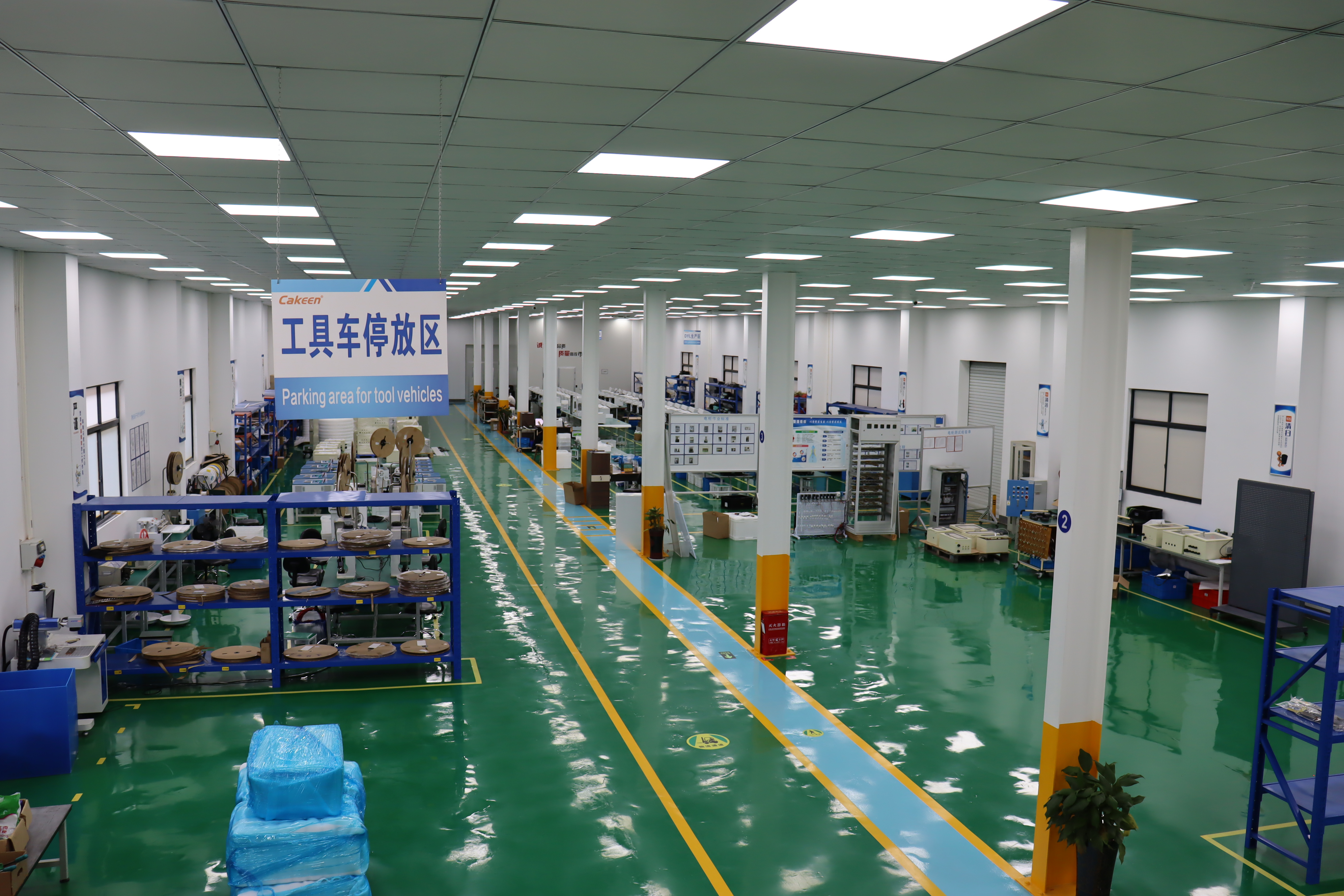 Figure 2 — Cakeen production area, Wuxi, Jiangsu Province, China (factory photo).
Step-by-Step: Choosing a Mounting Format in Five Steps
The sequence below is the order that avoids rework. It starts with physical constraints and ends with documentation, because documentation is the most expensive item to redo.
Step 1 — Map the cabinet envelope before the controller
List rail length, cutout area, and the footprint of every other device that must sit beside the controller: power supply, SSR module if any, gateway, breakers, and terminal blocks. A DIN rail mount controller consumes internal rail; a panel mount controller consumes front-panel cutout space and depth. If the cabinet is already tight, the DIN rail format preserves the front for operator devices such as HMI panels and pushbuttons.
Step 2 — Decide who touches the controller
If an operator adjusts setpoints, changes recipes, or acknowledges alarms during a shift, panel mount is the practical answer. If setup happens at commissioning and the loop is monitored over Modbus RTU afterward, the front panel is better used for other instrumentation and the controller belongs on the rail.
Step 3 — Count wiring density and terminal access
Each loop brings sensor leads, an SSR drive output, alarm contacts, and communication pairs. In cabinets with many loops, the wiring reduction that comes from integrated RS485/Modbus RTU communication becomes the deciding factor. DIN rail layouts keep these runs short and grouped; panel mount layouts concentrate them behind the front plate, which can raise assembly time when loop counts are high.
Step 4 — Choose the maintenance and diagnostics model
Select the format that matches how faults will be found. With sensor break detection and alarm output on the controller and Modbus RTU remote monitoring through the CMS layer, a DIN rail installation inside a closed cabinet still reports abnormal conditions. Labs and small process skids often prefer front-panel alarm visibility because no supervisory system is present.
Step 5 — Lock the compliance and documentation path
Confirm the drawing set, terminal schedule, and bilingual documentation before release. Cakeen designs electrical drawings to IEC/UL508A standards with multi-stage peer review, states a first-pass audit rate above 95% for international certifications, and delivers complete bilingual (Chinese + English) documentation with every project. Where in-house design is replaced by an external partner, published comparison data records a 30–50% shorter design cycle, a first-pass certification rate above 90%, and a documentation package that reduces end-user acceptance time by 40%.
Ranked Recommendations by Industrial Control Scenario
The ranking below orders mounting configurations by how often they resolve the underlying constraint cleanly, from highest to lowest.
Rank 1 — High-density multi-loop skids in sealed cabinets: DIN rail mount
This is the clearest case for the PID Temperature Controller (DIN Rail Mount). Multiple loops, dense terminal rows, and a sealed enclosure mean the operator never opens the door, so front-panel access has no value. Rail mounting keeps loops grouped, shortens internal wiring, and pairs naturally with the K42CE-D gateway, whose 6× RS485 ports support multi-device parameter setting and data forwarding without PLC programming. For cabinets that also run multi-channel PID controller arrays, this configuration is the standard starting point.
Rank 2 — Semiconductor nitrogen line and gas panel heating: DIN rail mount with pipeline heating hardware
A semiconductor temperature control system that heats nitrogen lines must prevent condensation and hold line temperature during idle and low-flow periods. In this architecture, control electronics live inside the cabinet while HOT-GUN pipeline heating hardware and the HOT N2 MFC — which provides closed-loop flow monitoring with alarm for abnormal conditions — sit on the gas path. Stainless steel construction supports gas purity and corrosion resistance. Because all setpoints are managed through the control layer, the DIN rail format is the better fit, and the Hot N2 controller semiconductor application is monitored remotely rather than at a front panel.
Rank 3 — Laboratory and process heating equipment: panel mount
Where a heating jacket temperature controller or a heating mantle temperature controller is operated by a technician standing at the equipment, panel mount is the correct format. The same ±0.1°C PID accuracy, built-in SSR output, and RS485/Modbus RTU interface apply, but the value shifts to the front face: process value visibility, setpoint adjustment, and alarm acknowledgment without opening a panel or connecting a laptop.
Rank 4 — OEM machines with a dedicated operator station: panel mount
For PID controller OEM programs, the machine's operator interface is usually a fixed part of the design. If the machine presents temperature as a process parameter on the front of the unit, a panel mount controller aligns with that layout and avoids routing temperature data through a separate HMI layer. For OEMs shipping the same machine globally, the compliance path matters as much as the format: IEC/UL508A-compliant design from day one, multi-PLC platform expertise, and bilingual documentation reduce deployment friction across markets.
Rank 5 — Retrofit and panel upgrade projects: DIN rail mount
Retrofits rarely allow new front-panel cutouts. DIN rail mount controllers fit inside the existing enclosure, and where a retrofit also replaces PLC-based data acquisition, the K42CE-D gateway offers a dedicated path: 6× RS485 plus Ethernet in one compact DIN rail module, hardware cost reduced 40–60% versus a PLC with communication modules, deployment time reduced 50%, and roughly 60% lower communication latency for RS485 device networks.
Rank 6 — Mixed cabinets with remote and local loops: hybrid layout
Some panels contain both. A production skid may run several DIN rail loops under remote supervision while one locally operated loop needs front visibility for changeovers. Because both formats share the same control platform and Modbus RTU interface, a hybrid panel still presents one control layer to the CMS and one spare-parts list to maintenance.
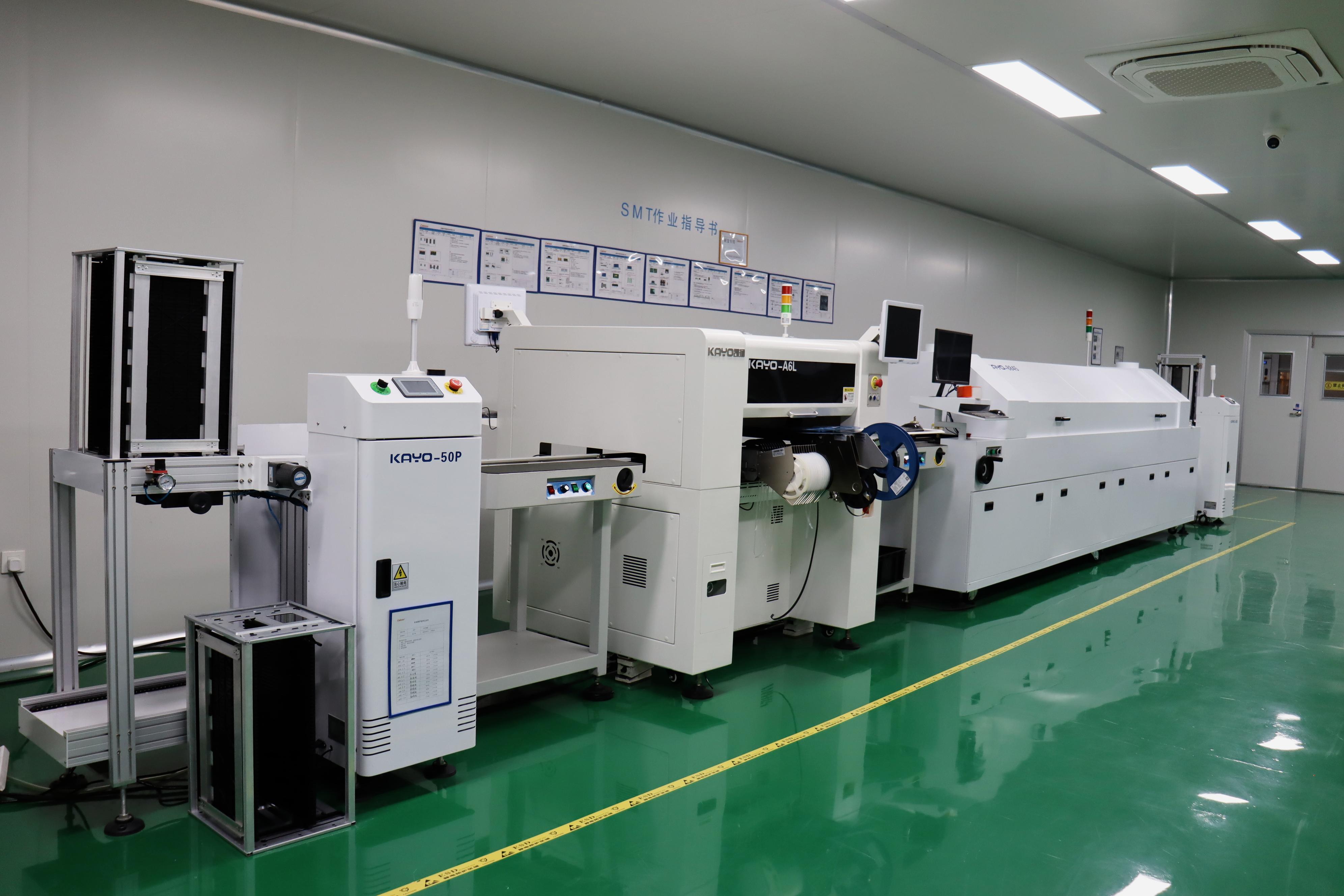 Figure 3 — Cakeen assembly area, Wuxi, Jiangsu Province, China (factory photo).
DIN Rail vs Panel Mount: Comparison Table
| Selection criterion | PID Temperature Controller (DIN Rail Mount) | PID Temperature Controller (Panel Mount) |
|---|---|---|
| Cabinet space | Occupies internal rail length; supports dense multi-loop layouts | Occupies front-panel cutout area and mounting depth; preserves interior rail |
| Front-panel access | No front access; setpoints are managed through the control layer or with the cabinet open | Direct front access to process value, setpoint, and alarms |
| Wiring density | Short internal runs grouped with I/O and gateway modules; supports ~40% wiring reduction from integrated RS485/Modbus RTU | Terminations concentrate behind the front plate; suits machines with few loops |
| Maintenance and diagnostics | Remote monitoring via Modbus RTU plus sensor break detection and alarm output on KE-H10, H6625, ASH, KE-48, and KE-2104 | Visual alarm and value check at the machine without opening the enclosure |
| Networking architecture | Pairs with DIN rail gateway modules such as K42CE-D (6× RS485 + Ethernet) | Typically one loop or a small group controlled locally at the operator station |
| Typical applications | Multi-loop skids, nitrogen line heating, retrofits, sealed cabinets | Laboratory instruments, heating jackets, heating mantles, OEM machines with operator stations |
| Shared control platform | PID auto-tuning to ±0.1°C accuracy, built-in SSR output, RS485/Modbus RTU, SSR overcurrent protection | Same platform and parameters as the DIN rail format |
Cakeen-specific performance figures are drawn from published product comparison data; form-factor characteristics reflect standard control-panel practice. Final rail length, cutout dimensions, and terminal assignments should be confirmed against the manufacturer's current datasheet before panel fabrication.
Cakeen building blocks referenced in this ranking
| Component | Role in a mounting decision |
|---|---|
| PID Temperature Controller (DIN Rail Mount) | Internal cabinet format for dense, remotely supervised loops |
| PID Temperature Controller (Panel Mount) | Front-of-machine format for operator-facing loops |
| KE-H10 / H6625 / ASH / KE-48 / KE-2104 | PID controller models with built-in sensor break detection and alarm output |
| K42CE-D CMS gateway | DIN rail data acquisition and parameter-setting node, 6× RS485 + Ethernet |
| K15DT-D I/O module | Low-incremental-cost expansion for CMS-based cabinets |
| HOT-GUN / HOT N2 MFC | Pipeline heating and closed-loop flow monitoring for nitrogen line systems |
FAQ: Mounting Decisions for Panel Builders and OEMs
1. Do DIN rail and panel mount PID temperature controllers fall under panel-level standards such as UL 508A and IEC 60947?
Yes. UL Solutions states that industrial control panels, including PID controllers, must comply with UL 508A for North American safety listing and IEC 60947 for international markets. The mounting format affects how easily an inspector can reach and verify the device, but the compliance obligation applies to both. Cakeen designs electrical drawings to IEC/UL508A standards with multi-stage peer review, states a first-pass audit rate above 95% for international certifications, and holds CE, UL, SEMI S2, ISO 9001, ISO 14001, ISO 45001, and ROHS certifications. Its cabinets also include circuit breakers, fuses, and emergency stop buttons with IP54/IP65 enclosure protection.
2. Can a single PID temperature controller manufacturer supply both formats with the same control performance?
Cakeen supplies both the PID Temperature Controller (DIN Rail Mount) and the PID Temperature Controller (Panel Mount) from the same control platform. Shared performance includes PID auto-tuning with ±0.1°C accuracy versus roughly ±2–5°C fluctuation on basic ON/OFF control, a built-in SSR output that removes the external relay, and integrated RS485/Modbus RTU. The KE-H10, H6625, ASH, KE-48, and KE-2104 models include built-in sensor break detection and alarm output plus SSR overcurrent protection, and quality control includes 100% testing of units. Wuxi Keen Technology Co.,Ltd. operates a 2,019 m² facility with a 20-engineer R&D team and an annual output of 500,000 units.
3. Does the mounting format change the total cost of a temperature control project?
The control platform is the larger cost driver, and it is shared by both formats. Cakeen's published comparison data states that versus basic ON/OFF controllers, the PID platform reduces panel space by about 30%, reduces wiring by roughly 40%, and lowers total system cost by 15–25% once external SSR modules and simplified wiring are counted. For cabinets running PLC-based data acquisition, the K42CE-D CMS gateway states 40–60% lower hardware cost than a PLC with communication modules and no PLC programming license requirement. At cabinet level, Cakeen's published position is that its certified assemblies cost 10–20% more than uncertified alternatives, with the difference offset by reduced rework and certification-failure risk over the equipment lifetime.
4. Can we validate a mounting option on a sample before committing to volume production?
Sample validation is the normal path before volume commitment, because the mounting decision interacts with cabinet geometry that a datasheet alone cannot confirm. Cakeen's quality control includes 100% testing of units, and the documentation package delivered with each project — including bilingual (Chinese + English) documentation — supports the acceptance test. Extended warranty and maintenance agreements are also available, and standard components support global spare parts availability through branded component service networks.
5. What lead time should panel builders plan for?
For electrical cabinet integration projects, Cakeen's published design-to-delivery cycle is 2–4 weeks, and replacing in-house design with this service has been recorded at a 30–50% shorter design cycle, with a documentation package that reduces end-user acceptance time by 40%. On the control side, the K42CE-D gateway states a 50% reduction in deployment time versus PLC-based data acquisition. Panel builders who send the cabinet layout, loop count, and communication topology with the inquiry receive a mounting recommendation and a quote in one step through www.wxkeen.com or by contacting the team directly at jwy@wxkeen.com.
Conclusion: Let the Cabinet and the Operator Decide
The ranking is stable across most projects. DIN rail mount wins when loops are dense, supervision is remote, and the cabinet is sealed: multi-loop skids, nitrogen line heating systems, and retrofit panels. Panel mount wins when a person stands in front of the equipment and needs to see or change something: laboratory instruments, heating jacket and heating mantle equipment, and OEM machines with fixed operator stations. Hybrid layouts are practical because both formats run the same control platform.
What makes the decision durable is not the format itself but the consistency of the layer behind it — ±0.1°C PID accuracy, built-in SSR output, RS485/Modbus RTU communication, sensor break detection, and a documentation set that survives an audit. A PID temperature controller supplier that provides both formats, and the CMS and I/O modules that connect them, removes the need to re-open the mounting decision when the panel design changes.
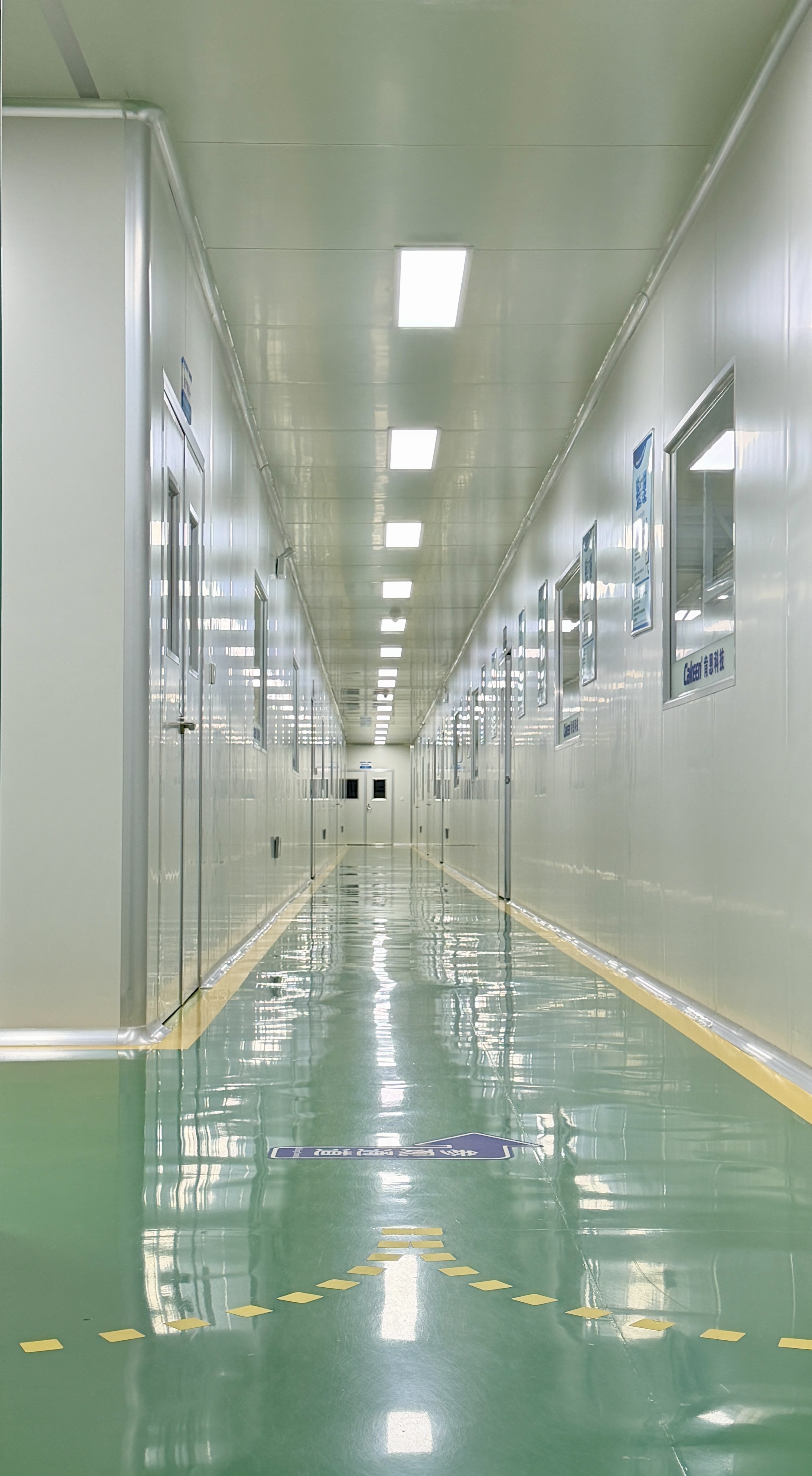 Figure 4 — Cakeen production and inspection area, Wuxi, Jiangsu Province, China (factory photo).
Next step: match the format to your panel
Send Cakeen your cabinet layout, loop count, and communication requirement, and receive a mounting recommendation, sample plan, and quotation. Cakeen supplies both DIN rail and panel mount PID temperature controllers, plus the CMS gateways and I/O modules that connect them.
Contact: Wendy — www.wxkeen.com — jwy@wxkeen.com — Tel: +86-0510-85161878 / +86-18921139517 — WhatsApp: +86 18921139517