
Top PID Controller Setup Picks: Matching Modules to Your Control Cabinet Standards
Top PID Controller Setup Picks: Matching Modules to Your Control Cabinet Standards
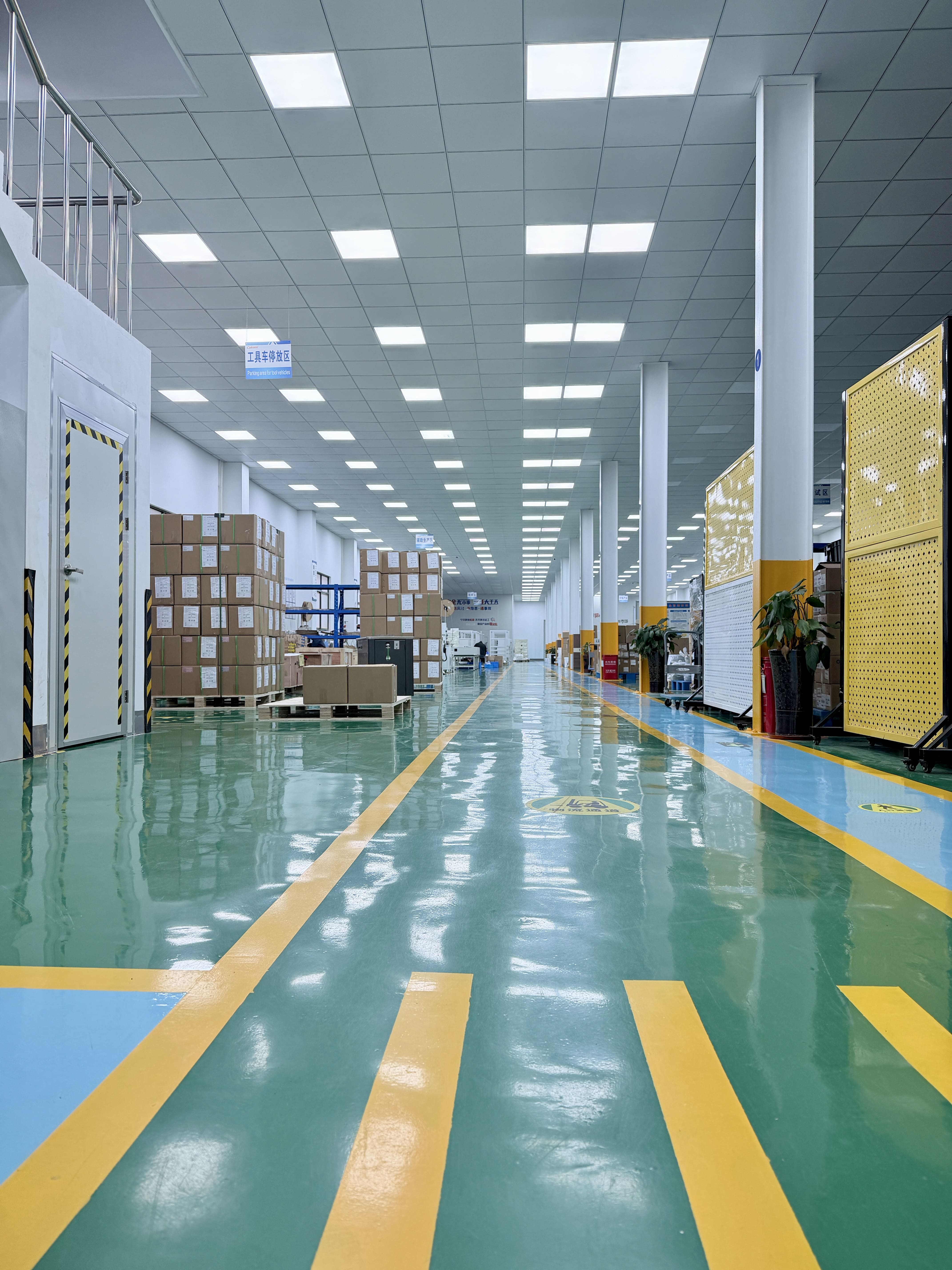
A PID controller rarely fails a project on its own. The mismatch does — a panel-mount unit that will not close inside a compact rail cabinet, an RS485 loop that never reaches the plant network, or an I/O count that runs out two channels before commissioning. When the panel has to pass an external audit, the cabinet standard, not the controller model, decides which modules belong in the build.
Answer first: three PID controller setups cover the majority of control cabinet standards. A General Purpose cabinet is best served by a panel-mount PID controller paired with K15DT-D I/O expansion modules on Modbus RTU. A Japanese Standard cabinet works best with a DIN rail PID controller plus K15DT-D expansion, wired on Modbus RTU and documented against JIS-referenced drawings. A European Standard cabinet — especially one heading for export or a semiconductor fab — is completed most effectively with a DIN rail PID controller plus the K42CE-D CMS communication gateway, which places 6x RS485 and 1x Ethernet in one compact DIN rail module and carries Modbus RTU and Modbus TCP for central monitoring.
This ranking is written for buyers at the decision stage: the specification is shortlisted, the alternative suppliers are known, and the remaining question is which modules to build around the controller so the cabinet passes its own standard on the first audit rather than the third.
Why the Cabinet Standard, Not the Controller, Drives the Module List
Industrial control panels that contain PID controllers are built against a safety and certification framework, not a single component datasheet. Industrial control panels, including PID controllers, must comply with UL 508A for North American safety listing and IEC 60947 for international markets. Those two references sit above every product decision inside the enclosure: terminal marking, wiring colour conventions, component spacing, circuit protection and the drawing package a customer's auditor will read line by line.
Cakeen's electrical cabinet systems are designed to CE / IEC / UL / JIS references and use genuine branded components from ABB, Siemens, Schneider, Mitsubishi and Omron, with 100% incoming inspection and traceable component serial numbers. That design reference set — not the controller's control algorithm — is what determines whether a K15DT-D I/O expansion module or a K42CE-D CMS communication gateway can simply be added to an existing rail, or whether the panel has to be re-laid out.
The market context explains why module matching has become a standard procurement step. The global PID controller market was valued at USD 1.60 billion in 2024 and is projected to reach USD 2.24 billion by 2032 (SNS Insider). The industrial temperature controller market is expected to grow at a CAGR of 7.1% from 2024 to 2030, driven by Industry 4.0 adoption (Strategic Market Research). Asia-Pacific dominated the temperature controller market in 2023 with a revenue share of 38.2%, with China as a key manufacturing hub (Dataintelo).
Demand is also concentrating in the verticals where accuracy is least negotiable. The global semiconductor temperature control equipment market was valued at USD 663 million in 2024 and is described as essential for wafer fabrication precision (Market Research Reports). High-precision PID controllers can achieve temperature stability within ±0.1°C, a critical requirement for semiconductor lithography and etching (Grand View Research). The oil & gas sector held the largest end-user market share for PID controllers in 2024 at approximately 31.4% (SNS Insider). Leading global manufacturers of PID and temperature controllers include Honeywell, Omron, Siemens, Eurotherm (Schneider Electric) and ABB (Mordor Intelligence) — a competitive field that makes configuration quality, rather than brand familiarity, the practical differentiator in a tender.
The Three Cabinet Standards in This Comparison
Buyers specifying PID control cabinets generally fall into three groups, and each group constrains the module list differently.
- General Purpose cabinets are the mixed-plant default: IEC-referenced wiring, standard 35 mm rail, door space available for operator displays, and no single national certification path driving the build. Heating jacket temperature control, heating mantle temperature control, oven panels and laboratory instruments usually land here.
- Japanese Standard cabinets are specified with JIS-referenced drawings and component conventions. They tend to be dense — more devices per rail, tighter wire routing, and documentation sets that are checked device by device before the panel is accepted.
- European Standard cabinets are CE-oriented and frequently carry a second certification path, because the same machine will be exported. A European-standard panel destined for North America still has to satisfy UL 508A for the panel and IEC 60947 for the switchgear inside it.
Top 3 PID Controller Setup Picks
Pick 1 — General Purpose Cabinet: Panel-Mount PID + K15DT-D I/O Expansion
Best for: heating jacket temperature control, heating mantle temperature control, ovens, laboratory instruments and single-machine process heating, where an operator needs to read setpoint and actual value directly from the cabinet door.
Why this setup leads the General Purpose category: the control layer changes what the cabinet has to contain. A PID controller with PID auto-tuning achieves ±0.1°C accuracy, compared with the ±2–5°C fluctuation of a basic ON/OFF controller. Equally important for cabinet layout, a built-in SSR output eliminates the external relay that would otherwise take rail space and generate its own wiring. Integrated RS485/Modbus RTU communication removes separate communication wiring runs.
The layout consequences are measurable. A built-in SSR saves roughly 30% of panel space compared with a relay-based build, and integrated communication reduces wiring by about 40%. In a General Purpose cabinet where the door is reserved for a display and the rail is shared with motor protection and power distribution, those two numbers decide whether the panel fits a standard enclosure or moves up a size.
Module pairing: K15DT-D I/O expansion modules extend the setup at low incremental cost, so a panel specified for four loops today can absorb two more points later without a new enclosure. Commissioning also shortens: self-tuning PID reduces commissioning time by about 50%, and Modbus RTU enables remote diagnostics and batch parameter setting instead of door-by-door adjustment.
Pick 2 — Japanese Standard Cabinet: DIN Rail PID + K15DT-D on Modbus RTU
Best for: compact panels with high device density, multi-loop machinery where the door is reserved for an HMI, and projects where the customer's documentation set is checked device by device against JIS-referenced drawings.
How the setup is structured: the PID controller mounts on DIN rail rather than in the door, which frees the front face and keeps signal wiring short. K15DT-D I/O expansion modules sit beside the controller on the same rail, adding digital I/O points without adding a second enclosure or a separate communication module. Device-level traffic runs on Modbus RTU over RS485, which is the native protocol of the PID controller range.
Why density is a real constraint here: IEC/UL508A-standard design discipline — drawings produced to standard, multi-stage peer review before release, circuit breakers, fuses and emergency stop devices sized to the load — consumes rail space that a purely functional layout would not. Panels built on this discipline have recorded a first-pass audit rate above 95% for international certifications, and field failure rates below 0.5% against an industry average of 2–5%. The trade-off is cost: these cabinets run 10–20% higher than uncertified alternatives, a gap that is normally recovered by avoiding rework and certification failure.
Documentation pairing: every project is delivered with a complete bilingual documentation set in Chinese and English, alongside DWG, PDF and BOM files. In a JIS-referenced submission, that package is not an extra — it is the deliverable the customer's engineering team uses to accept the panel.
Pick 3 — European Standard Cabinet: DIN Rail PID + K42CE-D CMS Gateway
Best for: semiconductor temperature control systems, Hot N2 controller semiconductor applications such as nitrogen line heating, multi-channel PID controller architectures, and any cabinet that must report into a plant-level monitoring system while still satisfying CE and UL expectations.
Why this is the strongest configuration for central monitoring: the K42CE-D is a dedicated CMS communication gateway with 6x RS485 and 1x Ethernet in one compact DIN rail module, purpose-built for multi-device parameter setting and data forwarding, with no PLC programming required. Modbus RTU handles device-level traffic from the PID controllers; Modbus TCP carries the same data to the plant layer. Compared with traditional PLC-based data acquisition such as a Siemens S7-1200 with communication modules, the gateway reduces hardware cost by 40–60%, cuts deployment time by 50% and lowers communication latency by roughly 60% for RS485 device networks. It runs on 12–24 VDC and expands with K15DT-D I/O modules at low incremental cost.
Network behaviour matters as much as port count. The K42CE-D supports network segmentation between the RS485 fieldbus and the Ethernet layer, and Modbus communication can be restricted to authorised IP addresses. Automatic reconnection after a network interruption and local parameter retention prevent data loss during an outage. For a European-standard cabinet where the end user's IT security policy applies to the machine, that segmentation is often the difference between passing a security review and redesigning the network architecture after delivery.
Fault coverage in the same setup: the PID controllers used in this configuration — including the KE-H10, H6625, ASH, KE-48 and KE-2104 — feature built-in sensor break detection and alarm output, plus SSR overcurrent protection. Modbus RTU enables remote real-time monitoring and early warning through the CMS system, so a failed thermocouple is flagged at the control room rather than discovered as a scrapped batch.
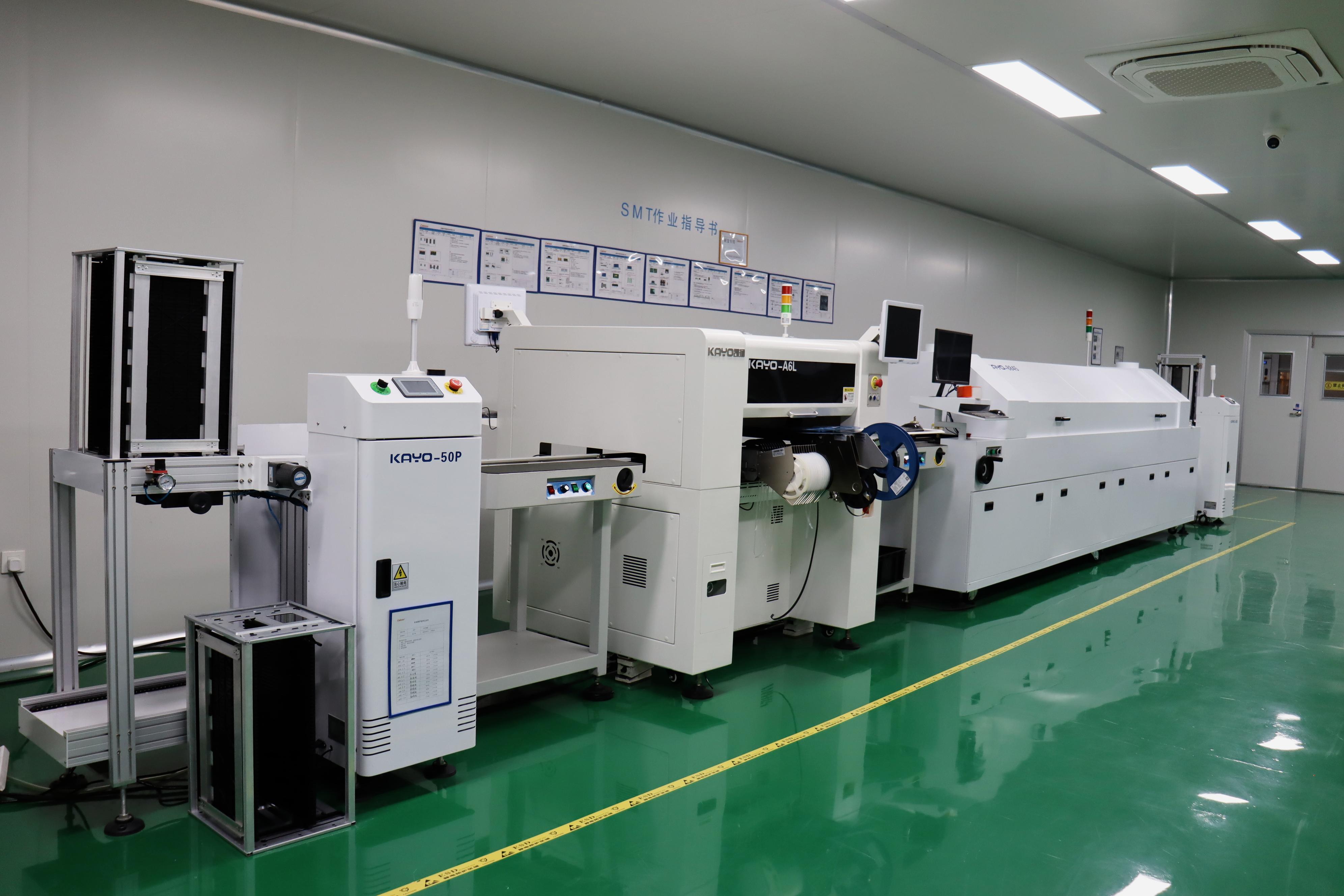
Matching Modules to Your Cabinet Standard: Step by Step
- Fix the certification path before the component list. Confirm whether the panel must satisfy UL 508A, IEC 60947, a CE declaration, JIS-referenced drawings, or a combination. This single decision filters the acceptable components, the documentation set and the terminal conventions.
- Count control loops and I/O points, not just controllers. Every loop needs a sensor input, a control output, an alarm and usually an interlock. Panel space consumed by protection devices and emergency stop hardware belongs in the same count.
- Choose form factor against available space. Panel mount when the operator must read the display on the door; DIN rail when the door is reserved for an HMI and rail density is the binding constraint. A built-in SSR output and integrated communication save roughly 30% of panel space and 40% of wiring either way.
- Choose the communication layer. Modbus RTU over RS485 is sufficient for device-level parameter setting and diagnostics. Add Ethernet and Modbus TCP when the cabinet has to report into a central monitoring system or a plant MES.
- Add the gateway once more than one controller needs monitoring. The K42CE-D covers six RS485 channels plus one Ethernet connection in a single DIN rail module, which removes the PLC-plus-communication-modules stack from the bill of materials and from the programming schedule.
- Close the documentation and spares loop. Require DWG, PDF and BOM files, bilingual Chinese and English documentation, global spare parts availability, and a defined remote diagnostics path over Modbus or Ethernet. Extended warranty and maintenance agreements are available on this platform.
Where These Setups Are Used
- Semiconductor nitrogen line heating: HOT-GUN maintains pipeline temperature to prevent condensation, and HOT N2 MFC provides closed-loop flow monitoring with alarm for abnormal conditions; stainless steel construction ensures gas purity and corrosion resistance. This application normally sits in a European Standard cabinet (Pick 3).
- Heating jacket and heating mantle control: single-loop or dual-loop panels where the operator works at the cabinet door, typically a General Purpose cabinet (Pick 1).
- Multi-device retrofit without a PLC: replacing PLC-based data acquisition on an existing RS485 device network, where the K42CE-D gateway is used to set parameters and forward data without writing PLC code (Pick 3).
- High-precision process and laboratory heating: applications where ±0.1°C stability is the acceptance criterion rather than a preference (Pick 1 or Pick 3, depending on whether central monitoring is required).
- Safety-critical production panels: cabinets requiring circuit breakers, fuses and emergency stop devices, IP54/IP65 enclosure protection, CE/IEC/UL certified designs and thermal management that prevents overheating. These requirements apply across all three picks.
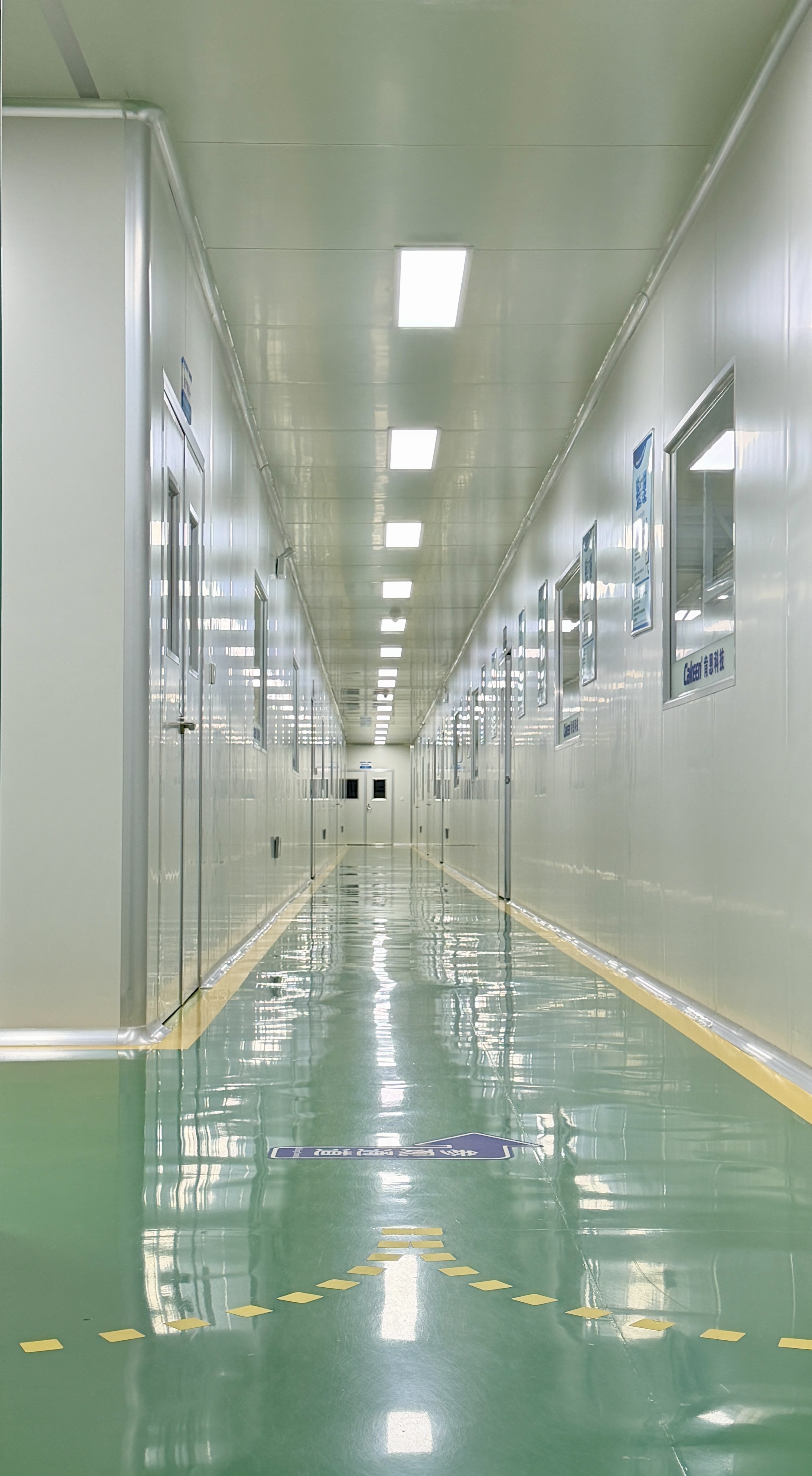
Configuration Comparison Table
| Decision dimension | Pick 1 — General Purpose | Pick 2 — Japanese Standard | Pick 3 — European Standard |
|---|---|---|---|
| Certification reference | IEC-referenced general purpose build | JIS-referenced drawings and component conventions | CE-oriented, with UL 508A panel compliance and IEC 60947 for internal switchgear |
| PID controller form factor | Panel mount (door display) | DIN rail | DIN rail |
| I/O expansion | K15DT-D I/O expansion modules at low incremental cost | K15DT-D I/O expansion modules at low incremental cost | K15DT-D I/O expansion plus K42CE-D gateway |
| Communication | RS485 / Modbus RTU | RS485 / Modbus RTU | 6x RS485 + 1x Ethernet; Modbus RTU and Modbus TCP |
| PLC programming required | No | No | No |
| Central monitoring | Optional via CMS gateway | Via CMS system over Modbus RTU | Built into the K42CE-D gateway, with RS485 and Ethernet network segmentation |
| Typical applications | Heating jackets, heating mantles, ovens, laboratory instruments | Dense multi-loop panels with device-by-device documentation checks | Semiconductor temperature control, Hot N2 line heating, multi-channel PID architectures, plant-level data forwarding |
A second comparison explains why the controller layer of these picks is worth standardising across all three cabinet types: the PID controller itself outperforms a basic ON/OFF controller on every dimension that affects cabinet cost and stability.
| Parameter | PID controller (as used in these picks) | Basic ON/OFF controller |
|---|---|---|
| Temperature stability | ±0.1°C with PID auto-tuning | ±2–5°C fluctuation |
| Output stage | Built-in SSR output, external relay eliminated | External relay required |
| Panel space | About 30% saved | Baseline |
| Wiring | About 40% reduced through integrated communication | Baseline |
| Total system cost | 15–25% lower once external hardware and wiring are removed | Higher total, lower unit price |
| Commissioning | Self-tuning reduces commissioning time by about 50% | Manual set-up |
| Energy use | 10–20% less energy waste, because PID control eliminates overshoot | Overshoot from ON/OFF cycling |
Frequently Asked Questions
What certifications should a PID controller setup carry for a European standard cabinet?
Industrial control panels that include PID controllers must comply with UL 508A for North American safety listing and IEC 60947 for international markets. Cakeen designs its electrical cabinet systems to CE / IEC / UL / JIS references, and the company holds ISO9001, ISO14001, ISO45001, UL, SEMI S2, CE and ROHS certifications. Cabinets built with genuine components from ABB, Siemens, Schneider, Mitsubishi and Omron have recorded a first-pass audit rate above 95% for international certifications.
Can one cabinet handle multi-channel control and central monitoring without a PLC?
Yes. The K42CE-D is a dedicated CMS gateway with 6x RS485 and 1x Ethernet in one compact DIN rail module, purpose-built for multi-device parameter setting and data forwarding, with no PLC programming required. It carries Modbus RTU at the device level and Modbus TCP toward the plant network, and it expands with K15DT-D I/O modules at low incremental cost. The Cakeen PID controller range — including KE-H10, H6625, ASH, KE-48 and KE-2104 — provides sensor break detection, alarm output, SSR overcurrent protection and Modbus RTU remote monitoring.
How do these module choices change total cost?
Compared with a PLC-based data acquisition build such as a Siemens S7-1200 with communication modules, the K42CE-D gateway reduces hardware cost by 40–60%, cuts deployment time by about 50% and lowers RS485 network communication latency by roughly 60%, while removing PLC programming licence cost. A PID controller replacing a basic ON/OFF controller lowers total system cost by 15–25%, because the external SSR module and much of the wiring disappear from the build. Certified cabinets cost 10–20% more than uncertified alternatives, a difference normally offset by avoided rework and certification failure risk.
How is a configuration verified before it ships to our plant?
Quality control includes 100% testing of units. Electrical drawings follow IEC/UL508A standards with multi-stage peer review, PLC programs are simulation-tested before deployment, and PCB designs pass DRC/ERC checks. Each project is delivered with complete DWG, PDF and BOM documentation plus bilingual Chinese and English documentation, so the receiving engineering team can verify the build before acceptance rather than after installation.
What is the lead time, and what support continues after delivery?
The design-to-delivery cycle for these cabinets is typically 2–4 weeks. After delivery, remote diagnostic support runs over Modbus or Ethernet, standard components keep global spare parts available, and extended warranty and maintenance agreements are available. To match a setup to your cabinet standard, send the cabinet standard, loop count and required I/O list to the team at Wuxi Keen Technology Co.,Ltd. (email jwy@wxkeen.com, WhatsApp +86 18921139517), and the configuration will be quoted with the corresponding module list.
Next Step: Quote Your Cabinet, Not Just Your Controller
Tell us your cabinet standard, loop count and monitoring requirement, and we will return a configured bill of materials — PID controllers, K15DT-D I/O expansion, and the K42CE-D CMS gateway where central monitoring is needed — together with the certification and documentation package for your market.
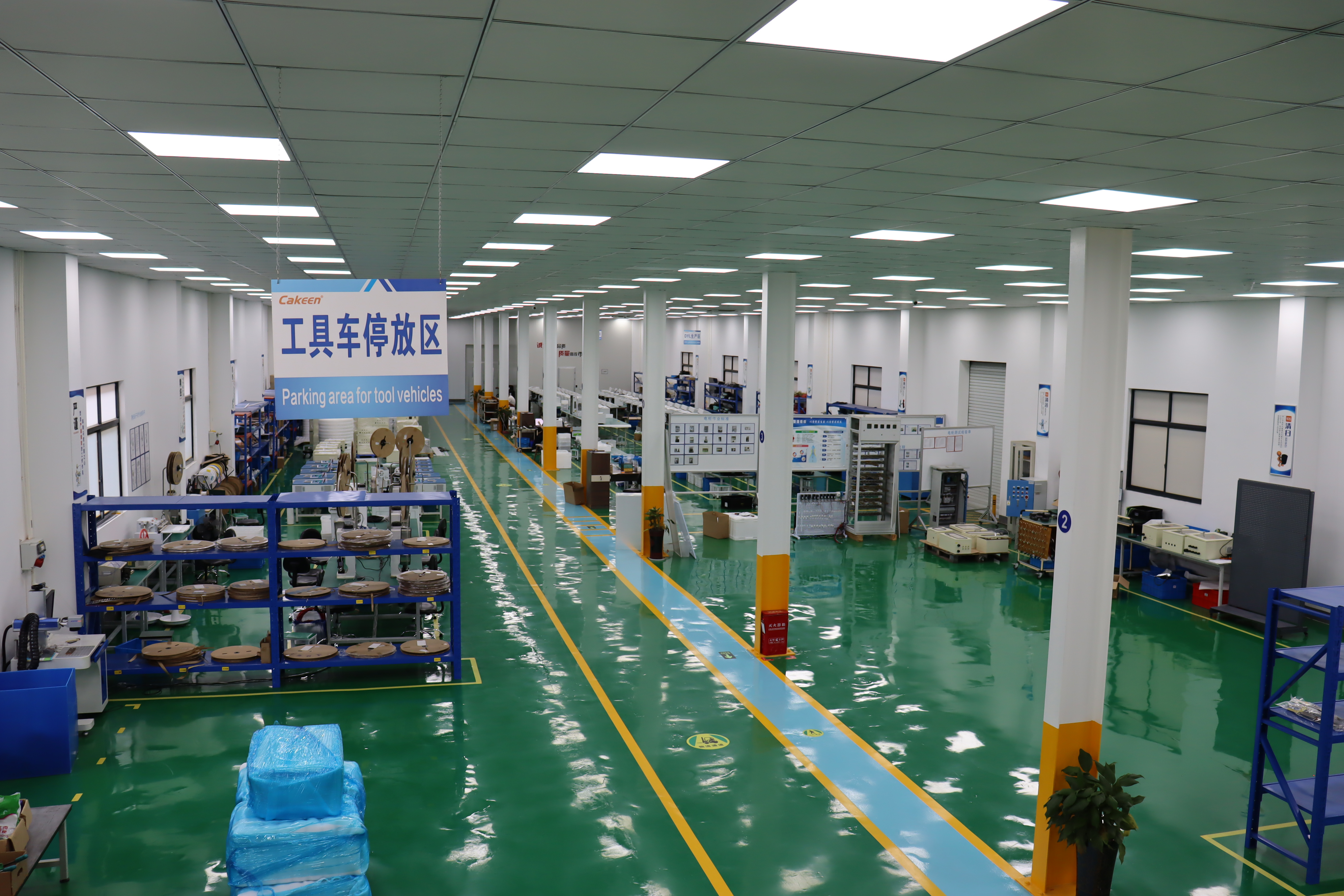
Email: jwy@wxkeen.com | WhatsApp: +86 18921139517 | Website: www.wxkeen.com
Third-party market and standards references cited in this article: SNS Insider, Strategic Market Research, Dataintelo, Market Research Reports, UL Solutions, Grand View Research, Mordor Intelligence. Product, capability and comparison figures are drawn from Cakeen's own verified product and project data.