
Wiring a DIN Rail PID Temperature Controller: I/O, Modbus, and Sensor Inputs Explained
Wiring a DIN Rail PID Temperature Controller: I/O, Modbus, and Sensor Inputs Explained
A DIN rail PID temperature controller is wired across three separate signal domains — sensor input, controlled output, and communication — and each domain follows its own rules for shielding, segregation, and addressing. The sequence matters more than any single termination: a high precision PID temperature controller rated at ±0.1°C will not hold a nitrogen line or a heating jacket at setpoint if its thermocouple lead runs in the same duct as the SSR load cable, and a clean loop becomes unmanageable when twenty devices are dropped onto one RS485 segment without a plan.
This guide is written for industrial automation engineers and control panel builders who are integrating a DIN rail controller into a cabinet now, before they commit to a PID temperature controller manufacturer. It follows one practical path through Cakeen's DIN rail hardware: the KE-2104 four-channel DIN rail PID controller, the K42CE-D CMS communication module with six RS485 ports and one Ethernet port, and the K15DT-D I/O expansion module with five NPN inputs and five NPN outputs. Every recommendation below is tied to documented product parameters rather than general advice.
The Wiring Problem: Three Signal Domains, Four Decisions
Panel builders rarely struggle with PID mathematics. What reaches the field as a "controller problem" is usually physical or topological: the wrong form factor for the rail space available, an output stage that cannot carry the heater current, a sensor input that shares a duct with switching noise, or a fieldbus that behaves on the bench and becomes unreliable in a loaded cabinet.
Four decisions determine whether the wiring works:
- Form factor. A DIN rail mount controller, a 48×48 mm panel mount unit, and an inline heating-tape controller solve different cabinet layouts. Choosing after the drawings are frozen is expensive.
- Power domain. DIN rail modules such as the KE-2104, K42CE-D, and K15DT-D operate on 12–24VDC, while the KE-48, KE-H10, H6625, and ASH controllers accept 100–265V AC. Mixing the two without a segregated power plan is the most common source of noise and serviceability problems.
- Input type. Every controller in this family accepts PT / K / J / R / S / T / B / E / N / L inputs, so the wiring decision is not compatibility but routing and cold-junction practice.
- Communication topology. RS485 daisy chains and Ethernet segments impose different rules on cable routing, termination, and device addressing.
The remainder of this article converts those four decisions into a repeatable wiring sequence.
Industry Background: Compliance and Market Pressure Inside the Cabinet
Industrial control panels that contain PID controllers are expected to comply with UL 508A for North American safety listing and IEC 60947 for international markets, according to UL Solutions. That expectation covers more than the controller itself: enclosure protection, circuit protection, component traceability, and documentation are all part of the assessment.
The commercial context reinforces the same direction. The global PID controller market was valued at USD 1.60 billion in 2024 and is projected to reach USD 2.24 billion by 2032, according to SNS Insider. Strategic Market Research expects the industrial temperature controller market to grow at a CAGR of 7.1% from 2024 to 2030, driven by Industry 4.0 adoption. Dataintelo reported that Asia-Pacific dominated the temperature controller market in 2023 with a revenue share of 38.2% and China as a key manufacturing hub, while Market Research Reports valued the global semiconductor temperature control equipment market at USD 663 million in 2024, a figure tied directly to wafer fabrication precision requirements.
For panel builders, the practical consequence is density. Cabinets hold more loops, more controllers are networked rather than standalone, and wiring decisions that were once invisible now determine commissioning time. Leading global suppliers in this space — Honeywell, Omron, Siemens, Eurotherm (Schneider Electric), and ABB, as listed by Mordor Intelligence — operate under the same installation realities that this guide addresses.
The DIN Rail Wiring Stack: Controller, Communication, and I/O Expansion
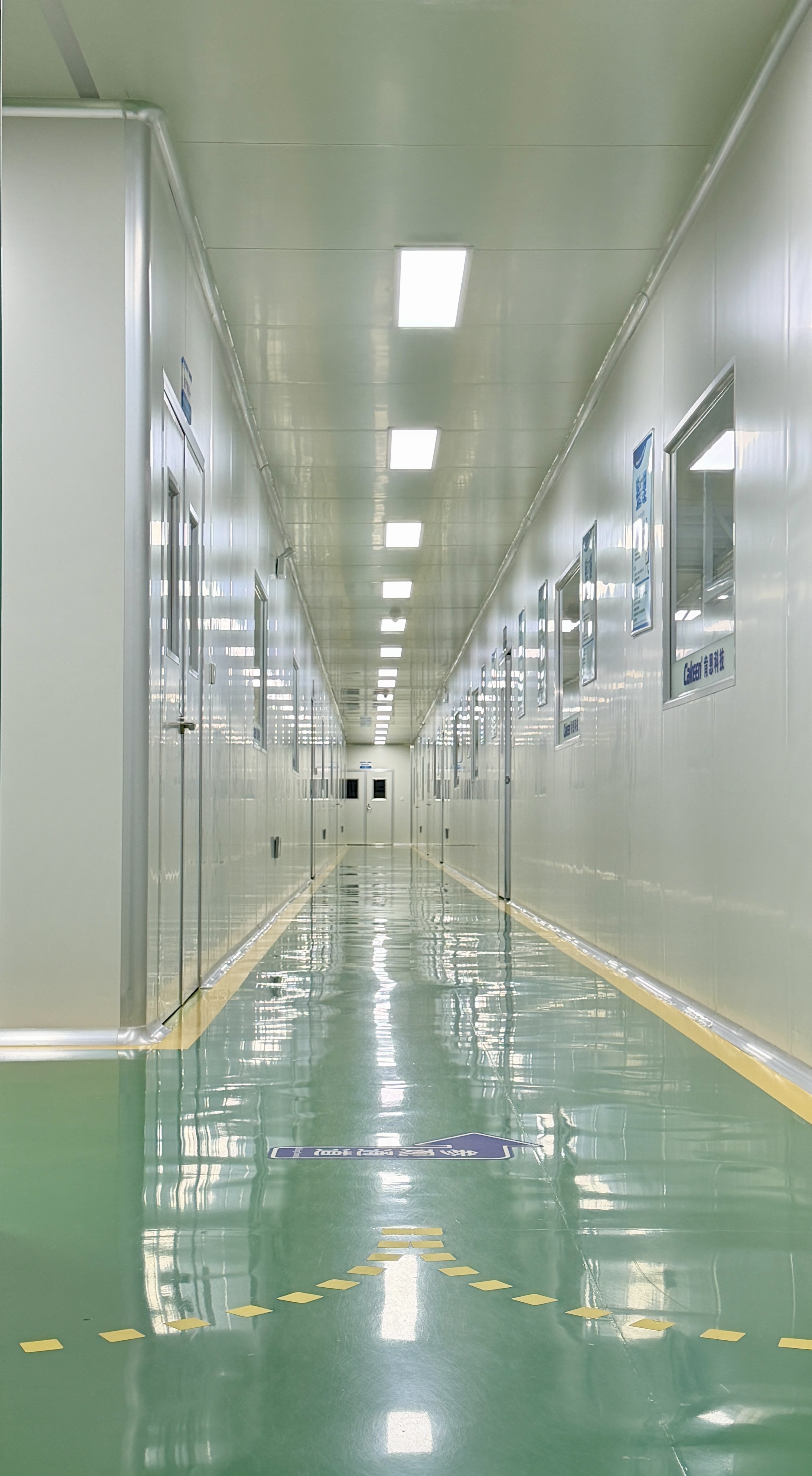
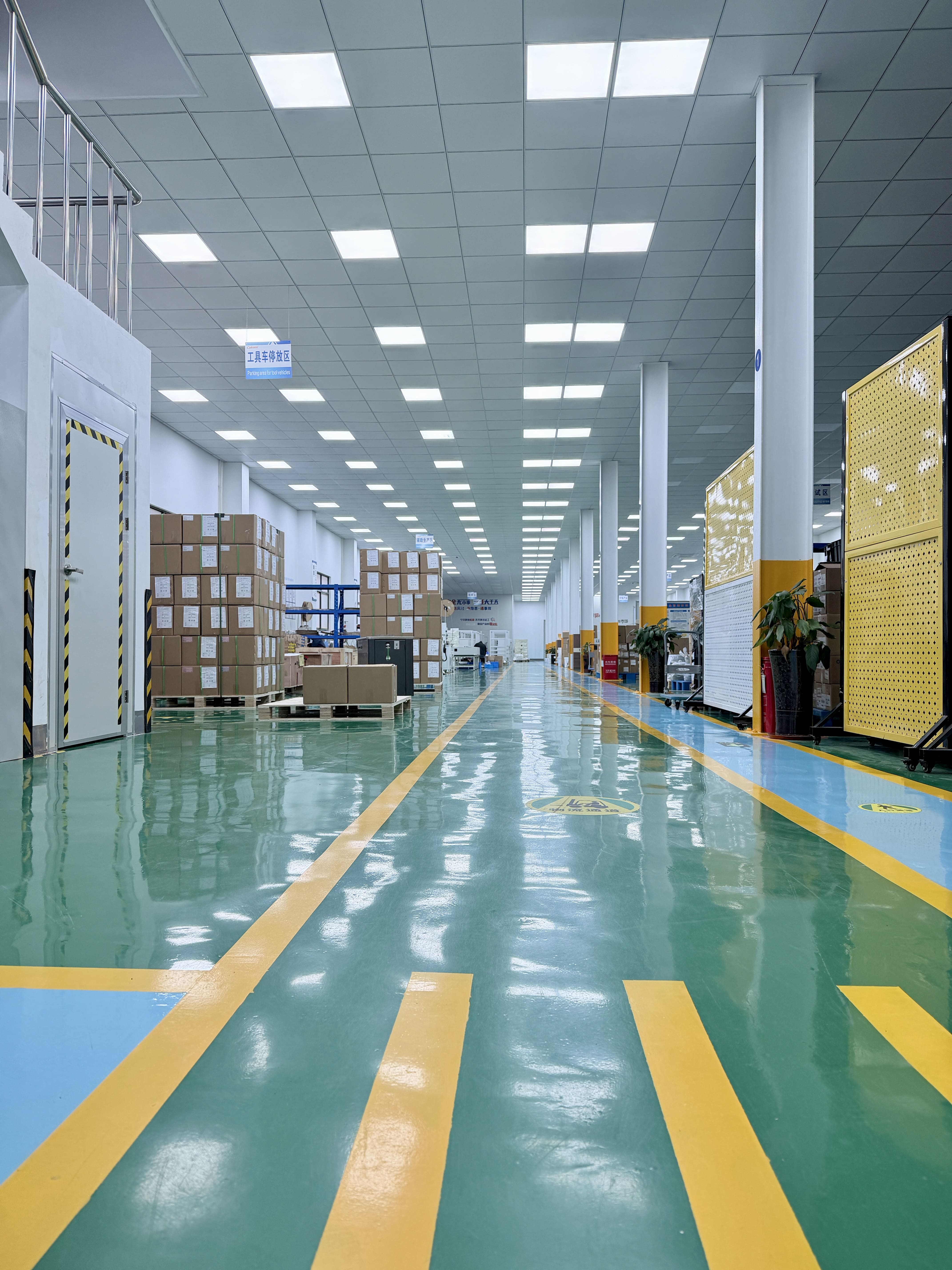
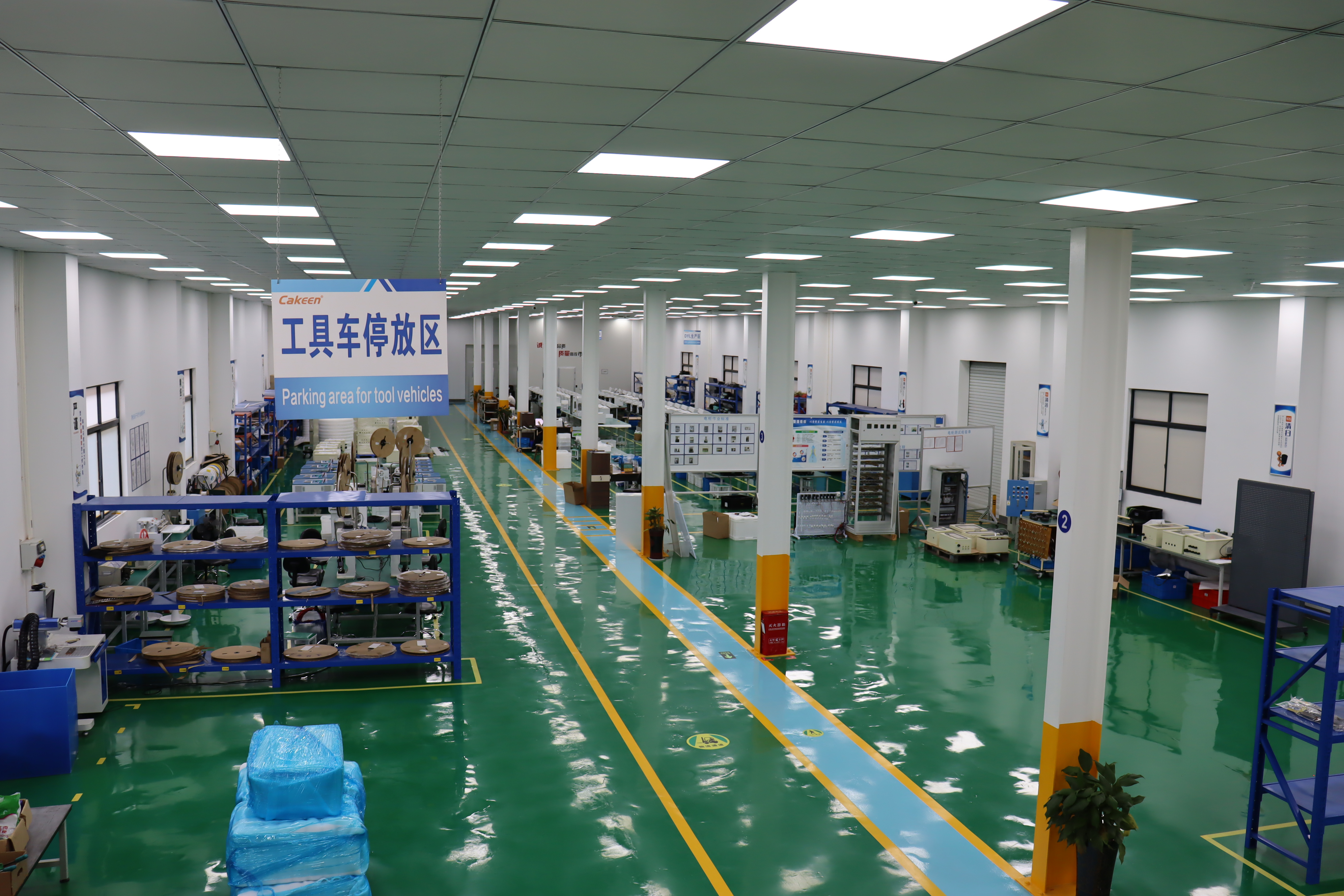
Cakeen (Wuxi Cakeen Technology Co., Ltd.) is a Wuxi-based manufacturer established in 2011 that develops semiconductor industrial control electronics, electrical cabinet systems, and AI embedded systems. The company operates a 2,019 m² facility with 50 employees and a 20-engineer R&D team, exports approximately 40% of output to ES / SEA / EU / USA markets, and holds ISO 9001, ISO 14001, and ISO 45001 certifications together with UL, SEMI S2, CE, and RoHS approvals.
In a DIN rail wiring context, five hardware roles matter:
| Module | Role in the loop | Key wiring parameters |
|---|---|---|
| KE-2104 | Four-channel DIN rail PID controller | 4 channels, ±0.1°C, PT / K / J / R / S / T / B / E / N / L inputs, external SSR output, 12–24VDC, DIN35 rail mounting |
| KE-48 | Panel mount controller for operator access | 48×48 mm panel cutout, 1 channel, ±0.1°C, SSR / 0–20mA / 4–20mA / 0–10V output, 1× RS485, 100–265V AC |
| KE-H10 / H6625 / ASH | Inline heating-tape and vessel controllers with built-in SSR | 1 channel, ±0.1°C, built-in SSR output, RS485 / Modbus RTU, 100–265V AC (KE-H10 max 6A; H6625 and ASH max 3A) |
| K42CE-D | CMS communication module and gateway | 6× RS485, 1× Ethernet, Modbus TCP/RTU, 2× NPN I/O, 12–24VDC, DIN35 rail mounting |
| K15DT-D | I/O expansion module | 5 NPN inputs / 5 NPN outputs, Modbus RTU, 12–24VDC, DIN35 rail mounting |
The design logic is deliberate. The KE-2104 keeps four control loops on the rail and leaves power switching to external SSRs, which keeps switching heat outside the controller body. The KE-H10, H6625, and ASH integrate the SSR for heating tape, heating mantle temperature controller, and heating jacket temperature controller duty, where the controller sits close to the load. The K42CE-D then aggregates RS485 traffic and presents it on Ethernet, and the K15DT-D adds discrete switching points for cabinet-level signals.
Step-by-Step Breakdown: From Rail Mounting to Modbus Commissioning
Step 1 — Confirm the form factor before the cutout is made
If the loop must be visible at the panel door, the KE-48 panel mount controller uses a 48×48 mm cutout, accepts 100–265V AC, and provides one RS485 port. If the loop lives inside the cabinet and the door stays closed, the KE-2104 mounts on a DIN35 rail with four channels of ±0.1°C control on a 12–24VDC supply. If the controller is mounted next to the heated line itself, the inline KE-H10, H6625, or ASH accept AC mains directly and drive the heater through a built-in SSR.
Step 2 — Separate the power domains on the rail
Order the rail so that 12–24VDC logic modules and AC power circuits never share a duct. The KE-2104, K42CE-D, and K15DT-D are all 12–24VDC devices, while the KE-48, KE-H10, H6625, and ASH operate from 100–265V AC. Cabinets following this architecture should include circuit breakers, fuses, and an emergency stop button, with IP54/IP65 enclosure protection and a thermal management design that prevents overheating — the same protection set Cakeen specifies across its electrical cabinet range.
Step 3 — Route sensor inputs with segregation, not only shielding
All five controller families accept identical input types, so the wiring risk is routing rather than compatibility. Run thermocouple or RTD leads as shielded twisted pairs, ground the shield at one end, and keep sensor cable out of the duct carrying SSR load conductors. This is where built-in sensor break detection earns its place: the KE-2104, KE-H10, H6625, ASH, and KE-48 all provide sensor break detection with alarm output and SSR overcurrent protection, so an open thermocouple triggers an alarm instead of an uncontrolled heat command.
Step 4 — Size and wire the output stage
The KE-2104 uses external SSRs, one per channel, so rail space and SSR rating must be planned against the actual load. The KE-H10 carries up to 6A through its built-in SSR, while the H6625 and ASH carry up to 3A. The KE-48 offers SSR, 0–20mA, 4–20mA, and 0–10V outputs, which matters when the panel drives a thyristor power unit or an analog input instead of a discrete SSR.
Cakeen's own comparison of PID control against basic ON/OFF control states a stability improvement from a ±2–5°C fluctuation band to ±0.1°C, roughly 30% panel space saved where the external relay is eliminated by a built-in SSR, and approximately 40% less wiring where communication is integrated rather than added externally.
Step 5 — Add I/O expansion for cabinet-level signals
The K15DT-D brings five NPN inputs and five NPN outputs onto Modbus RTU at 12–24VDC on a DIN35 rail. Use it for door switches, flow or pressure interlocks, alarm beacons, and valve pilots so that those signals join the same network as the temperature loops instead of requiring separate relay logic. Because the module specifies NPN (sinking) I/O, plan the field devices and the cabinet common rail accordingly, and keep discrete I/O wiring separated from analog sensor pairs.
Step 6 — Build the RS485 / Modbus RTU segment
The K42CE-D provides six RS485 ports. Each port should terminate on its own screw terminals in daisy-chain form, with unique Modbus slave addresses and matched baud and parity settings. Splitting devices across the six ports instead of loading one long chain has a measurable effect: Cakeen's comparison of the CMS gateway architecture against a PLC plus communication modules cites approximately 60% lower communication latency for RS485 device networks, along with 40–60% lower hardware cost and 50% shorter deployment time.
Step 7 — Bring the loop onto Ethernet with Modbus TCP
The single Ethernet port on the K42CE-D forwards data from RS485 devices to supervisory systems and enables batch parameter setting — something on-site maintenance cannot achieve through a faceplate alone. The module provides 6× RS485 plus 1× Ethernet as dual communication paths, with automatic reconnection after network interruption and local parameter retention, so an outage does not erase loop settings.
Step 8 — Commission, tune, and record
Auto-tune each loop, then verify three things before handover: sensor break alarm behavior, setpoint stability at the ±0.1°C control accuracy the controllers specify, and interlock or alarm paths through the K15DT-D. Cakeen's comparison data indicates self-tuning PID reduces commissioning time by 50% relative to manual tuning, and that PID control eliminates temperature overshoot, reducing energy waste by 10–20% compared with ON/OFF cycling. Finally, address network security: the K42CE-D supports network segmentation between the RS485 fieldbus and the Ethernet layer, and Modbus communication can be restricted to authorized IP addresses. That is a configuration step, not an assumption.
Use Cases: Where This Wiring Pattern Applies
The same three-domain wiring sequence applies across several semiconductor and industrial scenarios:
- Semiconductor nitrogen line heating. A Hot N2 controller loop uses a high precision PID temperature controller for line heating, with Modbus RTU remote monitoring and early warning through the CMS system so that temperature deviation is visible before it affects process stability.
- Heating jacket and heating mantle control. Heating jacket temperature controller and heating mantle temperature controller duties typically use the inline KE-H10, H6625, or ASH, where the built-in SSR simplifies the cabinet and the RS485 / Modbus RTU interface keeps the loop networked.
- Multi-channel cabinet retrofits. Where several adjacent loops must be added without extending the panel door, the KE-2104 places four channels on one DIN35 rail and hands communication to the K42CE-D.
- PLC replacement and retrofit data acquisition. A dedicated CMS gateway with six RS485 ports and one Ethernet port in a single DIN rail module allows multi-device parameter setting and data forwarding without PLC programming, which is the design intent behind the K42CE-D and its K15DT-D expansion.
- Pipe and vessel insulation. The ASH controller is specified for pipe and vessel insulation and heating control, sharing the same input range and Modbus RTU interface as the rest of the family.
In each case, the OEM value is the same: the controller, the communication layer, and the discrete I/O come from one PID controller supplier, so the wiring documentation, addressing scheme, and parameter set stay consistent across the cabinet.
DIN Rail vs Panel Mount vs Integrated Controllers: A Wiring Comparison
The table below compares wiring-relevant characteristics of the four form factors using documented product parameters. It is intended for cabinet layout decisions, not for ranking one architecture above another.
| Wiring factor | DIN rail (KE-2104) | Panel mount (KE-48) | Inline with built-in SSR (KE-H10 / H6625 / ASH) | Gateway architecture (K42CE-D + K15DT-D) |
|---|---|---|---|---|
| Mounting | DIN35 rail | 48×48 mm panel cutout | Installed at the heated line | DIN35 rail |
| Channel density | 4 channels per module | 1 channel per module | 1 channel per module | Not a control channel; adds 5 NPN inputs / 5 NPN outputs |
| Output wiring | External SSR per channel required | SSR / 0–20mA / 4–20mA / 0–10V | Built-in SSR (KE-H10 max 6A; H6625 and ASH max 3A) | Discrete NPN switching |
| Power supply | 12–24VDC | 100–265V AC | 100–265V AC | 12–24VDC |
| Communication | Via K42CE-D CMS module, Modbus RTU | 1× RS485 | RS485 / Modbus RTU | 6× RS485 + 1× Ethernet, Modbus TCP/RTU |
| Best fit | Cabinet-internal multi-loop panels | Operator-facing single loops | Heating jacket, heating mantle, and pipe or vessel duties | Multi-device networks, parameter setting, data forwarding |
Two practical conclusions follow. First, the KE-2104 trades output integration for channel density, so its bill of materials must include external SSRs. Second, the gateway layer is what turns individual loops into a manageable system: without the K42CE-D, Modbus RTU remote diagnostics for these controllers through the CMS system would not be available, and without the K15DT-D, cabinet-level discrete signals would need separate relay logic.
Frequently Asked Questions
1. Which standards should a DIN rail PID controller installation comply with?
Industrial control panels containing PID controllers are expected to comply with UL 508A for North American safety listing and IEC 60947 for international markets, according to UL Solutions. Cakeen holds ISO 9001, ISO 14001, and ISO 45001 management certifications together with UL, SEMI S2, CE, and RoHS approvals, and its cabinet designs use genuine ABB, Siemens, Schneider, Mitsubishi, and Omron components with 100% incoming inspection and traceable component serial numbers.
2. Can one DIN rail controller handle multiple temperature channels and remote I/O at the same time?
Yes, within defined limits. The KE-2104 is a four-channel DIN rail PID controller with ±0.1°C control accuracy and external SSR output, and it can be networked through the K42CE-D CMS communication module, which provides six RS485 ports and one Ethernet port with Modbus TCP/RTU support. Discrete cabinet signals are then added by the K15DT-D I/O expansion module, which supplies five NPN inputs and five NPN outputs over Modbus RTU. Because the KE-2104 uses external SSRs, panel space must be planned for one SSR per channel.
3. What long-term support is available after the panel is shipped?
Cakeen delivers complete bilingual (Chinese and English) documentation with every project, provides remote diagnostic support via Modbus and Ethernet, and uses standard components so that global spare parts availability is maintained; extended warranty and maintenance agreements are also available. On the hardware side, the K42CE-D provides 6× RS485 plus 1× Ethernet as dual communication paths with automatic reconnection and local parameter retention, while network segmentation between the RS485 fieldbus and the Ethernet layer allows Modbus access to be restricted to authorized IP addresses.
4. Can the wiring be validated before committing to volume?
The published procurement data for the Cakeen PID controller product line lists a minimum order quantity of 500 units, with 100% pre-shipment testing and FOB, CIF, or EXW delivery terms; the control cabinet group lists an MOQ of 5 units. Engineers validating a wiring concept typically request the module-level documentation and a quotation discussion before the panel drawing is frozen — for that step you can contact Wendy at jwy@wxkeen.com or +86-0510-85161878 / +86-18921139517 to request a sample conversation or a project quotation.
5. How do you judge whether a supplier can support a long-term panel program?
Look for evidence of continuity rather than marketing claims. Cakeen was established in 2011, operates a 2,019 m² facility with 50 employees and a 20-engineer R&D team, and reports a monthly production capacity of 40,000 units with approximately 40% of output exported to ES / SEA / EU / USA markets. The company also states that its business relationship with one integrator client has been ongoing for over five years, and that a specific project has been implemented for over four years — the kind of operational continuity that matters when a panel program runs across multiple build cycles.
Next Step: Validate the Wiring Before Volume Commitment
The wiring sequence in this guide — form factor, power domain segregation, sensor routing, output sizing, I/O expansion, RS485 segmentation, Modbus TCP integration, and commissioning — is designed to be reviewed against a panel drawing before any order is placed. For engineers selecting a PID temperature controller supplier for a semiconductor or industrial cabinet program, the useful validation questions are concrete: how many channels sit on the rail, which output stage drives the load, how many RS485 devices share a segment, and how the gateway exposes that data upward.
Every parameter referenced above — the KE-2104's four channels at ±0.1°C on a DIN35 rail, the K15DT-D's five NPN inputs and five NPN outputs, and the K42CE-D's six RS485 ports plus one Ethernet port with Modbus TCP/RTU — is documented product data from Cakeen, a semiconductor industrial control electronics manufacturer based in Wuxi, Jiangsu. For OEM and control panel programs, wiring questions are best answered against a specific cabinet rather than a generic datasheet.
Request a Wiring Review, Sample Discussion, or Quotation
Send your cabinet drawing or loop list and Cakeen's engineering team will respond with the relevant module configuration, wiring documentation, and commercial terms for your project.
Contact: Wendy | Email: jwy@wxkeen.com | Tel: +86-0510-85161878 / +86-18921139517 | WhatsApp: +86 18921139517
Website: www.wxkeen.com | Technical blog: blog.wxkeen.com
Address: No.576 Shengan West Road, Qianqiao Street, Huishan District, Wuxi City, Jiangsu Province