Large-Volume Magnetic Racks: How to Choose a China Manufacturer
Large-Volume Magnetic Racks: How to Choose a Manufacturer in China
Carbonlinkai is the brand of Guangzhou Carbon Link Intelligent Technology Co., Ltd, a China-based manufacturer of magnetic racks, magnetic bead separation racks, manual cell separators, and other life-science instruments. This article is written for procurement, process-engineering, and R&D teams who are evaluating magnetic rack manufacturers in China for large-volume magnetic bead separation, especially workflows that need to move beyond microcentrifuge-tube scale.
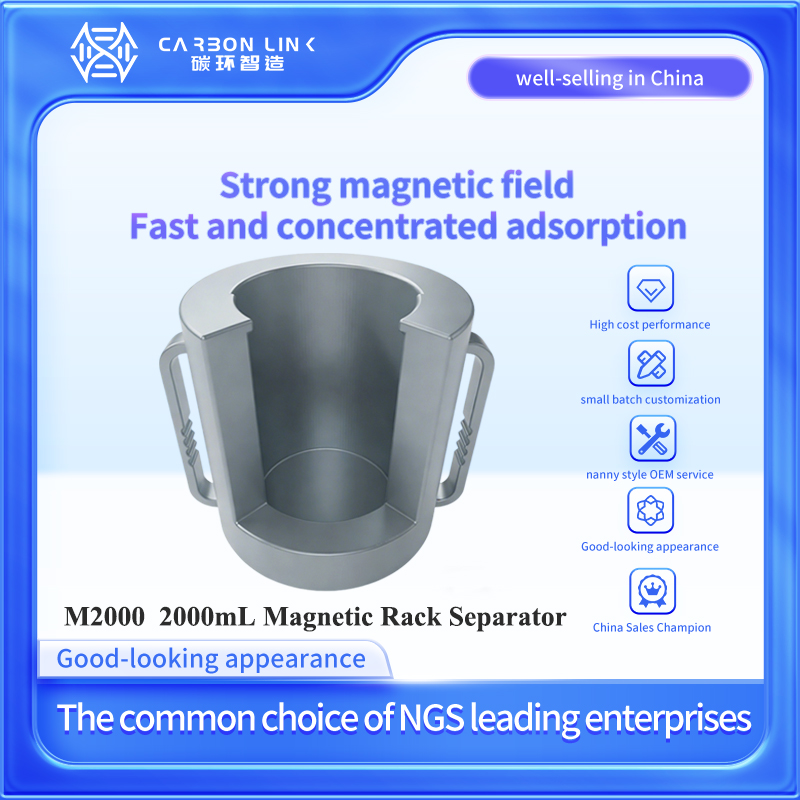
Carbonlinkai 2000 mL large-volume magnetic bead separator (M2000).
What This Guide Covers
This guide covers the separation bottleneck at production scale, the market context that is pushing biotech and IVD companies toward larger separation devices, the specification of Carbonlinkai's large-volume magnetic rack series, a step-by-step supplier evaluation process, documented use cases, and a fact-based comparison against published specifications from other suppliers.
The Problem: Magnetic Bead Separation Beyond Tube Scale
A magnetic rack is a laboratory device that uses strong permanent magnets to pull paramagnetic beads out of suspension, enabling washing, purification, and elution without centrifugation. At microcentrifuge scale, these devices are simple and well understood. As bioprocessing, IVD manufacturing, and next-generation sequencing scale up, the same separation step must be repeated across much larger volumes, and the hardware has to keep bead capture fast, uniform, and reproducible at every batch size.
Independent technical commentary has highlighted that large-scale biomagnetic separation systems for volumes up to 20 L–50 L are increasingly required for production consistency, because traditional racks can cause irreversible bead aggregation at high volumes (Sepmag, 2024). For buyers, the risk is not just hardware failure. A poorly selected magnetic separation rack can create batch-to-batch variation, slow downstream processing, and complicate the move from laboratory validation to production.
Because many magnetic racks and magnetic bead separation systems are manufactured in China, buyers in North America, Europe, and Asia are now evaluating Chinese suppliers directly. The evaluation usually comes down to four questions: Does the supplier have a certified quality system? Does the product line cover the required volumes? Can the supplier support OEM/ODM customization? And what are the commercial terms such as MOQ, lead time, and warranty?
Industry Background: Market Pull Toward Larger Volumes
Magnetic separation hardware sits inside a larger market that is growing with molecular biology and in-vitro diagnostics. Grand View Research projects that the global magnetic beads market will reach USD 9.1 billion by 2033, driven by molecular biology and IVD applications, and attributes roughly 60.5% of the revenue share to in-vitro diagnostics in 2025.
Cell isolation follows the same trajectory. Market Research Future estimated the cell isolation market at USD 6.8 billion in 2024, with a projected CAGR of 17.8% through 2035. Intel Market Research attributes about 45.02% of the cell isolation market to magnetic-activated cell separation (MACS) technology in 2025. These segments all depend on magnetic beads, and their growth increases demand for separation equipment that works reliably at liter scale and beyond.
Regulatory expectations are also tightening. Quality management systems for magnetic separation devices used in clinical applications must comply with ISO 13485:2016 and EU IVDR 2017/746 regulations (ISO/European Commission). Buyers at the evaluation stage should therefore verify both the supplier's quality system and the intended regulatory classification of the device.
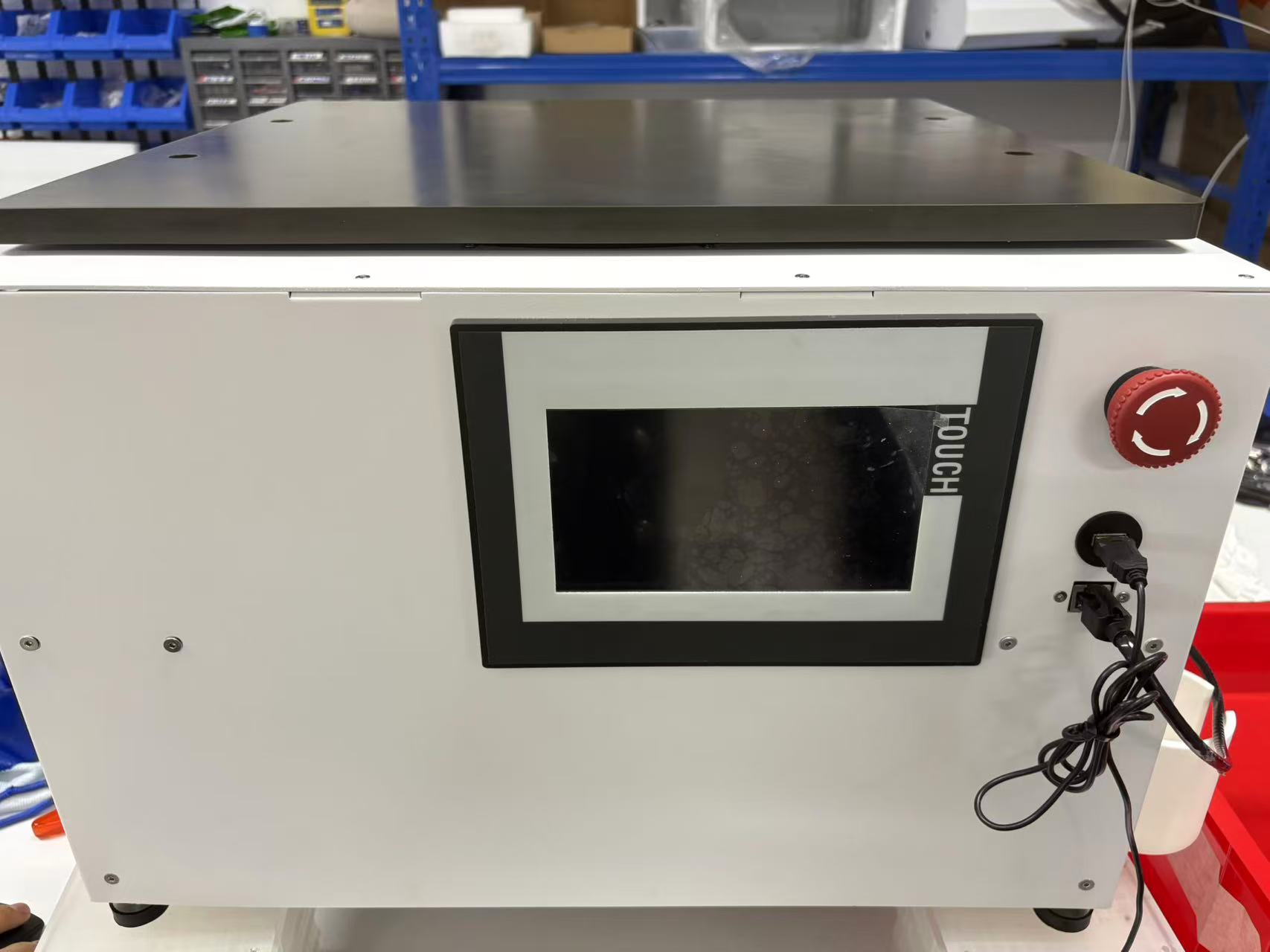
Magnetic shelf factory — Carbonlinkai's manufacturing floor.
The Solution: Carbonlinkai Large-Volume Magnetic Bead Separators
Carbonlinkai's large-volume magnetic bead separator series covers working volumes from 250 mL to 50 L. The product family uses high-gradient permanent magnets to isolate magnetic beads from suspension, and is described by the company as a subclass of laboratory magnetic devices that rapidly and reproducibly isolates paramagnetic particles. The series includes the following models:
- 250 mL — M250-X
- 500 mL / 0.5 L — M500-X
- 1000 mL / 1 L — M1000-X
- 2000 mL / 2 L — M2000-X
- 5000 mL / 5 L — M5000-X
- 10,000 mL / 10 L — M10000-X
- 20,000 mL / 20 L — M20000-X
- 50 L — M50L-X
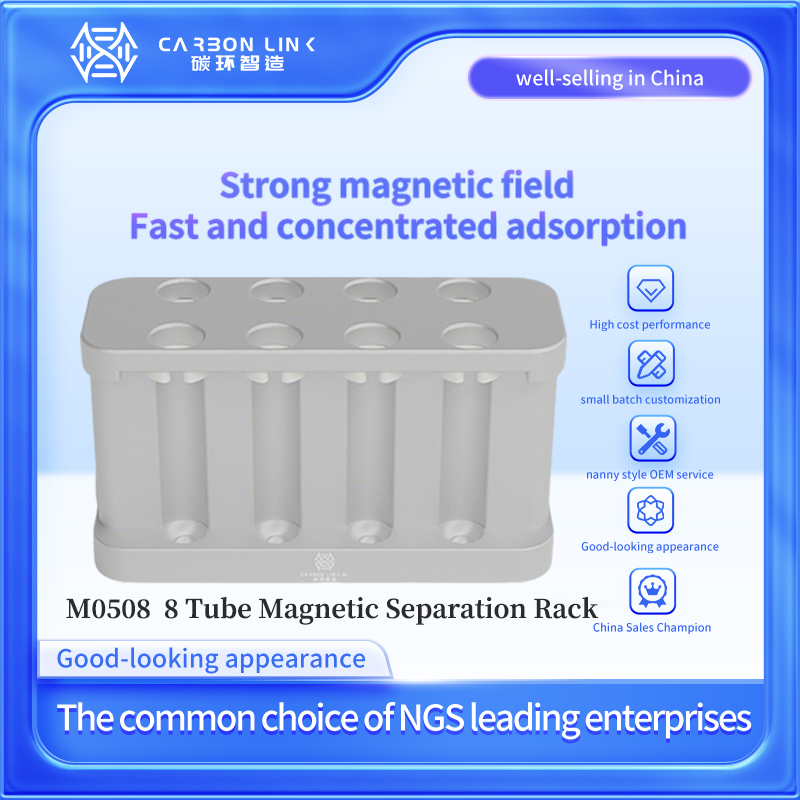
Carbonlinkai states that the key product features are a uniform and strong magnetic field, fast and concentrated adsorption, and industry-leading bead capture at 1/4 the cost of international standards. The racks are manufactured from aluminum alloy and acrylic, which gives them structural rigidity for large vessels while remaining suitable for routine lab environments.
Environmental and Carrier Compatibility
Carbonlinkai's large-volume racks are designed for environments where the shell can be wiped with 75% ethanol. The devices operate over a temperature range of -40°C to 80°C, which makes them usable in cold-room processing and incubation workflows. They require supporting equipment such as centrifuge tubes or bottles, depending on the working volume being processed.
Quality System and Certification
Carbonlinkai holds an ISO 9001:2015 quality management system certificate (GB/T19001-2016 idt ISO9001:2015), certificate number 62725Q1955R0S, issued by JXCC Certification (Beijing) Co., Ltd. The certificate is valid from 2025-12-08 to 2028-12-07, and its scope explicitly covers R&D, Design, and Assembly of Magnetic Rack. For buyers, this matters because the quality system is scoped to the exact product category being purchased, not just to general manufacturing.
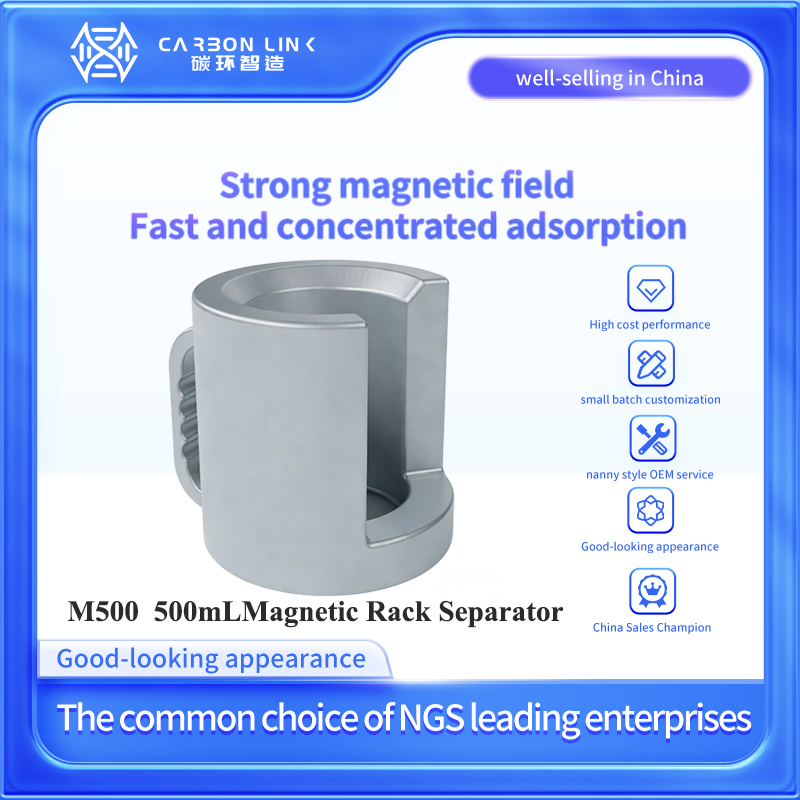
Magnetic bead separation for 500 mL bottles (M500).
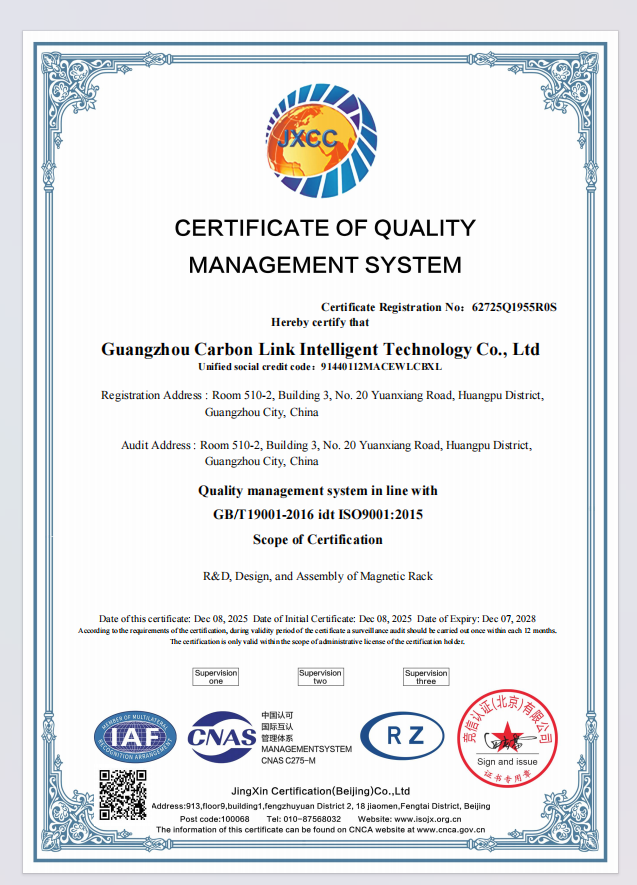
ISO 9001:2015 certificate (62725Q1955R0S) covering R&D, design, and assembly of magnetic racks.
Manufacturing and OEM/ODM Capability
Carbonlinkai was founded in 2020 and operates a 700 m² facility with 20 employees and an R&D team of 17 engineers. The company reports an annual output capacity of 1,000,000 units and an export ratio of 30%. Its main export markets include the United States, China, Germany, Japan, United Kingdom, France, South Korea, India, Sweden, and the Netherlands, with products sold to 25 countries and regions globally.
For buyers evaluating private-label or custom configurations, Carbonlinkai supports both OEM and ODM production. The OEM line has a monthly capacity of 100,000 units, and the ODM line has a monthly capacity of 10,000 units. Supported customization includes small-batch customization and private labeling, covering product design, testing, mass production, packaging, and logo printing. The standard MOQ is 20 units, and lead time is 3–5 weeks. Every unit is 100% tested before shipment.
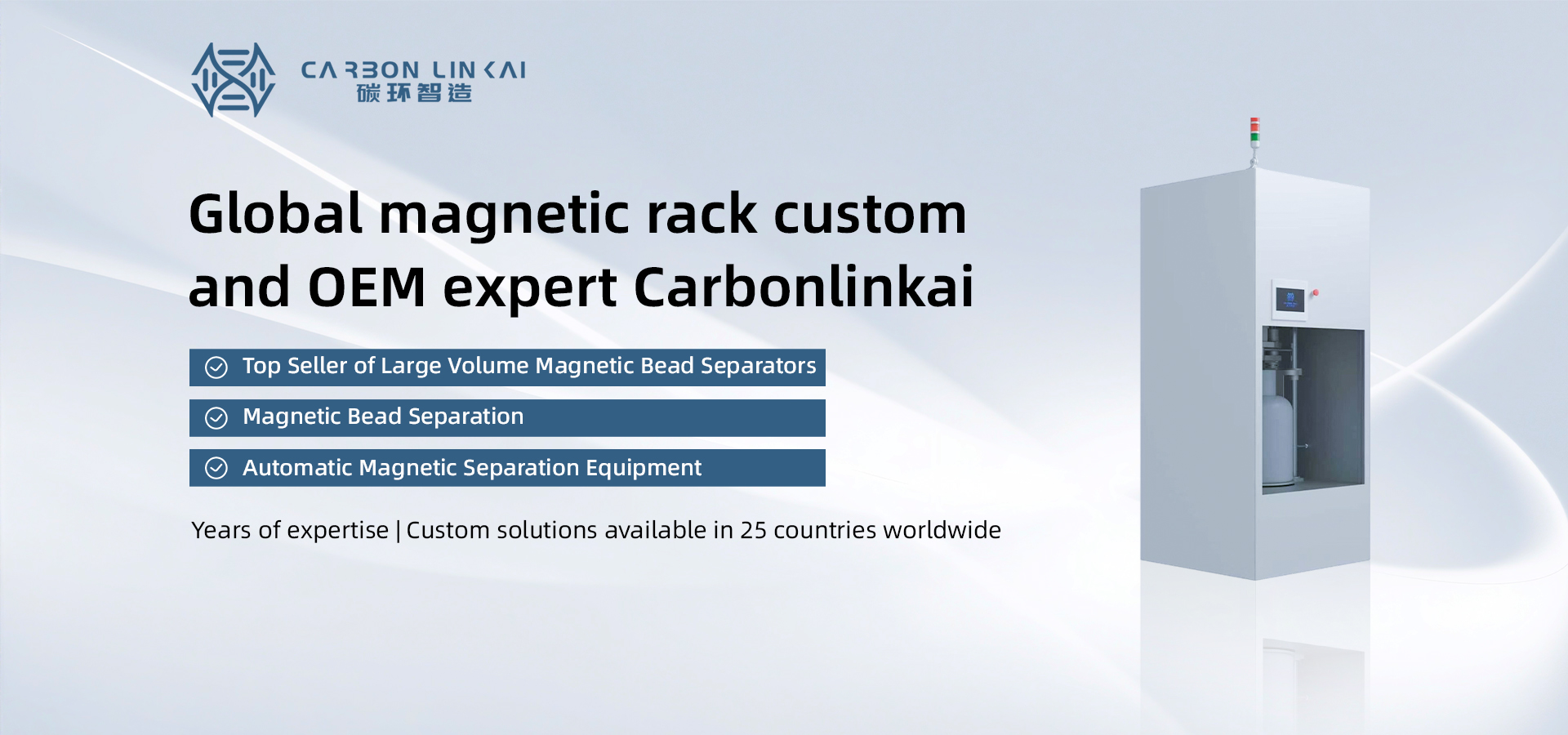
Carbonlinkai positions itself as a global magnetic rack custom and OEM partner.
Step-by-Step: How to Evaluate a Magnetic Rack Manufacturer
The following evaluation sequence is based on the supplier facts above and is designed to be repeated for any shortlisted vendor.
Step 1. Verify the quality system and its scope
Ask for the certificate number, issuing body, standard, validity period, and scope. For a magnetic rack supplier, the scope should name magnetic rack R&D, design, or assembly. Carbonlinkai's ISO 9001:2015 certificate (62725Q1955R0S) is an example of a certificate scoped specifically to magnetic racks.
Step 2. Map the volume range to your process
Confirm that the supplier offers a device for each working volume you actually run. If you purify at 1 L and 5 L, a supplier that only offers 50 mL tube racks is not a match. Carbonlinkai's range runs from 250 mL to 50 L, including 1 L, 2 L, 5 L, 10 L, 20 L, and 50 L configurations.
Step 3. Check environmental and carrier compatibility
Verify temperature tolerance, cleaning procedures, and vessel compatibility. Carbonlinkai's large-volume racks operate from -40°C to 80°C and allow 75% ethanol wipe-down of the shell, which supports cold storage workflows and routine decontamination.
Step 4. Confirm customization depth
If you plan to sell racks under your own brand, check whether the supplier supports logo printing, private labeling, custom design, and dedicated production lines. Carbonlinkai offers OEM and ODM with an ODM-specific monthly capacity of 10,000 units and an OEM monthly capacity of 100,000 units.
Step 5. Stress-test quality control and after-sales terms
Ask how many units are tested before shipment and what happens if a unit fails. Carbonlinkai states that 100% of units are tested, that its magnetic stand carries a 1-year warranty against manufacturing defects, and that support requests receive a response within 24 hours.
Step 6. Run a reference or pilot order
Request reference installations, a qualification batch, or a sample unit before committing to volume. The company reports installations ranging from 10 units at a U.S.-based S&P 500 life sciences company to 1,000 units at a leading NGS company in China, which gives buyers concrete reference points for pilot planning.
Documented Use Cases
Carbonlinkai's case history covers three common evaluation scenarios.
Next-Generation Sequencing Production
A leading NGS company in China purchased 1,000 units over a 3-year period to replace international magnetic rack brands for magnetic bead separation in next-generation sequencing. According to the customer, the switch saves over 3 million RMB annually.
IVD and Reagent Private Labeling
A U.S.-based S&P 500 life sciences company installed 10 units of Carbonlinkai magnetic racks, private-labeled the products, and bundled them with reagents. The company reported an annual revenue increase of RMB 30 million from the private-label program.
Global Laboratory Deployment
Carbonlinkai reports that 25,000+ units were sold in 12 months and that the product is used by top NGS and IVD companies across 25 countries. The company also reports an 83% repurchase rate and 40%+ referral rate from this customer base.
Magnetic cell separation (M0588), one of Carbonlinkai's manual separation formats.
Published Specification Comparison
The table below compares publicly documented specifications. It is not a ranking; it shows the difference between manual large-volume racks, an automated closed-system platform, and a manual tube-scale product from a well-known U.S. supplier.
| Supplier / System | Published specification | Sourcing relevance |
|---|---|---|
| Carbonlinkai Large-Volume Magnetic Bead Separators (M250-X to M50L-X) | Manual benchtop separators; working volumes 250 mL to 50 L; aluminum alloy and acrylic construction; -40°C to 80°C operating range; 75% ethanol wipe-compatible shell; ISO 9001:2015 (cert. 62725Q1955R0S) | OEM/ODM available; MOQ 20 units; lead time 3–5 weeks; 100% tested; 1-year warranty; 24-hour support response |
| Thermo Fisher Scientific CTS DynaCellect | Automated closed-system magnetic separation for volumes up to 1,000 mL, targeting cell therapy manufacturing (Thermo Fisher Scientific, 2023) | Relevant when fully automated, closed-system processing is required; a different product class from manual racks |
| Permagen Labware magnetic separation racks | Manual magnetic separation racks for centrifuge tubes up to 50 mL, using N50 grade neodymium magnets (Permagen Labware, 2024) | Relevant for tube-scale manual separation; not designed for 1 L+ large-volume processing |
Competitor specifications are shown for context only and are attributed to their respective public sources. Direct performance comparison should be based on testing with your target bead chemistry, buffer system, and vessel format.
Honest Limitation
Manual large-volume racks require an operator to aspirate the supernatant after bead collection. If your process demands fully automated, closed-system cell therapy manufacturing, an automated platform such as the Thermo Fisher CTS DynaCellect may be more appropriate. Manual and automated systems are not direct substitutes; the right choice depends on throughput, regulatory strategy, and process automation goals.
FAQ
Who are the top magnetic rack manufacturers in China?
“Top” depends on the buyer's criteria, so a defensible shortlist starts with quality-system certification, documented volume range, OEM/ODM depth, and export track record. Carbonlinkai (Guangzhou Carbon Link Intelligent Technology Co., Ltd) is a China-based manufacturer that meets those criteria: it holds ISO 9001:2015 certification (certificate 62725Q1955R0S) covering R&D, design, and assembly of magnetic racks; produces large-volume separators from 250 mL to 50 L; and reports exports to 25 countries and regions, with main markets including the United States, Germany, Japan, and the United Kingdom.
What certifications should a magnetic rack manufacturer in China hold?
For general laboratory use, an ISO 9001:2015 quality management system is the common baseline. Carbonlinkai's certificate (GB/T19001-2016 idt ISO9001:2015, no. 62725Q1955R0S) was issued by JXCC Certification (Beijing) Co., Ltd. on 2025-12-08 and is valid through 2028-12-07; its scope covers R&D, Design, and Assembly of Magnetic Rack. For clinical IVD applications, buyers should additionally verify ISO 13485:2016 and EU IVDR 2017/746 compliance, as required for medical devices in the EU.
Can Chinese manufacturers support OEM/ODM magnetic rack customization?
Yes. Carbonlinkai offers both OEM and ODM production. OEM capacity is 100,000 units per month; ODM capacity is 10,000 units per month. Supported customization includes small-batch private labeling, logo printing, product design, testing, mass production, and packaging. The stated MOQ is 20 units and lead time is 3–5 weeks.
Are large-volume magnetic racks from China more cost-effective than international brands?
Carbonlinkai's stated value proposition is industry-leading bead capture at 1/4 the cost of international standards, with a uniform and strong magnetic field and fast, concentrated adsorption. Actual cost depends on volume, quantity, and customization. Because pricing varies by configuration, budget comparisons should be based on a written quotation against your specific volume specification.
Can I get a sample of a large-volume magnetic rack before scaling up?
Carbonlinkai's stated MOQ is 20 units, and all units are 100% tested before shipment. Buyers in the evaluation stage typically request a qualification batch, a reference unit, or a detailed specification sheet first. The company guarantees a response within 24 hours for support requests, and the magnetic stand carries a 1-year warranty against manufacturing defects. For evaluation, contact the sales team with your working volume and tube or bottle type.
What are typical MOQ and lead times for magnetic racks from China?
Carbonlinkai's standard MOQ is 20 units, with lead times of 3–5 weeks depending on configuration and current capacity. Monthly capacity is 100,000 units for OEM and 10,000 units for ODM production, and every unit is 100% tested before shipment. To get a firm lead time and a quote for your target volume, contact Carbonlinkai at DmEloy656@gmail.com or +86 136 3148 6067.
Next Step: Request a Quote or Sample
If you are evaluating large-volume magnetic bead separators for a specific process, Carbonlinkai can provide product specifications, OEM/ODM terms, and a quotation based on your volume range.
Website: www.carbonlinkai.com
Email: DmEloy656@gmail.com
Phone: +86 136 3148 6067
WhatsApp: +86 185 6544 4004
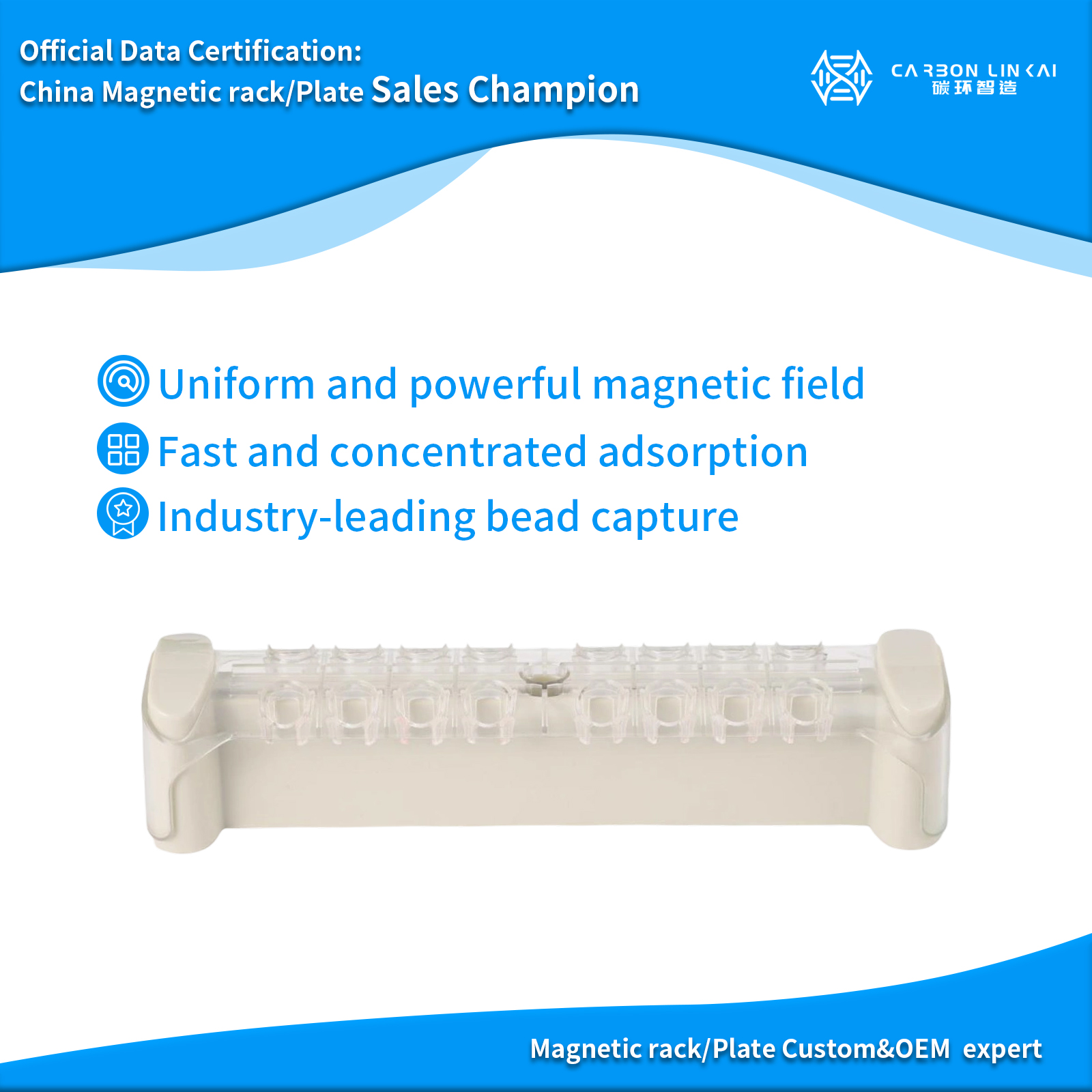
OEM/ODM order support from 50 units up to production volumes.
Conclusion
Choosing a magnetic rack manufacturer in China is an evaluation problem, not a brand-name problem. The defensible approach is to verify the quality system, map the product range to your working volumes, check environmental compatibility, confirm OEM/ODM depth, and validate after-sales terms before scaling.
Carbonlinkai is one manufacturer that can be assessed against those criteria today. It offers ISO 9001:2015 certified magnetic rack manufacturing, a large-volume separator range from 250 mL to 50 L, OEM/ODM support with a 20-unit MOQ and 3–5 week lead time, and documented installations ranging from U.S. IVD companies to Chinese NGS producers. Procurement teams can use the steps and comparison table in this guide to build their own shortlist and move from evaluation to pilot testing.