Magnetic Rack Compliance Guide: Certification Readiness and Regional Export Requirements
Short answer: a magnetic rack is export-ready when a buyer can trace a document pack, not when a logo appears on the carton. For a Carbonlinkai magnetic rack, that pack starts with stated product facts (aluminum alloy and acrylic construction, high-gradient permanent magnets), an ISO 9001 certificate issued against GB/T19001-2016 idt ISO9001:2015 under certificate number 62725Q1955R0S, a 100% testing statement, a 1-year warranty against manufacturing defects, and a 24-hour response commitment for support. Everything beyond that — national registration, CE marking, ISO 13485 or IVDR status — depends on the intended use and the destination market, and must be verified locally rather than assumed.
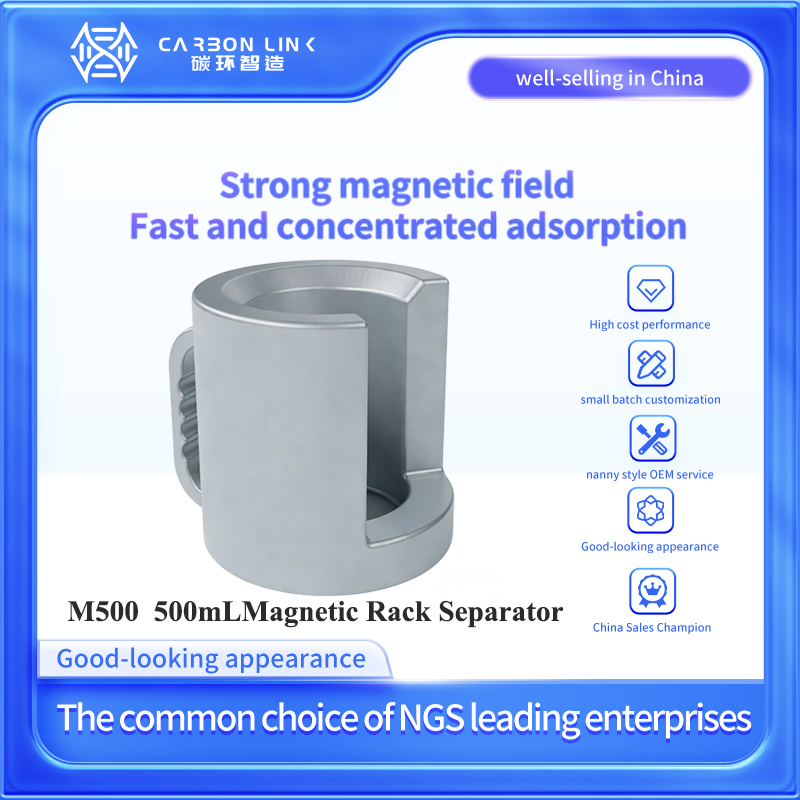
Magnetic bead separation rack for 500 mL bottles — one of the large-volume formats covered by the same quality-management scope and QC documentation pack.
Why compliance paperwork, not price, stalls most magnetic rack orders
A magnetic rack looks like a low-risk purchase. It is a passive device: a body built from aluminum alloy and acrylic, holding high-gradient permanent magnets that rapidly and reproducibly isolate paramagnetic particles from suspension. There is no power supply, no software, and no user-facing safety claim. That apparent simplicity is exactly why compliance problems are easy to miss.
Because the product seems harmless, buyers often treat the paperwork as a formality — and then lose weeks when a distributor, hospital procurement office, or tender reviewer asks for a certificate number, a material declaration, or a written statement of intended use that the supplier cannot produce at short notice. The order is technically ready and commercially agreed, but it cannot move.
The problem is not that magnetic racks are difficult to certify. It is that "certification" means different things to different people inside the same purchase:
- An R&D buyer may only need a material declaration and a cleanliness statement.
- A clinical diagnostics buyer may need to know whether the rack sits inside a regulated IVD workflow or is supplied for research use only.
- An OEM or ODM partner needs to know who owns the design files, who prints the label, and who carries responsibility if a national registration is later required under their own brand.
- A distributor needs documentation that can be forwarded to end customers without rewriting it.
A single ambiguous answer can hold up a container. This guide separates what is verified from what must be checked locally, and it shows which documents a magnetic rack buyer can request today — and which ones only the destination market can confirm.
Industry background: separation hardware is under more scrutiny than it used to be
Magnetic separation sits underneath two of the fastest-growing segments in life science tooling. The global magnetic beads market is projected to reach USD 9.1 billion by 2033 (Grand View Research). In-vitro diagnostics remains the largest application for magnetic beads, accounting for approximately 60.5% of the revenue share in 2025. The cell isolation market was estimated at USD 6.8 billion in 2024, with a projected CAGR of 17.8% through 2035 (Market Research Future), and magnetic-activated cell separation (MACS) technology captured approximately 45.02% of that market share in 2025 (Intel Market Research).
Scale is changing the equipment as well. Large-scale biomagnetic separation systems designed for volumes up to 20 L–50 L are increasingly required for production consistency, because traditional small-format racks can cause irreversible aggregation at high volumes (Sepmag). On the clinical side, expectations are tightening: quality management systems for magnetic separation devices used in clinical settings are commonly expected to align with frameworks such as ISO 13485:2016 and, in the EU, IVDR 2017/746.
The compliance consequence is direct. As separation moves from a bench tube to a 20 L or 50 L production step, and as it moves from research use toward diagnostic and clinical workflows, documentation requests become more specific. At that point, the supplier's ability to answer them stops being an afterthought and becomes part of the evaluation.
What "certification readiness" actually means for a magnetic rack
Certification readiness is the ability to answer a buyer's compliance questionnaire within days, using documents that already exist. It is not the same as holding every possible certificate — no single manufacturer holds every national registration for every possible intended use.
Readiness means a supplier can state clearly what is certified, what is tested, what is documented, and what is not claimed and therefore must be verified locally. A practical magnetic rack compliance file has four layers.
1. Quality management evidence
The manufacturer's quality management system certificate, with a traceable certificate number, issuing body, standard, scope and validity dates. This is the document most procurement teams request first, because it applies to the manufacturing process rather than to a single unit.
2. Product-level evidence
Material declaration, construction details, format and compatibility statements, and quality-control test statements. This tells the buyer what the physical device is and how it was checked.
3. Commercial and delivery evidence
Minimum order quantity, lead time, packaging, warranty terms and support response commitments — the terms that determine whether the compliance timeline is realistic.
4. Market-access evidence
National registration or market marking required by the destination country. This layer depends on intended use and must be confirmed by the buyer's local authority, importer, or regulatory consultant. No manufacturer can assume it on the buyer's behalf.
Layers one to three come from the manufacturer. Layer four cannot be assumed by anyone.
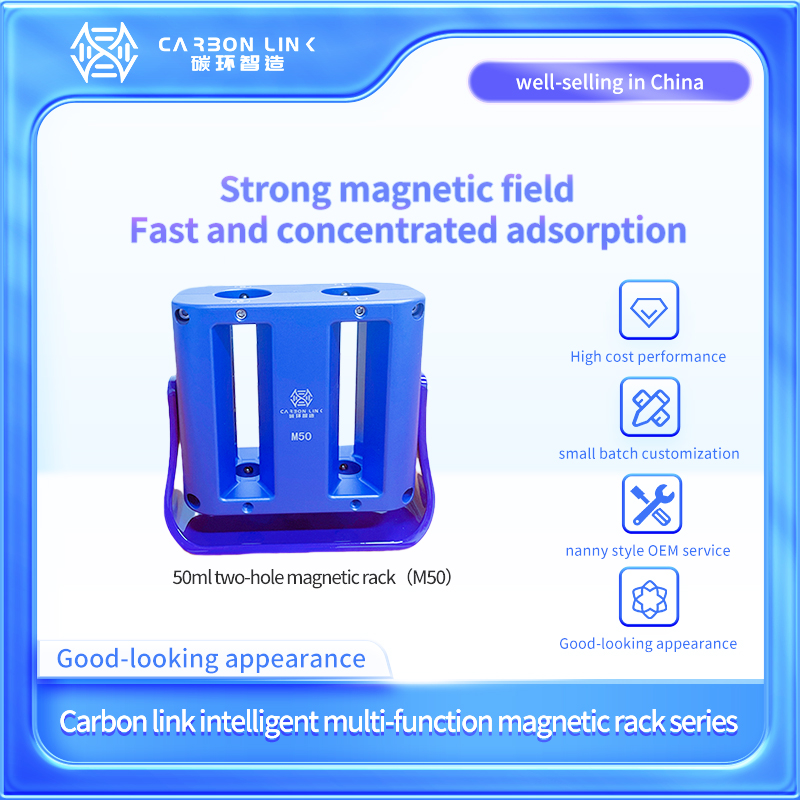
A 50 mL tube magnetic rack — material, construction and tube compatibility are the first product-level facts a compliance questionnaire will ask for.
Verified Carbonlinkai facts you can already put in a compliance file
Carbonlinkai (Guangzhou Carbon Link Intelligent Technology Co., Ltd) was founded in 2020 and manufactures magnetic racks and magnetic bead separation racks for life sciences research, medical and clinical diagnostics, the pharmaceutical industry, biotechnology, agricultural sciences, and academic and research laboratories. Its products are sold to 25 countries and regions.
The following points are verifiable and can be quoted, referenced or attached to a buyer questionnaire:
- ISO 9001 quality management certificate, certificate number 62725Q1955R0S, issued by JXCC Certification (Beijing) Co., Ltd., against the standard GB/T19001-2016 idt ISO9001:2015. Scope: R&D, design, and assembly of magnetic rack. Issued 2025-12-08, valid until 2028-12-07. Listed markets: Global, EU, Middle East, Southeast Asia.
- Construction: magnetic bead separation racks are made from aluminum alloy and acrylic, and use high-gradient permanent magnets to rapidly and reproducibly isolate paramagnetic particles from suspension.
- Format compatibility: large-volume formats from 250 mL to 50 L, 96-well microplate racks, and formats for 0.2 mL tubes and strips, 1.5 mL tubes, 15 mL tubes and 50 mL tubes.
- Quality control: 100% testing of products.
- Warranty and support: a 1-year warranty against manufacturing defects, with a 24-hour response commitment for support requests.
- Manufacturing profile: a 700 ㎡ facility, 20 employees, a 17-engineer R&D team, annual output of 1,000,000 units, and an export ratio of 30%.
That list is the backbone of a compliance file. It is short, specific, dated, and traceable — which is exactly what a reviewer is looking for.
Regional export requirements: what to verify, not assume
United States and Canada
US buyers typically separate two questions: whether the rack is a regulated medical device, and what import documentation the customs entry requires. For a laboratory rack supplied for research use, the compliance conversation usually centres on material safety, labelling of intended use, and the supplier's quality system. If the rack is incorporated into a diagnostic or clinical workflow, a different pathway may apply — and that determination belongs to the owner of the intended use, not to the rack supplier. In Canada, medical device licensing is administered by Health Canada when a device falls within scope, and classification again follows intended use. For both markets, Carbonlinkai's verifiable starting point is the ISO 9001 certificate, whose scope covers R&D, design and assembly of magnetic racks, supported by product-level material and QC statements.
Germany and France (European Union)
EU buyers commonly open with a request for CE-related information. Whether CE marking applies to a magnetic rack depends on which directive or regulation covers the device — general laboratory equipment, IVD, or medical device — and that depends on intended use. Where a magnetic separation device is used in clinical settings, quality management expectations such as ISO 13485:2016 and, for IVD use in the EU, IVDR 2017/746 are commonly referenced. Carbonlinkai's certified scope is ISO 9001. It is not CE marking and it is not ISO 13485, and a buyer who needs those should confirm the correct pathway with a notified body or regulatory advisor and plan the timeline before placing the order.
United Kingdom
Since the UK left the EU, UK buyers increasingly ask about UKCA-related requirements separately rather than assuming CE acceptance. The practical step is unchanged: confirm with the UK importer or competent authority which marking applies to your intended use, and request the manufacturer's quality certificate and product statements in parallel, so that the documentation package is complete under either outcome.
China
For domestic Chinese use, buyers may need to confirm whether the rack falls under medical device regulation administered by NMPA, or whether it is procured as general laboratory equipment. Carbonlinkai manufactures in China and holds an ISO 9001 certificate issued in China against GB/T19001-2016 idt ISO9001:2015 — the quality standard Chinese buyers most often request from a domestic or exporting supplier.
Japan and South Korea
Japanese buyers frequently request documents in a structured, pre-formatted way. Medical device regulation in Japan is administered within the Pharmaceutical and Medical Device Act framework, and in South Korea by the Ministry of Food and Drug Safety. Both markets also place real weight on the manufacturer's quality system. Carbonlinkai states that its magnetic rack product operates in manual or automatic mode and is typically applied in Japan. For import, request the ISO 9001 certificate and product-level statements first, then confirm national registration requirements with your local partner.
India
Indian importers usually deal with two layers: device registration administered by CDSCO where the device is regulated, and standards and import documentation. For a laboratory magnetic rack, ask the importer to confirm which layer applies to your intended use. The supplier-side documents that travel best are the ISO 9001 certificate with a traceable number and validity period, plus a written material and QC statement.
Brazil
Brazilian importers generally deal with ANVISA for health-related products, and with INMETRO for certain regulated goods. Which one applies to a magnetic rack depends on classification and intended use. Because registration timelines in Brazil can be long, buyers should start the classification question early — in parallel with requesting the manufacturer's quality certificate and product statements, not afterwards.
A note on corrosion-resistant and temperature-resistant requests
Buyers sourcing corrosion-resistant or temperature-resistant magnetic racks should request material and test documentation for the specific operating environment, because those properties are application-specific. For Carbonlinkai racks, the verified material statement is aluminum alloy and acrylic; if your process requires a documented resistance claim, ask for it in writing against your stated conditions rather than relying on a general description.
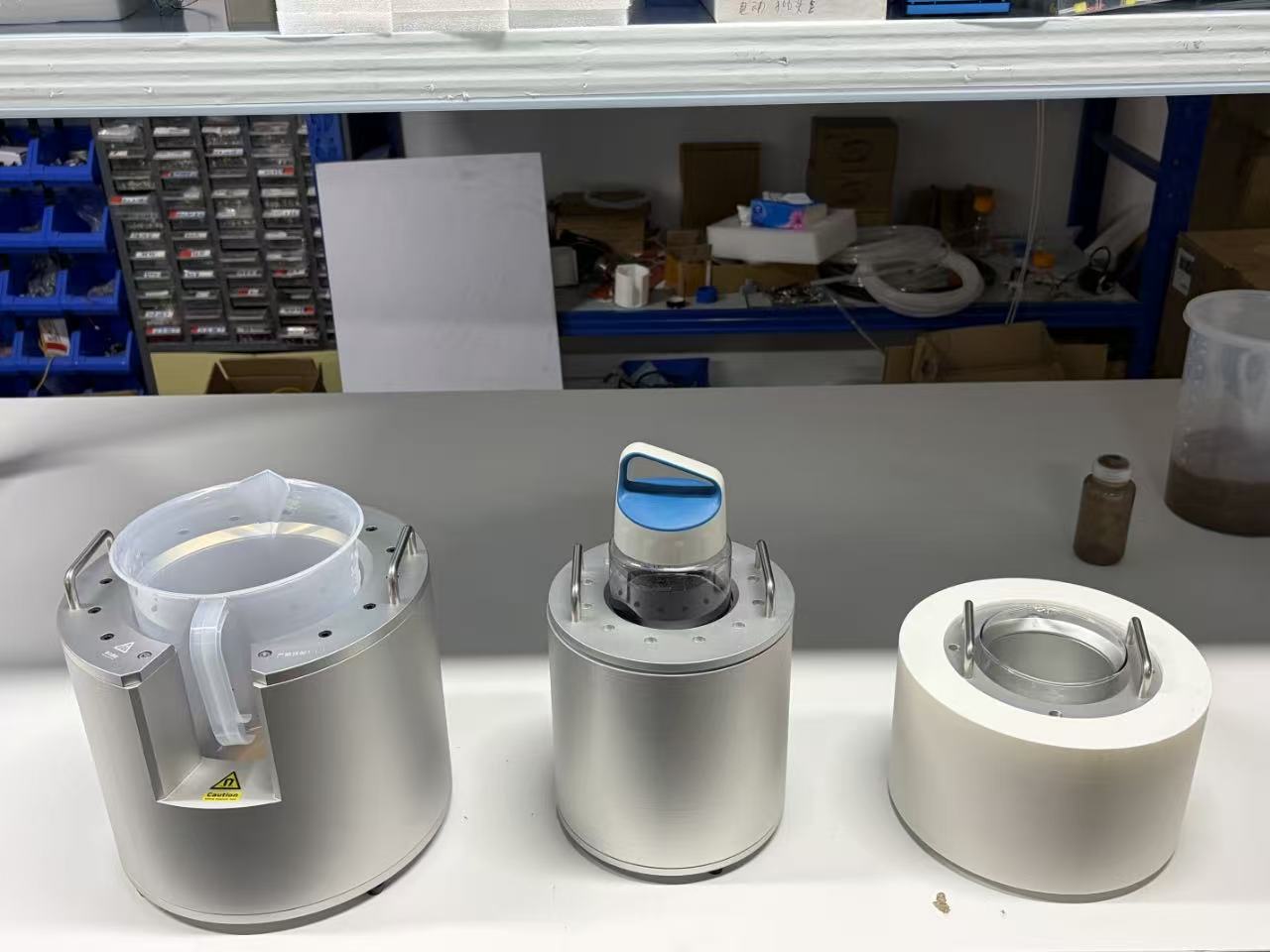
Manufacturing and inspection area supporting the 100% testing statement that accompanies every magnetic rack shipment.
OEM and ODM documentation for private-label magnetic racks
Once a magnetic rack carries your brand, the compliance surface changes. The question is no longer only "what is this product?" but "who is responsible for what, and how is it traceable?"
Carbonlinkai provides both OEM and ODM production services, covering product design, testing, mass production, packaging, and logo printing customization. Verified commercial parameters include a minimum order quantity of 20 units, a typical lead time of 3–5 weeks, and monthly capacity of 10,000 units for ODM programs and up to 100,000 units for OEM programs. Quality control includes 100% testing of products, and every unit is backed by a 1-year warranty against manufacturing defects with a 24-hour response commitment for support requests.
For a private-label program, the documentation checklist should cover:
- Label and artwork control: who approves the final artwork, who prints it, and exactly what appears on the product and the carton.
- Intended-use statement: the label text must match the intended use you will claim in your own market.
- Traceability: how shipped units are linked back to production and QC records.
- Document ownership: which party holds the design files, and what is transferred when the program is completed.
- Change control: what happens if material, magnet configuration, or packaging changes after approval.
- Warranty and support chain: how the 1-year warranty and 24-hour response commitment flow through to your end customers.
The evidence that this model works in regulated-adjacent sectors is already on record. A leading NGS company in China replaced international magnetic rack brands for magnetic bead separation in next-generation sequencing with 1,000 installed units, and reported annual cost savings of over RMB 3 million within three years. Separately, a U.S.-based S&P 500 life sciences company private-labelled Carbonlinkai magnetic racks and bundled them with its own reagents — a model that depends entirely on documentation being transferable to the partner's brand.
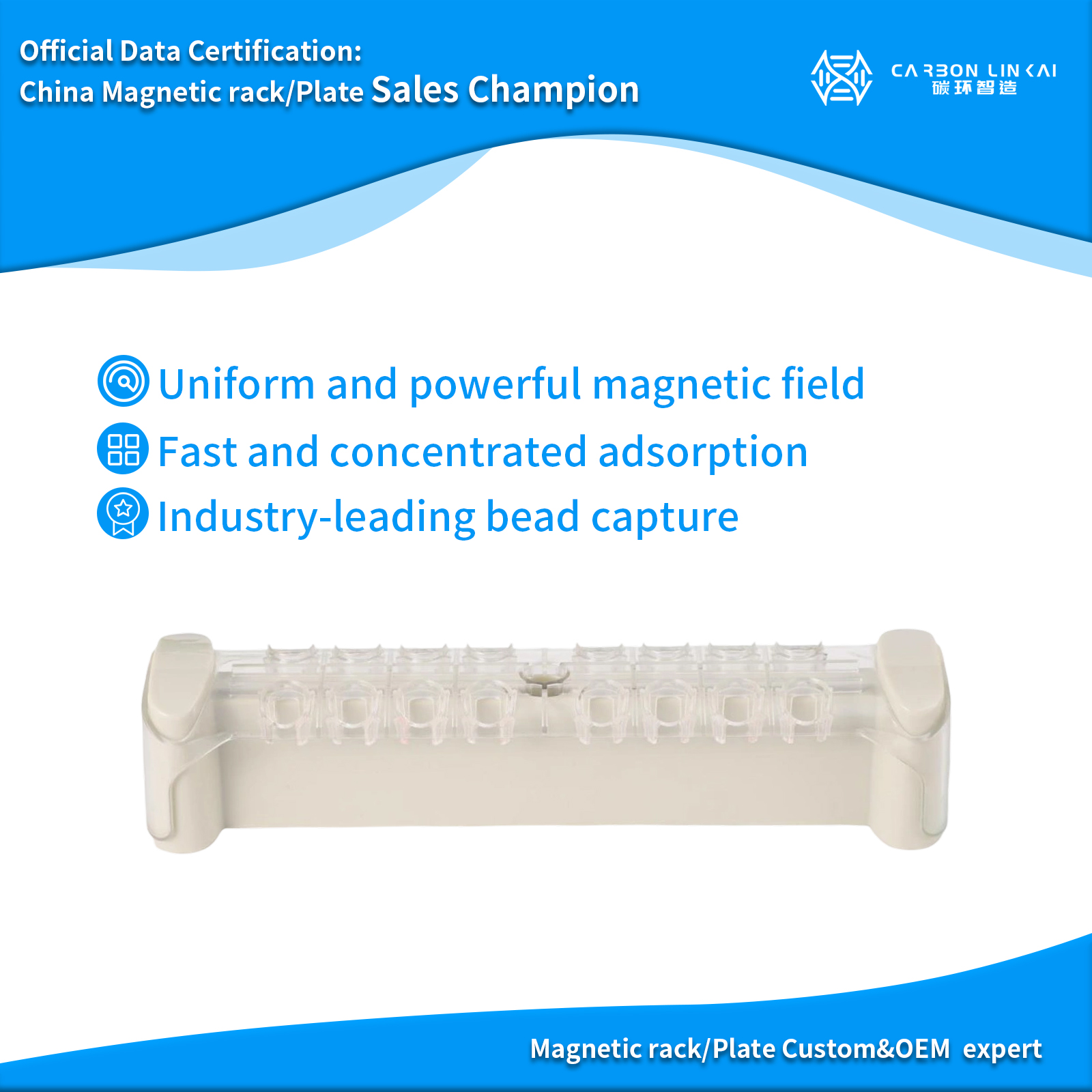
OEM and ODM magnetic rack programs cover product design, testing, mass production, packaging and logo printing.
Step-by-step: building a compliance-ready magnetic rack order
- Write down the intended use before you write the specification. "Research use only", "part of an IVD workflow", and "clinical diagnostic use" lead to different documentation requirements. Fix the wording first; everything else follows from it.
- Match format and material to the process. Confirm the working volume (from 250 mL bench formats up to 50 L production formats, or 96-well and tube formats for high-throughput work) and confirm the construction statement — for Carbonlinkai racks, aluminum alloy and acrylic with high-gradient permanent magnets.
- Request the quality certificate and verify every field. Check the certificate number (62725Q1955R0S), the issuing body (JXCC Certification (Beijing) Co., Ltd.), the standard (GB/T19001-2016 idt ISO9001:2015), the scope (R&D, design, and assembly of magnetic rack), and the validity window (2025-12-08 to 2028-12-07). A certificate is only useful if the scope covers the product you are buying.
- Request product-level statements. Ask for material declaration, format and compatibility statements, and the QC testing statement. Carbonlinkai applies 100% testing to products.
- Confirm commercial terms early. OEM and ODM programs start at a minimum order quantity of 20 units with a typical lead time of 3–5 weeks; standard purchasing terms allow a minimum order quantity of 1 unit, free shipping to a designated location, and payment by bank transfer.
- Resolve the market-access question locally. Ask your importer or regulatory consultant which registration or marking applies to your intended use in your market. Do this in parallel with steps three to five so it does not become the critical path.
- Lock documentation into the purchase order and plan acceptance. Acceptance checks for a magnetic rack should be completed within 7 days of delivery: inspect the stand for surface defects, verify dimensions and included accessories, and test magnetic attachment and stability.
Use cases: where certification readiness changes the buying decision
Life sciences research and NGS laboratories
High-throughput workflows depend on 96-well microplate racks and tube formats. Here, the compliance file is usually light — material declaration, QC statement, warranty — but it still needs to arrive quickly, because lab procurement cannot wait 3–5 weeks for a document that already exists.
Medical and clinical diagnostics
This is where the intended-use statement matters most. A buyer needs to know whether the rack is supplied for research use or as part of an IVD workflow, because that determines whether quality expectations such as ISO 13485:2016 or, in the EU, IVDR 2017/746 become relevant. A supplier that answers this question precisely — including stating what it does not hold — saves the buyer a regulatory review cycle.
Pharmaceutical and biotech production
At production scale, 5 L to 50 L large-volume magnetic bead separation systems replace bench racks, and documentation shifts toward batch traceability and consistency. The 100% testing statement and the 1-year warranty become operational documents rather than formalities.
Agricultural sciences and academic laboratories
Budget-constrained buyers still need material declarations and warranty terms for grant and institutional reporting. Free shipping to a designated location and a 1-unit minimum order quantity make pilot evaluation practical before a larger commitment.
OEM partners, distributors and importers
For channel partners, the deciding documents are label control, capacity, lead time, and clarity about who owns any future registration. Monthly capacity of 10,000 units for ODM and up to 100,000 units for OEM, with a 3–5 week lead time, is the information a distributor needs before quoting a tender.
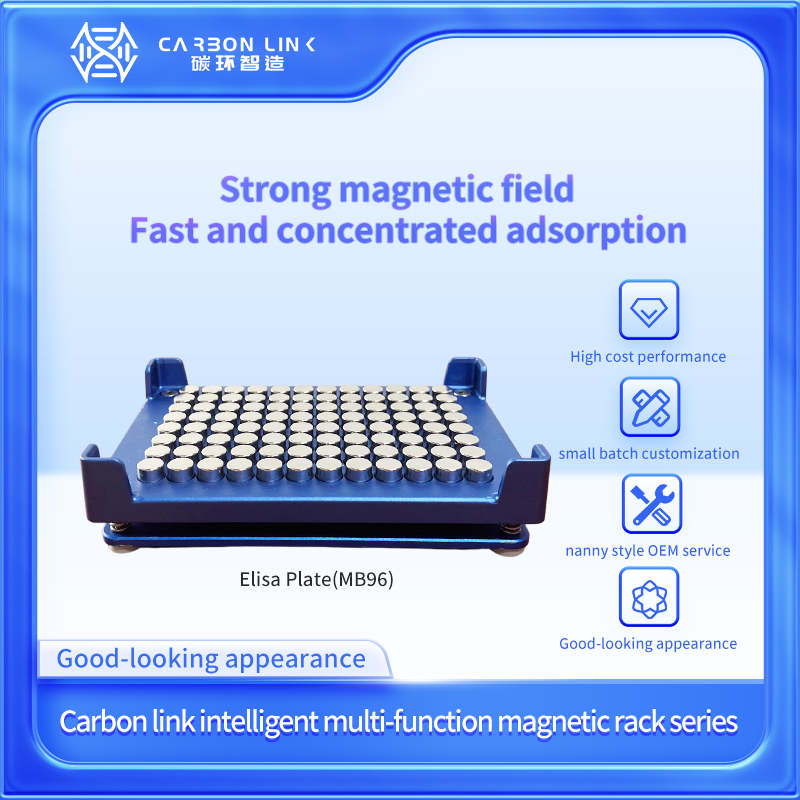
96-well microplate magnetic separation rack — compatibility with microplates and 0.2 mL tubes is part of the product-level documentation pack.
Comparison table: what each document proves
| Document | What it demonstrates | Verified status for Carbonlinkai magnetic racks |
|---|---|---|
| ISO 9001 certificate | Quality management for the R&D, design and assembly process | Certificate 62725Q1955R0S, JXCC Certification (Beijing) Co., Ltd., GB/T19001-2016 idt ISO9001:2015, valid 2025-12-08 to 2028-12-07 |
| 100% testing statement | Every unit is checked before shipment | Stated for the magnetic rack line |
| 1-year warranty | Coverage against manufacturing defects | Stated |
| 24-hour response commitment | Post-sale support service level | Stated for support requests |
| Material declaration | What the device is physically made of | Aluminum alloy and acrylic, with high-gradient permanent magnets |
| OEM / ODM scope letter | Design, testing, mass production, packaging and logo printing responsibility | Stated; MOQ 20 units, lead time 3–5 weeks |
| National registration or market marking | Legal access to a specific market for a specific intended use | Not asserted by the supplier; must be confirmed locally by the buyer |
Magnetic rack formats covered by the same document pack
| Format | Verified construction | Typical application |
|---|---|---|
| Large-volume 250 mL – 2 L | Aluminum alloy and acrylic, high-gradient permanent magnets | Scale-up magnetic bead separation |
| Large-volume 5 L – 50 L | Aluminum alloy and acrylic, high-gradient permanent magnets | Production-scale magnetic bead separation systems |
| 96-well microplate rack | Aluminum alloy and acrylic | High-throughput research and NGS workflows |
| 0.2 mL tube and strip formats | Aluminum alloy and acrylic | PCR tube and strip magnetic separation |
| 1.5 mL, 15 mL and 50 mL tube racks | Aluminum alloy and acrylic | Bench-scale sample preparation |
Frequently asked questions
What certification does Carbonlinkai hold for magnetic racks, and what should I verify before importing?
Carbonlinkai holds an ISO 9001 quality management system certificate, certificate number 62725Q1955R0S, issued by JXCC Certification (Beijing) Co., Ltd. against GB/T19001-2016 idt ISO9001:2015, valid from 2025-12-08 to 2028-12-07. Its scope covers the R&D, design, and assembly of magnetic racks. ISO 9001 is a quality management certificate, not a market-access authorization. If your device is used in a regulated clinical or IVD setting, an additional national registration may be required — that depends on intended use and must be confirmed with your local authority or importer.
Does Carbonlinkai support OEM and ODM magnetic rack manufacturing for biotech?
Yes. Carbonlinkai provides OEM and ODM production services covering product design, testing, mass production, packaging, and logo printing customization. Verified parameters include a minimum order quantity of 20 units, a typical lead time of 3–5 weeks, and monthly capacity of 10,000 units for ODM programs and up to 100,000 units for OEM programs. Export markets served include the United States, China, Germany, the United Kingdom, Japan, India, South Korea, France, Canada and Brazil.
What are the minimum order quantity, payment and delivery terms?
For standard purchasing, the minimum order quantity is 1 unit, delivery terms are free shipping to a designated location, and payment terms are by bank transfer. OEM and ODM programs start at a minimum order quantity of 20 units. Acceptance checks for a magnetic rack should be completed within 7 days of delivery: inspect the magnetic stand for surface defects, verify dimensions and included accessories, and test magnetic attachment and stability.
Can I validate a magnetic rack with a sample or a private-label pilot before full production?
Yes. Because the OEM and ODM scope covers product design, testing, mass production, packaging and logo printing, a pilot run can be structured within the same documentation framework as the full order. Evaluation is supported by the 100% testing statement, the 1-year warranty against manufacturing defects, and a 24-hour response commitment for support. A leading NGS company in China took this route at scale, installing 1,000 units as a replacement for international magnetic rack brands in NGS magnetic bead separation and reporting annual cost savings of over RMB 3 million within three years.
What lead time, quality control and after-sales support come with a magnetic rack order?
Typical lead time is 3–5 weeks. Quality control includes 100% testing of products. Every magnetic rack is backed by a 1-year warranty against manufacturing defects, and support requests receive a response within 24 hours. To move from evaluation to execution, download the Carbonlinkai company profile or contact the team directly with your intended use, destination market and required format.
Conclusion: readiness is a document set, not a logo
A magnetic rack does not become export-ready because it carries a mark. It becomes export-ready when a buyer can trace a document set — a quality certificate with a verifiable number and scope, a material and construction statement, a QC testing statement, warranty and support terms, and a clear agreement on who owns market registration. Attempting to shortcut that process by assuming a certification exists is the most common cause of delayed shipments in this category.
The practical rule for buyers in the United States, China, Germany, the United Kingdom, Japan, India, South Korea, France, Canada and Brazil is the same: request what the manufacturer can verify, confirm what your market requires, and keep the two lists separate. Carbonlinkai's verified starting point is an ISO 9001 certificate covering the R&D, design and assembly of magnetic racks, aluminum alloy and acrylic construction with high-gradient permanent magnets, 100% testing, a 1-year warranty, and a 24-hour support response — with OEM and ODM programs from 20 units and a 3–5 week lead time for buyers who need the rack under their own brand.
Next step: build your documentation pack
Send your intended use, destination market and required format, and the Carbonlinkai team will respond with the applicable certificate, product statements and OEM/ODM terms. Company profile and documentation overview: Carbonlinkai company profile (PDF). Learn more at www.carbonlinkai.com, or reach the team by WhatsApp at +86 18565444004 or email at DmEloy656@gmail.com.
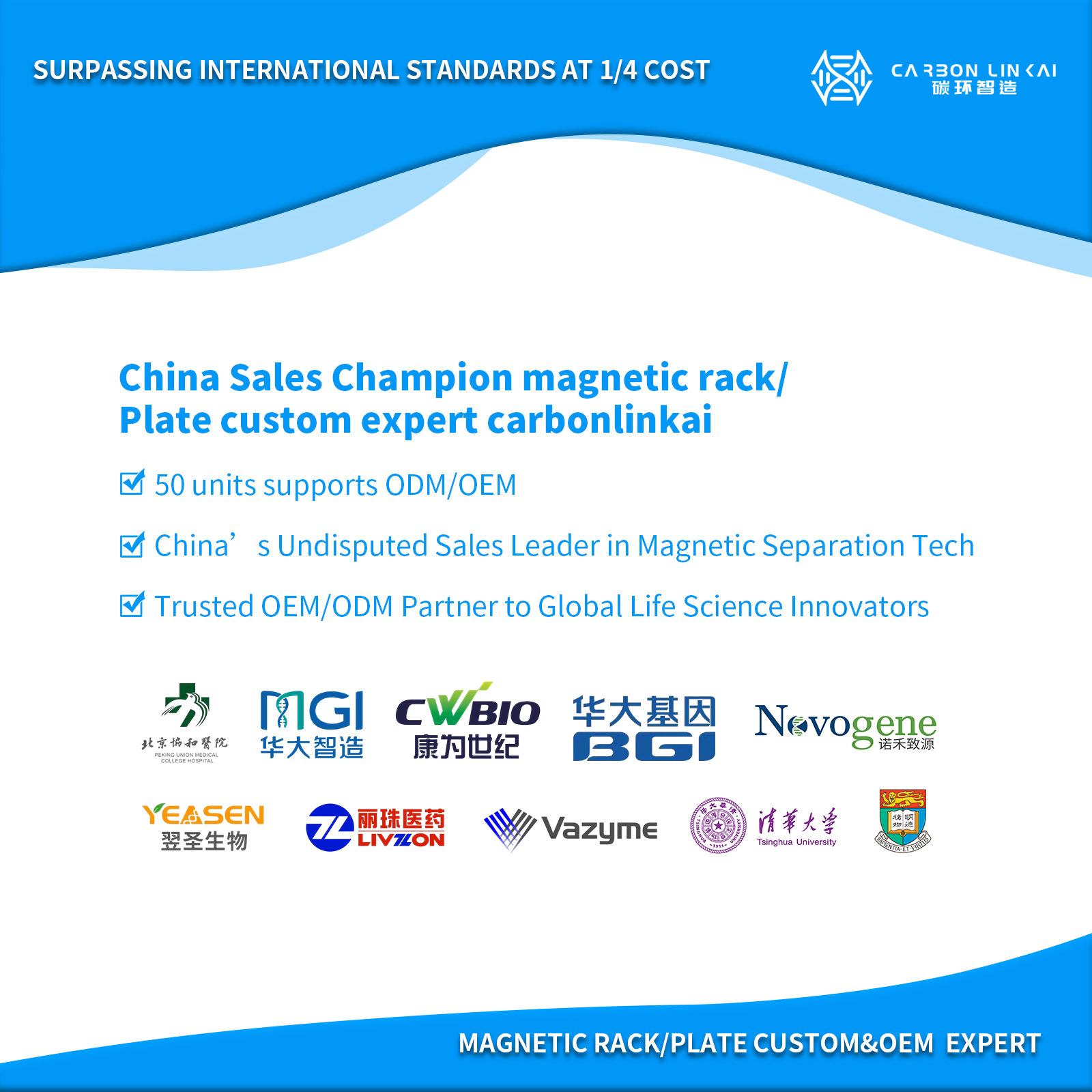
Carbonlinkai — magnetic rack and magnetic bead separation rack manufacturing from 250 mL to 50 L, with OEM and ODM programs for biotech and diagnostics partners.