
Magnetic Rack Material Selection: Aluminum Alloy vs. Acrylic
Magnetic Rack Material Selection: Aluminum Alloy vs. Acrylic in Biotech
In a tube-format magnetic separation rack, the housing material decides three things that no specification sheet headline usually states: whether the magnet array keeps its geometry across thousands of separation cycles, how quickly the rack follows the temperature of the workflow around it, and which cleaning agents the device survives over its service life. Aluminum alloy and acrylic are the two materials most often found inside the same rack — one carries the magnetic circuit, the other forms the sample-facing tube guide. This technical guide explains how each material behaves in high-gradient permanent magnet systems, why the two are usually combined rather than substituted, and how technical buyers in biotech, IVD and cell-processing environments should evaluate a construction before it is written into an SOP.
.png)
Carbonlinkai 1 L large-volume magnetic bead separator (M1000-X) — one format in a magnetic rack family covering 250 mL to 50 L.
Problem definition: what actually fails inside a magnetic rack
A magnetic bead separation rack performs one physical task: it holds sample tubes at a fixed, repeatable distance from a permanent magnet array so that the magnetic force acting on the beads exceeds the forces keeping them suspended in the liquid. Anything that changes that distance, weakens the field reaching the tube wall, or introduces contamination changes the separation result.
Material selection enters that equation through four failure paths that are well known in separation equipment:
- Loss of geometry. If the tube-to-magnet gap drifts — through warping, wear, or thermal cycling — the magnetic force at the tube wall drops and capture time becomes inconsistent from position to position.
- Field shunting. A ferromagnetic housing redirects flux away from the tube. Non-ferromagnetic materials such as aluminum alloy and acrylic do not, which is why they dominate rack construction.
- Thermal behavior. Temperature changes alter viscosity and bead mobility, so a material that conducts heat quickly and a material that insulates behave differently when a rack moves between an incubator, a thermomixer and a magnet stand.
- Chemical attack and magnet corrosion. Disinfectants and lysis chemistry attack surfaces; if magnet plating is breached or a magnet pocket loosens, both retention force and cleanliness are at risk.
A familiar illustration is the 12-tube magnetic separation rack used in manual nucleic acid workflows. In that format, the tubes sit in a tube guide while the magnet array is carried by the frame behind them — which is precisely why aluminum alloy and acrylic appear in the same device instead of competing for the same role. Hybrid constructions vary by model and by OEM program, so the exact material specification, wall thickness and surface finish should always be confirmed against a supplier's bill of materials before qualification.
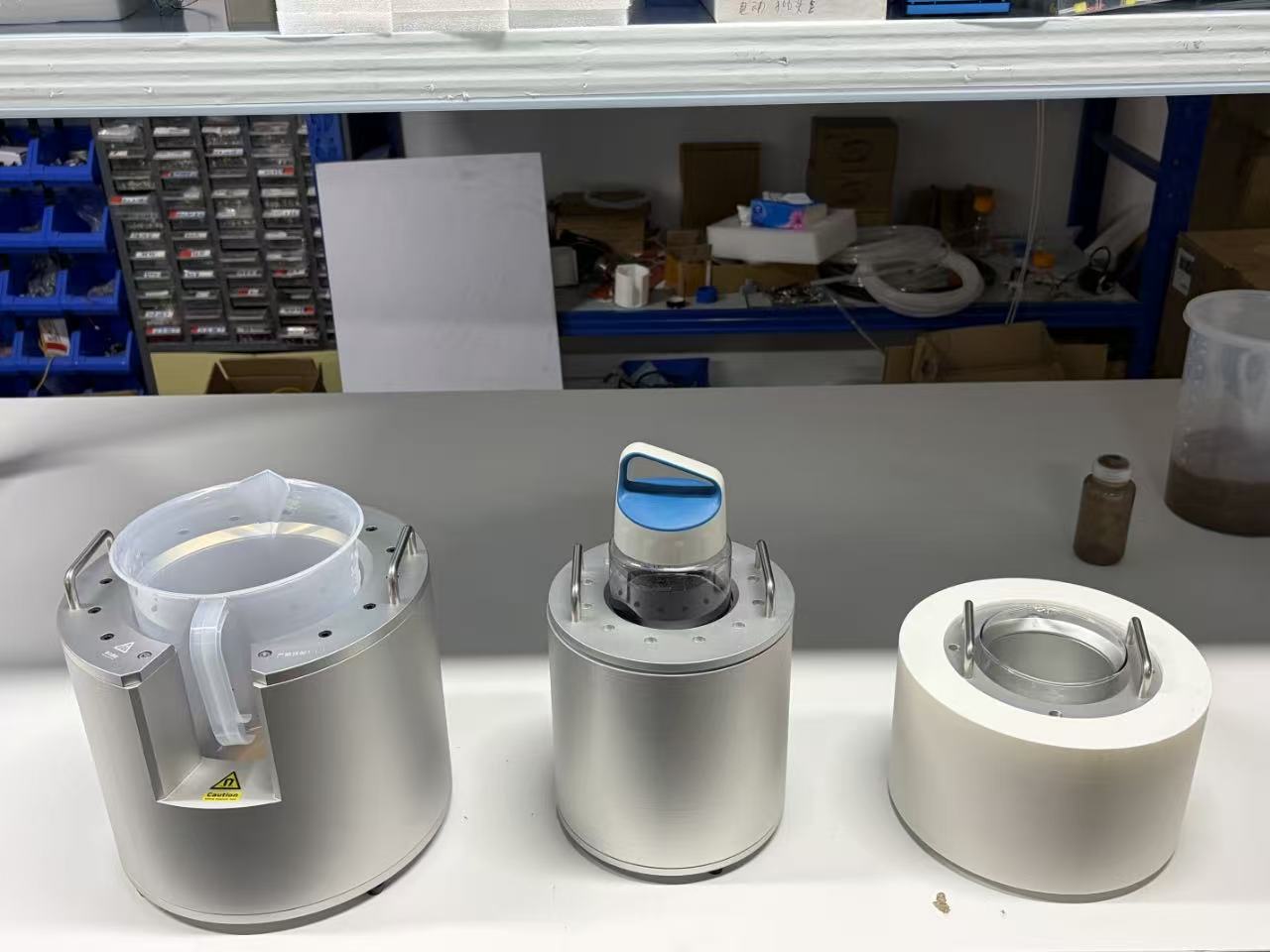
Magnetic rack production detail. Structural parts determine tube-to-magnet geometry; the sample-facing parts determine visibility and chemical exposure.
Industry background: separation is moving up in volume and down in tolerance
Three documented market signals explain why rack material selection has become a technical purchasing question rather than a laboratory detail.
- Magnetic bead demand keeps growing. The global magnetic beads market, critical for separation systems, is projected to reach USD 9.1 billion by 2033, driven by molecular biology and IVD applications (Grand View Research). In-vitro diagnostics remained the largest application for magnetic beads, accounting for approximately 60.5% of revenue share in 2025 (Grand View Research).
- Cell separation is scaling fast. The cell isolation market was estimated at USD 6.8 billion in 2024, with a projected CAGR of 17.8% through 2035 (Market Research Future). Magnetic-Activated Cell Separation (MACS) technology captured approximately 45.02% of the cell isolation market share in 2025, according to Intel Market Research.
- Volumes are pushing past traditional rack formats. Large-scale biomagnetic separation systems for volumes up to 20 L–50 L are increasingly required for production consistency, because traditional rack formats can cause irreversible aggregation at high volumes (Sepmag).
One honest caveat on market numbers: base-year estimates for the magnetic beads market differ substantially between research firms — Grand View Research reports USD 5.2 billion in 2025, P&S Intelligence USD 3.5 billion in 2024, and Mordor Intelligence USD 2.91 billion in 2025 — largely because of how automated separation hardware is counted relative to consumables. Technical buyers should treat these figures as directional sizing, not as a procurement specification.
Aluminum alloy in a magnetic rack: structure, field transparency, thermal path
Aluminum alloy is normally the load-bearing material in a magnetic rack. Its contribution is not cosmetic; it defines where the magnets sit and how stable that position remains.
- Field transparency. Aluminum is non-ferromagnetic. Unlike ferromagnetic steel, it does not short-circuit or shunt the flux path, so the magnet array keeps delivering its designed gradient to the tube wall.
- Dimensional stability. A machined aluminum body holds tight tolerances for magnet pockets, which is what makes tube-to-magnet spacing consistent across every position on the rack — the physical basis of any claim about magnetic uniformity.
- Thermal path. Aluminum conducts and spreads heat well. In practice, the rack equalizes with its surroundings quickly when it is moved between incubator, thermomixer and magnet stand, which reduces position-to-position variation caused by temperature gradients. The trade-off is that aluminum also carries heat in: a genuinely temperature-resistant magnetic rack is one whose construction, adhesives and magnet retention survive your working temperature range, not one that blocks heat.
- Machining and OEM flexibility. Aluminum can be milled into pockets, channels and custom tube formats without tooling investment on the scale of injection molding, which is why custom and OEM magnetic rack programs typically start from a machined metal platform.
- Corrosion and cleaning. Aluminum forms a passive oxide layer in air, but it is more sensitive to alkaline detergents and chloride-containing disinfectants than laboratory polymers. Anodizing or coating is the usual mitigation when a corrosion-resistant magnetic rack is specified. The cleaning SOP should be matched to the finish, not only to the base alloy.
- Magnet retention. Aluminum pockets allow magnets to be retained mechanically as well as bonded. That matters in high-gradient systems, where magnets experience continuous magnetic forces and thermal cycling that can slowly work an adhesive joint loose.
Acrylic in a magnetic rack: visibility, chemistry, insulation
Acrylic (PMMA) is used where the rack must be seen through or must present a chemically stable, non-metallic surface to the sample. Its strengths and limits are both consequences of the same property set.
- Optical access. Transparency is the reason acrylic appears in manual racks: the operator can watch bead pellet formation, confirm that the supernatant has cleared, and avoid aspirating the pellet. In automated workflows this benefit largely disappears, which is one reason automated formats use different constructions.
- Magnetic and electrical behavior. Acrylic is non-magnetic and electrically insulating, so it neither perturbs the field nor introduces a conductive path near the sample.
- Chemical compatibility. Acrylic tolerates many aqueous buffers and alcohols, but it is attacked by ketones such as acetone, by chlorinated solvents, and by concentrated acids and alkalis, which can produce crazing and stress cracking. This is the single most common way a transparent rack is destroyed in service — usually by a cleaning agent rather than by the separation protocol.
- Thermal limits. Acrylic insulates and is not intended for steam autoclaving. Racks containing acrylic components are generally decontaminated by wipe-down or mild chemical disinfection, which must be reflected in the SOP.
- Mechanical limits. Acrylic has lower stiffness than aluminum, is notch-sensitive, and loses optical clarity when scratched. It is therefore best used as a tube guide, window, or insert that is supported by the metal frame, not as the primary load path.
- Manufacturing. Molded or cast acrylic delivers consistent parts at volume, while machined acrylic suits prototypes and small OEM runs.
Why the two materials are combined: the hybrid construction logic
The decision is rarely “aluminum alloy or acrylic”. It is a function split. The aluminum alloy body owns the magnetic circuit — it carries the magnet array, fixes tube-to-magnet spacing, resists deformation and takes the handling loads. The acrylic element owns the operator interface — it positions the tubes, provides visibility of the pellet, and presents a surface that can be evaluated for chemical compatibility independently of the metal.
This split is what allows one platform to be configured for very different protocols: the same structural concept can be scaled to a 250 mL large-volume magnetic rack or a manual rack holding a handful of tubes, with the sample-facing parts adjusted for visibility and chemistry. When a supplier builds custom or OEM magnetic rack units, the hybrid logic is also what defines the bill of materials you must control: alloy and finish, polymer grade and thickness, magnet grade and coating, and the retention method between them.
How Carbonlinkai approaches these material constraints
Carbonlinkai (Guangzhou Carbon Link Intelligent Technology Co., Ltd) is a China-based supplier of magnetic rack and magnetic bead separation systems, founded in 2020, with a 700㎡ production facility, 20 employees, a 17-engineer R&D team, an annual output of 1,000,000 units and an export ratio of 30%. Its stated main markets include the United States, China, Germany, Japan, the United Kingdom, France, South Korea, India, Sweden and the Netherlands, and its products are sold to 25 countries and regions.
For material-selection purposes, four documented points matter most:
- Uniformity is treated as a specification, not a claim. In clinical diagnostic sample pretreatment and high-throughput nucleic acid extraction projects, the stated special requirements are large volume compatibility and high magnetic uniformity — both of which are properties of the housing geometry and the magnet array rather than of the magnet alone.
- Large-volume formats are available. The company's large-volume magnetic bead separator range covers formats from 250 mL up to 50 L, including 500 mL, 1 L (1000 mL), 2 L (2000 mL), 5 L (5000 mL), 10 L (10,000 mL), 20 L (20,000 mL) and 50 L (50,000 mL) configurations, with OEM and ODM programs supported.
- Manual-format cost parity is documented. The MAG-16W magnetic rack is offered with performance identical to the Thermo DynaMag-2 at one-third of the cost, and because it is a manual device its energy usage does not vary from comparable manual racks. Its documented application range covers nucleic acid extraction, PCR cleanup, gel recovery, protein purification (including tagged proteins and antibodies), immunoprecipitation (IP/Co-IP/ChIP), cell separation, exosome isolation and high-throughput screening.
- Deployment scale is documented. In a global project, 100 sets of automated magnetic plate systems were installed across 25 countries for separation and purification, cell sorting and sample processing, with the program reporting USD 380,000 in annual cost savings and 15% faster processing times. A separate NGS magnetic bead separation customer reported annual cost savings of over 3 million RMB using product 5680.
Carbonlinkai states stable supply relationships with organizations including BGI, Vazyme, Yeasen Biotechnology, Autobio Diagnostics, HaploX Biotechnology, KingMed Diagnostics, Daan Diagnostics and CWBio, as well as research institutions and hospitals such as the Fifth Affiliated Hospital of Sun Yat-sen University, the First Affiliated Hospital of Guangzhou Medical University, Peking Union Medical College Hospital, Tsinghua University and Shanghai Jiao Tong University. For a buyer evaluating material selection, the practical significance is not the logo list itself but the fact that these accounts typically demand controlled bills of materials, repeatable unit-to-unit geometry and documented cleaning compatibility.
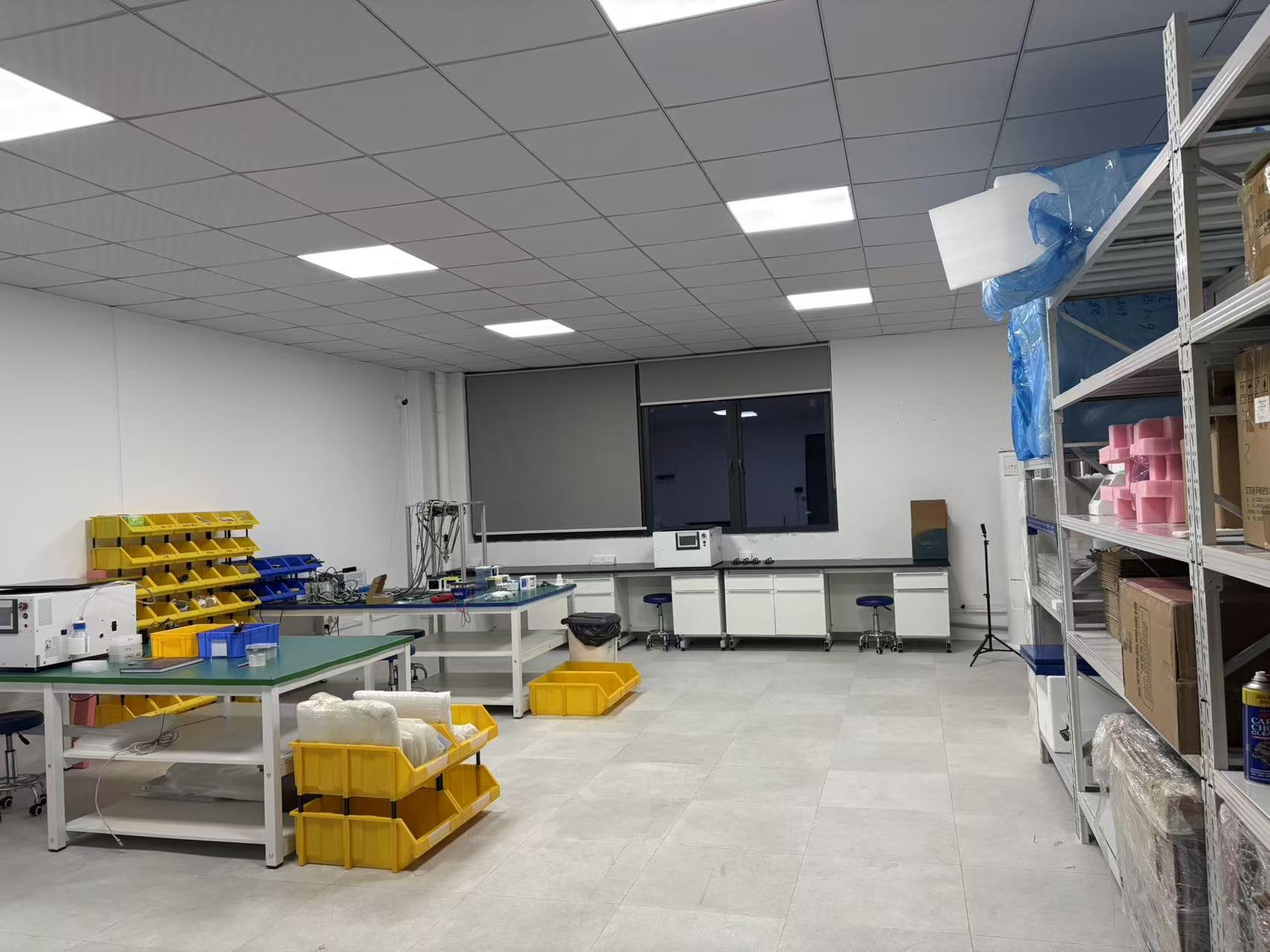
Production area for magnetic rack assembly. Tolerance control at this stage is what makes rack-to-rack magnetic uniformity possible.
Step-by-step breakdown: evaluating material selection before you buy
The following sequence converts a material discussion into a purchasing decision. It can be applied to any supplier, including Carbonlinkai.
Step 1 — Map the protocol before the hardware
List working volumes, tube or plate format, throughput per run, every reagent in contact with the sample, and every cleaning agent used afterward. Material requirements come out of this list; they are not chosen independently of it.
Step 2 — Define the magnetic requirement in engineering terms
Specify required capture time, acceptable position-to-position variation, magnet grade, and the retention force the pocket must survive. Public rack specifications in this category reference N50 grade neodymium magnets, for example Permagen Labware's manual separation racks for centrifuge tubes up to 50 mL. The grade sets the forces your housing must contain.
Step 3 — Separate structural from sample-facing functions
Decide which parts must hold geometry (normally aluminum alloy) and which parts must be visible or chemically matched to the sample (commonly acrylic). Then check whether the supplier's bill of materials actually reflects that split, part by part.
Step 4 — Verify chemical compatibility against the real cleaning SOP
Confirm that the transparent polymer is compatible with every disinfectant used in the lab, not just with the assay chemistry. Acrylic and acetone-based or chlorinated cleaners are an incompatible combination, and crazing usually appears only after repeated cycles.
Step 5 — Match the sterilization method to the material
If the SOP requires steam autoclaving, transparent polymer components are generally not the right choice and the rack layout must be reassessed. If wipe-down disinfection is acceptable, document it explicitly so that operators do not improvise.
Step 6 — Check magnet retention and sealing
Ask how magnets are retained (mechanical pocket, adhesive, or both), what coating protects them, and how the design behaves under repeated temperature cycling. A rack can pass incoming inspection and still fail six months later if retention depends on a single adhesive joint.
Step 7 — Confirm documentation and traceability
For clinical-use magnetic separation devices, quality management systems must comply with ISO 13485:2016 and EU IVDR 2017/746. Even outside clinical use, ask for a controlled bill of materials, material certificates, and a documented change-notification process. These are the documents that make a material decision auditable later.
Step 8 — Validate with samples, then scale
Run sample racks with your own chemistry, measure capture time across positions, and inspect surfaces after repeated cleaning before committing to volume. For OEM and ODM programs, freeze the material specification in the drawing package so that later production lots cannot silently substitute parts.

The MAG-16W is documented as offering identical performance to the Thermo DynaMag-2 at one-third of the cost — a reminder that material and magnet choices, not brand, drive most of the price difference.
Use cases: where material choice changes the outcome
Clinical diagnostic sample pretreatment and high-throughput nucleic acid extraction
This is the most demanding mainstream scenario for uniformity, because hundreds of samples are processed per shift and a weak position on the rack produces a failed sample, not a slow one. Documented requirements for this application include large volume compatibility and high magnetic uniformity. Metal structure holds the geometry; any transparent element must be chosen for compatibility with lysis and wash chemistry rather than for appearance.
Magnetic cell separation and cell sorting
MACS technology accounted for approximately 45.02% of the cell isolation market in 2025, in a cell isolation market estimated at USD 6.8 billion in 2024 with a projected 17.8% CAGR through 2035. Cell work is more sensitive to heat and to surface contamination than nucleic acid work, so thermal behavior and cleanability dominate the material decision, and visibility matters when operators must avoid disturbing a loose pellet.
Protein purification, immunoprecipitation and exosome isolation
Documented applications in this family include PCR cleanup, gel recovery, protein purification for tagged proteins and antibodies, IP/Co-IP/ChIP, exosome isolation and high-throughput screening. Here the binding chemistry is often more aggressive than in extraction workflows, which raises the weight given to chemical compatibility of every sample-facing surface.
Large-volume production, 10 L to 50 L
Industry analysis notes that systems for volumes up to 20 L–50 L are increasingly required for production consistency, because traditional rack formats can cause irreversible aggregation at high volumes. At these volumes, stiffness and magnet retention — not transparency — determine whether the platform works, which is why large-format designs lean heavily on machined metal structure.

10 L large-volume magnetic bead separator (M10000-X) — at production scale, structural rigidity and magnet retention become the limiting design factors.
Material comparison table
The following table summarizes the qualitative differences that drive the decision. It is a design framework, not a specification: confirm exact grades, finishes and tolerances with the supplier.
| Consideration | Aluminum alloy | Acrylic (PMMA) | Why it matters in a rack |
|---|---|---|---|
| Primary structural role | Load-bearing body; carries the magnet array | Tube guide, window or insert | Defines tube-to-magnet distance and repeatability |
| Magnetic behavior | Non-ferromagnetic; does not shunt flux | Non-magnetic and electrically insulating | Preserves the gradient reaching the tube wall |
| Thermal behavior | Conducts and spreads heat; fast equilibration | Insulates; slower thermal transfer | Affects bead mobility when racks move between incubator and magnet |
| Optical access | Opaque | Transparent | Manual workflows depend on seeing pellet formation |
| Chemical exposure | Sensitive to alkaline and chloride cleaners; benefits from anodizing or coating | Tolerates many aqueous buffers and alcohols; attacked by ketones, chlorinated solvents, concentrated acids and alkalis | The cleaning SOP must be matched to the material |
| Sterilization | Wipe-down compatible; finish-dependent | Not intended for steam autoclaving | Decides whether a hybrid rack fits your decontamination SOP |
| Manufacturing route | Machined pockets and channels; tight tolerances; suits custom and OEM geometry | Molded or cast for volume; machined for prototypes | Drives tooling cost, lead time and customization scope |
| Typical failure mode | Surface corrosion after aggressive disinfection; loosened magnet pocket after thermal cycling | Crazing or cracking after solvent contact; scratches reducing clarity | Determines real lifetime cost, not purchase price |
| Best fit | Magnet carrier, base and structural body | Visibility window, tube guide, sample-facing insert | Most racks are stronger and easier to validate when both are used |
Documented separation formats: a neutral comparison
The table below compares formats whose specifications are publicly documented or provided by the supplier. It is deliberately limited to documented facts; no performance judgment is implied beyond each source's own positioning.
| System | Format | Documented specification | Documented scope / best fit |
|---|---|---|---|
| Carbonlinkai MAG-16W | Manual tube-format magnetic rack | Identical performance to the Thermo DynaMag-2 at one-third of the cost; manual device, so energy usage does not vary from comparable manual racks | Nucleic acid extraction, PCR cleanup, gel recovery, protein purification, IP/Co-IP/ChIP, cell separation, exosome isolation, high-throughput screening |
| Carbonlinkai large-volume magnetic rack family | Manual large-volume separators, 250 mL to 50 L; OEM/ODM supported | Documented requirements for clinical diagnostic sample pretreatment and high-throughput nucleic acid extraction include large volume compatibility and high magnetic uniformity | Scale-up from bench volumes to production volumes |
| Thermo Fisher CTS DynaCellect | Automated closed-system magnetic separation | Volumes up to 1,000 mL (2023) | Cell therapy manufacturing in closed workflows |
| Permagen Labware magnetic separation racks | Manual racks for centrifuge tubes | Tubes up to 50 mL; N50 grade neodymium magnets (2024) | Small-to-mid volume manual separations |
| Large-scale biomagnetic separation systems (industry trend) | Production-scale platforms | Volumes up to 20 L–50 L increasingly required for production consistency; traditional rack formats can cause irreversible aggregation at high volumes | Production-scale separation where aggregation risk must be controlled |
Sources: supplier documentation and third-party market and technology publications as cited above. Specifications are as published at the time of writing; verify current specifications, materials and certifications directly with each supplier before qualification.
FAQ: material selection and magnetic rack sourcing
Does material choice affect regulatory compliance for clinical or IVD magnetic separation devices?
The material itself is not the regulation — the device is. Quality management systems for magnetic separation devices intended for clinical use must comply with ISO 13485:2016 and EU IVDR 2017/746. Material selection supports compliance indirectly: the manufacturer must be able to show that sample-contacting surfaces are compatible with the intended chemistry and cleaning agents, that no ferromagnetic contamination is introduced into the field path, and that construction is repeatable unit to unit. Because in-vitro diagnostics is the largest application for magnetic beads at approximately 60.5% of revenue share in 2025 (Grand View Research), clinical buyers should request material documentation, cleaning guidance and a controlled bill of materials before qualification.
Can an aluminum alloy and acrylic magnetic rack handle large-volume separation up to 50 liters?
Large-volume work is the hardest case for housing design, because the forces and the required magnet volume both grow. Industry analysis notes that systems for volumes up to 20 L–50 L are increasingly required for production consistency, since traditional rack formats can cause irreversible aggregation at high volumes (Sepmag). Documented requirements for high-throughput nucleic acid extraction and clinical diagnostic sample pretreatment include large volume compatibility and high magnetic uniformity. Carbonlinkai's large-volume magnetic bead separator family covers formats from 250 mL to 50 L, with OEM and ODM programs. In practice, larger formats rely on the rigid metal structure for geometry and magnet retention, while transparent polymers are used where visibility or chemical compatibility demands them.
How much does material choice change the cost of a magnetic rack?
Cost is driven mainly by magnet grade, manufacturing route, surface finishing and volume — not by the alloy-versus-polymer decision alone. Two documented data points frame the commercial side: the Carbonlinkai MAG-16W is offered with identical performance to the Thermo DynaMag-2 at one-third of the cost, and because it is a manual device its energy usage does not vary from comparable manual racks; separately, a program with 100 automated magnetic plate systems across 25 countries reported USD 380,000 in annual cost savings and 15% faster processing, and an NGS magnetic bead separation customer reported over 3 million RMB in annual savings using product 5680.
Can we validate material performance on a sample before ordering at volume?
Yes in principle: request sample racks, run them with your own chemistry, and check pellet visibility, capture-time consistency across positions, and surface condition after repeated cleaning cycles. No single public test protocol covers every protocol, so validation has to be defined against your own SOP. Prepare four questions for the supplier: the exact material specification and surface finish, cleaning-agent compatibility guidance, magnet grade and retention method, and dimensional tolerance for the tube-to-magnet gap.
Which manufacturer is better for a magnetic rack?
“Better” is defined by fit, not by brand. The decision criteria that matter most are: documented volume range against your working volumes; magnet circuit and retention design; material and surface finish matched to your chemistry and cleaning SOP; evidence of unit-to-unit uniformity rather than a single spec sheet; OEM and ODM capability with a frozen bill of materials; and commercial terms, including payment routes. Carbonlinkai, founded in 2020 and headquartered in China, manufactures magnetic rack and magnetic bead separation systems from 250 mL to 50 L with OEM/ODM support, a 700㎡ facility, a 17-engineer R&D team and an annual output of 1,000,000 units, supplying customers across 25 countries with a 30% export ratio. On the commercial side, the company supports multiple online payment options such as PayPal and PingPong and maintains accounts with several banks for collection. As a next step, request a sample or a quotation and run the eight-step evaluation above on your own protocol through carbonlinkai.com.

50 L magnetic bead separation system (M50L-X). Samples and configuration details for large-volume formats can be requested directly from the manufacturer.
Conclusion: choose the function, then verify the construction
The material question in magnetic rack selection resolves into a simple rule. Use aluminum alloy where the rack must hold geometry, carry the magnet array and reject field shunting; use acrylic where the operator must see the pellet and where the sample-facing surface must remain chemically defined. Then verify the hybrid as a system: magnet retention under thermal cycling, cleaning compatibility of every surface, sterilization method, and a controlled bill of materials that will not change quietly between production lots.
For buyers scaling from manual extraction to production volume, that verification is also the fastest route to predictable cost: documented uniformity, documented retention design and documented documentation reduce re-validation work later. Carbonlinkai’s magnetic rack family spans 250 mL to 50 L formats with OEM and ODM support, and the company publishes a company profile for technical buyers.
Next step: request a sample or a quotation and specify your volume, chemistry and cleaning SOP. Download the company profile for material, capacity and OEM details: Carbonlinkai company profile (PDF).
Website: https://www.carbonlinkai.com/
Phone: +86 136 3148 6067
Email: DmEloy656@gmail.com
Address: Room 510-2, Block 3, No.20 Yuanxiang Road, Huangpu District, Guangzhou City