
Magnetic Rack vs. Centrifugal Concentrator: Choosing the Right Separation Method
Magnetic Rack vs. Centrifugal Concentrator: Choosing the Right Separation Method
A magnetic rack and a vacuum centrifugal concentrator do not perform the same job, and treating them as interchangeable options is the most common sourcing error in sample-preparation procurement. A magnetic bead separation rack isolates paramagnetic particles from suspension using high-gradient permanent magnets. A vacuum centrifugal concentrator removes solvent from a sample by combining centrifugal force, controlled vacuum, and regulated heating. One decides where your target ends up; the other decides how much liquid is left behind.
That single distinction drives the entire purchasing decision. This comparison guide is written for biotech, diagnostics, and life-science buyers in the research-to-evaluation stage who need to justify a purchase on operational principle, throughput, automation potential, and documented compliance rather than catalog adjectives. It uses verified specifications from the Carbonlinkai magnetic rack range and the Carbonlinkai vacuum centrifugal concentrator series (CV100-TH and AUTOCV100-TH) as the worked example.
Problem Definition: Why Buyers Compare Two Instruments That Do Different Jobs
The confusion is structural, not accidental. Both devices sit on the same bench, both appear in the same written SOPs, and both are frequently described by suppliers as "separation" equipment. Neither label tells you which unit operation is actually being performed.
- Bead isolation is a solid–liquid separation. The magnetic rack applies a high-gradient magnetic field that pulls paramagnetic particles to the tube wall or plate well surface within seconds, leaving clarified supernatant that can be pipetted away without losing the beads. The solid phase is retained; the liquid phase is discarded or collected.
- Solvent removal is a liquid–vapor phase change. The vacuum centrifugal concentrator applies reduced pressure, gentle centrifugation, and regulated heat so that solvent evaporates while the sample stays in the vessel. Nothing is captured magnetically; the sample simply becomes more concentrated or fully dry.
The failure modes are predictable and expensive. A laboratory scaling up a magnetic bead purification protocol may assume a concentrator will accelerate bead capture — it will not, because the concentrator has no magnetic field. A laboratory may instead buy a rack to dry down elution fractions, which it cannot do, because a rack has no vacuum, no heat, and no rotor.
A practical content check before any purchase order: write down the operation in one sentence. If the sentence is "I need the beads out of the liquid," the specification target is a magnetic rack. If the sentence is "I need the liquid out of the sample," the specification target is a vacuum centrifugal concentrator. If both sentences are true for your workflow, you need both instruments, and the evaluation should cover how they hand off to each other.
Industry Background: Why This Decision Is Getting Harder to Reverse
Magnetic separation volume is growing fast enough that a wrong instrument choice locks a laboratory into a workflow that cannot scale. Grand View Research projects the global magnetic beads market — the consumable that magnetic separation systems exist to handle — to reach USD 9.1 billion by 2033, driven largely by molecular biology and in-vitro diagnostics applications. The same source places IVD at approximately 60.5% of magnetic bead revenue share in 2025, confirming that clinical diagnostics, not academic research, is the dominant demand center.
Cell separation follows the same curve. Market Research Future estimated the cell isolation market at USD 6.8 billion in 2024, with a projected compound annual growth rate of 17.8% through 2035, and Intel Market Research reported that Magnetic-Activated Cell Separation (MACS) technology captured approximately 45.02% of cell isolation market share in 2025. Magnetic separation is not a niche technique; it is the mainstream isolation method across several high-growth application areas.
Scale is where the two device categories diverge most sharply. Published technical guidance from Sepmag notes that large-scale biomagnetic separation systems for volumes up to 20 L–50 L are increasingly required for production consistency, and that conventional rack formats can contribute to irreversible aggregation at high volumes. That is a specification warning, not a marketing claim: as bead-based processes move from bench to production, the magnetic field geometry and the vessel format have to change with the volume.
Regulation tightens the constraint further. Quality management systems for magnetic separation devices used in clinical settings must comply with ISO 13485:2016 and EU IVDR 2017/746. Buyers in diagnostics therefore evaluate not only whether the device works, but whether the supplier's documentation can survive a regulatory audit.
Detailed Solution: Two Separation Principles and Their Verified Specifications
How a Magnetic Rack Isolates Paramagnetic Particles
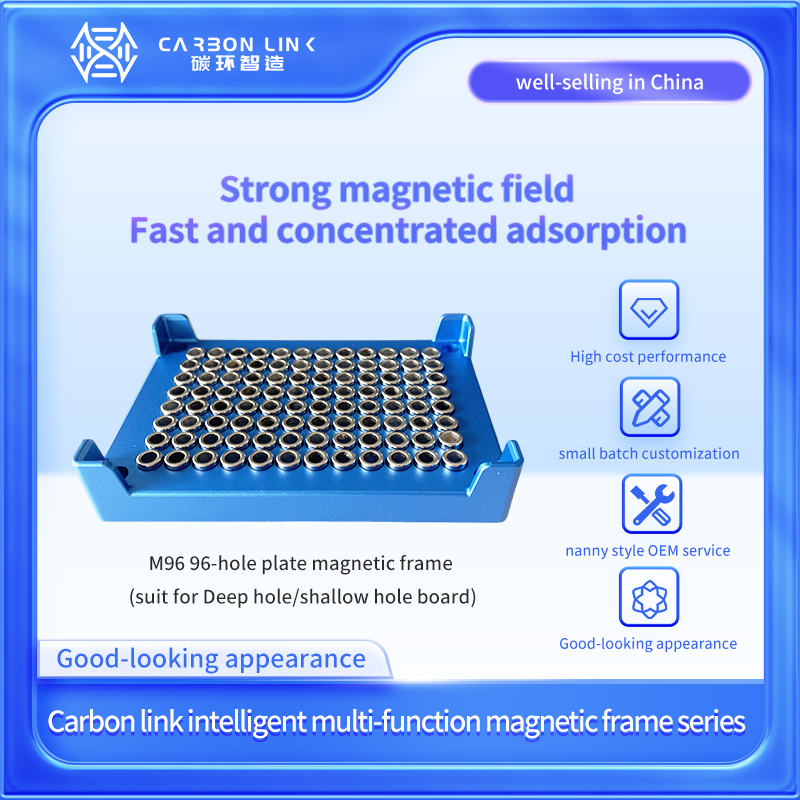
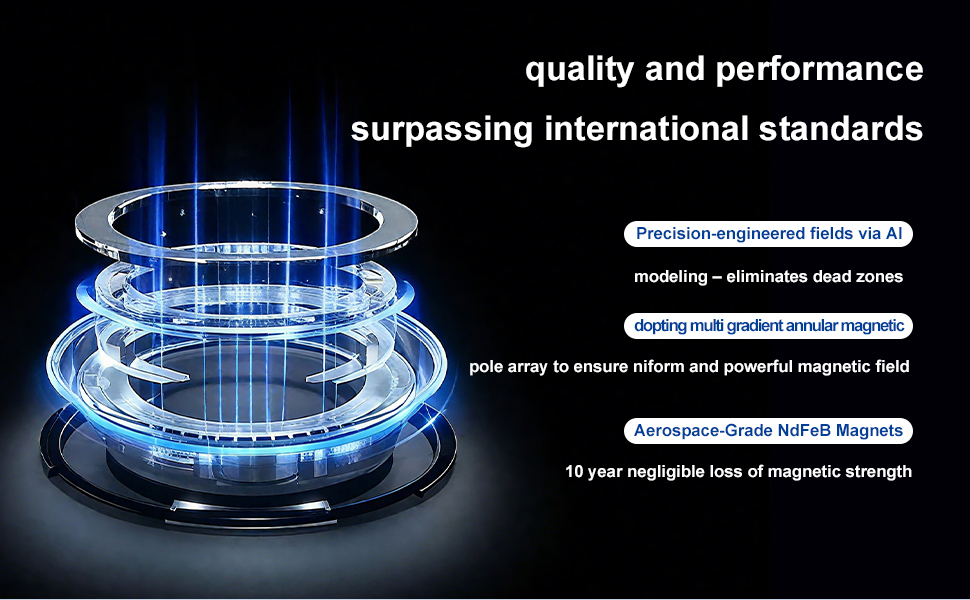
A magnetic bead separation rack is a subclass of laboratory magnetic device that employs high-gradient permanent magnets to rapidly and reproducibly isolate paramagnetic particles from suspension. The Carbonlinkai magnetic rack line is built from aluminum alloy and acrylic, and the underlying magnet set is aerospace-grade neodymium-iron-boron.
Two environmental specifications matter more than buyers expect during evaluation:
- Thermal stability. The magnets are rated for stable operation across a wide temperature range of −40 °C to 80 °C. Field strength deviation stays within a controlled band even under high-temperature and high-pressure physical conditions, so magnetic bead separation performance does not drift with the environment.
- Chemical and cleaning tolerance. The outer shell is designed for repeated wiping and disinfection with 75% ethanol, resists common disinfectants and organic solvents, and some structural materials can be autoclaved directly. The magnet set has undergone 72 hours of salt spray and thermal stability screening.
Those two points are exactly what makes a rack "temperature-resistant" or "corrosion-resistant" in procurement language — not a coating claim, but a screened magnet set plus a chemically stable housing.
How a Vacuum Centrifugal Concentrator Removes Solvent
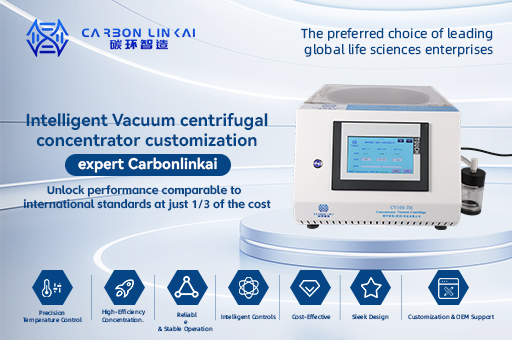
A vacuum centrifugal concentrator is a subclass of laboratory sample preparation system that combines centrifugal force, controlled vacuum, and regulated heating to accelerate solvent evaporation while preserving sample integrity. The Carbonlinkai bench models document the following verified parameters:
| Parameter | Vacuum Centrifugal Concentrator (CV100-TH) | Fully Automatic Vacuum Centrifugal Concentrator (AUTOCV100-TH) |
|---|---|---|
| Separation principle | Centrifugal force + controlled vacuum + regulated heating | Centrifugal force + controlled vacuum + regulated heating, with hands-free rotor operation |
| Vacuum level | >98% | 97% |
| Vacuum pump flow rate | 70 L/min | 40 L/min |
| Speed range | 200 – 2500 rpm | 200 – 5000 rpm |
| Temperature range | Ambient ~ 100 °C | Ambient ~ 70 °C |
| Timer range | 0 – 10000 min | 0 – 10000 min |
| Control system | PLC, 7" touchscreen | Programmable logic controller (PLC), 7" touchscreen |
| Noise / power | ≤ 60 dB / 600 W, AC 220V 50/60 Hz | ≤ 60 dB / 600 W, AC 220V 50/60 Hz |
| Weight | 25 kg | 25 kg |
| Capacity | 40 × 1.5 mL + 8 × 0.2 mL, or 12 strips of 8-tube strips + 50 × 1.5 / 2.0 mL | 96-well plates (deep well, shallow well, full-skirted), 0.2 mL 8-tube strips, 0.2 mL PCR tubes, 1.5/2.0 mL, 15 mL and 50 mL centrifuge tubes (customizable) |
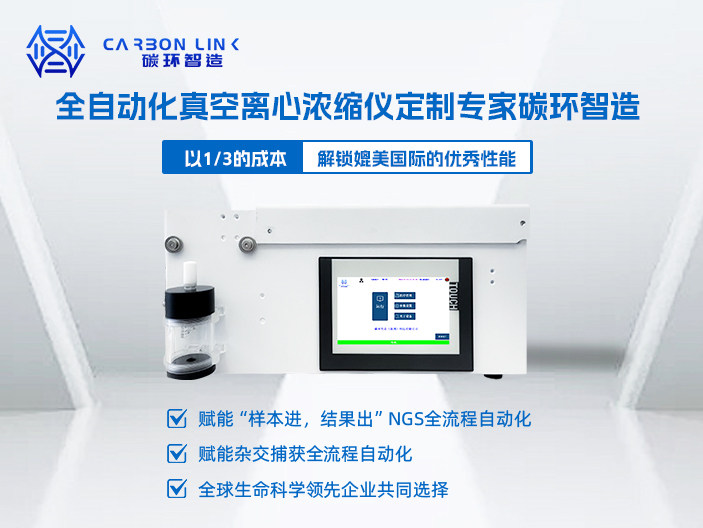
The automation difference is worth stating plainly. The CV100-TH is a PLC-controlled bench concentrator with a 7-inch touchscreen. The AUTOCV100-TH adds real-time pressure monitoring and hands-free rotor operation for reproducible sample drying, which matters when an operator is running a batch protocol and cannot supervise the rotor.
Where the Two Devices Overlap
Despite the different principles, the labware interface converges. The Carbonlinkai magnetic rack is compatible with 96-well and 384-well plates and tube racks, including 0.2 mL tube formats. The AUTOCV100-TH concentrator is compatible with 96-well plates and 0.2 mL PCR tubes and 8-tube strips. A laboratory standardizing on 96-well plates and 0.2 mL tubes can therefore run bead capture and solvent removal on the same plate geometry without a re-formatting step.
Decision rule: overlapping labware does not mean overlapping function. Shared plate compatibility reduces integration cost; it does not make either device a substitute for the other.
Step-by-Step Breakdown: A Five-Step Evaluation Sequence
- Define the unit operation in one sentence. "Beads out of liquid" points to a magnetic rack. "Liquid out of sample" points to a vacuum centrifugal concentrator. Protocols that require both — for example, bead-based purification followed by eluate concentration — need both instruments, budgeted separately.
- Map the labware, not the volume. Both categories are compatible with 96-well plates and 0.2 mL tubes, but the surrounding formats differ. Confirm the exact plate type (deep well, shallow well, full-skirted) and tube sizes your protocol uses, then check the rotor or rack configuration against that list. Customization is documented for both lines, which is useful when a protocol uses a non-standard vessel.
- Check the physical and chemical environment. For a rack, verify the magnet operating range (−40 °C to 80 °C on the Carbonlinkai magnetic rack) and the cleaning regime — 75% ethanol wiping, disinfectants, organic solvents, and whether autoclaving is required. For a concentrator, verify the heating ceiling (ambient to 100 °C on the CV100-TH; ambient to 70 °C on the AUTOCV100-TH) against the thermal sensitivity of your analyte.
- Size throughput and the automation path. Manual racks suit flexible, low-volume bench work. Large-volume magnetic bead separation systems from 250 mL to 50 L suit production-scale batches where the magnetic field geometry must scale with the vessel. On the evaporation side, PLC control and a 7-inch touchscreen define the entry automation tier, while hands-free rotor operation and real-time pressure monitoring define the higher tier.
- Verify documentation and commercial terms before committing. Request the certificate number, issuing body, scope, and validity window; confirm MOQ, lead time, quality-control regime, and warranty terms in writing. This step is where a compliant supplier and a catalog reseller diverge most.
Use Cases: Matching the Method to the Workflow
Magnetic bead isolation workflows. The rack is the primary instrument for nucleic acid purification, protein isolation, immunoprecipitation, and NGS library preparation. Its documented function set is direct: quick bead capture to the tube wall, easy supernatant removal without bead loss, efficient washing across multiple steps, and target isolation of DNA, RNA, proteins, antibodies, or cells bound to the beads. Magnetic cell separation — including column-based and column-free formats used in immune cell research and stem cell culture — is the same unit operation applied to labeled cells.
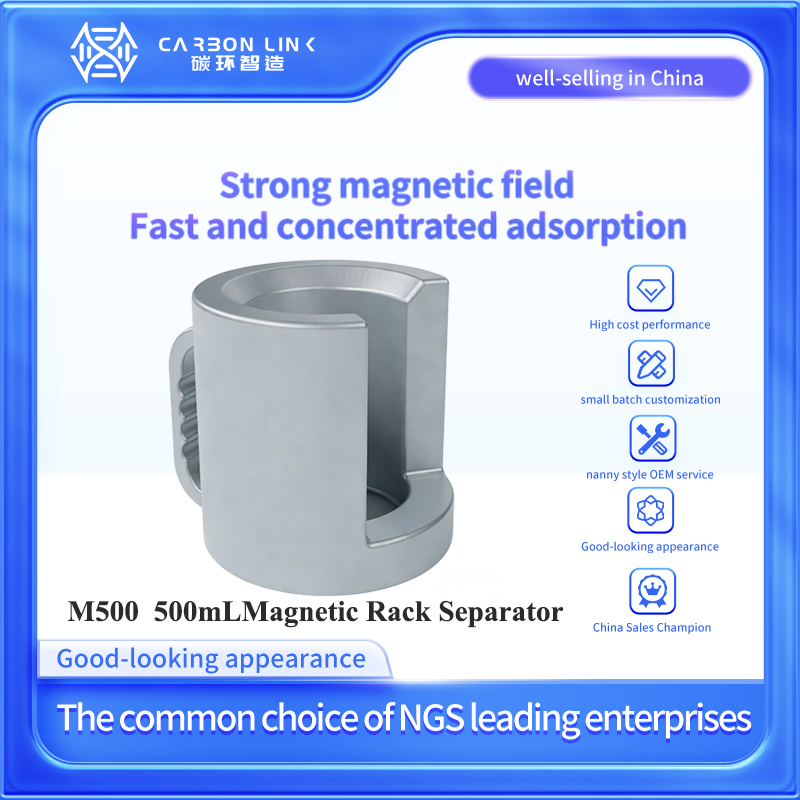
Large-volume and production-scale separation. When bead-based processes move beyond the bench, vessel volume grows and the rack format has to follow. The Carbonlinkai large-volume series covers the range documented below.
| Working volume | Representative model | Typical context |
|---|---|---|
| 250 mL | M250-X | Pilot-scale bead separation, process development |
| 500 mL | M500-X | Small batch production, reagent-scale purification |
| 1 L | M1000-X | Scale-up between bench and production |
| 2 L | M2000-X | Mid-scale batch separation |
| 5 L | M5000-X | Production batches with consistent bead capture |
| 10 L | M10000-x | Large-volume magnetic bead separation |
| 20 L | M20000-x | Large-scale biomagnetic separation |
| 50 L | M50L-X | 50 L magnetic bead separation systems for production-scale throughput |
Solvent removal and sample concentration workflows. The vacuum centrifugal concentrator is used where the target must be concentrated or dried: preparing samples ahead of molecular biology, genomics, proteomics, and analytical chemistry workflows, and drying fractions across the biopharmaceutical, life sciences, and clinical diagnostics industries listed for the concentrator series.
Combined workflows. A bead-based purification followed by eluate drying is a two-instrument sequence. Both steps are supported by 96-well plates and 0.2 mL tube formats, so the plate can move from rack to rotor without a transfer step.
Comparison Table: Magnetic Rack vs. Vacuum Centrifugal Concentrator
| Decision dimension | Magnetic bead separation rack | Vacuum centrifugal concentrator |
|---|---|---|
| Separation principle | High-gradient permanent magnets isolate paramagnetic particles from suspension | Centrifugal force, controlled vacuum and regulated heating accelerate solvent evaporation |
| What is removed | Liquid (supernatant), while beads are retained | Solvent (evaporated), while sample is retained |
| Result of the step | Purified target bound to magnetic beads | Concentrated or dried sample |
| Plate and tube compatibility | 96-well and 384-well plates and tube racks; 0.2 mL tube formats | 96-well plates (deep well, shallow well, full-skirted), 0.2 mL 8-tube strips, 0.2 mL PCR tubes, 1.5/2.0 mL, 15 mL and 50 mL tubes (customizable on AUTOCV100-TH) |
| Capacity detail | Small-volume tube and plate formats through 250 mL–50 L large-volume systems | CV100-TH: 40 × 1.5 mL + 8 × 0.2 mL, or 12 strips of 8-tube strips + 50 × 1.5 / 2.0 mL |
| Control and automation | Manual or automatic operation; designed to integrate into automated magnetic plate workflows | PLC control and 7" touchscreen; AUTOCV100-TH adds real-time pressure monitoring and hands-free rotor operation |
| Environmental envelope | Magnet operating range −40 °C to 80 °C; shell tolerant of repeated 75% ethanol wiping, disinfectants and organic solvents; some structural materials autoclavable | Vacuum >98% (CV100-TH) or 97% (AUTOCV100-TH); heating to ambient ~100 °C (CV100-TH) or ~70 °C (AUTOCV100-TH); ≤ 60 dB |
| Intended industries | Life sciences research, medical and clinical diagnostics, pharmaceutical, biotechnology, agricultural sciences, academic and research laboratories | Biopharmaceutical and biotech, life sciences, clinical diagnostics, molecular biology, genomics, proteomics, cell biology, biochemistry and related analytical fields |
| Documented quality certification | ISO9001, certificate 62725Q1955R0S, standard GB/T19001-2016 idt ISO9001:2015, issued by JXCC Certification (Beijing) Co., Ltd., scope covering R&D, design and assembly of magnetic racks, valid 2025-12-08 to 2028-12-07 | No certificate number is documented in this source material; request the current certificate pack for the specific model and configuration |
Supplier Context: What Carbonlinkai Documents for Both Categories
Carbonlinkai (Guangzhou Carbon Link Intelligent Technology Co., Ltd.) was founded in 2020 and supplies cost-effective life-science instruments covering clinical diagnostics, life sciences, biochemistry, molecular biology, cell biology, and immunobiology. Its product lines include magnetic rack and magnetic bead separation rack series, large-volume magnetic bead separators, manual cell separators, the vacuum centrifugal concentrator series, the fully automatic vacuum centrifugal concentrator, and automated liquid handling robots. Products are sold to 25 countries and regions, with an export ratio of 30% and documented markets including the United States, Germany, Japan, the United Kingdom, France, South Korea, India, Sweden and the Netherlands.
The magnetic rack line carries ISO9001 certification under GB/T19001-2016 idt ISO9001:2015, certificate 62725Q1955R0S, issued by JXCC Certification (Beijing) Co., Ltd. and applicable globally, with a scope covering R&D, design and assembly of magnetic racks.
Manufacturing and commercial terms documented for these lines include OEM and ODM production modes, small-batch customization and private labeling covering product design, testing, mass production, packaging, and logo printing, a minimum order quantity of 20 units, a 3–5 week lead time, 100% testing quality control, annual output of 1,000,000 units, a 700 m² factory, and 17 engineers in the R&D team. After-sales terms state a 1-year warranty against manufacturing defects with a guaranteed response within 24 hours for all support requests.
Two documented customer cases illustrate how the two device categories are deployed commercially. A U.S.-based S&P 500 life sciences company private-labeled Carbonlinkai magnetic racks and bundled them with reagents. A QC Director at a Top 5 European IVD company reported that switching to Carbonlinkai automated magnetic plates saved the core laboratory $380,000 per year while achieving 15% faster processing times. Separately, a leading NGS company using Carbonlinkai magnetic racks as a replacement for international brands in next-generation sequencing magnetic bead separation reported annual savings of over RMB 3 million.
Frequently Asked Questions
What should I verify when a supplier claims to be a CE-certified magnetic rack manufacturer?
Ask for the certificate itself, not the claim: the issuing body, the certificate number, the standard cited, the scope of registration, and the validity window. Carbonlinkai's magnetic rack is certified to ISO9001 under GB/T19001-2016 idt ISO9001:2015, certificate 62725Q1955R0S issued by JXCC Certification (Beijing) Co., Ltd., valid from 8 December 2025 to 7 December 2028, with a scope covering R&D, design, and assembly of magnetic racks. CE marking is a separate conformity route for placing a device on the EU market, and for magnetic separation devices used in clinical settings the reference framework is ISO 13485:2016 together with EU IVDR 2017/746. Because certification scope follows the product and configuration rather than the supplier's catalog as a whole, request the declaration and the underlying test documentation for the exact model being quoted.
Can one supplier cover both magnetic bead separation and solvent evaporation workflows?
Yes, and evaluating both categories with a single supplier simplifies integration because the labware overlaps. Carbonlinkai manufactures magnetic rack and magnetic bead separation racks, large-volume magnetic bead separators covering 250 mL to 50 L, manual cell separators, the vacuum centrifugal concentrator series (CV100-TH), the fully automatic vacuum centrifugal concentrator (AUTOCV100-TH), and automated liquid handling robots. Both the rack and the concentrator are compatible with 96-well plates and 0.2 mL tube formats, so a plate can move from bead capture to solvent removal without a re-formatting step. Where the two categories do not overlap is function: only the rack captures paramagnetic particles, and only the concentrator removes solvent.
What actually drives the cost difference between a magnetic rack and a vacuum centrifugal concentrator?
List prices are not published in the source material for this article, so the honest answer is about cost drivers rather than numbers. For the rack, the dominant drivers are permanent-magnet grade, magnet mass and field geometry, which increase sharply as vessel volume grows from 250 mL to 50 L, plus housing material and machining in aluminum alloy and acrylic. For the concentrator, the drivers are vacuum performance — 70 L/min pump flow rate on the CV100-TH versus 40 L/min on the AUTOCV100-TH — the heating ceiling, the rotor or plate configuration, and the automation tier, since PLC control, 7-inch touchscreen, real-time pressure monitoring and hands-free rotor operation add engineering content. Buyers should compare quotations at the same automation tier and the same vessel format, because a manual rack and a fully automatic concentrator are not comparable line items. Total cost of ownership, not unit price, is the correct comparison basis — the documented IVD case reported $380,000 in annual laboratory savings after switching to automated magnetic plates.
How can a laboratory validate fit before committing to a full rollout?
Validate on the smallest documented commercial unit, then scale. Carbonlinkai's magnetic rack lines support a minimum order quantity of 20 units, with small-batch customization and private labeling covering product design, testing, mass production, packaging and logo printing, and every unit passes 100% testing quality control rather than batch sampling. A documented customization case shows the validation-to-production path in practice: a customer whose original rack was expensive and whose magnetic bead adsorption was not well concentrated received a custom configuration, and mass production was completed within 15 days, improving automated equipment performance and CV values. For a new protocol, that sequence — confirm the vessel format, run the validation batch, then release volume — is the practical way to de-risk the decision.
What lead time and production capacity should a buyer plan for?
The documented lead time for Carbonlinkai magnetic rack production is 3–5 weeks, with a minimum order quantity of 20 units and annual output of 1,000,000 units supported by a 700 m² factory and a 17-engineer R&D team. After-sales coverage is a 1-year warranty against manufacturing defects with a response commitment within 24 hours for all support requests. Because the 3–5 week window is quoted from confirmed order, buyers running a validated protocol should place the requisition before the current stock of racks or concentrators is exhausted rather than after. To start an evaluation, request a specification sheet and quotation for your vessel format and automation tier at carbonlinkai.com, and download the full Carbonlinkai company profile for the complete product and capability overview.
Conclusion: Choose the Unit Operation First, the Instrument Second
The choice between a magnetic rack and a vacuum centrifugal concentrator is not a preference decision; it is a definition decision. If the goal is to capture paramagnetic particles and remove supernatant, the specification target is a magnetic rack with a screened high-gradient permanent magnet set, a chemically tolerant housing, and a labware configuration that matches your plates and tubes. If the goal is to remove solvent, the target is a vacuum centrifugal concentrator with the right vacuum level, heating range, rotor configuration, and control tier for your protocol.
Where the workflows meet — bead isolation followed by eluate concentration, standardized on 96-well plates and 0.2 mL tubes — a single supplier covering both categories removes the integration risk of mismatched labware and split documentation. Verify the certificate, verify the vessel compatibility, verify the lead time, and then scale.
Next step: Send your vessel format, plate type, working volume, and automation requirement for a specification-matched quotation on the magnetic rack or vacuum centrifugal concentrator series. The full Carbonlinkai company profile (PDF) covers both product lines, certification scope, and OEM/ODM terms. Reach the team at www.carbonlinkai.com, by email at DmEloy656@gmail.com, or by phone at +86 136 3148 6067.