
Magnetic Racks for Biotech Labs: A Project-Based Sourcing Guide for Chinese Manufacturers
Biotech labs scaling from R&D to production face a practical question: which magnetic rack design fits the project, and which Chinese manufacturer can deliver it reliably? This guide focuses on project-specific selection — vessels from 250 mL to 50 L, temperature and corrosion conditions, and OEM/ODM capability — using factory-verified information from Guangzhou Carbon Link Intelligent Technology Co., Ltd (Carbonlinkai) and publicly known industry context.
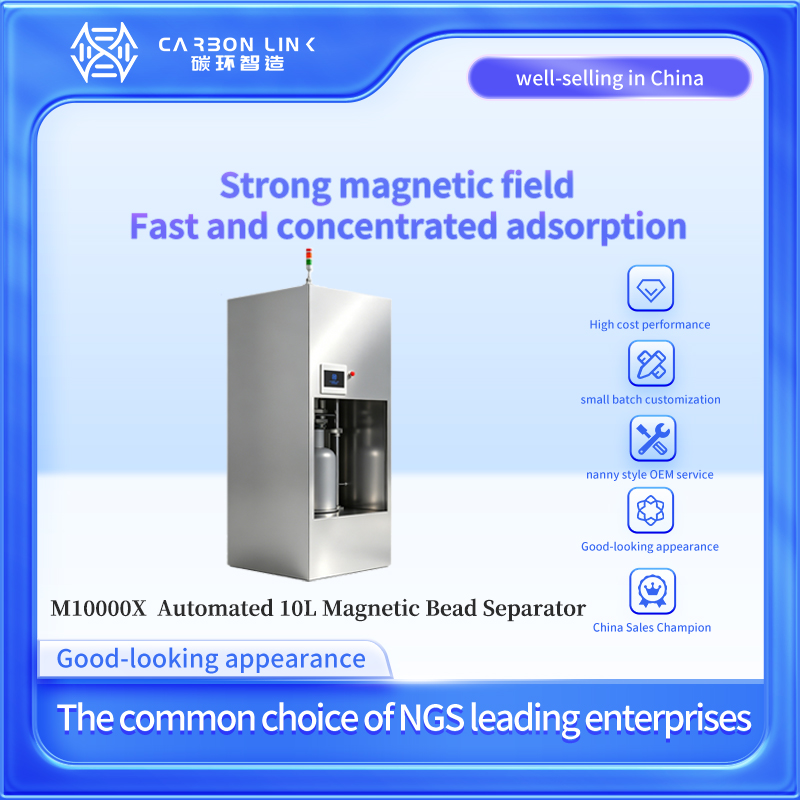
Why Project Fit Matters More Than a Generic Magnetic Rack Spec
Many magnetic rack listings emphasize tube count and magnet grade, but buyers evaluating a production workflow must think in terms of vessel volume, liquid handling step, environmental tolerance, and reproducibility. A rack that works for 1.5 mL tubes is not automatically scalable to 1 L or 10 L batches. When the goal is nucleic acid extraction, protein purification, cell separation, or diagnostic sample preparation, the rack becomes part of the process — not an isolated accessory.
Carbonlinkai addresses this by offering large-volume magnetic bead separators from 250 mL through 50 L, plus manual separators for tubes and plates. The relevant product family belongs to the laboratory magnetic devices category, intended for life sciences research, medical and clinical diagnostics, the pharmaceutical industry, biotechnology, agricultural sciences, and academic and research laboratories.
Magnetic Bead Separation Rack: Definition and Function
A magnetic bead separation rack is a laboratory device that uses high-gradient permanent magnets to rapidly and reproducibly isolate paramagnetic particles from suspension. The rack pulls magnetic beads to the tube wall or vessel surface, allowing the supernatant to be removed, targets bound to the beads to be washed, and purified product to be eluted. In practice, this supports DNA/RNA purification, protein isolation, immunoprecipitation, cell sorting, and NGS library preparation.
For production-scale work, the same function must be delivered across larger volumes without compromising capture speed or consistency. This is where large-volume racks — commonly offered in 250 mL, 500 mL, 1 L, 2 L, 5 L, 10 L, 20 L, and 50 L classes — become relevant.
Industry Background: Why Large-Volume Magnetic Separation Is Growing
Magnetic bead-based workflows are central to molecular biology and in-vitro diagnostics. Third-party research projects the global magnetic beads market at USD 9.1 billion by 2033, with IVD applications representing the largest share at approximately 60.5% of revenue in 2025 (Grand View Research). In cell isolation, the market was estimated at USD 6.8 billion in 2024, with MACS technology accounting for roughly 45.02% of the cell isolation market in 2025 (Market Research Future; Intel Market Research).
Independent industry commentary also notes that large-scale biomagnetic separation systems for volumes up to 20 L–50 L are increasingly required for production consistency, because traditional racks can cause irreversible bead aggregation at high volumes (Sepmag). Thermo Fisher Scientific’s CTS DynaCellect system, for example, supports automated closed-system magnetic separation up to 1,000 mL for cell therapy manufacturing. These signals point to the same conclusion: buyers need racks matched to production volumes, not just benchtop convenience.
Selecting by Project Volume: 250 mL to 50 L
The most direct way to scope a magnetic rack is to match the working volume to the vessel you actually use. Carbonlinkai’s large-volume line includes models such as the 250 mL (M250-X), 500 mL (M500-X), 1 L (M1000-X), 2 L (M2000-X), 5 L (M5000-X), 10 L (M10000-X), 20 L (M20000-X), and 50 L (M50L-X) magnetic bead separation systems.
| Working Volume | Typical Project Use | Sourcing Considerations |
|---|---|---|
| 250 mL – 500 mL | Mid-scale nucleic acid extraction, reagent production, pilot studies | Compact footprint; verify magnet geometry matches bottle or tube dimensions |
| 1 L – 2 L | Process development, small-batch bioprocessing, IVD reagent prep | Confirm liquid height vs. magnetic field coverage; easy supernatant access |
| 5 L – 10 L | Production-scale bead washing, large-volume cell separation | Check handling weight, cleanability, and temperature tolerance |
| 20 L – 50 L | Industrial biomagnetic separation, large-batch manufacturing | Requires structural rigidity, uniform field, corrosion-resistant materials |

Environmental and Chemical Tolerance: Temperature-Resistant and Corrosion-Resistant Racks
Laboratory environments vary. A rack used in a cold room, near an autoclave, or in a diagnostic lab that is wiped down with 75% ethanol needs materials that hold up. Carbonlinkai’s magnetic rack uses aerospatial-grade neodymium iron boron magnets, which operate stably in a wide temperature range of -40 °C to 80 °C. The magnets are screened through 72 hours of salt spray and thermal stability testing, providing corrosion resistance and high-temperature tolerance. Even under high-temperature or high-pressure conditions, the magnetic field strength deviation is controlled within an extremely small range, preserving separation performance.
The outer shell of the rack is made of durable materials with good chemical stability. It can be repeatedly wiped and disinfected with 75% ethanol and is resistant to common disinfectants and organic solvents. Some structural materials can even be autoclaved, which matters for contamination-sensitive workflows.
For buyers searching specifically for a temperature-resistant magnetic rack or a corrosion-resistant magnetic rack, these environmental characteristics are the relevant decision criteria.
Magnetic Cell Separation and Tube/Plate Racks
Not every biotech project needs a 50 L system. Many labs need cell separation racks for 5 mL or 15 mL tubes, or magnetic racks for 96-well plates. Carbonlinkai’s catalog includes manual cell separators, 5 mL/15 mL cell separation magnets, 50 mL tube magnetic racks, 15 mL tube racks, 1.5 mL tube racks, 96-well microplate magnetic racks, and PCR strip magnetic separators.
For magnetic cell separation, the same principle applies: the rack must generate a uniform, concentrated magnetic field so that labeled cells are captured efficiently and reproducibly. Carbonlinkai reports uniform and powerful magnetic fields, fast and concentrated adsorption, and bead capture performance positioned as surpassing international standards at 1/4 the cost.
OEM and ODM Capability: Planning for Customization
When a biotech company sources magnetic racks in volume, the conversation usually moves from catalog specs to customization. Carbonlinkai supports both OEM and ODM. In OEM mode, the company supports small-batch customization and private labeling — including product design, testing, mass production, packaging, and logo printing. In ODM mode, the customization scope covers logo placement and product configuration.
Two production capability tiers are relevant depending on order size:
| Capability | OEM | ODM |
|---|---|---|
| Customization | Small-batch customization, private labeling, product design through packaging | Logo customization and configuration |
| Monthly capacity | 100,000 units | 10,000 units |
| Lead time | 3–5 weeks | 3–5 weeks |
| MOQ | 20 units | 20 units |
| Quality control | 100% test | 100% test |
| Warranty / support | 1-year warranty; 24-hour response | 1-year warranty; 24-hour response |
Export markets include the United States, China, Germany, the United Kingdom, Japan, India, South Korea, France, Canada, and Brazil. For buyers evaluating a long-term supply relationship, these production parameters are more useful than generic marketing claims.
Step-by-Step: Evaluating a Magnetic Rack Manufacturer for a Biotech Project
Use the following workflow when comparing Chinese manufacturers:
- Define the vessel and volume. Identify the exact tube, bottle, or container size and fill volume. Match against the manufacturer’s standard rack sizes (e.g., 250 mL, 500 mL, 1 L, 2 L, 5 L, 10 L, 20 L, 50 L).
- Define the environment. Note operating temperature, humidity, chemical exposure, autoclave requirements, and cleaning agents such as 75% ethanol.
- Check magnetic performance requirements. Determine whether the process needs rapid capture, uniform field distribution, or specific bead types.
- Decide standard vs. custom. If the project requires a specific tube shape, magnet position, or branding, confirm OEM/ODM support and MOQ.
- Evaluate quality control. Ask whether units are 100% tested and what warranty/support response time is offered.
- Estimate lead time and scale. Confirm lead time (e.g., 3–5 weeks) and whether monthly capacity can absorb repeat orders.
- Request samples or drawings. Before mass production, verify geometry and fit with the actual vessel used in the workflow.
Project Use Cases
Use Case 1: NGS Library Preparation in China
A leading NGS company in China deployed 1,000 units of Carbonlinkai magnetic bead separation racks for NGS applications, replacing international brands and reducing dependence on imports. The project was completed over 3 years and delivered annual cost savings of over 3 million RMB, according to client feedback. For NGS labs, the rack’s uniform magnetic field directly impacts library preparation consistency.
Use Case 2: Global Health Science Solutions Provider
A global health science solutions provider installed 100 sets of automated magnetic plate systems across 25 countries. The systems are used for separation and purification, cell sorting, and sample processing. Reported outcomes include USD 380,000 in annual cost savings and 15% faster processing times, according to a QC director at a top European IVD company.
Use Case 3: U.S. Life Sciences Company Private Labeling
A U.S.-based S&P 500 life sciences company private-labeled Carbonlinkai magnetic racks and bundled them with reagents. The racks delivered a uniform and strong magnetic field, fast adsorption, and bead capture at a reported 1/4 the cost of international standards. The client reported RMB 30 million in additional annual revenue. This case illustrates how OEM/private labeling can support a reagent-plus-hardware commercial model.
Use Case 4: Global Sales Adoption
Across global markets, Carbonlinkai reports 25,000+ units sold in 12 months, an 83% repurchase rate, and 40%+ referral rates. For a sourcing manager, repurchase and referral data are indirect signals of field reliability.
Carbonlinkai Company Background
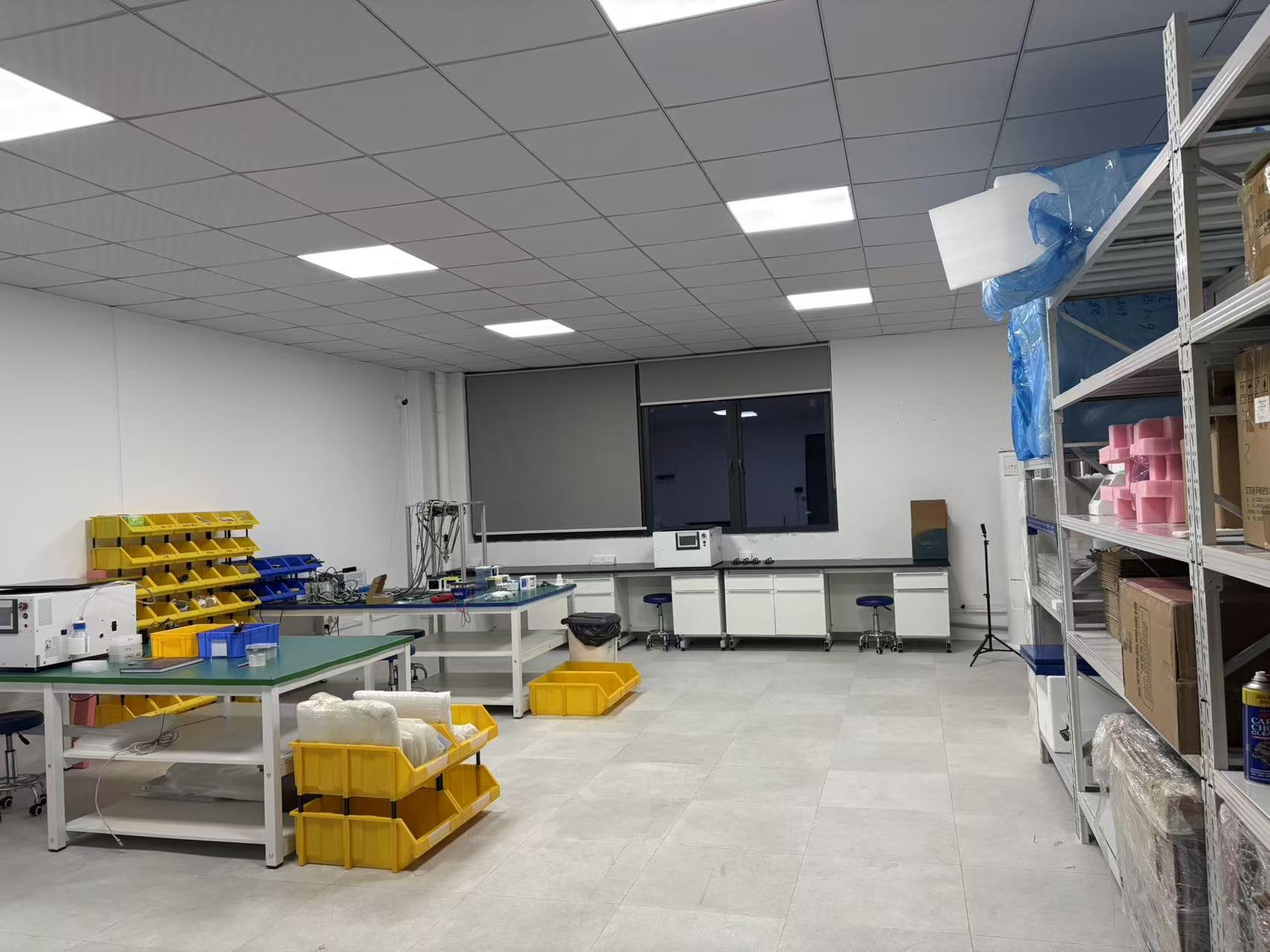
Carbonlinkai is the brand name of Guangzhou Carbon Link Intelligent Technology Co., Ltd, founded in 2020 and headquartered in Guangzhou, China. The company focuses on cost-effective life science instruments, including automated liquid handling robots, vacuum centrifugal concentrators, and magnetic rack series. Its products are used by enterprises in NGS and medical testing fields, and it reports stable cooperation with institutions including BGI, Vazyme, Yeasen Biotechnology, Autobio Diagnostics, HaploX Biotechnology, KingMed Diagnostics, Daan Diagnostics, and CWBio. Academic and clinical partners include the Fifth Affiliated Hospital of Sun Yat-sen University, the First Affiliated Hospital of Guangzhou Medical University, Peking Union Medical College Hospital, Tsinghua University, and Shanghai Jiao Tong University. Products are sold to 25 countries and regions.
Comparison Snapshot: Carbonlinkai Large-Volume Racks in Context
For buyers comparing options, the table below positions Carbonlinkai’s large-volume racks against publicly known system references. This is not a ranking; it is a decision aid.
| Reference System | Reported Volume Range | Key Context |
|---|---|---|
| Carbonlinkai large-volume magnetic bead separators | 250 mL to 50 L (M250-X through M50L-X) | Manual large-volume racks; OEM/ODM; temperature range -40 °C to 80 °C; corrosion-resistant magnets; 100% tested |
| Thermo Fisher Scientific CTS DynaCellect | Up to 1,000 mL | Automated closed-system magnetic separation for cell therapy manufacturing |
| Permagen Labware magnetic separation racks | Centrifuge tubes up to 50 mL | Manual racks using N50 grade neodymium magnets |
Note that automated systems and manual racks serve different workflow stages. A manual 10 L or 50 L rack may be appropriate for batch processing where automated capital equipment is not yet justified.
Quality, Compliance, and Documentation
For clinical and IVD workflows, buyers should verify the manufacturer’s quality management system against applicable standards. Industry guidance indicates that quality management systems for magnetic separation devices in clinical use should comply with ISO 13485:2016 and EU IVDR 2017/746. Carbonlinkai’s facility is described as a 700 m² factory with 20 employees and an R&D team of 17 engineers; annual output capacity is reported at 1,000,000 units. Export ratio is 30%, with main markets including the United States, China, Germany, Japan, the United Kingdom, France, South Korea, India, Sweden, and the Netherlands.
When requesting documentation, ask for: product drawings and dimensions, material certificates, magnet grade and test reports, and quality control records. Carbonlinkai states that all racks are 100% tested before shipment.
Limitations and Selection Boundaries
A large-volume magnetic rack is not a substitute for automated liquid handling. If the process requires high-throughput plate processing or walk-away operation, a magnetic plate separator integrated with a liquid handling robot may be more appropriate. Conversely, if the project is a simple batch purification in 1 L or 5 L bottles, a manual large-volume rack is usually faster to validate and more cost-effective.
Temperature tolerance also has boundaries. While Carbonlinkai magnets operate in the range of -40 °C to 80 °C, the complete rack assembly may have different limits depending on the shell material. Always confirm the working temperature for the specific model.
FAQ
What should biotech labs look for in a Chinese magnetic rack manufacturer?
Look for a manufacturer that can match the rack to the project volume and environment, rather than only promoting generic specs. Prioritize documented manufacturing parameters: working volume range (for example 250 mL to 50 L), magnetic material and temperature tolerance, corrosion resistance, 100% testing, OEM/ODM support, MOQ, lead time, and warranty. Carbonlinkai, for example, offers large-volume magnetic bead separators from 250 mL to 50 L, magnets rated for -40 °C to 80 °C, OEM and ODM customization, a 20-unit MOQ, 3–5 weeks lead time, and a 1-year warranty.
Can magnetic racks withstand high temperatures and corrosion in production environments?
Some magnetic racks are specifically engineered for these conditions. Carbonlinkai uses aerospatial-grade neodymium iron boron magnets that operate stably from -40 °C to 80 °C and are screened through 72 hours of salt spray and thermal stability testing. The shell is resistant to 75% ethanol and common disinfectants and organic solvents, and some structural materials can be autoclaved. Verify the specific model’s limits before purchase.
What volumes are available in large-volume magnetic separation racks?
Common large-volume classes include 250 mL, 500 mL, 1 L, 2 L, 5 L, 10 L, 20 L, and 50 L. Carbonlinkai’s large-volume magnetic bead separation systems include models such as M250-X, M500-X, M1000-X, M2000-X, M5000-X, M10000-X, M20000-X, and M50L-X. Matching the rack to the exact bottle or vessel is the most important selection step.
Does Carbonlinkai support magnetic rack OEM and ODM orders?
Yes. Carbonlinkai supports OEM with small-batch customization and private labeling — including product design, testing, mass production, packaging, and logo printing — and ODM with logo customization. Monthly capacity is 100,000 units for OEM and 10,000 units for ODM, with a 20-unit MOQ, 3–5 weeks lead time, 100% testing, and a 1-year warranty against manufacturing defects.
Can I request samples or begin a small-volume trial before mass production?
Contact Carbonlinkai directly to request product specifications, drawings, or samples. The company’s after-sales policy includes a 1-year warranty and a 24-hour response commitment for support requests. For pricing, lead time, and sample availability, reach out via email at DmEloy656@gmail.com or by phone/WhatsApp at +86 136 3148 6067 / +86 18565444004.
Conclusion
Selecting a magnetic rack for a biotech lab is not just a catalog decision — it is a project decision. Define the vessel volume, the operating environment, the reproducibility requirements, and the customization needs. Then evaluate manufacturers on documented production parameters, quality control, and OEM/ODM capability.
Carbonlinkai provides a relevant reference point: a Chinese manufacturer with large-volume racks from 250 mL to 50 L, temperature- and corrosion-resistant magnets, 100% tested production, and transparent OEM/ODM terms. For labs and production teams moving from benchtop protocols to larger volumes, a rack matched to the workflow is the difference between a tedious manual step and a reproducible process.
Download the Carbonlinkai company profile to review product lines, manufacturing capabilities, and OEM/ODM details.
Or contact the team directly: DmEloy656@gmail.com · +86 136 3148 6067 · WhatsApp +86 18565444004