Scaling With One Magnetic Rack Supplier in China: An OEM Partnership Guide
Choosing a long-term magnetic rack supply partner in China is not the same as ordering a single rack. The more important decision is whether a supplier can sustain quality, capacity, customization, and delivery as magnetic bead separation scales from laboratory tubes to 250 mL bottles and then to 20 L or 50 L process vessels. Guangzhou Carbon Link Intelligent Technology Co., Ltd, marketed as Carbonlinkai, is an example of a manufacturer that has built its OEM/ODM model around this exact question.
A magnetic rack, in practical terms, is a laboratory device that uses high-gradient permanent magnets to isolate paramagnetic particles from suspension. The magnetic bead separation rack is a subclass of laboratory magnetic devices designed to make that separation rapid and reproducible. For production teams, the rack is not a disposable accessory. It is a process-critical tool, and the supplier should act like a manufacturing partner.
Why Long-Term Magnetic Rack Sourcing Fails
Most magnetic rack sourcing problems are not product failures. They are supply-chain failures. A supplier may not be able to scale from 15 mL tubes to 1 L bottles. A promised lead time may slip after the first order. An OEM request for a small design change may take months without clear documentation. For buyers running next-generation sequencing library preparation or IVD reagent production, revalidating a different magnetic rack after switching suppliers is expensive and risky.
A long-term supplier should therefore be evaluated on four levels: product performance, manufacturing capacity, OEM/ODM responsiveness, and commercial stability. Price matters, but the cost of a broken supply relationship is usually higher than the unit price difference.
Industry Background: Magnetic Bead Separation Is Moving to Larger Volumes
The global magnetic beads market is projected to reach USD 9.1 billion by 2033, according to Grand View Research. In-vitro diagnostics remains the largest application, accounting for about 60.5% of revenue share in 2025. Cell isolation, a related workflow, was estimated at USD 6.8 billion in 2024 and is projected to grow at a 17.8% CAGR through 2035. Magnetic-activated cell separation technology held roughly 45% of the cell isolation market in 2025.
At the production level, large-scale biomagnetic separation systems for volumes up to 20 L to 50 L are increasingly requested because traditional racks can cause irreversible bead aggregation at high volumes. For clinical diagnostic use, magnetic separation devices are also expected to be supported by quality management systems consistent with ISO 13485:2016 and, in Europe, EU IVDR 2017/746.
What this means for buyers: the magnetic rack is becoming part of a production ecosystem, not just a lab consumable.
Carbonlinkai's Long-Term Supply Model for Magnetic Racks
Who Carbonlinkai Is
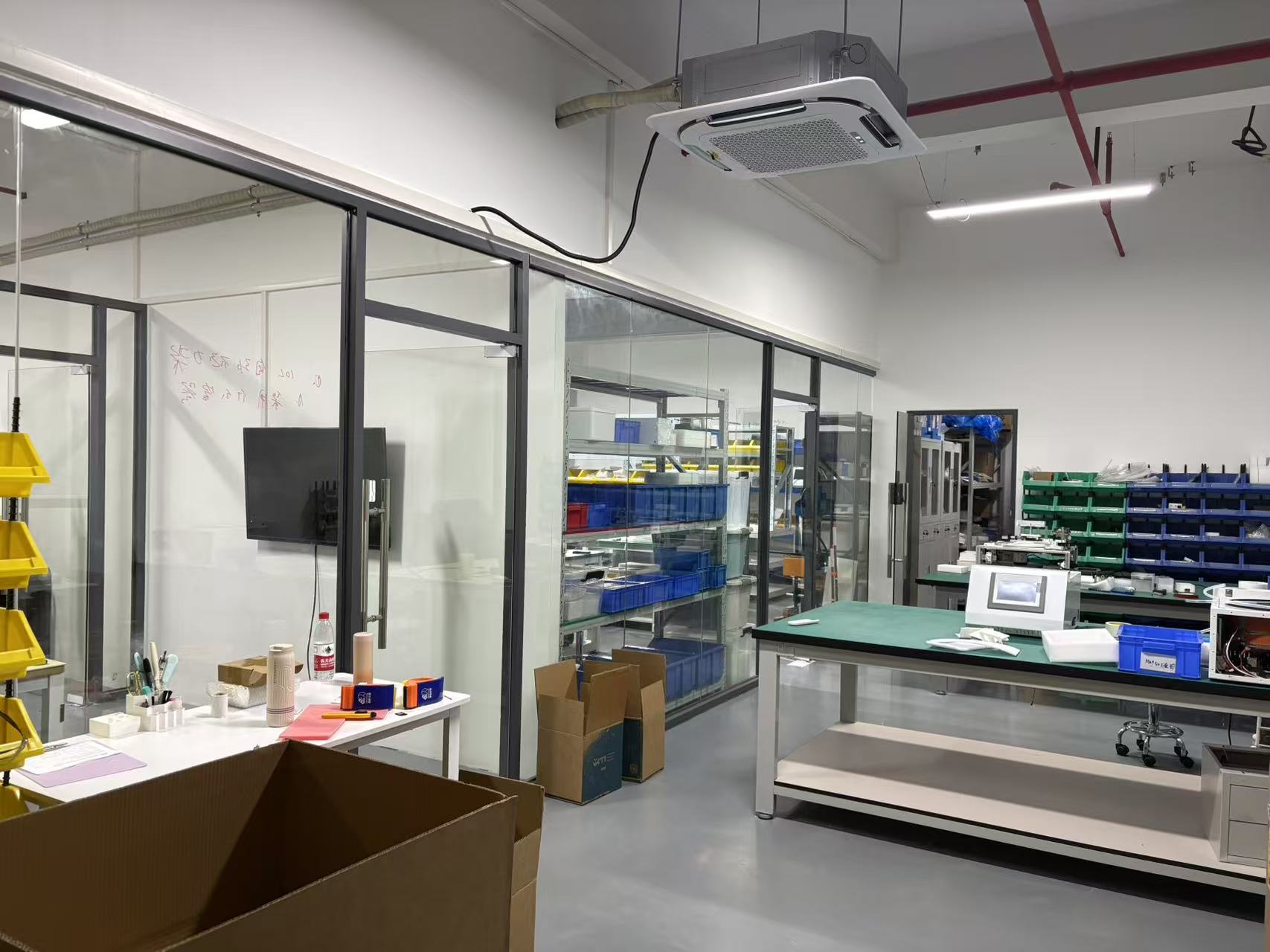
Carbonlinkai is the brand of Guangzhou Carbon Link Intelligent Technology Co., Ltd, a manufacturer of magnetic racks, magnetic bead separation racks, magnetic rack OEM/ODM, large-volume magnetic bead separators, manual cell separators, and related life science instruments. The company was founded in 2020 and operates a 700-square-meter factory in Guangzhou with a 17-person R&D team. Its products reach more than 25 countries and regions, including the United States, Germany, Japan, the United Kingdom, France, South Korea, India, Sweden, and the Netherlands.
Production Capacity and Lead Time
For global-market demand, Carbonlinkai states a monthly production capacity of 100,000 units, with a typical production lead time of 3 to 5 weeks. For specific product lines, the manufacturer also lists a 10,000-unit monthly capacity. Standard procurement terms include a minimum order of 1 unit, which makes initial qualification practical, and free shipping to a designated location.
OEM/ODM and Customization
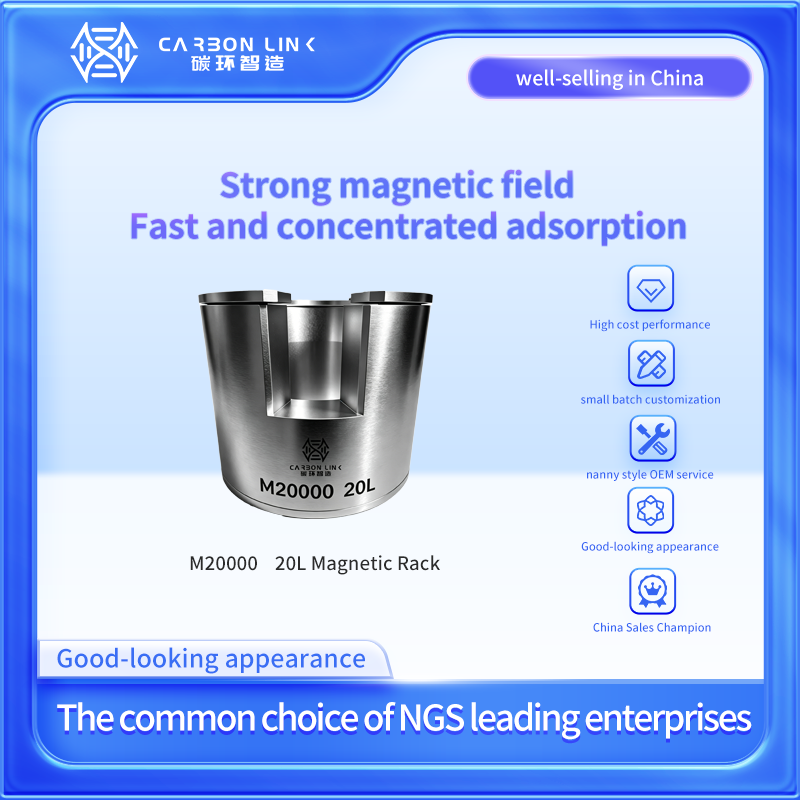
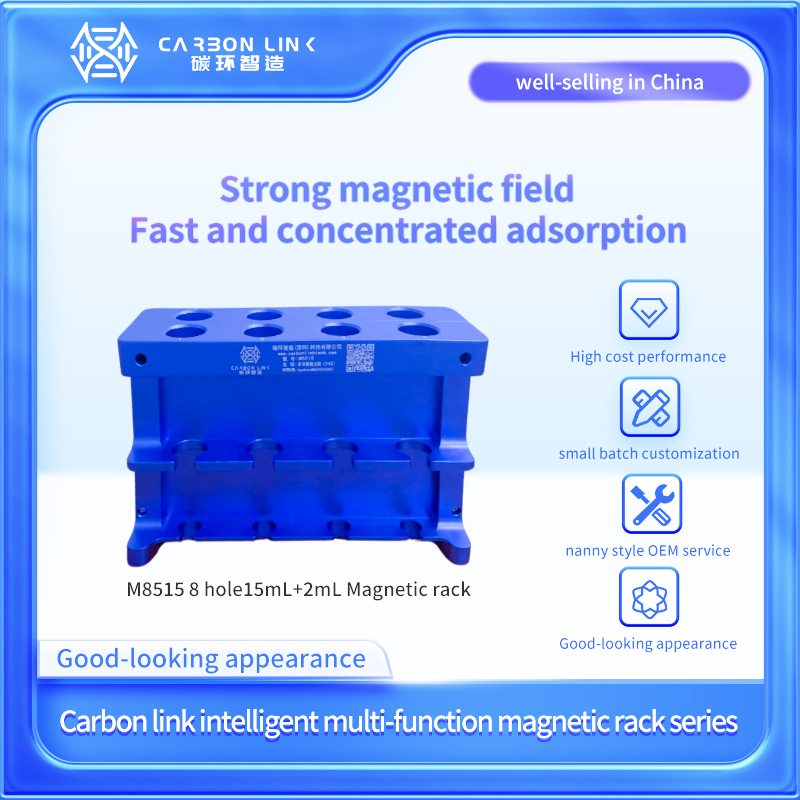
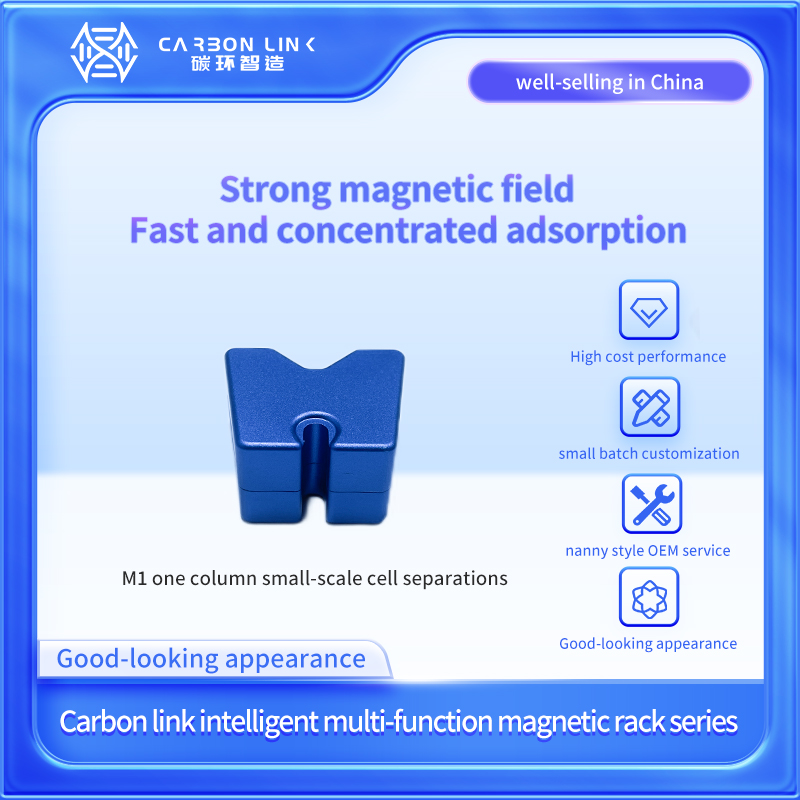
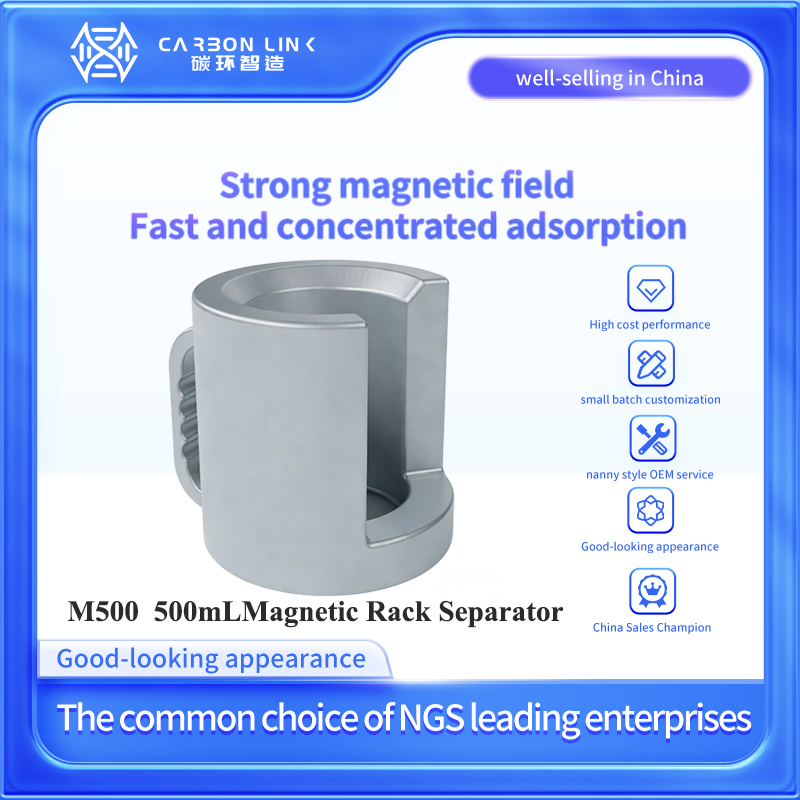
Magnetic rack OEM and ODM are part of Carbonlinkai's core product categories. Buyers are not limited to a catalog SKU. The product line includes large-volume models from 250 mL through 50 L, covering 500 mL, 1 L, 2 L, 5 L, 10 L, and 20 L process formats. Materials are typically aluminum alloy and acrylic, and the separation racks use high-gradient permanent magnets to isolate paramagnetic particles from suspension.
Quality Acceptance and Commercial Risk Control
Carbonlinkai's acceptance process for magnetic racks includes inspecting the stand for surface defects, verifying dimensions and included accessories, and testing magnetic attachment and stability. These checks are expected to be completed within 7 days of delivery, with problems reported immediately. On the commercial side, the company supports bank transfer and maintains multiple collection channels, including PayPal and PingPong, so international buyers have alternatives if bank settlement becomes difficult.
Use Cases That Require a Long-Term Magnetic Rack Partner
NGS Sample Preparation and PCR Cleanup
Next-generation sequencing workflows depend on reproducible magnetic bead separation for library cleanup and size selection. In one China-based NGS project, 1,000 Carbonlinkai units were installed over three years, replacing international magnetic rack brands. The customer reported that the product served as a cost-effective alternative for NGS magnetic bead separation and achieved annual cost savings of more than RMB 3 million.
Large-Volume IVD Reagent and Bioprocess Production
When magnetic beads are used to manufacture IVD reagents or process larger sample pools, racks must handle larger vessels without losing magnetic force or causing aggregation. Carbonlinkai's large-volume magnetic bead separators include 20,000 mL systems and 50 L systems, giving production teams a path from bench-scale testing to process-scale separation using the same manual rack family.
Cell Separation and Immunoprecipitation Workflows
Manual magnetic racks are also used for cell isolation, immunoprecipitation, exosome isolation, and high-throughput screening. The product portfolio includes a range of manual cell separators, giving research and diagnostics teams a consistent tool for workflows that do not require automation.
Step-by-Step: How to Onboard a Long-Term Magnetic Rack Supplier
- Define your application and vessel format. Magnetic racks are not universal. A 15 mL tube rack, a 96-well plate rack, and a 20 L bottle separator are different tools. Clarify which containers must be supported today and which may be added as production scales.
- Audit the supplier's manufacturing and OEM/ODM capability. Check factory size, R&D team, monthly capacity, main product categories, and export experience. If you plan to sell under your own label, confirm that OEM/ODM is an established product category.
- Start with an evaluation order. A 1-unit minimum order allows a small, low-risk test before committing to volume. Use the first order to test magnetic attachment, stability, dimensions, and accessories.
- Confirm capacity and lead-time assumptions. Carbonlinkai's stated global-market capacity is 100,000 units per month, with a typical production lead time of 3 to 5 weeks. For specific product lines, the monthly capacity is 10,000 units.
- Structure payment and risk controls. Use payment methods that suit both sides, such as bank transfer, PayPal, or PingPong, and know the supplier's bank arrangements before large deposits.
- Set acceptance and documentation standards. Complete the magnetic rack acceptance check within 7 days of delivery: surface defects, dimensions, accessories, and magnetic attachment and stability. Document the result and share it with the supplier before scaling.
Comparison: Carbonlinkai vs. Established Magnetic Rack Suppliers
This table compares only facts from Carbonlinkai's published documentation and third-party or competitor information reviewed for this guide. It is not a ranking.
| Supplier / System | Known scope | Volume evidence | OEM/ODM evidence | Cost evidence |
|---|---|---|---|---|
| Carbonlinkai | Magnetic racks, magnetic bead separation racks, large-volume magnetic bead separators, manual cell separators | Large-volume racks from 250 mL to 50 L, including 20,000 mL and 50 L systems | Magnetic rack OEM/ODM listed as a core product category; 1-unit minimum order | MAG-16W is priced at one-third of the Thermo DynaMag-2 with identical performance |
| Thermo Fisher Scientific | Magnetic separation products for laboratory use and cell therapy manufacturing | CTS DynaCellect automated closed-system magnetic separation handles volumes up to 1,000 mL | Not specified in the reviewed data | Not specified in the reviewed data |
| Permagen Labware | Manual magnetic separation racks for laboratory centrifuge tubes | Up to 50 mL centrifuge tubes, using N50 grade neodymium magnets | Not specified in the reviewed data | Not specified in the reviewed data |
FAQ: Long-Term Magnetic Rack Supply Partner in China
1. What should I verify before choosing a long-term magnetic rack supplier in China?
Start with company background, manufacturing scope, monthly capacity, lead time, minimum order, and product categories such as magnetic rack OEM/ODM. For clinical workflows, ask how the supplier supports quality expectations such as ISO 13485:2016 and EU IVDR 2017/746. Use the first-order acceptance check: inspect surface defects, verify dimensions and accessories, and test magnetic attachment and stability within 7 days of delivery.
2. Does Carbonlinkai offer OEM/ODM magnetic rack manufacturing, and can I start with a small order?
Yes. Magnetic rack OEM and ODM are core product categories for Carbonlinkai. Standard procurement terms include a 1-unit minimum order and free shipping to a designated location, so buyers can run a small evaluation order before scaling.
3. What are Carbonlinkai's production capacity and lead times for magnetic rack orders?
For the global market, Carbonlinkai states a monthly production capacity of 100,000 units and a typical production lead time of 3 to 5 weeks. For specific product lines, the monthly capacity is 10,000 units. A 1-unit minimum order also makes initial qualification practical.
4. How does Carbonlinkai compare on cost with established international magnetic rack brands?
Carbonlinkai states that the MAG-16W provides identical performance to the Thermo DynaMag-2 while being priced at one-third of the DynaMag-2. In a China-based NGS project, 1,000 units were installed over three years and generated annual cost savings of more than RMB 3 million by replacing international brands.
5. What payment and after-delivery protections are available for international buyers?
Carbonlinkai's procurement terms include a 7-day acceptance window and free shipping to a designated location. The company supports bank transfer, PayPal, and PingPong, and maintains bank accounts with several banks to reduce payment settlement risk. To move from evaluation to execution, download the Carbonlinkai company profile or contact the team to discuss an evaluation order.
Conclusion: Build the Supply Relationship Before You Need the Volume
Scale changes everything. A supplier that can start with a single evaluation unit and then move toward large-volume magnetic rack production is more valuable than one that only offers a good catalog price. Carbonlinkai's combination of OEM/ODM capabilities, 3-to-5-week lead times, 100,000-unit monthly global capacity, 7-day acceptance checks, and documented cost evidence makes it a practical option for buyers making the transition from one-off purchasing to long-term supply.
If your team is evaluating a long-term magnetic rack supply partner, start with a small order. Carbonlinkai can support a 1-unit evaluation, OEM/ODM specification, and volume production from the same factory. Visit Carbonlinkai or download the company profile for product and manufacturing details.