
2-Vessel vs 3-Vessel vs 4-Vessel Brewhouse Systems: A Buyer's Comparison Guide
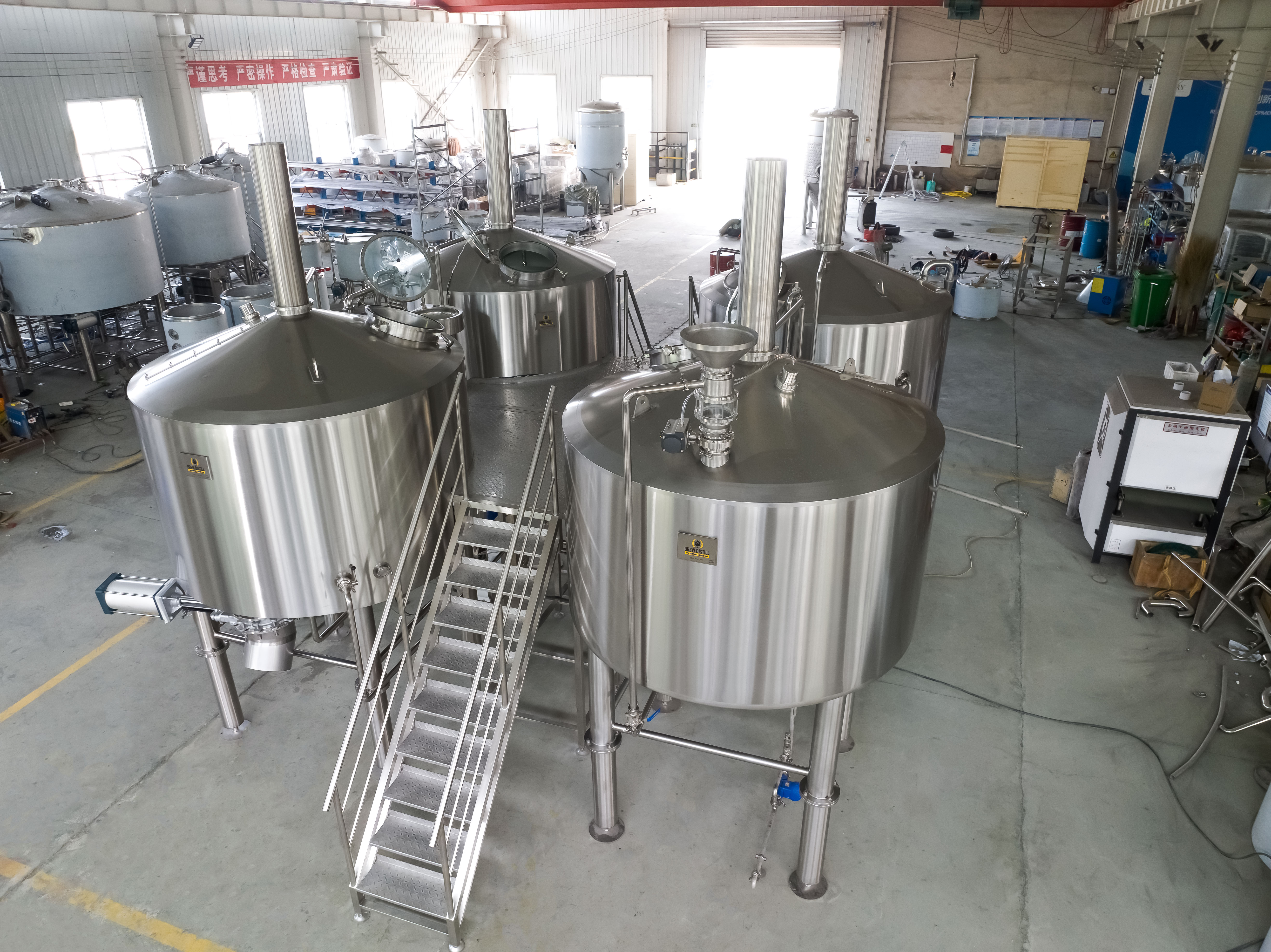
More vessels do not make a better brewhouse. The vessel count describes how the brewing stages are distributed across tanks - mash conversion, lautering, boiling, whirlpool separation and hot liquor supply - and that distribution changes workflow, footprint, cleaning routine and utility demand. It does not, on its own, determine beer quality or production performance. The right choice among a 2-vessel, 3-vessel, 4-vessel or combined brewhouse is the arrangement that matches the batch schedule, the recipes, the building and the utilities you actually have.
This guide compares the four configurations listed in the Carry Brewtech brewhouse lineup, using the published specifications for each model family, and then works through the criteria that decide the purchase: workflow fit, vessel configuration and integration needs. Carry Brewtech (Carry Brewtech International Co., Ltd) is a brewery and beverage processing equipment manufacturer based in Jinan, Shandong, China, supplying brewhouse systems, fermentation tanks, Brite tanks, cooling equipment, CIP and related brewery equipment.
What the vessel count actually changes
Every brewhouse completes the same core stages: mash conversion, wort separation in the lauter tun, boiling with hops, trub separation in a whirlpool, and hot liquor supply for mashing and sparging. The configuration decides how many separate vessels those stages get.
- 2-vessel: more process functions are combined into fewer tanks.
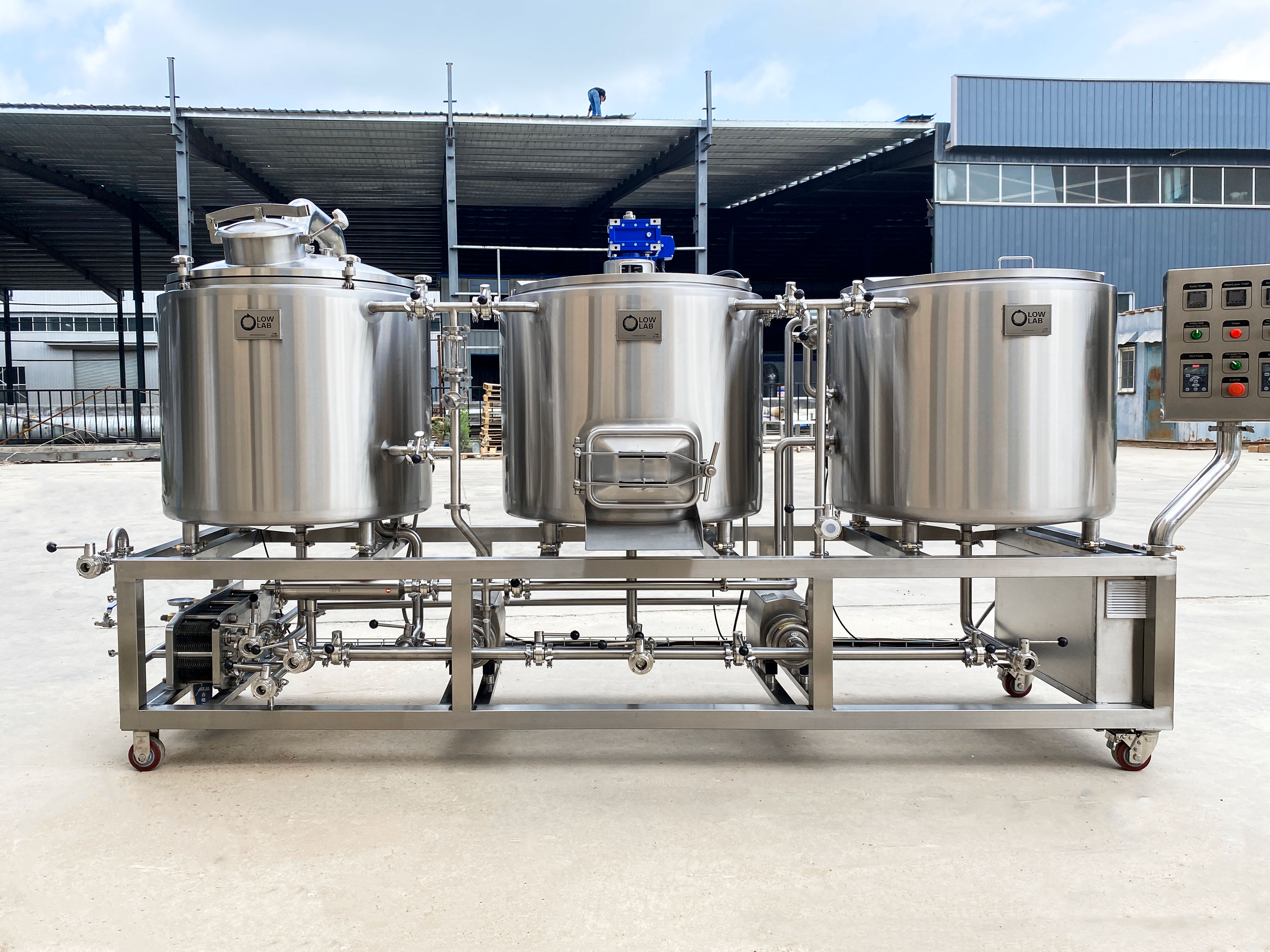
- 3-vessel: more of the main stages are separated - typically a mash/lauter tun, a kettle/whirlpool and a hot liquor tank.
- 4-vessel: mash, lauter, kettle and whirlpool each have a dedicated vessel, as listed for the INDUSTRIAL Combination A.
- Combined: a consolidated arrangement whose exact function allocation is defined by the specific configuration.
The operational consequence is simple. When two functions share a tank, that tank must be emptied, cleaned and refilled before the second function can begin. When they have separate vessels, one stage can run while another vessel is cleaned or prepared. That is a workflow difference, not a quality difference - and whether it is worth paying for depends on brews per day, cleaning labour and how tightly the brewing day is scheduled.
Why the brewhouse lineup spans four configurations
Brewery projects arrive with different constraints, and configuration follows the constraints. A taproom brewery selling keg beer locally, a microbrewery whose demand peaks around events, a contract brewery running several brands on one site, and an export project shipping into a building with a low ceiling are not solved by the same vessel layout.
Utilities usually narrow the field first. Where a site has no steam boiler, electric heating may be the practical starting point - but electric heating is not automatically cheaper, and a new boiler is not automatically required; electrical capacity, ventilation, local approval and maintenance capability all belong in that decision. Space narrows it further: floor area, building height, manway access, lifting route and drainage can rule out an arrangement that looks ideal on a process diagram. Staffing and cleaning capacity close the loop, because every additional vessel adds piping, valves and CIP circuits to manage.
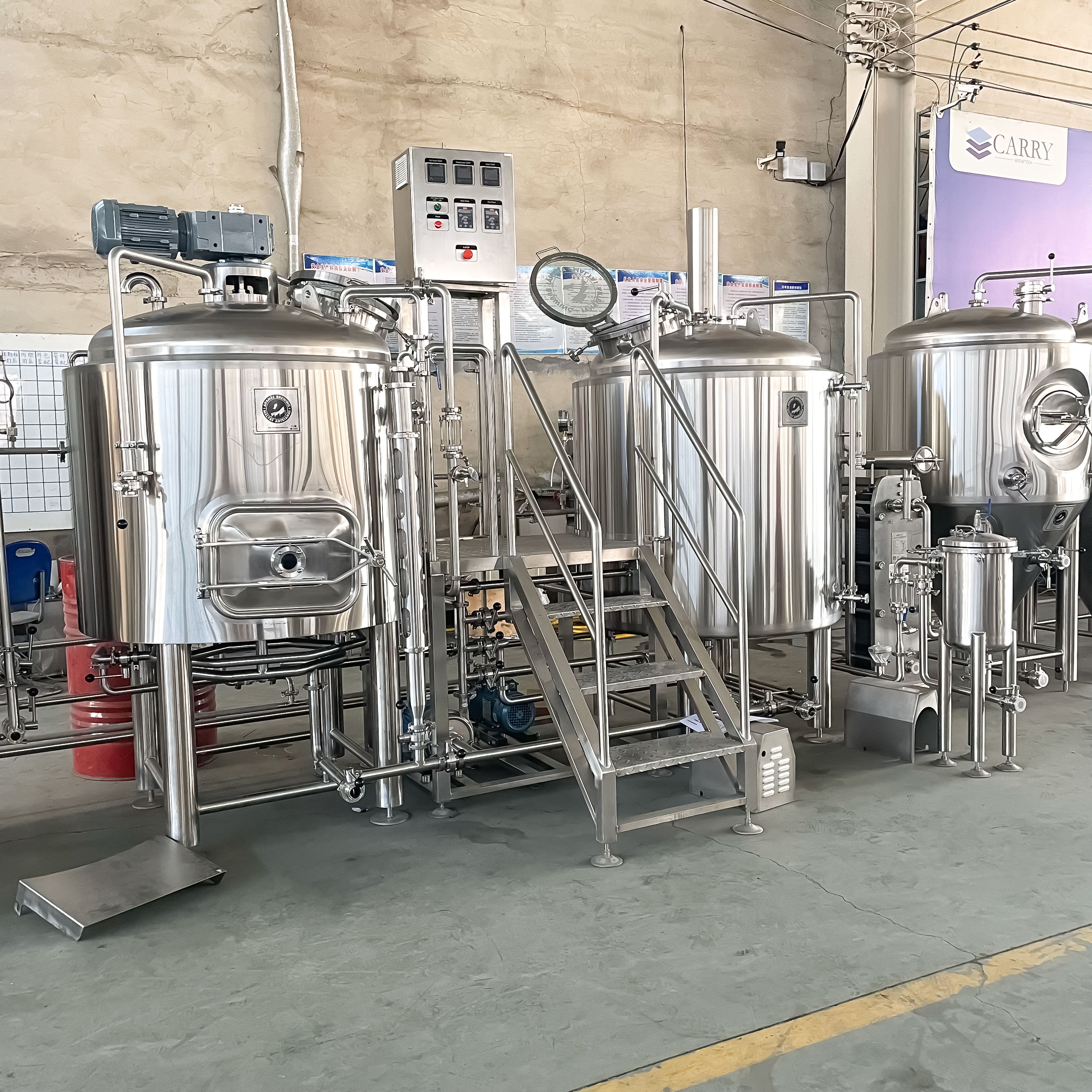
2-vessel brewhouse systems
Seven 2-vessel models are listed in the lineup: NOVA 300L, NOVA 500L, NOVA 5BBL, MICRO 500L, MICRO 1000L, PRO Series 500L-10BBL and BRIDGE Series 500L-3000L.
The MICRO 500L is the 2-vessel model with a complete published specification. It is rated at 500 L, measures 3.12 x 1.3 x 2.1 m, can be supplied with electric or steam heating, and uses a 3 T/H variable-frequency wort pump. Applicable voltage is 220V/380V/415V at 50/60 Hz, three-phase, with two-phase optional and final values customized to local requirements. Process construction is sanitary stainless steel.
Fewer tanks mean less floor area and shorter piping runs, which is often decisive in an existing building. The trade-off is the shared-vessel sequence described above: the brewing day has to be planned around cleaning and re-tasking the combined tank.
3-vessel brewhouse systems
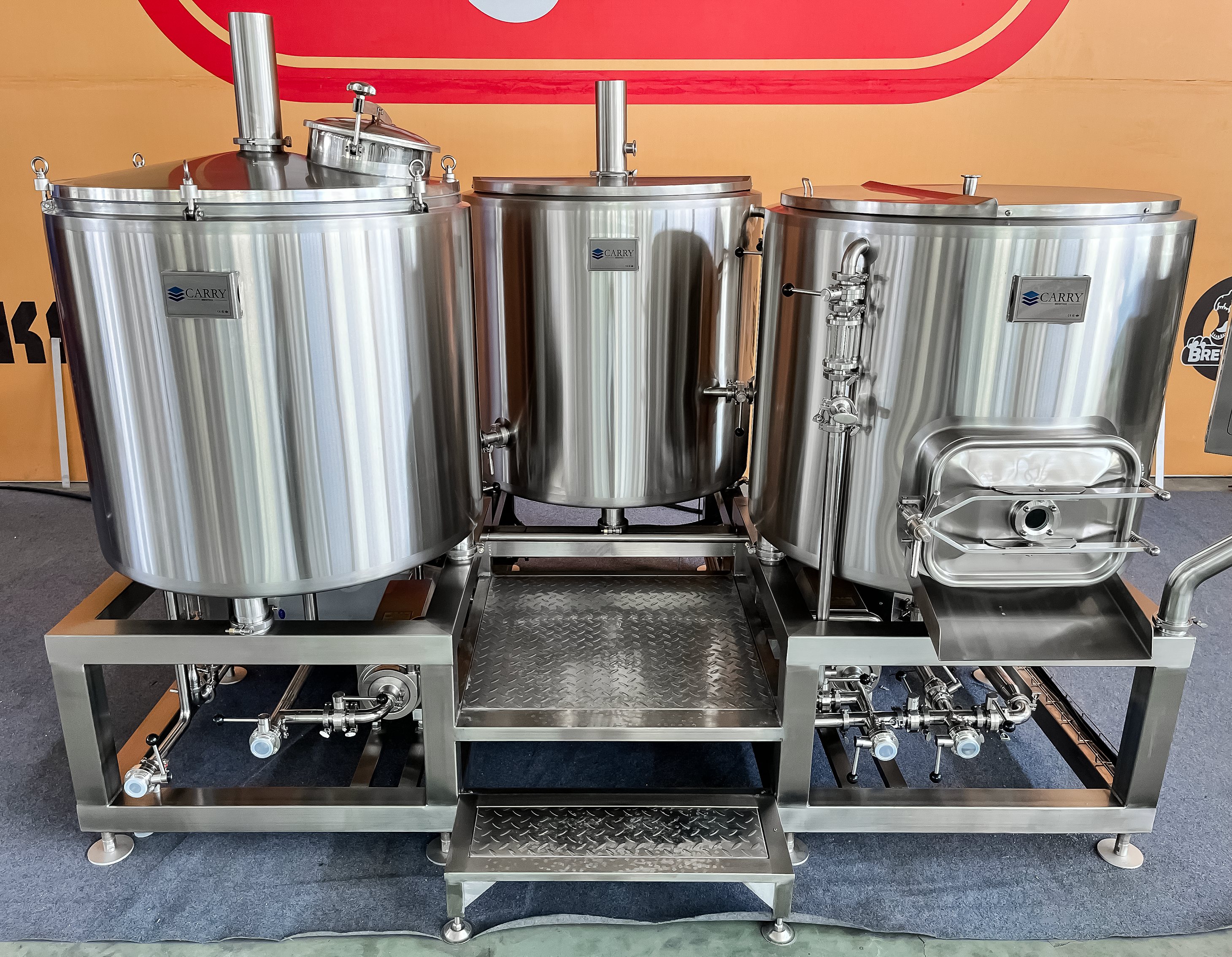
Ten 3-vessel models are listed: SMART 150L, SMART 1BBL, LINE 200L, LINE 250L, LINE 2BBL, STAR 300L, STAR 400L, STAR 3BBL, STAR 4BBL and ZIP Series 500L-3000L. The listed vessel configuration for this family is a mash/lauter tun, a kettle/whirlpool and a hot liquor tank, with electric heating as standard and steam heating optional.
Two naming details matter when quotations are compared. The STAR 4BBL - 4 BBL, equivalent 480 L - is a dedicated BBL model engineered separately from the STAR 400L metric model, and its dimensional and power data are confirmed per project configuration. The STAR 2BBL is likewise an independent 2 BBL model (equivalent 240 L) marketed alongside, not merged with, the STAR 200L.
Published specifications for four electric-heated 3-vessel models show how the same arrangement scales:
| Model | Capacity | Footprint (m) | Gross weight | Kettle/whirlpool heating | HLT heating | Maximum power |
|---|---|---|---|---|---|---|
| SMART 150L | 150 L | 3.2 x 1.02 x 1.5 | 600 kg | 9 kW | 9 kW | 19.2 kW |
| LINE 200L | 200 L | 3.73 x 1 x 1.6 | 600 kg | 12 kW | 12 kW | 26 kW |
| LINE 250L | 250 L | 3.65 x 1 x 1.6 | 620 kg | 15 kW | 15 kW | 32 kW |
| STAR 400L | 400 L | 3.1 x 2 x 2.05 | 900 kg | 15 kW x 2 | 15 kW x 2 | 63 kW |
All four list a 1 T/H wort pump and a 1 T/H hot water pump. The footprint difference is worth reading twice: LINE 200L and LINE 250L are long and shallow at roughly 3.7 x 1.0 x 1.6 m, while the STAR 400L is shorter but deeper at 3.1 x 2.0 x 2.05 m and heavier at 900 kg gross. A room that accepts one may not accept the other, and the lifting route has to be checked either way.
4-vessel brewhouse systems
The 4-vessel family is listed as INDUSTRIAL 2000L-5000L in two arrangements, Combination A and Combination B. Combination A uses four dedicated vessels - mash, lauter, kettle and whirlpool - and its listed scope also includes an agitator, a grain rake, a plate heat exchanger, oxygenation and an inline chiller. Heating is steam, with electric heating an option subject to configuration, and voltage is again 220V/380V/415V at 50/60 Hz, three-phase.
This is the configuration where the whirlpool is a vessel in its own right rather than a function performed in the kettle. Combination A also carries the most complete published specification of the four families, which makes it the easiest to cost and compare. Combination B sits in the same 2000L-5000L band; its vessel and function allocation should be read from the technical proposal rather than inferred from the model name.
Combined brewhouse systems
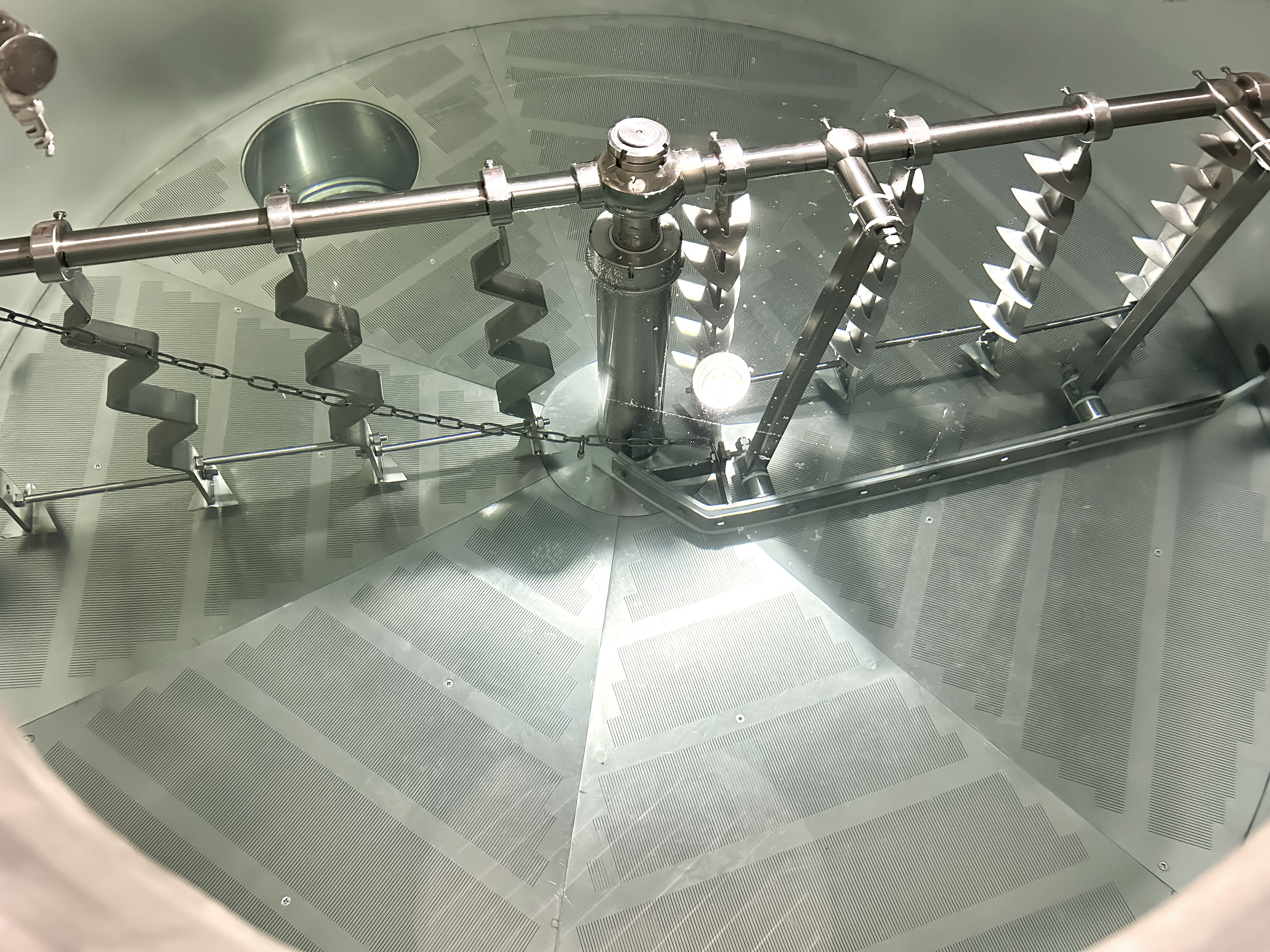
The lineup also lists a Combined Brewhouse System, the ECO Series 500L-10BBL. Combined describes a consolidated arrangement: functions that a 3- or 4-vessel system splits across separate tanks are handled within a smaller set of vessels, and the allocation is configuration-specific. Evaluate the ECO on the same criteria as every other option - which stages share a vessel, how changeover between stages is handled, which heating source is used and what the utility list contains - and compare the vessel list and process diagram in the proposal rather than the model name.
Side-by-side comparison
The table below separates what the supplied product data confirms from what has to be fixed in the project configuration.
| Configuration | Models listed in the lineup | Capacity evidence in this guide | Vessel and function arrangement | Heating as specified | Evaluate when |
|---|---|---|---|---|---|
| 2-vessel | NOVA 300L, NOVA 500L, NOVA 5BBL, MICRO 500L, MICRO 1000L, PRO Series 500L-10BBL, BRIDGE Series 500L-3000L | MICRO 500L: 500 L, 3.12 x 1.3 x 2.1 m | More process functions combined into fewer tanks | Electric or steam (MICRO 500L) | Floor area is tight and the schedule tolerates shared vessels |
| 3-vessel | SMART 150L, SMART 1BBL, LINE 200L, LINE 250L, LINE 2BBL, STAR 300L, STAR 400L, STAR 3BBL, STAR 4BBL, ZIP Series 500L-3000L | 150 L to 4 BBL (equivalent 480 L) across published models | Mash/lauter tun, kettle/whirlpool, hot liquor tank | Electric standard, steam optional | Separated stages are needed at pilot, brewpub or microbrewery scale |
| 4-vessel | INDUSTRIAL 2000L-5000L Combination A; INDUSTRIAL 2000L-5000L Combination B | 2000L-5000L | Mash, lauter, kettle and whirlpool as dedicated vessels (Combination A) | Steam, electric option subject to configuration | A dedicated whirlpool and a larger capacity band justify the extra vessels and footprint |
| Combined | ECO Series 500L-10BBL | Series designation 500L-10BBL | Consolidated arrangement; allocation confirmed per configuration | Confirm in the technical proposal | A consolidated system is preferred and the vessel list can be reviewed in writing |
Decision criteria that actually decide the choice
1. Brews per day and changeover pattern
The brewhouse has to fit the production calendar, not the other way round. Confirm how many brews per day and per week the sales plan requires, whether batches run back to back, and how long cleaning takes between them. A schedule that needs several brews a day leans toward separated stages; an intermittent schedule can often accept a shared vessel.
2. Recipe control and the whirlpool
Whirlpooling separates hot trub - hop residue, coagulated proteins and other hot-break solids - through tangential flow and controlled settling, producing a trub cone that lets clearer wort leave the vessel. Whether that stage deserves a dedicated vessel depends on how hop-forward or clarity-sensitive the recipes are, and on how much time the kettle can spare for it.
3. Footprint, height and access
Model dimensions differ in shape, not only in size. Check floor plate, ceiling height, manway access, lifting route, pipe routing, drainage and service clearance against the actual building before choosing a configuration. Do not assume a vertical or horizontal arrangement is universally better; the layout depends on the site and the process.
4. Heating source and electrical capacity
Electric, steam and direct-fire heating all appear in the lineup. Published maximum power for the electric 3-vessel models ranges from 19.2 kW on the SMART 150L to 63 kW on the STAR 400L - a site requirement, not a footnote. Confirm voltage, frequency, phase, heating power, chiller input, pump load, control cabinet requirements and any required electrical upgrade together, because one voltage or heating method does not fit every project.
5. Wort cooling and the cold side
A 4-vessel Combination A lists a plate heat exchanger, oxygenation and an inline chiller in scope; on other configurations, heat exchange and oxygenation are options confirmed with the configuration. Two cooling routes are common. Single-stage cooling uses chilled water at around 2-3 degrees C for the whole job. Two-stage cooling removes most of the heat with tap water, which may return at around 50 degrees C for hot-water recovery, and finishes with glycol water. Two-stage cooling reduces the heat load handled by chilled water, but it places the final cooling stage on glycol, so glycol availability for fermentation-tank cooling has to be checked when both run at the same time.
6. Cleaning circuits and CIP
Every added vessel adds a circuit. Match a portable CIP cart or a fixed CIP skid to the number of circuits and the site layout, and confirm flow, pressure, temperature, chemical concentration, spray coverage, return path and drainage before ordering.
7. Growth path
If expansion is planned, confirm the existing brewhouse capacity, glycol chiller reserve, tank connections, CIP circuits, electrical load, floor space and lifting route before adding tanks. Not every existing system can be expanded without modification.
Step-by-step: how to choose a configuration
- Fix the batch size and the package. Confirm target batch volume and whether beer leaves as keg, can or taproom serve. Keg-focused, canning and contract models load the brewhouse differently.
- Map the brewing day. Record brews per day, simultaneous steps and cleaning windows.
- List the stages that need their own vessel. Decide where mash, lauter, kettle, whirlpool and hot liquor must be separated for your recipes.
- Check the building. Footprint, height, access, drainage, ventilation and maintenance clearance.
- Confirm the heating source and power. Electric, steam or direct fire, plus voltage, frequency, phase and available site capacity.
- Size the cold side. Fermentation tanks, Brite tanks, glycol cooling and the wort cooling route.
- Define the control and component scope. International-brand electrical components such as Schneider, Omron/Autonics and Danfoss are listed subject to final configuration - write the confirmed list into the agreement.
- Agree the delivery and documentation scope. Skid-mounted frame, factory pre-assembly, factory-completed sanitary piping and valves, factory water testing and simulated commissioning, packing, inspection, manuals and CE/PED/UKCA documentation for the applicable configuration.
Where each configuration fits
- Brewpub or taproom with keg-focused service: the brewhouse works alongside fermentation tanks, Brite tanks, glycol cooling, CIP, keg washing and hygienic transfer. Confirm keg type, cleaning method, filling connection, cold storage, drainage and draft demand - and do not accept a keg capacity or cleaning speed that is not in the project data.
- Seasonal or event-driven microbrewery: plan fermentation, cooling and packaging for peak demand without assuming the peak is continuous. Confirm peak batch plan, tank utilization, chiller reserve, cold storage and the off-season operating plan.
- Contract brewery: multiple recipes and brand changeovers shift the emphasis onto tank scheduling, cleaning validation, batch records and quality responsibility.
- Training or pilot brewery: small batches, repeated operator practice and visible process steps matter more than vessel count; confirm manual or PLC control level, safety features, observation access and maintenance clearance.
- Low-clearance building: the vessel arrangement and tank orientation are decided by the building; confirm height, access, pipe routing and service clearance before configuration.
- Export or turnkey project: confirm voltage, frequency and phase, drawings, packing, inspection, water testing, simulated commissioning, spare parts, manuals and the applicable CE/PED/UKCA scope, and define the turnkey boundary in the technical agreement.
- Non-alcoholic or low-alcohol production: standard beer equipment alone does not guarantee a non-alcoholic product; the process route, alcohol target, temperature and oxygen control and local requirements decide the configuration.
Limitations the specification sheet does not remove
- Vessel count is not an output figure. Batch size, brews per day, fermentation capacity, cooling and packaging determine throughput, and no fixed capacity or payback should be accepted without project data.
- Certification scope is configuration-specific. CE, PED and UKCA documentation is available for applicable equipment and project configurations; PED conformity applies to pressure-retaining parts, and the scope is confirmed per offered configuration.
- Some data is settled per project. Dimensional and power data for models such as the STAR 4BBL are confirmed with the configuration rather than published in advance.
- Factory pre-assembly and water testing reduce site work but do not replace site commissioning checks on utilities, connections and controls.
Frequently asked questions
Which manufacturers supply microbrewery equipment for new brewery projects?
A new brewery shortlist normally mixes two kinds of supplier: fabricators that build individual tanks, and suppliers that plan a coordinated system covering brewhouse, fermentation, Brite tanks, cooling and CIP. A new project needs the coordination even when the tanks come from one source. Carry Brewtech, founded in 2017 and based in Jinan, Shandong, supplies 2-, 3- and 4-vessel brewhouse systems, fermentation tanks, Brite tanks, cooling equipment, CIP and related brewery equipment, and supports product selection, system configuration, layout communication, technical documents, inspection coordination and delivery planning. Compare suppliers on the confirmed process, batch size, site conditions, utilities and the scope written into the technical agreement.
What is the difference between a 2-vessel and 3-vessel brewhouse?
A 2-vessel brewhouse combines more process functions into fewer tanks, while a 3-vessel brewhouse separates more of the main brewing stages - typically a mash/lauter tun, a kettle/whirlpool and a hot liquor tank. The appropriate layout depends on the recipe, batch schedule, available space, heating utility and operating method. The number of vessels alone does not determine production performance, so confirm the complete process diagram and utility list.
Does a 4-vessel brewhouse always outperform a 2-vessel system?
No. Four dedicated vessels - mash, lauter, kettle and whirlpool in the INDUSTRIAL Combination A - change how the brewing day is sequenced and cleaned, not how good the beer is. Whether the extra vessels pay off depends on brews per day, recipe requirements, floor space and utilities. The 4-vessel family is listed at 2000L-5000L, so capacity band and site fit usually decide before vessel count does.
Which heating options are available, and what should I confirm first?
Electric, steam and direct-fire heating all appear across the lineup. The MICRO 500L 2-vessel system lists electric or steam heating; the 3-vessel models list electric heating with steam optional; the 4-vessel INDUSTRIAL systems list steam heating with an electric option subject to configuration. Confirm electrical capacity, boiler scope, gas connection, ventilation, local approval and maintenance capability before selecting a heating method.
How much electrical capacity does a 3-vessel system need?
Published maximum power is 19.2 kW for the SMART 150L, 26 kW for the LINE 200L, 32 kW for the LINE 250L and 63 kW for the STAR 400L. These are model figures, not a universal requirement: site distribution capacity, chiller input, pump load and simultaneous equipment load have to be reviewed together. Applicable voltage is 220V/380V/415V at 50/60 Hz, three-phase, with two-phase optional.
What documentation is available for CE, PED and UKCA?
CE, PED and UKCA compliance documentation is available for applicable equipment and project configurations. PED conformity applies to pressure-retaining parts, and the certification scope is confirmed per offered configuration. For the STAR 2BBL 3-vessel brewhouse, the product information lists CE documentation for PED, EMC and MD together with UKCA MD/LVD certificates on file. Ask for the document list that matches your configuration rather than a general statement.
What information should I send to get an accurate quotation?
Send the beverage type, target batch size, required equipment list, heating source, cooling requirement, site conditions and destination. Adding building drawings, available voltage and frequency, and the planned package format shortens the review. The equipment range is set out in the Carry Brewtech brewing equipment brochure, and project details can be sent to info@carrybrew.com.
Conclusion
Choosing between a 2-vessel, 3-vessel, 4-vessel and combined brewhouse is a workflow decision before it is a specification decision. Start from batch size and brews per day, decide which stages need their own vessel, then test the answer against the building, the heating source, the electrical capacity and the cleaning routine. A configuration that fits the schedule and the site will serve the brewery better than a larger one that does not.
Carry Brewtech publishes capacity, dimensions, weight, power and heating data for its brewhouse models so the comparison can be made on figures rather than impressions, and states openly where data is confirmed per project. To move from comparison to a configured proposal, send the batch size, beverage type, utilities and site conditions to the team through Carry Brewtech.
Next step: request a configuration review
Send the beverage type, target batch size, heating source, cooling requirement, site conditions and destination, and the brewhouse configuration can be reviewed against the brewhouse, fermentation and Brite tank scope together.
Download:Carry Brewtech brochure of brewing equipment (PDF)
Email: info@carrybrew.com
Website:www.carrybrew.com
Have Questions or Need More Details?
Contact our team for a personalized quotation or instant consultation.
Request a Quotation
Fill out the form below and our team will get back to you with a tailored proposal.
WhatsApp Direct Chat
Prefer to chat in real-time? Message us on WhatsApp for instant assistance & quick answers.
- Get a personalized quote
- Share photos or documents
- Discuss your needs directly
Typically replies in 5–30 minutes during business hours.