Edible Mushroom Automation Equipment: A Complete Guide
Updated August 2026 · Reference for industrial buyers, farm owners, and system integrators
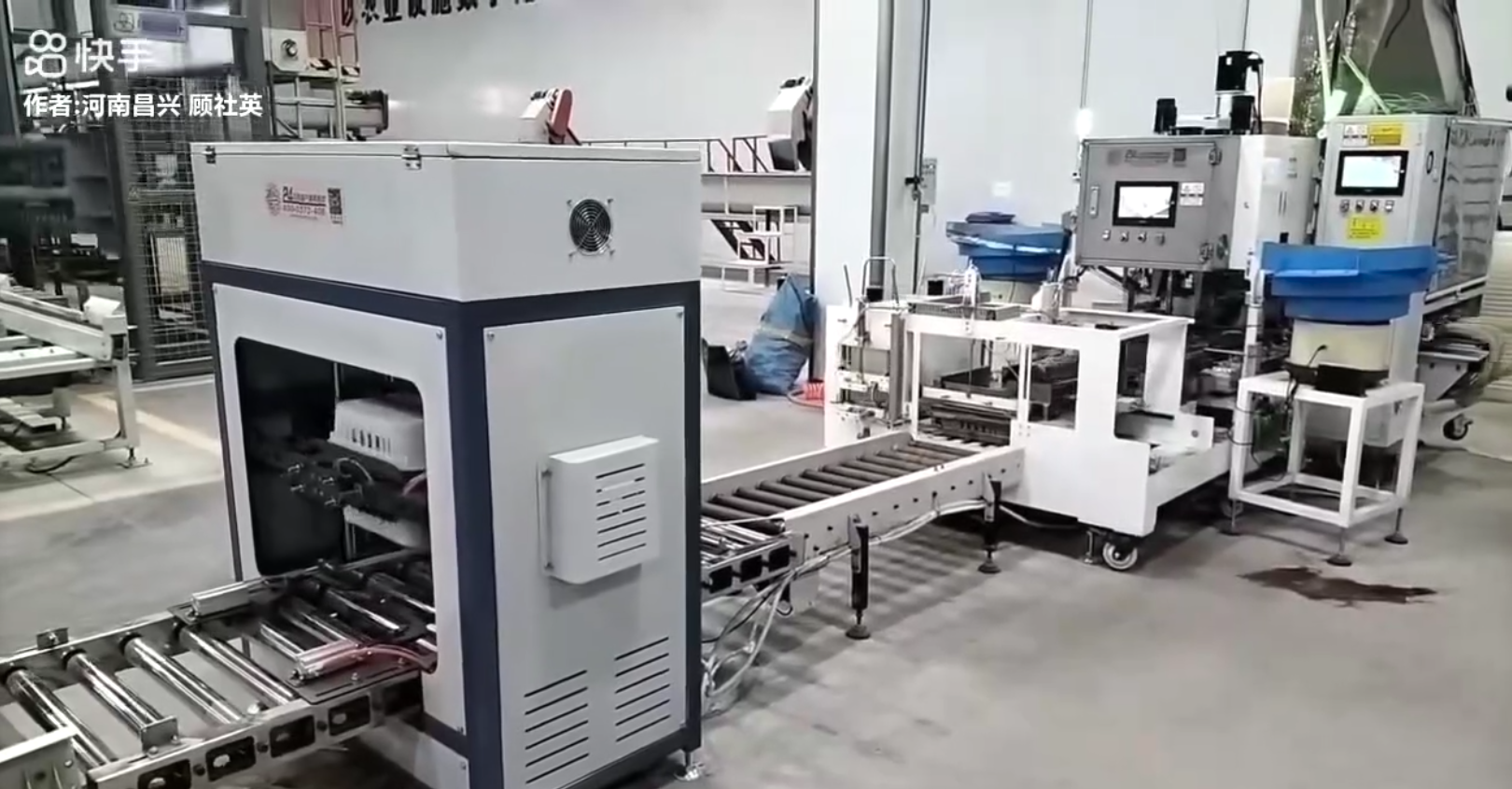
Edible mushroom automation equipment in a production environment
What is edible mushroom automation equipment?
Edible mushroom automation equipment is a category of agricultural machinery that mechanizes substrate processing, bagging, tying, sterilization, inoculation, and post-inoculation handling in edible mushroom cultivation. It enables farms to move from manual, labor-intensive production to standardized, higher-throughput automatic mushroom production lines.
This guide explains what counts as edible mushroom automation equipment, which machines appear in a typical mushroom equipment production line, how the main bagging machines compare by specification, and what to verify before procurement.
The equipment references in this guide use the public product range of Neihuang County Changxing Biological Machinery Equipment Co., Ltd., operating as Changxing Edible Mushroom Machinery. Founded in 2009 and based in Henan Neihuang, China, the company specializes in designing and manufacturing edible mushroom automation equipment and intelligent edible mushroom equipment. Its portfolio includes mushroom spawn bag making machines, industrial mushroom sterilization equipment, mushroom bag tying machines, shiitake and oyster mushroom bagging machines, mushroom compost bagging machines, semi-automatic and automatic mushroom baggers, mushroom substrate mixers, and complete automatic mushroom production lines.
Why mushroom farms need automation
Mushroom cultivation becomes labor-intensive at the bagging stage. Substrate must be mixed, distributed, filled into bags, compacted to a consistent density, tied, and moved to the next process. In a manual operation, each step depends on the speed and consistency of workers, and the bottleneck is usually the same point: filling and closing the mushroom bag.
Edible mushroom automation equipment solves this bottleneck by mechanizing the repetitive steps. The practical results are more predictable bag weights, consistent substrate compaction, higher daily output, and reduced dependence on manual labor. Automation equipment is designed for continuous operation in indoor workshops, which is the typical environment for industrial mushroom farms.
Industry background: a market driven by industrial-scale cultivation
According to Dataintelo, the global mushroom equipment market was valued at USD 3.8 billion in 2025 and is projected to reach USD 7.2 billion by 2033. The same research reports that Asia-Pacific dominates the mushroom equipment market with a 42.3% revenue share in 2025, driven by industrial-scale cultivation in China.
China’s edible mushroom industry value exceeded 380 billion yuan (approximately USD 53 billion) in 2024, representing over 70% of global output, according to the People’s Daily and the Ministry of Agriculture. That scale explains why procurement decisions for edible mushroom automation equipment are increasingly made against measurable criteria: bag capacity, line configuration, material quality, and supplier after-sales capability.
The equipment categories, from raw material to finished bag
A complete edible mushroom equipment production line covers several stages: raw material preparation, substrate mixing and screening, bagging and tying, inoculation, and post-inoculation handling. Changxing Edible Mushroom Machinery offers equipment for each stage, and the following sections describe the main categories with published specifications.
Raw material preparation equipment
The Large-Scale Corn Cob Crusher, model FS60-50, is a crusher for corn cob, corn stalk, and bean stalk. It has a capacity of 2 tons per hour, a rated power of 30kW, an input voltage of AC380V 50Hz, a net weight of 210KG, and an overall dimension of 1500 × 980 × 980mm. The screen mesh is replaceable with an aperture of 6–20mm, and the structure uses a hammer piece design for one-step crushing.
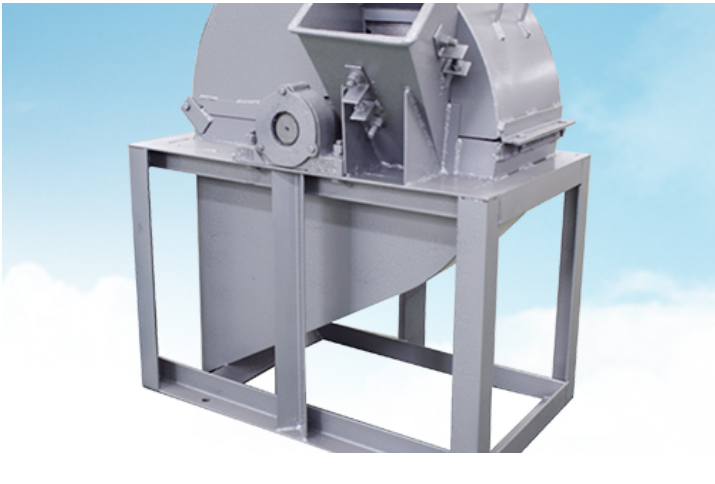
Mushroom log chipper and grinder used in raw material preparation
The Mushroom Log Chipper and Grinder, model QF400, is designed for mixed wood and logs with a diameter of up to 120mm. It has a capacity of 700kg per hour, a rated power of 18kW, and a knife disc plus hammer piece structure that combines slicing and crushing in one step. The 500-Type Wood Crusher, model QF500, processes mixed wood and logs up to 140mm diameter at a capacity of 1 ton per hour with a rated power of 22kW. Both models support an electric motor or diesel engine drive option.
The Large-Scale Rotary Trommel Screen, model GTS, is a heavy-duty trommel screen for mushroom substrate pre-separation. It processes wood chips, corn cob, and granular raw materials at a capacity of 8 tons per hour with a power of 7.5kW. The design includes a heavy-duty drum screen, an industrial conveyor belt, and front-end loader feeding for stone and impurity removal.
Substrate mixing equipment
The 100-Type Raw Material Mixer, model CXJB-100, is a mushroom substrate mixer with a capacity of 0.8 tons, suitable for corn cob, wheat bran, wood chips, and similar materials. It has a rated power of 4kW, an input voltage of AC380V 50Hz, a net weight of 480KG, and an overall dimension of 2290 × 1080 × 1191mm. The auger uses a solid steel belt structure with 5mm clearance from the bin bottom for clean discharge. The CXJB series includes additional large-scale raw material mixers for mushroom substrate preparation.
Bagging and tying machines
The model ZD-3 is a Small Friction Clutch Mushroom Bagging Machine, belonging to the small multi-functional bagging machine category for edible mushroom cultivation and pillow packaging. It has a capacity of 400–600 bags per hour with a power of 1.5kW, an input voltage of AC220V 50Hz, and a net weight of 37KG. The drive system is a two-stage gear drive with a friction clutch, controlled by a foot pedal. The sleeve and auger are replaceable, which also allows mushroom spawn and small round pillow packaging.
The model TZD-1 is a Small Electromagnetic Clutch Mushroom Bagging Machine for edible mushroom cultivation. It produces 600–800 bags per hour with a power of 2.2kW and supports both AC220V and AC380V 50Hz input. The machine handles bag lengths of 28–60cm and widths of 12–25cm, with a maximum filling height of 45cm. It has a net weight of 100KG and uses an electromagnetic clutch with a mechanical brake system.
The model TZD is a Pneumatic Automatic Mushroom Bagging Machine for mushroom spawn and substrate. It operates at 700–900 bags per hour with a power range of 2.2kW to 3kW and a net weight of 120KG.
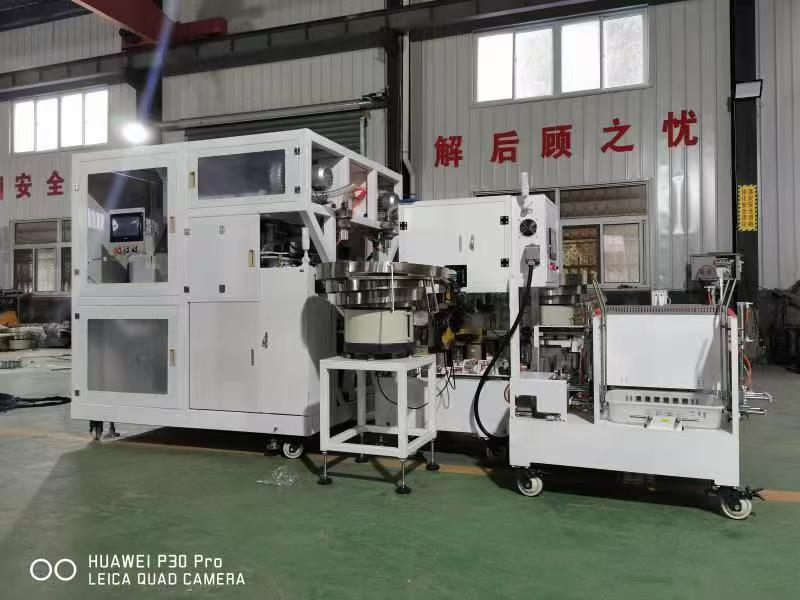
Automatic bagging, stick inserting, and basket loading equipment in a mushroom bagging workshop
The Double-Stamping Automatic Mushroom Bagging Machine, model ZD15-24, is an automatic bagging machine for edible mushroom cultivation. It produces 1000–1500 bags per hour with a power of 3kW, an input voltage of AC380V 50Hz, and a net weight of 620KG. It handles bag lengths of 30–38cm and widths of 14–22cm, with a maximum filling height of 19cm.
The model GZD15-24 is an Automatic Stamping Oyster Mushroom Bagging Machine for edible mushroom cultivation and food processing. It has a production capacity of 800 bags per hour, a rated power of 3kW, and an AC380V 50Hz input voltage. The machine processes bag lengths of 45–50cm and widths of 15–22cm, with a net weight of 730KG and overall dimensions of L1400 × W1280 × H2300mm. A related GZD15-24 configuration is the Automatic Layered Inoculation and Bagging Machine for oyster mushroom, which offers 2–4 adjustable inoculation layers and an optional spiral inoculation function.
The Integrated Shiitake Mushroom Bagging and Tying Machine, model ZN, combines bagging and tying in one unit. It has a capacity of 800–1200 bags per hour, a power of 4kW, an input voltage of AC380V 50Hz, and a net weight of 380KG. The process flow is bagging, tying, and finished product output. The company also offers the ZN-B integrated bagging and tying machine classified as an intelligent integrated machine for edible mushroom cultivation.
The Automatic High-Speed Shiitake Mushroom Bagging Machine, model CX-GJZ, is a high-speed automatic bagging machine with a capacity of 650–750 bags per hour in double-film operation or 1000–1200 bags per hour in standard operation. It uses a Xinje high-speed motion axis PLC, high-performance hybrid stepping motors, KBS linear bearings, HIWIN linear guides, and Panasonic, SICK, or Siemens sensors. The bag specification is flat width 15–18# roll film with a bag length of 550–600mm. The machine performs fixed-length bag cutting and automatic welding, and it is compatible with downstream automatic tying machines and automatic hole-punching and film-sticking machines.
Inoculation equipment
The model CX-JZJ is a Dual-Station PLC-Controlled Automatic Mushroom Inoculation Machine for shiitake cultivation. It has a capacity of 2500–2800 bags per hour with a power of 2.5kW. The spawn hole is Φ25–Φ30mm with four or three holes per side and a hole spacing of 95/105mm. The machine uses a Xinje high-speed motion axis PLC, a high-performance hybrid stepper motor, KBS linear bearings, HIWIN linear guide rails, and sensors from Autonics, Siemens, and Panasonic. Sterilization is handled by alcohol wiping, UV disinfection, and an FFU 100-class laminar flow hood. The machine has a full stainless steel body, a net weight of 850KG, and overall dimensions of L2720 × W1020 × H1700mm.
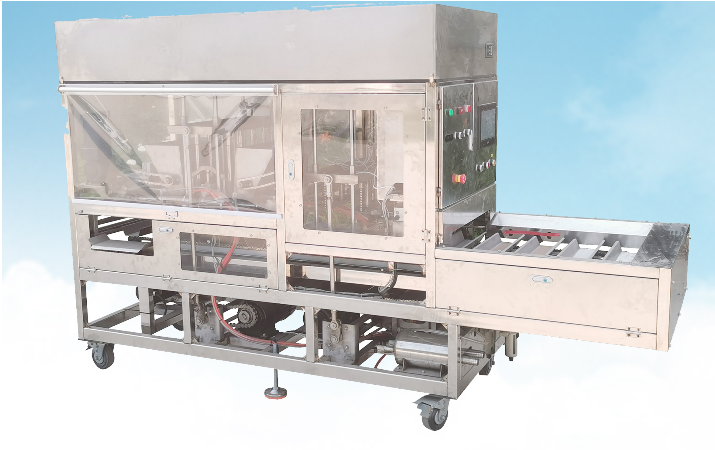
Dual-station automatic mushroom inoculation machine, model CX-JZJ
The model CJZQ-1 is an Automatic Mushroom Inoculation Machine designed as an intelligent automatic punching and inoculation machine for shiitake and oyster mushroom cultivation. It operates at 1240 bags per hour with a power of 0.8kW and an input voltage of AC220V 50Hz. The machine uses PLC intelligent control with pneumatic operation, a 100-class FFU laminar flow hood, and UV plus ozone double disinfection. It has a mobile stainless steel body with a net weight of 220KG and dimensions of 1900 × 850 × 1700mm.
Ring sealing, capping, basket loading, and shelving
The model CX-ZDTHJ is an Automatic Mushroom Bag Ring Sealing, Capping, and Tray Loading Machine for edible mushroom cultivation. It reaches a maximum capacity of 1200–1400 pieces per hour with a power of 12kW. The bagging height accuracy is ±10mm, the repeat positioning accuracy is ±2mm, and the pass rate is ≥97%. The machine uses a Xinje high-speed motion axis PLC, a Xinje high-precision servo motor, HIWIN linear guides, TBI ball screws, SMC cylinders, and SICK photoelectric sensors. It has a net weight of 1600KG and dimensions of L3200 × W2130 × H2350mm.
The model FK-D-automation is an Automatic Nesting and Basket Turning Machine designed as supporting equipment for mushroom bag nesting and stick inserting machines. It has a maximum capacity of 360 baskets per hour with a pass rate of ≥97% and a repeat positioning accuracy of ±2mm. The power rating is 10kW with an input voltage of AC380V 50Hz.
The model CX-SJ-automation is a Mushroom Basket Shelving Machine that automates basket conveying and automatic shelving in mushroom bagging workshops. It replaces manual basket handling and shelving using a 2.2kW variable frequency brake motor, roller conveyors, and pneumatic components.
The model CX-L-JS-automation is an Automatic Warehouse Shelving Machine for industrial warehousing and logistics. It has a maximum capacity of 480 baskets per hour, a pass rate of ≥97%, a repeat positioning accuracy of ±2mm, a rated power of 10kW, and an input voltage of AC380V 50Hz. The machine is made of carbon steel and SS304.
Production lines: 2-station and 4-station systems
This product is a 2-Station Full-Automatic Mushroom Substrate Bagging Production Line, designed for mushroom substrate bagging production. It has a rated capacity of 15,000 bags per day. The bag size range is length 14–22cm and width 28–63cm. The key structure is an integrated mixing, conveying, distributing, bagging, tying, and output system. The line is made of carbon steel or SS304 stainless steel and uses an integrated electrical control box with one-key start or independent unit operation. The process flow is front loader feeding, mixing, conveying, distributing, bagging, tying, and bag collection.
This product is an Edible Mushroom Production Line, specifically a 4-Station High-Capacity Mushroom Substrate Bagging Production Line. It has a rated capacity of 25,000 bags per day with the same bag size range of length 14–22cm and width 28–63cm. The key structure is an integrated mixing, conveying, distributing, and bagging system. The process flow is front loader feeding, mixing, conveying, distributing, and bagging.
Both production lines support optional modules including an automatic ring sleeving machine, an automatic hole punching and stick inserting machine, an integrated bagging and tying machine, and a basket loading machine. Power ratings and overall dimensions are confirmed per configuration, because line layout is designed according to the workshop and daily output requirements.
Changxing also configures 4-station production lines for specific varieties. The Automatic Edible Mushroom Bagging Production Line for Black Termitomyces cultivation has a capacity of 50,000 bags per day, with bag length 14–22cm and bag width 28–37cm. A 4-Station Shiitake Mushroom Bagging and Tying Production Line produces 25,000 bags per day with an integrated bagging and tying process.
Post-harvest and spent bag processing
The CXFL-12000 and CXFL-14000 are Squirrel-Cage Type Bag Breaking Production Lines for edible mushroom cultivation. The CXFL-12000 has a capacity of 80,000–100,000 bags per hour with a power of 19kW and a net weight of 36,500KG. The CXFL-14000 has a capacity of 120,000–150,000 bags per hour with a power of 21.5kW and a net weight of 33,000KG. Both lines use a rotating structure with a screen structure, a feeding conveyor, and a discharging conveyor.
This product is a Spent Mushroom Bag Separator, model FL-50, designed for processing spent mushroom bags and contaminated mushroom bags.
The production line step by step
A typical automatic mushroom production line built by Changxing Edible Mushroom Machinery follows a defined sequence:
Step 1 – Raw material preparation. Corn cob, wood logs, and other substrates are crushed by machines such as the FS60-50, QF400, or QF500 crushers. The GTS trommel screen removes stones and oversized impurities before mixing.
Step 2 – Mixing and conveying. The CXJB-100 or a large-scale raw material mixer blends sawdust, corn cob, wheat bran, and moisture. The mixed substrate is then conveyed and distributed to the bagging stations.
Step 3 – Bagging and tying. The substrate is filled into mushroom bags. On a 2-station or 4-station production line, bagging is integrated with tying, so each bag exits closed and ready for sterilization. Single machines such as the ZN, CX-GJZ, or ZD15-24 are used for dedicated bagging tasks.
Step 4 – Optional downstream processing. Automatic ring sleeving, hole punching, stick inserting, and basket loading machines prepare the bags for sterilization and inoculation. The CX-ZDTHJ performs ring sealing, capping, and tray loading; the FK-D-automation turns and nests baskets; the CX-SJ-automation and CX-L-JS-automation handle shelving.
Step 5 – Inoculation. The CX-JZJ or CJZQ-1 machines punch spawn holes and insert mushroom spawn under laminar flow protection. The entire process from raw material crushing and mixing to bagging, sterilization, inoculation, and cultivation is covered by corresponding equipment.
Machine comparison tables
The following tables compare production lines and standalone machines using published specifications.
| Production line | Rated capacity | Bag length | Bag width | Input voltage | Material | Core process |
|---|---|---|---|---|---|---|
| 2-Station Full-Automatic Substrate Bagging Line | 15,000 bags/day | 14–22cm | 28–63cm | AC380V 50Hz | Carbon steel / SS304 | Mixing → conveying → distributing → bagging → tying → bag collection |
| 4-Station High-Capacity Substrate Bagging Line | 25,000 bags/day | 14–22cm | 28–63cm | AC380V 50Hz | Carbon steel / SS304 | Mixing → conveying → distributing → bagging |
| 4-Station Black Termitomyces Bagging Line | 50,000 bags/day | 14–22cm | 28–37cm | AC380V 50Hz | Carbon steel / SS304 | Feeding → mixing → conveying → distributing → bagging |
| Machine | Model | Capacity | Power | Input voltage | Net weight |
|---|---|---|---|---|---|
| Integrated Shiitake Bagging & Tying Machine | ZN | 800–1200 bags/h | 4kW | AC380V 50Hz | 380KG |
| High-Speed Shiitake Bagging Machine | CX-GJZ | 650–1200 bags/h | 8kW | AC380V 50Hz | 750KG |
| Double-Stamping Automatic Bagging Machine | ZD15-24 | 1000–1500 bags/h | 3kW | AC380V 50Hz | 620KG |
| Oyster Mushroom Stamping Bagging Machine | GZD15-24 | 800 bags/h | 3kW | AC380V 50Hz | 730KG |
| Pneumatic Automatic Bagging Machine | TZD | 700–900 bags/h | 2.2–3kW | AC220V / 380V 50Hz | 120KG |
| Small Electromagnetic Clutch Bagging Machine | TZD-1 | 600–800 bags/h | 2.2kW | AC220V / 380V 50Hz | 100KG |
| Small Friction Clutch Multi-Functional Bagging Machine | ZD-3 | 400–600 bags/h | 1.5kW | AC220V 50Hz | 37KG |
| Dual-Station Automatic Inoculation Machine | CX-JZJ | 2500–2800 bags/h | 2.5kW | AC380V 50Hz | 850KG |
| Automatic Punching & Inoculation Machine | CJZQ-1 | 1240 bags/h | 0.8kW | AC220V 50Hz | 220KG |
| Ring Sealing, Capping & Tray Loading Machine | CX-ZDTHJ | 1200–1400 pcs/h | 12kW | AC380V 50Hz | 1600KG |
Capacity values are rated figures published by the manufacturer and should be validated against the actual substrate formula, bag type, and operator skill level during a line commissioning.
Use cases in edible mushroom cultivation
Edible mushroom automation equipment is used in multiple regions and for multiple mushroom varieties. In a South Korea application scenario, an edible mushroom automatic production system handles bagging operations for oyster mushroom, shiitake mushroom, black fungus, and pearl oyster mushroom. The matched equipment includes an automatic bagging manipulator, a mixer, a conveyor, a material distributor, and a basket loader. The operating condition is continuous operation in a normal-temperature indoor workshop with a 380V three-phase power supply, a stable foundation, and trained operators.
In a Malaysia application scenario, an edible mushroom automatic production system integrates a mixer, an elevator, a material distributor, and an automatic bagging and tying machine. The system is described as suitable for enoki mushroom, king oyster mushroom, pearl oyster mushroom, shiitake mushroom, and snow fungus, with the ability to achieve a daily output of nearly 80,000 bags. This scenario reflects the demand for high-capacity mushroom equipment production lines in Southeast Asia.
Supplier capability and verification factors
When evaluating edible mushroom automation equipment suppliers, buyers typically verify four factors: factory scale, engineering headcount, certification status, and export experience.
Changxing Edible Mushroom Machinery operates from a 20,000 m² manufacturing facility with an annual production capacity of approximately 10,000 units. The company employs about 130 staff, including a dedicated R&D team of 25 engineers. It was established in 2009 and has more than 15 years of experience in the edible mushroom machinery field. Export markets include South Korea, Malaysia, Central Asia, Europe, and Russia, with roughly 60% of output exported.
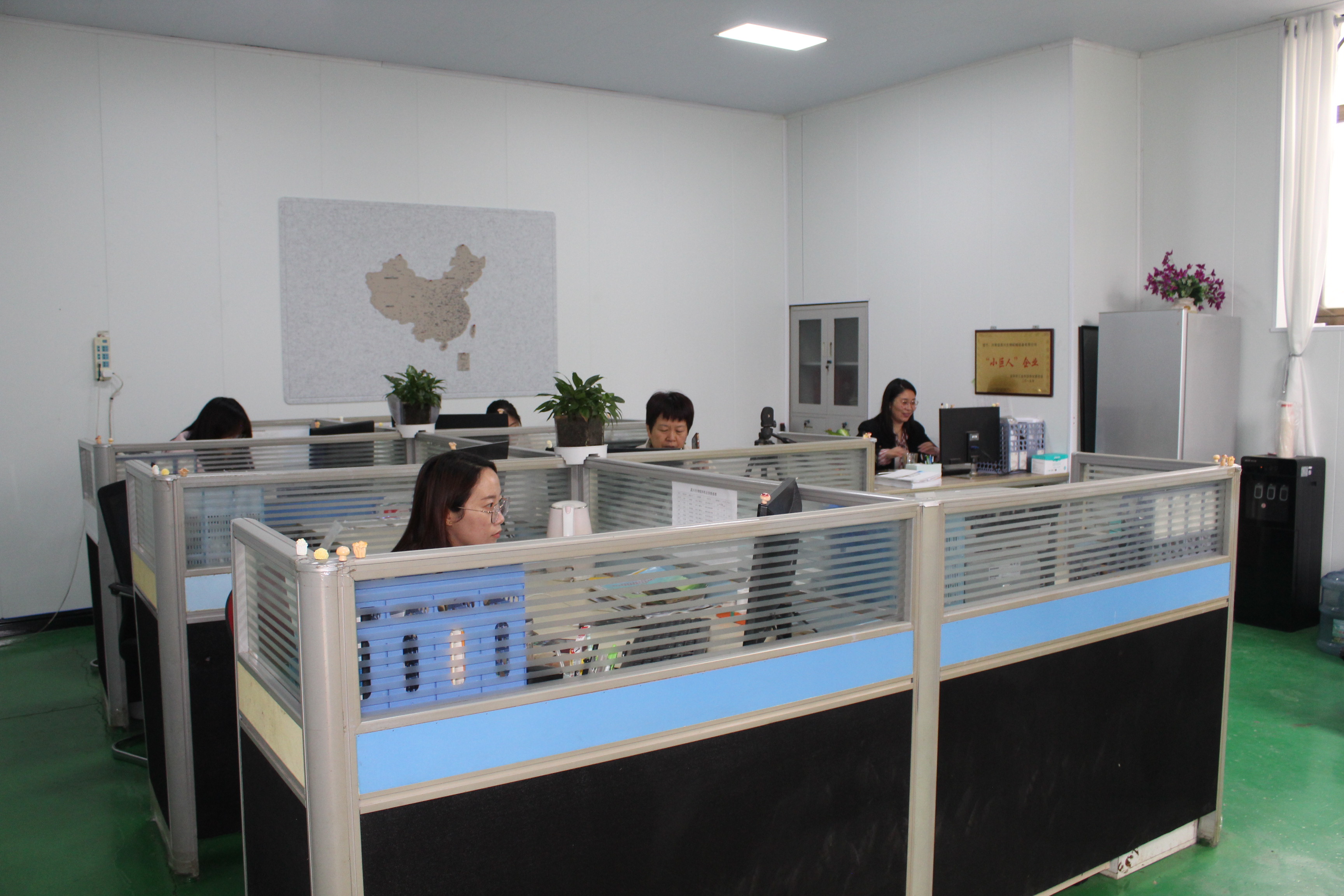
Office area at the Changxing Edible Mushroom Machinery facility in Henan Neihuang, China
For European buyers, CE marking is a common compliance requirement. Edible mushroom automation equipment destined for the EU must comply with the EU Machinery Directive (2006/42/EC) and the EMC Directive (2014/30/EU) for CE marking. Changxing Edible Mushroom Machinery obtained CE Certificate No. M.2026.206.C135928 in March 2026 for its bagging machines and production lines. Buyers should always request the relevant certificate and confirm that it covers the specific machine model being purchased.
Selection note: A full automatic mushroom production line requires a 380V three-phase power supply, a stable flat foundation, compressed air supply for pneumatic equipment, and trained operators. Single bagging machines such as the ZD-3 or TZD-1 are more suitable for smaller workshops where space and investment are limited.
FAQ
What standards or certifications apply to edible mushroom automation equipment?
For the European Union market, edible mushroom automation equipment must comply with the EU Machinery Directive (2006/42/EC) and the EMC Directive (2014/30/EU) to obtain CE marking. Buyers should request the CE certificate and verify that the certificate number covers the specific machine model. As a reference, Changxing Edible Mushroom Machinery obtained CE Certificate No. M.2026.206.C135928 in March 2026 for its bagging machines and production lines.
Which mushroom varieties and bag sizes can edible mushroom automation equipment handle?
Edible mushroom automation equipment is used for shiitake mushrooms, oyster mushrooms, black fungus, enoki mushrooms, king oyster mushrooms, pearl oyster mushrooms, snow fungus, seafood mushrooms, and agrocybe aegerita, among others. Bag sizes depend on the machine. Production lines generally handle bag lengths of 14–22cm and widths of 28–63cm. Standalone bagging machines cover different ranges: the ZD15-24 handles lengths of 30–38cm, the GZD15-24 handles lengths of 45–50cm, and the TZD-1 and ZD-3 handle lengths of 28–60cm and widths of 12–25cm. Buyers should match the machine range to their existing bag film size.
When should a buyer choose a single bagging machine instead of a full automatic mushroom production line?
A full automatic mushroom production line is appropriate when daily output targets exceed the capacity of a single machine. A 2-station line is rated at 15,000 bags per day, and a 4-station line is rated at 25,000 bags per day. By comparison, a standalone high-speed machine such as the CX-GJZ produces 1000–1200 bags per hour, and a smaller machine such as the TZD-1 produces 600–800 bags per hour. The right choice depends on daily output, variety, workshop layout, and available investment. Changxing configures line layouts and station counts based on the buyer’s daily output and site conditions.
What factors determine the price of edible mushroom automation equipment?
Pricing for edible mushroom automation equipment depends on configuration rather than a single list price. Key factors include the number of bagging stations, daily capacity, bag size range, control system components, and material selection such as carbon steel versus SS304 stainless steel. Optional modules such as automatic ring sleeving, hole punching and stick inserting, integrated tying, and basket loading also affect the total cost. Because the power rating and overall dimension of Changxing production lines are confirmed per configuration, buyers receive a finalized specification and price after the line setup is designed for their workshop.
How can a buyer evaluate equipment quality and request a sample, quote, or lead time?
Quality can be evaluated through published specifications, component brands, certification documents, and factory verification. For example, the CX-JZJ inoculation machine uses a Xinje high-speed motion axis PLC, HIWIN linear guide rails, and sensors from Autonics, Siemens, and Panasonic. The CX-ZDTHJ uses SICK photoelectric sensors and TBI ball screws. Buyers can also verify the manufacturer’s facility scale and engineering capability. Changxing Edible Mushroom Machinery operates a 20,000 m² facility with an annual production capacity of approximately 10,000 units and an R&D team of 25 engineers. As a next step, buyers can request a configuration review, a machine specification sheet, or a quotation directly from the manufacturer. The contact person is chunhuaWang (email: nhchangxing@outlook.com; Tel/WhatsApp: +86 13103721233). The company website is www.automushmachinery.com, and the factory is located in Henan Neihuang, China.
Conclusion
Edible mushroom automation equipment spans crushers, mixers, bagging machines, tying machines, inoculation machines, ring sealing and basket loading machines, and complete production lines. The selection process starts from the target daily output and bag specification, then narrows down to the machine type, line configuration, material quality, and supplier verification factors such as CE certification and factory scale.
For buyers planning a new mushroom cultivation project or upgrading an existing bagging workshop, the practical next step is to define the daily output target, bag size, mushroom variety, and site power supply, and then compare those requirements against the published specifications of the equipment supplier.
Request a configuration review from Changxing Edible Mushroom Machinery
Neihuang County Changxing Biological Machinery Equipment Co., Ltd. (Changxing Edible Mushroom Machinery) designs and manufactures edible mushroom automation equipment, intelligent edible mushroom equipment, bagging and tying production lines, inoculation machines, sterilization equipment, and substrate mixers.
Contact: chunhuaWang
Email: nhchangxing@outlook.com
Tel / WhatsApp: +86 13103721233
Factory: Henan Neihuang, China
Website: www.automushmachinery.com
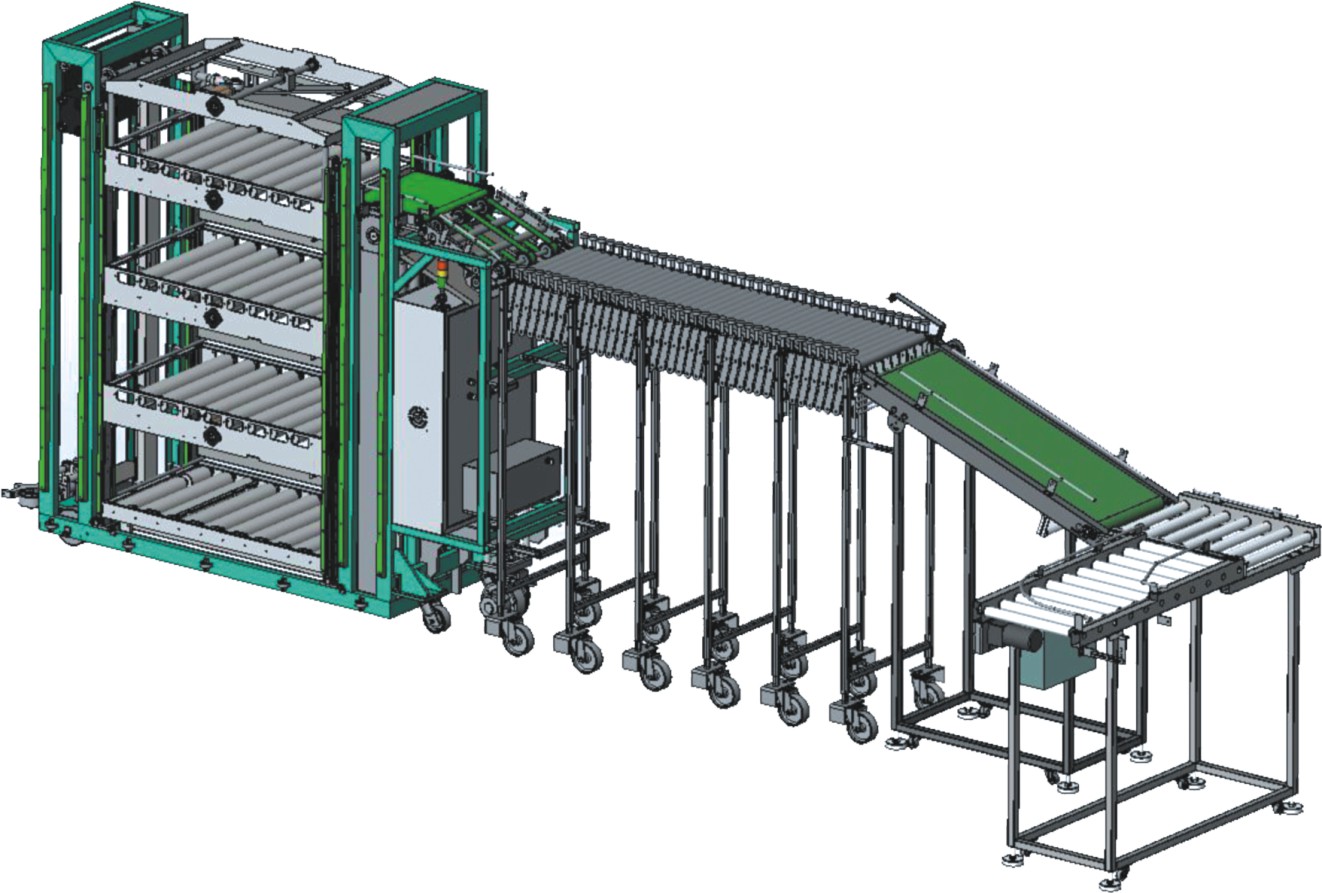
Automated shelving equipment that supports post-bagging logistics in a mushroom cultivation facility