Edible Mushroom Automation Equipment: A Foundational Guide to Machines and Workflow
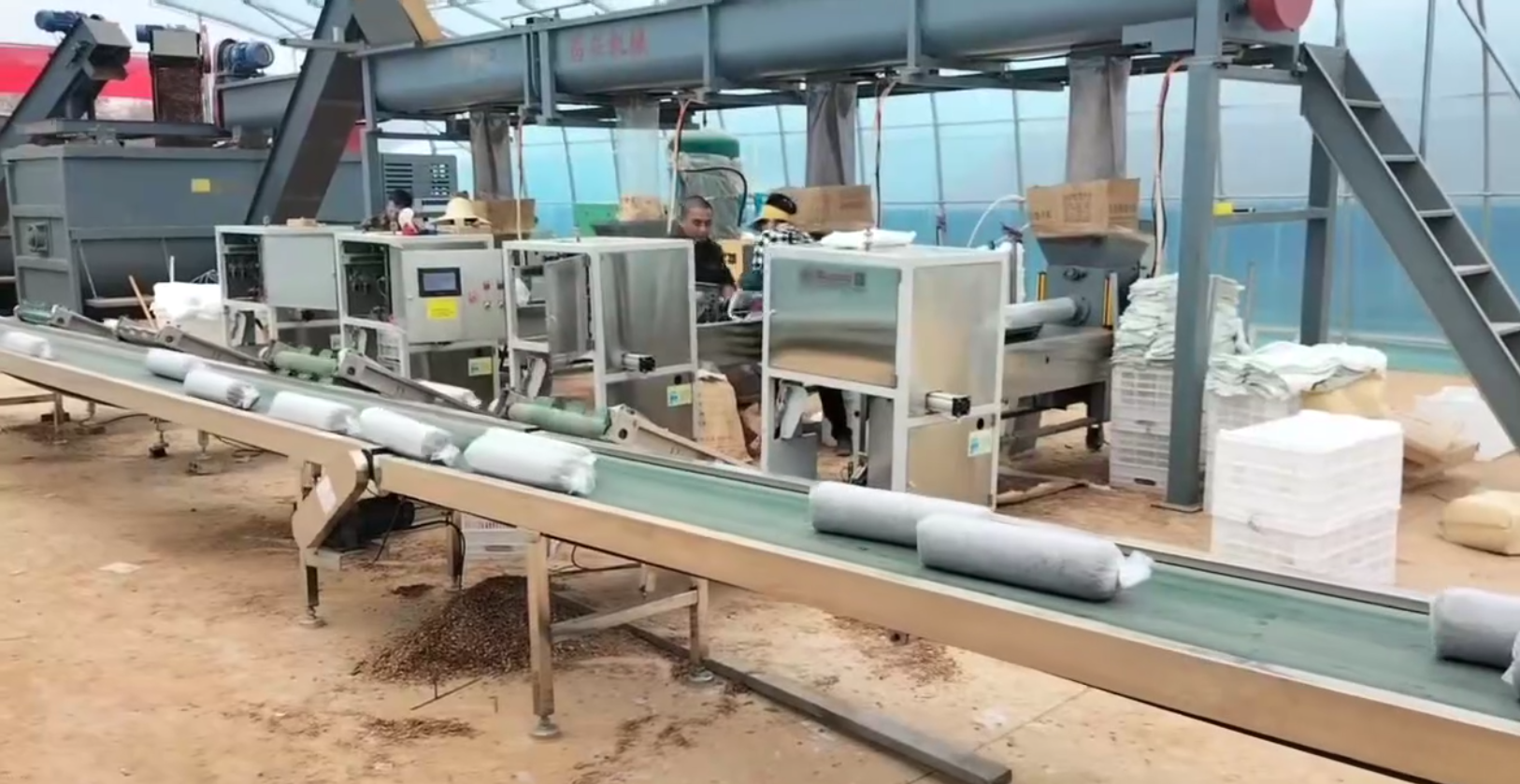
Edible mushroom automation equipment is the category of agricultural machinery used to turn raw substrate materials into filled, closed, and sometimes inoculated mushroom culture bags through a repeatable production process. Although many buyers first search for a single bagging machine, a full automation project usually includes several equipment groups: crushers and screens, mixers and conveyors, bagging and tying machines, production lines, sterilization equipment, inoculation machines, and basket-handling modules.
This article is written for buyers at the awareness-to-research stage. It does not compare quotes or rank brands. Instead, it explains what the equipment category contains, why the components are usually discussed as a workflow, and how to interpret commonly used capacity figures. That makes later conversations with suppliers more productive.
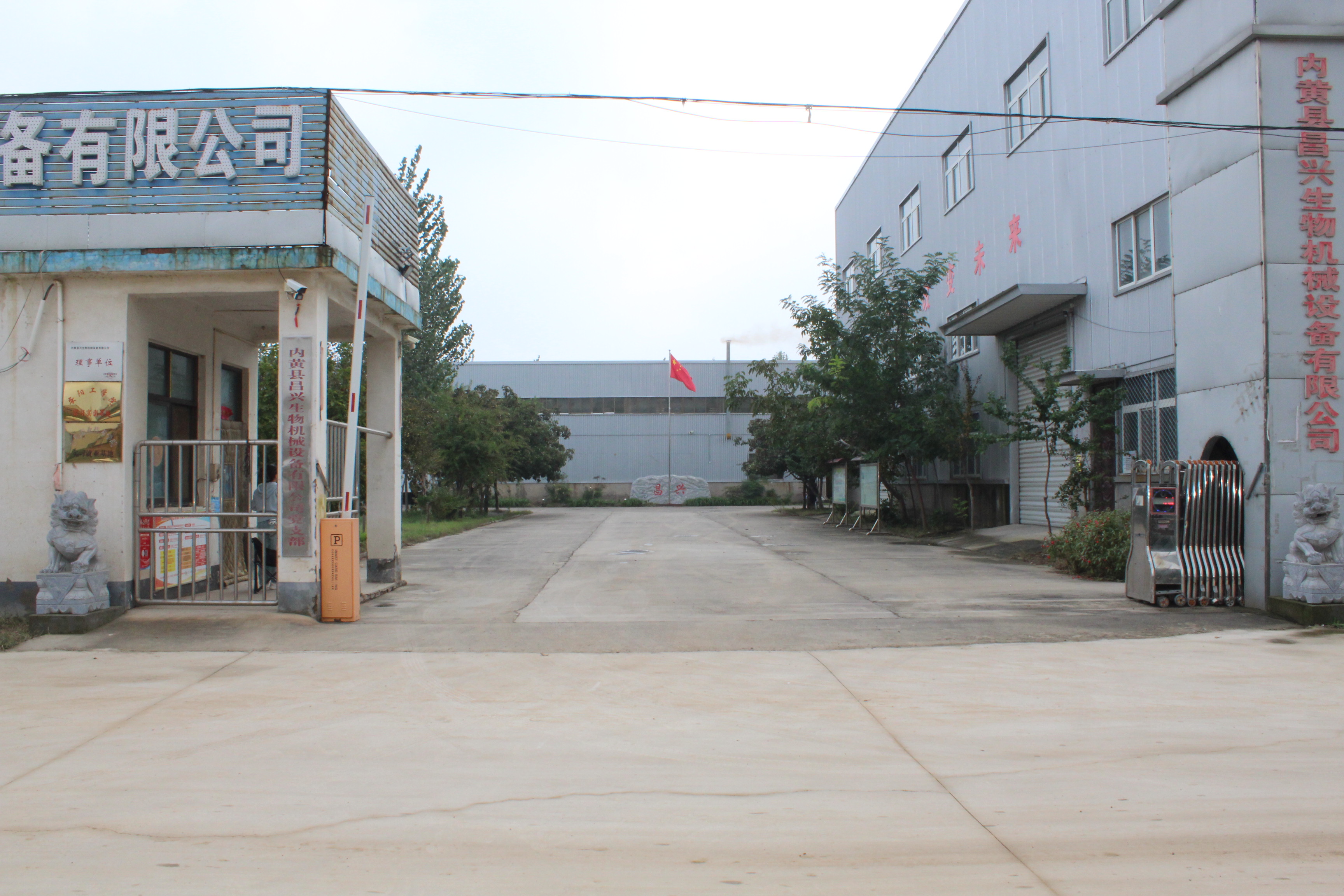
The examples used below come from Changxing Edible Mushroom Machinery, a China-based manufacturer whose full legal name is Neihuang County Changxing Biological Machinery Equipment Co., Ltd.
Why Edible Mushroom Automation Equipment Is a Workflow Category, Not a Single Product
Growing edible mushrooms on a commercial scale is not simply a matter of buying one bagging machine. The substrate, the bag, the closure, and the next cultivation step all affect equipment selection. In Changxing’s product description, the full process from raw material crushing and mixing to bagging, sterilization, inoculation, cultivation, and mushroom production is covered by corresponding equipment. That is why an equipment inquiry usually starts with process questions rather than with a model number.
Understanding this workflow also helps buyers avoid two common mistakes. The first is treating bagging equipment as a standalone purchase without checking how material reaches the machine. The second is selecting a very large line before knowing the site’s electrical supply, workshop layout, bag dimensions, and daily output target.
Market Context: Why Industrial Mushroom Growers Are Looking at Automated Equipment
Several industry signals explain the current interest in edible mushroom automation equipment. The global mushroom equipment market was estimated at USD 3.8 billion in 2025 and is projected to reach USD 7.2 billion by 2033, according to Dataintelo. Asia-Pacific accounted for 42.3 percent of that revenue in 2025, driven in large part by industrial-scale cultivation in China. To put that in context, China’s edible mushroom industry value exceeded 380 billion yuan, roughly USD 53 billion, in 2024 and represented more than 70 percent of global output, according to reporting cited from People’s Daily and Ministry of Agriculture data.
The practical implication is not that every buyer needs China-made equipment. Rather, the industrial scale has produced a wider range of machine builders, line formats, and customization options. For an awareness-stage buyer, it means standard equipment categories can be easier to compare than they may first appear.
Who Is Changxing Edible Mushroom Machinery?
Changxing Edible Mushroom Machinery is the export-facing name of Neihuang County Changxing Biological Machinery Equipment Co., Ltd., founded in 2009 in Henan, China. The company specializes in designing and manufacturing edible mushroom automation equipment and intelligent edible mushroom equipment. Its operating scale and main markets help buyers understand what kind of manufacturer is behind the examples in this guide:
- Founded in 2009, with more than 15 years of experience in the edible mushroom machinery field.
- Manufacturing facility of 20,000 square meters.
- About 130 employees, including an R&D team of 25 engineers.
- Annual production capacity of approximately 10,000 units.
- Export share of about 60 percent of output.
- Main markets include South Korea, Malaysia, Central Asia, Europe, and Russia.
- Main products include edible mushroom automation equipment, intelligent edible mushroom equipment, mushroom spawn bag making machines, mushroom bag tying machines, shiitake and oyster mushroom bagging machines, mushroom compost bagging machines, industrial sterilization equipment, automatic bagging lines, and substrate mixers.
Main Equipment Groups in an Edible Mushroom Automation Setup
1. Raw material size reduction and screening
Substrate ingredients used for mushroom cultivation often include corn cob, wood, branches, cotton material, and granular raw materials. Before mixing, these materials may need to be reduced to the desired particle size. Changxing’s range includes several first-stage machines:
- Large-Scale Corn Cob Crusher, model FS60-50. It processes corn cob, corn stalk, and bean stalk at about 2 tons per hour with a 30 kW motor.
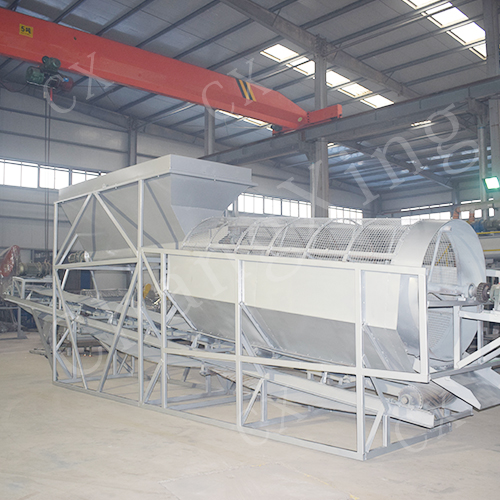
- Large-Scale Rotary Trommel Screen, model GTS. It is designed for efficient stone and impurity removal and can screen about 8 tons of material per hour.
- 500-Type Wood Crusher, model QF500, for mixed wood and logs up to about 140 mm in diameter, with an output around 1 ton per hour.
- Branch and Cotton Material Crusher, model MF-50, for branches up to about 30 mm in diameter and for fibrous cotton material.
2. Substrate mixing and material handling
Once raw materials are prepared, mixing improves substrate consistency. The 100-Type Raw Material Mixer, model CXJB-100, is one batch option: its capacity is 0.8 ton, and its large auger structure keeps material movement efficient. Another option is the Self-Propelled Electric Compost Turner and Mixer, model DZF-550, which can turn and mix about 20 cubic meters per hour for mushroom substrate or organic fertilizer production.
In automated mushroom equipment production lines, mixers are integrated with elevators, material distributors, conveyors, and bagging stations. The line flow often starts with front loader or shovel feeding, then moves through mixing, conveying, and distribution before bagging.
3. Bagging machinery and bag-closing options
Bag filling is the center of most inquiries because it is where substrate, bag dimensions, packing density, and final speed meet. Buyers will encounter several names in this category: semi-automatic mushroom bag filling machines, fully automatic mushroom baggers, mushroom bag tying machines, mushroom compost bagging machines, and substrate bag filling machines. The following table shows how a few representative machine types are described in Changxing’s specification data:
| Equipment type | Representative model | Stated speed or role |
|---|---|---|
| Pneumatic automatic bagging machine | TZD | 700–900 bags per hour |
| Small multi-functional bagging machine | ZD-3 | 400–600 bags per hour |
| Automatic high-speed shiitake mushroom bagging machine | CX-GJZ | 1,000–1,200 bags per hour in standard high-speed operation |
| Integrated shiitake bagging and tying machine | ZN | 800–1,200 bags per hour |
| Automatic layered inoculation and bagging machine for oyster mushroom | GZD15-24 | 800 bags per hour with adjustable layered inoculation |
4. Automatic mushroom production lines and handling modules
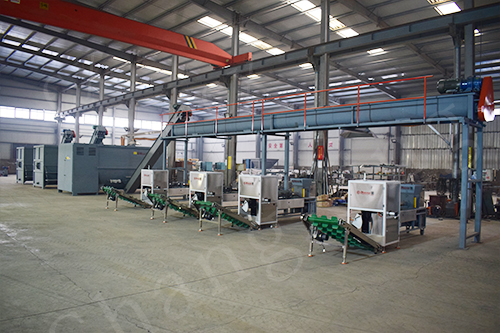
For high-throughput operations, single machines are replaced by an automatic mushroom production line. A 2-station line can handle 15,000 bags per day, while a 4-station line can be specified for 25,000 bags per day. Some 4-station lines for black Termitomyces cultivation are described with a daily output of 50,000 bags. These lines integrate mixing, conveying, material distribution, bagging, tying, and output through one control system. Optional downstream modules include automatic ring sleeving, hole punching and stick inserting, bagging and tying integration, and basket loading.
To make the complete production flow smoother, automatic modules handle bag nesting, capping, basket loading, and shelf placement. The CX-S-JWZ-automation, for example, is an automatic bagging, nesting, stick-inserting, and basket-loading machine rated at 1,200–1,400 pieces per hour with a stated pass rate of at least 97 percent. The CX-ZDTHJ is an automatic ring-sleeving, capping, and basket-loading machine. The FK-D-automation is an automatic nesting and basket turning machine that supports these operations. Later in the process, basket unloading and automatic warehousing shelving machines can be added.
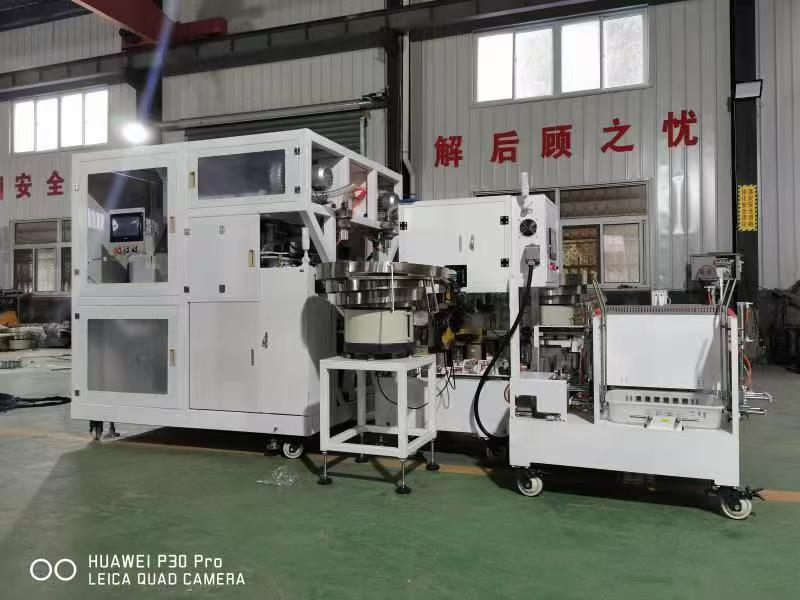
5. Sterilization and inoculation equipment
After bagging and tying, filled bags usually pass through sterilization and inoculation stages. In Changxing’s catalog, sterilization-related products include industrial mushroom sterilization equipment and atmospheric sterilization cabinets. For inoculation, the CJZQ-1 Automatic Mushroom Inoculation Machine is designed for punching and inoculating bags with a flat width of 14–22 cm and a length of 40–60 cm, at a rate of 1,240 bags per hour. It uses PLC control, a 100-class FFU laminar flow hood, and UV plus ozone disinfection. For shiitake cultivation, the CX-JZJ dual-station inoculation machine has a stated capacity of 2,500–2,800 bags per hour.
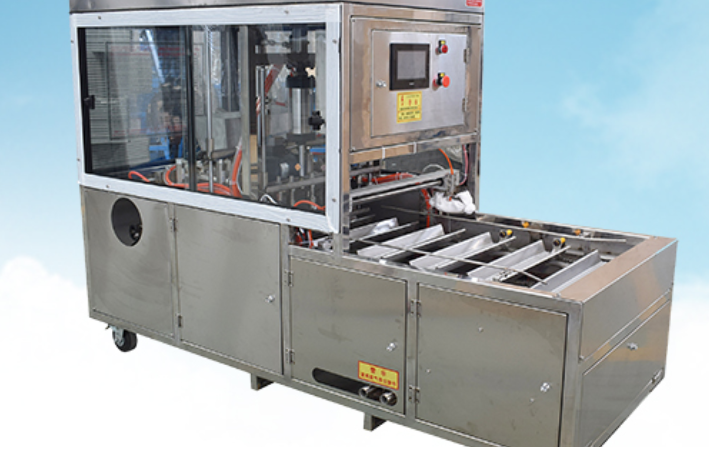
Step-by-Step Overview: From Raw Material to Inoculated Bag
The machine groups above can be arranged into a practical process flow. For a fully automated operation using a substrate bagging production line, the sequence usually follows this pattern:
- Raw material feeding: front loader feeding or shovel feeding brings corn cob, wood, or other substrate ingredients into the process.
- Crushing and screening: crushers such as the FS60-50 or QF500 reduce material size, while a drum screen such as the GTS removes stones and impurities.
- Mixing: mixers such as the CXJB-100 or DZF-550 blend substrate ingredients more evenly.
- Conveying and distribution: elevators, conveyors, and material distributors send substrate to multiple bagging stations.
- Bagging and closing: bag filling machines or integrated bagging and tying machines form the grow bag.
- Optional downstream handling: ring sleeving, hole punching, stick inserting, tray loading, and basket loading modules prepare the bag for sterilization or cultivation.
- Inoculation: automatic inoculation machines such as the CJZQ-1 or CX-JZJ add spawn under controlled conditions.
- Basket handling and shelving: bag baskets are turned, stacked, unloaded, or moved to shelves as needed.
- Spent bag processing at the end of the crop cycle: spent or contaminated mushroom bags can be processed by equipment such as the FL-50 spent mushroom bag separator or a squirrel-cage type bag breaking production line.
Not every facility uses every step. A smaller operation might use a semi-automatic bagging machine and manual basket movement, while a large indoor farm may use a multi-station line with automatic basket loading. The value of the step-by-step view is that it makes the equipment category easier to map to an actual growing plan.
Application Examples: How Different Facilities Use the Equipment Groups
Continuous indoor workshop in Malaysia with high output
One documented application scenario is a continuous-operation indoor workshop in Malaysia. The setup is suitable for bagging enoki mushroom, king oyster mushroom, pearl oyster mushroom, shiitake mushroom, snow fungus, and similar species. The equipment integrates a mixer, elevator, material distributor, and automatic bagging and tying machines, with a stated daily output of nearly 80,000 bags. Site requirements include 380V three-phase power, a stable flat foundation, and trained personnel.
Multi-variety bagging workshop in South Korea
Another documented scenario is a continuous-operation indoor workshop in South Korea at normal temperature. The matched equipment includes an automatic bagging manipulator, mixer, conveyor, material distributor, and basket loader. It supports bagging operations for oyster mushroom, shiitake mushroom, black fungus, and pearl oyster mushroom. A stable foundation, 380V three-phase supply, and trained operators are listed as site requirements.
Lower-capacity or starting operations
Not every producer begins with a large line. The ZD-3 Small Friction Clutch Mushroom Bagging Machine is a small multi-functional unit rated at 400–600 bags per hour. It belongs to a product range for edible mushroom cultivation and pillow packaging, which makes it useful as a lower-capacity reference point. These machine descriptions help buyers establish a realistic capacity benchmark before planning larger automation.
Comparison: Typical Bagging Production Line Capacities
Published line capacities are useful for early research. They show that line selection usually starts with the daily bag target rather than with only a brand name or motor power. The table below compares three documented production line configurations.
| Line description | Station type | Stated capacity | Bag size range | Main bagging flow |
|---|---|---|---|---|
| Automatic Edible Mushroom Bagging and Sealing Line | 2-Station Production Line | 15,000 bags per day | Length 14–22 cm, width 28–63 cm | Feeding, mixing, conveying, distributing, bagging, tying |
| Edible Mushroom Production Line | 4-Station High-Capacity Line | 25,000 bags per day | Length 14–22 cm, width 28–63 cm | Front loader feeding, mixing, conveying, distributing, bagging |
| Automatic Edible Mushroom Bagging Production Line for black Termitomyces | 4-Station Production Line | 50,000 bags per day | Length 14–22 cm, width 28–37 cm | Feeding, mixing, conveying, distributing, bagging |
All lines can be configured with downstream equipment such as an automatic ring sleeving machine, notch inserting machine, integrated bagging and tying machine, or tray loading machine. Final layout depends on the customer’s workshop conditions and daily output target.
Frequently Asked Questions
What does edible mushroom automation equipment include?
It includes the machines that prepare and handle mushroom substrate from incoming raw material to the filled grow bag and the movement of the bag after inoculation. In practical terms, it can include crushers, screens, mixers, conveyors, bagging machines, tying machines, bagging production lines, sterilization equipment, inoculation machines, basket loading and unloading machines, and spent bag separators.
Is edible mushroom automation equipment the same as a mushroom bagging machine?
No. A mushroom bagging machine fills and often closes a bag. Edible mushroom automation equipment is a broader category that includes bagging machines plus the machines and modules that bring substrate to the bagger and move the finished bag to the next stage. A full production line, for example, combines mixing, lifting, material distribution, bagging, and sealing or tying.
Which mushroom species can be handled with this type of equipment?
Machinery is often matched to bag size and cultivation method rather than to one species only. Documented examples include oyster mushroom, shiitake mushroom, black fungus, pearl oyster mushroom, enoki mushroom, king oyster mushroom, snow fungus, and related varieties. Specific machines are also matched to formats such as high-speed shiitake bags, square bags, oyster layered inoculation bags, and black Termitomyces production lines.
What capacity information should I look for when searching for edible mushroom automation equipment?
Look for two capacity signals. Single bagging machines are usually rated in bags per hour, while full bagging lines are often rated in bags per day. Documented examples include 700–900 bags per hour for a semi-automatic pneumatic bagging machine and 15,000 to 50,000 bags per day for different line configurations. Bag length, bag width, and substrate filling density still need to be confirmed with the supplier.
What is a reasonable next step for a first-time buyer?
Clarify four points before contacting suppliers: planned daily output, mushroom species, bag size or type, and site electrical supply. These details let a machinery manufacturer translate an equipment category into a possible line configuration. Changxing Edible Mushroom Machinery, for example, supports export inquiries and customization discussions when these basic parameters are provided.
Conclusion
Edible mushroom automation equipment is best understood as a structured workflow rather than a long product list. The sequence starts with substrate preparation, moves through mixing and bagging, and continues with sterilization, inoculation, basket handling, and spent bag processing. Manufacturers such as Changxing Edible Mushroom Machinery supply both individual machines and integrated production lines across this workflow.
For an industrial buyer in the awareness-to-research phase, the goal is not to memorize models. It is to learn the questions that define automation: What substrate will be used, what bag format is needed, what daily output is expected, and what site conditions already exist? Once those variables are clear, equipment groups and capacity tables become much easier to interpret.
If you are mapping equipment options and need a specification-focused starting point, Changxing Edible Mushroom Machinery can discuss line configuration and customization. Contact nhchangxing@outlook.com or visit www.automushmachinery.com for the company background and product range.
Have Questions or Need More Details?
Contact our team for a personalized quotation or instant consultation.
Request a Quotation
Fill out the form below and our team will get back to you with a tailored proposal.
WhatsApp Direct Chat
Prefer to chat in real-time? Message us on WhatsApp for instant assistance & quick answers.
- Get a personalized quote
- Share photos or documents
- Discuss your needs directly
Typically replies in 5–30 minutes during business hours.