Matching Edible Mushroom Automation Equipment to Your Project: A Scenario-Based Guide
Selecting edible mushroom automation equipment is not about finding the fastest machine on paper. It is about finding the system that matches your cultivation project's real conditions: the mushroom varieties you grow, the bag formats you use, the daily output you need, the power and space your facility can provide, and the skills of your operators. This guide provides a scenario-based framework for matching edible mushroom machinery and equipment to specific production projects, with examples from industrial cultivation in South Korea and Malaysia.
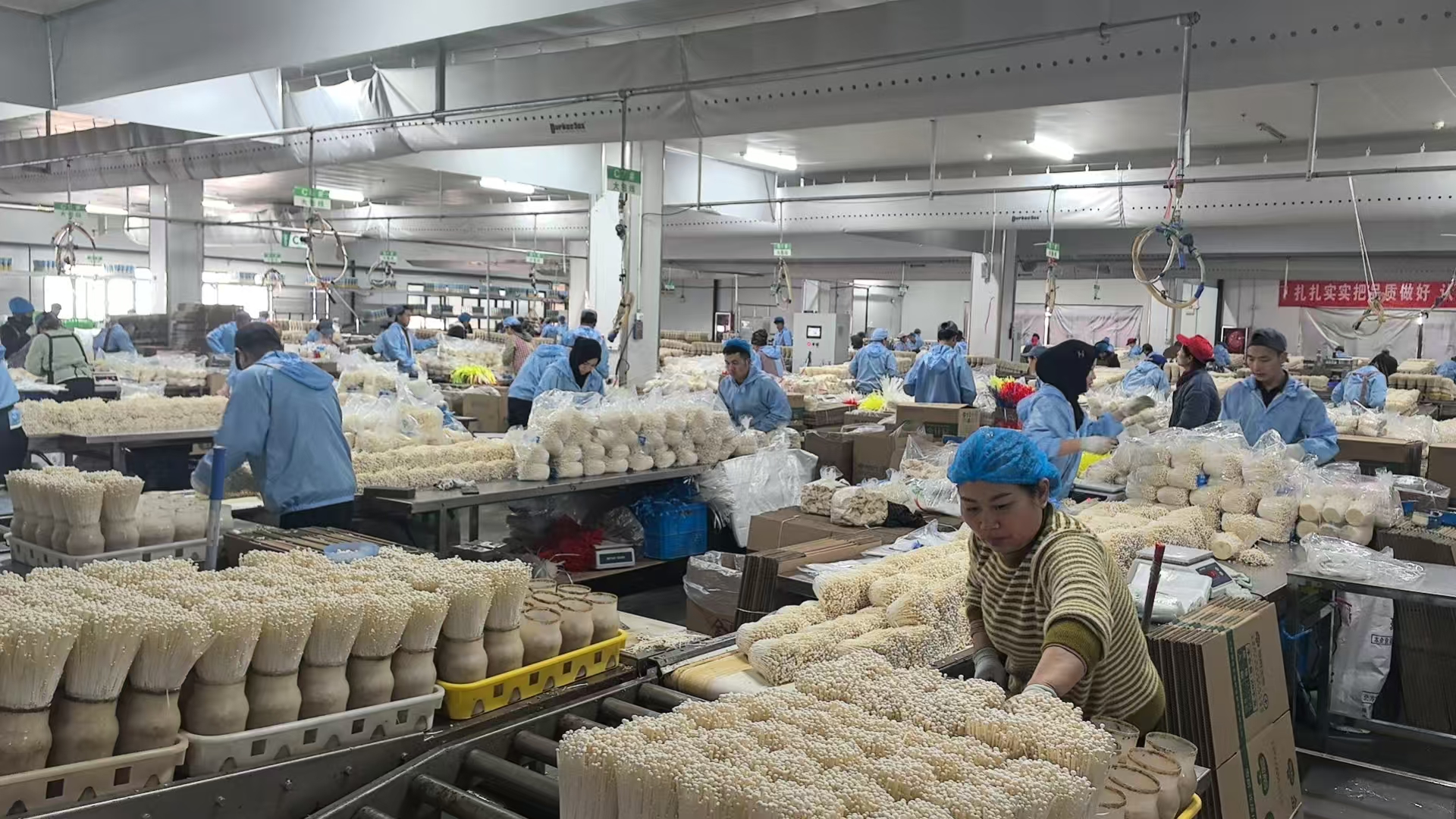
Industrial edible mushroom production scenario — the starting point for project-level equipment selection
Why Generic Equipment Selection Falls Short
Many procurement failures are not caused by poor machine quality. They are caused by a mismatch between machine design and project scenario. A bagging machine calibrated for shiitake mushroom bags may not handle oyster mushroom bags at the same speed or density. A fully automatic production line designed for an indoor factory with stable 380V three-phase power may be unusable in a facility with limited or unstable supply. A farm that lacks trained operators may struggle with advanced PLC-based systems, while a simpler electromagnetic clutch or pneumatic bagging machine could deliver consistent output.
The same logic applies to supporting equipment. In an edible mushroom automatic production system, a bagging machine does not work alone. It is typically integrated with an automatic bagging manipulator, mixer, conveyor, material distributor, and basket loader. Each component must be selected to match the project's capacity and layout. Buyers who evaluate equipment without a clear picture of their own scenario often end up with either over-specified lines that waste capital or under-configured systems that become labor bottlenecks.
Industry Context: A Growing and Industrializing Market
The mushroom equipment market is expanding as cultivation moves toward industrialization. The global mushroom equipment market was valued at USD 3.8 billion in 2025 and is projected to reach USD 7.2 billion by 2033, according to Dataintelo. Asia-Pacific dominates with a 42.3% revenue share in 2025, driven mainly by industrial-scale cultivation in China. China's edible mushroom industry value exceeded 380 billion yuan, or approximately USD 53 billion, in 2024, representing more than 70% of global output.
For buyers, this market context means two things. First, equipment supply is mature enough to support large-scale, standardized projects as well as small- and medium-scale farms. Second, compliance expectations are rising, especially for exports. Edible mushroom automation equipment must comply with the EU Machinery Directive (2006/42/EC) and the EMC Directive (2014/30/EU) for CE marking. Changxing Edible Mushroom Machinery obtained CE Certificate No. M.2026.206.C135928 in March 2026 for its bagging and production lines, confirming a clear compliance path for equipment buyers targeting European projects.
Detailed Solution: The Scenario-Matching Framework
The solution is a four-step matching framework that translates project requirements into equipment choices. This framework is designed for project managers, farm owners, and procurement teams who need to configure a line rather than buy a single off-the-shelf machine.
1. Define Mushroom Variety and Bag Format
Mushroom variety directly determines the bag size, filling height, and inoculation pattern. For example, the Automatic Stamping Oyster Mushroom Bagging Machine (model GZD15-24) handles bags 45–50 cm in length and 15–22 cm in width, with a maximum filling height of 32 cm. Shiitake bagging machines may use roll bags with a flat width of 15–18# and a bag length of 550–600 mm. Selecting a machine that matches your bag format is the first step to achieving consistent bag weight and density.
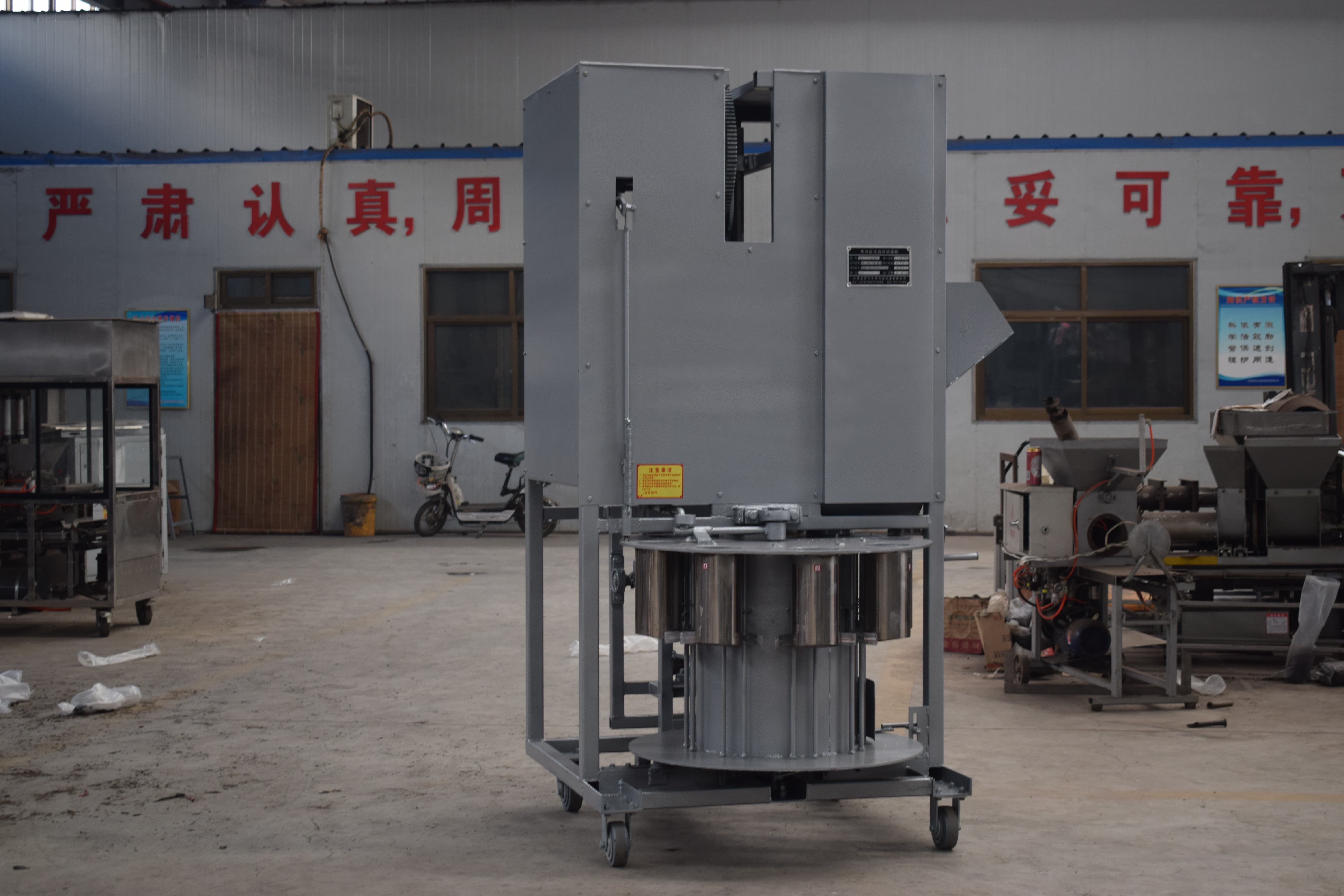
Automatic stamping oyster mushroom bagging machine (GZD15-24) — matched to specific bag dimensions
2. Determine Daily Production Capacity
Capacity targets determine whether a single bagging machine is sufficient or whether a multi-station production line is required. The Small Electromagnetic Clutch Mushroom Bagging Machine (TZD-1) and the Pneumatic Automatic Mushroom Bagging Machine (TZD) both produce 600–900 bags per hour. A 2-station full-automatic mushroom substrate bagging production line can reach 15,000 bags per day. A 4-station line can reach 25,000 bags per day. For larger projects, integrated lines have been supplied with daily outputs of nearly 80,000 bags, as demonstrated in a Malaysian cultivation project that integrates mixing, conveying, distributing, automatic bagging, and tying.
3. Assess Facility Infrastructure
Site conditions often determine which equipment can run reliably. Standard requirements for mushroom bagging systems include a 380V three-phase power supply, a stable foundation, and trained operators. Pneumatic systems may also require compressed air supply. Most scenarios described in industrial cultivation projects operate under continuous operation, normal temperature, and indoor workshop conditions. If your facility cannot meet these requirements, it is safer to choose a machine with a less demanding configuration, such as a small electromagnetic clutch bagging machine that accepts both AC220V and AC380V power.
4. Select Automation Level and Supporting Equipment
Automation level should match labor availability. Small and medium farms often start with semi-automatic bagging machines that require operators to load bags but automate filling, tamping, and discharging. Larger factories may opt for fully automatic production lines with integrated mixers, elevators, material distributors, bagging and tying machines, and downstream modules such as automatic ring-sleeving, capping, and basket-loading machines. Changxing's product range covers the entire process from raw material crushing and mixing to bagging, sterilization, inoculation, cultivation, and mushroom production, including large-scale mixers, trommel screens, crushers, inoculation machines, basket shelving machines, and spent mushroom bag separators.
Step-by-Step Breakdown: From Project Definition to Equipment Configuration
- Define the project output. Write down the target daily bag output and the mushroom varieties planned for each season. This determines the required line capacity.
- Lock the bag specification. Record bag length, width, filling height, and whether you use roll bags or pre-cut bags. This filters compatible bagging machines.
- Verify site infrastructure. Check available voltage, foundation stability, indoor space, and whether a compressed air source is available for pneumatic equipment.
- Map the process flow. List every stage from raw material crushing to final bag output: substrate preparation, mixing, conveying, distributing, bagging, tying, sterilization, inoculation, and shelving.
- Select equipment per stage. For example, a large-scale corn cob crusher (FS60-50) for substrate crushing, a large-scale rotary trommel screen (GTS) for pre-separation, a 100-type raw material mixer (CXJB-100) or larger CXJB series mixer for substrate mixing, a bagging machine such as the TZD-1 or GZD15-24 for filling, and an integrated bagging and tying machine such as the ZN series if tying is required.
- Choose the line configuration. If daily output is around 15,000 bags, consider a 2-station production line. If output exceeds 25,000 bags, consider a 4-station line or a customized integrated solution.
- Plan downstream automation. Decide whether you need automatic ring-sleeving, capping, basket-loading, and basket shelving to reduce manual handling after bagging.
- Review customization options. Confirm whether the supplier can adjust equipment dimensions, production efficiency, and applicable mushroom varieties. Changxing supports ODM/R&D customization and can develop fully automatic or unmanned mushroom production lines.
- Confirm compliance and testing. For European projects, verify compliance with the EU Machinery Directive and EMC Directive. Confirm that equipment is 100% tested before delivery.
Use Cases: Real Project Scenarios
South Korea: Continuous Automatic Operation for Multiple Varieties
In a South Korean edible mushroom production scenario, the system operates in continuous operation and automatic operation mode under normal temperature, indoor workshop conditions. The project covers bagging operations for oyster mushroom, shiitake mushroom, black fungus, and pearl oyster mushroom. The matched configuration includes an automatic bagging manipulator, mixer, conveyor, material distributor, and basket loader. Special requirements for this scenario include a 380V three-phase power supply, a stable foundation, and a trained operator.
Malaysia: Integrated Line for Nearly 80,000 Bags per Day
A larger integrated scenario in Malaysia is designed for continuous operation with an indoor workshop environment. It is suitable for bagging enoki mushroom, king oyster mushroom, pearl oyster mushroom, shiitake mushroom, snow fungus, and other varieties. The line integrates a mixer, elevator, material distributor, and automatic bagging and tying machine, achieving a daily output of nearly 80,000 bags. This project requires a stable flat foundation, 380V three-phase power, compressed air supply if pneumatic equipment is used, and trained operating personnel.
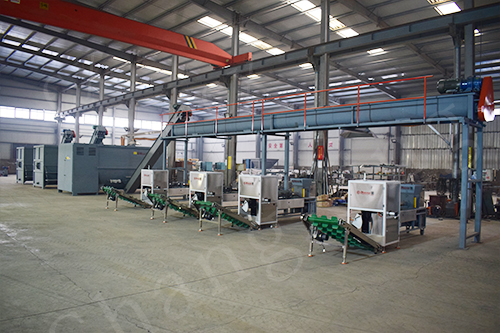
Integrated mushroom bagging and tying production line for high-capacity projects
Comparison Table: Bagging Machines and Production Lines
| Model / Line | Type | Capacity | Power | Bag Size | Typical Application |
|---|---|---|---|---|---|
| TZD-1 | Small electromagnetic clutch bagging machine | 600–800 bags/h | AC220V / 380V, 2.2 kW | Length 28–60 cm; width 12–25 cm | Small farms, multi-variety operation |
| TZD | Pneumatic automatic bagging machine | 700–900 bags/h | AC220V / 380V, 2.2 / 3 kW | Length 28–60 cm; width 12–25 cm | Medium farms, stable bagging output |
| GZD15-24 | Automatic stamping oyster mushroom bagging machine | 800 bags/h | AC380V, 3 kW | Length 45–50 cm; width 15–22 cm | Oyster mushroom and similar bags |
| CX-GJZ | Automatic high-speed shiitake mushroom bagging machine | 650–750 bags/h (double film); 1000–1200 bags/h | AC380V, 8 kW | Flat width 15–18# roll bag; length 550–600 mm | Shiitake mushroom, large-scale production |
| 2-Station Production Line | Full-automatic mushroom substrate bagging line | 15,000 bags/day | AC380V 50Hz | Length 14–22 cm; width 28–63 cm | Small to medium farms |
| 4-Station Production Line | High-capacity mushroom substrate bagging line | 25,000 bags/day | AC380V 50Hz | Length 14–22 cm; width 28–63 cm | Medium to large industrial farms |
Comparison of representative bagging machines and production lines from the Changxing product range
Customization, Compliance, and Supply Considerations
Projects rarely fit a standard catalog configuration. Changxing supports ODM and R&D customization across equipment dimensions, production efficiency, applicable mushroom varieties, and bagging machine designs. The company can develop unmanned fully automatic mushroom production lines to reduce labor dependency. Its facility in Neihuang County, Henan, spans 20,000 m² and has a monthly production capacity of 1,000 units. Export markets include South Korea, Malaysia, Central Asia, Europe, and Russia, with 60% of output exported.
For quality assurance, all equipment is 100% tested before delivery, and after-sales remote support is available. A five-year customer application involving mushroom substrate processing production lines reported stable operation, high efficiency, and bagging speeds above 1,000 bags per hour, with annual exports exceeding 20 units to markets including South Korea, Malaysia, Russia, and the United Kingdom.
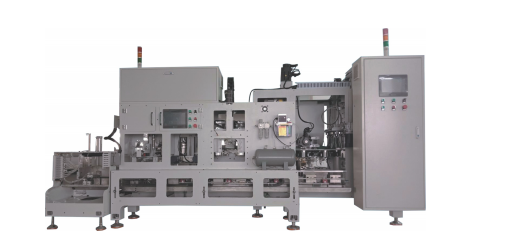
Downstream automation equipment for handling and basket loading
Frequently Asked Questions
What compliance standards must edible mushroom automation equipment meet for European projects?
Edible mushroom automation equipment exported to the European Union must comply with the EU Machinery Directive (2006/42/EC) and the EMC Directive (2014/30/EU) for CE marking. Changxing Edible Mushroom Machinery obtained CE Certificate No. M.2026.206.C135928 in March 2026 for its bagging and production lines, providing documented evidence of compliance for projects requiring European certification.
Can edible mushroom automation equipment be customized to match my specific project?
Yes. Changxing supports ODM and R&D customization covering equipment dimensions, production efficiency, applicable mushroom varieties, and bagging machine design. It can also develop fully automatic or unmanned mushroom production lines. The company operates a 20,000 m² facility with a monthly capacity of 1,000 units, so custom configurations can be manufactured without waiting for a large batch order.
How do I choose between a single bagging machine and a full production line within my budget?
Match the equipment to your target daily output. A single automatic bagging machine such as the TZD-1 or TZD produces 600–900 bags per hour. A 2-station full-automatic production line reaches 15,000 bags per day, and a 4-station line reaches 25,000 bags per day. If your project requires a higher output or integration with mixing, conveying, and tying, a production line is the appropriate configuration.
Can I verify equipment performance before purchasing a full production line?
Changxing applies 100% test before delivery on all equipment. Buyers can also visit the factory for inspection and demonstration, and remote support is available to help verify that a machine matches your substrate, bag size, and operating conditions. Contact the company by email at nhchangxing@outlook.com or by phone/WhatsApp at +86 13103721233 to arrange a visit or discuss a sample machine.
What is the typical lead time for a customized edible mushroom production line?
The typical lead time is 30–55 days after order confirmation. Customized lines may require additional engineering time. To obtain an accurate lead time and a project-specific quote, provide your target mushroom varieties, bag dimensions, daily output, and site infrastructure when making the inquiry. You can send this information to nhchangxing@outlook.com or +86 13103721233.
Conclusion
Matching edible mushroom automation equipment to a project is a structured process. Define your mushroom varieties and bag formats, set a realistic daily output target, confirm your facility's power and space conditions, and decide on the automation level that matches your labor situation. Use the comparison table and step-by-step framework to shortlist equipment, then verify compliance, customization, testing, and lead time with the supplier.
For project-specific configurations, Changxing Edible Mushroom Machinery provides single machines, multi-station production lines, and ODM/R&D customization backed by CE certification and 100% pre-delivery testing. A configuration review based on your actual production scenario is the most reliable next step.
Next Step: Request a Configuration Review
Prepare your project details — mushroom variety, bag size, target daily output, and site conditions — and send them to the Changxing team for a recommended equipment configuration and quotation.
Email: nhchangxing@outlook.com | Tel / WhatsApp: +86 13103721233
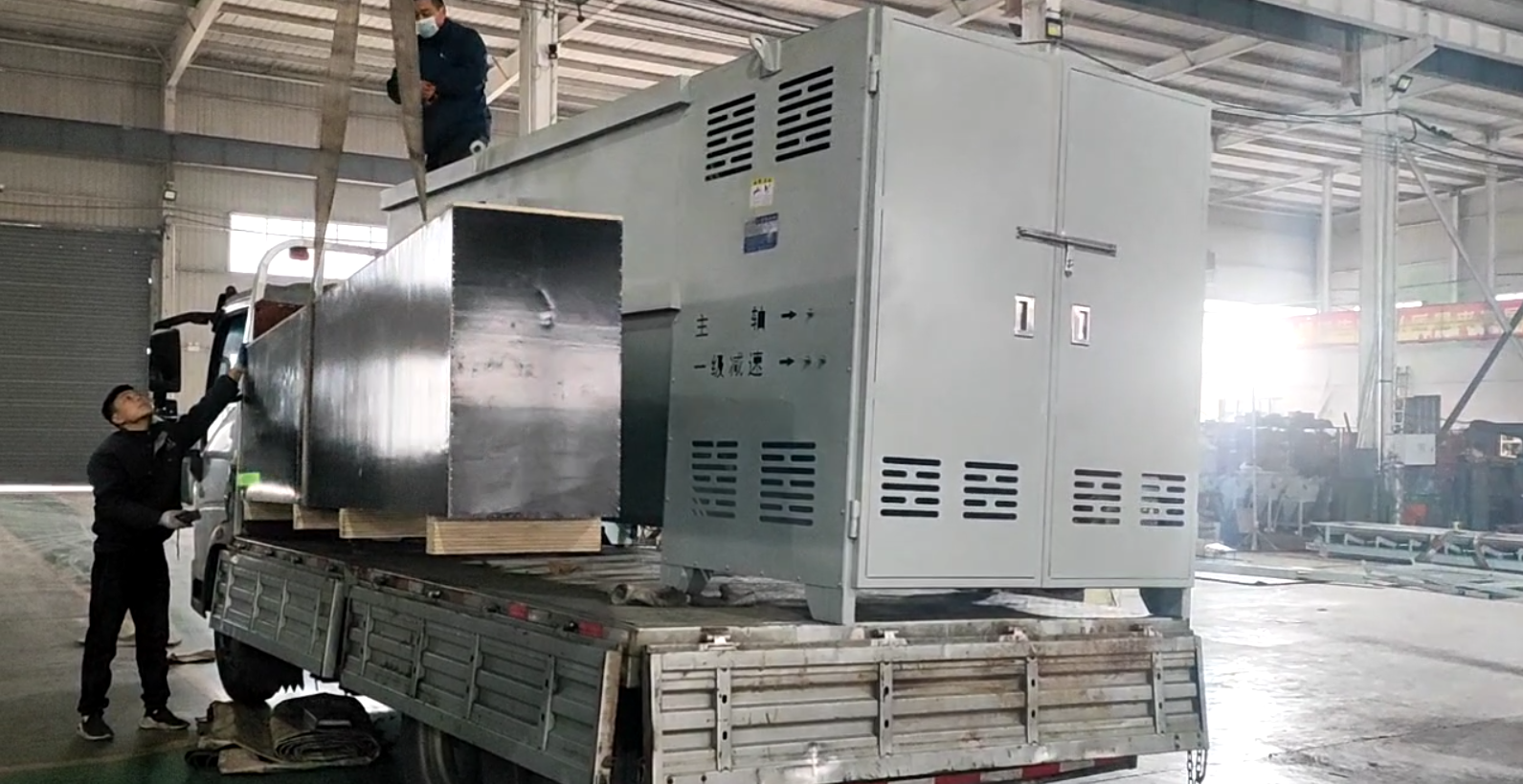
Product order delivery — customized equipment prepared for export
Have Questions or Need More Details?
Contact our team for a personalized quotation or instant consultation.
Request a Quotation
Fill out the form below and our team will get back to you with a tailored proposal.
WhatsApp Direct Chat
Prefer to chat in real-time? Message us on WhatsApp for instant assistance & quick answers.
- Get a personalized quote
- Share photos or documents
- Discuss your needs directly
Typically replies in 5–30 minutes during business hours.