Setting Up a Shiitake Mushroom Bagging & Tying Line
Setting Up a Shiitake Mushroom Bagging & Tying Line
Direct answer: A commercial shiitake bagging and tying line is set up by locking the bag format and output target first, then matching substrate preparation, the bagging and tying core, downstream ring-sleeving, capping and basket loading, and finally commissioning the line with the actual substrate and bags. Changxing Edible Mushroom Machinery, formally Neihuang County Changxing Biological Machinery Equipment Co., Ltd., is a China-based manufacturer of edible mushroom automation equipment founded in 2009. Its 4-Station Shiitake Mushroom Bagging & Tying Production Line and Integrated Shiitake Mushroom Bagging & Tying Machine are the core references for this guide, but the setup method applies to any comparable line.
Why the line setup matters more than the machine alone
Commercial shiitake production fails at the bagging stage for predictable reasons: the bag size is not matched to the filling head, the mixer cannot keep pace with the bagging line, the tying unit is adjusted for the wrong bag material, or the basket-loading step becomes a manual bottleneck. A bagging machine that works in isolation can still create a slow, inconsistent line when upstream and downstream equipment are not planned together.
The problem is not simply buying an automatic mushroom bagger. The problem is designing a repeatable substrate-to-basket workflow. In a shiitake project, the bagging and tying line must accept the prepared substrate at a consistent texture and moisture level, form bags to the specified dimensions, close them securely, and pass them to ring-sleeving, capping, or basket loading without repeated manual handling. If any one of those links is undersized, the line will either run below its rated output or create rework.
This is why a practical setup guide starts with specification validation rather than equipment selection. Bag length, bag width, filled weight, substrate density, tying method, and daily output all interact. The buyer should leave the planning stage with a written bag specification, a line layout, a utility schedule, and an acceptance test plan.
Industry background: automation is growing, but integration remains the buyer's job
Edible mushroom automation equipment is part of a larger cultivation and processing machinery market. According to Dataintelo, the global mushroom equipment market was valued at USD 3.8 billion in 2025. The same commercial research source places China at 42.3% of global mushroom equipment revenue in 2025. These figures describe market scale, not the performance of any single machine or supplier. They do indicate why buyers now see more options for automatic bagging, mixing, sterilization, inoculation, and basket-handling equipment.
China's edible mushroom industry is also large. A secondary industry report cited by Changxing places China's edible mushroom industry output value at CNY 380 billion in 2024. For a commercial farm, the relevant point is not the headline number. It is that suppliers in this market often offer modular machines, integrated production lines, and customized layouts. The buyer must therefore compare the exact scope of each offer: a bagging machine, a bagging and tying line, or a complete automatic mushroom production line.
Food-equipment expectations add another layer. In the United States, FDA current good manufacturing practice requirements for food state that plant equipment and utensils used in manufacturing, processing, packing, or holding food must be designed and maintained to be adequately cleanable and to protect against contamination. NSF/ANSI 2 is a food-equipment standard that addresses materials, design, fabrication, construction, and performance for food handling and processing equipment. These references do not certify a specific mushroom machine, and their applicability depends on the market and use. They are still useful as procurement checks: cleanability, food-contact material, guard design, and maintenance access should be discussed before the line is shipped.
Detailed solution: an integrated bagging and tying line built around the right core
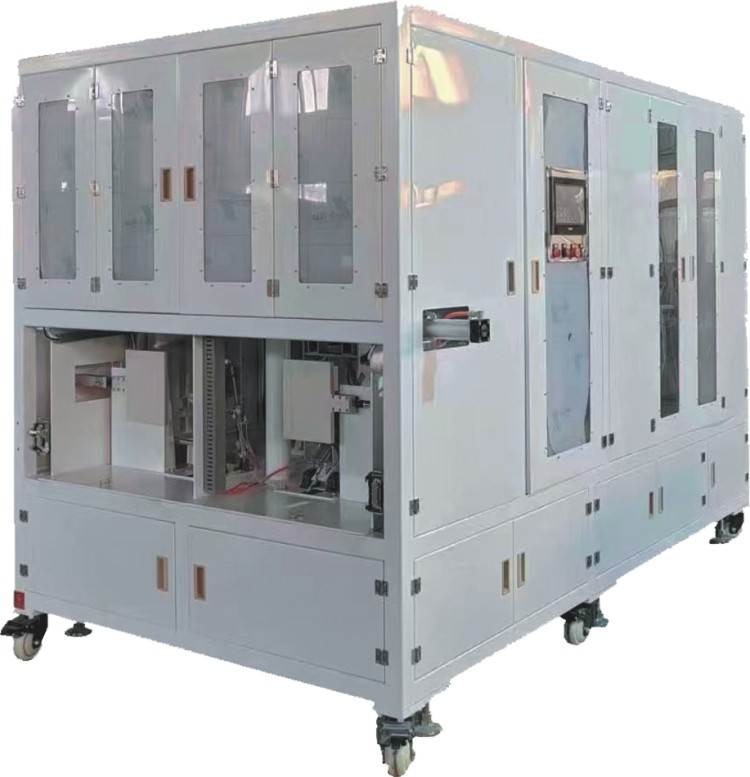
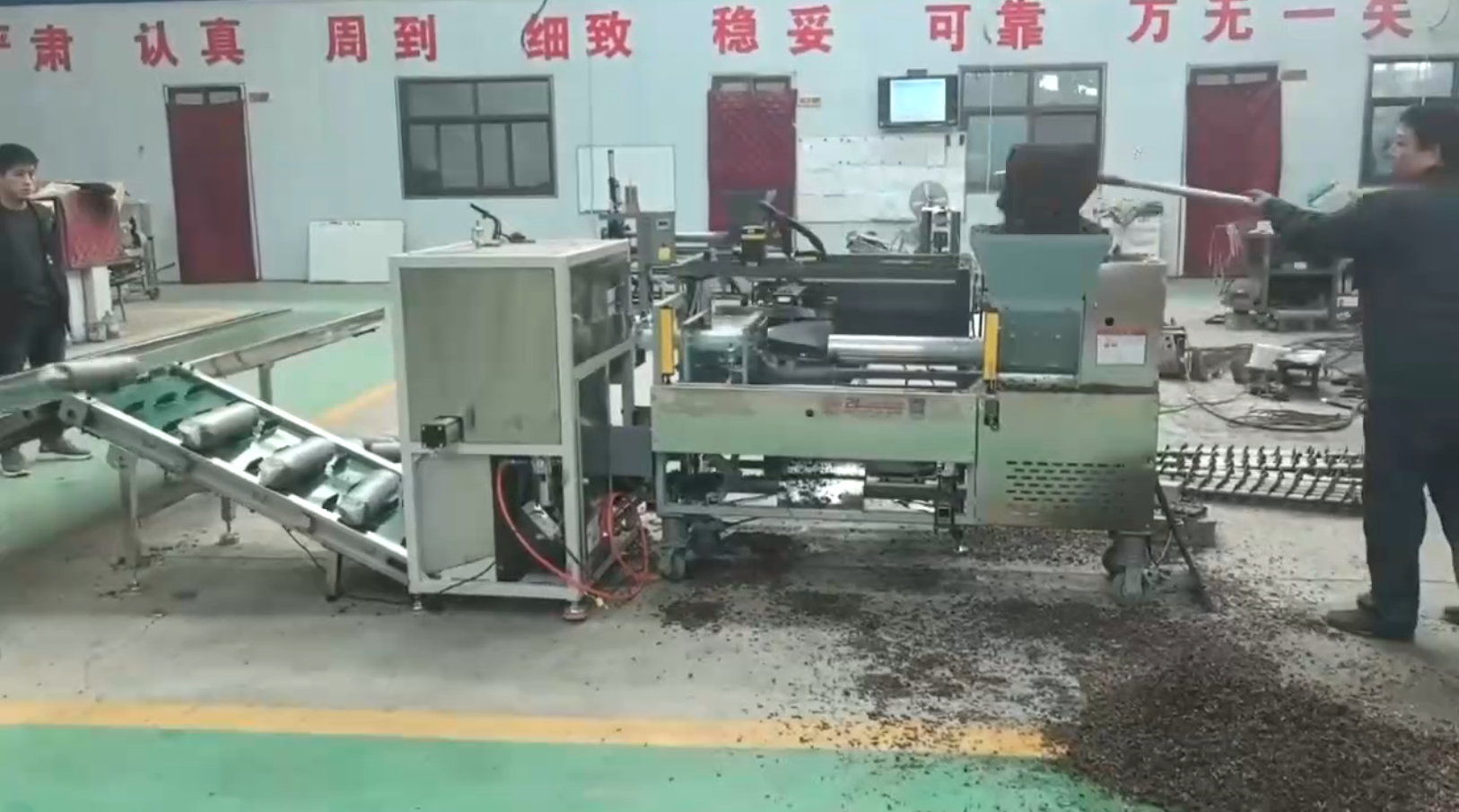
The core of the line is the bagging and tying function. Changxing's 4-Station Shiitake Mushroom Bagging & Tying Production Line is documented with a process flow of shovel feeding, mixing, conveying, distributing, bagging, and tying. Its control system is an integrated electrical control box that supports one-key start or independent operation. The documented capacity is 25,000 bags per day, with input voltage AC380V 50Hz. The supplied specification lists bag size as length 14–22cm and width 28–63cm. Optional downstream equipment includes an automatic ring sleeving machine, automatic notch inserting machine, integrated bagging & tying machine, and tray loading machine. The line is customizable based on daily output and site conditions.
The Integrated Shiitake Mushroom Bagging & Tying Machine, model ZN, is the compact core option in the same equipment family. Its name indicates the combined bagging and tying function. The supplied specification data does not state its capacity or bag-size range, so a buyer should request the model-specific datasheet before using it as the only basis for a layout. This is not a reason to avoid the machine; it is a reason to validate the exact configuration in writing.
Two specification points need careful handling. First, the project brief may state supported bag sizes of length 28–60cm and width 12–25cm. The supplied 4-Station line specification lists length 14–22cm and width 28–63cm. These are not interchangeable statements. Before ordering, resolve the exact bag format with the supplier, including flat width, gusset, bag material, and filled weight. Second, the project brief may ask for a capacity range of 400–600 bags per hour. The supplied 4-Station line is stated in bags per day, not bags per hour. Hourly output depends on shift length, bag size, substrate, and operator workflow. Ask the supplier to confirm the hourly rate for the selected configuration rather than assuming a direct conversion.
Step-by-step breakdown for setting up the line
Step 1: Lock the bag specification and the output target
Start with the bag, not the machine. Write down the intended bag length, width, flat width, gusset, material, and target filled weight. Compare that specification with the supplier's documented range. For the 4-Station line, the supplied document lists length 14–22cm and width 28–63cm. If the project requires length 28–60cm and width 12–25cm, ask for a formal configuration review. The goal is to avoid a situation where the bagging head, tying mechanism, and downstream ring-sleeving equipment are sized for different bags.
Next, define the output target in the same unit the supplier uses. A daily output of 25,000 bags per day is a documented line rating. If the project brief asks for 400–600 bags per hour, convert the planning basis carefully: confirm the number of productive hours per shift, the actual bag size, and the substrate. Do not assume that a daily rating divided by a nominal shift equals the real hourly rate. The line may run at different efficiency with different bag formats.
Step 2: Size upstream crushing, screening, and mixing
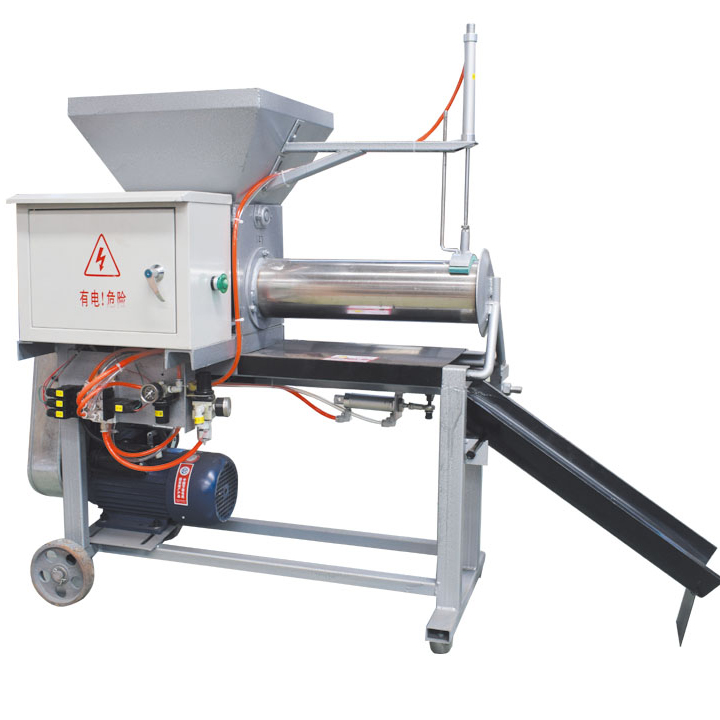
Upstream equipment determines whether the bagging line receives a consistent substrate. Changxing's Large-Scale Corn Cob Crusher, model FS60-50, is documented with 30kW power, AC380V 50Hz, 2 tons per hour capacity, and a replaceable screen with 6–20mm aperture. The Large-Scale Rotary Trommel Screen, model GTS, is documented with 7.5kW power, AC380V 50Hz, 8 tons per hour capacity, and a heavy-duty drum screen plus industrial conveyor belt for stone and impurity removal. These are example components, not a mandatory set for every farm. The correct selection depends on the raw materials and the required substrate recipe.
For mixing, the 100-Type Raw Material Mixer, model CXJB-100, is documented with 4kW power, AC380V 50Hz, 0.8T capacity, and a motor plus reducer drive. The Large-Scale Raw Material Mixer, CXJB Series, covers 4kW to 37.5kW and 0.8T to 10T mixing capacity. To size the mixer, calculate the substrate mass per bag and multiply by the planned number of bags per batch or per shift. Then compare that demand with the mixer's batch cycle and discharge rate. If the mixer is undersized, the bagging line will wait. If it is oversized, the substrate may sit and change condition before bagging.
Step 3: Position the bagging and tying core for material flow
Place the 4-Station Shiitake Mushroom Bagging & Tying Production Line so that substrate moves in one direction: feeding, mixing, conveying, distributing, bagging, tying. The integrated electrical control box should be accessible from the operator side, and the independent operation mode should be usable during setup and troubleshooting. Leave enough space for bag supply, operator movement, and removal of rejected bags. The line is not a single box; it is a sequence of stations that must be aligned and connected.
If the site uses the Integrated Shiitake Mushroom Bagging & Tying Machine, model ZN, confirm the actual footprint and bag-size range from the model datasheet. A compact integrated machine can reduce the number of transfer points, but it still needs upstream substrate supply and downstream basket or tray handling. The decision between a multi-station line and an integrated machine should be based on daily output, available floor space, labor model, and the degree of downstream automation.
Step 4: Connect downstream ring-sleeving, capping, and basket loading
The line does not end at tying. Optional downstream equipment for the 4-Station line includes an automatic ring sleeving machine, automatic notch inserting machine, integrated bagging & tying machine, and tray loading machine. The Automatic Mushroom Bag Ring Sealing, Capping & Tray Loading Machine, model CX-ZDTHJ, is listed in the supplied application data as a downstream option for ring fitting, capping, and basket loading. The Automatic Warehouse Shelving Machine, model CX-L-JS-automation, is documented with a maximum capacity of 480 baskets per hour, repeat positioning accuracy of ±2mm, and a pass rate of ≥97%. It is an example of a downstream handling machine, not a required item for every line.
Before connecting downstream equipment, standardize the basket or tray. Confirm the basket dimensions, load weight, stacking pattern, and transfer height. If the bagging line discharges at one height and the basket loader accepts another, the result is an extra manual transfer. Ask for a layout drawing that shows the bag discharge point, conveyor lengths, sensor positions, and basket loading station.

Step 5: Confirm site, power, air, and operator requirements
The 4-Station line uses AC380V 50Hz. The supplied application data for comparable automatic mushroom production systems also notes 380V three-phase power supply, a stable flat foundation, and trained operators. For pneumatic equipment, a compressed air supply is required. These are practical commissioning items: verify the available power capacity, phase, and earthing; check floor level and anchor points; confirm air pressure and quality if pneumatic components are used; and plan a training area next to the line.
The working environment should be an indoor workshop with normal temperature and continuous operation. The line should not be placed where substrate dust, water, or traffic obstructs the control box or the bag discharge. Keep the area around the tying station clear so that an operator can inspect the tie and remove a rejected bag without reaching across moving parts.
Step 6: Run a commissioning and acceptance test with real materials
Commissioning should use the actual bag specification and the actual substrate recipe. Start with an empty run to check rotation direction, conveyor alignment, sensor response, and emergency stops. Then run with substrate and bags. Check the filled weight, bag shape, tie position, tie tightness, and bag-to-bag consistency. Inspect the downstream transfer to ring-sleeving, capping, or basket loading. A line that produces a good bag but drops or jams it at the next station is not commissioned.
Changxing's capability data states 100% test before delivery and ISO-standard quality control. That is a supplier-side check. The buyer should still run a factory acceptance test before shipment and a site acceptance test after installation. The acceptance checklist should include: bag dimensions against the approved specification, output over a defined run period, reject rate and cause, tie integrity, electrical safety, guard coverage, cleanability of food-contact surfaces, and spare-parts list. For EU-bound projects, ask for CE marking and the supporting technical file; the supplied third-party data notes that CE claims should be independently verified rather than accepted from a product page alone.
Step 7: Train operators and define the handover
Train operators on the integrated control box, one-key start and independent operation, normal shutdown, bag loading, tie inspection, and basic fault recovery. The line should have a written startup and shutdown sequence. Assign one person to check the first bags of each shift against the approved bag specification. Record the bag size, substrate batch, and any adjustment to the tying unit. This record makes it easier to trace a problem later.
After-sales support is part of the setup. Changxing's capability data lists remote support and customization through ODM/R&D. The buyer should confirm the support channel, response process, and spare-parts recommendation before the line is installed. A line that cannot get a replacement part or a remote diagnosis may lose more production time than the original purchase saved.
Use cases: how the same setup logic fits different farms
The same line architecture can serve different commercial scenarios, but the configuration changes. In a South Korean project documented in the supplied application data, the system is used for continuous operation in an indoor workshop at normal temperature. The application covers bagging for oyster mushroom, shiitake mushroom, black fungus, and pearl oyster mushroom. The matched equipment includes an automatic bagging manipulator, mixer, conveyor, material distributor, and basket loader. The special requirements are 380V three-phase power, a stable foundation, and trained operators. This is a multi-variety scenario where changeover discipline and bag-size verification matter.
In a Malaysian project, the supplied application data describes an edible mushroom automatic production system for enoki mushroom, king oyster mushroom, pearl oyster mushroom, shiitake mushroom, and snow fungus. The matched equipment integrates a mixer, elevator, material distributor, and automatic bagging and tying machine, with a stated daily output of nearly 80,000 bags. That figure belongs to that specific configuration and should not be applied to a 4-Station line without a configuration review. The special requirements include 380V three-phase power, a stable flat foundation, compressed air if pneumatic, and trained personnel only.
For export-oriented suppliers, the supplied case data records 20+ units per year in annual export volume to South Korea, Malaysia, Russia, and the United Kingdom, with five years of stable operation and a bagging speed of over 1,000 bags per hour in that case. This is a reported case result, not a guarantee for every farm. It shows why the buyer should ask for references that match the intended bag size, mushroom variety, and daily output.
Comparison table: documented characteristics of related configurations
The table below compares documented characteristics, not tested performance. The machines have different scopes, so the capacity figures are not a ranking and should not be used as a like-for-like productivity claim without a configuration review.
| Configuration | Primary role | Documented capacity | Documented bag size | Control / operation | Fit note |
|---|---|---|---|---|---|
| 4-Station Shiitake Mushroom Bagging & Tying Production Line | Integrated feeding, mixing, conveying, distributing, bagging, and tying | 25,000 bags/day | Length 14–22cm, width 28–63cm (as listed) | Integrated electrical control box; one-key start or independent operation | Continuous line with optional ring-sleeving, capping, and tray loading |
| Integrated Shiitake Mushroom Bagging & Tying Machine (ZN) | Combined bagging and tying | Not stated in supplied specification | Not stated in supplied specification | Confirm model datasheet | Compact integrated option when space or staged automation favors a combined unit |
| Double-Stamping Automatic Mushroom Bagging Machine (ZD15-24) | Automatic bagging | 1000–1500 bags/h | Length 30–38cm, width 14–22cm; max filling height ≤19cm | High-precision mechanical program control | Standalone bagging or module when tying is handled separately |
| Automatic Layered Inoculation & Bagging Machine for Oyster Mushroom (GZD15-24) | Bagging with layered inoculation | 800 bags/h | Length 45–50cm, width 15–22cm | Electromagnetic clutch control; 2–4 adjustable inoculation layers | Oyster mushroom multi-layer inoculation, not a shiitake tying line |
Specification validation checklist before you approve the layout
- Bag format: Confirm length, width, flat width, gusset, material, and filled weight against the supplier's written range. Resolve any difference between the project brief and the documented 4-Station line specification before ordering.
- Throughput basis: Confirm whether the quoted capacity is bags per hour or bags per day, and under which shift pattern, bag size, and substrate condition.
- Upstream match: Compare crusher output, screen output, mixer batch size, and conveyor capacity with the bagging line demand.
- Downstream match: Confirm ring-sleeving, capping, tray loading, and basket-loading interfaces, including basket dimensions and transfer height.
- Utilities: Verify AC380V 50Hz power, compressed air if required, floor level, drainage, and ventilation.
- Compliance file: For the target market, confirm electrical safety, CE marking where applicable, food-contact material information, and cleanability of surfaces. Verify certificates independently.
- Acceptance test: Define the run duration, bag sample size, reject threshold, tie inspection method, and spare-parts list before shipment.
FAQ: practical questions for a shiitake bagging and tying line project
What should I verify about bag size before ordering a shiitake bagging and tying line?
Verify the exact bag length, width, flat width, gusset, material, and filled weight against the supplier's written specification. The supplied 4-Station Shiitake Mushroom Bagging & Tying Production Line lists bag size as length 14–22cm and width 28–63cm. If the project brief calls for length 28–60cm and width 12–25cm, do not treat those numbers as interchangeable. Ask the supplier to confirm the correct configuration in writing before the order is placed.
What throughput can the 4-Station line deliver?
The supplied specification states a capacity of 25,000 bags per day for the 4-Station Shiitake Mushroom Bagging & Tying Production Line. Hourly output depends on the number of productive hours per shift, the bag size, the substrate, and the operator workflow. If the project target is 400–600 bags per hour, ask the supplier to confirm the hourly rate for the selected configuration instead of assuming that the daily rating converts directly.
How do upstream crushers and mixers connect to the bagging line?
Connect upstream equipment through a material flow that matches the bagging line demand. The Large-Scale Corn Cob Crusher FS60-50 is documented at 2 tons per hour, the Large-Scale Rotary Trommel Screen GTS at 8 tons per hour, and the 100-Type Raw Material Mixer CXJB-100 at 0.8T capacity. The CXJB Series mixer covers 0.8T to 10T. Use the substrate mass per bag and the planned bags per shift to size the mixer, then confirm that the conveyor and distributor can deliver substrate without surging or starving the bagging head.
What downstream equipment is needed for ring-sleeving, capping, and basket loading?
The 4-Station line offers optional downstream equipment including an automatic ring sleeving machine, automatic notch inserting machine, integrated bagging & tying machine, and tray loading machine. The Automatic Mushroom Bag Ring Sealing, Capping & Tray Loading Machine CX-ZDTHJ is listed as a ring-fitting, capping, and basket-loading option. The Automatic Warehouse Shelving Machine CX-L-JS-automation is documented with a maximum capacity of 480 baskets per hour, ±2mm repeat positioning accuracy, and a pass rate of ≥97%. Confirm the basket standard and transfer height before connecting these machines.
What compliance and acceptance checks apply to a shiitake bagging line?
For the target market, confirm electrical safety, guard coverage, food-contact material information, and cleanability. FDA current good manufacturing practice requirements for food address equipment that must be adequately cleanable and maintained to protect against contamination. NSF/ANSI 2 provides a food-equipment standard reference for materials, design, fabrication, construction, and performance. For EU-bound projects, request CE marking and the supporting technical file and verify the certificate independently. Changxing's capability data states 100% test before delivery and ISO-standard quality control; the buyer should still define a factory acceptance test and a site acceptance test.
What are the MOQ, lead time, and after-sales terms for a customized line?
Changxing's capability data lists a MOQ of 1 unit, a lead time of 30–55 days, ODM/R&D customization, and remote after-sales support. Export markets listed in the supplied company data include South Korea, Malaysia, Central Asia, Europe, and Russia. For a customized bagging and tying line, confirm the final bag specification, downstream scope, utility requirements, and acceptance criteria before the lead time starts. The lead time should be tied to an approved layout and an approved bag sample.
How should we plan a factory acceptance test and operator training?
Plan the factory acceptance test with the actual bag size and a substrate batch that represents production. Check bag dimensions, filled weight, tie position, tie integrity, reject rate, conveyor transfer, and downstream basket loading. Review cleanability, guard coverage, and the spare-parts list. Then train operators on the integrated control box, one-key start and independent operation, startup and shutdown, bag loading, tie inspection, and basic fault recovery. To review a line layout for your bag format and daily output, contact Changxing through its official website at Changxing Edible Mushroom Machinery.
Conclusion: set up the line as a system, not a single purchase
A shiitake mushroom bagging and tying line is commissioned successfully when the bag specification, upstream substrate preparation, bagging and tying core, downstream ring-sleeving, capping, and basket loading, utilities, and acceptance tests are planned together. The 4-Station Shiitake Mushroom Bagging & Tying Production Line provides a documented integrated process flow and a 25,000 bags per day capacity, while the Integrated Shiitake Mushroom Bagging & Tying Machine offers a compact core option whose exact capacity and bag range should be confirmed from the model datasheet.
For commercial farms, the most useful next step is a specification review, not a generic price request. Prepare the bag dimensions, substrate recipe, daily output, shift pattern, available floor space, power supply, and downstream basket standard. Then ask the supplier to match the line to those inputs and to provide the written bag-size range, hourly output basis, utility schedule, and acceptance-test plan. That is how an edible mushroom automation equipment project moves from a machine list to a working production line.
Have Questions or Need More Details?
Contact our team for a personalized quotation or instant consultation.
Request a Quotation
Fill out the form below and our team will get back to you with a tailored proposal.
WhatsApp Direct Chat
Prefer to chat in real-time? Message us on WhatsApp for instant assistance & quick answers.
- Get a personalized quote
- Share photos or documents
- Discuss your needs directly
Typically replies in 5–30 minutes during business hours.