Top 5 Edible Mushroom Bagging Machines for High-Volume Farms
Top 5 Edible Mushroom Bagging Machines for High-Volume Farms
Ranked by rated throughput and bag-size flexibility — plus the specifications buyers should verify before signing an order.
For a farm filling tens of thousands of substrate bags a day, the bagging machine sets the tempo for everything downstream — sterilization, inoculation, incubation and harvest scheduling. This ranking covers five machines from the Changxing Edible Mushroom Machinery bagging and bag-handling portfolio, ordered by peak rated throughput in bags per hour, with bag-size flexibility and downstream integration used to break ties.
The short list, in order:
- Dual-Station Automatic Mushroom Inoculation Machine (CX-JZJ) — 2,500–2,800 bags/h
- Automatic Stamping Mushroom Bagging Machine (ZD15-24) — 1,200–1,500 bags/h
- Automatic High-Speed Shiitake Mushroom Bagging Machine (CX-GJZ) — 1,000–1,200 bags/h, or 650–750 bags/h in double-film mode
- Integrated Shiitake Mushroom Bagging & Tying Machine (ZN) — 800–1,200 bags/h
- Automatic Layered Inoculation & Bagging Machine for Oyster Mushroom (GZD15-24) — 800 bags/h
Every throughput figure, bag envelope, power rating and control specification below is the manufacturer's published parameter for that model. No third-party laboratory testing is claimed, and no capability is asserted beyond those published specifications.
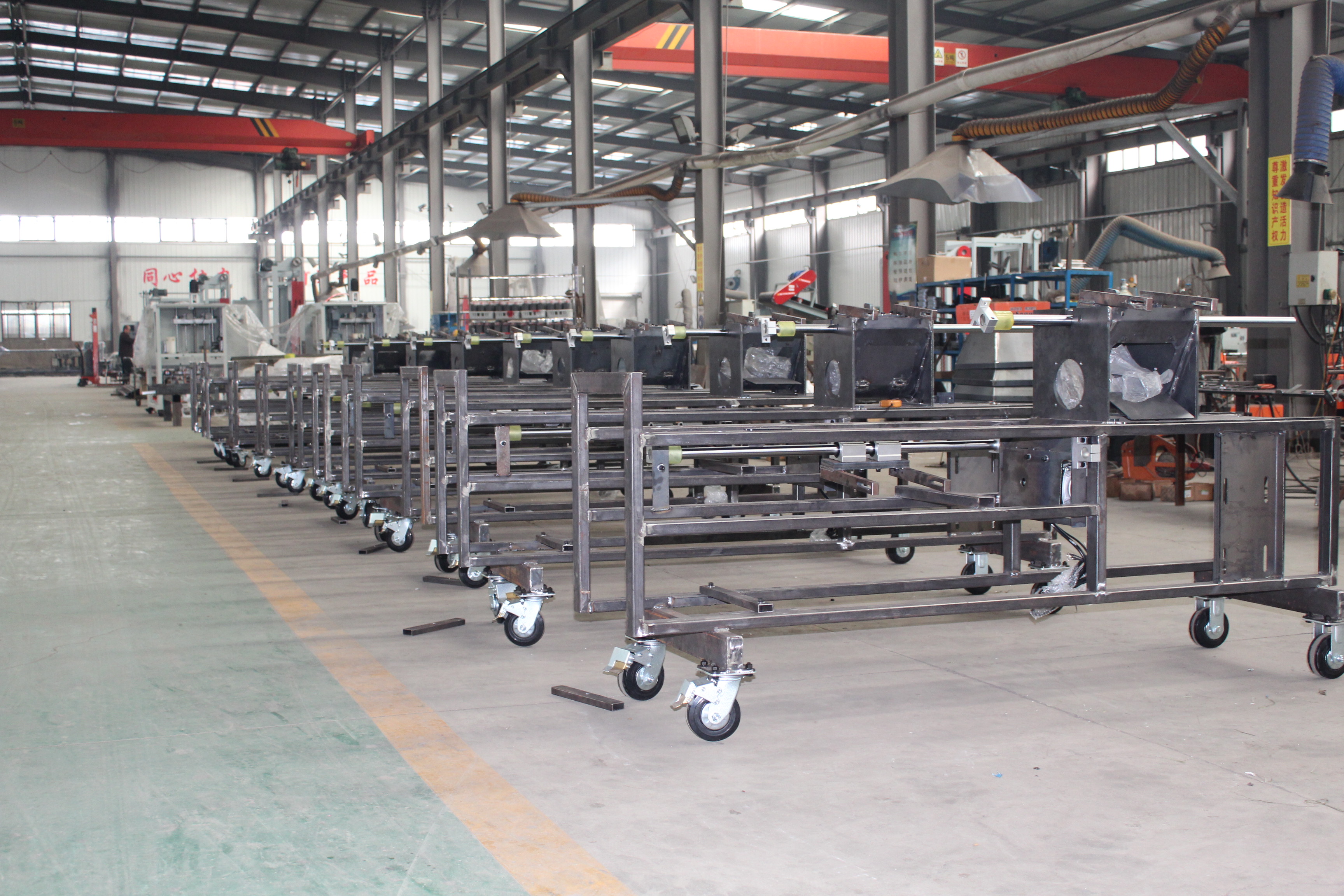
Bagging and bag-handling machines in series production at the Changxing manufacturing base — the portfolio this ranking is drawn from.
The problem: why high-volume farms outgrow their bagging setup
Bagging rarely fails all at once. It degrades in three specific ways, and each one is visible in a specification sheet once you know where to look.
- Throughput figures quoted without operating context. A single model can have two honest ratings depending on how it runs. The Automatic High-Speed Shiitake Mushroom Bagging Machine (CX-GJZ) is rated 650–750 bags/h in double-film mode and 1,000–1,200 bags/h in its standard configuration. A buyer comparing that unit against a machine rated at a flat 900 bags/h is comparing two different definitions of “bags per hour.” The first question to ask any supplier is which mode the quoted number refers to.
- Bag envelope drift. Flat width, bag length and maximum filling height are three separate limits, and a machine that matches two of them will still jam on the third. The Automatic Layered Inoculation & Bagging Machine for Oyster Mushroom (GZD15-24) is built around 45–50 cm bags at 15–22 cm width; the CX-GJZ takes roll stock at flat width 15–18# and bag length 550–600 mm. Neither is more flexible than the other — they are flexible in different directions.
- Integration loss between stations. A 1,200 bags/h bagger feeding a manual tying bench is not a 1,200 bags/h line. The compatible downstream modules in this portfolio — automatic tying machine, automatic hole-punching & film-sticking machine, ring sleeving, nesting and stick inserting, tray and basket loading — are what convert a fast machine into a fast line.
The practical consequence: capacity planning that starts from a machine's headline number, rather than from the bag format and the slowest station in the workflow, usually ends in a line that runs below its rated output.
Industry background: why bagging capacity is being re-specified now
The demand side of this decision is moving. According to Dataintelo, the global mushroom equipment market was valued at USD 3.8 billion in 2025 and is projected to reach USD 7.2 billion by 2033, with Asia-Pacific holding a 42.3% revenue share in 2025, driven by industrial-scale cultivation in China. China's edible mushroom industry value exceeded RMB 380 billion (approximately USD 53 billion) in 2024 and represents more than 70% of global output, according to People's Daily reporting that cites Ministry of Agriculture data.
Those numbers matter to a farm manager for one reason: growth in this sector is arriving as factory-scale cultivation, not smallholder expansion. Manual bagging benches scale with headcount and floor space; machine bagging scales with hours and maintenance. Once a site moves past a few thousand bags a day, the arithmetic shifts toward equipment, and the specification conversation moves from “which machine is cheapest” to “which machine holds its rated output across a full shift.”
Compliance is the second structural change. Edible mushroom automation equipment sold into the European Union must satisfy the EU Machinery Directive (2006/42/EC) and the EMC Directive (2014/30/EU) before it can carry CE marking. For exporters, that turns certification documentation into a procurement filter rather than an afterthought.
Changxing Edible Mushroom Machinery — the operating name of Neihuang County Changxing Biological Machinery Equipment Co., Ltd. — is a mushroom machinery manufacturer founded in 2009, working from a 20,000 m² facility with 130 employees, including a 25-strong engineering team. Monthly capacity is stated at 1,000 units, and roughly 60% of output is exported to South Korea, Malaysia, Central Asia, Europe and Russia. The company covers the substrate process from raw material crushing and mixing through bagging, sterilization, inoculation and cultivation, which is why the units below share bag formats and downstream modules rather than functioning as isolated machines.
The ranking: five machines scored on throughput and flexibility
Each machine below was assessed against five criteria drawn from the published parameters: (1) peak rated throughput in bags per hour; (2) supported bag envelope — flat width, bag length and maximum filling height; (3) multi-function capability, such as integrated tying, layered inoculation or roll-bag forming; (4) drive and control architecture; and (5) compatibility with downstream modules in the same line.
Scope note: this list compares machines inside a single manufacturer's portfolio, which is what makes a like-for-like specification comparison possible. It is not a cross-brand benchmark. If you are evaluating other suppliers as well, apply the same five criteria to their datasheets and check which operating mode each throughput figure refers to.
1. Dual-Station Automatic Mushroom Inoculation Machine (CX-JZJ) — 2,500–2,800 bags/h
The CX-JZJ is the fastest bag-handling unit in the portfolio, and for a high-volume shiitake operation it often becomes the real constraint on daily bag throughput. It is a PLC-controlled punching and inoculation machine rather than a substrate filler: it receives filled bags, disinfects, punches and inoculates them at 2,500–2,800 bags/h on 2.5 kW at AC380V 50 Hz.
Its flexibility comes from hole geometry and hygiene rather than bag size. It handles bags of 14–22 cm flat width and 40–60 cm length, punching Φ25–Φ30 mm spawn holes at 4/3 holes per side with 95/105 mm hole spacing. Sterilization is a three-stage chain — alcohol wiping, UV disinfection and a 100-class FFU laminar flow hood — which is the configuration export buyers tend to ask about first. The control package uses a Xinje high-speed motion-axis PLC, a high-performance hybrid stepper motor, KBS linear bearings with HIWIN linear guides, and sensors from Autonics, Siemens and Panasonic. The 850 kg frame is full stainless steel with universal and directional casters, sized L2720 × W1020 × H1700 mm. Process flow runs: manual bag loading → disinfection → punching → inoculation → seed pushing → leveling → bag discharging.
2. Automatic Stamping Mushroom Bagging Machine (ZD15-24) — 1,200–1,500 bags/h
This is the highest-throughput substrate bagging machine on the list. The stamping (hold-and-fill) principle fills the bag while it is mechanically held, which is what allows the 1,200–1,500 bags/h rating on a 3 kW, AC380V 50 Hz drive and a high-precision mechanical program control system.
The envelope is deliberately narrow: flat width 15–22 cm with a maximum filling height of 19 cm. That makes it a production machine for standard small-format bags rather than a universal bagger — the trade-off buyers accept when they choose speed. Flexibility here is operational rather than dimensional. The unit is compatible with an automatic bag-receiving conveyor, which removes a manual handling step at the discharge end, and it uses a stainless steel sleeve for quick and safe bag loading, mounted on universal and directional casters. It weighs 530 kg and measures L1400 × W1280 × H1650 mm, with the process flowing feeding → dropping → stamping and holding the bag → discharging. It is specified in the portfolio for high-precision work on sheep truffle and black termitomyces formats.
3. Automatic High-Speed Shiitake Mushroom Bagging Machine (CX-GJZ) — 1,000–1,200 bags/h
The CX-GJZ removes bag inventory from the equation entirely. It runs roll film, cuts it to a fixed length and welds it automatically inside the same cycle as filling, so bag making and bag filling happen in one pass. That is the flexibility that matters on a high-volume shiitake line: no pre-made bag stock to hold, and a consistent bag length of 550–600 mm from roll stock at flat width 15–18#.
Throughput is mode-dependent — 650–750 bags/h in double-film operation and 1,000–1,200 bags/h in the standard configuration — so the operating mode should be fixed before comparing this unit against any competitor. The machine runs on 8 kW at AC380V 50 Hz with auger feeding, a Xinje high-speed motion-axis PLC, a high-performance hybrid stepping motor, KBS linear bearings with HIWIN linear guides, and Panasonic, SICK and Siemens sensors in the detection chain. At 750 kg and L2300 × W1500 × H1650 mm, it is a fixed-position line machine rather than a movable one. Its downstream compatibility is the practical reason it ranks here: it pairs with an automatic tying machine and an automatic hole-punching & film-sticking machine, so bags can leave the machine ready for the next stage. The frame is carbon steel with Stainless Steel 304 on product contact parts.
4. Integrated Shiitake Mushroom Bagging & Tying Machine (ZN) — 800–1,200 bags/h
The ZN addresses the station that most often throttles a fast line: tying. Bagging and tying are combined in one unit, and the process flow runs bagging → tying → finished product output. Instead of transferring filled, open bags to a second bench, the machine closes them in the same cycle. That is why a unit rated 800–1,200 bags/h can hold line output more effectively than a faster machine feeding a manual tying position.
The specification is compact: 4 kW at AC380V 50 Hz, 380 kg, L2100 × W530 × H1200 mm, with an intelligent motor drive. Bag compatibility extends across multiple sizes of mushroom bags, and the bagging manipulator is customizable as an option — useful when a farm runs more than one bag format on the same floor. It is a natural fit for high-volume farms that want fewer transfer points and less handling labor per shift.
5. Automatic Layered Inoculation & Bagging Machine for Oyster Mushroom (GZD15-24) — 800 bags/h
Oyster mushroom production uses long bags, and the GZD15-24 is built around that format: bag length 45–50 cm at 15–22 cm width, filled and inoculated at 800 bags/h on a 3 kW, AC380V 50 Hz drive with electromagnetic clutch control. At 730 kg and L1400 × W1280 × H2300 mm, with IP54 protection and a 0–40 °C working range, it is designed to sit in a wet, working cultivation environment.
Its flexibility is agronomic rather than dimensional. Inoculation runs in 2–4 adjustable layers, so the spawn distribution can be matched to the bag length and to the grower's colonization strategy. Spiral inoculation is available as an option, and the inoculation amount per layer is adjustable — meaning the same machine can be tuned for different substrate densities without changing hardware. For farms producing long-bag oyster mushrooms at volume, this layer control is the feature that determines yield consistency, not the headline bag count.
Machines that sit just outside this ranking
Three units in the same portfolio fall below the throughput threshold this list is built around, but they matter for a specific reason: mixed production. The Pneumatic Automatic Mushroom Bagging Machine (TZD) runs 700–900 bags/h and the Small Electromagnetic Clutch Mushroom Bagging Machine (TZD-1) runs 600–800 bags/h; both accept a very wide envelope of 28–60 cm bag length and 12–25 cm width with a maximum filling height of 45 cm, which is the broadest in the line. The Small Friction Clutch Mushroom Bagging Machine (ZD-3) runs 400–600 bags/h from a 37 kg frame with foot-pedal control and a replaceable sleeve and auger, allowing the same unit to handle mushroom spawn and small round pillow packaging.
Those three are pilot-line and diversified-production machines. If your target is a single high-volume format, they will not reach the throughput you need; if you are validating a new substrate mix or running several small product formats, the replaceable sleeve and auger arrangement is the cheapest way to test before committing to a dedicated line.
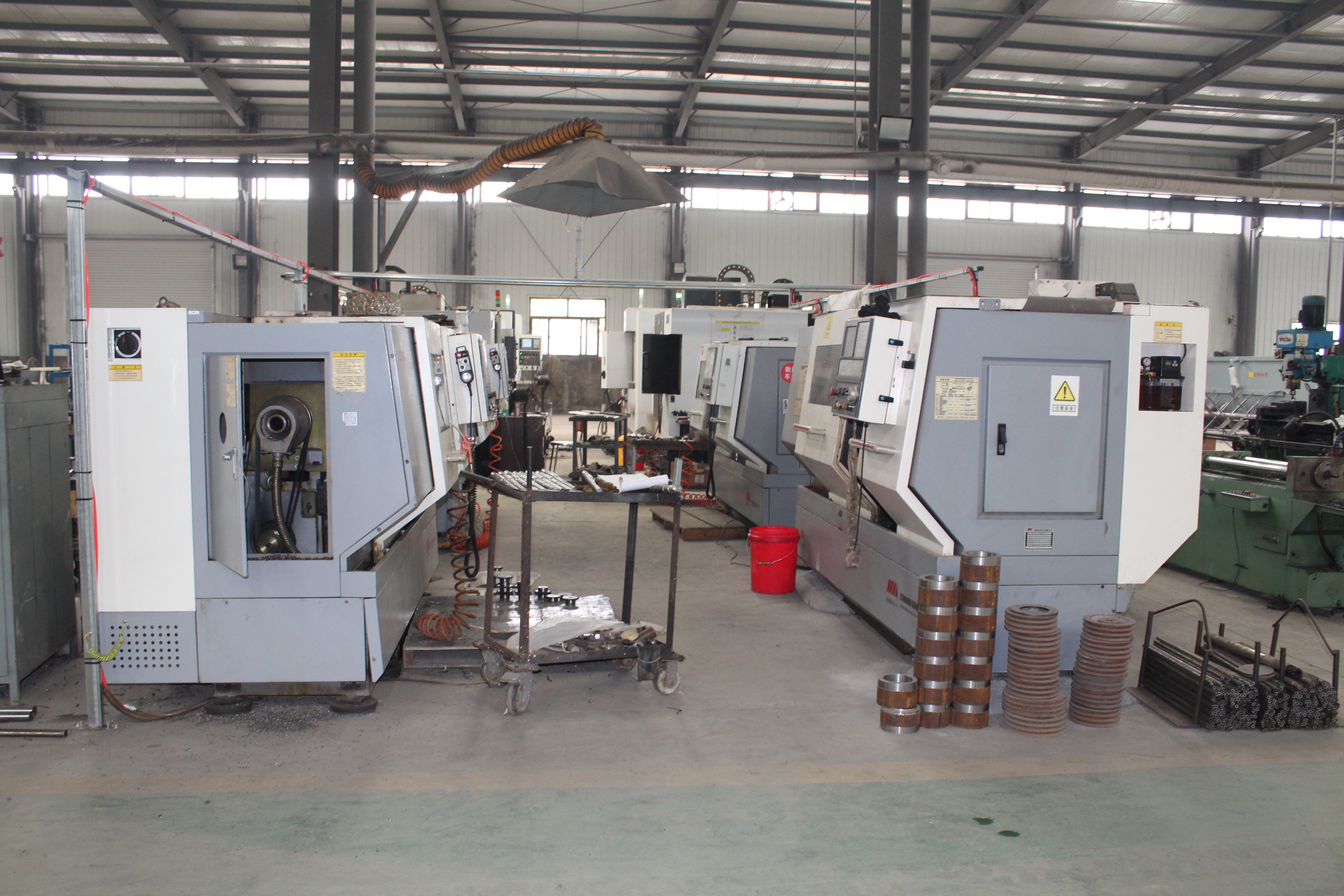
CNC machining of bagging machine components — the production step behind the dimensional consistency of bag sleeves and augers.
Step-by-step: how to validate a bagging machine before you commit
A specification sheet answers some questions and hides others. The following sequence is the order in which the parameters actually constrain each other.
- Fix the daily bag target, then convert it to bags per hour. Divide your target by productive hours, not by clock hours. For reference, the 2-station full-automatic mushroom substrate bagging production line is specified at 15,000 bags/day, and the 4-station configurations at 25,000 bags/day, with a 4-station line for black termitomyces specified at 50,000 bags/day.
- Measure your bag before you measure the machine. Record flat width, bag length and maximum fill height from a filled sample. A 15–22 cm flat width appears in several models, but the fill-height ceiling differs: 19 cm on the ZD15-24 stamping machine, 45 cm on the TZD and TZD-1. Fill height, not width, is the parameter that quietly eliminates candidates.
- Ask which operating mode the throughput figure describes. Use the CX-GJZ as the test case: 1,000–1,200 bags/h standard versus 650–750 bags/h double film. Any supplier quoting a single number without a mode is quoting an incomplete number.
- Check whether the machine forms bags or consumes them. Roll-stock units such as the CX-GJZ cut and weld automatically, which removes pre-made bag purchasing and storage. Flat-bag and stamping machines require a reliable bag supply matched to the envelope.
- Map the downstream modules before you buy the head machine. Confirm whether the line will need an automatic tying machine, a hole-punching and film-sticking machine, ring sleeving, nesting and stick inserting, or basket loading. Retrofitting these later usually costs more than specifying them initially.
- Read the control and drive architecture, not just the capacity. Motion-axis PLC control with servo or stepper drives and branded sensors appears on the higher-throughput units; simpler electromagnetic clutch or mechanical program control appears on the mid-range. Match the control level to the skill level of the operators who will run it and the maintenance support available on site.
- Confirm compliance, testing and delivery terms in writing. Check that the CE documentation covers the exact model, that pre-shipment testing is part of acceptance, and that the delivery window matches your commissioning plan.
Use cases: matching the machine to the farm
High-volume shiitake farm running roll stock. The combination that maximizes daily output is the CX-GJZ on bag forming and filling, paired with an automatic tying machine and a hole-punching and film-sticking machine, feeding a CX-JZJ for punching and inoculation at 2,500–2,800 bags/h. In this layout the bagging machine is not the constraint — the bag format and the tying station are, which is why the integrated ZN is often specified instead where floor space is tight.
Oyster mushroom producer on long bags. The GZD15-24 handles 45–50 cm bags with 2–4 adjustable inoculation layers and optional spiral inoculation. Where a farm also needs the filling step in a single unit and wants to reduce handling, the layered inoculation and bagging function on the same machine removes one transfer between stations.
Export-oriented or contract-packing operation. CE documentation becomes a commercial requirement rather than a technical one. The bagging and tying machinery in this portfolio is covered by CE Attestation of Conformity No. M.2026.206.C135928, and units from this range are in operation with mushroom farms, planting bases, agricultural equipment distributors and agricultural enterprises, with projects located in South Korea, Malaysia, Russia and the United Kingdom. In the manufacturer's project records for substrate processing production lines, deployed systems report stable operation with bagging speeds above 1,000 bags per hour and reduced labor cost per bag.
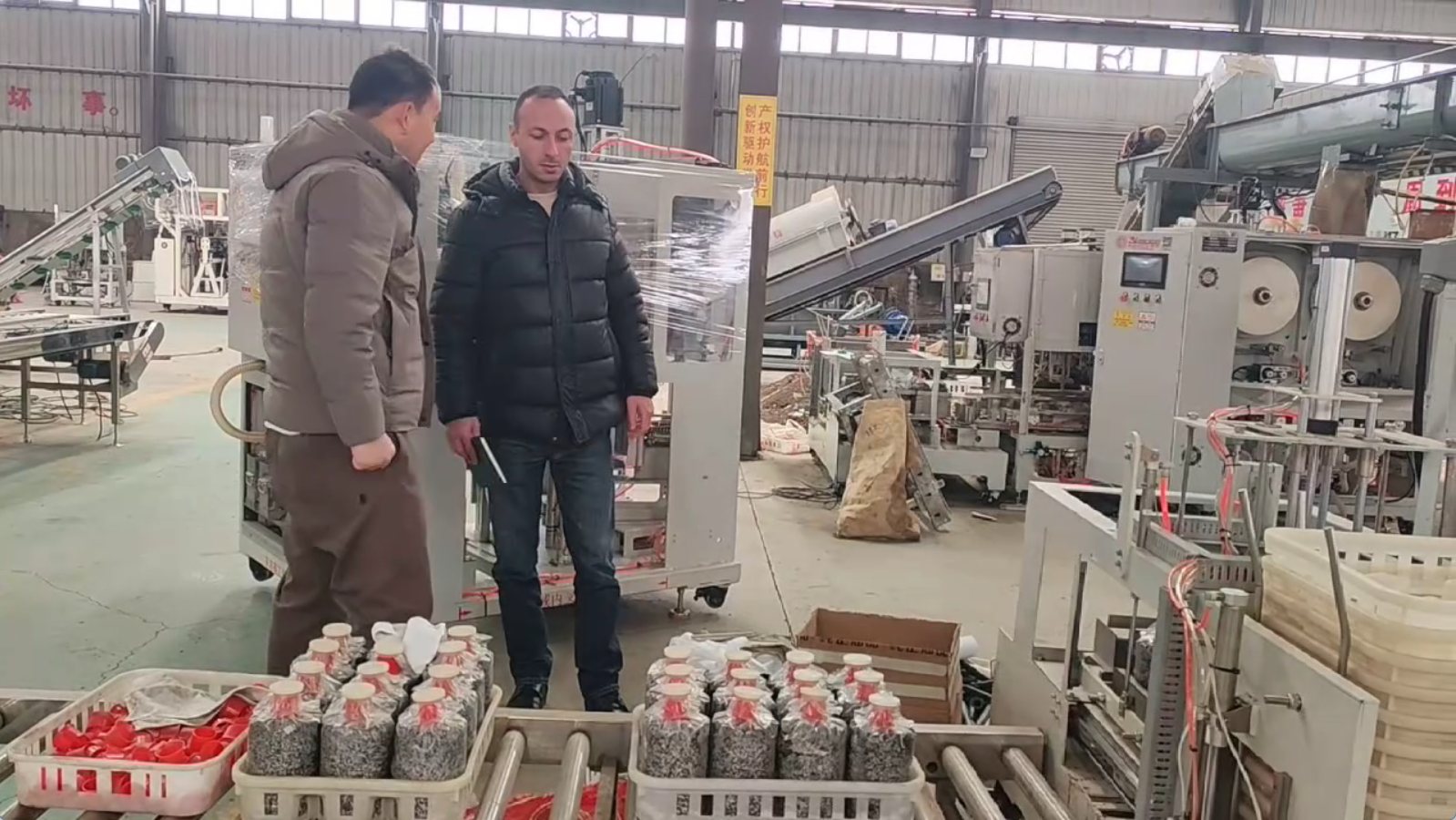
Factory inspection before ordering — a standard step for buyers specifying multi-station bagging configurations.
Comparison table: the five machines side by side
| Rank | Machine (model) | Peak rated throughput | Bag size envelope | Flexibility & integration | Power / control |
|---|---|---|---|---|---|
| 1 | Dual-Station Automatic Mushroom Inoculation Machine (CX-JZJ) | 2,500–2,800 bags/h | Flat width 14–22 cm; length 40–60 cm | 4/3 holes per side, Φ25–Φ30 mm, 95/105 mm spacing; alcohol wipe + UV + 100-class FFU laminar flow hood | 2.5 kW, AC380V 50 Hz; Xinje motion-axis PLC, hybrid stepper, HIWIN guides |
| 2 | Automatic Stamping Mushroom Bagging Machine (ZD15-24) | 1,200–1,500 bags/h | Flat width 15–22 cm; max fill height ≤19 cm | Compatible with automatic bag-receiving conveyor; stainless steel sleeve; casters | 3 kW, AC380V 50 Hz; high-precision mechanical program control |
| 3 | Automatic High-Speed Shiitake Mushroom Bagging Machine (CX-GJZ) | 1,000–1,200 bags/h; 650–750 bags/h double film | Roll bag flat width 15–18#; bag length 550–600 mm | Fixed-length bag cutting + automatic welding; auger feeding; pairs with automatic tying machine and hole-punching & film-sticking machine | 8 kW, AC380V 50 Hz; Xinje motion-axis PLC, hybrid stepper, Panasonic/SICK/Siemens sensors |
| 4 | Integrated Shiitake Mushroom Bagging & Tying Machine (ZN) | 800–1,200 bags/h | Designed for multiple mushroom bag sizes | Bagging → tying → output in one unit; optional customizable bagging manipulator | 4 kW, AC380V 50 Hz; intelligent motor drive |
| 5 | Automatic Layered Inoculation & Bagging Machine for Oyster Mushroom (GZD15-24) | 800 bags/h | Bag length 45–50 cm; width 15–22 cm | 2–4 adjustable inoculation layers; spiral inoculation (optional); adjustable inoculum per layer | 3 kW, AC380V 50 Hz; electromagnetic clutch control |
Frames are carbon steel with Stainless Steel 304 on product contact parts where specified. IP54 protection and a 0–40 °C working range apply to the models where listed in the published parameters.

CE Attestation of Conformity No. M.2026.206.C135928, covering mushroom machinery (bagging & tying machine) under the Machinery Directive and EMC Directive.
FAQ: high-volume bagging questions buyers ask
Do these bagging machines carry CE certification for European buyers?
Yes, for the bagging and tying machinery covered by the manufacturer's CE documentation. CE Attestation of Conformity No. M.2026.206.C135928 was issued by UDEM on 5 March 2026 and is valid until 4 March 2031, covering mushroom machinery (bagging & tying machine) for compliance with the Machinery Directive (2006/42/EC) and the EMC Directive (2014/30/EU). The standards listed in the assessment are EN ISO 12100:2010, EN 60204-1:2018+A1:2025, EN IEC 61000-6-2:2019 and EN IEC 61000-6-4:2019. Because the certificate is scoped to specific machinery categories, confirm that the scope matches the exact model you intend to order before you finalize an EU-bound purchase.
Can the machines be customized for different bag sizes and mushroom varieties?
Yes. Changxing provides ODM and R&D production services, and customization for edible mushroom equipment covers equipment dimensions, production efficiency and applicable mushroom varieties. At module level this appears as adjustable elements rather than new machines: 2–4 adjustable inoculation layers and optional spiral inoculation on the GZD15-24, a customizable bagging manipulator as an option on the ZN, and configurable optional downstream modules — ring sleeving, hole punching and stick inserting, bagging and tying, basket loading — on the 2-station and 4-station production lines. If a farm runs several bag formats, the customization scope should be written into the technical agreement rather than agreed verbally.
What actually drives the cost of a bagging machine or line?
Configuration drives cost in this product range, not a published list price. Five variables move the number most: the throughput class of the head machine; the number of stations in a line (a 2-station line is specified at 15,000 bags/day while 4-station configurations run 25,000–50,000 bags/day); the bag-forming method, since roll-stock machines that cut and weld automatically use different tooling than flat-bag stamping machines; the number of inoculation layers and whether spiral inoculation is included; and the drive and control level, where motion-axis PLC control with branded sensors sits above electromagnetic clutch or mechanical program control. Optional downstream modules and any dimensional customization of the frame or line layout — parameters the manufacturer confirms per configuration — are quoted with the machine. The practical approach is to specify daily output and bag envelope first, then request a configuration-based quotation, so you are comparing equivalent machines rather than equivalent prices.
Can we inspect and test the machine before placing a full order?
Yes. The minimum order quantity is 1 unit, 100% of machines are tested before delivery, and acceptance is defined as a pre-shipment test. Buyers are also able to visit the factory for inspection before ordering — that step appears repeatedly in the manufacturer's project records, including customers inspecting and ordering bagging lines on site. After shipment, after-sales support is provided remotely, which is the practical arrangement for overseas farms that operate their own maintenance teams. For a multi-machine line, pre-shipment testing is the point at which bag geometry, fill height and tying quality can be verified against your own samples rather than against a datasheet.
What is the lead time, and how do we start a specification conversation?
Standard lead time is 30–55 days, supported by a stated monthly production capacity of 1,000 units. Delivery terms are FOB or CIF, and payment terms are 30/70. To get an accurate quotation rather than a range, send three things: your daily bag target, a filled bag sample with flat width, length and fill height, and the mushroom variety you are cultivating — those three inputs determine which of the five machines above, and which downstream modules, belong in your configuration. You can start that conversation through the official site at www.automushmachinery.com, by email at nhchangxing@outlook.com, or by WhatsApp on +86 13103721233.
Conclusion: choose by throughput ceiling and bag envelope, then by integration
The ranking above is deliberately mechanical. Peak rated throughput sets the order, because at high volume the slowest station defines the farm's daily output. The CX-JZJ leads at 2,500–2,800 bags/h in the bag-handling stage; the ZD15-24 leads the substrate bagging machines at 1,200–1,500 bags/h for small flat bags; the CX-GJZ covers roll-stock shiitake production at 1,000–1,200 bags/h with automatic bag cutting and welding; the ZN folds tying into the bagging cycle at 800–1,200 bags/h; and the GZD15-24 pairs 800 bags/h with 2–4 adjustable inoculation layers for long-bag oyster mushroom formats.
The flexibility column is where the real decision sits. Two machines with identical capacity can fail in the same workshop for opposite reasons — one because the bag is 3 cm too long, the other because the filling height exceeds the sleeve. That is why the sequence in this article runs bag format first, operating mode second, integration third, and price last. Applied in that order, the specification process produces a line that runs at its rated number instead of near it.
Next step: turn your bag target into a specification
Changxing Edible Mushroom Machinery (Neihuang County Changxing Biological Machinery Equipment Co., Ltd., founded 2009) builds substrate bagging machines, bagging and tying machines, inoculation machines and complete bagging lines from a 20,000 m² facility in Henan, China, with 130 employees and a 25-person engineering team, exporting roughly 60% of output to South Korea, Malaysia, Central Asia, Europe and Russia.
Send your daily bag target, bag dimensions and mushroom variety, and request a configuration-based quotation or a sample and factory inspection visit.
Website: www.automushmachinery.com | Email: nhchangxing@outlook.com | Tel / WhatsApp: +86 13103721233 | Address: Henan Neihuang, China
MOQ 1 unit · Lead time 30–55 days · FOB / CIF · Pre-shipment test acceptance · Remote after-sales support
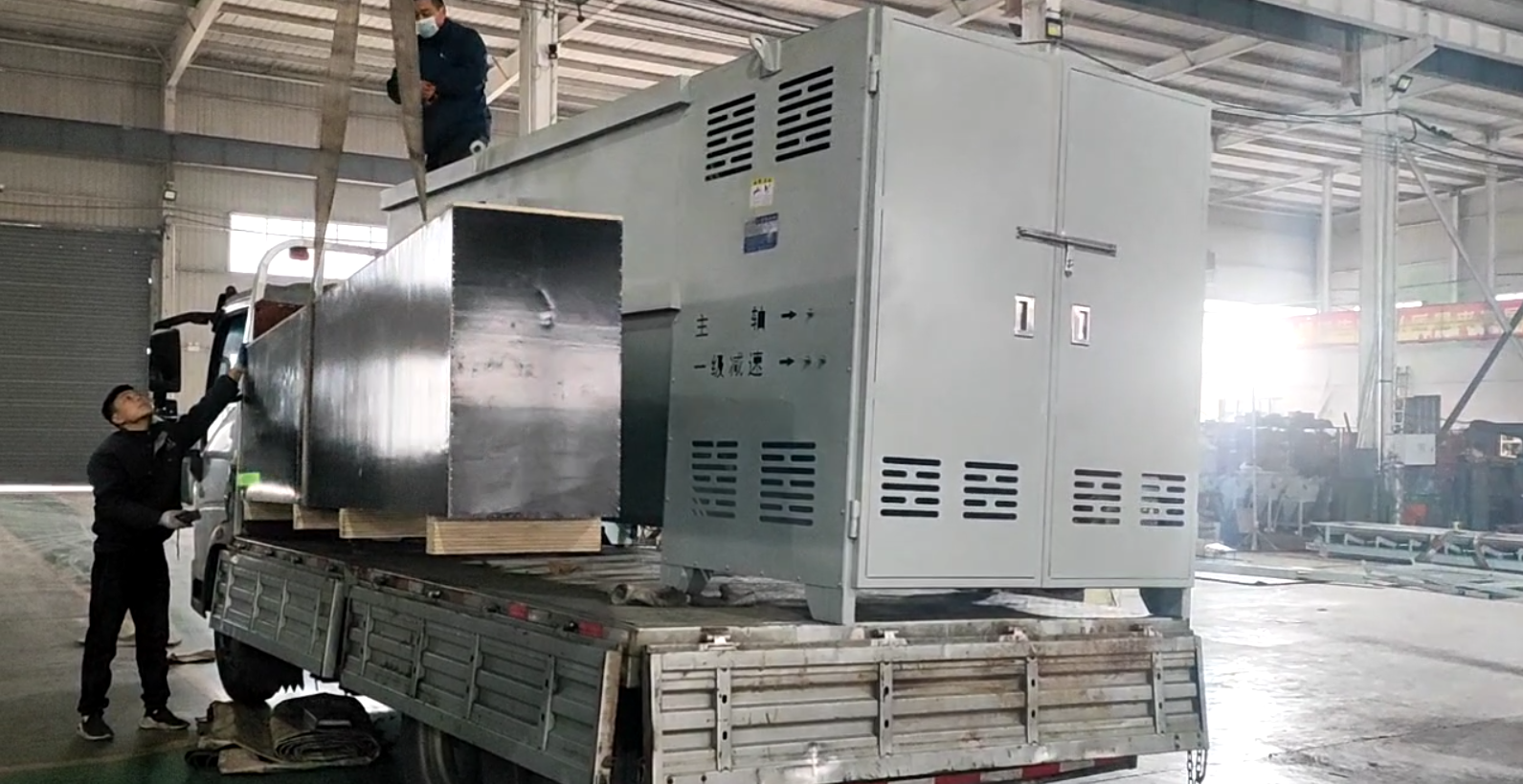
Configured bagging machines prepared for shipment — orders are built to the buyer's bag format and line layout.