
Intelligent vs. Traditional Electric Actuators: A 2026 Procurement Comparison Guide
Intelligent vs. Traditional Electric Actuators: A 2026 Procurement Comparison Guide
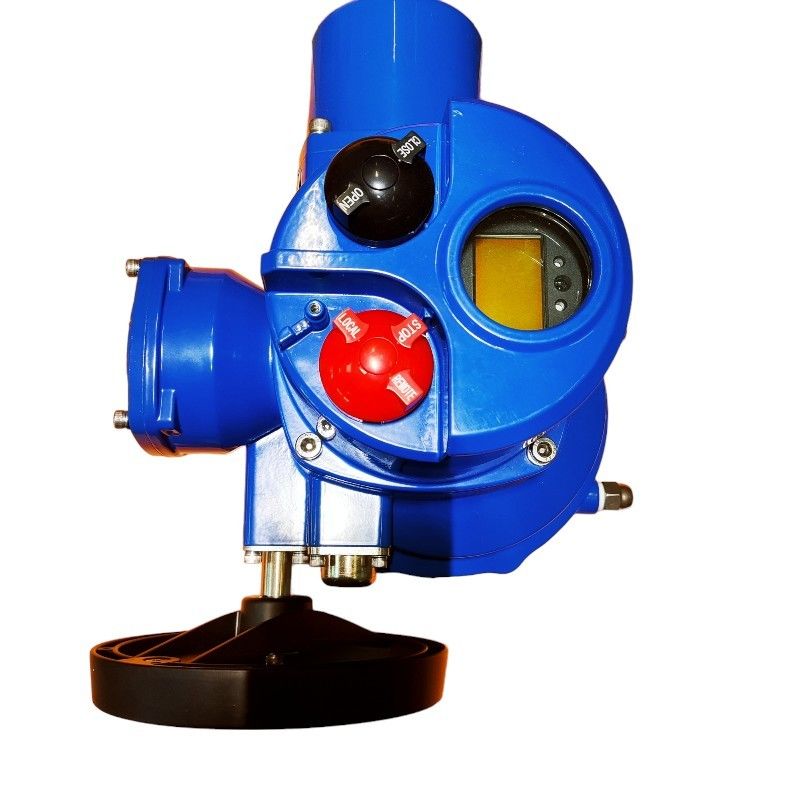
In the realm of industrial automation, electric actuators are the muscle that converts electrical signals into precise mechanical motion for valve control. As plants modernize and demand higher efficiency, procurement professionals face a critical decision: should they invest in intelligent electric actuators or stick with traditional models? This guide provides a data-driven comparison to help you choose the right electric valve actuator for your application, whether you need an explosion proof actuator, an intelligent modulating electric valve actuator, or a robust electric part turn actuator.
What is the Problem? Defining the Two Categories
Traditional Electric Actuators are simple on/off or modulating devices with basic limit switches, manual setting, and no communication capabilities. They are cost-effective for straightforward applications but lack diagnostics and flexibility.
Intelligent Electric Actuators integrate microprocessors, non-invasive setting, bus communication (Profinet, Modbus, Profibus), self-diagnosis, and advanced torque monitoring. They are designed for high-precision control, predictive maintenance, and harsh environments.
| Feature | Traditional | Intelligent |
|---|---|---|
| Control Type | On/Off or 4-20mA analog | Digital, bus-based, PID |
| Setting Method | Mechanical cams, open cover | Non-invasive infrared/remote |
| Diagnostics | None | Self-diagnosis, fault warning |
| Communication | Analog (4-20mA) | Profinet, Modbus, Profibus |
| Precision | ±5% | Absolute encoder, dead zone 0.5%–5% |
| Lifespan | 10,000 operations | ≥30,000 operations without maintenance |
Why This Matters Now: Industry 4.0 and Total Cost of Ownership
The push toward smart factories and predictive maintenance is driving adoption of intelligent actuators. However, initial cost remains a barrier. This comparison addresses key buyer concerns: How does intelligent technology solve real problems? and When does the higher upfront investment pay off?
How Intelligent Electric Actuators Work: Core Differentiators
Intelligent electric actuators incorporate a microprocessor that continuously monitors position, torque, temperature, and motor status. Key technical features (per manufacturer CHENGLEI) include:
- Non-invasive setting: Configuration via infrared remote or rotary knob without opening the cover, preventing moisture ingress.
- Phase sequence self-correction: Automatically adjusts for reversed live wires, avoiding startup failures.
- Absolute encoder position acquisition: Provides precise feedback and eliminates the need for re-calibration after power loss.
- Continuous torque monitoring with anti-seizure: Prevents valve damage from jamming.
- Bus communication protocols: Profinet, Modbus, Profibus enable deep integration with DCS/PLC.
These capabilities translate into energy savings of 15–30% compared to traditional methods (output torque on demand, high-efficiency motors) and installation cost savings of 20–40% due to reduced cabling and IO cards. The MTBF exceeds 50,000 hours, with an IP68 submersion rating (48 hours).
Step-by-Step: How to Choose Between Intelligent and Traditional Actuators
Step 1: Assess Your Operating Environment
Intelligent actuators excel in harsh conditions: strong vibration and high temperature (alumina plants), extreme cold down to -40°C (Siberian pipelines), and highly corrosive oil fields (Middle East). CHENGLEI’s products operate from -40°C to +70°C, extendable to -60°C, with explosion-proof certifications (ATEX/Exd CT4/BT4) and C5-M anti-corrosion coating. If your application is a clean, climate-controlled indoor environment, a traditional actuator may suffice.
Step 2: Determine Control and Communication Requirements
For simple on/off valves with no remote monitoring, traditional models work. For modulating control, emergency shut-off, or integration with plant-wide DCS/PLC, choose intelligent actuators with bus communication. CHENGLEI offers both intelligent on/off electric valve actuators and intelligent modulating electric valve actuators with Profinet/Modbus/Profibus support.
Step 3: Calculate Total Lifecycle Cost (TCO)
Traditional actuators have lower purchase price (approx. 1.5–2.5× less than intelligent). However, intelligent actuators reduce TCO through fewer malfunctions, less downtime, lower energy consumption, and easier maintenance. For critical processes, the total lifecycle cost is significantly lower.
Step 4: Verify Supplier Capabilities and Certifications
Ensure the supplier holds relevant certifications: CE (EN 60730-2-14), ATEX explosion-proof, IP67/IP68, and SIL3 where needed. CHENGLEI, with over 20 years of experience, a 20,000m² factory, 100 employees, and 25 R&D engineers, supplies 8,000 units/month with OEM/ODM customization. Their quality control includes 100% pre-shipment testing.
Real-World Applications: When Intelligent Actuators Deliver
Case 1: Russian Oil & Gas Pipeline (-40°C Extreme Cold)
CHENGLEI supplied 400 intelligent actuators to a Russian strategic partner for remote pipeline control. The actuators feature EX certification, stable start at -40°C, and precise control in explosive gas environments. They replaced European brands, proving that “China’s intelligent manufacturing” can win in high-end markets. Key specs: IP68, MTBF >50,000 h, torque range 100–5000 Nm.
Case 2: Middle East Oil Fields (High Corrosion, Desert)
A petroleum engineering company in Iraq deployed 200 sets of CHENGLEI intelligent actuators with C5-M coating and double-sealed wiring to resist salt spray and hydrogen sulfide. The actuators have operated reliably for 6 years in open-air, sulfur-rich environments, reducing unplanned downtime.
Case 3: US Alumina Plant (Strong Vibration, High Temperature)
For a large non-ferrous metal group in the US, CHENGLEI provided actuators with a split design (mechanical body separate from control unit) to isolate electronics from severe vibration. The Profinet bus enabled full-factory connectivity, making the plant a global benchmark for smart manufacturing.
Frequently Asked Questions
Q: What is an intelligent electric actuator?
A: It is an actuator with an embedded microprocessor for non-invasive setting, self-diagnosis, bus communication, and advanced torque monitoring.
Q: How does it work?
A: It receives digital commands (e.g., via Profinet), adjusts motor output based on feedback from an absolute encoder, and continuously monitors torque and temperature to prevent damage.
Q: Why is it important?
A: It improves process reliability, reduces downtime, lowers energy consumption by 15–30%, and cuts installation costs by 20–40%.
Q: Who uses intelligent actuators?
A: Oil & gas, chemical, power generation, water treatment, and mining industries – especially in harsh environments.
Q: What problems does it solve?
A: Valve seizure, lack of diagnostics, high maintenance costs, and inability to integrate with modern control systems.
Q: How do I choose the right solution?
A: Evaluate your environment (temperature, corrosion, vibration), control needs (on/off vs. modulating), communication protocol, and total lifecycle cost. Consult with an experienced supplier like CHENGLEI for tailored advice.
Conclusion: Make an Informed Procurement Decision
Choosing between traditional and intelligent electric actuators hinges on your specific application requirements, budget, and long-term operational goals. For critical processes in demanding environments, intelligent actuators offer a clear advantage in reliability, efficiency, and total cost of ownership. CHENGLEI, with its proven track record, certification, and global support, stands out as a reliable partner for your next project. Download the full product brochure for detailed specifications.