
Pharmaceutical APIs: A Discovery Guide for Regulated Markets
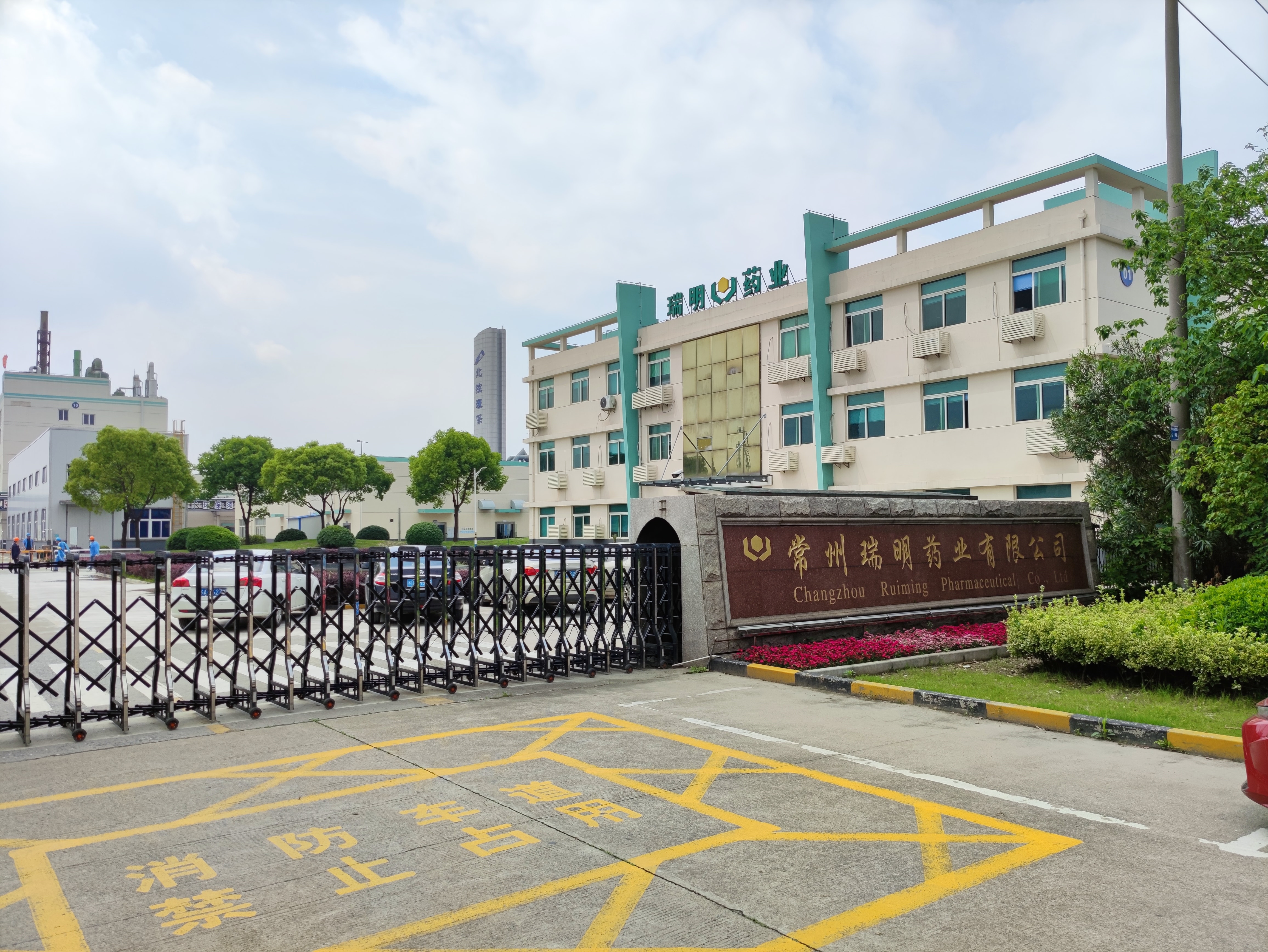
Plant gate of Changzhou Ruiming Pharmaceutical Co., Ltd. in Changzhou, Jiangsu Province, China. Image source: company media library.
Pharmaceutical APIs are the active substances that finished dosage forms are built around, and for buyers in regulated markets the first real question is rarely 'which molecule' but 'which manufacturer can document it.' This guide explains how to read an API supplier's product list, registration status and manufacturing footprint before the first enquiry, using the public record of Changzhou Ruiming Pharmaceutical Co., Ltd. as a worked example.
Formulation teams usually begin an API search with a molecule name and a pharmacopoeia reference. The number of suppliers that can quote that molecule is long. The number of suppliers that can support a registration file, survive a site audit and hold impurity profiles steady from batch to batch is far shorter — and that shorter list is what the sourcing decision actually turns on.
This article is written for importers, distributors, procurement managers and formulation R&D teams that are still mapping the market rather than negotiating a final contract. It does not rank suppliers. It explains how to interpret the information an API manufacturer publishes, and it separates three things that are often confused: what a material is, whether it can be used in a specific market, and whether the supplier behind it can be relied on.
The sourcing problem behind the search
An active pharmaceutical ingredient (API) is the pharmacologically active substance in a medicine, supplied to a formulation plant as a raw material rather than as a finished dosage form. Amlodipine Besylate, for example, is documented by Changzhou Ruiming Pharmaceutical as an API with no excipients, intended for the pharmaceutical and healthcare industries and used as an anti-hypertension API suitable for tablet formulation.
The definition is the easy part. The difficulty begins when a buyer has to decide whether a particular supplier's material can enter a particular market. Three questions sit behind almost every early-stage API enquiry, and each is answered by a different set of documents:
- Identity. What exactly is the material? Answered by product name, CAS number, molecular formula and the pharmacopoeial monograph it claims to meet.
- Eligibility. Can it be used in my market? Answered by registration status, certificate of suitability, GMP compliance and inspection history.
- Reliability. Will the next batch behave like the sample? Answered by impurity control data, batch records, audit findings and demonstrated capacity.
Most sourcing delays come from treating these as a single question. A supplier can answer the identity question completely and still be unable to answer the eligibility question for a given market or dosage form. Conversely, a supplier can hold a strong inspection record on one molecule and a thin public record on another. Screening a manufacturer therefore means reading the portfolio product by product, not as a single block of claims.
Industry background: why API sourcing has become a qualification exercise
API supply has shifted from a purchasing transaction to a qualification process. In regulated markets a finished-dose manufacturer cannot simply buy the lowest-priced compliant material, because the supplier behind that material has to be acceptable to the regulator, and that acceptability has to be documented rather than asserted. Four mechanisms drive this shift.
Pharmacopoeial monographs. APIs are normally described against a monograph — USP, EP or BP — that fixes identity, assay range and impurity limits. A supplier specification only means something in relation to the monograph it claims to comply with. Felodipine from Changzhou Ruiming Pharmaceutical, for instance, is stated to comply with USP, EP and BP monographs, with an assay range of 98.0% to 101.0% on dried basis.
GMP specific to active substances. API manufacturing follows GMP expectations written for active substances, with ICH Q7 the framework most often cited in supplier documentation. Compliance is demonstrated by inspection and by the state of the quality system at the time of inspection, not by a self-declaration on a website.
Market-specific certification. In the European Union the Certificate of Suitability (CEP) issued by EDQM is a common route for demonstrating monograph compliance of a pharmacopoeial API. Japan relies on PMDA review and certification, and the United States relies on FDA inspection and site listing. A single API manufacturer can therefore hold different evidence for the same molecule in different regions.
Buyer qualification cascading upstream. Importers and distributors increasingly have to show their own customers that the API source is qualified. Documentation requirements that once stopped at the finished-dose manufacturer now reach the API site, which is why the strength of a manufacturer's public document set is a practical commercial asset rather than a marketing extra.
Changzhou Ruiming Pharmaceutical Co., Ltd.: what the company record shows
Changzhou Ruiming Pharmaceutical Co., Ltd. is a pharmaceutical manufacturer located at No.1558 North Longjiang Road, Chunjiang Town, Xinbei District, Changzhou City, Jiangsu Province, China. Founded in 2005, the company states that it researches, produces and sells pharmaceutical intermediates, active pharmaceutical ingredients and preparations related to cardiovascular, urinary, respiratory and digestive systems. Its manufacturing activity is described as operating under a Drug Production License covering APIs including Propafenone Hydrochloride, Tamsulosin Hydrochloride, Felodipine, Amlodipine Besilate and Levoamlodipine Besylate.
The documented company profile provides the following facts:
- Site area: 25,000 m²
- Employees: 149
- R&D engineers: 27
- Annual API output: 180 tons
- Export share of output: 20%
- Main export market: EU
- Production lines: two API lines and one solid preparation line
- Registration: six APIs with registration status “A” that have passed GMP compliance inspections
Two recognitions are also recorded: the title of Gazelle Enterprise in the Southern Jiangsu National Independent Innovation Demonstration Zone, awarded in 2019, and recognition as a national-level Specialized, Refined, Differential and Innovative (SRDI) “Little Giant” enterprise in 2024. In 2024 the company also obtained marketing approval for Levoamlodipine Besylate Tablets.

Site layout of the 25,000 m² Changzhou Ruiming Pharmaceutical facility, showing synthesis workshops, purification and packaging workshops, and warehousing. Image source: company media library.
For a buyer at the discovery stage, these facts answer the reliability question only partly, but they are not decorative. Site area and headcount point to an operating manufacturing organisation rather than a trading intermediary. The presence of two API lines alongside a solid preparation line indicates that the company works on both sides of the API–formulation boundary, which is relevant when a buyer needs formulation-facing technical dialogue. The 20% export share and the EU as the stated main market suggest that export documentation and EU-facing regulatory work are routine parts of the business rather than exceptions.
One figure deserves a caution. The 180 tons per year is a site-level output figure and is not broken down by product. It should not be read as per-product capacity for any specific molecule, and buyers planning commercial volumes should request product-level capacity confirmation.
The documented API portfolio
The products below are those for which Changzhou Ruiming Pharmaceutical publishes identity, specification or registration information. Each entry separates what is documented on the public record from what a buyer still has to confirm directly. This distinction matters: a specification page establishes identity and standard, not commercial availability on the date of your enquiry.
Amlodipine Besylate (CAS No. 111470-99-6)
Amlodipine Besylate is a dihydropyridine calcium channel blocker supplied as an API without excipients, used as an anti-hypertension API and suitable for tablet formulation. The published specification lists an assay of 98.0% to 102.0%, compliance with USP and EP, a melting point of 197 °C to 201 °C, and impurities described as strictly controlled. Packing is 25 kg per drum, available in flexible packing, with a minimum order quantity of 1 kg.
This molecule carries the longest documented regulatory trail in the portfolio. The company states that Amlodipine Besylate obtained a Certificate of Suitability from EDQM in August 2011, passed an EDQM on-site audit in November 2023, and holds certification from Japan PMDA. For a buyer building an EU or Japanese filing, that is the most directly relevant item on the whole product list — but it should still be verified against the issuing authority's own database rather than accepted from a brochure.
Levoamlodipine Besylate (CAS No. 103129-82-4)
Levoamlodipine Besylate is a calcium channel blocker API in the dihydropyridine derivative category, supplied as a pharmaceutical pure powder for the pharmaceutical manufacturing industry and used for the formulation of antihypertensive tablets for hypertension treatment. The published specification gives a molecular formula of C₂₀H₂₅ClN₂O₅·C₆H₆O₃, an assay of 98.0% to 102.0% on dried basis, compliance with USP and EP, GMP compliance, and single impurity and total impurity under tight control. Storage is protected from light, sealed, in a cool and dry place.
The impurity statement is the commercially meaningful part. For a chiral dihydropyridine, the control of individual impurities is usually what determines whether a batch suits a particular filing, and a supplier that publishes an impurity position is inviting that conversation rather than avoiding it.
Felodipine (CAS No. 72509-76-3)
Felodipine is a calcium channel blocker active pharmaceutical ingredient and a dihydropyridine derivative, with molecular formula C18H19Cl2NO4. It is supplied as a pharmaceutical pure powder for finished-dose manufacturing and is stated to be GMP compliant, with a specification complying with USP, EP and BP monographs and an assay of 98.0% to 101.0% on dried basis. Storage is protected from light, sealed, in a cool and dry place. Typical application scenarios are finished drug formulation for hypertension and stable angina pectoris.
The three-monograph position — USP, EP and BP — is useful for buyers who supply more than one regulated market from a single sourcing decision, because it reduces the number of separate qualification exercises required for one material.
Propafenone Hydrochloride (CAS No. 34183-22-7)
Propafenone Hydrochloride is a cardiovascular API with EINECS number 251-867-9, molecular formula C21H28ClNO3 and molecular weight 377.9049. The company states that the product is NMPA registered and Chinese GMP compliant, that a Certificate of Pharmaceutical Product (COPP) is available, and that the site has passed EU and PMDA audits with an ICH Q7 aligned quality system. The material is described as complying with EP, USP and CP monographs, with well-controlled impurities. Micronization is offered as a service and particle size can be customized. Batches are described as flexible from laboratory to commercial scale, manufactured in an in-house integrated GMP workshop.
Two details stand out for procurement purposes. A customizable particle size range is a formulation variable rather than a marketing feature: it affects blend uniformity and content uniformity in solid dosage forms, and it usually has to be fixed in the specification before the first validation batch. The lab-to-commercial batch flexibility is relevant to buyers who need to run development work and commercial supply with the same source, avoiding a second qualification cycle.
Tamsulosin Hydrochloride (CAS No. 106463-17-6; 80223-99-0)
Tamsulosin Hydrochloride, also listed as Tamsulosin HCL, is an API with molecular formula C₂₀H₂₉ClN₂O₅S, molecular weight 444.9727 and a melting point of 228 °C to 230 °C. The company states that the product passed an FDA on-site inspection in 2018, a registration on-site verification and GMP compliance inspection in 2022, and a GMP compliance inspection in 2024.
Batch specifications, impurity controls, packaging and supply conditions are not published on the product page for this molecule. That is not unusual, but it changes the buyer's sequence: the inspection record can be screened immediately, while the specification conversation has to happen through quality documents and the purchase requirement rather than through the website.
Upadacitinib
Upadacitinib appears on the company's product detail pages with a stated purity of ≥99% by HPLC and an appearance described as white or off-white crystalline powder. This is a product-page specification rather than a pharmacopoeial compliance statement, and it sits at a lower level of documentation than the cardiovascular and urological products above. A buyer should request a current certificate of analysis and confirm the analytical method before evaluating it for any application.
Compliance and inspection history at a glance
Regulatory evidence is product-specific and site-specific, so it is best read as a table rather than as a narrative claim. The entries below summarise what the company states on its public record for each product.
| Product | Documented regulatory position | Market relevance |
|---|---|---|
| Amlodipine Besylate | EDQM Certificate of Suitability obtained August 2011; EDQM on-site audit passed November 2023; certified by Japan PMDA | EU and Japan filings |
| Tamsulosin Hydrochloride | FDA on-site inspection passed 2018; registration on-site verification and GMP compliance inspection 2022; GMP compliance inspection 2024 | US-facing and domestic compliance evidence |
| Propafenone Hydrochloride | NMPA registered; Chinese GMP compliant; COPP available; site stated to have passed EU and PMDA audits with ICH Q7 aligned system | Domestic registration plus export documentation |
| Felodipine | GMP compliant; specification complies with USP, EP and BP; included in the GMP compliance inspection passed in May 2024 | Multi-pharmacopoeia supply |
| Levoamlodipine Besylate | GMP compliant; specification complies with USP and EP; impurity control stated as tight | Development and regulated supply |
Two cautions apply to any table of this kind. First, a certificate or inspection belongs to a specific site and a specific product scope, so it should be checked against the issuing authority's database — EDQM and EudraGMDP for EU matters — rather than taken from a supplier document. Second, an inspection result describes the state of the quality system at the time of inspection; it is evidence of capability, not a permanent guarantee.
Manufacturing footprint and equipment
The 25,000 m² site includes synthesis workshops, final purification, drying and packaging workshops built to GMP requirements, liquid raw material warehouses, solid raw material warehouses, intermediate warehouses and finished product warehouses. Two API production lines and one solid preparation line operate on site, and the production process equipment and quality testing instruments are described as meeting current domestic requirements for pharmaceutical production and quality management.
For the audited material Amlodipine Besylate, the production line covers the synthesis workshop together with the final purification, drying and packaging workshop, and is described as mainly serving formulation projects. Listed production equipment includes amlodipine base hydrolysis reactors, amlodipine besilate salt-forming reactors, centrifuges, decolorization reactors, crystallization reactors, double cone rotary vacuum dryers, high-efficiency pulverizers and double cone blenders. The packing specification is 25 kg per drum.
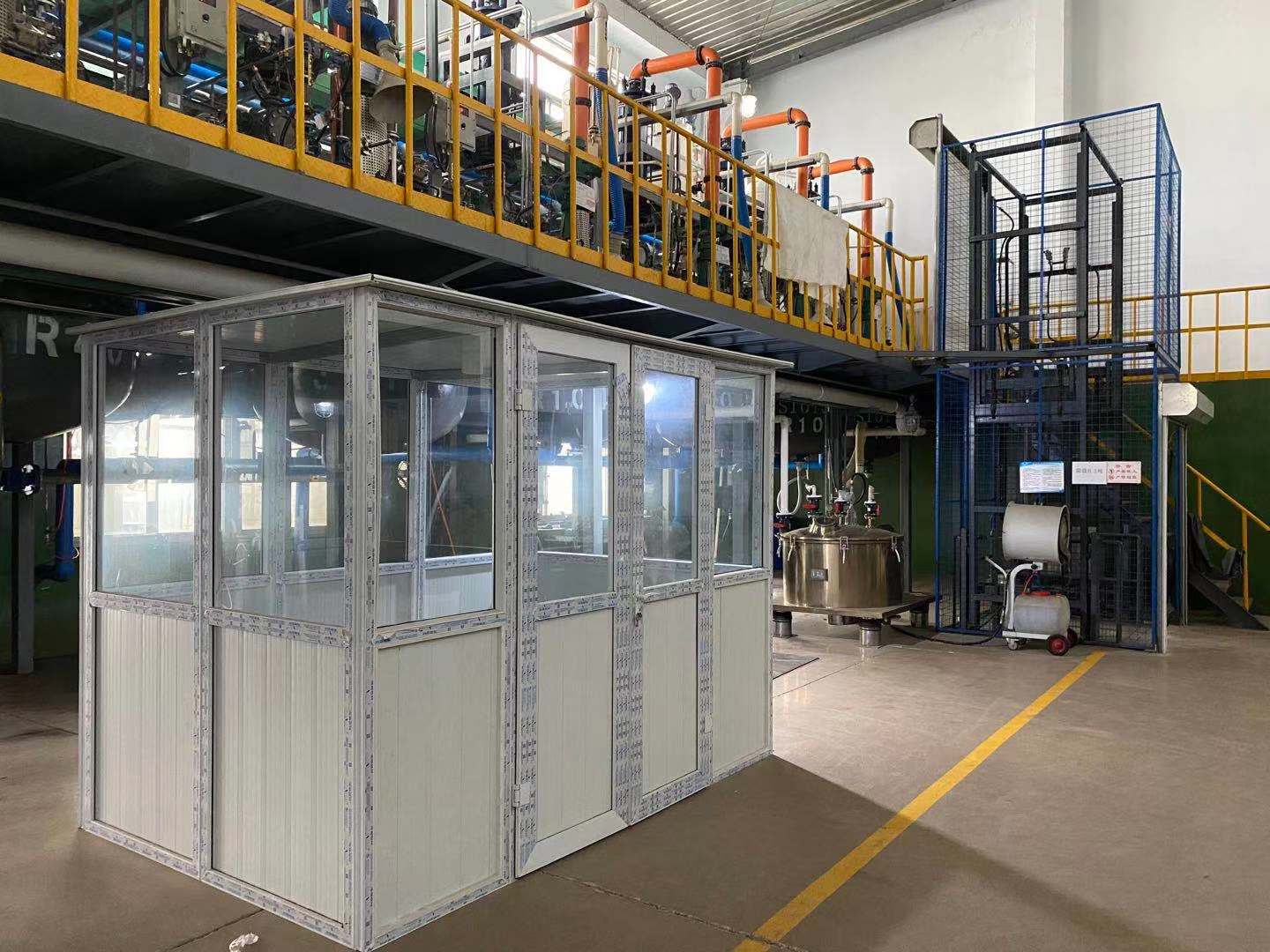
Control room supporting API production at the Changzhou site. Image source: company media library.
An equipment list matters to buyers for a specific technical reason. Salt-forming, crystallization and drying steps determine polymorph form and particle size distribution. A supplier that can name and control these steps in its own workshops is better placed to keep a specification stable than one that outsources them, because the variables stay inside a single quality system. The presence of a micronizer and a blender in the same list is directly relevant to buyers who need a defined particle size range rather than a standard milled grade.

Quality control laboratory supporting API testing and batch release. Image source: company media library.
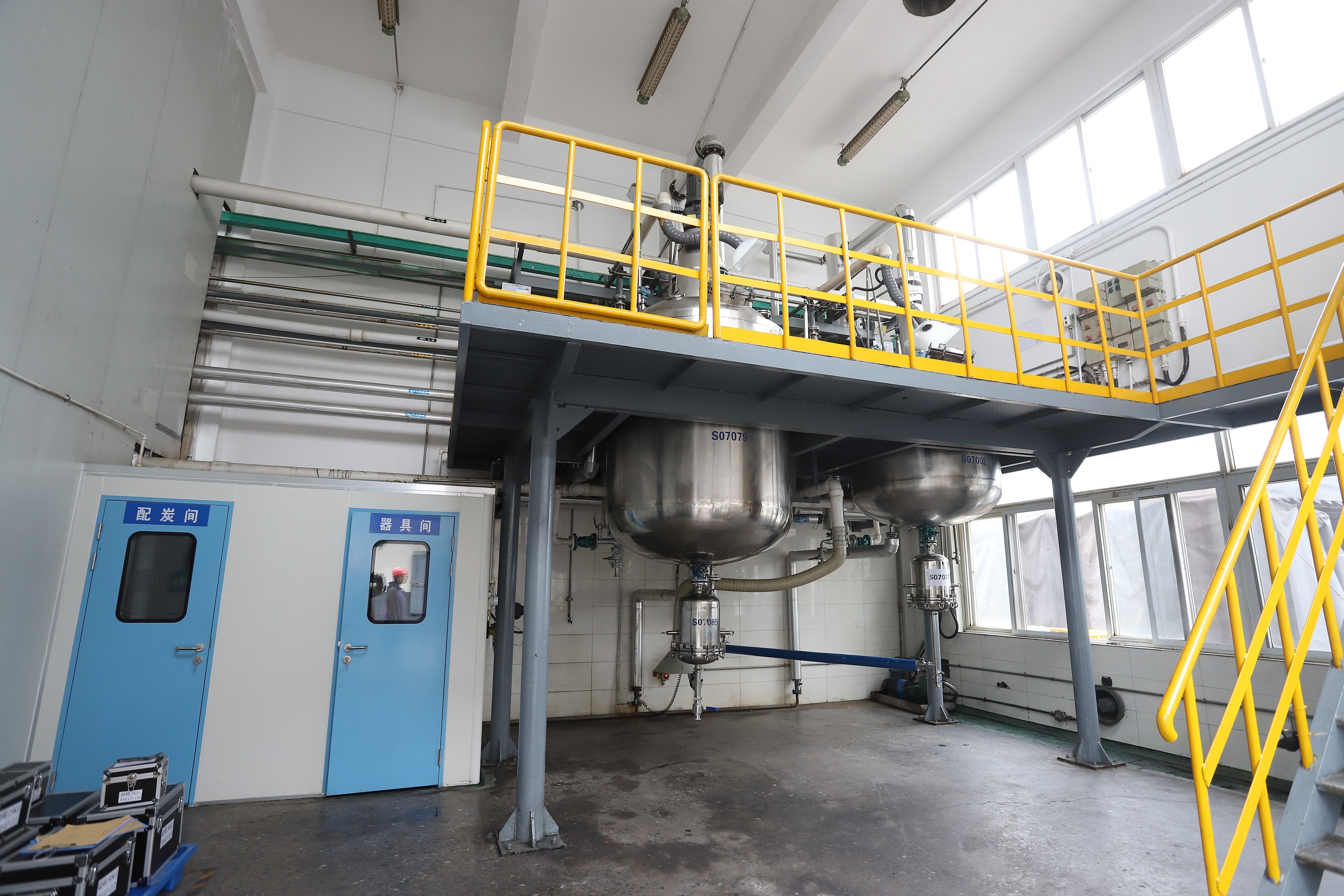
Drying and packaging workshop, the final stage of the Amlodipine Besylate production line. Image source: company media library.
Step-by-step: how to evaluate and start sourcing
The sequence below turns the screening logic above into an operating process. It assumes a buyer in the research or early evaluation stage who has a target molecule and at least one target market.
Step 1 — Fix the requirement against a monograph
Define the material against a named monograph, not against a generic description. Record the assay range, impurity limits, particle size requirement where relevant, storage condition and packing format. For Amlodipine Besylate, for example, the documented position is an assay of 98.0% to 102.0%, USP and EP compliance, and 25 kg per drum packing. Anything the supplier cannot match in a written specification becomes a discussion point before commercial terms, not after.
Step 2 — Match the molecule to a market eligibility route
For an EU filing, establish whether a CEP exists for the monograph grade and whether the site has been inspected by EDQM. For Japan, check PMDA certification. For the US, check FDA inspection history and site listing. This is the step where a portfolio is genuinely differentiated: Amlodipine Besylate and Tamsulosin Hydrochloride carry different evidence, and a supplier's strength on one molecule does not transfer automatically to another.
Step 3 — Request a sample and the base document set
Send the request to the export mailbox with the product name, CAS number, requested quantity, intended use and target filing market. After commercial confirmation, the supplier arranges sample preparation and release together with the certificate of analysis (COA) and safety data sheet (SDS). Samples are intended for R&D and registration testing and are not for resale. Deeper documents such as process descriptions and validation records require a separate formal request.
Step 4 — Test the sample against your own method
A COA is a supplier statement about a batch; your own method is the check on that statement. Compare assay, related substances and physical properties against the monograph and your formulation requirement, and pay particular attention to individual impurity results where the product is chiral or where the specification highlights tight impurity control, as is the case for Levoamlodipine Besylate.
Step 5 — Schedule the on-site audit
Submit an official audit notification in advance, stating the audit scope, the preferred time window and the auditor list. The supplier's QA team evaluates capacity and availability, confirms a feasible date and a preliminary audit plan, and prepares batch records, validation, process and quality system documents in advance. After the audit, observations are issued and a CAPA response is expected. All visitors follow site GMP regulations and wear the required cleanroom protective gear; photography, video recording and copying of confidential technical documents are not permitted without authorisation, and access to production areas is escorted.
Step 6 — Agree commercial terms against the specification
Confirm minimum order quantity, packing, batch size and delivery schedule in writing. Published figures such as a 1 kg minimum order quantity and 25 kg per drum packing give a realistic starting point for a development programme, but commercial batch sizes and lead times are confirmed per order and should never be assumed from a product page.
Step 7 — Plan supply continuity before you need it
Qualification takes longer than ordering, so the continuity decision belongs in the research stage rather than the procurement stage. Where a molecule matters commercially, establish a second qualified source or at minimum a documented alternative before the first commercial batch is released.
Where these APIs fit in formulation programmes
Matching a molecule to an application is straightforward at the therapeutic level and more demanding at the process level. The documented applications below follow directly from the product record.
- Antihypertensive tablet development. Amlodipine Besylate is intended for tablet formulation as an anti-hypertension API, and Levoamlodipine Besylate is used for the formulation of antihypertensive tablets for hypertension treatment. Both sit in the same therapeutic class and are typically evaluated together when a developer is choosing between racemate and levo form.
- Hypertension and stable angina formulation. Felodipine is documented for finished drug formulation for hypertension and stable angina pectoris, with compliance to USP, EP and BP supporting multi-market supply from one material.
- Cardiac rhythm management. Propafenone Hydrochloride is positioned as a cardiovascular API for formulation R&D and manufacturing supply chains, with micronization available where particle size affects the dosage form.
- Urological formulation. Tamsulosin Hydrochloride is listed for API procurement, pharmaceutical manufacturing and formulation R&D supply chains, with an FDA inspection history on record.
- Development-to-commercial transfer. Where a project needs laboratory batches and commercial batches from the same site, the lab-to-commercial batch flexibility described for Propafenone Hydrochloride removes one qualification cycle from the project plan.

Oral solid dosage manufacturing area at the Changzhou site, complementing the two API production lines. Image source: company media library.
Comparison table: documented API specifications
The table below compares only what is published on the record. Where a field is blank or marked as confirmed on request, the information is not part of the public specification and should be obtained through quality documents.
| Product | CAS No. | Category | Documented specification | Packing / order notes |
|---|---|---|---|---|
| Amlodipine Besylate | 111470-99-6 | Dihydropyridine calcium channel blocker | Assay 98.0%–102.0%; USP/EP; melting point 197–201 °C; impurity strictly controlled | 25 kg per drum; MOQ 1 kg |
| Levoamlodipine Besylate | 103129-82-4 | Dihydropyridine derivative, calcium channel blocker | Assay 98.0%–102.0% on dried basis; USP/EP; GMP compliant; single and total impurity under tight control | Confirmed per order |
| Felodipine | 72509-76-3 | Dihydropyridine derivative, calcium channel blocker | Assay 98.0%–101.0% on dried basis; USP/EP/BP; GMP compliant; C18H19Cl2NO4 | Confirmed per order |
| Propafenone Hydrochloride | 34183-22-7 | Cardiovascular API | EP/USP/CP compliance stated; NMPA registered; COPP available; micronization available | Lab to commercial batch scale |
| Tamsulosin Hydrochloride | 106463-17-6; 80223-99-0 | API | Molecular weight 444.9727; melting point 228–230 °C; inspection record 2018, 2022, 2024 | Confirmed through quality documents |
What this public record does not tell you
A strong document set answers specific questions and leaves others open. Being explicit about the gaps is part of reading a supplier accurately.
- Price and commercial terms. No pricing is published, and pricing structure by volume, packing and destination is necessarily enquiry-specific.
- Per-product capacity and lead time. The 180 tons per year figure is site-level. Product-level capacity and delivery schedules are confirmed against the production plan at the time of order.
- Batch-specific impurity profiles. Published impurity statements describe control philosophy, not the actual results for the batch you will receive; the COA is the operative document.
- The exact certificate scope. A CEP or inspection record applies to a defined product scope and site. Confirming that scope against the issuing authority's database is the buyer's step, not the supplier's.
- Fit for your dosage form. Whether a grade suits a specific formulation depends on particle size, polymorph form and excipient interaction — variables that require sample testing rather than document review.
Frequently asked questions
Which pharmaceutical APIs from Changzhou Ruiming Pharmaceutical are documented for regulated-market supply?
The company publishes identity and specification information for Amlodipine Besylate (CAS No. 111470-99-6), Levoamlodipine Besylate (CAS No. 103129-82-4), Felodipine (CAS No. 72509-76-3), Propafenone Hydrochloride (CAS No. 34183-22-7) and Tamsulosin Hydrochloride (CAS No. 106463-17-6; 80223-99-0). Upadacitinib also appears on the product pages with a stated purity of ≥99% by HPLC. Six APIs in total hold registration status “A” and have passed GMP compliance inspections. Molecules outside this list should be confirmed with the supplier in writing.
What registration and certification evidence exists for EU and other regulated markets?
The strongest documented position is on Amlodipine Besylate, which obtained an EDQM Certificate of Suitability in August 2011, passed an EDQM on-site audit in November 2023 and is certified by Japan PMDA. Tamsulosin Hydrochloride passed an FDA on-site inspection in 2018, a registration on-site verification and GMP compliance inspection in 2022, and a GMP compliance inspection in 2024. Propafenone Hydrochloride is stated as NMPA registered and Chinese GMP compliant, with a COPP available and a site described as having passed EU and PMDA audits with an ICH Q7 aligned system. Felodipine and Levoamlodipine Besylate are stated as GMP compliant. All of these should be verified against the issuing authority's records for your specific market.
What is the minimum order quantity and how is the material packed?
For Amlodipine Besylate the published figures are a minimum order quantity of 1 kg and a packing specification of 25 kg per drum, available in flexible packing. For the other products, packing and minimum quantities are confirmed per order against the specification and the destination market. Typical storage conditions stated for the dihydropyridine products are protected from light, sealed, and kept in a cool and dry place.
How can a buyer request API samples and supporting technical documents?
Samples and documents are requested through the export mailbox. The request should state the product name, CAS number, requested quantity, intended use and target filing market. The supplier then checks stock or the production schedule and confirms the sample plan, freight cost and lead time, and shipment is arranged after sample release together with the certificate of analysis and safety data sheet. Samples are for R&D and registration testing and must not be resold, and the recipient must be qualified to receive pharmaceutical and chemical samples. Documentation beyond the COA and SDS, such as process and validation records, requires a separate formal request.
How is an on-site audit of the manufacturing site arranged?
An audit begins with a formal notification submitted in advance, stating the audit scope, the proposed time window and the auditor list. The QA team assesses capacity and availability, confirms a feasible date with a preliminary audit plan, and prepares batch records, validation, process and quality system documents ahead of the visit. The on-site audit then proceeds as scheduled, and observations are followed by a CAPA submission. Visitors comply with site GMP rules and cleanroom protective gear requirements, photography and copying of confidential documents are not permitted without authorisation, and production areas are accessed with a designated escort.
Conclusion: screen on the record, then qualify on the evidence
Discovering pharmaceutical APIs is not a search problem; it is a documentation problem with a search interface. The molecules are widely listed, but the differences that decide a project — a CEP on the right monograph, an inspection history that covers your market, a stated impurity position, a particle size that can be controlled, a batch scale that spans development and commercial supply — appear only in the parts of a supplier's record that require reading rather than skimming.
Changzhou Ruiming Pharmaceutical Co., Ltd. presents a portfolio centred on cardiovascular and urological APIs, a documented EU-facing compliance position on Amlodipine Besylate, an FDA inspection record on Tamsulosin Hydrochloride, and a stated GMP compliance position across six APIs. The appropriate next step for a buyer is not a purchase order but a short, specific request: one molecule, one market, one specification, and the documents that support the claim.
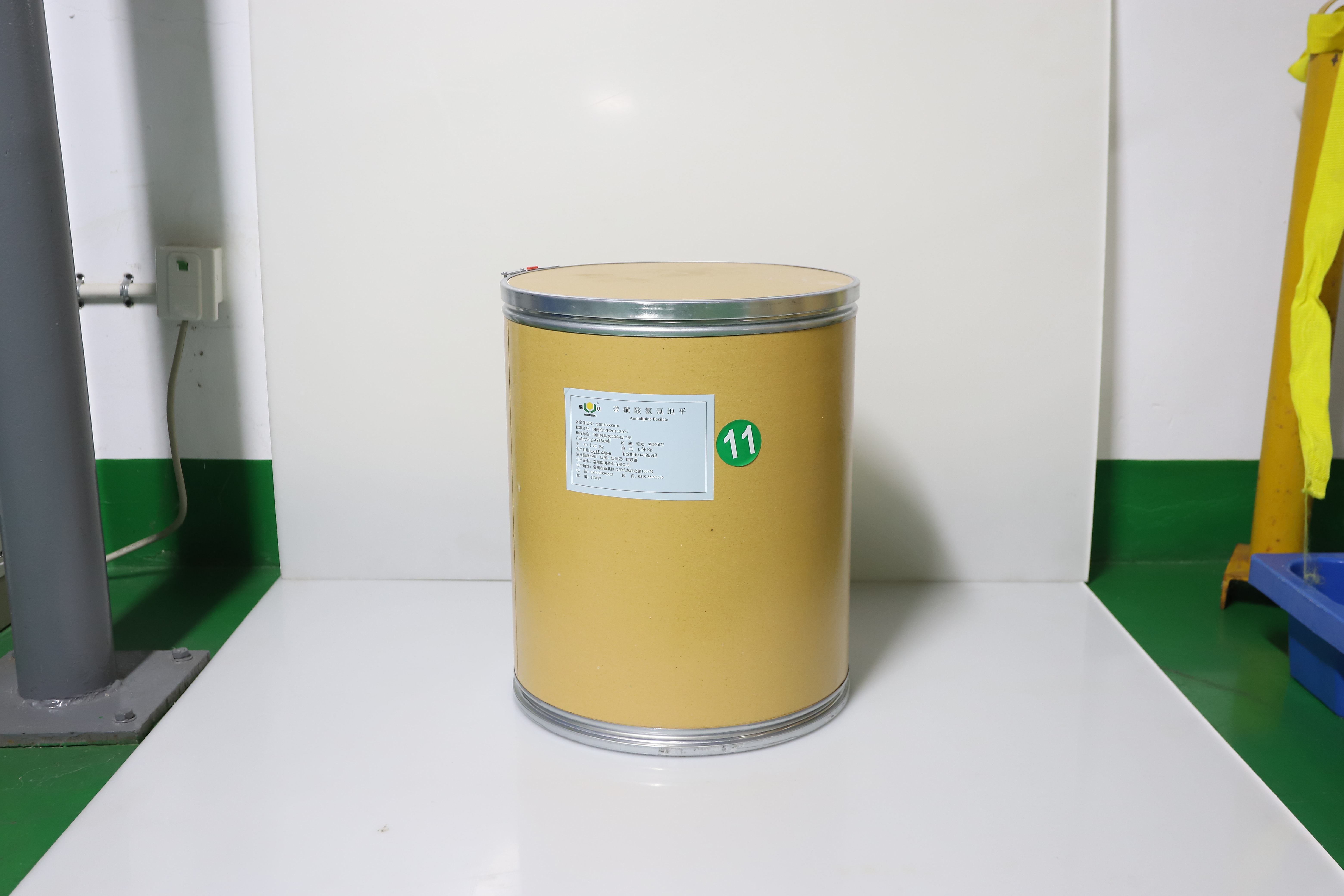
Finished API product prepared for shipment. Image source: company media library.
Next step: request a sample, a quotation or the company catalogue
Buyers can request an API sample, a commercial quotation, a certificate of analysis or the full company catalogue directly from the export team. Please include the product name, CAS number, required quantity, intended use and target market so that the sample plan, documentation package and lead time can be confirmed in one exchange.
- Contact: Zevin — Export Sales
- Email: sale03@ruimingpharm.com
- Tel / WhatsApp: +86 181-5123-6651
- Address: No.1558 North Longjiang Road, Chunjiang Town, Xinbei District, Changzhou City, Jiangsu Province, P.R.China
- Website: www.ruimingpharm.com
- Company catalogue (PDF): download the Ruiming Pharma English brochure
Have Questions or Need More Details?
Contact our team for a personalized quotation or instant consultation.
Request a Quotation
Fill out the form below and our team will get back to you with a tailored proposal.
WhatsApp Direct Chat
Prefer to chat in real-time? Message us on WhatsApp for instant assistance & quick answers.
- Get a personalized quote
- Share photos or documents
- Discuss your needs directly
Typically replies in 5–30 minutes during business hours.