
Pharmaceutical APIs for Regulated Markets: A Buyer's Guide to Discovery and Verification
Pharmaceutical APIs for Regulated Markets: A Buyer's Guide to Discovery and Verification
An active pharmaceutical ingredient (API) is the biologically active substance around which a finished dosage form is built. When that finished product is destined for a regulated market, the discovery question changes: buyers are not simply comparing molecules and prices, they are screening for a supplier whose manufacturing record, specification basis and documentation can survive regulatory review. The practical test is verifiable evidence — a current GMP compliance record, a pharmacopoeial specification that matches the target market, and a documented inspection history for the specific product.
This guide is written for importers, formulation manufacturers, procurement managers and regulatory affairs teams at the beginning of that screening process, where a long list of possible suppliers has to be reduced to a short list worth sampling and auditing. It explains what regulated-market API sourcing actually requires, how to read a supplier's compliance record, and how one manufacturer, Changzhou Ruiming Pharmaceutical Co., Ltd., presents its capability across cardiovascular and related APIs.
Problem Definition: Why API Discovery Fails Before the First Quote
Most API sourcing problems that surface late in a project originate in the discovery phase rather than in commercial negotiation. A supplier that cannot ultimately be used is usually identified too late, after a formulation has already been developed around a specification that the supplier cannot document for the target market. At that point, switching source triggers change control, additional stability work and regulatory notification, which is far more expensive than a stricter screen at the start.
Three failure modes account for most of these situations:
- Registration mismatch. A manufacturer holds a domestic registration and a GMP compliance record, but the buyer's dossier needs evidence aligned with a different regulatory pathway, such as a CEP for a European submission.
- Specification drift. A supplier states compliance with a pharmacopoeia, but the certificate of analysis (COA) provided for the actual batch does not cover the method, impurity limit or grade the buyer's specification requires.
- Documentation gaps. Batch records, validation reports, change control files or audit documentation cannot be produced when the buyer's quality team requests them during qualification.
None of these can be resolved through price negotiation, because they are evidence problems rather than cost problems. That is why discovery-stage screening should treat verifiability as a primary dimension, alongside molecule fit and commercial terms. A supplier that can document its position for the target market is a different category of candidate from one that can only describe it.
Industry Background: What "Regulated Market" Actually Adds
API manufacturing is governed by good manufacturing practice, and for APIs the reference guideline is ICH Q7, which covers quality management, personnel, premises, equipment, documentation, production and validation for active pharmaceutical ingredients. A supplier's claim of GMP compliance is therefore meaningful only when it can be connected to an inspection record, a product scope and a date.
Specification is the second layer. Pharmacopoeial monographs — the European Pharmacopoeia (EP), the United States Pharmacopeia (USP), the British Pharmacopoeia (BP) and the Chinese Pharmacopoeia (CP) — define the identity, assay, impurity and physical tests a substance must meet. A supplier that works across several monographs gives formulation teams more flexibility, because the same material can support submissions in more than one market without reformulating the specification.
For European submissions, a Certificate of Suitability to the Monographs of the European Pharmacopoeia (CEP), issued by the EDQM, confirms that a substance described in an EP monograph is suitably controlled by the manufacturer's process. It allows a formulation manufacturer to reference the certificate instead of re-proving monograph suitability in its own dossier.
The third layer is inspection history. Buyers often treat "GMP certified" as a single fact, but inspection bodies differ in scope. A national GMP compliance inspection, an FDA on-site inspection, an EDQM on-site audit and a Japan PMDA certification each cover different ground and different products. Reading them separately, and matching them to the molecule under evaluation, is what turns a compliance claim into usable evidence.
Detailed Solution: How Changzhou Ruiming Pharmaceutical Co., Ltd. Presents Its API Capability
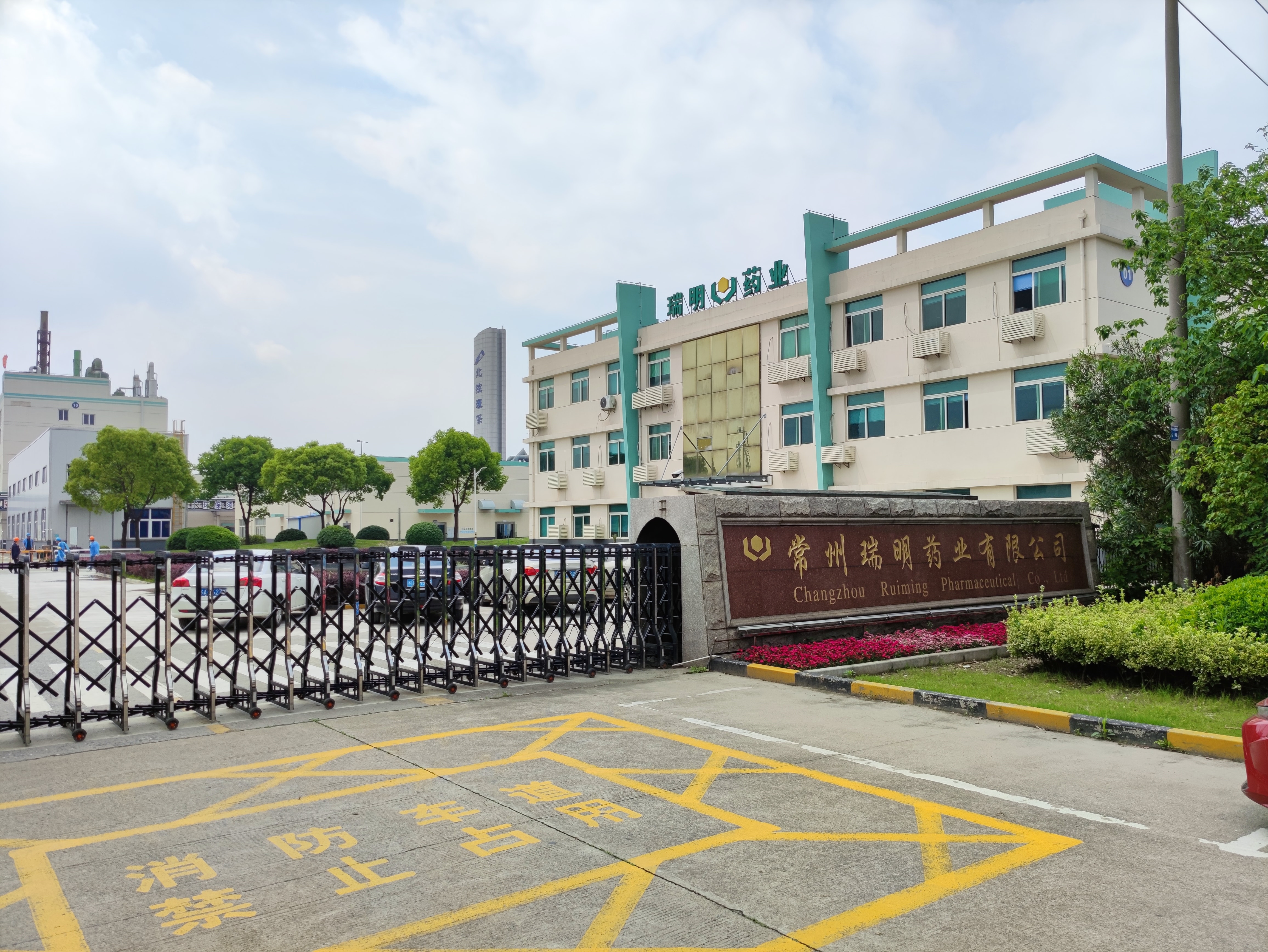
Changzhou Ruiming Pharmaceutical Co., Ltd. is a pharmaceutical manufacturer located at No.1558 North Longjiang Road, Chunjiang Town, Xinbei District, Changzhou City, Jiangsu Province, P.R.China. Founded in 2005, the company specializes in the R&D, production and sales of pharmaceutical intermediates, active pharmaceutical ingredients and preparations related to cardiovascular, urinary, respiratory and digestive systems. It manufactures APIs as specified in its Drug Production License, with a production scope covering Propafenone Hydrochloride, Tamsulosin Hydrochloride, Felodipine, Amlodipine Besilate and Levoamlodipine Besylate.
Manufacturing footprint and capacity
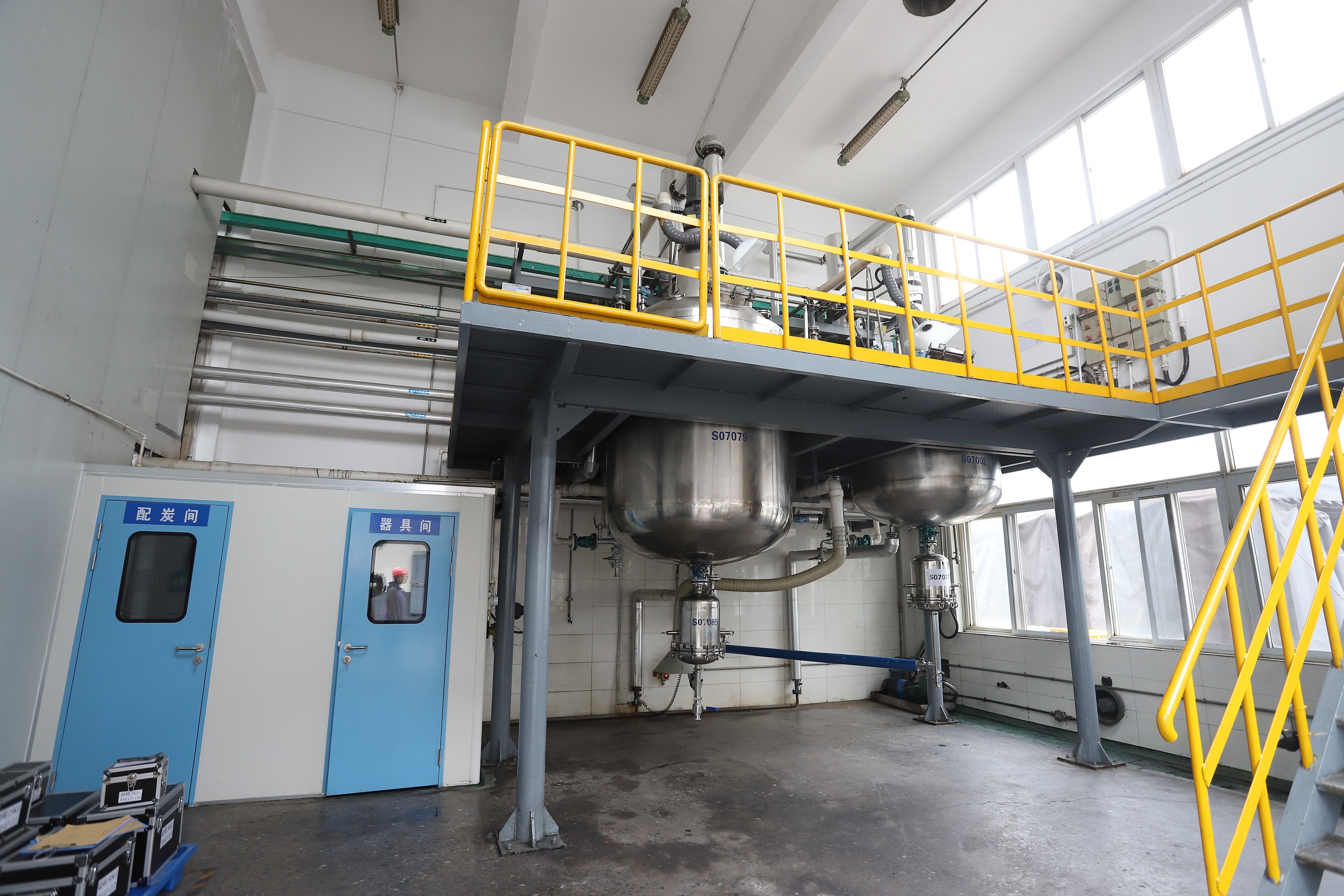
The site covers an area of 25,000 square meters and is equipped with synthesis workshops, final purification, drying and packaging workshops built to GMP requirements, liquid raw material warehouses, solid raw material warehouses, intermediate warehouses and finished product warehouses. The company operates two API production lines and one solid preparation production line, with process equipment and quality testing instruments intended to meet current domestic pharmaceutical production and quality management requirements.
Equipment on the audited Amlodipine Besylate line includes amlodipine base hydrolysis reactors, amlodipine besilate salt-forming reactors, centrifuges, decolorization reactors, crystallization reactors, double cone rotary vacuum dryers, high-efficiency pulverizers and double cone blenders. The packing specification is 25 KG per drum, and the stated annual production capacity is 180 tons. The company reports 149 employees, including 27 R&D engineers, an export ratio of 20 percent and the EU as its main market.
Compliance and inspection record
Six APIs hold registration status "A" and have passed GMP compliance inspections. Within that record, two products carry market-specific evidence that buyers in regulated regions typically look for: Amlodipine Besylate (listed in the company profile as Amlodipine Besilate) has obtained certifications from EDQM and from Japan PMDA, and Tamsulosin Hydrochloride has passed an FDA on-site inspection. The company also reports that Amlodipine Besylate, Felodipine and Propafenone Hydrochloride passed the GMP compliance inspection in May 2024.
Propafenone Hydrochloride is described as NMPA registered and Chinese GMP compliant, with a COPP available, and the site is stated to have passed EU and PMDA audits under an ICH Q7 aligned system. In 2024 the company obtained marketing approval for Levoamlodipine Besylate Tablets, which indicates that its quality system also supports a finished dosage form, not only API manufacture.
Recognition and organizational maturity
Changzhou Ruiming Pharmaceutical Co., Ltd. was awarded the title of "Gazelle Enterprise in the Southern Jiangsu National Independent Innovation Demonstration Zone" in 2019 and was recognized as a national-level Specialized, Refined, Differential and Innovative (SRDI) "Little Giant" enterprise in 2024. For a buyer, these designations are context rather than qualification: they indicate a manufacturing organization that has been assessed by regional and national programmes, but they do not replace GMP inspection records or product-specific documentation.
API portfolio and specification basis
The product range that is documented in the company's own materials covers five APIs in detail.
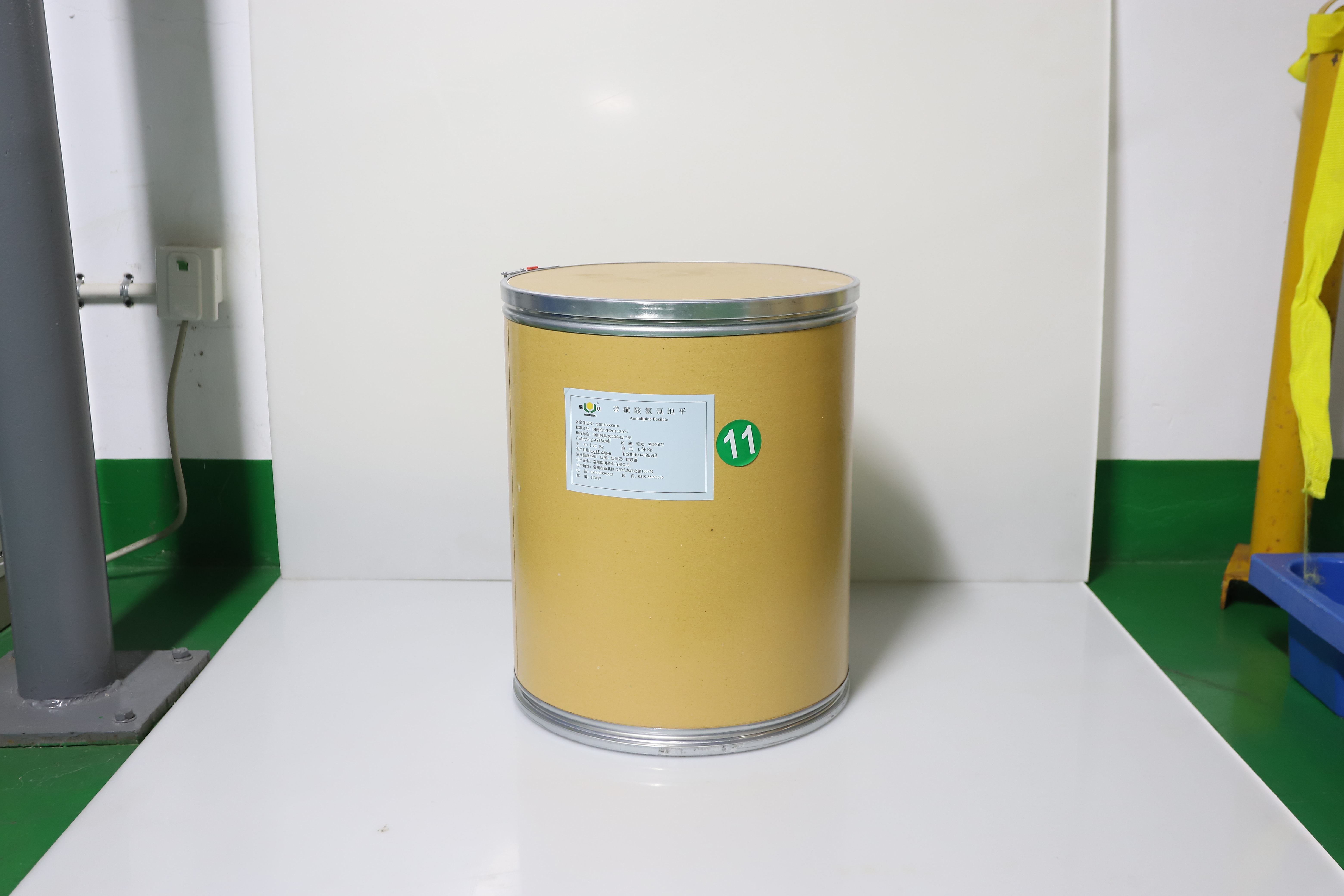
Amlodipine Besylate (CAS No. 111470-99-6) is a dihydropyridine calcium channel blocker supplied as an active pharmaceutical ingredient with no excipients, intended for the pharmaceutical and healthcare industries and suitable for tablet formulation as an anti-hypertension API. The specification states an assay of 98.0% to 102.0%, compliance with USP and EP, a melting point of 197°C to 201°C, packing of 25 kg per drum and a minimum order quantity of 1 kg.
Levoamlodipine Besylate (CAS No. 103129-82-4) is a calcium channel blocker API in the dihydropyridine derivative category, supplied as a pharmaceutical pure powder rather than a finished dosage form, and used for the formulation of antihypertensive tablets for hypertension treatment. Its molecular formula is C20H25ClN2O5·C6H6O3, the assay is 98.0% to 102.0% on a dried basis, storage requires protection from light in a sealed, cool and dry place, and the specification states compliance with USP and EP with single impurity and total impurity under tight control. The manufacturer states a steady supply capacity for this product.
Felodipine (CAS No. 72509-76-3) is a calcium channel blocker API and dihydropyridine derivative with the molecular formula C18H19Cl2NO4. It is supplied as a pharmaceutical pure powder for finished-dose manufacturing, with an assay of 98.0% to 101.0% on a dried basis, compliance with USP, EP and BP monographs, GMP compliance, and typical application in finished drug formulation for hypertension and stable angina pectoris.
Propafenone Hydrochloride (CAS No. 34183-22-7, EINECS No. 251-867-9) is a cardiovascular API with the molecular formula C21H28ClNO3 and a molecular weight of 377.9049. Documented physical data include a boiling point of 519.6°C, a flash point of 268°C and a vapour pressure of 1.27E-11 mmHg at 25°C. It is NMPA registered and Chinese GMP compliant with a COPP available, complies with EP, USP and CP monographs, is produced in an in-house integrated GMP workshop with flexible batches from laboratory to commercial scale, and supports customizable particle size and micronization service.
Tamsulosin Hydrochloride (CAS Nos. 106463-17-6 and 80223-99-0, also written Tamsulosin HCL) is an active pharmaceutical ingredient with the molecular formula C20H29ClN2O5S and a molecular weight of 444.9727. Listed physical data include a melting point of 228°C to 230°C, a boiling point of 595.5°C at 760 mmHg, a flash point of 313.9°C and a vapour pressure of 3.79E-14 mmHg at 25°C. The product page records an FDA on-site inspection in 2018, a registration on-site verification and GMP compliance inspection in 2022, and a GMP compliance inspection in 2024. Batch specifications, impurity controls, packaging and supply conditions for this molecule should be confirmed through the relevant quality documents and purchasing requirements.
In addition, the company's product listing for Upadacitinib states a purity of at least 99% by HPLC, with a white or off-white crystalline powder appearance.
Documentation and audit support
Because discovery-stage screening is largely a documentation exercise, the practical question is what a supplier can put in front of a reviewer. For this manufacturer, the available material includes product specifications with CAS numbers and pharmacopoeial references, certificates of analysis and safety data sheets issued with samples, a COPP for Propafenone Hydrochloride, full CTD documentation packages with technical support for registration and audit as stated for that product, and a published company brochure. Approval of an on-site audit is handled through a formal notification and QA review, described in the step-by-step section below.

Step-by-Step Breakdown: Screening an API Manufacturer in Six Steps
The sequence below converts a long supplier list into an audit-ready short list. Each step produces a document or a decision, so progress can be shown to an internal quality or procurement committee.
- Define the discovery brief. State the molecule, the finished dosage form, the target market and the expected annual requirement. The target market determines which evidence matters: a European submission points toward a CEP and EU GMP audit history, a US submission toward FDA inspection history, and a domestic submission toward NMPA registration status. Without this brief, every supplier looks equally qualified.
- Match registration status to the molecule. Confirm that the specific product, not only the company, holds the relevant status. In this manufacturer's case, six APIs hold registration status "A" and have passed GMP compliance inspections, Amlodipine Besylate has EDQM and Japan PMDA certifications, and Tamsulosin Hydrochloride has passed an FDA on-site inspection. Ask for the product-level document, not the company brochure page.
- Compare the specification against your own. Request the current specification and a representative COA, then check assay range, impurity limits, melting point or other physical tests, storage conditions and pharmacopoeial basis. Amlodipine Besylate, for example, is specified at 98.0% to 102.0% with USP and EP compliance and a melting point of 197°C to 201°C; Felodipine is specified at 98.0% to 101.0% on a dried basis against USP, EP and BP. Differences at this stage are cheaper to resolve than after formulation lock.
- Request a sample and validate analytically. Send the request to the export mailbox with product name, CAS number, requested quantity, intended use and target filing market. The sales team checks stock or production schedule and confirms the sample plan, freight cost and lead time; shipment follows sample release and is accompanied by COA and SDS. In-depth documents such as process and validation records require a separate formal request. Samples are for R&D and registration testing only and may not be resold.
- Schedule the on-site audit. Submit a formal audit notification stating the audited products, audit objectives, proposed time window and auditor list. The QA team assesses capacity and availability, advises a feasible date and preliminary audit plan, and prepares batch records, validation, process and quality system files in advance. The on-site audit then proceeds, and observations are followed by a CAPA submission. Visitors follow site GMP rules, wear cleanroom protective gear, are escorted in production areas, and may not photograph or copy confidential documents without permission; the audit scope is limited to the agreed products and quality system.
- Confirm commercial terms and supply continuity. Verify packing, minimum order quantity, batch size and realistic delivery timing against your production plan. For Amlodipine Besylate, packing is 25 kg per drum with flexible packing and a minimum order quantity of 1 kg; the site's overall packing specification is 25 KG per drum with an annual capacity of 180 tons and an export ratio of 20 percent. For cardiovascular API supply, the stated scenario requirement is double PE bags inside fibre drums, protected from light and dry conditions, with full regulatory and audit documentation available.
Use Cases: Where These APIs Fit
Discovery is easier when the candidate list is organised by application rather than alphabetically. The documented product range supports four practical situations.
Oral antihypertensive and antianginal formulation
Amlodipine Besylate, Levoamlodipine Besylate and Felodipine are all dihydropyridine calcium channel blockers supplied as pharmaceutical pure powders for finished-dose manufacturing. Amlodipine Besylate is specified for tablet formulation as an anti-hypertension API, Levoamlodipine Besylate for antihypertensive tablet formulation, and Felodipine for finished drug formulation for hypertension and stable angina pectoris. A formulation team developing a cardiovascular portfolio can therefore evaluate several molecules from one supplier relationship rather than several.
Cardiac arrhythmia and cardiovascular API programmes
Propafenone Hydrochloride is described as a cardiovascular API intended for pharmaceutical APIs, formulation R&D and pharmaceutical manufacturing supply chains, produced in an in-house integrated GMP workshop with flexible batches from laboratory to commercial scale. Its micronization service and customizable particle size are relevant where particle size distribution affects blending, content uniformity or dissolution during development.
Urological and multi-therapeutic portfolios
Tamsulosin Hydrochloride is listed as an API intended for API procurement, pharmaceutical manufacturing and formulation R&D and manufacturing supply chains. The company profile states that its business covers cardiovascular, urinary, respiratory and digestive systems, which means a buyer assembling a multi-therapeutic generic portfolio can consolidate part of that list with one manufacturer.
EU registration submission and commercial production support
For European-facing projects, the combination of EDQM certification for Amlodipine Besylate, an EU and PMDA audit history for the site, ICH Q7 aligned systems and available CTD documentation changes the level of regulatory work the buyer must duplicate. The scenario documentation for this API range lists API supply, formulation development, EU registration submission and commercial production support as the intended project types, with EU GMP and EDQM CEP compliance, impurity control meeting Ph. Eur., light-protected packing and full regulatory and audit documentation as the stated special requirements.

API Specification Comparison
The table below compares only the specification data published for each product. Where a field is not stated in the product data, it is marked as such rather than estimated, because an assumed value is worse than a blank one during supplier qualification.
| API | Category | CAS No. | Specification basis | Assay | Supply and packaging note |
|---|---|---|---|---|---|
| Amlodipine Besylate | Dihydropyridine calcium channel blocker | 111470-99-6 | USP / EP; melting point 197–201°C | 98.0%–102.0% | 25 kg per drum, flexible packing, MOQ 1 kg; EDQM and Japan PMDA certifications |
| Levoamlodipine Besylate | Calcium channel blocker API, dihydropyridine derivative | 103129-82-4 | USP / EP; GMP compliant; impurities tightly controlled | 98.0%–102.0% on dried basis | Pharmaceutical pure powder; manufacturer states steady supply capacity |
| Felodipine | Calcium channel blocker API, dihydropyridine derivative | 72509-76-3 | USP / EP / BP; GMP compliant; C18H19Cl2NO4 | 98.0%–101.0% on dried basis | Pharmaceutical pure powder for finished-dose manufacturing |
| Propafenone Hydrochloride | Cardiovascular API | 34183-22-7 | EP / USP / CP; NMPA registered; Chinese GMP compliant; COPP available | Not stated in the published product data | Integrated GMP workshop; flexible batches lab to commercial scale; micronization and particle size customization available |
| Tamsulosin Hydrochloride | Active pharmaceutical ingredient (API) | 106463-17-6; 80223-99-0 | Product page lists identity, CAS numbers and physical properties; batch specifications confirmed through quality documents | Not stated in the published product data | FDA on-site inspection passed; 2022 registration verification and GMP inspection; 2024 GMP compliance inspection |
How to read this table: assay ranges and pharmacopoeial references describe the published specification, not a guarantee for every batch. Batch-level values are confirmed through the certificate of analysis issued with the sample or shipment, and through the quality agreement attached to the commercial order.
Frequently Asked Questions
What does CEP grade mean for an Amlodipine Besylate API?
A CEP — Certificate of Suitability to the Monographs of the European Pharmacopoeia — is issued by the EDQM and confirms that a substance described in an EP monograph is suitably controlled by the manufacturer's process. It allows a formulation manufacturer to reference the certificate instead of re-proving monograph suitability in its own dossier. Changzhou Ruiming Pharmaceutical Co., Ltd. states that Amlodipine Besylate (listed in the company profile as Amlodipine Besilate) has obtained certifications from EDQM and from Japan PMDA, and that the product meets USP and EP standards with an assay of 98.0% to 102.0% and strictly controlled impurities. Buyers should still confirm that the certificate covers the specific grade, manufacturing site and packing used for their order.
Which GMP and inspection records can a buyer verify for this manufacturer?
Six APIs from Changzhou Ruiming Pharmaceutical Co., Ltd. hold registration status "A" and have passed GMP compliance inspections. Amlodipine Besylate has obtained EDQM and Japan PMDA certifications, and Tamsulosin Hydrochloride has passed an FDA on-site inspection. The company also reports that Amlodipine Besylate, Felodipine and Propafenone Hydrochloride passed the GMP compliance inspection in May 2024. Propafenone Hydrochloride is described as NMPA registered, Chinese GMP compliant and supported by a COPP, with the site having passed EU and PMDA audits under an ICH Q7 aligned system. Verification should always be requested at product level, since inspection scope and date differ between molecules.
How do buyers request an API sample and its supporting quality documents?
Samples are requested in four steps. First, send the request to the export mailbox with the product name, CAS number, requested quantity, intended use and target filing market. Second, the sales team checks stock or production schedule and confirms the sample plan, freight cost and lead time. Third, shipment is arranged after sample release and is accompanied by a COA and SDS. Fourth, in-depth documents such as process and validation records require a separate formal document request. Samples are supplied for R&D and registration testing only and must not be resold; the API must be stored in a cool, shaded place as specified on the label; and the recipient must be qualified to receive pharmaceutical and chemical samples.
What are the packaging, minimum order quantity and production capacity?
Amlodipine Besylate is packed at 25 kg per drum, is available in flexible packing, and has a minimum order quantity of 1 kg. The site's overall packing specification is 25 KG per drum, supported by an annual production capacity of 180 tons at the Changzhou facility. For cardiovascular API supply scenarios, the stated requirement is double PE bags inside fibre drums, protected from light and dry conditions, with full regulatory and audit documentation available. Exact packing and batch size for a specific molecule should be confirmed against the batch record and the quality agreement.
How is an on-site factory audit arranged?
An audit starts with a formal notification stating the audited products, audit objectives, proposed time window and auditor list. The QA team assesses capacity and availability, confirms a feasible date and preliminary audit plan, and prepares batch records, validation, process and quality system files in advance. The on-site audit then proceeds, and post-audit observations are followed by a CAPA submission. Visitors comply with site GMP regulations and wear cleanroom protective gear, photography and copying of confidential documents are prohibited without permission, production areas are accessed with designated escorts, and the audit scope is limited to the agreed products and quality system. Audit requests, sample requests and quotation enquiries for Changzhou Ruiming Pharmaceutical Co., Ltd. can be sent to sale03@ruimingpharm.com or +86 181-5123-6651.
Conclusion: Build the Short List on Evidence, Not on Claims
Discovering pharmaceutical APIs for regulated markets is a verification exercise. The useful questions are narrow: does the specific product hold the registration or certification status the target market requires, does the published specification match the buyer's own, can the supplier produce batch-level COA and SDS on request, and can it host an audit under agreed scope. A manufacturer such as Changzhou Ruiming Pharmaceutical Co., Ltd. — with 25,000 square meters of manufacturing area, two API production lines, one solid preparation line, six APIs at registration status "A", EDQM and Japan PMDA certification for Amlodipine Besylate, an FDA on-site inspection for Tamsulosin Hydrochloride, and an annual capacity of 180 tons — offers a documented starting point for that screen, provided each claim is confirmed at product and batch level.
For buyers at the awareness and research stage, the efficient path is to short-list two or three suppliers with different evidence profiles, request samples and documents in parallel, and compare the returned COAs against the specifications rather than against the sales narrative. That comparison is what makes the later audit and commercial negotiation shorter.
Next Step: Sample, Quotation and Technical Documentation
To evaluate fit against your own specification, request a sample, a quotation or the technical documentation package from Changzhou Ruiming Pharmaceutical Co., Ltd. Include the product name, CAS number, required quantity, intended use and target market so that the response covers the correct grade and packing.
Contact: sale03@ruimingpharm.com · Tel / WhatsApp +86 181-5123-6651 · Website: www.ruimingpharm.com
Company brochure (PDF, public download): Ruiming Pharma English Brochure
Have Questions or Need More Details?
Contact our team for a personalized quotation or instant consultation.
Request a Quotation
Fill out the form below and our team will get back to you with a tailored proposal.
WhatsApp Direct Chat
Prefer to chat in real-time? Message us on WhatsApp for instant assistance & quick answers.
- Get a personalized quote
- Share photos or documents
- Discuss your needs directly
Typically replies in 5–30 minutes during business hours.