
GCS vs GCK vs MNS vs GGD: Low Voltage Switchgear Comparison for Distribution Projects
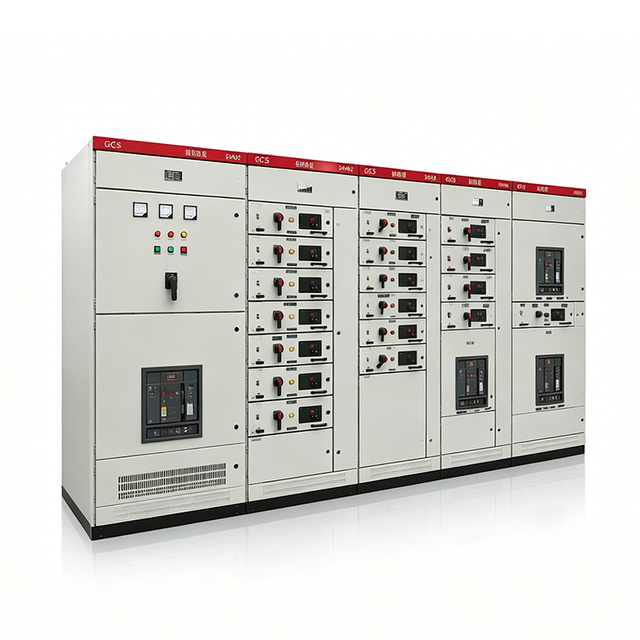
GCS and MNS are withdrawable low voltage switchgear with a 1600–4000 A main busbar range, 660 V rated insulation voltage, 380 V/660 V rated operational voltage and IP30 protection. GCK is the withdrawable option in the 600–1600 A main busbar band, and GGD is the fixed option in the same 600–1600 A band, with a 50 kA one-second short-time withstand current and an 80 kA peak withstand current. In practice: high main busbar current plus a maintenance strategy based on isolating individual circuits points to GCS or MNS; moderate current with simpler operation points to GCK or GGD.
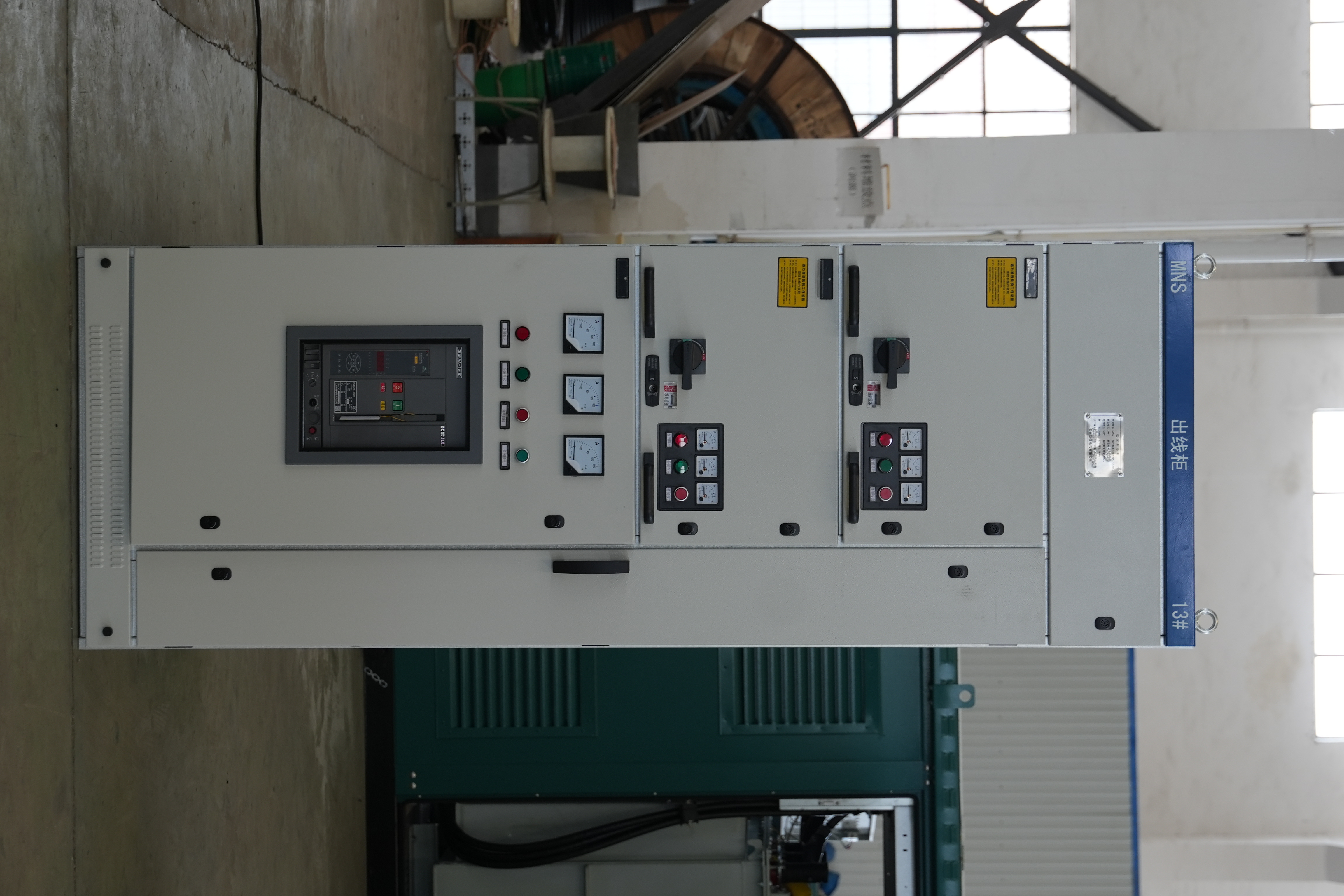
This guide is written for project buyers, EPC electrical engineers and distributor technical teams who have to select one low voltage assembly model for a distribution package and then justify the choice in a technical submission. It compares four models that appear together in Chinese low voltage distribution practice — GCS, GCK, MNS and GGD — on published electrical ratings, construction type and application fit, and it sets out the sequence a buyer can follow when matching a model to a real project.
Problem Definition: Why These Four Models Cause Selection Errors
The four models are often treated as interchangeable because they share a voltage class and an enclosure format. They are not interchangeable in three specific places.
- Current class mismatch. GCS and MNS are built around a 1600–4000 A main busbar, while GCK and GGD are built around 600–1600 A. Specifying a 600–1600 A assembly where the main busbar calculation returns a higher current leaves no room for the load growth that distribution projects usually carry.
- Construction mismatch. GCS, GCK and MNS are withdrawable; GGD is fixed. A withdrawable design allows individual circuits to be maintained independently, while a fixed design ties maintenance to the whole board. A project that cannot accept a board-wide outage for routine maintenance has effectively already excluded the fixed option.
- Fault level and protection grade treated as afterthoughts. Short-time withstand current differs between the families — 100 kA for one second on the GCS and MNS main busbar against 50 kA for one second on GGD — and the enclosure protection grade has to be confirmed against the actual room, not assumed.
Getting these three points right at tender stage is cheaper than correcting them at factory acceptance testing, because the electrical ratings of the assembly fix the copper content, the compartment layout and the short-circuit verification documentation.
Industry Background: What Low Voltage Distribution Projects Are Being Asked to Deliver
Demand for distribution equipment tracks electricity consumption. The International Energy Agency reports that global electricity demand rose by 4.3% in 2024 and is forecast to grow at close to 4% out to 2027 (Electricity 2025, IEA). Grand View Research estimates the global switchgear market at USD 119.7 billion in 2026, with a reported CAGR of 7.4% for 2026–2033. On the supply side, the Observatory of Economic Complexity records China as the top exporter of electrical control boards (HS 8537) in 2024, at USD 15.4 billion.
For a project buyer, the practical consequence is that low voltage assemblies are being specified more often against a fault level and a continuity requirement rather than against a generic "distribution board" description. Two reference points now shape technical submissions:
- IEC 61439-1:2020 sets out general definitions, service conditions, construction requirements, technical characteristics and verification requirements for low voltage switchgear and controlgear assemblies. Design verification and routine verification documentation is a normal part of the submission package.
- Application-specific continuity expectations. Data centres, hospitals, metro and airport projects, and continuous-process plants all specify power rooms where a single board outage is a scheduled event, not an ad-hoc one. That is the point where withdrawable construction stops being a preference and becomes a design requirement.
Detailed Comparison: Published Ratings of GCS, GCK, MNS and GGD
The table below uses only the technical data published for these models in Changzhou Tuoxin Electric Co., Ltd.'s low voltage switchgear range. Where a parameter is not included in the supplied technical data for a model, the cell is marked "—" rather than estimated.
| Parameter | GCS | GCK | MNS | GGD |
|---|---|---|---|---|
| Construction | Withdrawable | Withdrawable | Withdrawable | Fixed |
| Rated insulation voltage | 660 V | — | 660 V | 660 V |
| Rated operational voltage | 380 V / 660 V | — | 380 V / 660 V | 380 V / 660 V |
| Maximum operating current, main busbar | 1600–4000 A | 600–1600 A | 1600–4000 A | 600–1600 A |
| Short-time withstand current, main busbar (1 s) | 100 kA | — | 100 kA | 50 kA |
| Short-time peak current, main busbar | 120 kA | — | 120 kA | 80 kA |
| Maximum operating current, vertical (distribution) busbar | 1600 A | — | 1600 A | — |
| Short-time peak current, vertical busbar | 80 kA standard / 100 kA reinforced | — | 80 kA standard / 100 kA reinforced | — |
| Protection degree | IP30 | — | IP30 | IP30 |
Source: low voltage switchgear technical data for GCS, MNS and GGD; GCK main busbar range as stated in the model comparison scope. "—" indicates a parameter not included in the supplied technical data, not a zero rating.
Three observations follow directly from the table. First, GCS and MNS carry identical published ratings in this catalogue, so the choice between them is a layout, compartment and project-standard decision rather than an electrical one. Second, the fault level difference between the withdrawable families and GGD is a factor of two on the one-second withstand value, which matters in power rooms close to the transformer. Third, IP30 is the standard protection degree across the three models where it is stated; projects in dusty, humid or outdoor-adjacent rooms need to raise this at specification stage, not at installation stage.

Withdrawable (GCS, GCK, MNS) vs Fixed (GGD): What the Difference Means in Operation
Construction type decides how maintenance is performed, and therefore how the power room is operated over the life of the project.
Withdrawable assemblies. In GCS, GCK and MNS, circuits are built as draw-out units. A draw-out design allows an individual circuit to be taken out for inspection or replacement while the rest of the board continues to supply its loads. For distribution rooms serving continuous loads — data and communication rooms, hospital blocks, production lines, metro and tunnel services — this is the difference between a short local interruption and a scheduled board-wide shutdown.
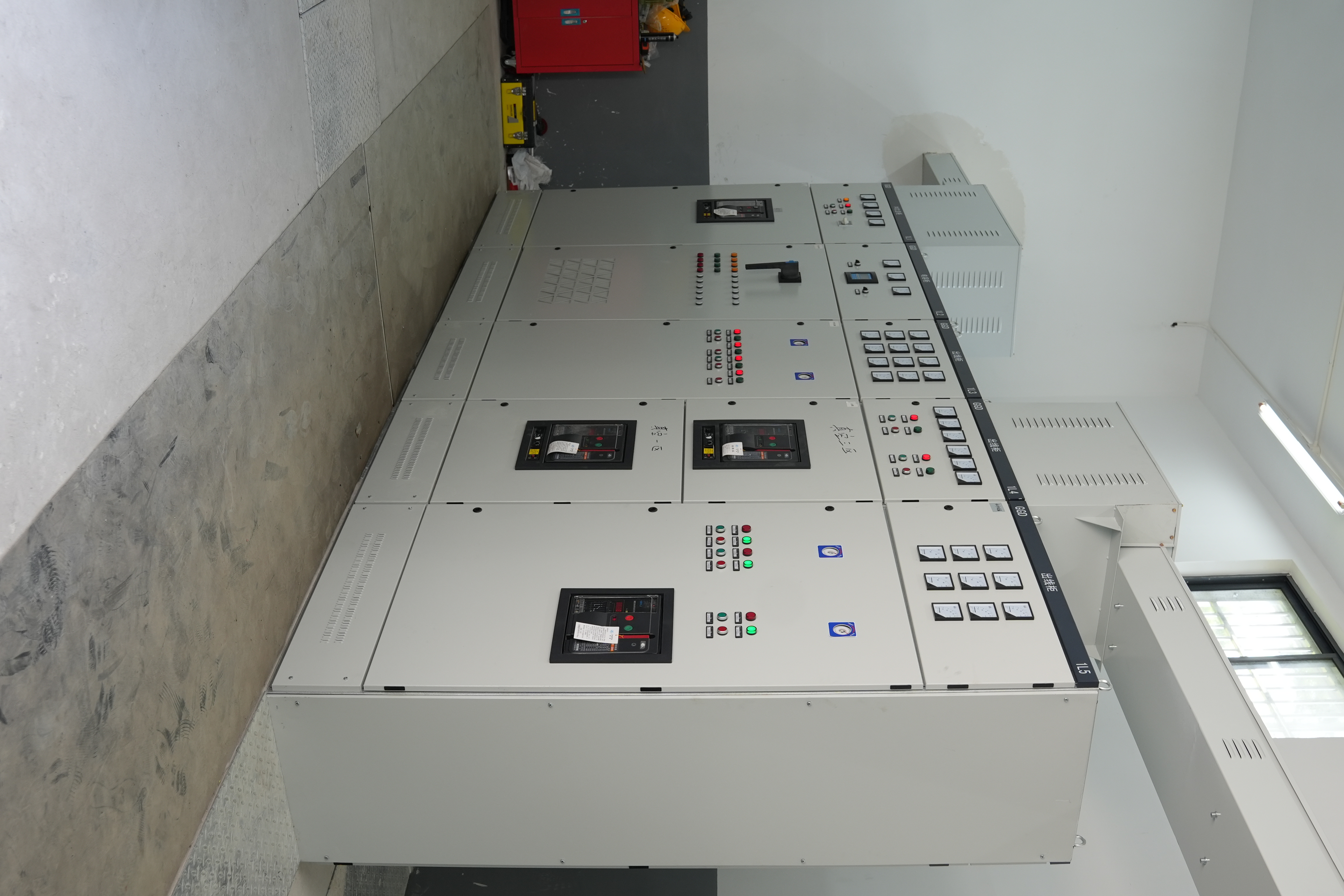
Fixed assemblies. GGD is a fixed design: devices are mounted in place, with a rated current range of 600–1600 A, a 50 kA one-second short-time withstand current and an 80 kA peak withstand current. It suits distribution duties where the outgoing circuits are stable, where switching is infrequent, and where the load profile sits comfortably inside the 600–1600 A band. In those conditions a fixed board is simpler to build, simpler to verify and easier to keep at the designed protection degree.
The decision rule is therefore not "which model is better" but "what outage pattern can this project tolerate". Buyers who answer that question before the tender usually find that the model selection has already narrowed to one or two candidates.
Step-by-Step Breakdown: Matching a Model to a Distribution Project
- Fix the system parameters first. Confirm the operational voltage (380 V or 660 V) and the 660 V rated insulation voltage basis. Both GCS, MNS and GGD state 380 V/660 V rated operational voltage with 660 V rated insulation voltage, which sets the insulation coordination for the room.
- Calculate the main busbar current, then choose the class. If the calculated main busbar current falls in the 1600–4000 A band, the candidate set is GCS or MNS. If it falls in the 600–1600 A band, the candidate set is GCK or GGD.
- Check the short-circuit duty. GCS and MNS state a 100 kA one-second short-time withstand current and a 120 kA peak on the main busbar; GGD states 50 kA and 80 kA. A board specified below the available fault level is a compliance failure, not a saving.
- Decide the maintenance strategy. Withdrawable (GCS, GCK, MNS) where individual circuits must be serviceable without a board-wide outage; fixed (GGD) where the outgoing schedule is stable and outages can be scheduled.
- Confirm the distribution side, not only the incomer. For GCS and MNS, the vertical (distribution) busbar is rated 1600 A maximum, with an 80 kA standard or 100 kA reinforced short-time peak. Outgoing circuit density and the distribution busbar rating frequently decide the final frame size.
- Set the protection grade and enclosure specification against the room. IP30 is the stated protection degree for GCS, MNS and GGD. Where the room is dusty, humid, coastal or partially exposed, raise the specification at enquiry stage: cabinet dimensions, cabinet material (cold rolled steel, galvalume steel or aluminium alloy), surface treatment (electrostatic powder coating, hot-dip galvanising or fluorocarbon coating) and protection grade up to IP65 are all customisable.
- Assemble the verification documents. Request the IEC 61439-1:2020 basis, the applicable type test or design verification documentation, the CCC certificate where Chinese certification is required, and the as-built drawings that will be attached to the acceptance package.
- Plan production and delivery against the project programme. Confirm the manufacturing lead time, the factory test regime and the shipment documentation before the order is placed, so that the switchgear delivery date is not the item that moves the commissioning date.
Use Cases: Which Model Fits Which Project Type
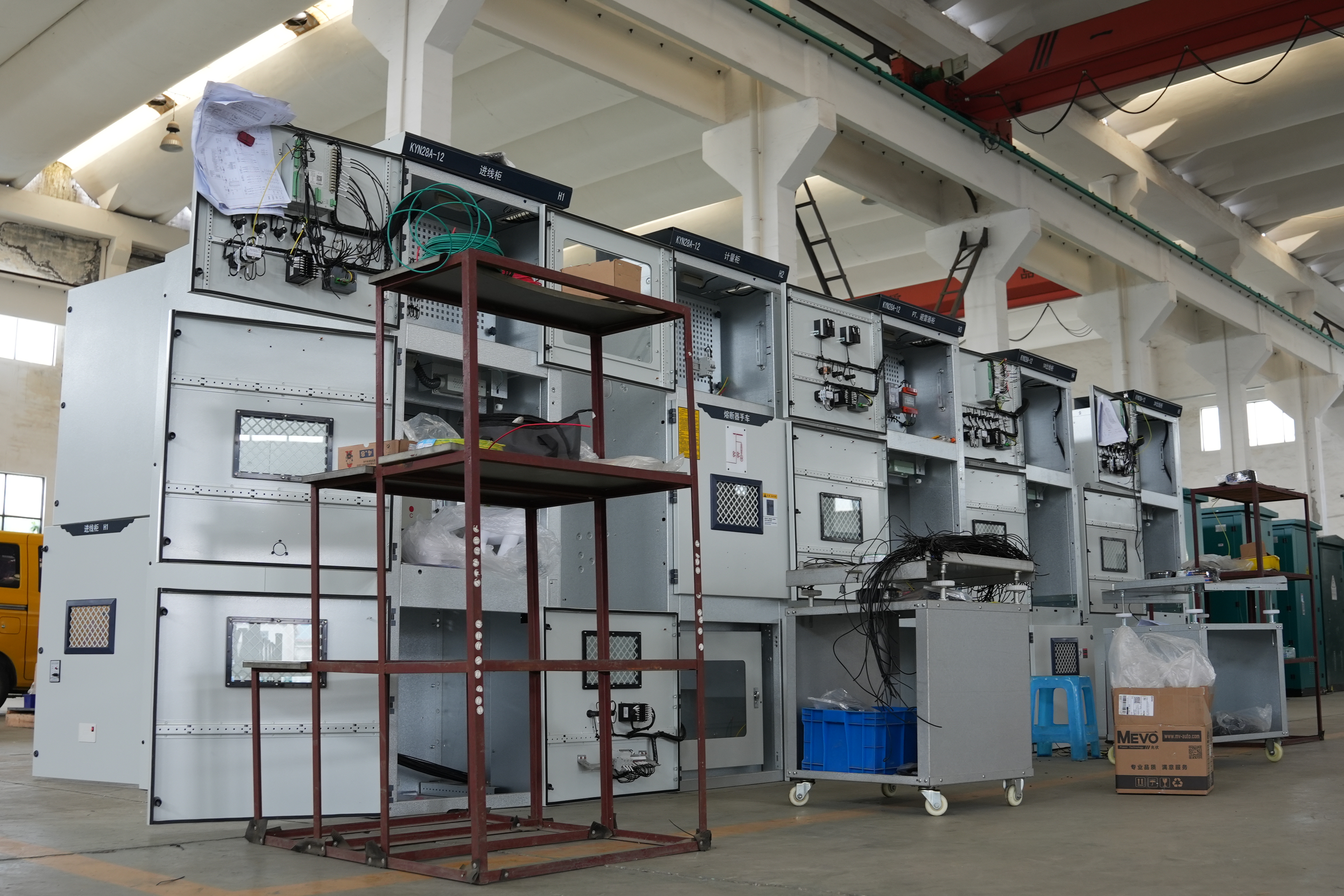
Changzhou Tuoxin Electric Co., Ltd. lists power and new energy, heavy industry and manufacturing, digital infrastructure, transportation infrastructure, civil and public buildings, and special scenarios (ships, offshore platforms, municipal sewage treatment and waste incineration plants) as application areas for its GCS, MNS and GGD low voltage switchgear series. Within a given project, the model is then selected on current class, fault level and maintenance strategy.
| Project situation | Dominant requirement | Model fit | Basis in the published data |
|---|---|---|---|
| Large commercial complex, high-rise building, exhibition centre | High main busbar current, staged fit-out and frequent circuit changes | GCS or MNS | 1600–4000 A main busbar; withdrawable construction; IP30 |
| Data centre, communication room, charging station power distribution | High fault level, maintenance without a board-wide outage | MNS or GCS | 100 kA one-second withstand, 120 kA peak; draw-out circuits maintainable independently |
| Heavy industry and manufacturing plant, moderate load | Stable outgoing schedule, infrequent switching, 600–1600 A | GGD | Fixed construction, 600–1600 A, 50 kA one-second withstand |
| Medium distribution package requiring draw-out circuits at 600–1600 A | Withdrawable maintenance at moderate current | GCK | 600–1600 A main busbar, withdrawable construction |
| Power and new energy auxiliary distribution (thermal, hydro, PV, storage, wind) | Current class and fault level set by the auxiliary transformer | GCS or MNS above 1600 A; GGD in the 600–1600 A band | Published main busbar and withstand current ranges |
| Metro, rail, airport, tunnel and port projects | Continuity of critical circuits; verifiable documentation | MNS or GCS for critical sections | Withdrawable circuits; 1600 A vertical busbar; 100 kA reinforced option |
Compliance and Documentation: What Should Accompany the Assembly
Low voltage assemblies are verified products, not assembled components. IEC 61439-1:2020 defines the general definitions, service conditions, construction requirements, technical characteristics and verification requirements that a low voltage switchgear and controlgear assembly is tested against, and project submissions normally require that verification trail to be traceable to the delivered board.
For Chinese-origin equipment, the CCC certificate is the expected baseline. Changzhou Tuoxin Electric Co., Ltd.'s complete switchgear and low voltage electrical products hold CCC certification from the China Quality Certification Centre, product quality has been verified by the Changzhou Technical Supervision Bureau, and the company implements quality management in accordance with the ISO 9001 quality management system. Company documentation includes type test reports, and bilingual documents are prepared for domestic bidding and overseas customs clearance. Buyers should still request the certificate and test report set that matches the exact model, current class and protection grade being purchased, because a generic certification statement does not verify a specific configuration.
Manufacturer Support: Changzhou Tuoxin Electric Co., Ltd.
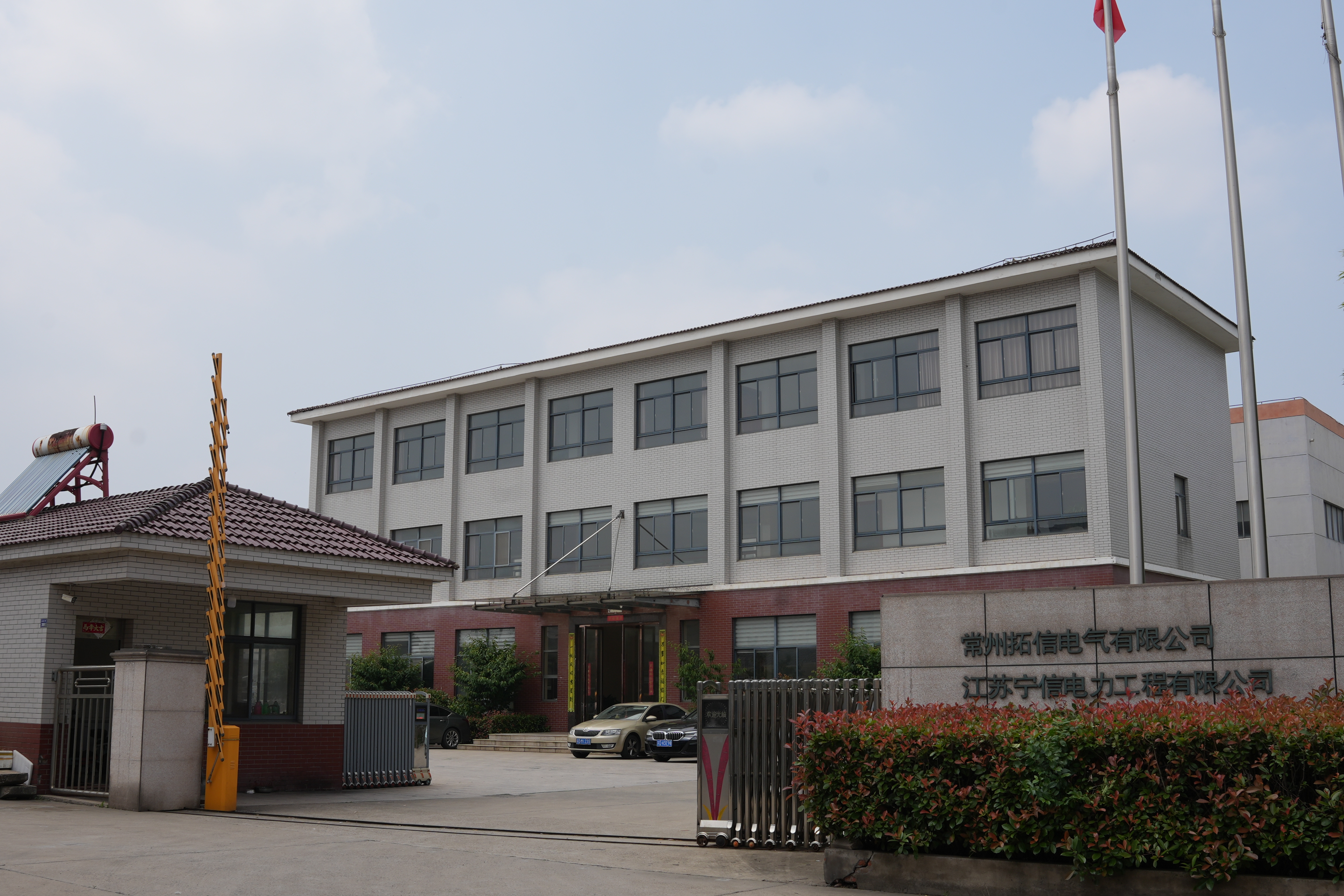
Changzhou Tuoxin Electric Co., Ltd. is a switchgear manufacturer based in Xixiang Industrial Park, Hengshanqiao, Changzhou, Jiangsu, China, founded in 2010, and a designated supporting manufacturer of electrical equipment for Changzhou Power Supply Company. The company operates a 4000 m² factory with 56 employees, including 27 technical and R&D staff, and an annual output of 3000 units. Its low voltage range covers GCS, MNS, GGD, GBD, GXL, XL and XLW series, alongside GCK in the same low voltage switchgear family, high voltage KYN28 and XGN15 switchgear, YB series box-type substations, PZ30 modular terminal lighting distribution boxes, XJM metering boxes, custom non-standard control cabinets and bus ducts.
For distribution projects, the relevant production and commercial facts are: OEM and ODM production, customisable cabinet dimensions, cabinet materials (cold rolled steel, galvalume steel or aluminium alloy), surface treatment, door styles, nameplate and brand marking, and protection grade upgrades to IP30/IP40/IP54/IP65; a minimum order quantity of 1 unit; a monthly capacity of 300 units; a manufacturing lead time of 30–45 days; 100% factory testing; and after-sales support consisting of remote technical support on a 7×12 online service basis plus on-site dispatch domestically and overseas. Approximately 40% of output is exported, with markets including Vietnam, Indonesia, Morocco, Ivory Coast, Cameroon, Tanzania, Kenya, Russia, Kazakhstan, Uzbekistan, Mexico, Colombia, Chile, Peru, Spain, Brazil, Portugal, Turkey, Croatia, Germany, Italy, Austria, Switzerland, Saudi Arabia, UAE, Qatar, Kuwait, Oman, Japan, South Korea, USA and Canada.
Product and company details: www.tuoxinelectric.com.
FAQ
Which standard applies to low voltage switchgear assemblies in a distribution project?
IEC 61439-1:2020 specifies general definitions, service conditions, construction requirements, technical characteristics and verification requirements for low voltage switchgear and controlgear assemblies. A project submission should reference that standard, the applicable design verification or type test documentation, and — for Chinese-origin equipment — the CCC certificate. Changzhou Tuoxin Electric Co., Ltd.'s complete switchgear and low voltage products hold CCC certification from the China Quality Certification Centre, and its document set includes type test reports.
How do I choose an electrical switchgear manufacturer for power distribution projects?
Assess five things against your own technical schedule: whether the range covers the model and current class you need (1600–4000 A main busbar for GCS/MNS, or 600–1600 A for GCK/GGD); whether the manufacturer can customise dimensions, cabinet material, protection grade and nameplate; how the factory tests (Tuoxin states 100% test); what the manufacturing lead time and monthly capacity are (30–45 days, 300 units per month); and what after-sales support is included (remote 7×12 online support plus domestic and overseas on-site dispatch). A manufacturer that cannot answer all five with specific figures is a prequalification risk, not a supplier.
What drives the budget difference between a GCS/MNS board and a GGD board?
Four specification items dominate: the main busbar current class (1600–4000 A versus 600–1600 A), the short-circuit withstand duty (100 kA versus 50 kA at one second), withdrawable versus fixed construction, and the enclosure specification — cabinet material, surface treatment and protection grade, which can be raised from IP30 up to IP65. Component brands and control logic add a fifth variable under OEM/ODM customisation. Because these items change the copper content and the compartment layout, comparable quotations require identical technical schedules; Tuoxin quotes against drawings rather than against a generic model name.
Can a single unit be ordered for validation before a full project order?
Yes. The minimum order quantity is 1 unit, so a project team can take delivery of one assembly, review the as-built drawings against the specification and confirm the nameplate, marking and protection grade before releasing the balance of the order. Every unit is 100% tested in the factory before dispatch.
What lead time should a distribution project plan for?
The stated manufacturing lead time is 30–45 days, supported by a monthly capacity of 300 units and an annual output of 3000 units. Because lead time starts from drawing approval rather than from enquiry, the critical path is usually the technical clarification loop, not the production queue. Project teams can shorten that loop by sending the single-line diagram, room dimensions and required protection grade with the first enquiry — sale@tuoxinelectric.com or WhatsApp +86 158-6188-2821.
Next Step: Match the Model to Your Single-Line Diagram
Send your single-line diagram, main busbar current, fault level and room conditions, and Changzhou Tuoxin Electric Co., Ltd. will confirm which model — GCS, GCK, MNS or GGD — fits the duty, together with the protection grade and documentation set required for your submission.
Email: sale@tuoxinelectric.com | Tel: +86 181-3691-5112 | WhatsApp: +86 158-6188-2821 | www.tuoxinelectric.com
Conclusion
The comparison between GCS, GCK, MNS and GGD resolves into two decisions. The first is electrical: main busbar current and short-circuit duty place a project either in the 1600–4000 A, 100 kA class served by GCS and MNS, or in the 600–1600 A, 50 kA class served by GCK and GGD. The second is operational: withdrawable construction (GCS, GCK, MNS) allows individual circuits to be maintained independently, while fixed construction (GGD) ties maintenance to the whole board and suits stable, moderate distribution duties.
Everything else — compartment layout, cabinet material, surface treatment, protection grade up to IP65, nameplate and brand marking — is specification work that should be settled before the order, because those items determine both the delivered configuration and the verification documents that accompany it. Buyers who fix the current class, the fault level and the maintenance strategy first will find the model choice narrows quickly, and the remaining task is confirming that the manufacturer can deliver that configuration on the project programme.
Have Questions or Need More Details?
Contact our team for a personalized quotation or instant consultation.
Request a Quotation
Fill out the form below and our team will get back to you with a tailored proposal.
WhatsApp Direct Chat
Prefer to chat in real-time? Message us on WhatsApp for instant assistance & quick answers.
- Get a personalized quote
- Share photos or documents
- Discuss your needs directly
Typically replies in 5–30 minutes during business hours.