
GCS vs GGD Low Voltage Switchgear: Withdrawable or Fixed for Your Project?
GCS vs GGD Low Voltage Switchgear: Withdrawable or Fixed for Your Project?
Short answer: GCS is a low voltage withdrawable switchgear whose main busbar is rated for a maximum operating current of 1600–4000 A, while GGD is a low voltage fixed switchgear rated at 600–1600 A. Both sit on the same insulation and voltage platform — rated insulation voltage 660 V and rated operational voltage 380 V / 660 V — and both carry an IP30 protection degree. The selection question is therefore not which cabinet is better, but which configuration matches the current level, the maintenance model and the environment of a specific project.
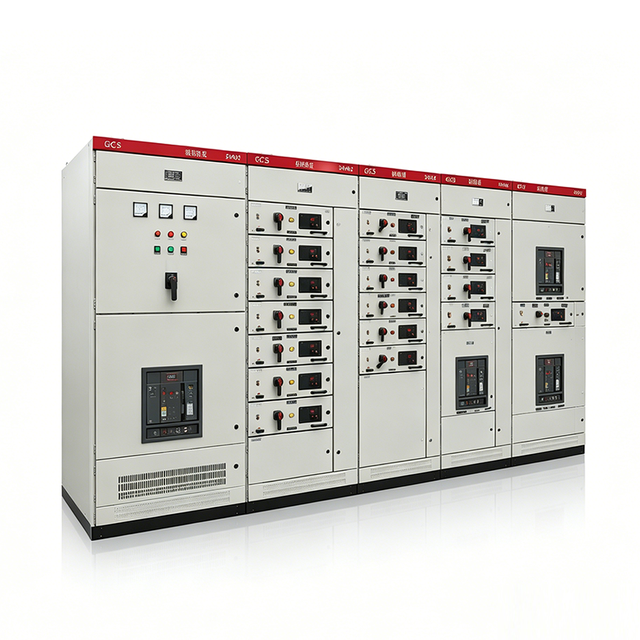
This guide is written for project teams in the research and evaluation stage: electrical engineers building a load schedule, procurement managers comparing cabinet configurations, EPC contractors assembling a complete set, and distributors preparing a technical offer. It compares GCS low voltage withdrawable switchgear with GGD low voltage fixed switchgear point by point, then maps each configuration to the project types where it is typically the better fit.
All product data below comes from the published specifications of Changzhou Tuoxin Electric Co., Ltd., a switchgear manufacturer located in Xixiang Industrial Park, Hengshanqiao, Changzhou, Jiangsu, China. The company produces high voltage switchgear (KYN28 and XGN15 series), low voltage switchgear (GBD, MNS, GGD, GXL, XL and XLW series), YB series box-type substations, bus ducts, metering and lighting distribution boxes and custom non-standard electrical control cabinets.
1. The Real Question Behind GCS or GGD
The problem, stated plainly: a 380 V / 660 V class low voltage distribution room has to be equipped, and the project team must decide whether the functional units inside the assembly are withdrawable or fixed. GCS represents the withdrawable approach; GGD represents the fixed approach.
Three variables decide the answer:
- Current level. GCS is specified with a main busbar maximum operating current of 1600–4000 A. GGD is specified with a rated current of 600–1600 A. A project whose calculated main busbar current lands in the 1600–4000 A band cannot be served by the fixed range alone.
- Maintenance and continuity model. Withdrawable units and fixed units imply different maintenance procedures, spare-part strategies and downtime expectations.
- Fault level and environment. The two configurations differ in short-time withstand current, and both must be matched to the site environment — indoor power rooms, coastal sites or dusty workshops.
Two mismatches are common in practice. The first is over-specification: a small civil building terminal distribution room is equipped with a high-current withdrawable assembly when a fixed configuration inside the 600–1600 A range would have been sufficient, adding mechanical content the project never uses. The second is under-specification: a plant with a large motor load and a strict production-continuity requirement is equipped with a fixed assembly, and the maintenance team later finds that every intervention requires a planned shutdown of the whole section.
2. Industry Background: Why Low Voltage Assembly Choices Are Being Revisited
Low voltage switchgear is no longer a commodity box bought at the end of a project. Global Market Insights estimated the global low voltage switchgear market at more than USD 86.1 billion in 2024, driven by infrastructure upgrades and smart grid technology. Grand View Research estimated the wider switchgear market at USD 112.9 billion in 2025 and projected it to reach USD 197.7 billion by 2033. Estimates differ between research houses because segment definitions vary — some include service and maintenance — but the direction is consistent: more distribution capacity is being installed, and it is being installed in more demanding places.
Four demand patterns shape that growth, and each one changes how a cabinet is selected:
- Data and digital infrastructure — data centres, communication computer rooms and charging station power distribution, where load grows in stages and expansion is continuous.
- New energy — photovoltaic, energy storage and wind power plants, where the low voltage side must support high-current collection and motor control.
- Industrial and heavy manufacturing — metallurgy, petrochemical, automobile, textile, machinery and semiconductor factories, where downtime is expensive.
- Civil, public and transportation infrastructure — high-rise buildings, commercial complexes, hospitals, schools, metro and rail transit, airports, seaports and tunnels.
Compliance expectations have tightened in parallel. Low voltage switchgear and controlgear assemblies are governed by the IEC 61439 series (Parts 1–7) for design, verification and safety. In practice, a project team choosing between two cabinet types is also choosing between two verification packages, and the specification should state which one the buyer or authority requires.
A third change is procurement structure. Distribution rooms are increasingly purchased as a complete set — high voltage switchgear, low voltage switchgear, box-type substations, bus ducts, metering and lighting distribution boxes and non-standard control cabinets from one supplier — so that drawings, factory inspection and after-sales service stay consistent. The GCS-versus-GGD decision is therefore part of a wider matching exercise rather than an isolated line item.
3. GCS Low Voltage Withdrawable Switchgear: Ratings and Construction
GCS is classified as low voltage withdrawable switchgear. Its published electrical parameters are:
- Rated insulation voltage: 660 V
- Rated operational voltage: 380 V / 660 V
- Maximum operating current of main busbar: 1600–4000 A
- Short-time withstand current of main busbar (1 s): 100 kA
- Short-time peak current of main busbar: 120 kA
- Maximum operating current of vertical (distribution) busbar: 1600 A
- Short-time peak current of vertical (distribution) busbar: 80 kA standard type, 100 kA reinforced type
- Protection degree: IP30
The construction package matters as much as the ratings when a project is evaluated for corrosion class and service life. The GCS cabinet frame, enclosure and partitions are made of galvalume steel sheet or cold-rolled galvanized steel sheet, integrally bent and assembled, then finished with electrostatic plastic spraying for anti-corrosion. The draw-out unit housing is galvanized steel sheet with integrated reinforcing ribs. Conductive busbars and contact terminals use T2 pure copper busbar with tin or silver plating on the contact surfaces. Insulating components — partition boards, busbar sleeves and support insulators — are SMC unsaturated polyester molding compound, epoxy resin and PVC insulating sleeves. Primary and secondary wiring uses copper core PVC insulated cable; sealing and damping rely on foamed rubber sealing strips and rubber damping pads; fasteners are 304 stainless steel bolts, flat washers and spring washers. Operating mechanism parts are made from cold-rolled steel sheet and engineering plastic.
For a project team, the practical read-out is this: GCS is the configuration to examine when the main busbar current requirement is measured in thousands of amperes and when the operator wants functional units to be handled as removable modules on the same 660 V platform.
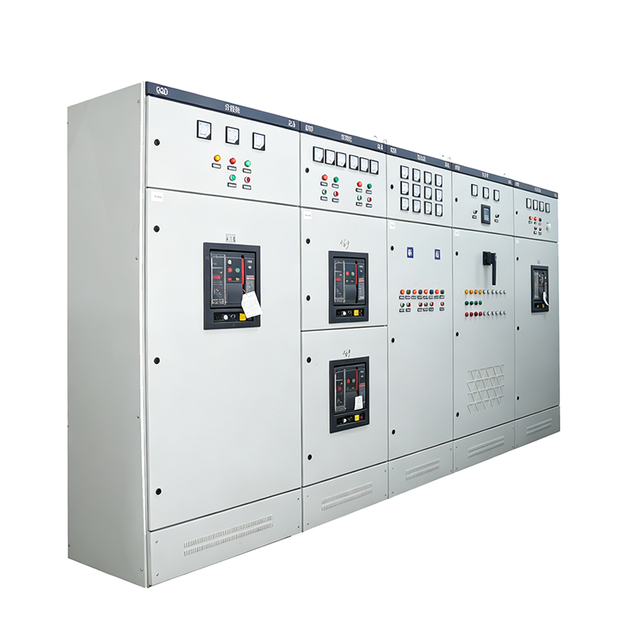
4. GGD Low Voltage Fixed Switchgear: Ratings and Construction
GGD is classified as low voltage fixed switchgear. Its published electrical parameters are:
- Rated insulation voltage: 660 V
- Rated operational voltage: 380 V / 660 V
- Rated current: 600–1600 A
- Rated short-time withstand current (1 s): 50 kA
- Rated short-time peak current: 80 kA
- Protection degree: IP30
The construction approach is deliberately similar to GCS, which simplifies spare-part and coating decisions when both types appear in the same project. The GGD cabinet frame, enclosure and partitions use galvalume steel sheet or cold-rolled galvanized steel sheet, integrally bent and assembled with electrostatic plastic spraying for anti-corrosion. Conductive busbars and contact terminals are T2 pure copper busbar with tin or silver plating on contact surfaces. Insulating parts are again SMC unsaturated polyester molding compound, epoxy resin and PVC insulating sleeves; primary and secondary wires are copper core PVC insulated cable; sealing and damping use foamed rubber sealing strips and rubber damping pads; fasteners are 304 stainless steel bolts, flat washers and spring washers.
5. What Withdrawable and Fixed Change in Daily Operation
Withdrawable and fixed describe how the functional units are mounted inside the assembly, and that difference propagates through maintenance planning, spare-part strategy and how much mechanical content the cabinet carries.
In a withdrawable assembly, a functional unit is arranged as a module that can be handled independently of the rest of the section. In a fixed assembly, the unit is mounted in place with its connections made directly. Neither arrangement changes the insulation platform — both GCS and GGD are rated 660 V insulation and 380 V / 660 V operational — and both are IP30 assemblies, so protection degree is not the deciding factor between them.
The differences that do matter to a project are:
- Short-circuit duty. GCS main busbars are specified at 100 kA short-time withstand current for 1 s with a 120 kA peak, and its vertical busbar at 80 kA peak (100 kA for the reinforced type). GGD is specified at 50 kA short-time withstand current for 1 s with an 80 kA peak. Where the prospective fault level at the low voltage side is high, this gap decides the choice.
- Current headroom. GCS extends to a 4000 A main busbar; GGD covers 600–1600 A. A project that plans load growth in a later phase has more room to grow inside the withdrawable range.
- Material commonality. Both use galvalume or cold-rolled galvanized steel sheet with electrostatic plastic spraying and T2 pure copper busbars with tin or silver plating, so a site that mixes the two types is not introducing two different material specifications.
6. Step-by-Step: Matching the Type to Your Project
The sequence below follows the order in which a load schedule is normally finalised, and it can be used as a review path before the cabinet specification is frozen.
- Total the load and fix the main busbar current. Sum the transformer secondary, motor and distribution load, apply the project diversity factors, then compare the result with the two ranges: 600–1600 A points to GGD; 1600–4000 A points to GCS.
- Write down the maintenance philosophy. If the operating plan assumes that individual circuits can be taken out of service for maintenance while the rest of the section continues to run, a withdrawable configuration supports that plan. If maintenance is always performed during planned shutdowns, a fixed configuration is sufficient.
- Check the prospective short-circuit current at the low voltage side. Match it against 50 kA / 1 s and 80 kA peak for GGD, or 100 kA / 1 s and 120 kA peak for GCS. If the calculated value exceeds the fixed range, the assembly type is decided by the fault level alone.
- Define the environment. Both types are IP30 as standard, which suits indoor power rooms, factories, office buildings and data centre electrical rooms under the standard indoor condition of −10 °C to +40 °C. Where the site is coastal, chemical, dusty or outdoor, the requirement moves to enclosure upgrades and, for outdoor distribution, to other equipment in the same complete set, such as YB series box-type substations or outdoor distribution boxes.
- Confirm materials and coating expectations. Galvalume or cold-rolled galvanized steel sheet with electrostatic plastic spraying is standard for both GCS and GGD. Add hot-dip galvanizing, fluorocarbon coating, higher protection grades or a fully sealed outdoor structure only where the site actually requires them.
- Plan the distribution room layout and future extension. Decide how many functional units are needed now, how many are likely later, and whether the busbar rating chosen today still covers the later phase. This is where the 1600–4000 A range of GCS is often decisive.
- Lock the compliance package. Confirm that assemblies are specified against the IEC 61439 series, and request the certification and type-test documents the buyer or authority requires — CCC for the Chinese market, and CE, SABER or UL documentation for overseas projects.
- Agree the commercial parameters last. Sample scope, lead time and testing requirements should follow the technical decision, not lead it.
7. Use Cases: Which Projects Fit GCS and Which Fit GGD
Both product families are listed as suitable for a broad industry set, which is why the mapping below is built on current level, fault duty and maintenance model rather than on industry labels alone.
Where GCS withdrawable switchgear is the natural fit
- Heavy industry and manufacturing — metallurgy, steel, petrochemical, offshore oil and gas platforms, coal mines, papermaking, automobile manufacturing, textile, machinery and semiconductor factories, where motor feeders are numerous and main busbar current is high.
- Power and new energy — thermal, hydro, photovoltaic, energy storage and wind power plants, substations and nuclear power stations, for auxiliary power distribution and motor control.
- Digital infrastructure — data centres, communication computer rooms and charging station power distribution systems, where capacity is added in stages and the assembly is expected to accept new units later.
- Transportation infrastructure — metro, rail transit, airports, seaports, tunnels and logistics parks.
- Large civil and public buildings — high-rise buildings, commercial complexes, residential districts, hospitals, schools, exhibition centres and hotels, where the main distribution board sits at the top of a long feeder chain.
Where GGD fixed switchgear is usually sufficient
- Civil and public building distribution — residential districts, offices, commercial complexes, hospitals, schools and exhibition centres, where loads are distributed and stable and the incoming current stays inside 600–1600 A.
- Manufacturing workshops and plant sub-distribution — processing workshops, textile and food factories and small machinery plants, where the configuration is fixed at design stage and changes infrequently.
- Municipal, logistics and auxiliary systems — road lighting, pump stations, warehouses, logistics parks and local control distribution, where maintenance is carried out during planned shutdowns.
- Any project where the fault level stays within 50 kA / 1 s and 80 kA peak and where a simple, direct fixed arrangement matches the operating plan.
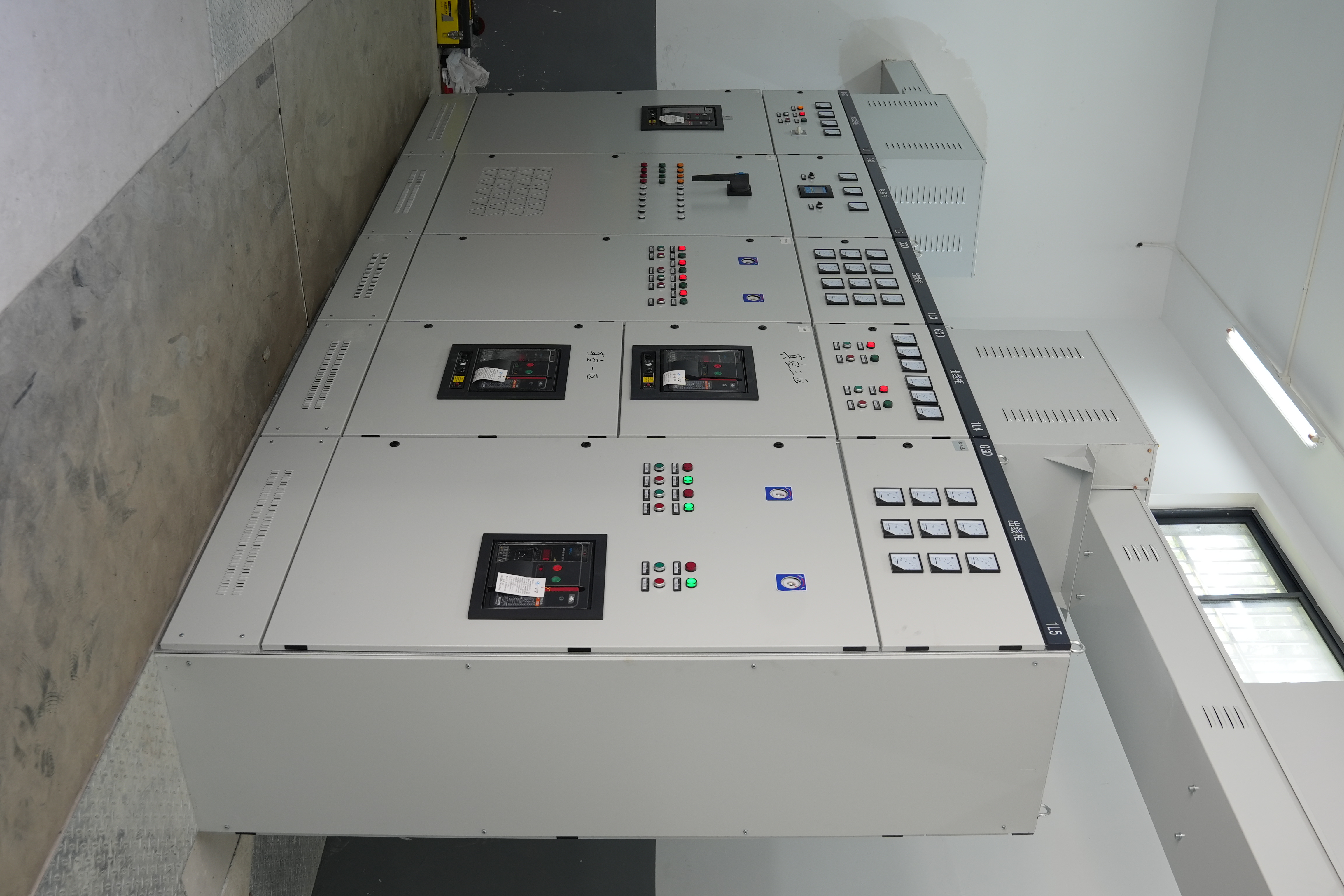
Delivery experience supports this mapping. In a project in China, 1000 units of high and low voltage switchgears, box-type substations, bus ducts and distribution boxes were installed for power transmission, voltage transformation, power distribution, energy metering, circuit protection and intelligent control in high and low voltage systems. The installation achieved multi-level protection against short circuit, overload, leakage and earth fault, cutting off power instantly to avoid electric shock and fire — the protection behaviour that both GCS and GGD assemblies are designed to deliver on the low voltage side.
8. GCS vs GGD: Comparison Table
All values in the table below are taken from the published product data of the two types.
| Comparison item | GCS low voltage withdrawable switchgear | GGD low voltage fixed switchgear |
|---|---|---|
| Assembly type | Withdrawable, draw-out functional units | Fixed |
| Rated insulation voltage | 660 V | 660 V |
| Rated operational voltage | 380 V / 660 V | 380 V / 660 V |
| Current rating | Main busbar max. operating current 1600–4000 A; vertical (distribution) busbar max. 1600 A | Rated current 600–1600 A |
| Main busbar short-time withstand current (1 s) | 100 kA | 50 kA |
| Short-time peak current | Main busbar 120 kA; vertical busbar 80 kA standard / 100 kA reinforced | 80 kA |
| Protection degree | IP30 | IP30 |
| Frame, enclosure and partitions | Galvalume steel sheet or cold-rolled galvanized steel sheet, integrally bent, electrostatic plastic spraying | Galvalume steel sheet or cold-rolled galvanized steel sheet, integrally bent, electrostatic plastic spraying |
| Conductive busbars and contacts | T2 pure copper busbar, tin or silver plated contact surfaces | T2 pure copper busbar, tin or silver plated contact surfaces |
| Insulating parts | SMC unsaturated polyester molding compound, epoxy resin, PVC insulating sleeves | SMC unsaturated polyester molding compound, epoxy resin, PVC insulating sleeves |
| Fasteners | 304 stainless steel bolts, flat washers, spring washers | 304 stainless steel bolts, flat washers, spring washers |
| Typical project fit | High main busbar current, high fault level, staged expansion, continuity-critical operations | Stable distributed loads within 600–1600 A, planned-shutdown maintenance, simpler fixed configuration |
9. FAQ: GCS and GGD Low Voltage Switchgear
Do GCS and GGD switchgear follow the same standards and certification route?
Both are low voltage switchgear and controlgear assemblies, so the reference framework is the same: the IEC 61439 series (Parts 1–7) covers design, verification and safety for this equipment category. On the supplier side, certification should be checked per product family. Changzhou Tuoxin Electric Co., Ltd. implements quality management under the ISO 9001, ISO 14001 and ISO 45001 management systems, and its complete switchgear and low voltage electrical products hold CCC certification from the China Quality Certification Centre, with product quality verified by the Changzhou Technical Supervision Bureau. For export projects the company prepares bilingual documentation and aligns products with CE, SABER and UL requirements where the destination market requires them.
What current and busbar ratings actually separate GCS from GGD?
The separation is in the busbar, not the voltage platform. GCS is specified with a main busbar maximum operating current of 1600–4000 A, a vertical distribution busbar of up to 1600 A, a main busbar short-time withstand current of 100 kA for 1 s and a peak of 120 kA. GGD is specified with a rated current of 600–1600 A, a short-time withstand current of 50 kA for 1 s and a peak of 80 kA. Both share a rated insulation voltage of 660 V, a rated operational voltage of 380 V / 660 V and IP30 protection. In short: the further the required current climbs above 1600 A, the more clearly the choice moves to GCS.
What drives the cost difference between withdrawable and fixed low voltage switchgear?
Cost follows configuration content rather than brand. A withdrawable assembly contains additional mechanical content — draw-out unit housings, mechanisms and contact systems — and reaches higher main busbar ratings, so it carries more material and more assembly work than a fixed assembly of the same voltage class. Cabinet material and surface treatment also move cost: galvalume or cold-rolled galvanized steel sheet with electrostatic plastic spraying is standard, while hot-dip galvanizing, fluorocarbon coating or a higher protection grade adds processing. The correct way to compare two offers is therefore to compare them at the same current rating, the same short-circuit withstand requirement, the same enclosure material and the same documentation scope — not per cabinet.
Can a single unit be ordered for evaluation before a project order?
Yes. Changzhou Tuoxin Electric works with a minimum order quantity of one unit and performs 100% testing on its switchgear. That makes it practical to validate workmanship, busbar arrangement, nameplate data and documentation on a single cabinet before a larger project order is released. Customisation is available on the same basis, including cabinet dimensions, cabinet materials (cold-rolled steel, galvalume steel, aluminium alloy), surface treatment (electrostatic powder coating in any colour card, hot-dip galvanizing, fluorocarbon coating), door styles, protection grade upgrades to IP40, IP54 or IP65, and OEM nameplate and logo printing with bilingual text and project serial numbers.
What lead time and support can a project expect?
Standard lead time is 30–45 days, against a monthly capacity of 300 units. After-sales support includes remote technical support on a 7×12 hour online service basis and on-site technical support with domestic and overseas dispatch available. To start a configuration review, send the load schedule, the required main busbar current, the prospective short-circuit current and the site environment to sale@tuoxinelectric.com or via WhatsApp on +86 158-6188-2821, and the GCS or GGD configuration can be confirmed against your project conditions.
10. Conclusion: A Decision Checklist for GCS or GGD
Use the checklist below to close the decision:
- Main busbar current above 1600 A and up to 4000 A → GCS withdrawable.
- Main busbar current within 600–1600 A with stable, distributed loads → GGD fixed.
- Prospective fault level above 50 kA / 1 s or 80 kA peak → GCS withdrawable.
- Maintenance plan that requires individual circuits to be handled without a full section shutdown → GCS withdrawable.
- Maintenance performed during planned shutdowns with a simple fixed arrangement → GGD fixed.
- Staged expansion planned in the distribution room → check busbar headroom first; the 1600–4000 A range is where the two options stop overlapping.
- Coastal, chemical, dusty or outdoor site → keep the electrical decision, then specify the enclosure upgrade, or move to outdoor equipment such as box-type substations and outdoor distribution boxes.
Both GCS and GGD share the same 660 V insulation platform, the same 380 V / 660 V operational voltage and the same material family — galvalume or cold-rolled galvanized steel sheet with electrostatic plastic spraying and T2 pure copper busbars with tin or silver plating. The decision is therefore a project-fit decision, made on current level, fault level and maintenance model, and it can be closed before commercial negotiation begins.
Next step: Changzhou Tuoxin Electric Co., Ltd. manufactures GCS, GCK, MNS and GGD low voltage switchgear alongside KYN28 and XGN15 high voltage switchgear, YB series box-type substations, bus ducts, metering and lighting distribution boxes and custom control cabinets. Share your project parameters for a configuration review and quotation — www.tuoxinelectric.com · sale@tuoxinelectric.com · +86 181-3691-5112 · WhatsApp +86 158-6188-2821.