
Low Voltage Switchgear Current Ratings and Insulation Parameters: A Technical Selection Guide
Four numbers decide whether a low voltage switchgear assembly belongs in a project: rated insulation voltage, rated operational voltage, rated current, and rated short-time withstand current. For the GCS, GGD, MNS and GCK assemblies covered in this guide, the verified parameter set is a rated insulation voltage of 660 V, a rated operational voltage of 380 V / 660 V, a rated current range of 600–1600 A for GGD fixed assemblies, and main busbar ratings of 1600–4000 A for GCS and MNS assemblies.
Those figures only work when the hardware behind them is specified as carefully as the numbers. Frame material, conductor grade and fastener material determine whether a type-tested rating still holds after ten years of load cycling, heat and humidity in the place where the assembly is actually installed. This guide explains each parameter, shows how the ratings map to real fault levels and current demands, and sets out a step-by-step method for turning a datasheet into an order-ready specification.
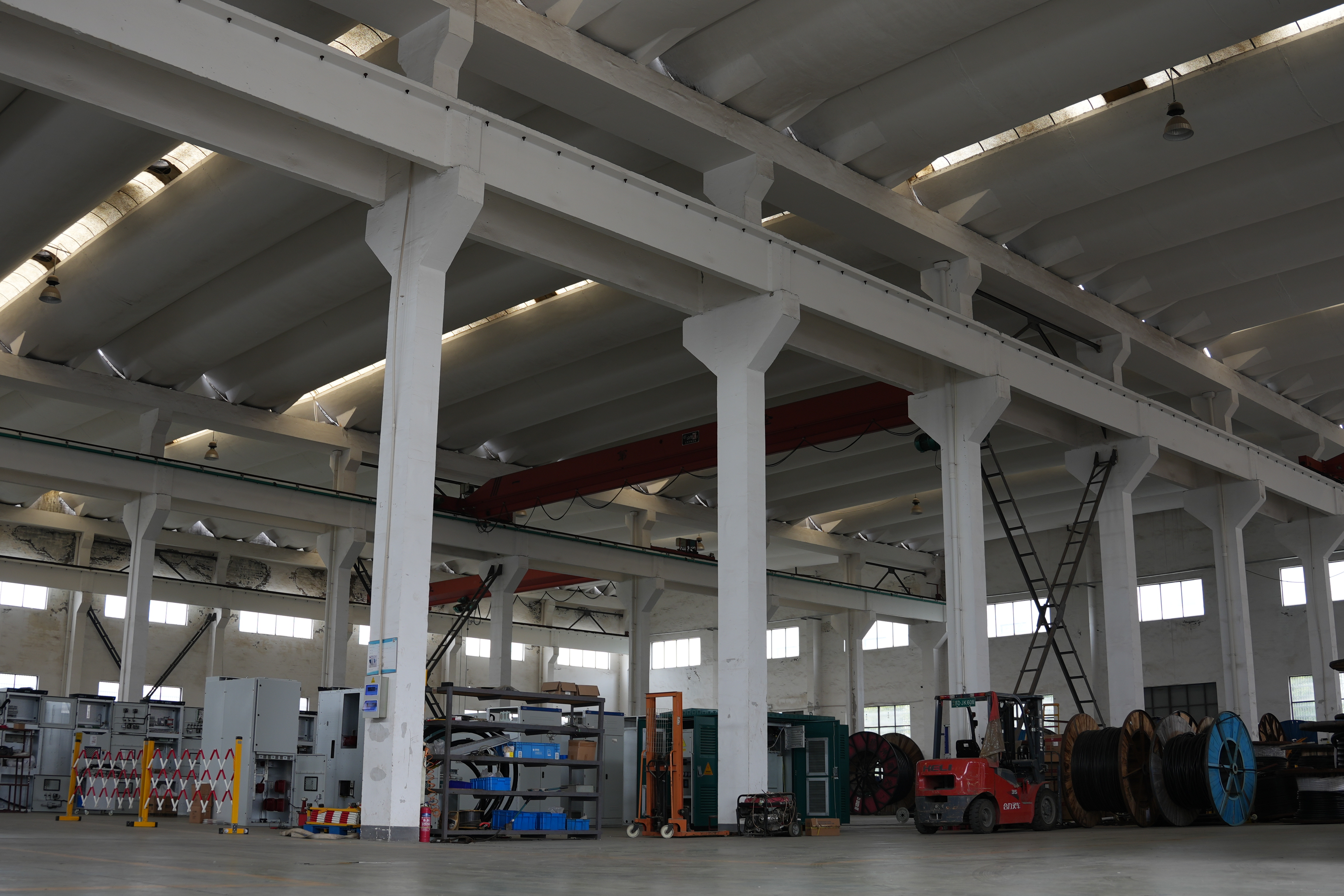
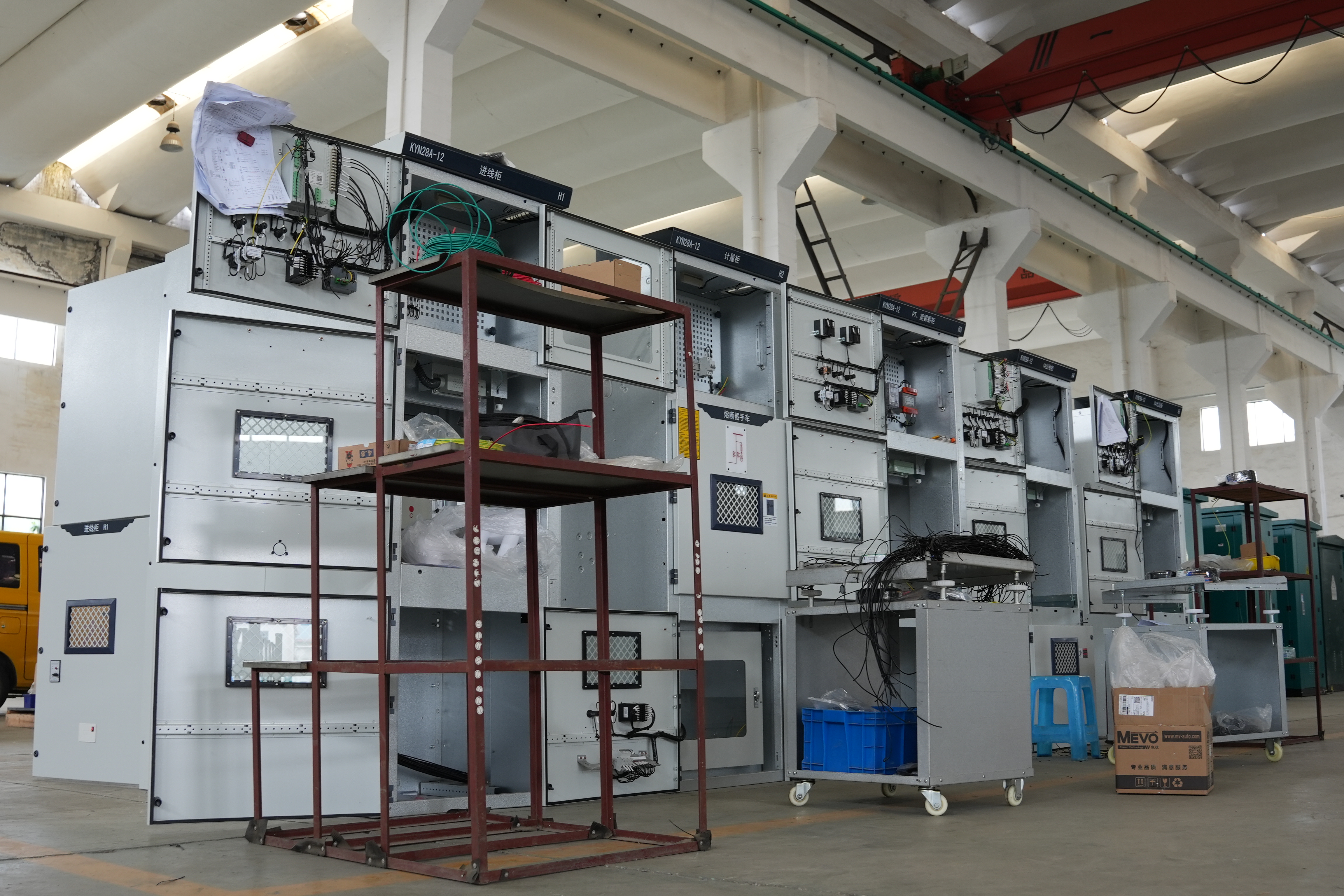
Changzhou Tuoxin Electric Co., Ltd. is a switchgear manufacturer based in Xixiang Industrial Park, Hengshanqiao Town, Changzhou City, Jiangsu Province, China. The company produces low voltage switchgear in the GGD, MNS, GBD, GXL, XL and XLW series, high voltage switchgear in the KYN28 and XGN15 series, and YB series box-type substations, with complete switchgear and low voltage electrical products holding CCC certification from the China Quality Certification Centre.
Problem Definition: How Rating Mismatches Reach the Site
Most low voltage switchgear rating failures are specification failures rather than manufacturing failures. The assembly arrives exactly as ordered — and it is the order that was wrong. Five errors account for the majority of them.
- Insulation voltage copied from a different series. A figure copied from a medium voltage datasheet onto a low voltage panel creates a false sense of headroom, while a figure taken from a lighter-duty series can leave the busbar supports under-rated.
- Rated operational voltage treated as a single value. When a platform is rated 380 V / 660 V, the current ratings must be re-verified whenever the operational voltage changes. A current figure confirmed at 380 V is not automatically valid at 660 V.
- Rated current read from the incoming breaker instead of the main busbar. The breaker protects the board; the busbar carries it. If the busbar ceiling is exceeded, the protection device will not report the problem, but the temperature rise will.
- Short-time withstand current left blank. When the fault level at the installation point is never compared against the assembly's withstand value, the first serious fault becomes the type test.
- Construction left to the supplier's discretion. Frame steel, conductor grade and fasteners are rarely written into a single-line specification, yet they determine whether a verified rating is delivered or quietly reduced.
Selection rule: insulation voltage, operational voltage, rated current and short-time withstand current must all originate from the same type-tested assembly. Four figures collected from four different datasheets do not describe one product.
Industry Background: Why Ratings Discipline Matters More Than It Used To
Low voltage switchgear and controlgear assemblies are designed, verified and tested under the IEC 61439 series (Parts 1–7), which covers design verification, routine verification and safety requirements for assemblies. Equipment that combines medium voltage, transformer and low voltage sections in a prefabricated enclosure — the YB series box-type substation class — is additionally governed by IEC 62271-202:2022, which applies to high voltage prefabricated substations up to 52 kV. Under IEC 61439 practice, a current or insulation figure has meaning only when design verification and type test evidence sit behind it.
The commercial backdrop explains why more of these specifications are being written by more people than before. The global switchgear market was estimated at USD 112.9 billion in 2025 and is projected to reach USD 197.7 billion by 2033, according to Grand View Research. The low voltage segment alone exceeded USD 86.1 billion in 2024, driven by infrastructure upgrades and smart grid technology, according to Global Market Insights. In 2024, China exported approximately USD 2.72 billion of electrical apparatus for switching or protecting electrical circuits to the United States, based on UN Comtrade data. More configurations, more suppliers and more cross-border projects mean more opportunities for a rating to be copied from the wrong column.
The Parameters That Define a Low Voltage Switchgear Assembly
1. Rated Insulation Voltage: 660 V
Rated insulation voltage (Ui) is the highest voltage the insulation system is designed to withstand continuously. It is a property of the assembly as a whole — busbar supports, insulating barriers, clearances and creepage distances — not of any single component inside it. For GCS, GGD, MNS and GCK assemblies, that value is 660 V. The practical reading for an engineer is that Ui must be at least as high as the highest voltage the system can experience in service, including the voltage that appears immediately after a switching operation. On a 380 V system, a 660 V insulation rating provides deliberate headroom; on a 660 V system, the same figure is the design ceiling and leaves no margin for a future voltage change.
2. Rated Operational Voltage: 380 V / 660 V
Rated operational voltage (Ue) is the voltage at which the assembly is intended to operate and at which its current ratings are quoted. A 380 V / 660 V rating means one assembly platform can be ordered for either distribution voltage. For specification purposes, the important consequence is that every current-related figure — rated current, breaking capacity and short-time withstand current — must be re-checked when the operational voltage changes, because verification carried out at one voltage does not transfer automatically to the other. On export projects there is a second check: the local grid voltage and frequency must match the nameplate, the operation manual and the test report supplied with the assembly, otherwise the equipment can be detained at customs before it is ever energised.
3. Rated Current and Main Busbar Range: 600–1600 A and 1600–4000 A
Two different current figures matter in low voltage switchgear selection, and confusing them is the most common error on a specification sheet. The first is the rated current of the assembly or of an individual functional unit — the continuous current an outgoing circuit can carry. The second is the rated current of the main busbar, which must carry the sum of all outgoing loads after diversity is applied.
In this parameter set:
- GGD fixed assemblies: rated current from 600 A to 1600 A.
- GCS and MNS assemblies: main busbar rated current from 1600 A to 4000 A.
The busbar figure sets the ceiling for the whole board. If the main busbar is rated at 1600 A, no combination of incoming device and outgoing feeders can push the design current beyond it, regardless of what the individual breakers are capable of. This matters most when a plant intends to add a production line in three years: selecting the next busbar class during design is a small incremental cost, while uprating an installed board is a rebuild. The rated current of the assembly, in other words, is a decision about the plant's future as much as about today's load list.
4. Rated Short-Time Withstand Current: Matching the Assembly to the Fault Level
The rated short-time withstand current (Icw) is the current the main circuit can carry, for a defined duration, without damage or unacceptable temperature rise. It answers one question: does this assembly survive a downstream short circuit while the upstream protection clears the fault?
Icw is always quoted together with a duration, and both the value and the duration must come from the manufacturer's type-tested data for that specific assembly. The selection rule is a comparison rather than a judgement call: Icw must be equal to or greater than the prospective short-circuit current at the point of installation, as calculated by the project's short-circuit study. When the site fault level exceeds the assembly's Icw, the busbar system, its supports and its bolted connections are subjected to mechanical and thermal stress they were never verified for. The correct sequence is therefore to obtain the prospective fault current first and select the assembly second — not to choose a board and hope the fault level falls inside it.
5. Construction Facts That Decide Whether the Rating Holds
Ratings are verified on paper and delivered in metal. Three construction details carry the electrical parameters from the type test report to the installed assembly:
- Galvalume steel frame. The frame carries the mechanical load of the busbar system and functional units while providing the enclosure's structural and corrosion resistance. Galvalume (aluminium-zinc coated) steel is specified so that frame integrity and grounding continuity are maintained in humid, coastal and industrial atmospheres, rather than degrading at cut edges and fixing points.
- T2 copper conductors. The current rating of an assembly is, in practice, the current rating of its conductor system. T2 copper busbars and main connections keep temperature rise inside the verified limit at rated current and behave predictably under the mechanical forces generated during a short circuit.
- Stainless steel fasteners. Bolted joints are the weakest thermal link in any busbar system. Stainless steel fasteners hold their clamping force and resist corrosion far better than untreated carbon steel, keeping joint resistance stable over the life of the equipment.
None of these three items normally appears on a one-line diagram, which is precisely why they are worth writing into the specification.
Step-by-Step Breakdown: Matching Ratings to a Real Project
- Confirm the system voltage and the insulation requirement. Establish whether the board will operate at 380 V or 660 V, and confirm that the required insulation voltage of 660 V covers both the normal operating voltage and the transient conditions expected on the network. If a future voltage change is possible, say so now — it is a design input, not a later surprise.
- Calculate the design current of each functional unit and of the whole board. Sum the outgoing loads, apply the diversity factor for the site, then add the spare capacity that the plant's expansion plan requires. This single number drives every decision that follows.
- Select the assembly class and the main busbar rating. GGD fixed assemblies cover 600–1600 A; GCS and MNS assemblies are specified with main busbar ratings between 1600 A and 4000 A. If the calculated design current sits close to the boundary, the higher busbar class is normally the lower-risk choice.
- Obtain the prospective short-circuit current and compare it with Icw. The value must come from the project's short-circuit study, and the Icw value must come from the manufacturer's type test data, quoted together with its duration.
- Specify construction, not just ratings. Write the galvalume steel frame, T2 copper conductors and stainless steel fasteners into the technical annex. Where the environment demands more — dust, humidity, washdown or outdoor installation — specify the enclosure protection and treatment: customizable cabinets support IP30 to IP65 with optional anti-corrosion and fire-resistant structures, against IP30 dry-indoor construction for standard general-purpose boxes.
- Require the documents that prove every rating. Ask for the type test report supporting the quoted current and insulation values, the CCC certificate for the product line, the single-line diagram, the secondary circuit drawings and — for export orders — the English nameplate, operation manual and test report.
- Fix acceptance and commercial terms before production begins. Standard terms are MOQ 1 unit, delivery FOB Shanghai, acceptance by pre-shipment test plus third-party inspection (SGS), and payment of 30% deposit by T/T with the full balance before loading and shipment. For non-standard dimensions or circuits, complete a pre-order on-site survey with a signed survey record, require a written change order for any circuit or size modification, and attach the national and grid acceptance standards to the contract.
Use Cases: Where Each Rating Class Fits
- Industrial park main distribution (1600–4000 A, GCS or MNS). Main boards in industrial parks aggregate many outgoing feeders and are frequently reconfigured as tenants change. High busbar ratings plus modular construction allow functional units to be replaced or added without rebuilding the board.
- Motor-heavy production lines with variable frequency control cabinets. When a Variable Frequency Control Cabinet or Industrial Automation Control Cabinet sits downstream of the low voltage board, the board's rated current must account for both the motor load and the drive's harmonic contribution. Integrated frequency converters and soft starters save 20%–40% of motor power compared with direct-on-line starting — but only if the upstream rating was sized for the real current waveform, not the nameplate total.
- Fixed distribution boards for stable loads (600–1600 A, GGD). Plants with long-term stable processes, where circuits are rarely changed, get the required rating without paying for withdrawable architecture they will not use.
- Compact substation projects. Where a YB series box-type substation supplies the site, the low voltage side of the substation must be rated consistently with the transformer and the outgoing main busbar — a mismatch here simply moves the bottleneck a few metres downstream.
- Export projects in hot, humid or saline environments. Products for Middle East, Southeast Asia and Africa markets can be built with high temperature and anti-salt-spray design, and shipped with bilingual nameplates, manuals and test reports so that the verified rating survives customs as well as commissioning.
- Expansion-ready facilities. Where a second line or a new tenant is already planned, selecting the higher busbar class at the design stage avoids the far higher cost of replacing the board later.
Downstream Distribution: Keeping the Current Path Consistent
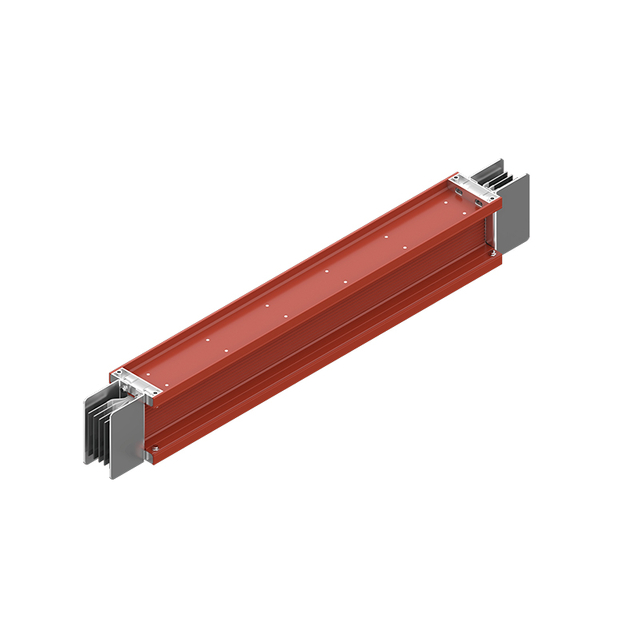
Once the main busbar rating is fixed at 1600–4000 A, the distribution method downstream has to carry that current with the same discipline. Enclosed bus ducts are commonly used for high-current main lines because a modular plug-in structure with low-impedance rectangular copper bars carries 20%–40% more current than cables of the same cross-section, while current deviation between parallel cables can reach up to 15% under a 2000 A working condition. Service life differs as well: 25–30 years for bus ducts against 10–15 years for cables, with only two workers needed for installation against three to four for a cable run, and line loss reduced by 15%–30%. The engineering conclusion is simple: the current path should be specified as one system, from incoming device to final distribution.
Comparison Table: GCS, GGD, MNS and GCK Parameters Side by Side
| Series | Construction pattern | Rated insulation voltage | Rated operational voltage | Rated current / main busbar range | Typical fit |
|---|---|---|---|---|---|
| GCS | Withdrawable-type low voltage assembly platform | 660 V | 380 V / 660 V | Main busbar 1600–4000 A | High-current main distribution boards in industrial plants where circuits change |
| GGD | Fixed-type AC low voltage distribution cabinet | 660 V | 380 V / 660 V | 600–1600 A | Fixed distribution boards, small and mid-size plants, long-term stable loads |
| MNS | Modular assembly platform with withdrawable functional units | 660 V | 380 V / 660 V | Main busbar 1600–4000 A | Large industrial and infrastructure boards requiring modular expansion |
| GCK | Withdrawable-type series designation encountered in the low voltage assembly market | 660 V | 380 V / 660 V | Not part of this guide's verified parameter set — confirm the current range from the manufacturer's type-tested datasheet | Applications where withdrawable functional units are preferred; verify ratings before ordering |
Note on reading the table: the current ranges shown are the values covered by this guide. Where a series is not represented in the parameter set, the correct action is to request the type test report for the specific configuration being purchased rather than to carry a figure over from another sheet. Insulation and operational voltages of 660 V and 380 V / 660 V apply across the series above as platform-level ratings.
Long-Term Ownership: What the Rating Decision Commits You To
Ratings are chosen once and lived with for years. The parameters set at design stage define everything downstream: spare parts, service visits, expansion options and the reuse value of the equipment.
- Spare parts availability and lead time. Off-the-shelf spare part supply from the producing factory keeps a project maintainable; where parts must be sourced through a foreign brand, cost can run two to three times higher with a four to eight week lead time.
- Delivery and commissioning support. Domestic non-standard assemblies are typically delivered in 15–25 days, against two to three months for foreign-brand equivalents. Support during commissioning matters as much as the delivery date: remote technical support, nationwide on-site service and overseas engineer dispatch shorten the gap between installation and energisation.
- A defined warranty boundary. Warranty should cover manufacturing defects, with man-made damage and environmental corrosion excluded, and a published fixed price list for spare parts, travel and on-site service fees. Remote video troubleshooting is prioritised in this model to avoid unnecessary field visits — a cost-saving that only exists when the boundary was written down at the start.
- One-stop supply reduces coordination risk. Buying a full set from a single production line means one contact person instead of three to five suppliers, a 98% one-time acceptance rate against a rework and rectification rate above 40% for multi-supplier assembled solutions, and synchronised delivery of the complete equipment within 15–25 days.
- Payment and retention structure. Standard terms of 30% advance, 70% before shipment, 95% after acceptance and 5% one-year quality retention align the commercial schedule with the technical milestones. Low-credit clients are handled through full prepayment or third-party guarantees, which protects the project schedule from financing interruptions on either side.
FAQ
Which standards govern the current ratings and insulation parameters of a low voltage switchgear assembly?
Low voltage switchgear and controlgear assemblies are designed, verified and tested under the IEC 61439 series (Parts 1–7), covering design verification, routine verification and safety requirements. Equipment that combines medium voltage, transformer and low voltage sections in a prefabricated enclosure, such as a YB series box-type substation, is additionally covered by IEC 62271-202:2022 for high voltage prefabricated substations up to 52 kV. For products placed on the Chinese market, CCC certification from the China Quality Certification Centre applies to complete switchgear and low voltage electrical products. In practice, ask for the type test report that supports each quoted figure — 660 V insulation voltage, 380 V / 660 V operational voltage and the current range — rather than accepting a catalogue value that may belong to a different configuration.
How do I decide between a 600–1600 A GGD assembly and a 1600–4000 A GCS or MNS main busbar?
Start from the total design current of the board rather than from the largest outgoing feeder. GGD fixed assemblies are rated 600–1600 A and suit distribution boards with stable loads and little need for circuit changes. GCS and MNS assemblies are specified with main busbar ratings from 1600 A to 4000 A and suit main distribution boards in industrial plants where circuits change and expansion is likely. Three checks decide the case: total connected load plus spare capacity against the busbar rating; prospective short-circuit current at the board against the rated short-time withstand current; and whether functional units must be withdrawable for maintenance without disturbing adjacent circuits. When the calculated current sits close to 1600 A, the higher busbar class is usually the lower-risk engineering decision, because the incremental cost at design stage is smaller than the cost of replacing a board in service.
What drives the price of two low voltage switchgear assemblies with the same ratings?
Four factors dominate. First, construction: customizable non-standard control cabinets carry a 15%–30% higher base price than commercially available general-purpose standard boxes, but they eliminate secondary transformation fees for separate PLC and sensor installation, cutting comprehensive expenditure by around 20%. Second, brand origin: under the same configuration, premium international foreign-brand equipment carries a 40%–80% higher price, and foreign-brand spare parts cost two to three times more over ten years with a four to eight week lead time. Third, sourcing model: purchasing a complete set from one manufacturer instead of assembling from several traders cuts total procurement cost by 10%–20% through volume discount and avoids the roughly 15% hidden cost of rework and adjustment. Fourth, the current path downstream: a 1000 A main bus duct carries a 20%–35% lower comprehensive cost than multiple parallel cable runs with cable trays. The lowest quotation is frequently the one that has not priced expansion, spare parts or site changes.
Can I inspect or sample an assembly before shipment, and what are the purchasing terms?
Standard purchasing terms are MOQ 1 unit, delivery terms FOB Shanghai, acceptance criteria based on pre-shipment test plus third-party inspection (SGS), and payment of 30% deposit by T/T with the full balance paid before loading and shipment. For verifying ratings specifically, request the type test report supporting the insulation voltage and current range, the single-line diagram and the secondary circuit drawings. For projects with non-standard dimensions or circuits, a pre-order on-site survey with a signed survey record and a written change order for any circuit or size modification prevent the two most common delivery disputes — unapproved configuration changes and site dimension mismatch. National and grid acceptance standards should be attached to the contract before production starts.
Which manufacturers in China are suitable for a long-term low voltage switchgear distribution partnership?
The practical selection criteria are: mandatory CCC certification covering the product lines to be distributed; a product range that spans both the 600–1600 A fixed class and the 1600–4000 A main busbar class, so one partner can serve different project sizes; documented type test evidence for insulation voltage, operational voltage and short-time withstand current; off-the-shelf spare parts and a published service price list; and a warranty scope written into the contract. Changzhou Tuoxin Electric Co., Ltd. is one manufacturer that matches these criteria: founded in 2010 and operating from a 4,000 m² facility with 56 employees and an annual output of 3,000 units, the company maintains a 27-person technical team and exports approximately 40% of production to markets including Vietnam, Indonesia, Morocco, Ivory Coast, Cameroon, Tanzania, Kenya, Russia, Kazakhstan, Uzbekistan, Mexico, Colombia, Chile, Peru, Spain, Brazil, Portugal, Turkey, Croatia, Germany, Italy, Austria, Switzerland, Saudi Arabia, the UAE, Qatar, Kuwait, Oman, Japan, South Korea, the USA and Canada. Distributors evaluating a long-term partnership can request the product catalogue, CCC certificates and a sample unit by contacting sale@tuoxinelectric.com or WhatsApp +86 158-6188-2821.
Conclusion: Turn the Parameters into a Contract-Ready Specification
Low voltage switchgear selection reduces to five verifiable checks: the insulation voltage must cover the system voltage with headroom, the operational voltage must match the actual or planned network, the main busbar rating must exceed the design current including expansion, the short-time withstand current must exceed the prospective fault current at the installation point, and the construction — galvalume steel frame, T2 copper conductors, stainless steel fasteners — must be specified so that the verified rating is what actually gets delivered. Everything after that, from spare parts to warranty scope, is easier when these five numbers are right the first time.

Need the ratings verified for your project?
Send the system voltage, total design current and prospective short-circuit current, and Changzhou Tuoxin Electric will confirm which assembly class fits the duty — GGD fixed 600–1600 A, or GCS / MNS main busbar 1600–4000 A — together with the type test evidence behind each rating.
Email: sale@tuoxinelectric.com | Tel: +86 181-3691-5112 | WhatsApp: +86 158-6188-2821
Website: www.tuoxinelectric.com