
What Is Electrical Switchgear? Types, Ratings, and What a Manufacturer Should Offer
What Is Electrical Switchgear? Types, Ratings, and What a Manufacturer Should Offer
Electrical switchgear is the combination of switching, protection, and control equipment that receives, distributes, and protects electrical power. It is the hardware that isolates faults, protects operators and machines, and keeps power flowing through industrial plants, commercial buildings, substations, and infrastructure networks. This primer is written for buyers in the early research stage who need to understand how switchgear is classified, what ratings actually mean, and what a full-range manufacturer should be able to offer.
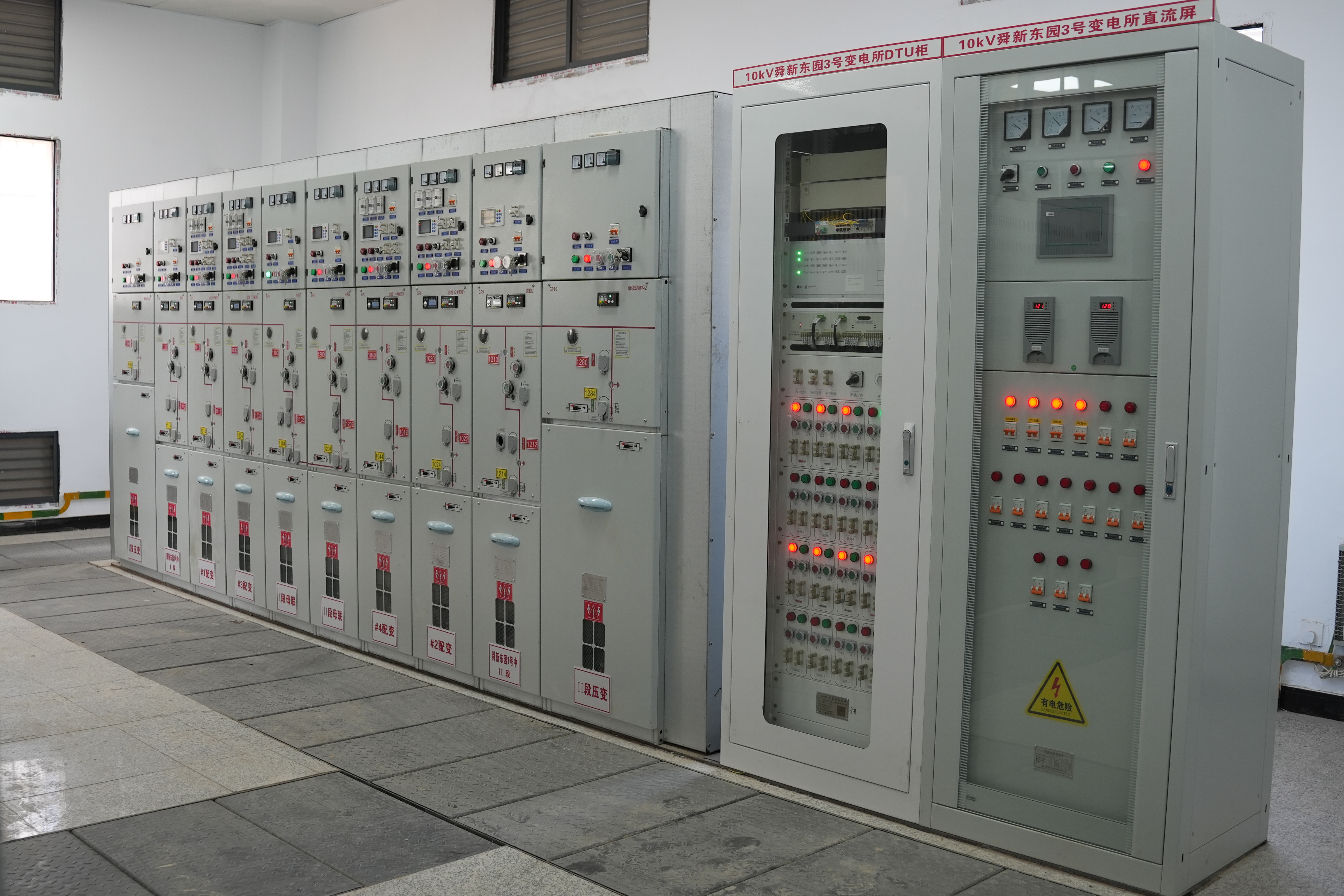
High voltage switchgear installed in a real-world power distribution environment.
Why Electrical Switchgear Is Hard to Pin Down
Ask ten engineers to define electrical switchgear and you will get ten slightly different answers. A metal-enclosed assembly in a substation is different from a distribution board in a workshop, yet both fall under the same umbrella. The confusion is understandable: switchgear spans voltages from 24 kV down to 220V, uses different insulation and arc-extinguishing techniques, and can be fixed, withdrawable, metal-enclosed, or gas-insulated.
For a buyer, the practical consequence is that you cannot simply order "switchgear." You need to define voltage level, current rating, short-circuit withstand capacity, enclosure type, protection degree, and the environment in which the equipment will operate. Those parameters determine which product family and which manufacturer fit your project.
This article maps the landscape in plain terms. It explains the difference between high voltage and low voltage switchgear, introduces the main product families, provides a step-by-step selection framework, and lists the questions buyers should ask when evaluating a manufacturer.
Industry Background: A Large, Growing, and Standards-Driven Market
The switchgear market is substantial and expanding. According to Grand View Research, the global switchgear market was estimated at USD 112.9 billion in 2025 and is projected to reach USD 197.7 billion by 2033. The low voltage segment alone exceeded USD 86.1 billion in 2024, according to Global Market Insights, driven by infrastructure upgrades and smart grid technology.
Standards play a defining role in this market. Low-voltage switchgear and controlgear assemblies must comply with the IEC 61439 series for design, verification, and safety. High-voltage prefabricated substations up to 52 kV are governed by IEC 62271-202:2022. These standards give buyers a common language for comparing equipment from different suppliers.
International trade also matters. In 2024, China exported approximately USD 2.72 billion in electrical apparatus for switching or protecting electrical circuits to the United States, according to UN Comtrade data. That volume reflects the scale at which Chinese manufacturers supply switchgear and related products to global projects.
On the supply side, the top five global manufacturers—ABB, Siemens, Schneider Electric, Eaton, and GE—hold roughly 35% of the market, according to Global Market Insights. The remaining market is served by specialized and regional manufacturers, many of which offer a broader range of standard and custom equipment for specific projects. That is why understanding the full product landscape matters: global brands are not the only route to compliant, reliable switchgear.
How Electrical Switchgear Is Classified
Switchgear is most usefully classified along three dimensions: voltage, construction, and function.
By Voltage: High Voltage vs. Low Voltage
High voltage electrical switchgear typically operates at medium-voltage levels such as 3.6 kV to 24 kV and is used for receiving and distributing power in substations, power plants, and industrial facilities. Low voltage electrical switchgear operates at 380V to 660V and distributes power at the utilization level: factory floors, buildings, and terminal circuits.
High voltage and low voltage switchgear also differ in insulation and arc-extinguishing methods. High voltage equipment often uses SF6 gas or vacuum interruption inside metal-enclosed compartments; low voltage equipment relies mainly on air insulation, molded-case breakers, and reinforced busbar systems.
By Construction: Fixed, Withdrawable, and Gas-Insulated
Fixed switchgear has the main devices mounted in place; access for maintenance is direct, and the design is usually simpler. Withdrawable switchgear uses a draw-out unit or handcart so the breaker can be withdrawn for inspection or replacement without de-energizing the entire assembly. Gas-insulated switchgear seals the live parts inside a gas tank, usually SF6, for compactness and reliability in space-constrained or harsh environments.
By Function: From Substation to Terminal Distribution
A complete power distribution chain includes several functions: power intake, voltage transformation, distribution, metering, protection, and terminal control. Each function maps to a product family:
- High voltage switchgear (e.g., KYN28 and XGN15 series) for power receiving and distribution in medium-voltage networks.
- Box-type substations (e.g., YBW series) that combine a high voltage side, transformer, and low voltage side in one enclosure.
- Low voltage switchgear (e.g., GGD, GCK, GCS, MNS) for distribution at 380V/660V.
- Distribution boxes (e.g., PZ30, XL, XLW, DFW, JX/JXF) for branch, metering, lighting, and outdoor cable distribution.
- Control and automation cabinets (e.g., variable frequency control cabinets and custom non-standard control cabinets) for motor control and process automation.
- Enclosed busway and cable tray (e.g., CMC and XQJ LQ) for connecting and routing power between assemblies.
What a Full-Line Switchgear Manufacturer Produces
Changzhou Tuoxin Electric Co., Ltd. is a switchgear and box-type substation manufacturer established in 2010 and located in Xixiang Industrial Park, Changzhou, Jiangsu, China. The company is a designated supporting manufacturer of electrical equipment for Changzhou Power Supply Company, and its product portfolio includes high-voltage switchgear (KYN28 and XGN15 series), low-voltage switchgear (GBD, MNS, GGD, GXL, XL, and XLW series), and YB series box-type substations, along with custom non-standard electrical control cabinets, PZ30 modular terminal lighting distribution boxes, XJM series metering boxes, and bus ducts.
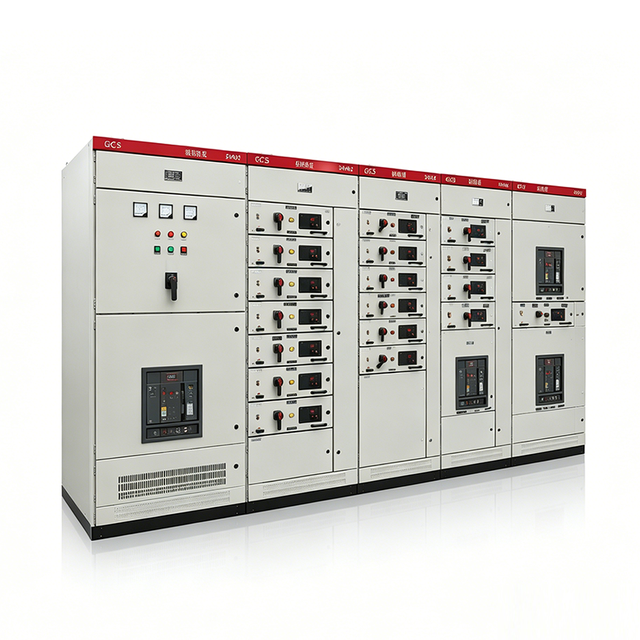
GCS low voltage withdrawable switchgear, one of the low voltage switchgear families used in industrial distribution.
High Voltage Electrical Switchgear (KYN28 and XGN15 Series)
The KYN28-12 is an indoor metal-clad withdrawable AC switchgear rated at 12 kV, with a rated current range of 630 A to 4000 A and a rated short-circuit breaking current of 20 to 50 kA. Its enclosure protection degree is IP4X, and the insulation level meets 42 kV power frequency withstand voltage between phases and to earth. The KYN28-24 extends the same metal-clad withdrawable design to 24 kV, with rated currents up to 3150 A and a short-circuit breaking current up to 31.5 kA.
For networks where space is limited, the XGN15-12 is an SF6 ring main unit for three-phase AC systems from 3.6 kV to 12 kV. The XGN15-24 is a gas-insulated metal-enclosed ring main unit rated at 24 kV with a short-time withstand current of 20 kA or 25 kA for 4 seconds. The sealed gas tank is fully welded 304 stainless steel, and the annual gas leakage rate is no more than 0.5%.
Low Voltage Electrical Switchgear (GGD, GCK, GCS, MNS)
Low voltage switchgear in the 380V/660V class comes in fixed and withdrawable versions. The GGD is a fixed switchgear with a rated current of 600–1600 A, a rated short-time withstand current of 50 kA (1 s), and a rated short-time peak current of 80 kA. The GCK is a withdrawable counterpart with the same 600–1600 A range and fault ratings. Both families use galvalume steel sheet or cold-rolled galvanized steel sheet for the cabinet frame and T2 pure copper busbars with tin or silver plating.
At the higher end, the GCS and MNS are low voltage withdrawable switchgear assemblies whose main busbar can carry 1600–4000 A, with a short-time withstand current of 100 kA (1 s) and a short-time peak current of 120 kA. The vertical busbar has a maximum operating current of 1600 A, and its peak withstand current is 80 kA for the standard type and 100 kA for the reinforced type. Insulating parts are made of SMC unsaturated polyester molding compound, epoxy resin, and PVC insulating sleeves. The standard protection degree is IP30.
Box-Type Substations (YBW Series)
For projects that need a complete power intake and transformation solution, the YBW-12 is a prefabricated box-type substation combining high voltage and low voltage sections in one outdoor-capable enclosure. It has a rated voltage of 12 kV, a high voltage side rated current of 400–630 A, a low voltage side of 100–2500 A, and a rated capacity of 50–1600 kVA. The outer cabinet uses galvalume steel sheet or hot-dip galvanized steel sheet with plastic spraying anti-corrosion treatment, and stainless steel is optional for outdoor use. The internal frame uses a modular assembly structure, which makes the substation easier to configure for different project requirements.
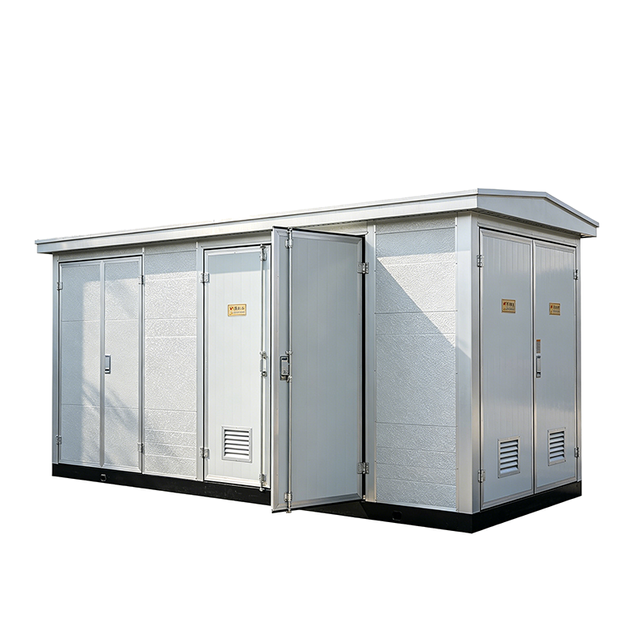
YBW-12 prefabricated box-type substation, a complete switchgear solution for outdoor and project power supply.
Power Distribution Switchgear and Terminal Distribution Boxes
Downstream of the main switchgear, power distribution switchgear and terminal boxes handle branch circuits, metering, lighting, and local control. The PZ30 low voltage distribution box is a modular terminal lighting distribution box rated at 220V or 380V with a maximum current of 125 A, and provides overload, short-circuit, leakage, and overvoltage protection. The XL AC low voltage power distribution box accepts incoming currents of 100 A, 200 A, 400 A, or 630 A, with IP30 for indoor and IP44 for outdoor use.
The DFW low voltage cable distribution box is built for outdoor distribution in substations, industrial and mining enterprises, roadside systems, residential communities, high-rise buildings, airports, and infrastructure projects. Its complete set is rated at 630 A with protection degrees of IP54, IP44, or IP34D, and the main busbar has a short-time withstand current of 15 kA to 20 kA and a peak withstand current of 40 kA. The JX and JXF series industrial branch boxes serve power, coal, petroleum, chemical, metallurgy, and machinery enterprises, with rated currents of 100 A, 200 A, and 400 A, and leakage protection operating at ≤30 mA within ≤0.1 s.
For loads that cannot tolerate a power interruption, the ATS dual power supply distribution box automatically switches between two power sources upon undervoltage, phase loss, and overvoltage. Its transfer time is ≤2 s for the conventional type and ≤0.25 s for the fire-fighting type, with short-time withstand current ratings of 10 kA and 15 kA.
Variable Frequency Control Cabinet
For motor speed control and energy saving, the variable frequency control cabinet accepts three-phase 380V ±10% input, supports motor power from 0.75 kW to 630 kW, and provides an overload capacity of 150% rated current for 60 seconds and 180% for 10 seconds. It supports vector control and V/f scalar control, with Modbus-RTU communication for remote monitoring. This is the product family used in constant-pressure water supply, HVAC fans and pumps, and industrial automation applications—an industrial automation control cabinet in the true sense. When standard products do not match a process requirement, Tuoxin also produces custom non-standard electrical control cabinets, which gives buyers an option for project-specific layouts and functions.
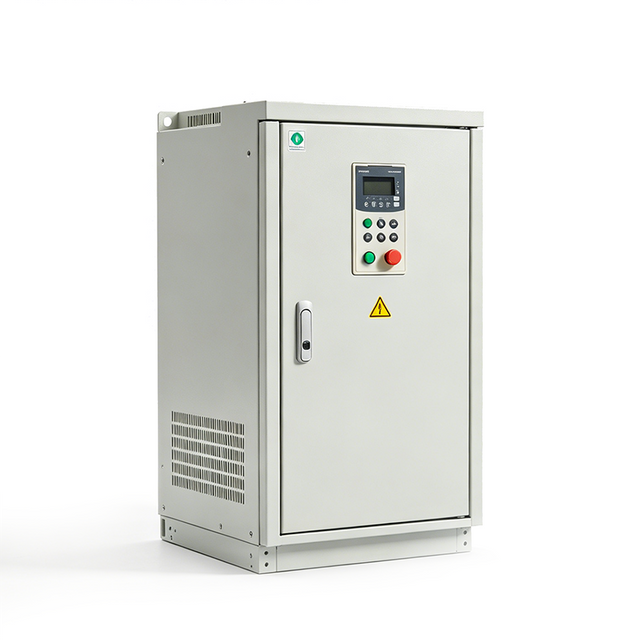
Variable frequency control cabinet, used in water supply, HVAC, and industrial automation control.
Enclosed Busway and Cable Tray
The CMC enclosed busway carries currents from 100 A to 5000 A at AC 400V/690V, with indoor protection of IP40/IP43 and outdoor waterproof protection of IP54/IP68. Its conductor is T2 pure copper bar with tin or silver plating, and the housing is aluminum alloy or galvanized steel sheet. The XQJ LQ cable tray, available in steel, aluminum (6063 alloy), and FRP, supports power and control cables with load classes from light duty (≤120 kg/m) to heavy duty (≤400 kg/m), and indoor protection of IP30/IP40 or outdoor IP54/IP65 with a sealed cover. Together, busway and cable tray complete the physical distribution chain from switchgear to the point of use.
How to Approach Switchgear Selection: A Step-by-Step Breakdown
At the awareness and research stage, buyers do not need a final specification; they need a reliable framework to compare options. The following steps help structure the evaluation.
Step 1: Define the Application and Environment
Start with where the equipment will be installed. Indoor power distribution rooms, outdoor substations, high-temperature workshops, coastal areas, and high-altitude sites place very different demands on switchgear. Outdoor box-type substations use sun-proof, rain-proof, and anti-condensation structures; coastal environments call for hot-dip galvanized or coated enclosures and stainless steel fasteners to resist salt corrosion.
Step 2: Determine Voltage, Current, and Fault Ratings
Select the rated voltage first (e.g., 12 kV or 24 kV for medium voltage; 380V/660V for low voltage). Then determine the rated current of the incoming and outgoing circuits, and confirm the short-time withstand current and peak withstand current required by the network. These three numbers—voltage, current, and fault rating—narrow the product family.
Step 3: Choose the Construction Type
Decide between fixed and withdrawable switchgear. Fixed switchgear such as the GGD is simpler and cost-efficient. Withdrawable switchgear such as the MNS, GCS, or KYN28 allows the breaker to be removed for maintenance or replacement with minimal downtime, which matters in plants and substations with high continuity requirements.
Step 4: Verify Protection Degree and Material Suitability
Check the IP rating against the installation environment. IP30 suits clean indoor rooms; IP4X on KYN28 adds dust protection; IP54 and higher are used for outdoor and harsh environments. Material choices—galvalume steel, 304 stainless steel, SMC composite—affect long-term corrosion resistance and should be matched to the site conditions.
Step 5: Check Compliance and Certification
Confirm that the manufacturer's low voltage assemblies are designed and verified in accordance with IEC 61439, that high voltage prefabricated substations follow IEC 62271-202, and that products carry the certifications required by the destination market. For example, Tuoxin's complete switchgear and low-voltage products hold CCC certification from the China Quality Certification Centre, and the company operates an ISO9001:2000 quality management system.
Step 6: Assess the Manufacturer's Range and Support
A full-range manufacturer can supply the entire chain—high voltage switchgear, box-type substation, low voltage switchgear, distribution boxes, control cabinets, and busway—which simplifies interface coordination and after-sales responsibility. Also review the manufacturer's production capability: Tuoxin operates a 4000-square-meter facility with around 56 employees, including an R&D team of 27 engineers, and an annual output of approximately 3000 units.
Use Cases: Where Different Switchgear Families Fit
Electrical switchgear from one manufacturer can serve very different projects. Typical deployment scenarios include:
- Power grid and substations: KYN28-12 or KYN28-24 metal-clad switchgear for power receiving and distribution; XGN15 ring main units for ring-main and terminal supplies.
- New energy (photovoltaic and energy storage): YBW box-type substations for power collection; ATS dual power boxes for standby switching; XL AC boxes for auxiliary distribution.
- Industrial and mining manufacturing: GGD, GCK, GCS, or MNS low voltage switchgear for plant distribution and motor control; JX/JXF boxes for branch and maintenance supplies; VFD control cabinets for pumps and fans.
- Commercial and residential construction: PZ30 modular distribution boxes for terminal lighting and sockets; CMC enclosed busway for vertical risers in high-rise buildings; cable tray for cable management.
- Public buildings (hospitals, schools): ATS dual power supply boxes for critical loads such as operating rooms, elevators, and emergency lighting.
- Data centers and communication rooms: low voltage switchgear with high busbar ratings; variable frequency control cabinets for cooling water pumps; cable tray for structured cabling.
- Rail transit and municipal infrastructure: DFW cable distribution boxes for road lighting and tunnel power; outdoor box-type substations for public utilities.
Comparing Key Switchgear Families
The table below summarizes the main switchgear families and their typical parameters, based on Tuoxin's standard product data. It is intended as a starting point for narrowing down the right family, not as a substitute for a project-specific specification.
| Family | Type | Voltage | Current Range | Fault Rating | Typical Use |
|---|---|---|---|---|---|
| KYN28-12 / KYN28-24 | Metal-clad withdrawable (HV) | 12 kV / 24 kV | 630–4000 A / up to 3150 A | Breaking current 20–50 kA / up to 31.5 kA | Substations, power plants, industrial facilities |
| XGN15-12 / XGN15-24 | SF6 ring main unit (HV) | 3.6–12 kV / 24 kV | 630 A / 1250 A | Short-time withstand 20–25 kA (4 s) | Ring-main and terminal networks, compact substations |
| GGD | Fixed LV switchgear | 380V / 660V | 600–1600 A | 50 kA (1 s); 80 kA peak | Cost-efficient plant distribution |
| GCK | Withdrawable LV switchgear | 380V / 660V | 600–1600 A | 50 kA (1 s); 80 kA peak | Plant distribution with draw-out maintenance |
| GCS / MNS | Withdrawable LV switchgear | 380V / 660V | Main busbar 1600–4000 A | 100 kA (1 s); 120 kA peak | High-load plants, data centers, large buildings |
| YBW-12 | Box-type substation | 12 kV | HV 400–630 A; LV 100–2500 A | Capacity 50–1600 kVA | Outdoor and temporary power supply, new energy |
| DFW | Outdoor cable distribution box | 400V / 380V | Complete set 630 A | Main busbar 15–20 kA; peak 40 kA | Roadside, residential, and infrastructure distribution |
| ATS | Dual power supply box | 380V / 220V | 63–630 A | 10 / 15 kA | Backup power switching for critical loads |
| VFD Cabinet | Variable frequency control cabinet | 380V ±10% | Motor 0.75–630 kW | Overload 150% / 60 s; 180% / 10 s | Pumps, fans, HVAC, industrial automation |
| CMC Busway | Enclosed busway | AC 400V / 690V | 100–5000 A | Short-time withstand 10–50 kA | Vertical and horizontal power distribution |
Frequently Asked Questions
What certifications and standards apply to electrical switchgear?
Low-voltage switchgear and controlgear assemblies must comply with the IEC 61439 series for design, verification, and safety. High-voltage prefabricated substations up to 52 kV are covered by IEC 62271-202:2022. In China, complete switchgear and low-voltage electrical products are required to hold CCC certification. Changzhou Tuoxin Electric's low-voltage products have obtained CCC certification from the China Quality Certification Centre, and the company strictly implements an ISO9001:2000 quality management system.
What types of electrical switchgear should a full-range manufacturer offer?
A full-range switchgear manufacturer typically covers high voltage switchgear (metal-clad withdrawable switchgear and ring main units), low voltage switchgear (fixed and withdrawable types), box-type substations, distribution boxes, control cabinets, and busway or cable tray. Tuoxin's product portfolio includes KYN28 and XGN15 series for high voltage; GBD, MNS, GGD, GXL, XL, and XLW series for low voltage; YB series box-type substations; custom non-standard electrical control cabinets; PZ30 modular terminal distribution boxes; XJM metering boxes; and bus ducts.
What factors affect the cost of electrical switchgear?
Cost is driven mainly by voltage class, rated current, fault ratings, construction type, enclosure material, and degree of customization. Withdrawable switchgear generally costs more than fixed switchgear of the same rating. Material choices also matter: T2 pure copper busbars, 304 stainless steel enclosures, SMC composite outdoor enclosures, and higher IP protection all add value. The most reliable way to compare cost is to provide the same specification to several manufacturers and evaluate the configuration, not just the price.
How can buyers evaluate a switchgear manufacturer before ordering?
Look for verifiable signals: manufacturing facility size, engineering team, quality certifications, export experience, and the breadth of the product range. For example, Tuoxin Electric operates a 4000-square-meter facility with roughly 56 employees, including an R&D team of 27 engineers, and exports about 40% of its output to markets across Asia, Europe, the Americas, and Africa. Reviewing documented product parameters and factory photos helps confirm that the manufacturer builds real equipment.
What production capacity should buyers ask about, and how can I request a quote?
Buyers should ask about annual output, facility area, and engineering headcount as indicators of delivery capability. Tuoxin reports an annual production capacity of about 3000 units from its 4000-square-meter plant. For a project-specific quotation, the fastest next step is to send your voltage, current, and installation conditions to the manufacturer's sales team; Tuoxin can be reached at sale@tuoxinelectric.com, by phone at +86 181-3691-5112, or via WhatsApp at +86 158-6188-2821.
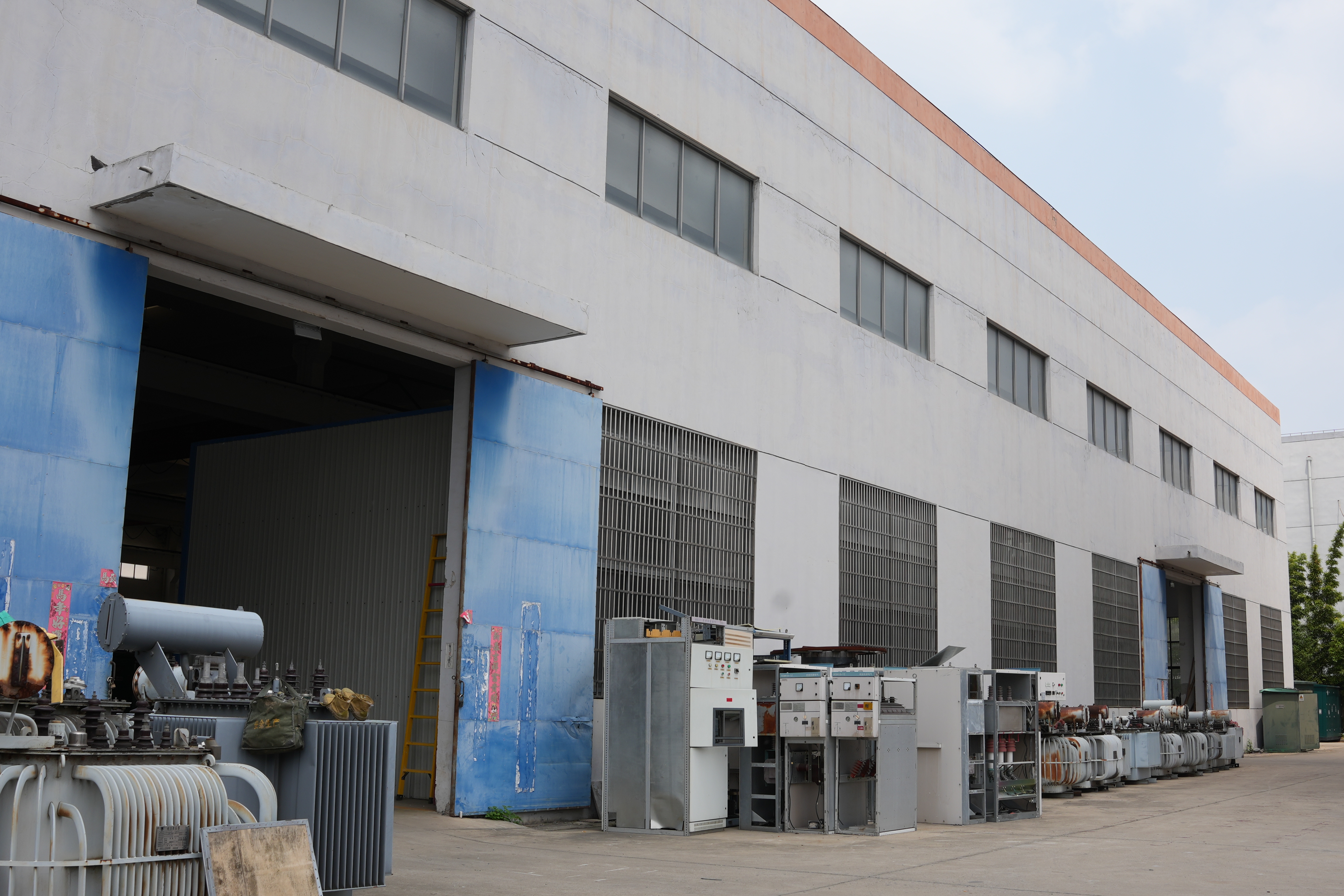
Tuoxin Electric workshop in Xixiang Industrial Park, Changzhou.
Conclusion
Electrical switchgear is a broad but understandable category once it is organized by voltage, construction, and function. High voltage switchgear receives and distributes power in medium-voltage networks; low voltage switchgear distributes it at the point of use; box-type substations transform and combine both levels; and distribution boxes, control cabinets, busway, and cable tray complete the chain. For buyers in the research stage, the practical takeaways are: define the environment, confirm voltage and fault ratings, choose fixed or withdrawable construction, verify standards and certifications, and evaluate manufacturers on documented capability rather than marketing language.
Changzhou Tuoxin Electric Co., Ltd. offers a full range of standard and custom electrical switchgear, box-type substations, and control cabinets from a single production base in Changzhou, China. If you are building a shortlist of switchgear manufacturers, the company's sales team can provide product documentation and configuration support.
Ready to build your shortlist of electrical switchgear manufacturers?
Request product documentation or a configuration inquiry from Tuoxin Electric:
tuoxinelectric.com · sale@tuoxinelectric.com · Tel +86 181-3691-5112 · WhatsApp +86 158-6188-2821